How to Add a Lampshade When Your Lamp Has No Harp

Clara Townsend
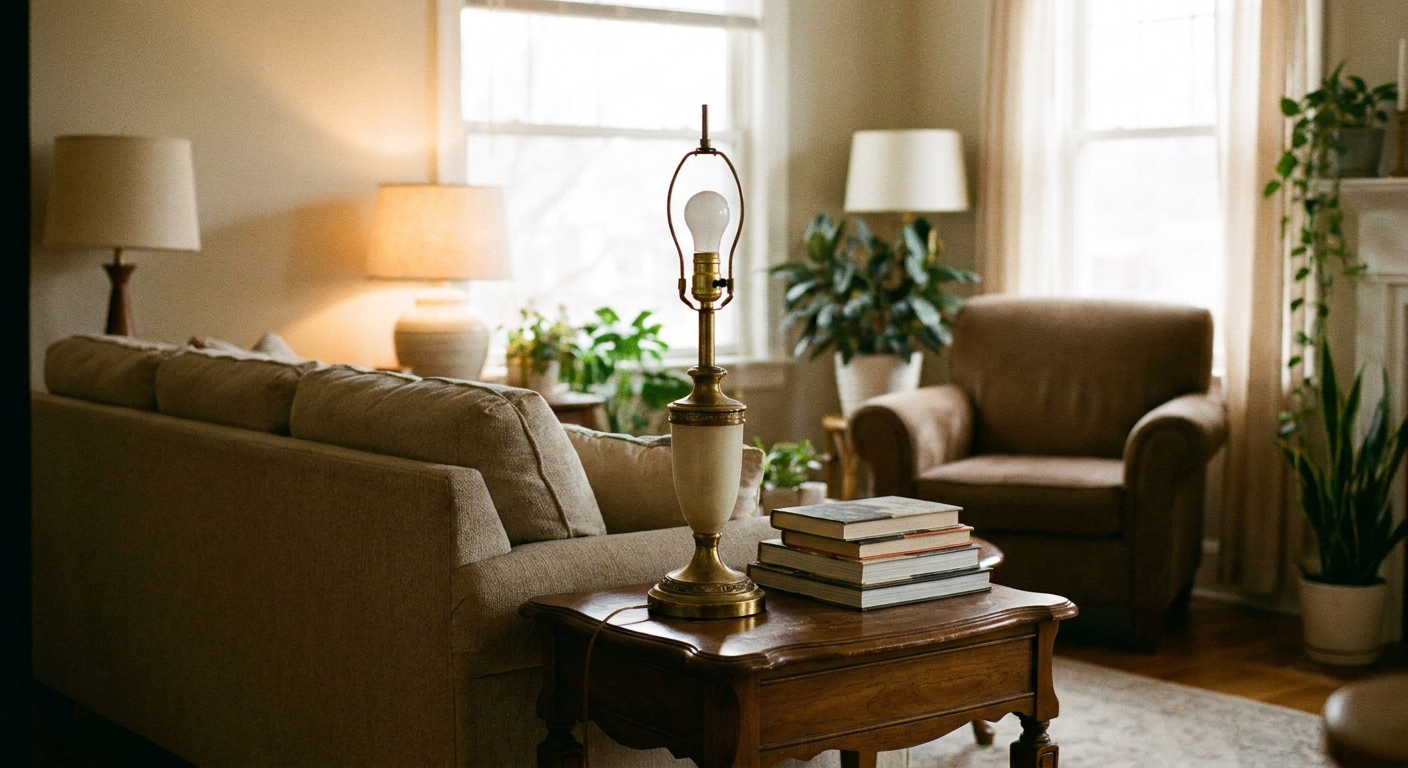
I have a special soft spot for the oddball lamp that shows up at a flea market looking perfectly fine, right up until you get it home and realize there is nowhere to attach a shade. You look at the socket, you see a threaded rod or stud at the top (where a finial would screw on), and yet there is no harp saddle. No U-shaped frame. No little bracket. Just… an awkward naked bulb situation.
The good news: this is usually fixable. The slightly annoying news: not every “harp-less” lamp is meant for a spider shade at all, and a finial stud alone does not guarantee it. Below is how I decide, step by step, what will work without forcing a setup that is unsafe or wobbly.
First, identify what you actually have
Before you buy any shade hardware, take 60 seconds to look closely at the top of the lamp. You are looking for clues that tell you whether the lamp was designed for a spider shade with a harp, or whether it was designed for a different shade system entirely.
Socket + finial stud, but no harp saddle
If the socket has a threaded rod running up through the center (the piece a finial screws onto), that is often a sign the lamp can be set up for a spider shade. Many lamps simply lose their harp over the years, especially thrifted ones.
That said, some vintage and proprietary setups also use a center stud for their own shade carriers. So I treat the stud as a clue, not a promise.
Also, the missing piece is not just the harp. You also need the harp saddle, which is the little bracket that grips the harp’s feet and clamps onto the socket (or sits under the socket shell on some styles).
Signs your lamp was not meant for a spider shade
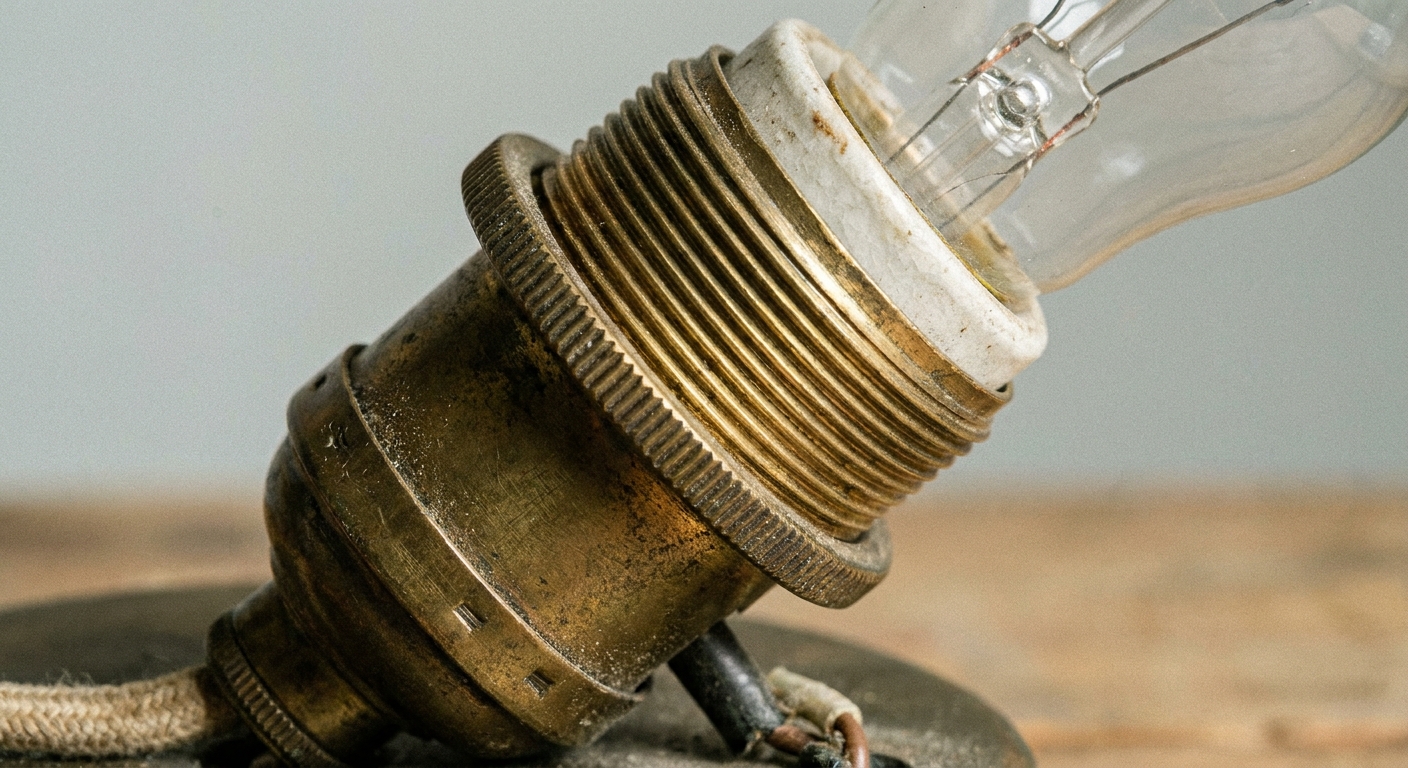
- UNO-style socket: The socket has visible threads on the outside near the bulb, meant for a shade ring to screw on. This setup uses an UNO shade or UNO adapter, not a harp.
- Euro fitter ring: You see a wide fitter ring or ledge near the socket area that looks like a seat for a shade to rest on (usually a shade with a larger center opening).
- Proprietary shade holder: Tabs, clips, a fixed frame, or a special gallery at the top that looks purpose-built for one specific shade style.
- No safe place to anchor hardware: The socket is sealed or unusually shaped, with no place a saddle can clamp securely. In that case, a spider shade may never sit straight.
When a clip-on shade works
If your priority is fast, low-fuss, and inexpensive, a clip-on shade can be a perfectly acceptable solution, especially for small accent lamps. I use them most for petite vintage bases where I want a soft glow and do not need the architectural look of a tall harp and finial.
Clip-on is a good choice when:
- The lamp is small and would look top-heavy with a large spider shade.
- You are using a standard bulb shape, usually an A-shape bulb, and you can keep the bulb size consistent.
- The lamp sits somewhere low-traffic, like a bedroom nightstand, where it is not constantly bumped.
- You are styling, not rewiring: You want a quick win without taking anything apart.
Choose clip-on shades carefully
Clip-on shades tend to look best when the shade is scaled modestly and the bulb is not visually dominating the shade. For the prettiest light, I like a warm LED bulb and a shade material that gives a gentle diffusion, like linen, cotton, or parchment-style paper.
Important heat note: clip-on shades sit close to the bulb. Use an LED (not halogen), give the shade a little breathing room, and follow the socket’s maximum wattage label. With LEDs, pay attention to actual watts, not just “equivalent to.” If anything smells hot or the shade material feels warm to the touch, switch to a lower-watt LED and a smaller bulb.
Quick 3-way note: A 3-way socket can still use a clip-on shade, but make sure the shade stays clear of the bulb at all brightness levels. Some 3-way bulbs run larger, which can make a clip-on feel cramped.
When to add a harp kit
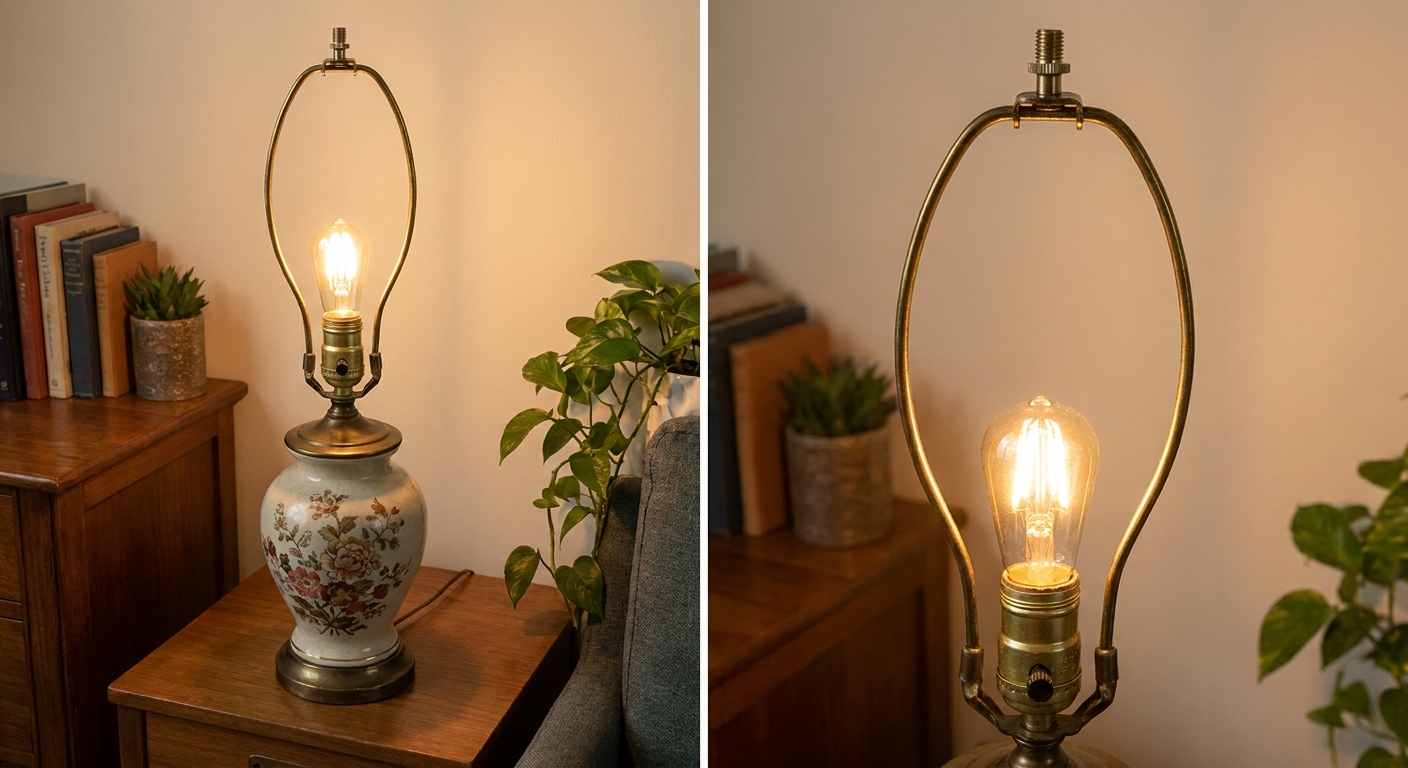
If you want a classic spider shade with a finial on top, adding a harp is usually the most normal-looking solution. When it is done right, it looks like the lamp came that way.
What you need
- A harp saddle (also called a harp holder or shade holder)
- A harp (the U-shaped frame, sized to your shade’s height and the look you want)
- A finial (optional if you already have one that fits the threaded rod)
You will often see these sold as a lamp harp kit. If you already have a threaded rod and finial, you may only need the saddle and harp.
How to pick harp height
This is where most people get stuck, so here is the rule of thumb I use:
- Start with shade height: the harp height is often close to the shade height, but not always identical.
- Aim for a good bulb position: ideally, the bulb sits roughly around the middle of the shade (not peeking out the bottom, not jammed up at the top).
- Decide where you want the shade to land: if you want the shade to sit lower and feel cozy, go a bit shorter. If you want more height and air, go a bit taller.
Two common saddle styles
- Clip-on saddle: Clamps to the socket. This is the easiest DIY option for many modern sockets.
- Set-screw saddle: Tightens with a small screw. This can feel more secure on certain socket shapes, but you need to confirm it matches your socket diameter.
Simple install steps
Unplug the lamp. Remove the bulb. Then:
- Attach the harp saddle to the socket (or seat it properly if it is the style that sits beneath a socket shell).
- Insert the harp’s two feet into the saddle.
- Place your spider shade on the harp.
- Screw on the finial to secure the shade.
If you are ever tempted to make it fit by bending metal aggressively or forcing a clamp onto a brittle socket, pause. That is the moment I step back and choose a different approach, because sockets are not expensive, but electrical safety is priceless.
Quick measuring guide
Once you know how the shade attaches, measurements keep you from buying a shade that looks awkward or sits wrong.
Measure the shade
- Top diameter: across the top opening.
- Bottom diameter: across the bottom opening.
- Height: straight up and down from top to bottom.
Measure your lamp
- Base height: from the bottom of the base to the bottom of the socket (not the finial stud).
- Where you want the bottom of the shade: I usually want it to cover the socket hardware and feel visually centered, not perched.
- Fitter type: spider, UNO, clip-on, or euro fitter.
If you want an easy visual check, set a book or shallow box on top of the lamp where the shade would start, then hold a tape measure from there to where you want the shade to end. That number is a very handy reality check before you order anything.
When a spider shade is not the answer
Sometimes a lamp looks like it should be a standard harp-and-finial situation, but the structure is telling you otherwise. Here are the scenarios where I stop trying to force a spider shade and pivot to a shade system that matches the lamp’s design.
The socket is designed for an UNO shade
If your socket is meant to accept an UNO fitter (a shade that attaches directly to the socket), a harp is not the right tool. You can either buy an UNO shade, or in some cases use an adapter to convert a spider shade to UNO. I only bother with an adapter when the lamp will still look balanced and the attachment feels solid and safe.
The lamp has a built-in holder or special fitter
Some vintage and specialty lamps have their own shade mounting method. If you see a wide ring, tabs, or a fixed frame near the top, the lamp may be intended for a specific type of shade. In that case, match the fitter rather than adding a harp that will float awkwardly above the structure.
The top of the lamp is unstable
A harp creates leverage. If the socket is loose, the lamp’s neck is wobbly, or the top assembly shifts when touched, adding a harp will only exaggerate the problem. Tighten and repair the lamp first, or choose a shade method that does not rely on that single point of stability.
The bulb sits wrong inside the shade
Even if you can physically attach a harp, you still need the bulb position to make sense visually and practically. If the bulb ends up glaring at eye level, or the shade sits awkwardly low and crowds the socket, a spider shade is not the right match without further modification, like adjusting the rod length or using a different socket assembly.
Quick decision checklist
- I want the easiest solution: try a clip-on shade and use an LED bulb.
- I want a classic finial-and-shade look: add a harp saddle plus harp (a kit is usually simplest).
- My socket has UNO threads or a shade ring: skip the harp and shop for an UNO shade or the correct adapter.
- I see a wide euro fitter ring or built-in tabs: match that fitter style rather than forcing a spider shade.
- The socket is loose or the lamp top wiggles: repair stability first, then choose your shade method.
FAQ
Why does my lamp have a finial stud if there is no harp?
Because the finial and harp are often separate pieces, and harps are frequently lost during moves, estate clear-outs, or thrift store sorting. The threaded rod can stay in place even when the saddle and harp disappear. Occasionally, that stud can also be part of a different shade carrier system, which is why I like to look for other fitter clues before I buy anything.
Can I add a harp to any lamp?
No. You can only add a harp when there is a secure way to mount the saddle and the lamp is structurally stable enough to support the shade. If the socket is designed for an UNO fitter, a harp is usually the wrong solution.
Do I need to rewire the lamp to add a harp saddle?
Usually, no. Many saddles clamp onto the socket without electrical work. That said, if the socket is cracked, loose, or feels unsafe, replacing the socket (or having it serviced) is the smarter move than adding shade hardware on top of a problem.
What if I am not sure what fitter my lamp uses?
Take a clear photo of the socket from the side and from above, and note whether you see outside threads, a removable UNO ring, a euro fitter ledge, or a central threaded rod for a finial. In most cases, those details reveal the intended shade system quickly. If the lamp looks modified or mismatched, trust your eyes and prioritize stability over trying to force a standard setup.