Dishwasher Leaves Dishes Wet
Gust
There are few household betrayals quite like opening the dishwasher to a foggy blast of disappointment and a top rack full of dripping cups. You planned for clean, ready-to-put-away dishes. Instead you are towel drying plastic lids like it is a part-time job.
The good news is that “clean but wet” is usually a drying problem, not a washing problem. And most drying problems come down to a handful of fixable culprits: no rinse aid, a cool final rinse, a setting that skips heat, unloading too soon, airflow issues, or a heater that never actually ran.
First, confirm what “wet” looks like
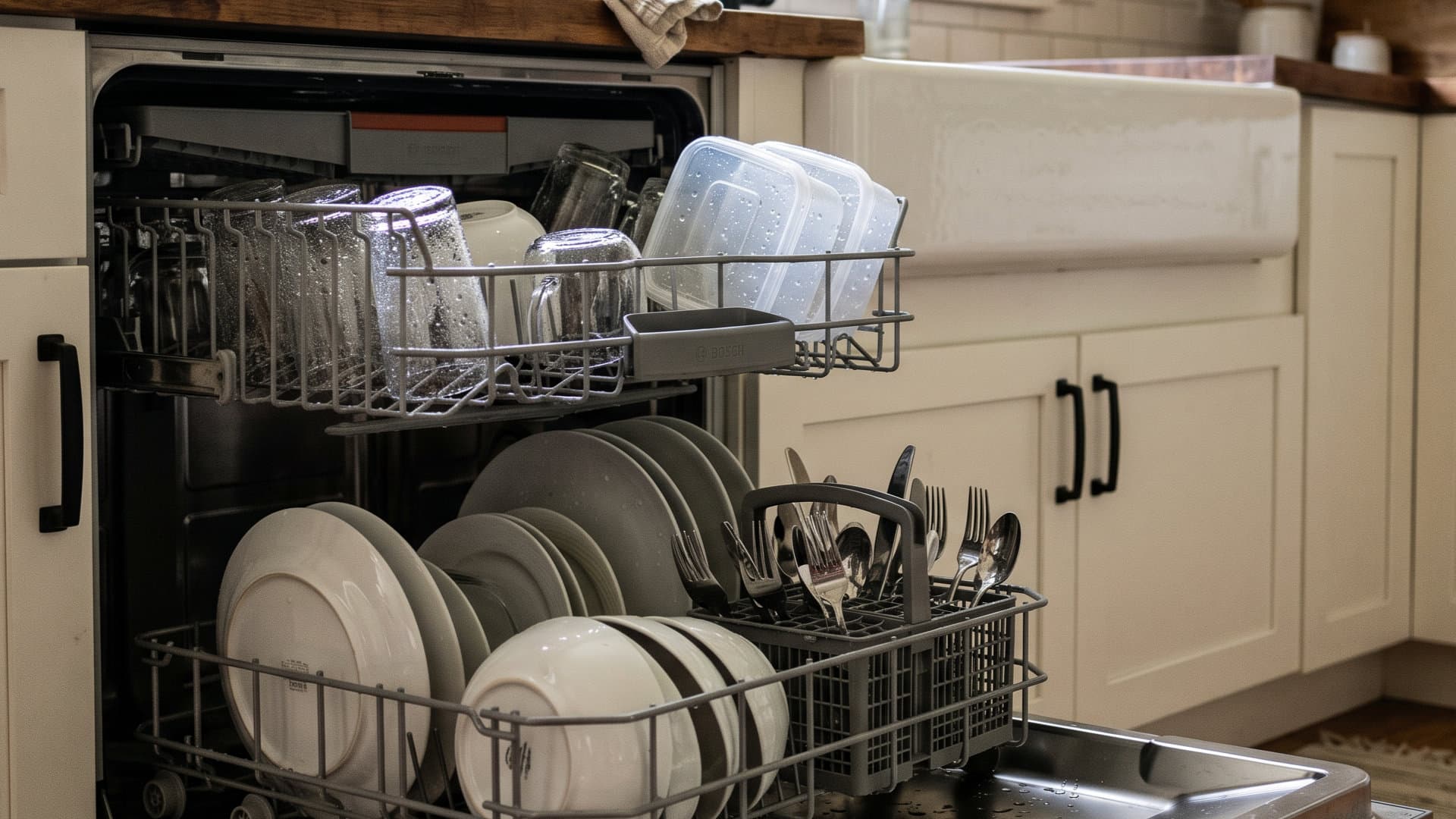
Before you start toggling settings, do a quick reality check. Some moisture is normal, especially on plastics. Plastic does not hold heat the way ceramic and glass do, so it does not evaporate water as effectively.
- Normal: a few drops on plastic lids and lightweight cups, dishes still warm, no pooling on the tub floor.
- Not normal: everything is cold, water is sitting in the concave bottoms of mugs and bowls, and even plates on the bottom rack are noticeably wet.
If your dishwasher is finishing the cycle but leaving standing water in the bottom of the tub, that is a different issue (draining). If your dishes are coming out clean but with a slippery or greasy film, that is also its own problem. This page stays focused on drying failures.
A quick drying check
If you want a fast clue, run a normal cycle and check two things near the end:
- Steam when you crack the door: Many dishwashers release a rush of steam during or right after the drying phase.
- Warm interior walls: On many models, the tub should feel warm, not room temperature.
One important caveat: these cues vary by model. Condensation-dry machines (common on many European-style dishwashers) and some newer drying systems do not always finish with the same obvious “heat blast,” even when they are working normally.
Check 1: Rinse aid
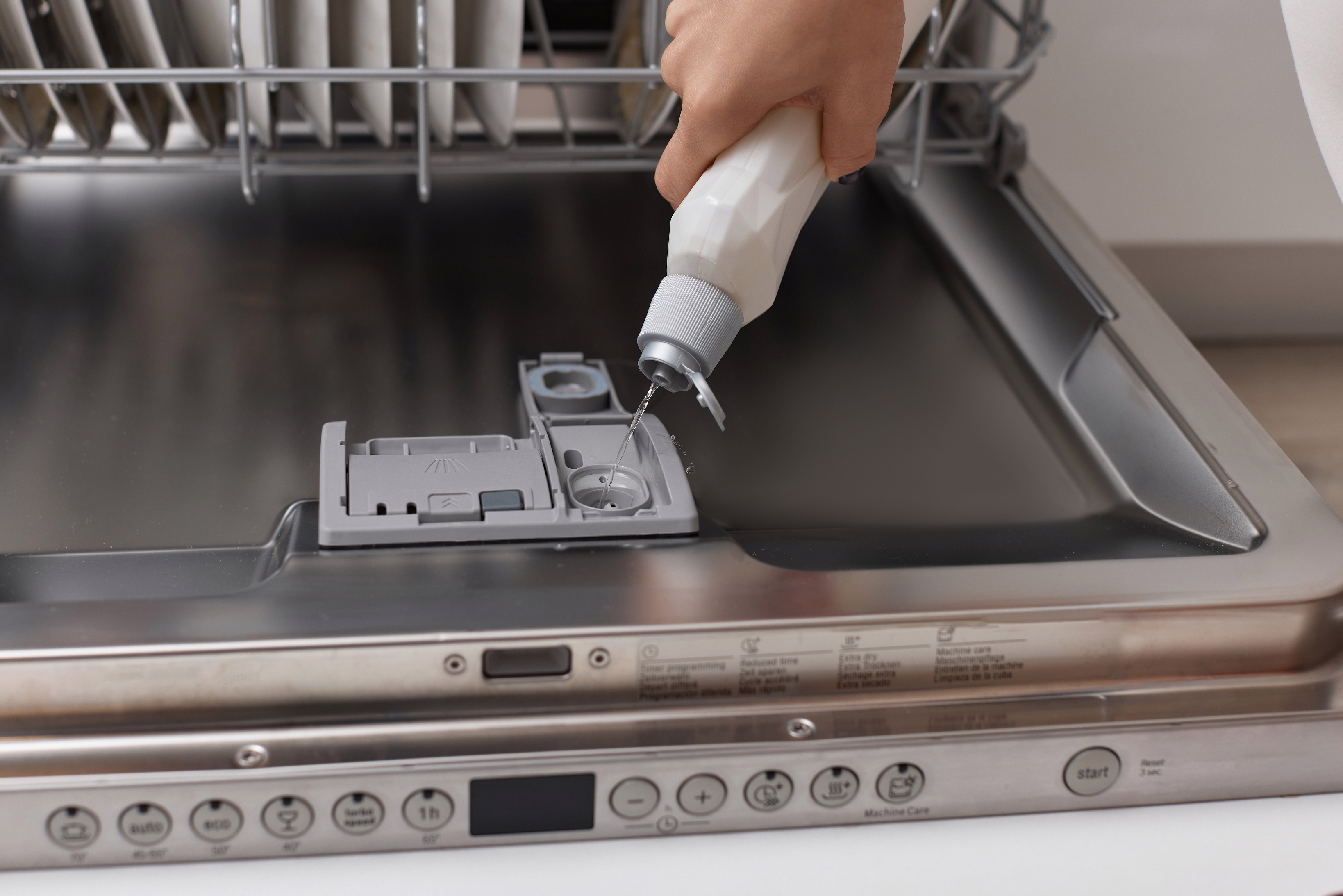
Rinse aid is not just an “extra.” It changes how water behaves, helping it sheet off instead of clinging in droplets. If your dishwasher dries poorly, rinse aid is the very first thing I check, especially in rentals where no one has topped it off in ages.
What to do
- Open the rinse aid dispenser, usually on the inside of the door next to the detergent cup.
- Fill it to the indicated line and close it securely.
- If your dishwasher has a rinse aid dial, set it to the middle setting to start (you can adjust later).
If you start seeing a bluish film or streaking on glassware after adding rinse aid, lower the dispenser setting slightly. If everything is still wet, raise it.
Check 2: Do not skip heat
Many dishwashers have cycles designed to save energy by lowering water temperature and minimizing heated drying. Those cycles are great for utility bills. They are not great for bone-dry plastics.
Settings that commonly leave dishes wetter
- Eco or Energy Saver
- Quick Wash or 1-Hour
- Air Dry or No Heat Dry
- Delicate (often uses lower temps)
Try this instead
- Select Normal or Auto.
- Turn on Heated Dry (or switch off Air Dry).
- If available, enable Sanitize or High Temp occasionally. A hotter final rinse can dramatically improve drying.
If you are in a rental, it is worth checking the control panel for a tiny “Air Dry” light that is quietly ruining your evenings.
Check 3: The final rinse may be too cool
Drying is basically a heat story. The dishwasher relies on hot dishes and a warm tub so the remaining water evaporates. If the final rinse is lukewarm, the water just sits there.
What can cool the final rinse
- Hot water takes a long time to reach the kitchen, so the dishwasher fills with cooler water.
- Other hot water use in the home during the dishwasher’s fill periods can reduce incoming water temperature.
- The dishwasher is not boosting temperature as it should on heated cycles.
An easy fix to try
Before starting the dishwasher, run the kitchen faucet until the water is hot. Then start the cycle. This simple habit helps more than people expect, especially in older buildings with long pipe runs.
If you are thinking about your water heater settings, keep household safety in mind. Many homes are set around 120°F (49°C), and many dishwashers can heat water internally on certain options.
Check 4: Loading that traps water
I think of a dishwasher like styling shelves: airflow and spacing are everything. Water cannot evaporate if it is trapped in little upside-down swimming pools.
Common loading issues
- Bowls and cups angled the wrong way: If a cup is slightly upright, it will hold water.
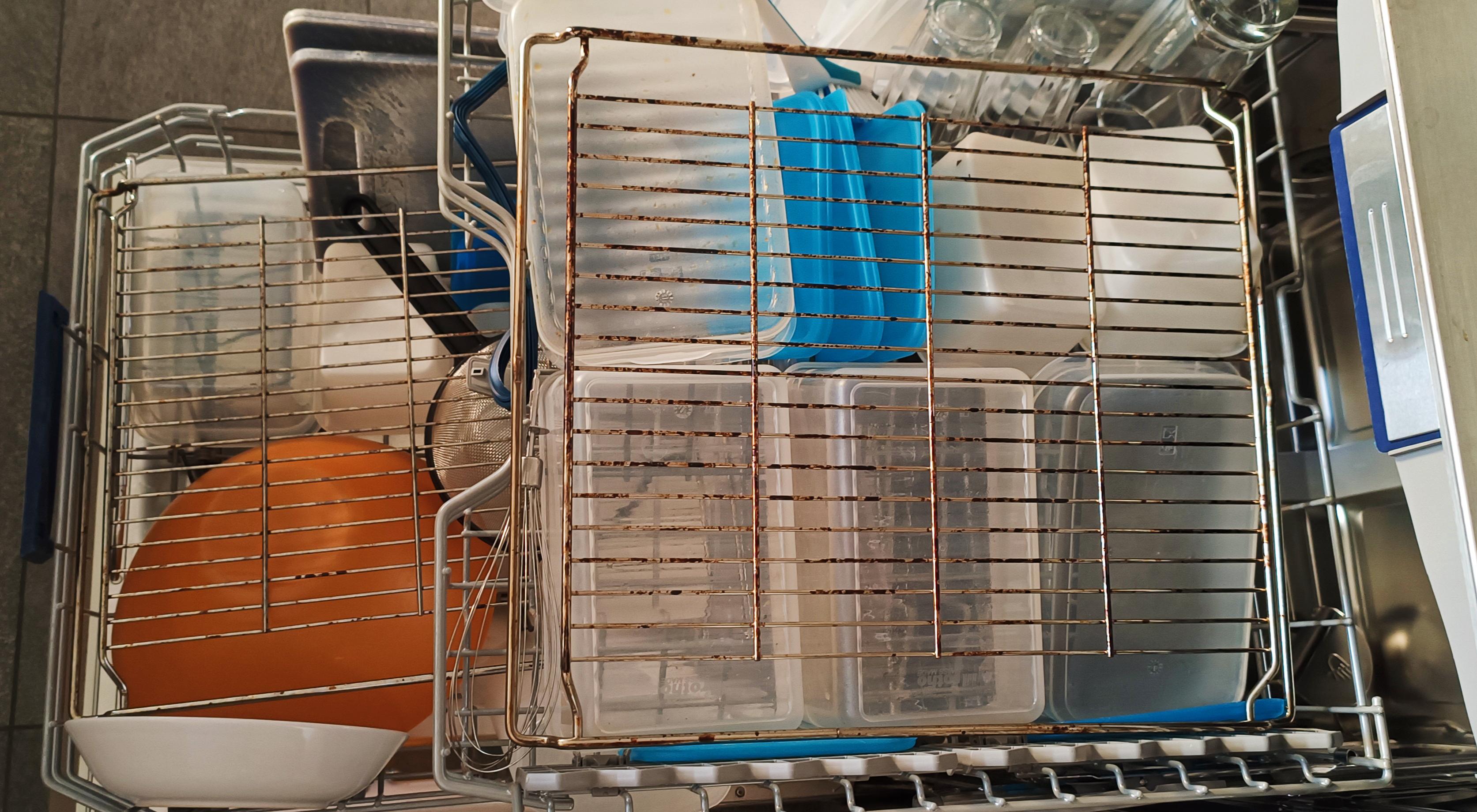
- Plastic nesting: Lightweight plastics often stack and create water pockets.
- Overcrowding: Dishes that touch block both spray and drying airflow.
- Top rack chaos: When small items shift and flip, they collect water.
Quick loading tweaks
- Angle cups and bowls downward so water can slide off.
- Separate plastic lids so they do not spoon together.
- Put plastics on the top rack when possible, especially if your model has an exposed heating element near the bottom.
- Do a gentle wiggle test before you close the door. If items wobble a lot, they will likely flip or pool.
Check 5: Clean the filter and spray arms
This is the unglamorous fix that quietly changes everything. A clogged filter can limit water flow and leave extra droplets behind. Sometimes dishes look “clean enough,” but drying performance drops because circulation is weaker than it should be.
What to do
- Pull out the bottom rack and locate the filter on the tub floor.
- Remove it (usually a twist unlock), rinse it under hot water, and brush off any gunk.
- Check the spray arms for trapped debris in the holes, then rinse them if needed.
If you have never cleaned your filter, do not be surprised if this is the whole story.
Check 6: Unloading timing
This one feels almost annoyingly simple, but it is real. If you open the door immediately when the cycle ends, you interrupt the final bit of evaporation.
A better routine
- When the cycle ends, crack the door open 2 to 4 inches.
- Wait 10 to 15 minutes before unloading.
- Unload the bottom rack first so any droplets from the top rack do not fall onto clean plates below.
If your dishwasher has an auto-open feature that pops the door at the end, that is exactly what it is trying to do for you.
Check 7: Venting and airflow
Some dishwashers rely on a vent, a fan, or a designed airflow path to move humid air out. If that pathway is blocked, you can end up with a humid little sauna where everything stays wet.
What to look for
- A vent on the inner door or along the tub edge that looks clogged with residue.
- A door gasket that is dirty or not sealing evenly.
- On models with a fan, an unusually quiet end-of-cycle behavior when you normally hear airflow.
You can wipe residue and clean the gasket. If you suspect a vent or fan failure, that is usually a service call.
Check 8: It may not be heating
If you have tried rinse aid, selected heated dry, started with hot water, and cleaned the filter, but everything is still cold and wet, the heating system may not be working. This is especially common in older units and rentals that have lived a hard life.
Signs the heating system may be failing
- Dishes feel room temperature at the end of heated cycles.
- You consistently get little to no steam when you open the door right after a heated cycle, even after you have ruled out an Air Dry setting.
- The dishwasher throws a heating-related error code (varies by brand).
- Cycles run unusually long while trying to reach temperature, or the machine stops and reports an error.
What you can safely do (no tools)
- Confirm Heated Dry is selected.
- Try a High Temp or Sanitize option once and see if drying improves.
- Check that the dishwasher is not set to a global Energy Saver mode in its settings menu, if your model has one.
Beyond that, this becomes a maintenance call. Heating circuits, thermostats, and control boards are not a casual DIY situation, and in a rental they should not be your responsibility.
If you rent: when to call maintenance
I am all for a quick DIY win, but rentals have a line. If you cross into “this might be an electrical component,” put the screwdriver down and protect your lease and your sanity.
Submit a maintenance request if
- You have added rinse aid, used a heated dry cycle, and still get cold, wet dishes.
- The dishwasher is not drying after you have cleaned the filter and confirmed the settings.
- You see an error code, burning smell, or tripped breaker related to the dishwasher.
- The door does not latch consistently (a poor latch can disrupt drying).
When you message maintenance, be specific. “Dishwasher runs but does not dry” is clearer than “dishwasher is weird.” Include the cycle used (Normal plus Heated Dry), whether rinse aid is filled, and whether dishes are cold at the end. That usually speeds up the diagnosis.
Small upgrades that help
If you are doing everything right and your machine is just a little underpowered, a few habits can make the whole kitchen feel smoother.
- Keep a slim flour sack towel nearby: Not for drying everything, just for the occasional plastic lid.
- Choose heavier reusable containers: Thicker plastics dry better than ultra lightweight takeout tubs.
- Do not skip rinse aid: It is the lowest effort, highest impact change for most households.
FAQ
Why are only plastics wet?
Plastic does not retain heat well, so water does not evaporate off it as effectively. Rinse aid, proper spacing, and cracking the door after the cycle can help a lot.
Does Air Dry actually dry anything?
It can, but it relies mostly on residual heat and time. In a cool kitchen or a packed dishwasher, it often leaves more moisture behind than Heated Dry.
Should I open the dishwasher door to dry dishes?
Yes, slightly. Cracking it open for 10 to 15 minutes after the cycle helps steam escape and speeds evaporation. Just be mindful of kids and pets around a hot door.
If my dishes are wet and also smell bad, what then?
Drying problems and odor often overlap because trapped moisture feeds smells. Start with the drying checks here, but persistent odor can also point to cleaning and maintenance issues that deserve their own troubleshooting path.