Leaky Kitchen or Bathroom Faucet: Renter-Safe First Checks

Clara Townsend
Clara Townsend is an interior stylist, vintage furniture enthusiast, and the creative voice behind Velvet Abode. With over a decade of experience transforming both cramped city apartments and sprawling fixer-uppers, she believes that a beautiful home is built on personal stories rather than massive budgets. When she isn't hunting for the perfect brass sconce at a local flea market, she can usually be found rearranging her living room for the third time this month.
A leaky faucet has a special talent for showing up at 11 p.m. when you finally want the house to feel calm. Before you spiral into worst-case scenarios or start unscrewing things you cannot put back, let’s do a few renter-safe checks that help you figure out where the water is coming from. That one detail makes your landlord or maintenance team move faster, and it keeps you from accidentally turning a drip into a flood.
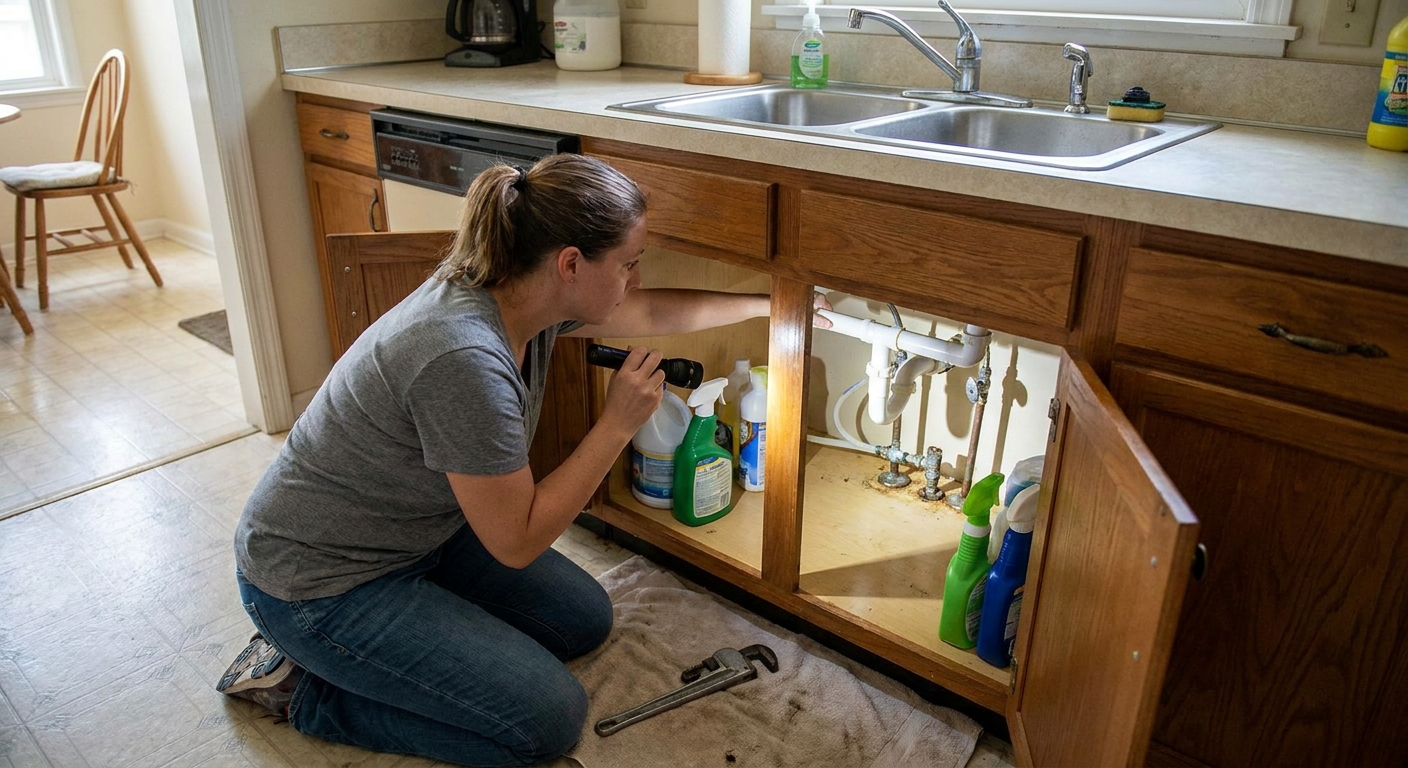
First: grab a towel and do a 60-second safety reset
Even small leaks can surprise you. Start here so you can inspect without panic.
- Clear the cabinet. Pull out anything that could get water-damaged.
- Lay down a towel under the shutoff valves and pipes. Paper towels are great for spotting fresh drips.
- Use a flashlight or your phone light. Leaks love hiding in shadows.
- Do a quick dry test. Wipe everything dry so you can see where new water appears.
If water is actively spraying or pooling fast, skip to the shutoff section below.
Pinpoint the leak zone
Most faucet leaks fall into one of these zones. The goal is to identify the most likely source so the right part gets replaced.
1) Dripping from the spout (even when off)
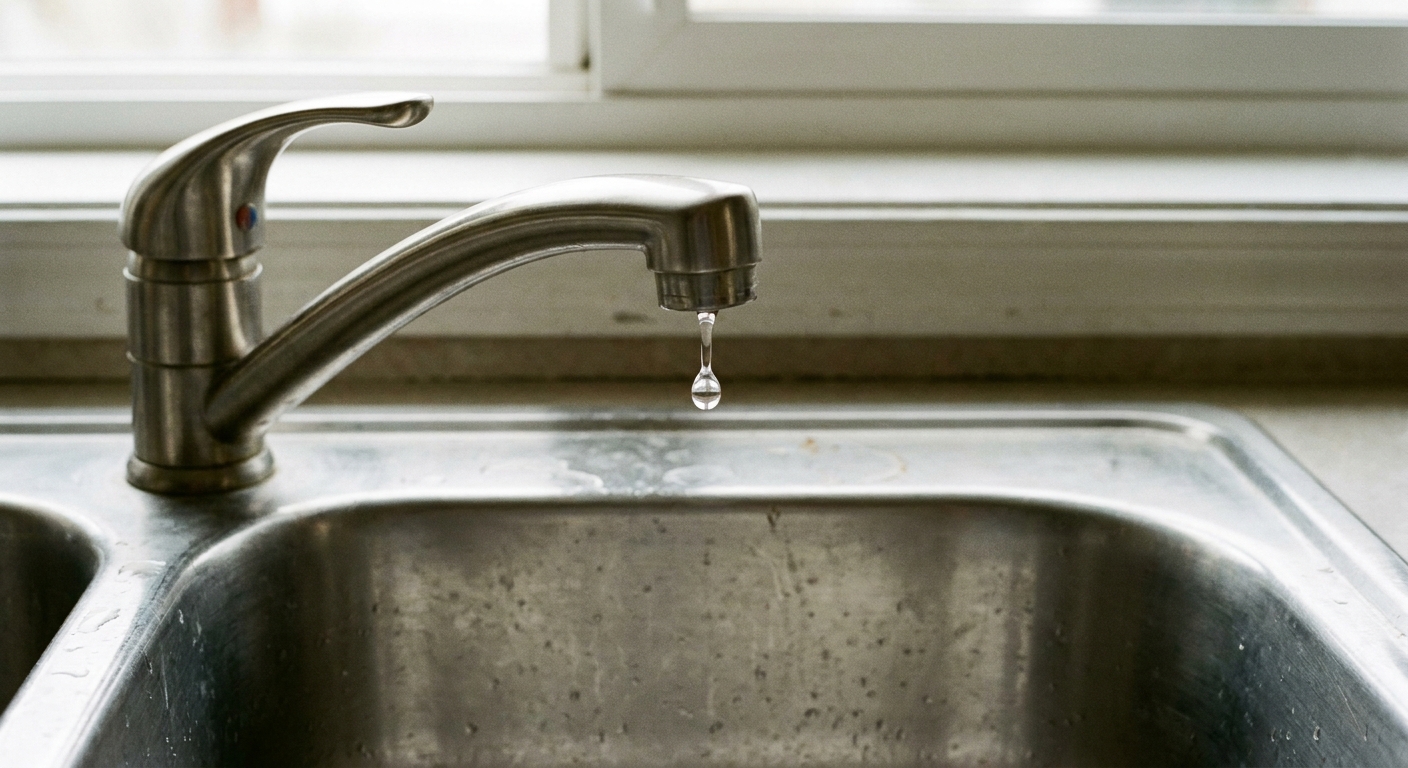
This is the classic “drip... drip... drip” into the sink. It usually points to a worn internal seal, washer, cartridge, or ceramic disc depending on the faucet style. It is typically not a drain problem. Drain leaks show up under the sink or around the drain hardware.
- Clue: Drip continues with the handle fully off.
- Often needed: Cartridge or internal seal replacement, which is typically landlord or maintenance territory.
2) Water around the handle(s) or faucet base
If you see moisture beading at the handle base or the faucet body where it meets the sink, it may be a loose retaining nut, worn O-ring, or failing seal. Sometimes it only shows up when the water is running.
- Clue: Dry when off, but water appears when you turn the faucet on or swivel the spout.
- Often needed: Tightening a packing or bonnet nut (renter-safe if gentle), or replacing an O-ring or cartridge.
3) Leaking under the sink
If the cabinet floor is wet, you are usually dealing with supply connections, shutoff valves, the sprayer hose connection, or drain plumbing. These are different systems, and your landlord will want to know which one it is.
- Clue: Water drips onto the cabinet floor or runs down a pipe.
- Often needed: Tightening a connection, replacing a supply line, repairing a shutoff valve, reseating a sprayer quick-connect, or sealing drain components.
Quick checks: supply, drain, sprayer, or sweat
Here are fast ways to separate the “pressurized water” side from the “drainage” side, plus two common curveballs.
Test A: Does it leak when the faucet is off?
- If the spout drips into the sink when off: this usually points to a worn cartridge, washer, or internal seal inside the faucet.
- If water appears under the sink when off: suspect a pressurized supply-side issue like a shutoff valve, supply line, or a connection at either end of the supply line. These can worsen quickly.
- If it only leaks while running or draining: do Test B.
Test B: Run water, then plug the drain and drain it
Do this only if nothing is actively flooding.
- Turn on water and watch under the sink while it runs. Look for drips from supply lines, the faucet body, or sprayer connections.
- Close the stopper or plug the drain, fill the sink a few inches, then drain it while watching the drain pipes and joints.
- Leaks while filling or running: often supply connections, faucet body, sprayer head, or the pull-down hose quick-connect.
- Leaks mainly while draining: often the P-trap, slip nuts, drain tailpiece, or the sink strainer seal.
Fast sprayer check (kitchen faucets)
If you have a pull-down sprayer, run the faucet and switch to spray mode for a few seconds. Watch the spray head connection and look under the sink for drips at the hose quick-connect. A small leak there can mimic a bigger plumbing issue because the hose moves while you use it.
Not a leak: condensation (pipe sweat)
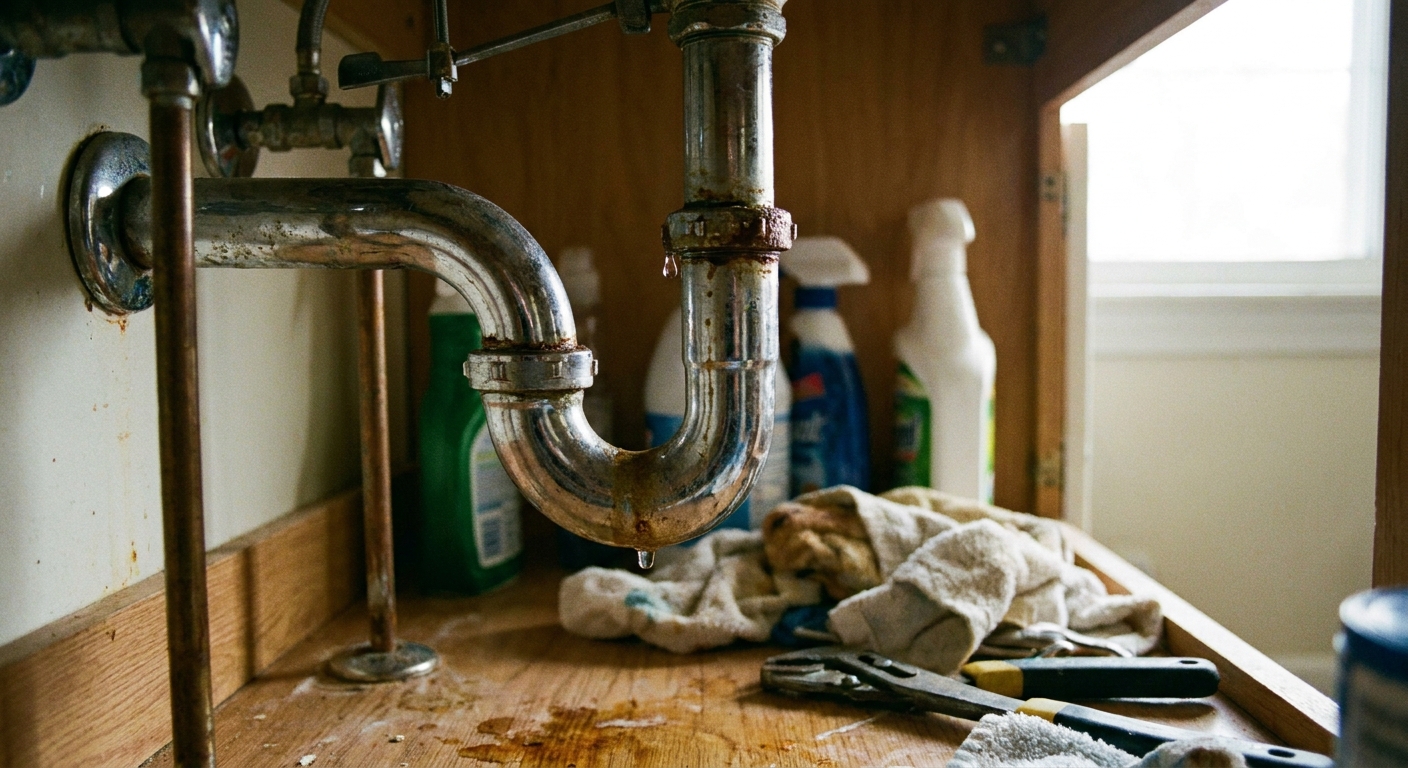
Sometimes the cabinet is wet because cold water lines sweat, especially in humid weather. After you dry the pipes, condensation tends to reappear as a light, even film on the cold line, not a single drip point. A true leak usually forms a specific droplet and drips from one fitting or joint.
Renter-safe tightening
This is firmly in “light maintenance” territory. No disassembly. No part replacement. No forcing anything. If it resists, stop and document it for maintenance. If your lease requires approval for any adjustments, follow that.
Under the sink: supply line connections
You will see two flexible lines, hot and cold, running from the shutoff valves up to the faucet.
- Find the exact spot. Touch each connection with a dry paper towel to see where it gets wet.
- Hand-tighten first. Many small weeps stop with a gentle hand snug.
- If a nut is clearly loose: use an adjustable wrench for a tiny turn, about 1/8 to 1/4 turn. Then recheck.
Do not overtighten. Some connections seal with internal washers and can be damaged by cranking down.
Faucet handle area: packing or bonnet nut (only if obvious)
Some faucets have a nut beneath the handle that compresses packing material or holds the cartridge assembly. If water is seeping from the handle base, a small snug can help.
- Only tighten if you can clearly see the nut and it is designed to be tightened.
- Use a gentle touch: 1/8 turn, then test.
- Stop if the handle becomes stiff or the leak worsens.
If you are unsure what you are looking at, stop and take a photo for maintenance. “I don’t want to make it worse” is always the correct renter instinct.
Drain slip nuts: snug, not crank
If the leak shows up mainly while draining, you may be able to stop a small seep at a slip-joint nut.
- Dry everything.
- Run the drain. Locate the exact joint that drips.
- Hand-tighten the slip nut. If needed, use pliers for a small additional snug.
Do not add sealants or tape to slip-joint threads unless your landlord explicitly asks. Slip joints usually seal with beveled washers, not the threads, and overtightening can crack plastic nuts or distort the washer.
Faucet type clues
You do not need to identify the exact part, but describing the faucet type helps your landlord bring the right replacement.
- Two-handle faucet (hot and cold separate): Older styles often use washers or stems. Drip at spout can mean a worn washer or seat.
- Single-handle faucet: Commonly uses a cartridge. Drip at spout or leak at handle base can point to a failing cartridge or O-rings.
- Pull-down kitchen faucet: Leaks can appear at the spray head connection, hose quick-connect, or the faucet body when the hose retracts.
Helpful detail: Does the drip change with hot vs cold? If one side makes it worse, mention that.
Shut off water if you need to
If the leak is more than a slow drip, or the cabinet is filling, shut off water to stop damage first and troubleshoot second.
- Use the under-sink shutoff valves if you have them. Turn clockwise to close.
- If a valve will not turn or starts leaking around its stem, stop. Do not force it. Contact your landlord right away.
- No shutoff valves? You may need to shut off the main water supply for your unit or building. If you do not know where it is, call maintenance.
After shutting off, open the faucet to relieve pressure and catch any remaining water.
What to photograph for your landlord
Good photos speed up approvals and parts runs. Think of it like sending a clear “this is the problem” postcard.
- One wide shot of the whole sink and faucet.
- One photo under the sink showing both shutoff valves, supply lines, and drain assembly.
- A close-up of the exact leak point, ideally with a visible droplet forming.
- A short video showing when it leaks: faucet off, faucet on, and draining if relevant.
- Any water damage: swollen cabinet base, bubbling laminate, damp drywall, or flooring.
If you can safely do it, include a photo of the faucet brand logo on the handle or spout. It can save a whole extra visit.
Stop and call right away
- Water is spraying, streaming, or soaking the cabinet or wall.
- The shutoff valve will not close, is stuck, or starts leaking when you touch it.
- You see signs of mold, a musty smell, or cabinet material that is soft and swollen.
- The leak appears to come from inside the wall or from a ceiling below.
- There is standing water near outlets, a garbage disposal cord, or anything electrical.
This is not you being dramatic. Water damage is expensive and fast. Calling early is the responsible move.
Copy-paste message to your landlord
If you like having words ready when your brain is tired, here you go:
Hi! I noticed a leak at the kitchen or bathroom faucet. The leak appears to be coming from: (spout / handle base / under-sink supply line / sprayer connection / drain area). It happens: (when faucet is off / only when running / mainly while draining). I shut off the under-sink valves: (yes/no). I’ve attached photos and a short video showing the leak point and the under-sink plumbing. Can maintenance schedule a repair?
That’s it. Calm, clear, and specific. You deserve a home that feels calm and dry, not like a drip soundtrack.