Dishwasher Leaking Onto the Floor: Renter-Safe Checks First

Clara Townsend
Clara Townsend is an interior stylist, vintage furniture enthusiast, and the creative voice behind Velvet Abode. With over a decade of experience transforming both cramped city apartments and sprawling fixer-uppers, she believes that a beautiful home is built on personal stories rather than massive budgets. When she isn't hunting for the perfect brass sconce at a local flea market, she can usually be found rearranging her living room for the third time this month.
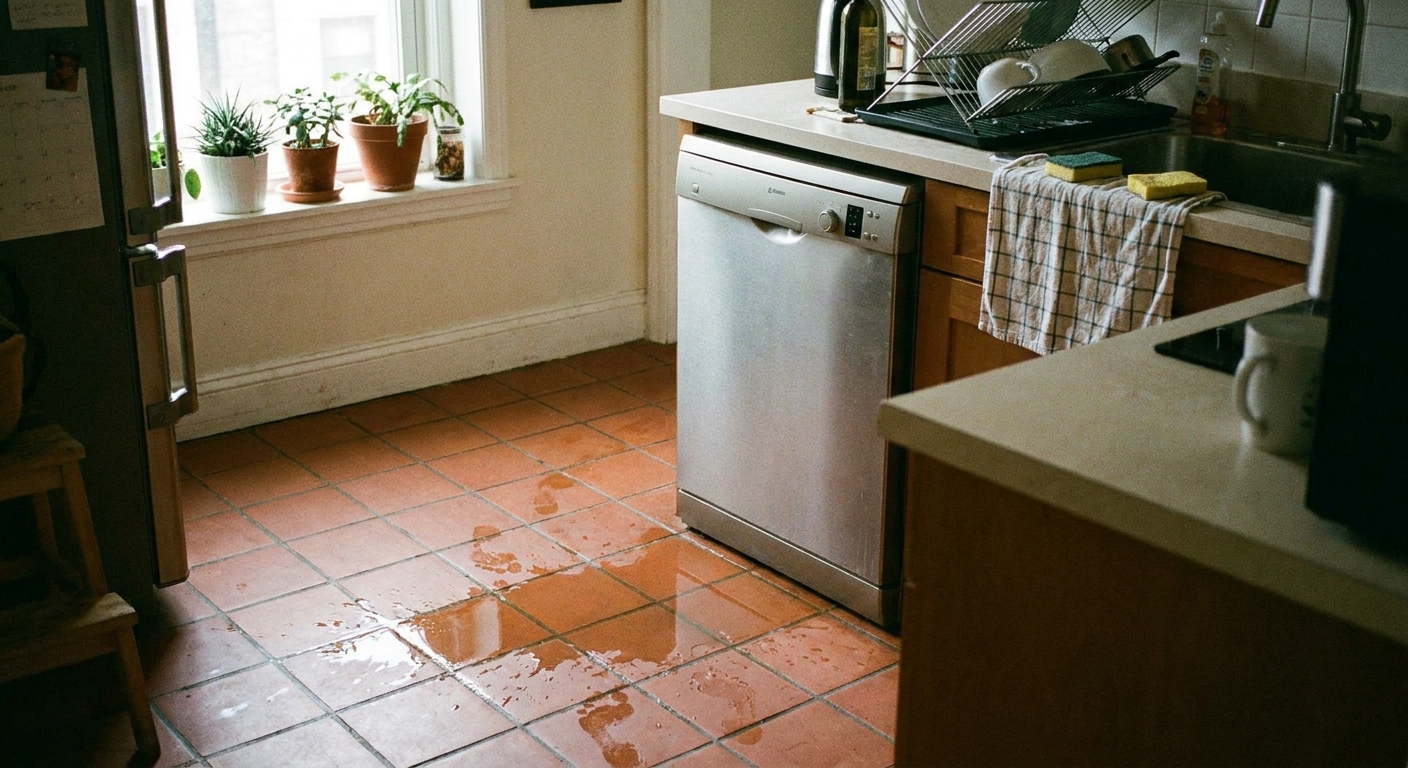
A dishwasher leak has a way of making your kitchen feel like a tiny, chaotic spa you didn’t ask for. Before you panic-text your landlord (or start mopping like it’s a part-time job), take a breath and do a few renter-safe checks. The goal isn’t to take anything apart. It’s to figure out where the water is coming from, stop it safely, and document what you found so maintenance can fix the real problem faster.
First: stop the water safely
Even a small puddle can wick under flooring, swell baseboards, and leave that musty smell that never quite goes away. Here’s the safest order of operations.
1) Pause and power down
- Cancel the cycle if you can do it from the control panel.
- If water is actively spreading, turn the dishwasher off (power button) and then switch it off at the breaker if you’re not sure it’s safe to touch anything near standing water.
2) Shut off the water
Many dishwashers have a shutoff valve under the sink on the hot water line. It may be a dedicated dishwasher valve, a dual-outlet stop (two lines coming off the same valve), or in older setups, a small saddle valve. It’s usually a small knob or lever on the pipe that feeds a thin braided hose.
- Turn the valve clockwise until it stops.
- If you can’t find it or it’s stuck, don’t force it. Skip to calling maintenance.
If you still need to use the sink: Double-check you shut off the dishwasher feed and not the main hot water to the faucet. If you aren’t sure which valve is which, leave it alone and call maintenance.
3) Contain and protect
- Throw down towels around the puddle.
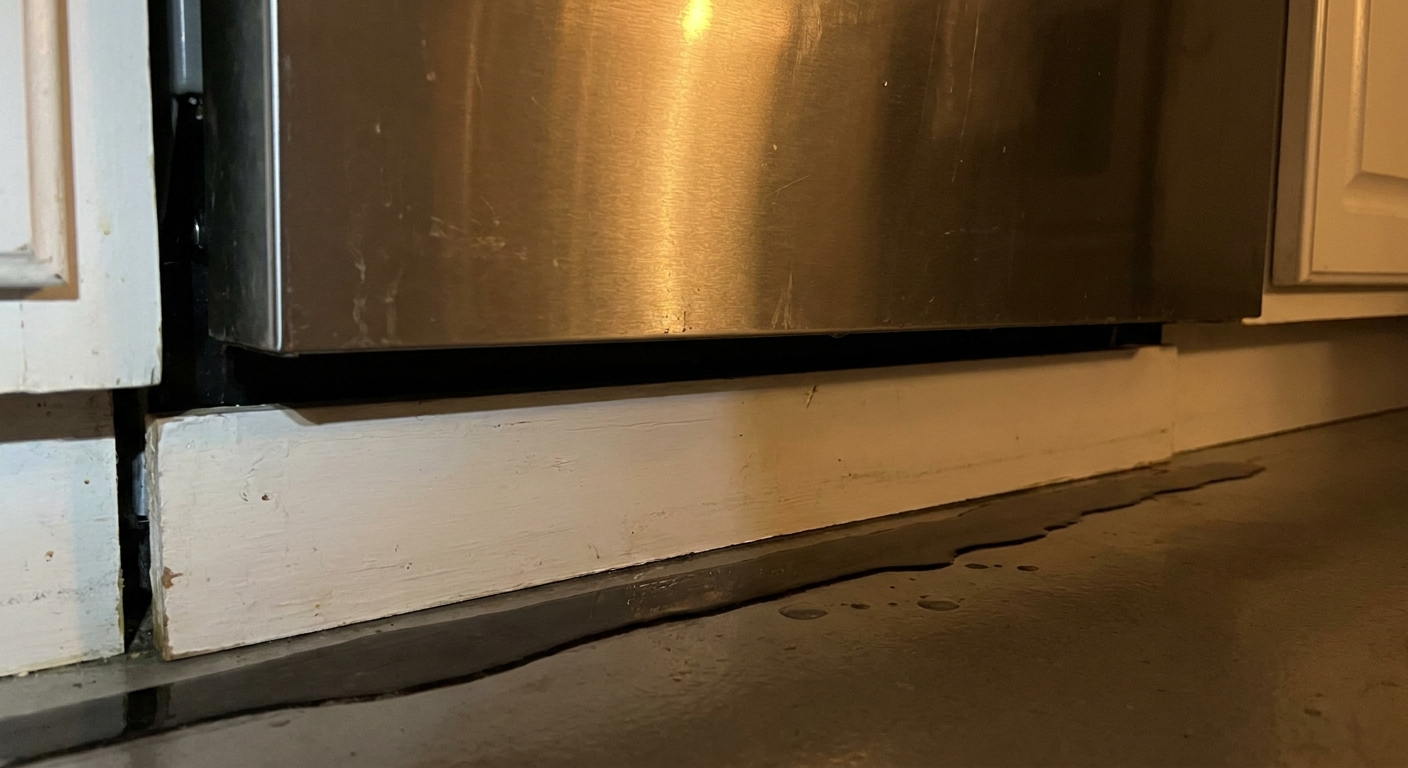
- If you have wood or laminate flooring, add a towel right along the toe-kick (the short panel under the cabinets) and baseboards to limit seepage.
- Take photos of where the water is pooling and any drips you can see.
If you smell burning, see sparking, or the water is near an outlet or power strip, treat it as urgent and stop here. Call maintenance right away.
Triage: floor puddle vs water in the tub
This is the mistake that wastes the most time: water inside the dishwasher tub isn’t automatically a leak. Many models keep a small amount of water down in the sump area to keep seals from drying out.
- Usually normal: a thin puddle sitting only in the very bottom around the filter or sump area.
- Not normal: water visibly pooled across the bottom, water that smells bad, a cycle that ends with dishes still sitting in dirty water, or water that rises above the filter area.
A puddle on the floor is a different failure mode and needs faster action.
Quick clue list
- Puddle at the front center: often door seal, door alignment, rack not seated, or over-sudsing.
- Puddle under the sink area: often inlet hose, drain hose, or disposal connection. It can also be a sink or disposal leak unrelated to the dishwasher, so note whether it only happens when the dishwasher runs.
- Puddle that appears only while draining: frequently drain hose, clamp, air gap, or disposal connection issues.
- Puddle that appears early in the cycle: frequently inlet-side issues or overfilling.
Renter-safe checks (10 to 15 minutes)
1) Door gasket: wipe and inspect
The door gasket is the rubber seal that runs around the dishwasher opening. If it’s coated in grease, a tiny seed, or even a folded bit of label glue from a jar, it can prevent a tight seal and let water sneak out at the front.
- Open the door and run a paper towel along the gasket channel.
- Wipe with a soft cloth and warm soapy water. Avoid harsh cleaners that can dry rubber out.
- Check for twists, tears, or areas pulling away. Don’t try to glue it back as a renter. Just document it.
What to tell maintenance: “Front leak. Gasket looks worn or not seated on the lower right,” plus a photo.
2) Latch, racks, and loading
If the door isn’t fully latching, the dishwasher can spray water against a door that isn’t truly sealed. Sometimes the “problem” is as simple as a cutting board or pan handle preventing the door from closing flush.
- Remove anything from the front of the racks that could interfere with the door.
- Check the bottom rack wheels: make sure the rack isn’t derailed or riding up on one side. A crooked bottom rack is a surprisingly common reason the door won’t close evenly.
- Close the door firmly until you hear or feel the latch click.
- If the door feels loose or you have to lift it to latch, that points to alignment or hinge issues that maintenance should handle.
3) Rule out over-sudsing (very common)
Over-sudsing can force foamy water out of the door area, especially at the front. This happens when dish soap is used by accident, when rinse aid is spilled, or when pods plus additional detergent get doubled up.
- Look for a floor puddle that’s slippery or bubbly.
- Open the dishwasher: if you see a lot of foam, that’s your culprit.
- Don’t add more detergent.
Renter-safe fix: Scoop out foam with a bowl, then run a short rinse cycle with no detergent. If the foam is excessive, keeps coming back, or the machine still leaks, stop testing and call maintenance.
4) Peek under the sink: inlet and drain connections
You aren’t disassembling anything here. You’re just looking for drips.
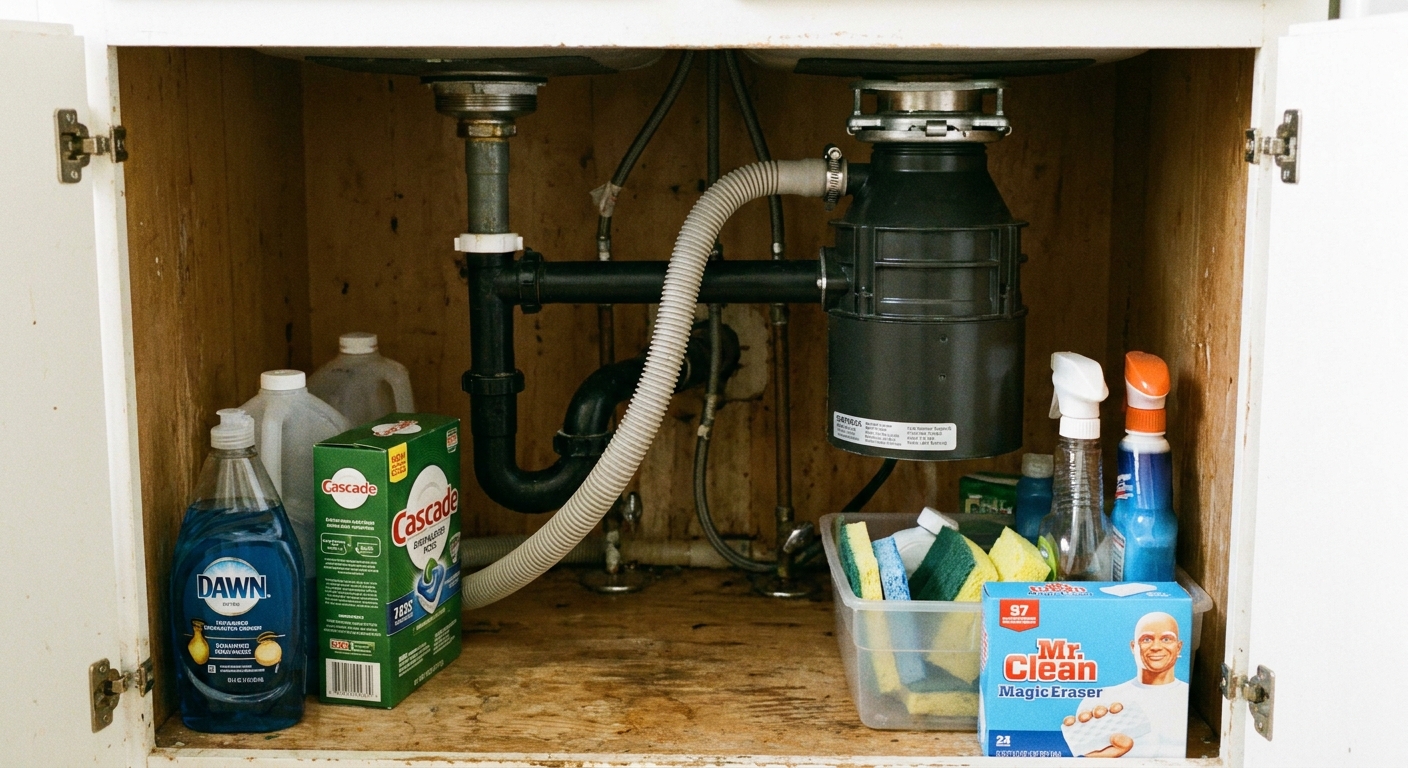
- Find the dishwasher drain hose under the sink. It’s usually a ribbed hose that connects to the garbage disposal or sink drain.
- Look for moisture around the connection point and clamp.
- Find the hot water supply line and the small valve feeding a braided or copper line to the dishwasher. Look for a slow drip or mineral crust (dried leak evidence).
If you see active dripping, shut off the valve if possible and call maintenance. Hoses and clamps are a landlord fix in most rentals.
5) Quick drain hose routing check (high loop or air gap)
Under many sinks, the dishwasher drain hose should run up high (a “high loop”) or connect to an air gap on the countertop. If the hose is sagging low, it can contribute to backflow, gurgling, or leaks under the sink.
- Look for a hose looped up near the underside of the countertop or routed to an air gap.
- Don’t re-route or re-strap it yourself unless your lease allows it. Just note what you see for maintenance.
Leak timing clues
If you can safely observe the next run (stay nearby, keep towels down, don’t leave the apartment), timing helps pinpoint the source. If it’s actively leaking, don’t keep running full cycles just to gather clues.
Puddle appears early (during filling)
- Possible causes: inlet hose seep, loose connection under sink, overfilling due to a faulty float or valve.
- What you can do: check under-sink connections for drips, then stop and report.
Puddle appears mid-cycle (during washing)
- Possible causes: door not sealing, gasket issues, rack not seated, spray arm hitting a dish and redirecting water toward the door.
- Less visible causes (not renter-fixable): cracked spray arm, internal pump seal leak, or a split internal hose.
- What you can do: reload to keep tall items away from the door, confirm spray arms can spin freely. If it still leaks, stop and call maintenance.
Puddle appears near the end (during draining)
- Possible causes: drain hose connection, loose clamp, crack in hose, disposal connection issue, air gap overflow.
- What you can do: look under sink while it drains, without touching wet electrical areas.
Leveling: small tilt, big leak
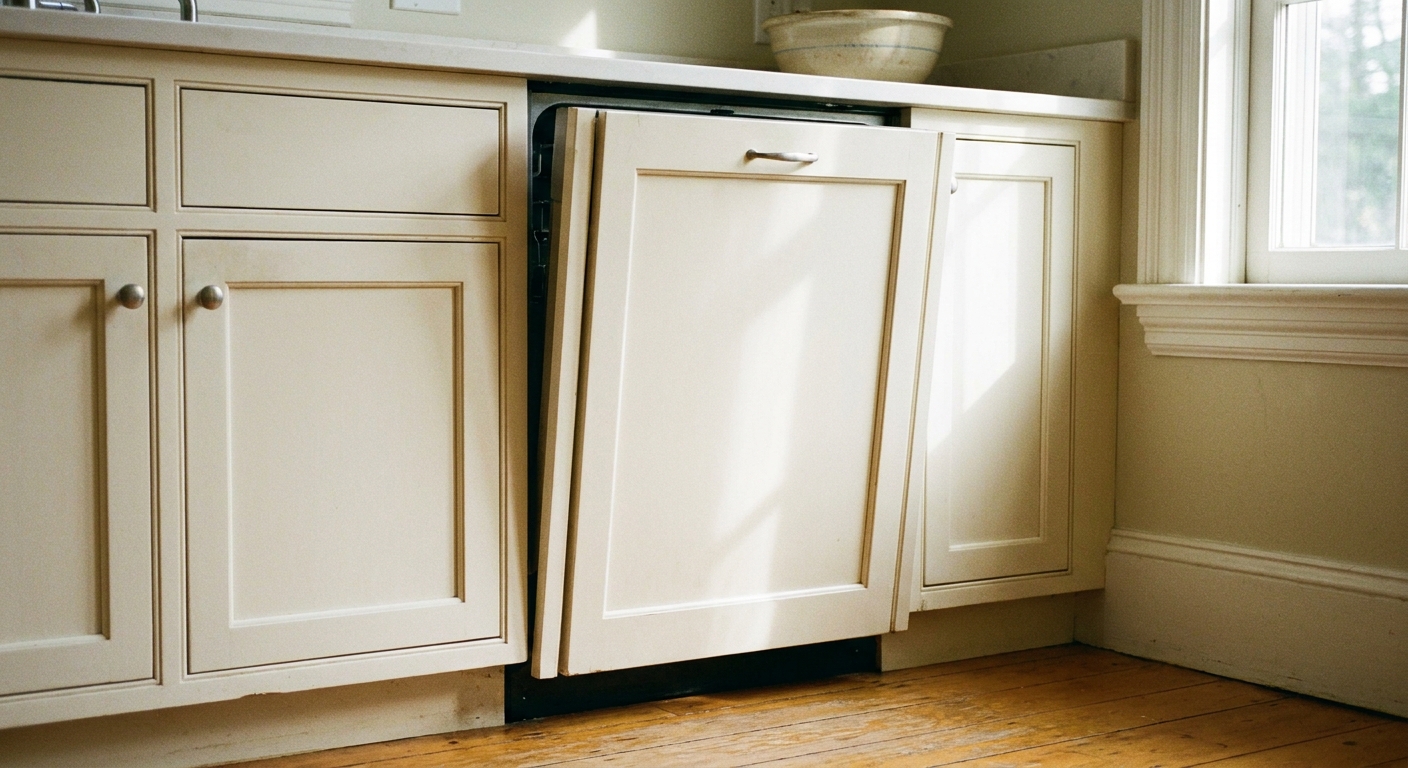
A dishwasher that tilts forward can encourage water to press against the door seam. In a perfect world, the installer leveled it. In a rental world, sometimes the machine is doing its best on a slightly uneven floor.
Renter-safe check: Stand back and look at the door gap. Does one side look lower? Does the door swing open or shut on its own?
- If the dishwasher feels obviously tipped, don’t try to adjust feet yourself unless your lease explicitly allows it and you can access them without pulling the machine out.
- Instead, tell maintenance: “Unit appears not level and leaking from front edge.”
What not to do
I love a good DIY moment as much as anyone, but rentals have a line. These are the steps that can create liability or cause bigger leaks.
- Don’t pull the dishwasher out of the cabinet.
- Don’t remove the toe-kick panel unless your lease permits it and you can do it safely. It can expose wiring, sharp edges, and leak points that are better left to maintenance.
- Don’t replace gaskets, hoses, or clamps yourself.
- Don’t use sealants, tape “fixes,” or glue on rubber parts.
- Don’t keep running cycles to “test it” if it’s actively leaking. One more puddle can be one more warped floorboard.
When to call maintenance now
Some leaks are a “shut it down and call” situation, not a “let’s see what happens” situation.
- Water is pooling fast or spreading under cabinets.
- You can’t shut off the dishwasher water supply.
- Leak is coming from under the unit, not just the door edge.
- There’s any sign of electrical risk: outlets nearby, burning smell, flickering lights, tripped breaker.
- Your flooring is wood or laminate, or you’ve had water damage in the unit before.
- You see dripping at the shutoff valve or supply line under the sink.
What to send in your maintenance request:
- When the leak happens (filling, washing, draining, or after the cycle).
- Where the puddle forms (front center, front left, under sink, etc.).
- Whether it only happens when the dishwasher is running (helps rule out sink or disposal leaks).
- Photos of the puddle and any visible drips under the sink.
- What you already tried (wiped gasket, reduced detergent, reloaded racks, checked bottom rack alignment).
After you shut it down: dry and limit damage
- Wipe up all visible water right away, including inside the sink cabinet if it’s damp.
- Pull everything out from under the sink so the cabinet floor can dry.
- Run a fan and, if you have one, a dehumidifier for a few hours.
- Check back later for new moisture around the toe-kick and under-sink cabinet floor.
If you’re seeing repeated dampness even after everything looks “dry,” report that too. Slow leaks are great at hiding until they get expensive.
Phone checklist
- Cancel cycle and switch off power if needed
- Shut off dishwasher water valve under sink (if accessible)
- Photograph puddle and any drips
- Dry the area and run a fan
- Check door gasket for debris and wipe clean
- Confirm door latches fully, bottom rack is seated, and nothing blocks closure
- Look for foam and stop over-sudsing
- Check under-sink drain hose and inlet line for moisture
- Note when leak happens and report with details
Leaks are stressful, but a calm, observational approach is renter gold. You’re protecting your home, your deposit, and your sanity, all while giving maintenance the clues they need to fix it properly.