Curtains That Twist and Will Not Hang Straight
Gust
A little flutter. A cozier corner.
If a curtain panel is doing that odd little spiral, like it is trying to corkscrew itself into a candy cane, it is almost never your imagination. Fabric has “memory,” and so do headers, linings, and rods that are the tiniest bit out of level.
The good news is you usually do not need new curtains, and you do not need to change your header style. You just need to diagnose what is actually twisting, then fix it in the right order so you do not press beautifully… and rehang it onto the same problem.

What “twisting” looks like, and what it usually means
Most curtain hang problems fall into a few repeatable patterns:
- Spirals down the length: the top edge is rotated on the rod, or the fabric and lining are fighting each other.
- Kicks out at the hem: a packing crease, a pulled lining, or the bottom hem is slightly torqued from sewing or shrinkage differences.
- Refuses to hang in one flat plane: the header is skewed, the rod is not level, or the panel is being forced into an angle by the way it is threaded onto rings or grommets.
Before you touch an iron, do a quick check from the top down. Twists start at the top more often than they start at the bottom.
Step 1: Rule out the rod and hardware
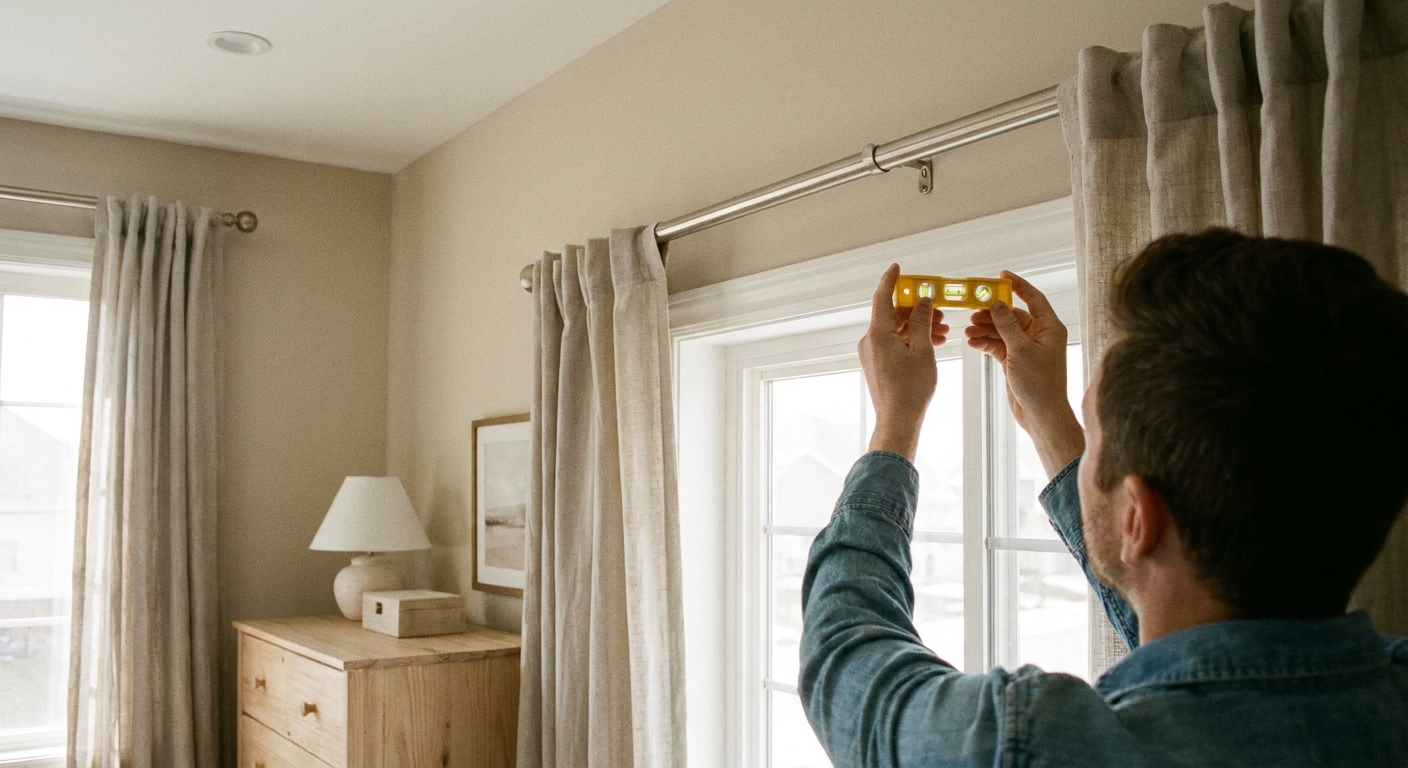
Check if the rod is level
A rod can look fine and still be off by a few millimeters, which is enough to make a panel swing and settle crooked.
- Put a small level on top of the rod, not the bracket.
- If you do not have a level, measure from the floor to the rod at both ends.
- Tighten brackets and confirm the rod is fully seated in both supports.
If the rod is not level, fix that first. Otherwise you will chase a twist that is actually gravity doing its job.
Make sure the panel is loaded evenly
Even without switching header types, you can still accidentally “bias” a panel.
- Rings with clips: confirm clips are evenly spaced and clipped at the same depth. If one clip bites higher or lower, it can torque the top edge.
- Rod pocket: make sure the rod is not bunching the pocket fabric in one spot. Scrunch the pocket evenly, then redistribute fullness.
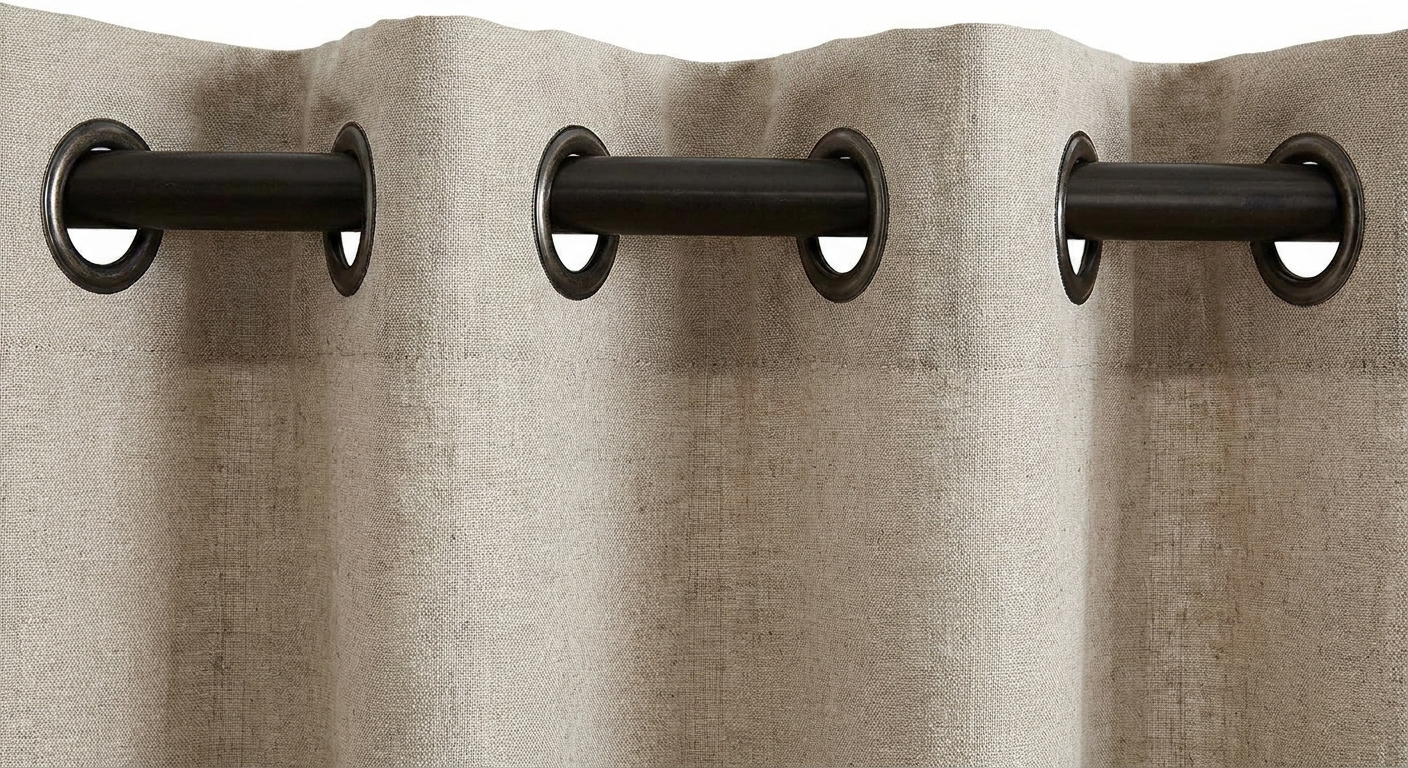
- Grommets: confirm every grommet is facing the same way. If one is flipped, the fold rhythm breaks and the panel can twist as it stacks.
Step 2: Separate a packing crease from a true twist
Packing creases love to pretend they are permanent personality traits. They are dramatic, but they are usually the easiest fix.
Quick test
- Stand at the side of the panel and look down the face fabric.
- If you see one or two sharp vertical folds that create a ripple effect, that is likely packaging.
- If the side hems look like they are rotating toward the front or back as they descend, that is a twist that starts at the header or lining.
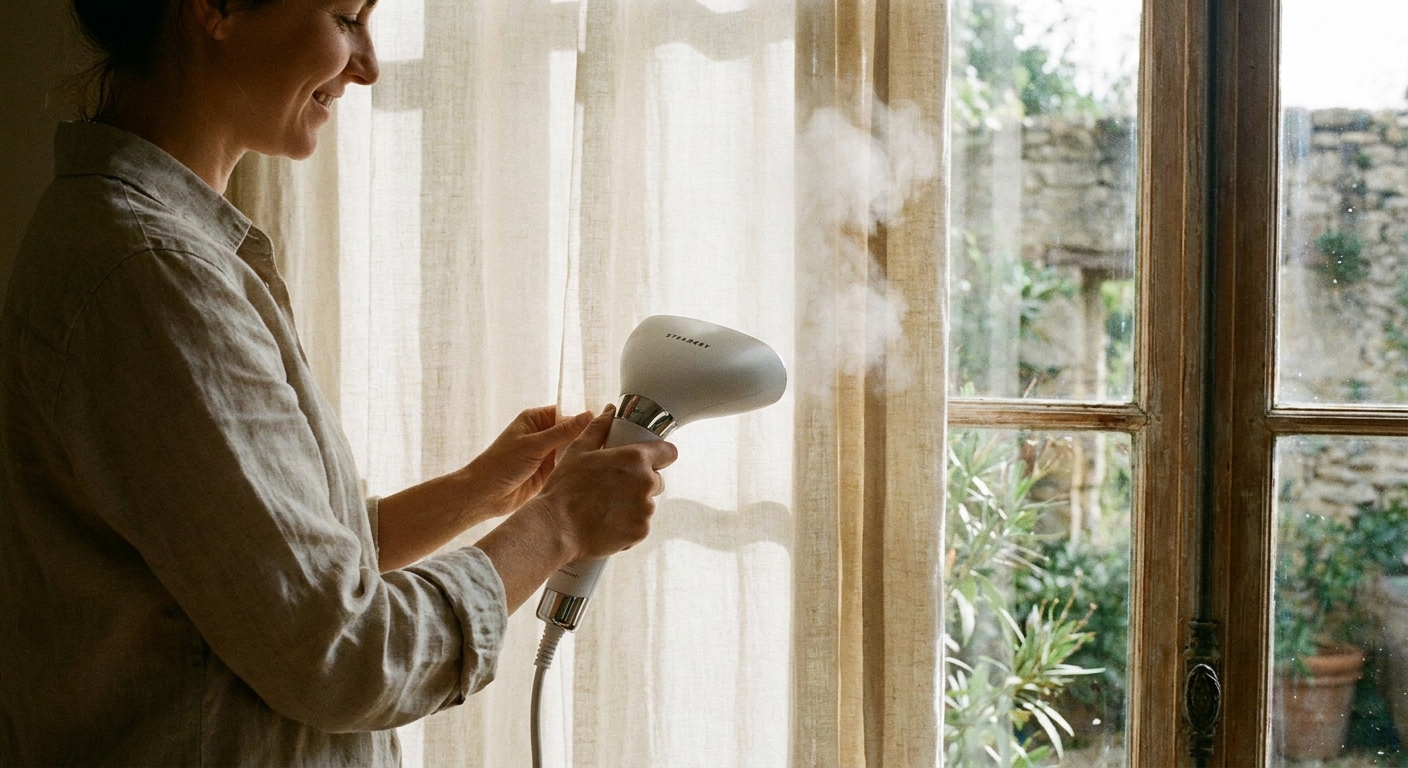
If it is packing creases, you can often solve it with steam and a proper cool down while hanging. If it is a true twist, you will want to take the panel down and reset the top geometry.
Step 3: Inspect the header for a skew or torque
This is the sneaky one. If the top edge is not square, the whole panel will “choose” a diagonal path and spiral as it falls.
What to look for
- Uneven top edge: lay the panel on a flat surface and fold it in half lengthwise. If the top corners do not match, the header may be slightly off-grain.
- Stiffening tape that is buckled: some headers have a band that can twist in shipping.
- Grommet strip that is not flat: if the grommet band has a wave or bow, it can force rotation with each fold.
If the header is visibly warped, pressing the body of the curtain will not fix the twist. You need to flatten the header first.
Step 4: Check whether the lining is pulling the face fabric
Lining is wonderful, but it can also act like a determined little tugboat. If the lining is attached too tightly, or it shrank differently than the face fabric, it will pull the panel into a spiral or a hem kick.
Two simple checks
- Side seam tension: with the panel hanging, gently pinch the side hem and the lining together. If the lining feels tighter and is drawing the edge inward, it is pulling.
- Bottom mismatch: look at the bottom edge. If the lining hem is shorter and “lifting” the face fabric, the face fabric can buckle and flare.
For a mild pull, careful steaming and hanging with weight can relax things. For a strong pull caused by shrinkage, the lasting fix is usually sewing related, but you can still improve the hang by pressing in the right sequence and rehanging correctly.
The pressing and rehang order that fixes most twists
Here is the order that tends to work because it fixes the top geometry first, then lets the body relax without being forced back into a twist.
1) Take the panel down and support it
Work on an ironing board, a clean table with a pressing cloth, or a bed covered with a clean sheet. Avoid dragging the panel by the header. That can set new torque into the top edge.
2) Press the header first
- Use the lowest heat that works for your fabric.
- If steaming, keep the iron slightly above the fabric and let steam do the work.
- Press the header flat, especially any stiff band, grommet strip, or pocket seam.
Let the header cool completely while flat. Cooling is when fabric “sets.”
3) Press the side hems next
Side hems act like rails. If they are twisted, the whole panel will follow.
- Press from top to bottom on one side hem, then the other.
- Do not stretch as you press. You want relaxed, not elongated.
4) Smooth the face fabric in sections
Work down the panel in sections. If you chase wrinkles randomly, you can accidentally rotate the fabric.
5) Address the lining last
If the lining is the puller, pressing it earlier can lock in the mismatch. Finish with light steam on the lining, then let it cool.
6) Rehang, then “train” the folds
- Hang the panel so the top is not rotated. Start at one end and make sure the header sits flat along the rod.
- Form your folds by hand from top to about knee height.
- Let it hang for several hours, ideally overnight, without being disturbed.
When the hem kicks out: small fixes that help
A hem that flares away from the wall is usually either a stubborn crease near the bottom or a lining tug.
Add temporary weight while it cools
After steaming or pressing, you can help the hem settle by adding gentle weight for a few hours.
- Clip a couple of smooth, lightweight items near the bottom edge on the back side, spaced apart.
- Avoid anything that can dent the fabric or leave rust marks.
Check that the bottom is not caught
If the panel is brushing a radiator cover, a vent, a bed frame, or the corner of a sofa, it can “learn” a kick-out shape. Give it clearance and let it relax again.
Common causes, matched to the fastest fix
- Twist starts at the top immediately: press the header, rehang carefully, confirm the rod is level.
- Twist appears mid-panel: press side hems, then the body in sections.
- Hem flares but the rest hangs straight: steam the bottom third, add temporary weight, check for furniture interference.
- Face fabric looks pulled to one side: lining tension is likely, steam lightly and let it hang undisturbed.
Fabric care notes so you do not make it worse
I am a wisp of curtain fabric, so I say this with affection: we can be a little fussy about heat.
- Polyester and blackout panels: use lower heat and more steam. High heat can create shine or flatten texture permanently.
- Linen blends: steam is your friend, but let the panel cool fully to set the shape.
- Velvet: avoid pressing the pile directly. Steam from the back or hover-steam from the front with no contact.
If you are unsure, test heat and steam on an inside hem area first.
Quick FAQ
Why does only one panel twist, and the other hangs fine?
Panels can be cut slightly off-grain, pressed differently in packaging, or sewn with tiny tension differences at the header or lining. Even small differences show up once gravity takes over.
Can I fix a twist without taking the curtains down?
If it is a packing crease, often yes. Steam from top to bottom, shape the folds by hand, and let it hang overnight. If the twist is clearly coming from the header, taking it down to press the top edge usually saves time.
Do I need to wash the curtains to get them to hang straight?
Not necessarily. Washing can introduce new shrinkage differences between face fabric and lining. Pressing and proper rehanging are the gentler first steps.
How long should I wait for curtains to “relax”?
Give freshly steamed or pressed panels at least several hours, and ideally overnight, to cool and settle. Fabric often looks straighter the next day.
A calm finish
A twisted curtain is not a decorating failure. It is usually just fabric holding onto a bad day in a box, or a header insisting on a tiny angle. Start with level and loading, then press the header before you press the body. Once the top is behaving, the rest usually falls in line like it meant to all along.