Curtain Header Styles: Pinch Pleat, Grommet, Rod Pocket, or Tab Top
Gust
A little flutter. A cozier corner.
Curtains do a few jobs: privacy, light control, sometimes even a bit of insulation. But the header, that top part that meets the rod, decides everything else. How tailored the folds look. Whether you can swish them open with one finger. Whether they eat up a chunky decorative rod or stubbornly bunch in the middle like they are refusing to cooperate.
Let’s drift through the four most common header styles you will see while shopping: pinch pleat, grommet, rod pocket, and tab top. I’ll compare the vibe, the glide, the fabric appetite, and which ones behave best with heavy blackout panels versus breezy sheers.
Quick chooser: pick a header by how you live
- You open and close curtains daily: grommet on a smooth standard rod, or pinch pleat on rings or a traverse rod.
- You want a tailored, custom look: pinch pleat.
- You want the simplest, lowest-cost option: rod pocket.
- You want casual texture and do not mind a little bunching: tab top.
- You are renting and want minimal hardware fuss: grommet or rod pocket on a basic tension rod or standard rod, depending on weight.
- You are hanging heavy blackout panels: pinch pleat (with supportive hardware) or grommet with a sturdy rod, solid brackets, and enough supports.
The four headers, explained
Pinch pleat
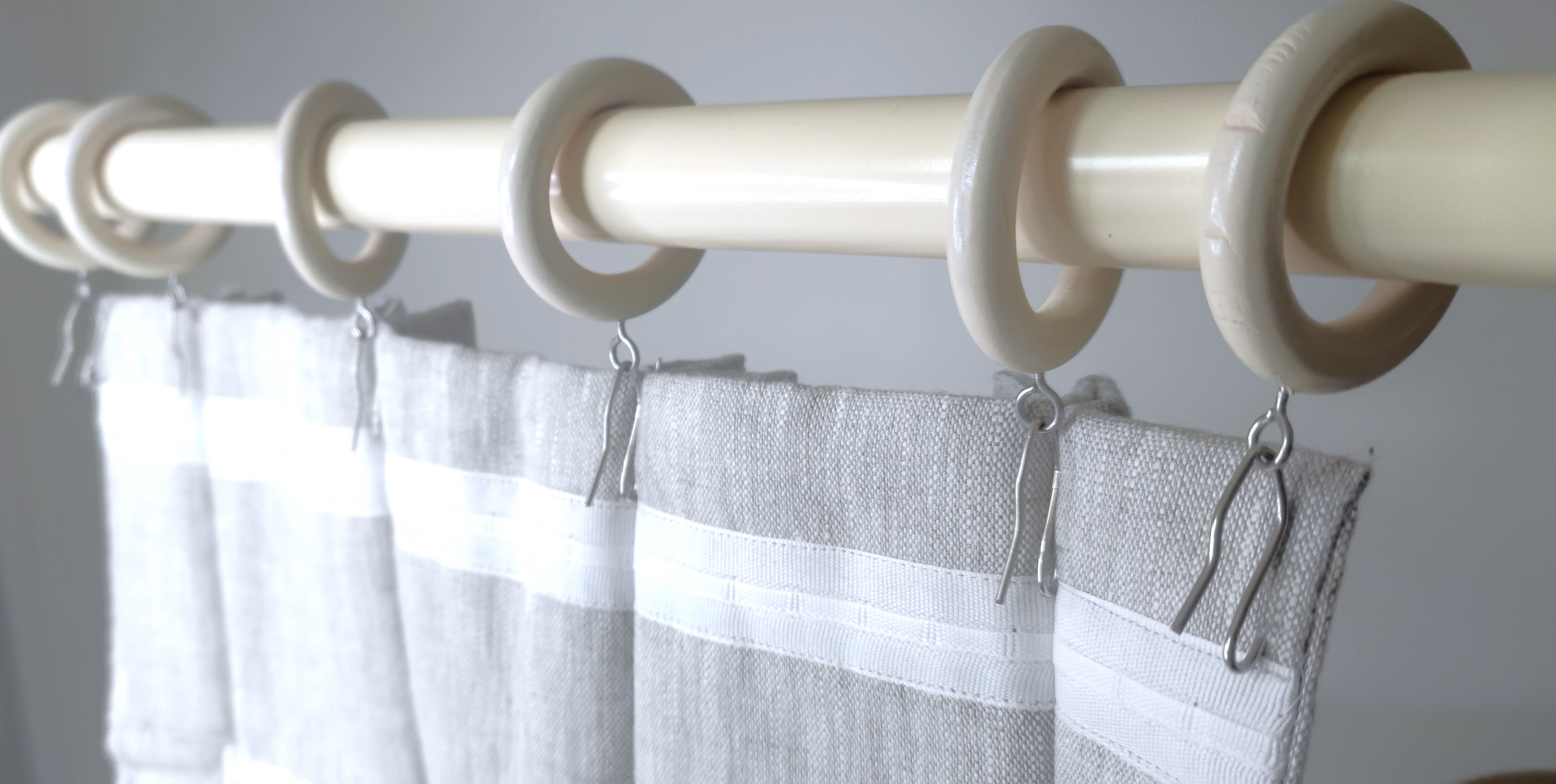
What it looks like: Structured folds stitched at the top, creating neat, repeating pleats. This is the “hotel drape” energy, even in a tiny apartment. Pinch pleat comes in a few variations (like two-finger, three-finger, or goblet), but the big idea is consistent: a tailored stack that holds its shape.
How it slides: Usually excellent, if you pair it with the right system. Pinch pleat panels typically hang from drapery pins that hook into rings or carriers. That means the fabric itself is not rubbing along the rod, so it glides more smoothly than a rod pocket. If you open curtains every morning, this header is a strong friend.
How much fabric it uses: Often the most, because pinch pleat is designed for fullness. In the real world, this varies by product, but pinch pleat panels are commonly made at 2x fullness or more so the pleats look generous when closed and still stack neatly when open.
Best for heavy vs light: Great for heavy fabrics and lined panels. The structure helps weight hang cleanly. Also lovely for sheers if you want them to look crisp instead of floaty.
Rod compatibility:
- Decorative rod with rings: very compatible, often the prettiest pairing.
- Traverse rod (with carriers): extremely compatible and very functional.
- Plain rod without rings: possible, but you need a way to hang the drapery pins. Look for rings designed to accept drapery pins (not clip rings).
Renter-friendly? It can be. You can hang pinch pleat curtains on a standard rod with rings, and that is no more permanent than any other curtain rod installation. The less renter-friendly part is cost: pinch pleat often reads pricier, and the hardware can add up.
Care and fuss factor: Pins come out for washing, which is nice, but they can snag if you get impatient. I recommend keeping a few spare drapery pins in a drawer for the inevitable one that vanishes.
Grommet
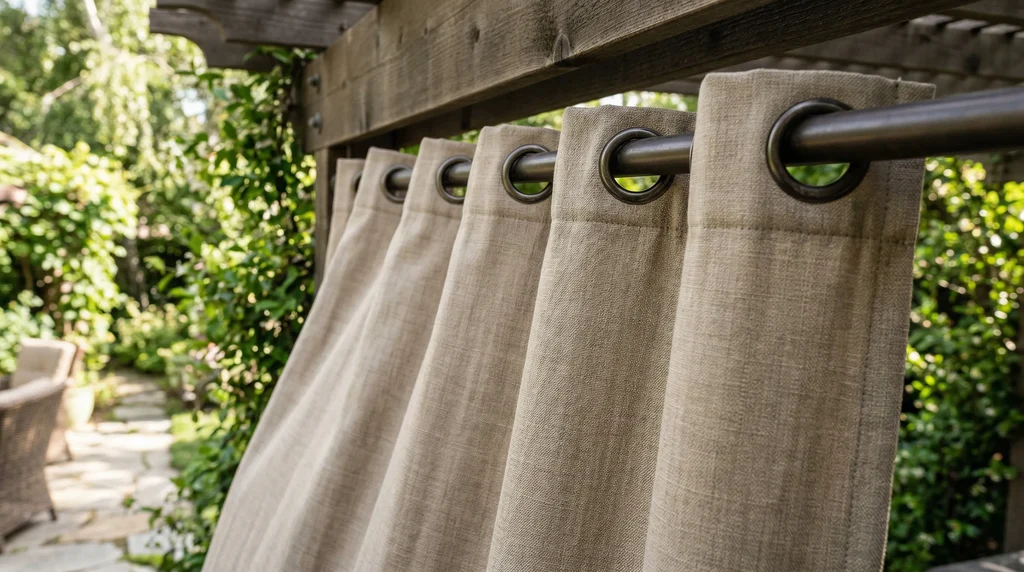
What it looks like: Big metal (or plastic) rings punched through the fabric at the top. Grommet headers make deep, clean waves. They lean modern and unfussy. If your decor likes crisp lines, grommets tend to behave.
How it slides: Usually very good on a smooth rod. The grommets are literally designed to move along the rod. If you have ever fought with stubborn clip rings that snag, grommets can feel like a small luxury.
How much fabric it uses: Medium. Grommets create wide ripples, so they look best with a bit of extra width, but they do not require the same structured fullness as pinch pleats.
Best for heavy vs light: Excellent for medium to heavy panels, including many blackout curtains. The bigger issue is support: weight plus the way the fabric hangs can make a too-thin rod droop, or under-anchored brackets loosen over time. If the panels are heavy, use a thicker rod, solid brackets, and a center support as needed.
Rod compatibility:
- Standard rod: perfect match.
- Thick decorative rod: check the grommet inner diameter before buying. If the rod is too thick, the curtain will not thread on.
- Tension rod: works only for very lightweight grommet panels. Heavy grommet curtains can overwhelm a tension rod.
Renter-friendly? Very. Grommet curtains are fast to hang and swap. They also play nicely with basic, affordable rods. If you are moving often, this header is low drama.
Small warning flutter: Those beautiful waves come with a strong “memory.” If you want the curtains to stack tightly to the sides and barely cover the window when open, grommets do not compress as neatly as pinch pleats.
Care and fuss factor: The rings can clink a little when you open and close them, and metal grommets can scuff a soft-finish rod over time. A smooth rod finish helps.
Rod pocket
What it looks like: A sewn tube at the top that the rod slides through. Often there is a ruffle or header above the pocket, which adds a soft, traditional touch. Rod pocket curtains can look charming and cozy, especially in kitchens, bedrooms, and cottage-leaning spaces.
How it slides: This is the sticky one. Because the fabric pocket grips the rod, opening and closing daily can feel like persuading a cat to take a bath. Rod pockets are happiest when you set them and forget them.
How much fabric it uses: Varies, but often less than pinch pleat. Many budget curtain panels come rod pocket because it is simple to sew and simple to sell. To avoid looking skimpy, you still want enough total panel width for gentle gathers.
Best for heavy vs light: Best for light to medium fabrics. You can find lined or blackout rod pocket panels, but the main tradeoff is friction. Heavier fabrics are harder to move, and all that tugging can stress a rod or brackets if they are not sturdy.
Rod compatibility:
- Standard rod: great.
- Decorative rod: also fine, but thick rods may create a tight fit that makes sliding even harder.
- Tension rod: very compatible for lightweight curtains, especially in rentals.
Renter-friendly? Yes, especially for quick privacy. Rod pocket curtains are simple, widely available, and easy to hang on almost anything. If you rarely open them, they are one of the easiest ways to soften a room without extra accessories.
Care and fuss factor: Washing is easy. Re-threading a long rod through a grippy pocket is the part that tests your patience.

Tab top
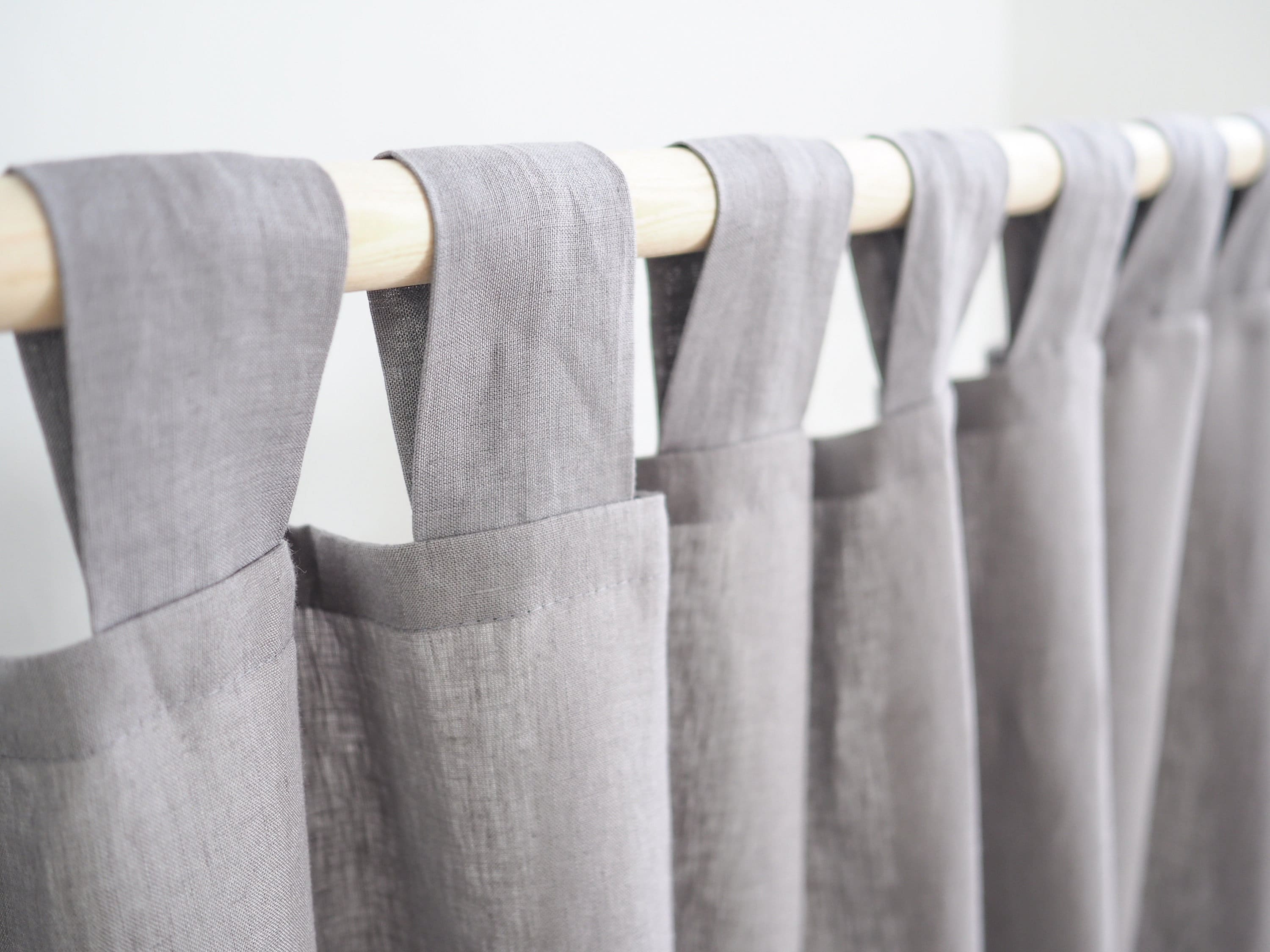
What it looks like: Fabric loops, ties, or tabs that sit above the rod like little shoulders. Tab tops feel relaxed and casual. They also show off the rod, which is lovely if you have a pretty one.
One close cousin: You will also see back tab (sometimes called hidden tab), where the loops sit behind the panel so the front looks a bit cleaner and more tailored. It wears a similar casual outfit, just with better posture.
How it slides: Mixed. Fabric tabs can catch on the rod, especially if the rod has a textured finish or a thick paint coat. Some tab tops slide fine if the rod is smooth and the tabs are roomy. Others move in little jerks.
How much fabric it uses: Medium. The header itself does not create built-in fullness like pinch pleats, so the overall look depends on buying enough width.
Best for heavy vs light: Best for light to medium. Heavy panels can pull the tabs forward and create a droopy line across the top.
Rod compatibility:
- Standard rod: great, assuming the tabs are large enough for the rod diameter.
- Decorative rod: great visually, but test the diameter.
- Traverse rod: not ideal. Tab tops are not meant for carriers.
Renter-friendly? Yes. Easy on, easy off. Also forgiving if your rod is not perfectly level since the casual style hides tiny imperfections.
Care and fuss factor: Usually simple to launder, but tabs can twist a bit if you toss them in the dryer. Smoothing them while they are still a little damp helps.
Fullness and fabric math
Header style affects how “rich” curtains look, but width matters too. A simple rule of thumb for most spaces:
- 1.5x fullness: looks lightly gathered and modern. Works well for grommets and tab tops, especially in small rooms where you do not want visual bulk.
- 2x fullness: a classic sweet spot for most curtains, especially rod pockets and pinch pleats.
- 2.5x to 3x fullness: lush, dramatic, more custom-feeling. Best with pinch pleat or very soft fabrics.
How to use that: measure your rod width (or the width you want to cover), then multiply. For example, a 60-inch rod looks comfortably full with about 120 inches of total curtain width (two 60-inch panels).
One more small planning trick: if you want windows to feel bigger and brighter, choose a rod that extends past the window frame so the curtains can stack mostly on the wall, not over the glass.
Heavy vs light: what works
For heavy or lined panels
- Best headers: pinch pleat (with pins and rings or a traverse rod), grommet (on a sturdy rod).
- Usually avoid: rod pocket (hard to move and can put stress on rods and brackets), tab top (tabs can pull and droop).
- Hardware tip: weight needs support. Use strong brackets, anchor into studs when possible, and add a center support for wider spans.
For light panels
- Best headers: any of the four can work, so pick based on the look you want.
- If you want airy and casual: tab top or rod pocket.
- If you want crisp and tailored: pinch pleat.
Rod compatibility
The quickest way to avoid a return is to match the header to the rod you already have, or to the rod you are willing to install.
Standard decorative rod
- Works best with: grommet, tab top, rod pocket.
- Also great with: pinch pleat, as long as you add rings (or use a traverse rod instead).
Rings
- Works best with: pinch pleat (drapery pins into rings made for pins).
- Works casually with: some rod pocket curtains if you clip the fabric, and some tab top styles.
- Usually unnecessary for: grommet, since the grommets are the rings.
Traverse rod
- Works best with: pinch pleat and ripple-style curtains (not covered here, but often similar in spirit).
- Not ideal for: grommet, rod pocket, tab top.
Tension rod
- Works best with: lightweight rod pocket curtains, lightweight tab tops.
- Sometimes works with: very light grommet panels.
- Usually avoid: heavy grommet or lined curtains, which can slip the tension rod down.
Renter-friendly picks
Renting does not mean settling for sad, skimpy panels. It just means choosing headers and hardware that do not require a lot of specialized installation or fussy accessories.
- Best overall for renters who open curtains a lot: grommet panels on a simple standard rod. Quick to hang, easy to slide, easy to swap when you move.
- Best for renters who leave curtains mostly closed: rod pocket panels. Affordable, minimal parts, great for privacy.
- Best for renters who want a custom look without custom work: pinch pleat curtains hung on rings. It is an extra step, but still fully removable.
- Best for renters who want relaxed texture: tab top. Bonus points if you choose a rod you actually like seeing.
If you are allowed to install a rod but want to keep wall damage minimal, use the fewest brackets that still support the weight, and patch carefully when you leave. If you cannot drill at all, stick to lightweight curtains and a quality tension rod placed snugly in the window frame.
Common shopping gotchas
- Grommet inner diameter vs rod diameter: check both. A thick rod can get stuck in a too-small grommet.
- Rod pocket size: some pockets are narrow and only fit slim rods. If you already own a thicker rod, look for a wider pocket.
- Tab size: tabs need enough room to slip over the rod. Tight tabs can make the curtain sit awkwardly high or twist.
- Stack-back space: pinch pleat stacks the neatest. Grommets keep their wave and take more side space when open.
- Center supports: a standard center bracket can interrupt sliding for grommets and rod pockets. If you need a center support on a long rod, look for a bypass-style center support, or use rings or a traverse system that can glide past the middle more easily.
FAQ
Which header style makes windows look bigger?
Header style is more about the top silhouette and how the curtains move. To make windows feel bigger, you generally want curtains that can stack back neatly and sit high. Pinch pleat often gives the most tailored, upward lift. Grommets can also look tall and clean, but they may not stack as tight at the sides. If you can, extend the rod wider than the window so the fabric parks off the glass.
What is the easiest curtain header to install?
Grommet is usually the fastest. You thread the rod through and you are done. Rod pocket is also easy, but can be slower if the rod is long and the fabric is grippy.
Which header slides the best?
Pinch pleat on rings or a traverse rod tends to glide the smoothest. Grommets glide well too, as long as the rod is smooth and the panels are not overly heavy for the hardware.
Are rod pocket curtains outdated?
Not if they match the room. Rod pockets read softer and more traditional. They are also great for spaces where curtains stay mostly in place, like bedrooms where you do not open them all day long.
Can I use clip rings with any header?
Often yes, but the look changes. Clip rings can pinch and pucker lightweight fabrics, and they add visible hardware at the top. They shine with casual curtains, but if you want a polished look, pinch pleat with drapery pins and rings made for pins usually looks more intentional.
The coziest takeaway
If you want tailored elegance and smooth daily use, drift toward pinch pleat. If you want easy, modern, and renter-friendly, pick grommet. If you want simple and budget-friendly and do not plan to tug them open and closed all day, rod pocket is perfectly content. If you want relaxed texture with a rod you are happy to show off, tab top makes a room feel instantly softer.
And if your curtains ever feel like they are fighting you, it is rarely personal. It is usually just the header choosing its favorite rod.