Coffee Stain on a Mattress

Gust
A little flutter. A cozier corner.
Coffee on a mattress feels personal. It is warm, it is fast, and it is determined to become a permanent little moon crater of brown. The trick is to treat coffee like what it usually is: a tannin-heavy stain in water. If your coffee had milk or cream, it becomes a mixed stain (tannins plus a little protein and fat), but the first response is still the same: blot, lightly rinse at the surface, then lift color without ever turning your mattress into a sponge.
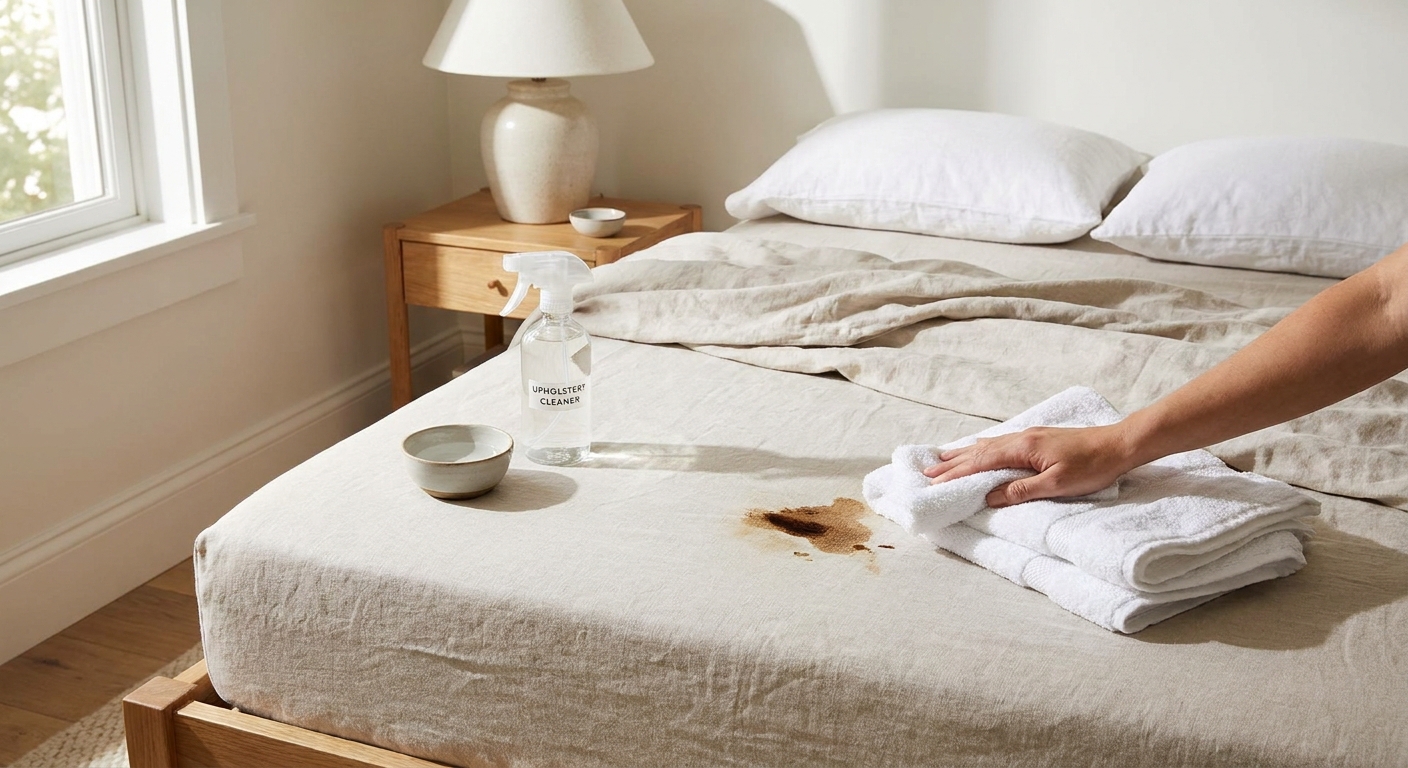
First: keep it dry
Mattresses are not like removable cushion covers. If liquid sinks deep into foam, it can take ages to dry and can raise odor or mildew risk. This applies whether you have memory foam, latex, or an innerspring with foam layers on top. So we work in thin layers: blot, mist, blot, instead of pour, scrub, soak.
If your mattress has a care label or the manufacturer warns against liquid cleaners, follow that guidance first, especially if the mattress is under warranty.
What you need
- White paper towels or clean white cloths
- A spray bottle (or a bowl plus a barely damp cloth)
- Cool water
- Liquid dish soap (clear is ideal)
- White vinegar (optional, may help with discoloration and odor)
- Baking soda (for deodorizing after the stain work)
- A fan (and ideally a dehumidifier if your room is humid)
Before you start
- Strip the bed. Wash sheets right away so coffee does not set there too.
- If there is a protector or encasement: unzip and remove it. Treat it separately like fabric, because you can rinse that in a sink or washer. Mattress first-aid is different.
- Test any cleaner on a hidden seam area of an encasement or cover fabric if possible.
Fresh spill: blot, then a tiny soap rinse
If the coffee is still fresh or only minutes old, you are mostly racing gravity. Work from the outside of the spot toward the center to keep it from spreading.
Step 1: blot like you mean it
- Press a thick layer of paper towels or a folded cloth onto the spill.
- Hold pressure for 15 to 30 seconds, then lift.
- Rotate to a clean section and repeat until towels come up barely damp.
Do not rub. Rubbing can push coffee deeper and fuzz up mattress cover fabric.
If you are seeing brown transfer onto the towel, you are making progress.
Step 2: make a gentle cleaning mist
In a spray bottle, mix:
- 1 cup cool water
- 2 to 3 drops dish soap
Mist the stained area lightly. You want the surface evenly damp, not wet.
Step 3: blot again, then a clear-water blot
- Blot with a fresh towel until the area feels only slightly damp.
- For rinsing, use 1 to 2 light mists of plain cool water, or dampen a cloth and blot (often safer than spraying).
- Blot again.
That quick clear-water step helps because leftover soap can attract dirt and can leave a dull ring later.
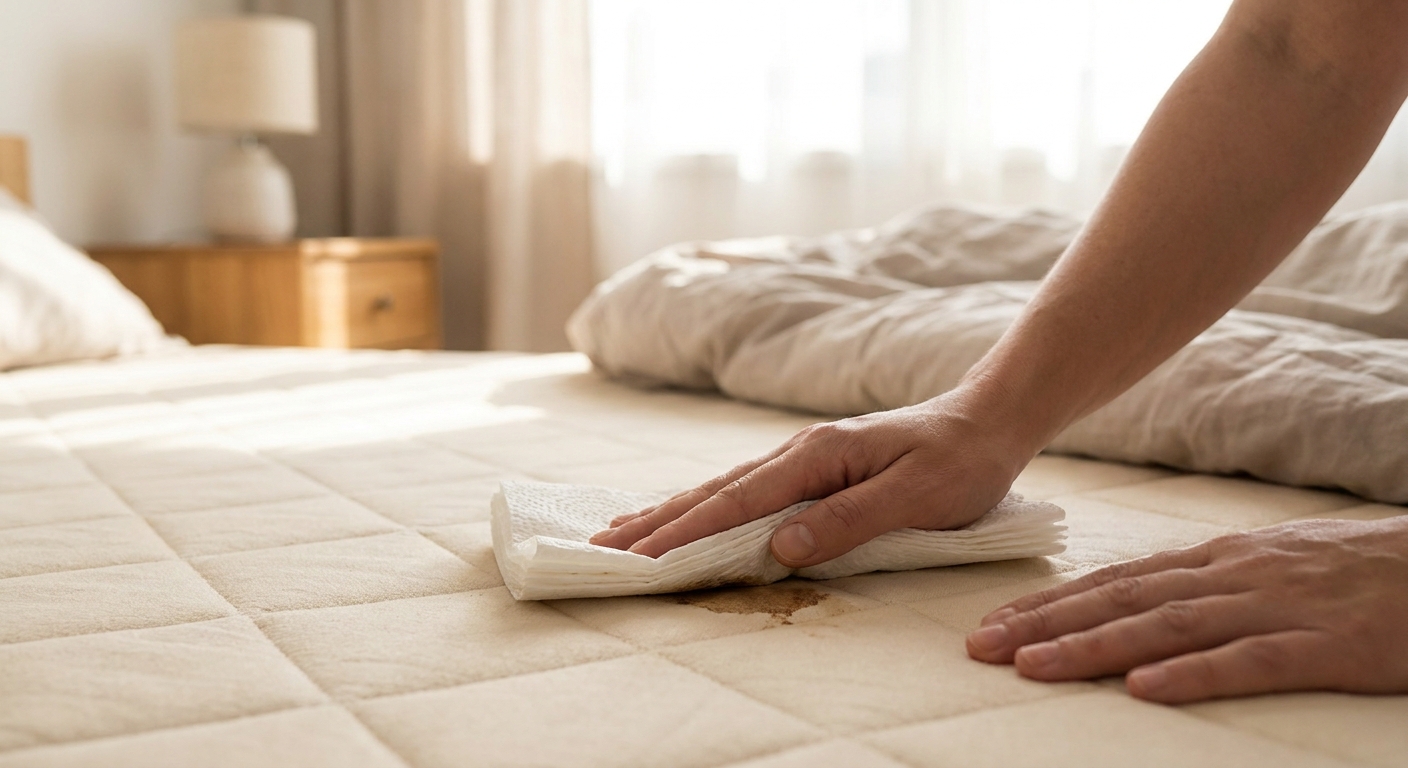
Dried coffee or a ring: lift color gently
Dried coffee usually shows up as a darker center with a light brown edge. That edge is the classic wicking ring. The goal is to treat the whole marked area, not just the darkest dot, so the perimeter does not become even more defined.
Step 1: rehydrate lightly
Mist plain cool water over the entire stained area, including the ring, then blot. This loosens dried coffee so you can lift it up into your towel instead of grinding it around.
Step 2: try a diluted vinegar mist (optional)
White vinegar is a mild acid that may help with some coffee discoloration and can help reduce odor on the surface.
Mix in a spray bottle:
- 1 cup cool water
- 1 tablespoon white vinegar
Mist lightly, wait 2 to 3 minutes, then blot thoroughly.
If you dislike the temporary vinegar smell, do not worry. It fades as the mattress dries, especially with airflow.
Step 3: for stubborn discoloration, use hydrogen peroxide carefully
For stubborn brown discoloration on many light-colored mattress covers, 3% hydrogen peroxide can help lift remaining color. But it can lighten or damage some dyed or printed ticking and some natural fibers, so spot test first and keep moisture minimal.
- Dab a small amount of 3% hydrogen peroxide onto a cloth, not directly onto the mattress.
- Hold it against the stain for 1 to 3 minutes.
- Blot with a water-damp cloth to remove residue, then blot dry.
Do not mix peroxide with vinegar or bleach, and do not use bleach on your mattress.
If your mattress has a darker cover or you are unsure of the material, stick with the dish soap and vinegar method and repeat rather than risking discoloration.
Drying: how you prevent rings and mildew
Even when you use very little liquid, the mattress still needs to dry fully. This is where many stains “come back” as a faint ring the next day.
How to dry it fast
- Press-dry: Put a dry towel over the spot and press firmly to pull out hidden moisture.
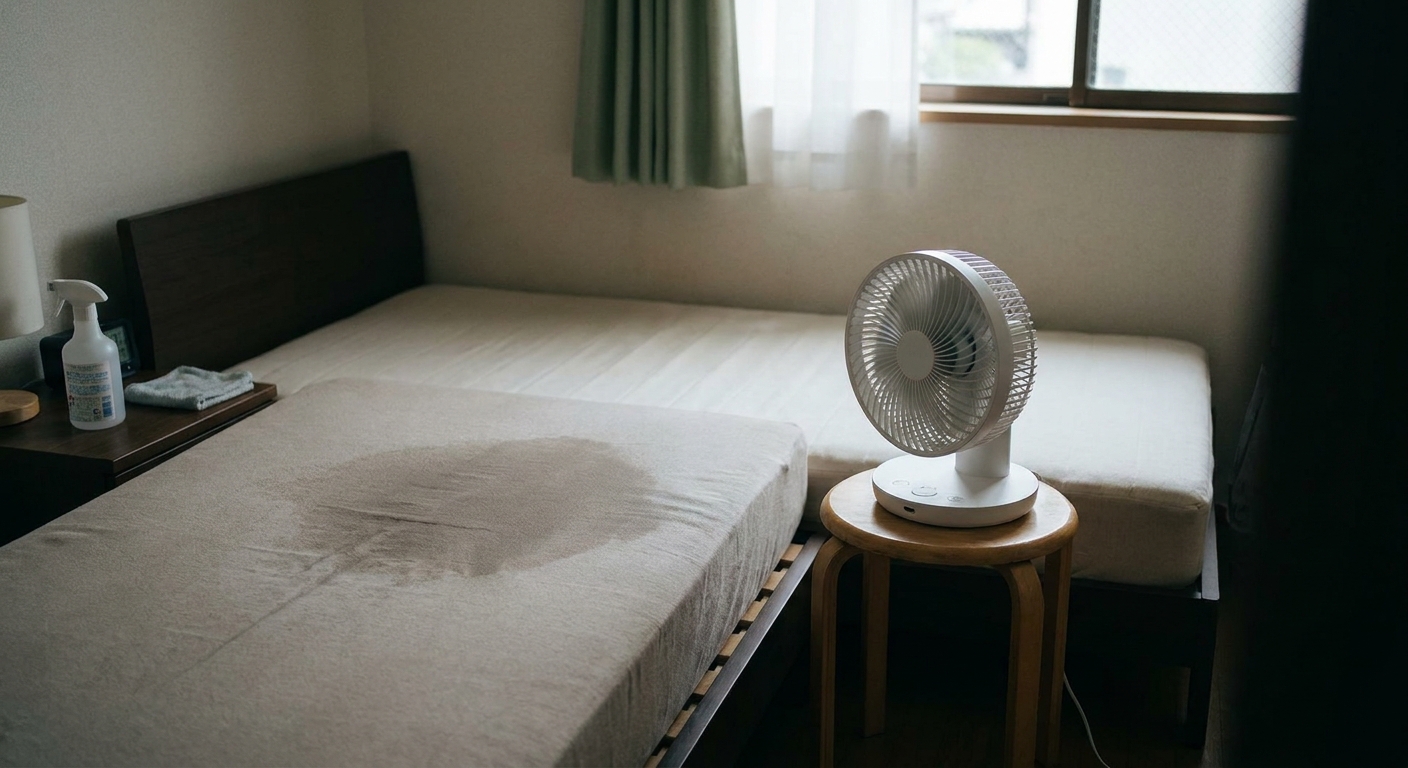
- Fan it: Aim a fan directly at the area for several hours.
- Boost evaporation: If you have a dehumidifier, run it nearby with the door closed.
- Let it breathe: If possible, lift the mattress edge or stand it slightly so air can reach more surfaces.
Skip the hair dryer on high heat for foam mattresses. Concentrated heat can overheat and can degrade some foams or adhesives. Room-temperature airflow and time are safer.
Once it is dry: deodorize lightly
If any coffee odor lingers, dust a light layer of baking soda over the area, let it sit 30 minutes to a few hours, then vacuum thoroughly using an upholstery attachment.
If it hit a protector or encasement
This is the lucky path. A protector can take a more traditional fabric cleaning approach because you can rinse it properly.
- Check the care label for water temperature and drying guidance.
- Pre-treat with a dab of dish soap or a laundry stain remover, working it in gently with fingers.
- Rinse from the back side of the fabric under cool water to push coffee out.
- Wash as directed, ideally air dry or low heat to protect waterproof layers.
If the protector is waterproof and the coffee sat a while, stains can cling to the fabric face even when the waterproof membrane did its job. Pre-treating and sunlight drying can help, as long as the label allows it.
If the removable fabric contains milk or cream residue, an enzyme-based laundry pre-treater can be helpful on the protector or cover, but do not soak foam layers with it.
What not to do
- Do not flood the mattress with water, steam, or a carpet shampooer. Coffee plus trapped moisture can turn into smells.
- Do not scrub hard. You can damage the knit cover and spread the stain.
- Do not use bleach. It can weaken fibers and discolor the cover unevenly.
- Do not confuse coffee with chocolate. Chocolate is a mix of fat and cocoa, so it needs grease-cutting steps. Plain black coffee is mostly tannins and water.
- Do not treat it like a rug. Rug pile can be flushed downward into a pad and extracted. A mattress should stay as dry as possible.
Still there? Repeat with less moisture
Coffee stains often lighten in rounds. If you still see a shadow:
- Repeat the vinegar mist and blot cycle once or twice.
- Focus on evenly treating the whole ring area so edges blend.
- Fully dry between rounds. Damp-on-damp cleaning invites wicking.
If you are still getting color transfer onto your towel, keep going slowly. If the stain is old, large, or has soaked deep, a professional upholstery cleaner may be able to extract more safely with controlled equipment. When in doubt, especially for expensive or warranty-covered mattresses, check the manufacturer’s cleaning guidance.
Quick FAQ
Will coffee stain a mattress permanently?
It can, especially if it dries fully before you blot. But most coffee stains lighten significantly with patient, low-moisture blotting and a gentle color-lifting approach.
Can I use baking soda right away on wet coffee?
It is better to blot and clean first. Baking soda on a wet spill can turn into paste that is harder to lift out of fabric texture. Use it after the area is clean and mostly dry.
Why did my coffee stain turn into a ring?
Rings happen when moisture spreads outward and dries at the edges, leaving color behind. Treating the full marked area and drying quickly with airflow reduces the chance of that “halo” coming back.
What if my coffee had cream and sugar?
Cream adds fat and protein, and sugar adds stickiness. Still start with the same blot and gentle soap method, but be extra careful to remove residue with a light clear-water blot and thorough drying. For protectors and removable covers, an enzyme-based laundry pre-treater can help with dairy residue.