Washing Machine Door Won’t Open After a Cycle
Gust
A little flutter. A cozier corner.
And then: the laundry is done, the display says “End,” and your front-load washer door is still stubbornly locked. I have drifted through enough laundry nooks to know this one is equal parts annoying and slightly ominous.
The good news is that most washer doors stay locked for very normal reasons: a built-in cool-down timer, leftover water in the drum, or a control panel that needs a quick reset. Below are renter-safe checks that do not require taking the machine apart.
First: a few safety notes (quick but important)
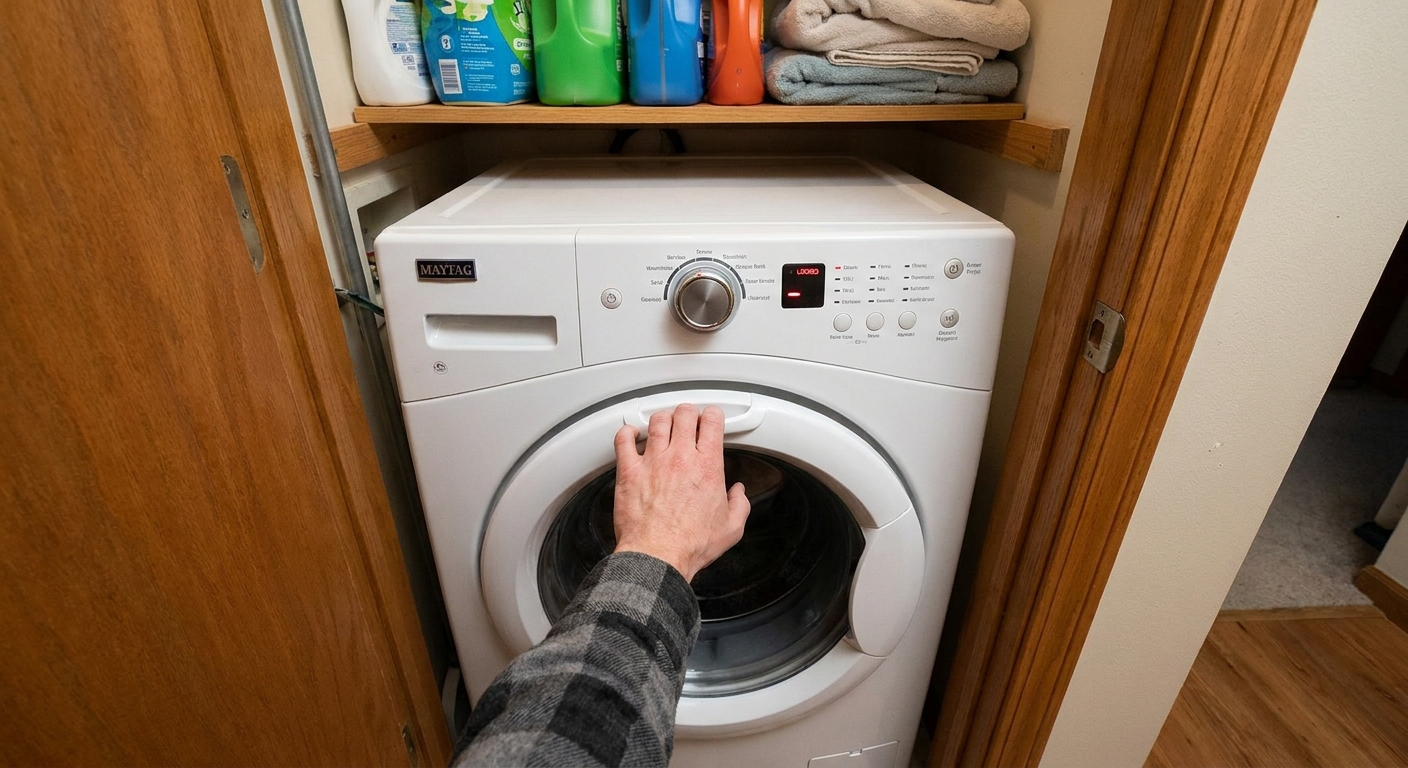
- Do not pry the door with a tool. It can crack the plastic, bend the hinge, or break the latch.
- Pause the urge to force it if the drum might be full of water. A sudden release can cause a spill.
- If you smell burning, see smoke, or hear loud electrical buzzing, unplug the washer if safe and contact maintenance immediately.
Step 1: Wait out the lock timer
Many front-load washers keep the door locked 2 to 5 minutes after the cycle ends. Some models can take closer to 10 minutes, especially after hot cycles or if the machine is balancing the drum at the end.
Try this:
- Wait quietly for a few minutes.
- Listen for a soft click.
- Press Power once, then try the handle again.
If your washer has a Child Lock / Control Lock feature, check the panel for an icon (often a little lock). If it is on, the machine may seem “done” but still refuse to open.
Step 2: Do a renter-safe power reset
If the door does not unlock after waiting, a simple reset often brings the latch back to life.
Reset method
- Press Power to turn the washer off.
- Unplug the washer (or switch off the breaker if the plug is not accessible).
- Wait 1 to 2 minutes.
- Plug it back in.
- Turn it on and select Drain/Spin or Spin if available, then try the door again when it completes.
Why this works: the door lock is controlled electronically. A brief power-down can clear a stuck state and let the latch release normally.
Step 3: Check for residual water (the most common reason)
Front-load washers are designed to stay locked if water is detected in the drum. Even a small amount can keep the lock engaged.
How to tell
- Look through the glass. Do you see a visible waterline at the bottom?
- Gently rock the drum by hand (through the glass) and listen for sloshing.
- Check the display for messages like “nd”, “drain”, “F9E1”, “OE”, “E21”, or similar drain-related codes (codes vary by brand).
If there is water inside, skip trying to force the door and move to draining steps below.
Step 4: Try a Drain/Spin cycle
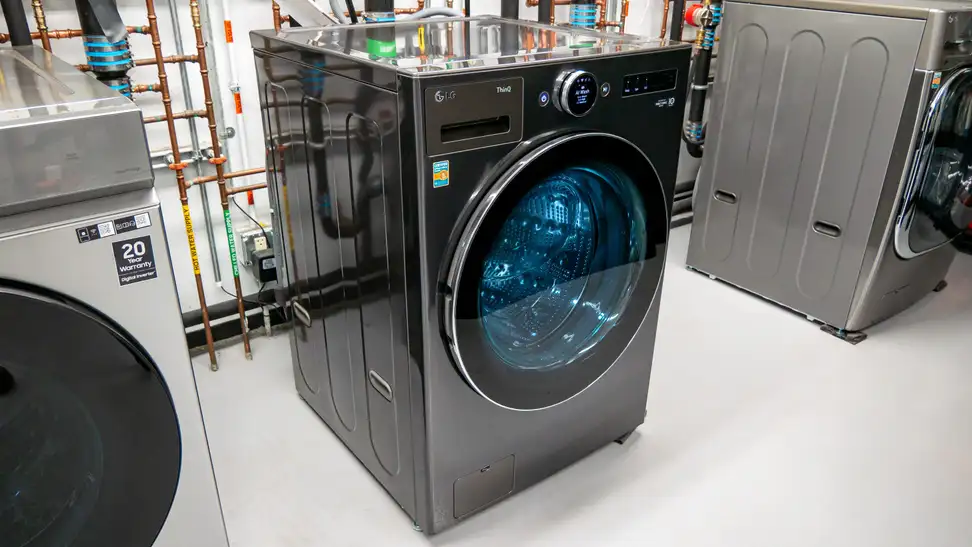
Before you open any access panels, let the washer try to finish draining on its own.
- Select Drain/Spin or Rinse/Spin.
- If you can adjust spin speed, choose low or medium for a gentler attempt.
- When it ends, wait a few minutes for the lock timer, then try the door.
If the machine hums but does not drain, or you still see water, the pump filter area is the next renter-safe stop.
Step 5: Use the emergency drain and pump filter (slow and tidy)
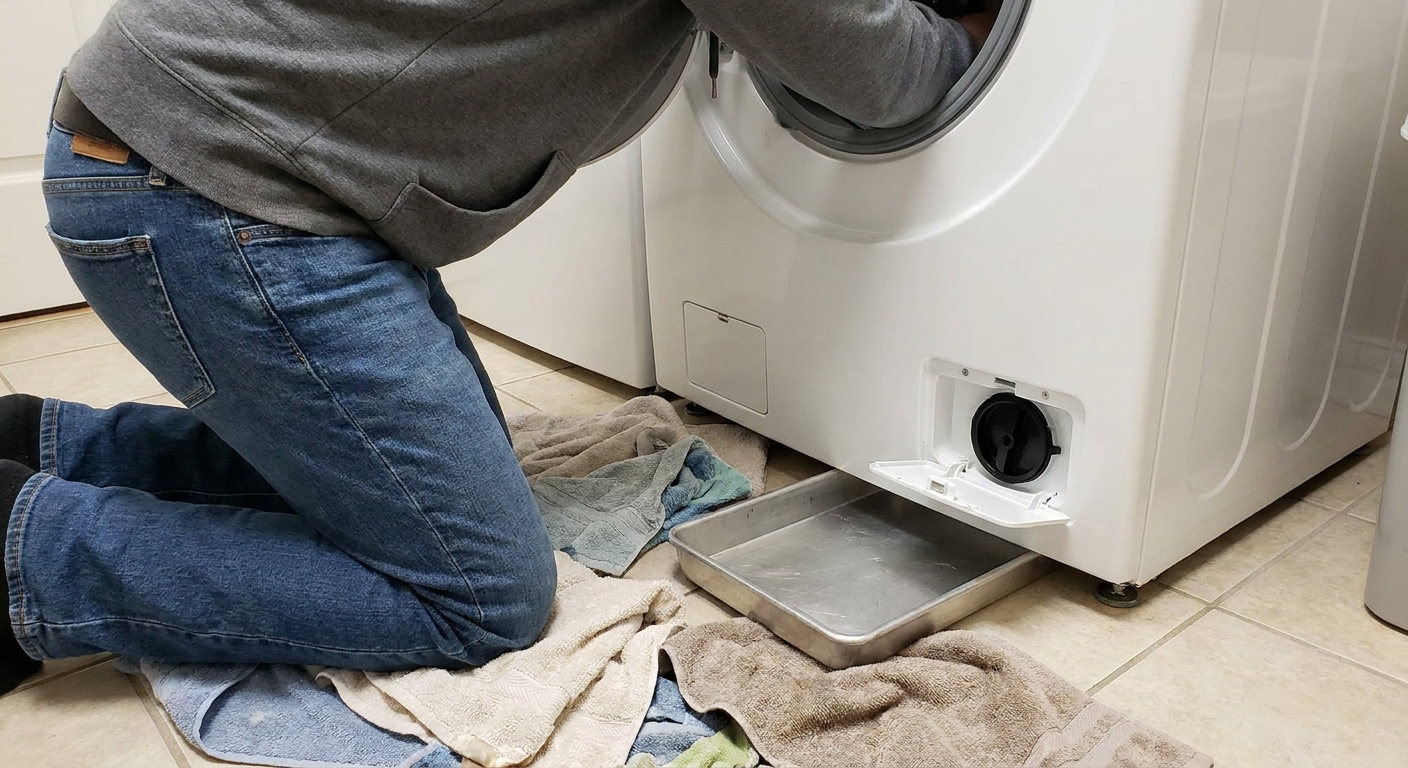
Many front-load washers have a small access door near the bottom front. Behind it you may find:
- a drain pump filter (a twist-out cap), and
- a small emergency drain hose with a plug (not on every model).
This is often the fix when a sock, coin, lint clump, or hairpin is blocking drainage. It is also the most likely step to involve water, so set yourself up like a calm little laundry wizard.
What you need
- Old towels
- A shallow pan or baking dish
- A small cup (helpful for scooping)
- Optional: gloves
How to drain safely
- Turn the washer off and unplug it.
- Open the lower access panel.
- If there is an emergency drain hose, pull it out slightly, aim it into a pan, and remove the plug to let water trickle out. Re-plug between pan dumps.
- If there is no hose, place towels and a shallow pan under the pump filter cap, then turn the cap slowly to let water seep out in a controlled way.
- Once drained, remove the filter fully and clear debris. Reinstall it snugly.
After draining and reinstalling the filter, plug the washer back in and try Drain/Spin again. In many cases the door will unlock when the machine senses an empty drum.
Step 6: Look for a manual door release (some models)
Some washers include a manual release tab or cord near the door lock, usually accessible from:
- behind the lower front access panel near the pump filter, or
- just inside the cabinet edge (varies widely by model).
It is often a small plastic pull or fabric loop, sometimes colored (orange, green, or red), intended for emergencies when the door is locked and the machine cannot power the latch open.
Use it carefully
- Only use a manual release after you are confident the drum is not full of water.
- Follow the direction of the tab or cord, usually a gentle downward pull.
- If it resists hard, stop and call maintenance. Forcing a manual release can break the latch assembly.
If you have the washer’s model number, the manufacturer’s online manual can confirm whether your unit has a manual release and where it is located.
Quick checks that can keep the door locked
Control Lock or Child Lock
If the control lock is on, the washer can ignore button presses or behave oddly around the end of a cycle. Look for a lock icon and try holding the indicated buttons (often 3 seconds) to toggle it off.
Too many suds
High-suds situations can confuse water level sensing and slow draining. If you used regular detergent instead of HE, or used a bit too much, run a Rinse/Spin after you regain access and reduce detergent next time.
Overloaded drum
An overstuffed load can lead to poor draining or an unbalanced final spin. When the door unlocks, consider re-washing in smaller batches.
When to call maintenance (and what to say)
If you are renting, this is one of those moments where calling for help is not “overreacting.” Call maintenance if:
- The door remains locked after waiting, resetting, and attempting Drain/Spin.
- You cannot drain water through the filter area without significant leaking.
- The washer shows repeated drain error codes.
- You hear grinding from the pump, or the machine will not drain at all.
- The handle, hinge, or latch feels loose or cracked.
A simple script
“My front-load washer finished the cycle but the door stays locked. I tried waiting, power resetting, and a Drain/Spin. There appears to be residual water and it will not drain, and the door will not unlock.”
If you can, share the brand and model from the sticker around the door opening or along the inside edge of the door.
FAQ
How long should a washer door stay locked after the cycle?
Often 2 to 5 minutes. Some models can take up to 10 minutes, especially after hot cycles.
Can I force the washer door open?
It is best not to. Forcing can break the handle or latch and can cause a flood if water is still in the drum. Use a reset and drainage steps instead.
Why is there water left in the bottom and the door will not open?
The washer may detect water and keep the door locked for safety. The most common causes are a clogged pump filter, blocked drain path, or a drain pump that is struggling.
I drained the filter and it still will not unlock. Now what?
Try a Drain/Spin again after reinstalling the filter. If it still will not unlock, look for a manual release tab if your model has one. If not, or if anything feels stuck or fragile, call maintenance.
A small breezy takeaway
When a washer door refuses to open, it is usually doing one of two things: waiting (timer, cool-down) or protecting you from water (residual water, drain issue). A little patience, a quick power reset, and a tidy filter drain solve a surprising number of lock standoffs. And when they do not, maintenance is the correct next step, not a defeat.