Washing Machine Won’t Drain or Spin? Renter-Safe Checks

Clara Townsend
Clara Townsend is an interior stylist, vintage furniture enthusiast, and the creative voice behind Velvet Abode. With over a decade of experience transforming both cramped city apartments and sprawling fixer-uppers, she believes that a beautiful home is built on personal stories rather than massive budgets. When she isn't hunting for the perfect brass sconce at a local flea market, she can usually be found rearranging her living room for the third time this month.
There are few household moments more deflating than opening your washer to find your clothes sitting in a little indoor pond. If you are renting, you also get the bonus stress of wondering what you are allowed to touch. The good news: a lot of “won’t drain” or “won’t spin” situations are caused by simple, fixable things like a stubborn cycle setting, an unbalanced load, or a door or lid lock that is not quite latching.
This guide is specifically for washers that finish with water left in the drum or refuse to spin. If your washer is shaking, walking, or thumping , that is a different issue with different fixes. Same for front-load gasket mold, which is a maintenance and cleaning topic rather than a draining failure.
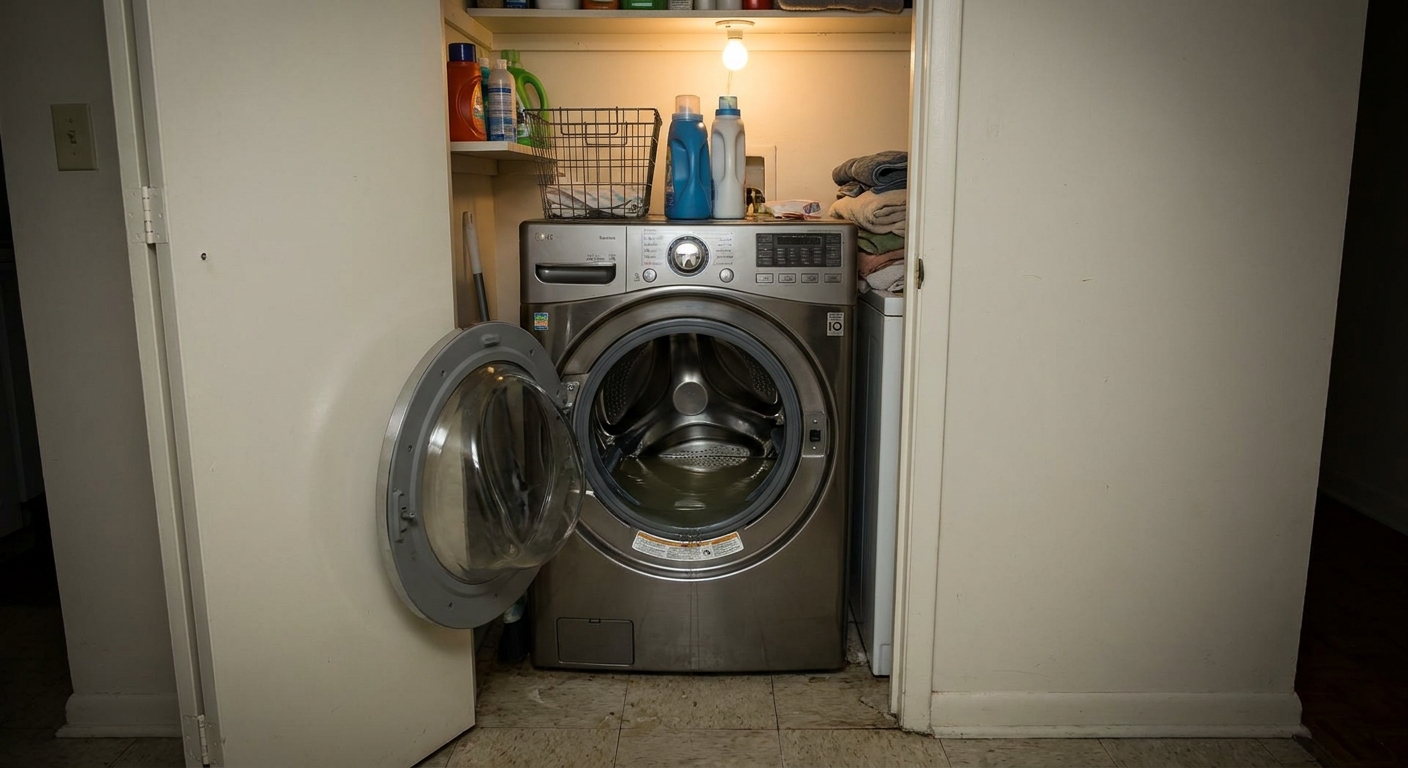
First, a quick safety pause (worth 30 seconds)
- If water is actively leaking onto the floor, turn the washer off and avoid stepping into water near electrical outlets. If you can safely reach it, shut off the washer water supply valves.
- If you smell burning, hear grinding, or the washer is making an electrical buzzing sound, stop and call maintenance.
- If the water is above the bottom of the door on a front-loader, do not open it. You will flood your bathroom or laundry nook fast.
- If your lease says “no repairs”, you can still do the checks below. They are observation and light tidying, not disassembly.
Fast fixes: Cancel, Drain, Spin
Before you touch anything else, try to coax the machine into finishing the job. Modern washers can get stuck if the load is uneven, the lid lock is fussy, or the cycle logic thinks something is unsafe.
1) Pause or Cancel, then Drain or Spin
- Press Pause/Cancel once or press and hold (it depends on the model). Wait about 10 seconds.
- Select Drain or Drain and Spin. If you only see “Spin,” try Spin (start low). If water stays in the drum, stop and move to the drain hose and filter checks below.
- Listen for a low hum and a whoosh of water moving through the drain line.
2) Try a simpler cycle
Some machines behave better on a basic cycle than on a sensor-heavy one.
- Choose Rinse and Spin or Quick Wash with no extra options.
- Turn off options like Extra Rinse, Soak, or Steam.
3) Optional: a quick power reset (only if safe and allowed)
If you can easily reach the plug without moving the machine and your building rules allow it, unplug the washer for 60 seconds, then plug it back in and try Drain and Spin again. If access is tight or you would have to pull the unit out, skip this and move on.
4) If the door is locked and it will not drain
Front-loaders often keep the door locked until the water level is low. If it is stuck locked and the tub is still full after a Drain attempt, jump to the sections on door lock symptoms, filter and pump access, and when to call maintenance.
Check the usual suspect: an unbalanced load
Washers are cautious. If the load is lopsided, many machines will refuse to spin at full speed because it could slam around and damage the drum or cabinet. That can leave you with clothes soaked enough to drip, plus lingering water.
Signs it is a balance issue
- The washer tries to start spinning, then stops, then tries again.
- You hear a few thumps, then a long pause.
- Heavy items are involved, especially bath mats, hoodies, blankets, or one big towel with a few small items.
Renter-safe fix
- Pause the cycle and wait for the drum to stop completely.
- Open the lid or door and redistribute the load. Think: spread weight like you are fluffing a duvet inside its cover.
- If there is one very heavy item, add two or three similar-weight towels to balance it, or remove the heavy item and wash it alone.
- Restart with Drain and Spin or Spin on a lower setting first.
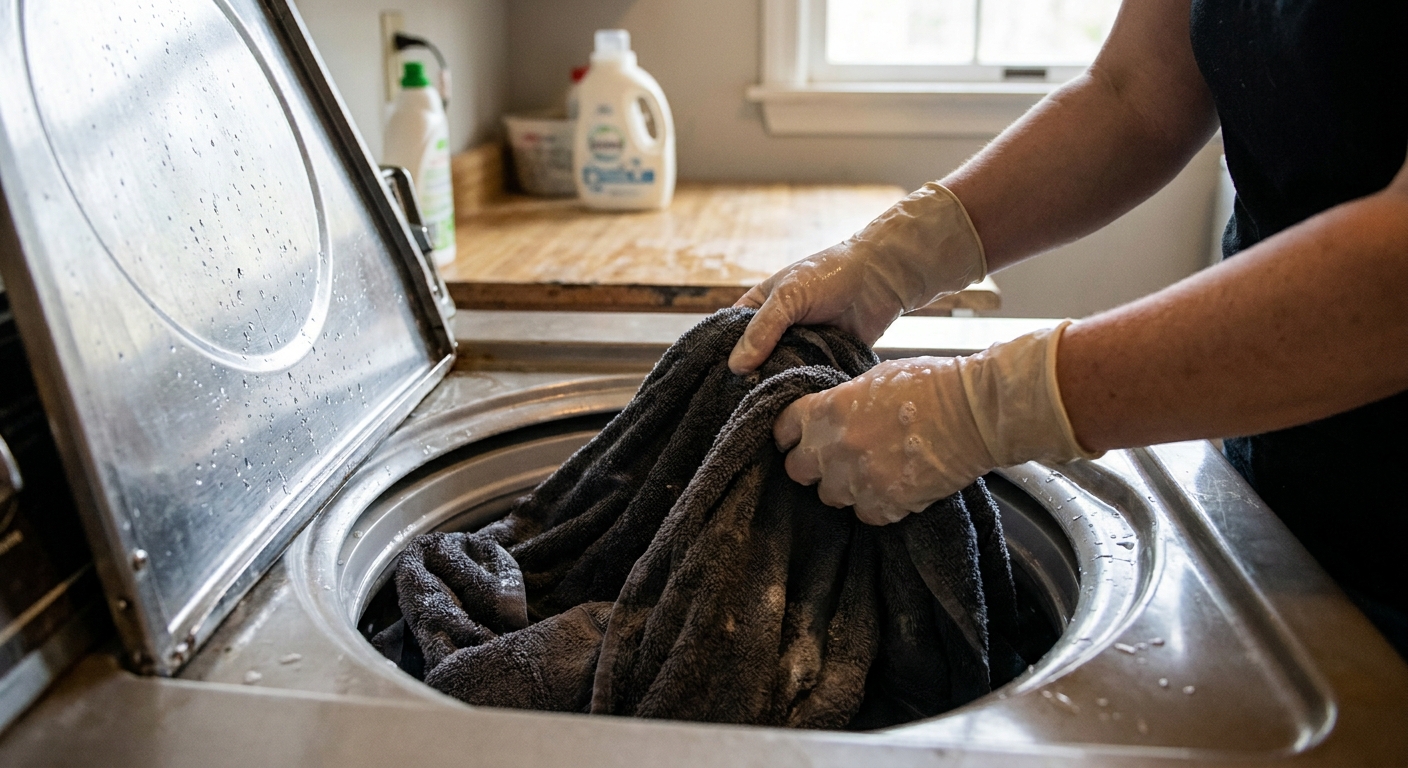
Door lock and lid lock
If your washer will not spin, it often comes down to one simple message: it does not believe it is safely closed.
Top-loaders: lid lock symptoms
- You see Lid, Lid Lock, or a blinking lock icon.
- You hear a click, then nothing.
- The washer fills and agitates, but it will not spin or drain fully at the end.
What you can safely do
- Check for a sock or washcloth caught between the lid and the rim.
- Wipe the lid edge and rim with a dry cloth. Detergent residue can be surprisingly slippery.
- Close the lid firmly. Do not slam, but make it decisive.
- If your model has it, check Control Lock. Sometimes it is on by accident and blocks changes.
Front-loaders: door lock symptoms
- The door closes, but it does not “catch” with that confident little thunk.
- You see Door, Lock, or a lock symbol, and the cycle refuses to advance to spin.
- The machine drains partially, then stops as if unsure.
Renter-safe checks
- Make sure no fabric is trapped in the door seal.
- Press around the door edge gently and close again.
- If the door feels misaligned or sagging, stop and call maintenance. Hinges and latches are not a renter DIY moment.
Standing water: what it means
When you have water left in the drum, the washer is usually dealing with one of three things: a drain path problem, a pump problem, or a safety lockout that prevented the final drain and spin.
First, calibrate what “standing water” means
A small amount of water at the very bottom of some front-loaders can be normal. What is not normal is a visible pool that covers the bottom of the drum, soaked clothes at the end, or water that looks like it never even tried to leave.
Clue 1: Does it sound like it is trying to drain?
- You hear a steady hum but water does not move: the pump may be blocked by debris, or the drain hose may be kinked.
- It is totally silent during the drain portion: it might be stuck in a logic error, a lid or door lock issue, or a failed pump that needs service.
Clue 2: Is the water clear or full of lint?
- Clear water can point to a simple cycle interruption or balance issue.
- Linty, grimy water can hint at a drain filter or pump area obstruction.
Clue 3: Did you wash something “pockety”?
Coins, hair pins, screws, and even a rogue kids toy can block a pump or filter. If you just washed a jacket, check the pockets in the future, but for now, keep reading.
Drain hose clues
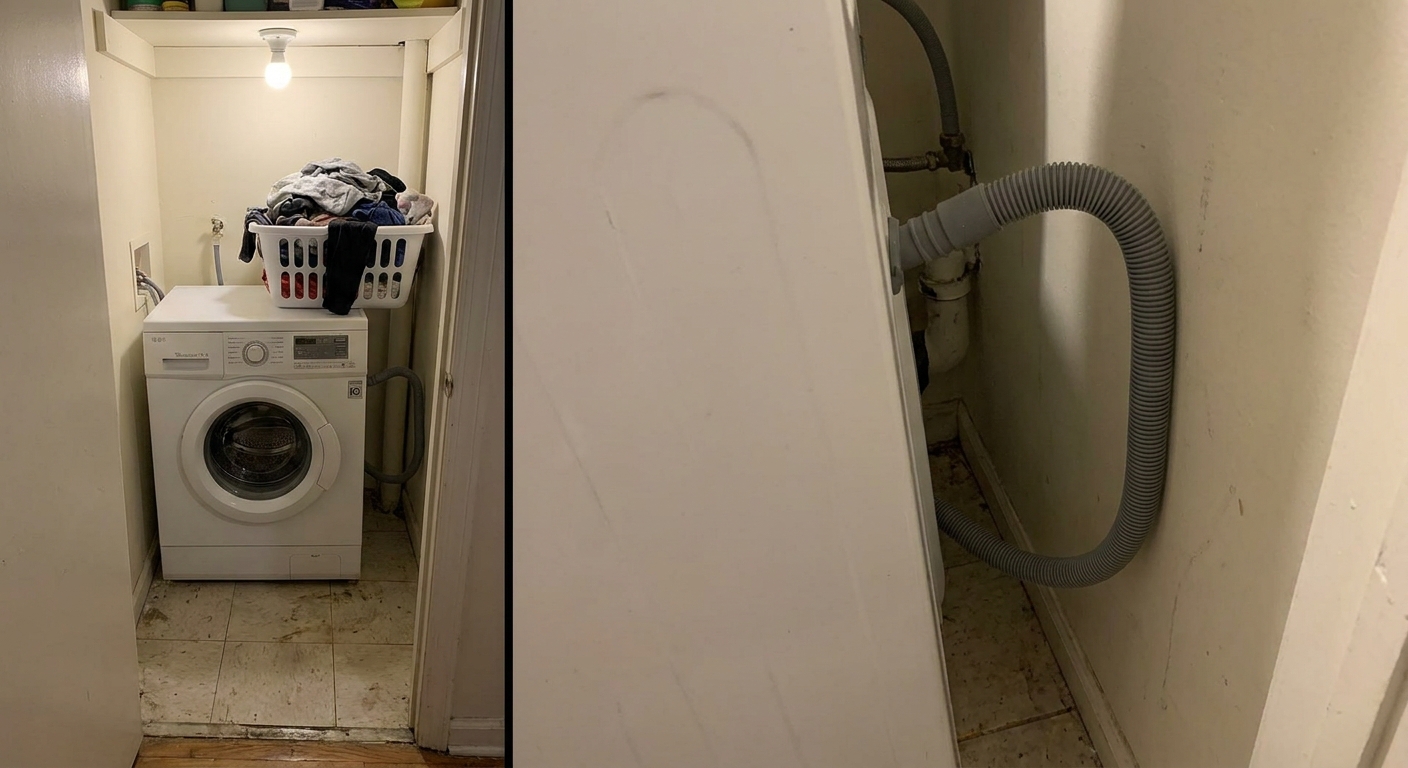
In apartments, the drain hose is often tucked behind the machine in a tight closet, sometimes bent like a paperclip. A kinked hose can stop draining, or it can drain slowly enough that the washer gives up.
What to look for
- Sharp kinks or a hose pinched against the wall.
- The hose pushed too far down into a standpipe. This can contribute to siphoning or slow draining on some setups. Many installs work best with a little air gap and the hose inserted only as far as the install guide recommends.
- A hose that looks crushed from the washer being shoved back.
Renter-safe fix
- If you can safely access it, gently pull the washer forward a few inches.
- Straighten obvious kinks so the hose makes a smooth curve.
- Make sure the hose is secure and not loose enough to pop out during a drain.
If moving the washer feels risky in your space, or you would have to tilt it, stop and call maintenance. A small mistake can turn into a fast mess.
Filter and pump access
This part depends on the washer type and your comfort level. Many front-loaders have a small pump filter access door near the bottom front. Clearing it can solve a “won’t drain” issue, but it can also release water onto your floor. If you are renting and unsure, there is no shame in handing this to maintenance.
If your front-loader has an access panel
You may see a little square door. Behind it is often a filter knob and sometimes a tiny emergency drain tube.
Renter-safe approach
- Check your manual first if you can find the model number (usually inside the door frame). Many brands have PDFs online.
- If you decide to proceed: place several towels down. Use a very shallow pan (like a baking dish) plus a bowl or bucket nearby.
- Open the small access door and look for the small drain tube. If present, uncap it and drain slowly into your shallow pan.
- Expect to cap, empty, and uncap the tube many times. Washers can hold gallons of water, and that tiny tube drains in small batches.
- Once water is mostly drained, open the filter and remove obvious debris like coins, lint clumps, or a small sock. Reinstall firmly.
Stop and call maintenance if you see broken plastic, a cracked filter cap, the cap will not reseal, or the area smells strongly burnt or electrical.
Top-loaders
Many top-loaders do not have a renter-friendly filter access. If yours does not have an obvious panel and the manual does not mention a filter, do not start removing panels.
When to call maintenance
Here is my renter-friendly line in the sand. Call maintenance if any of these are true:
- The drum is still full or very heavy with water after you tried Cancel and Drain twice.
- The washer will not unlock after a reasonable wait, and the tub still has water.
- You see error codes related to drain, pump, suds, or lock. Examples that show up on some brands include “ND,” “OE,” “F9,” and lock icons. Codes vary by model, so just report the exact code you see.
- You hear loud grinding, repeated clicking, or a pump that sounds strained without movement.
- There is any active leak from under the machine.
- This is a shared laundry room machine. Do not open panels or filters on a building-owned unit. Report it.
When you submit a ticket, include: when it happened, whether the washer drains at all, any error code, and whether the door or lid lock light is on. That short note can save you days.
Clothes rescue (if you need them tonight)
Sometimes you just need clean clothes, not a perfect washer.
Getting water out safely
- If the washer is a top-loader and you can open it, you can scoop water into a bucket using a small container. Go slowly.
- If it is a front-loader with water inside and it is locked, do not force it open. If your machine has the bottom access panel and a small emergency drain tube, you may be able to drain the tub in batches (shallow pan, cap and empty repeatedly). Once the water level is low, many doors will unlock so you can rescue your clothes.
- If you cannot access an emergency drain tube, or draining does not help the lock release, call maintenance.
Saving the load
- Wring items gently over the tub or sink.
- If you have access to a dryer, run a short cycle on low heat first, then increase as needed. Overly wet loads can throw dryer balance too.
- If you are air-drying, hang items with space between them and point a fan toward the rack if you have one.
Foam problems (oversudsing)
If you open the door or lid and see a lot of foam, the washer may pause, extend the cycle, or limit spin to protect the machine. That can look like a drain problem.
What to do
- Do not add more detergent.
- Run Rinse and Spin or a plain Rinse if available. Then try Drain and Spin.
- For next time: use HE detergent if your washer is HE, and use less than you think you need. Too much soap is a common culprit in small apartment machines.
Small habits that prevent it
- Do smaller loads, especially with towels and bedding.
- Use the right detergent amount. Oversudsing can cause the washer to extend cycles, pause, or limit spin.
- Check pockets like it is a tiny ritual. Coins and bobby pins love pump filters.
- Once a month, run a cleaning cycle if your machine has one, or run hot water with a washer cleaner tablet if allowed by your building.
A home should feel like a comforting hug, not a puddle. If you have tried the renter-safe checks and the washer still will not drain or spin, calling maintenance is not “being dramatic.” It is being smart.