Sun-Faded Stripe on a Fabric Headboard
Gust
A little flutter. A cozier corner.
If your fabric headboard has developed one stubborn, lighter stripe, you have my permission to squint at it dramatically from across the room. This is one of those sneaky bedroom mysteries: is it dirt that will lift with a clean, or is it sun that quietly stole the dye?
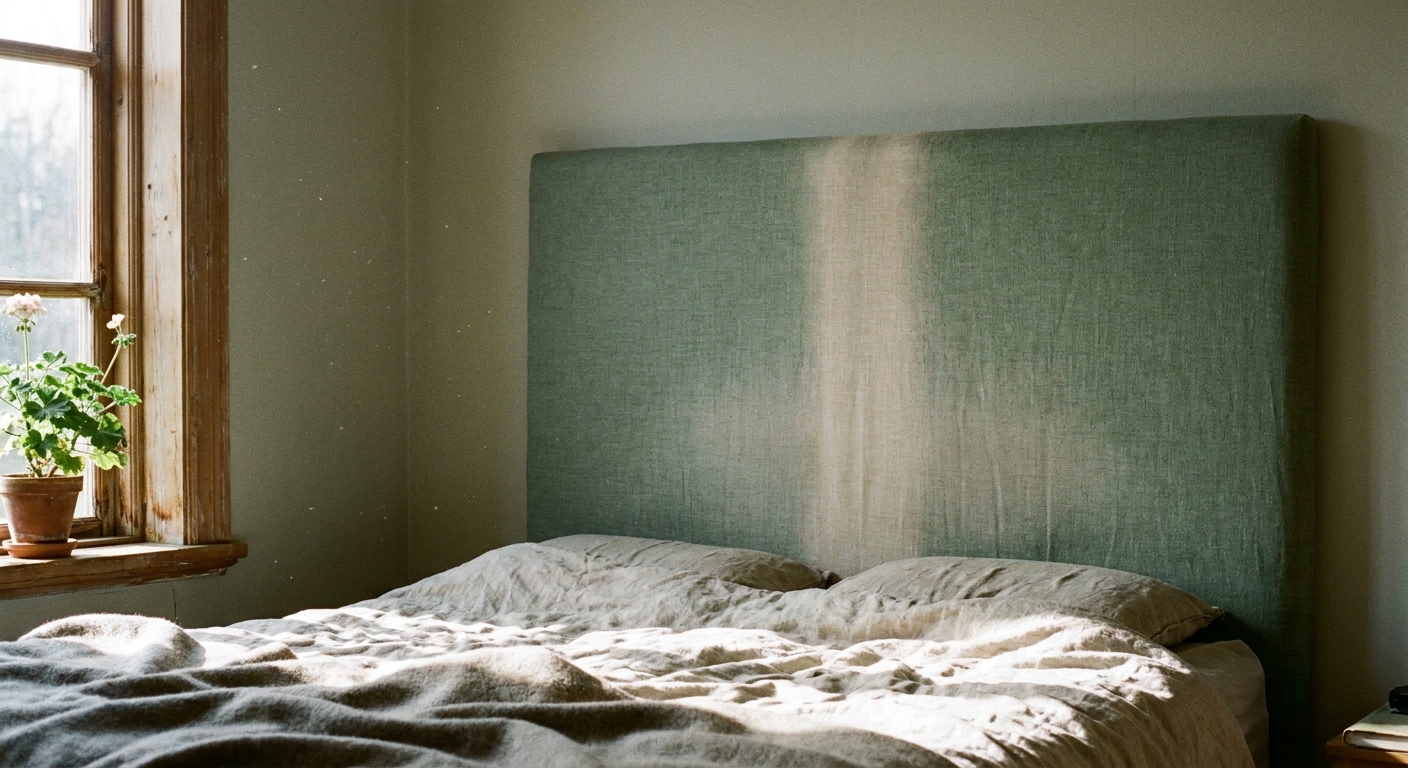
Dirt stripe or sun-faded stripe?
The easiest clue is this: dirt usually looks uneven and lives on the surface. Sun fading looks like a clean, intentional-looking band that follows where light lands.
Before you do anything: if your headboard has a care tag or you know the upholstery cleaning code, take a peek. W or WS is generally safer for water-based cleaners. S means solvent-only. X means vacuum only. If you cannot find a code, keep moisture to a whisper and test first.
Signs it is dirt or buildup
- Gray or dingy tone rather than simply “lighter.”
- Smudgy edges, fingerprints, or darker patches near hands and pillows.
- It changes when you brush it with your hand or a soft upholstery brush, especially on velvet, microfiber, or fabrics with nap.
- It improves after gentle spot cleaning and drying.
Signs it is sun fading
- Crisp edges or a very consistent stripe, often vertical.
- It matches the path of the sun, commonly the side closest to a window or a band above the pillows where light hits daily.
- No grime transfers to a white cloth during a light cleaning test.
- The fabric feels normal but the color is simply gone.
If you want one quick, low-drama test: lightly dab a small part of the stripe with a barely damp white microfiber cloth and a tiny amount of upholstery-safe cleaner diluted in water. (Dish soap can work in a pinch, but it can also leave residue on some upholstery, so go tiny.) Blot dry with a clean towel. No soaking, no scrubbing. If the cloth comes away dirty and the stripe looks better once fully dry, it was dirt. If nothing changes, fading is likely.
Why washing will not bring color back
Sun fading is not a stain sitting on top of the fabric. It is the dye molecules breaking down from UV exposure. Once the color has been altered, it cannot be “cleaned back” to the original shade.
That is why a deeper clean can make the stripe feel more obvious. Cleaning removes the dulling layer of dust and body oils from the surrounding area. The headboard gets cleaner overall, but the faded section stays faded, so the contrast increases.
Also worth knowing: UV can weaken fibers over time, not just color. If the fabric feels thin, brittle, or a little crunchy in that stripe, treat it gently and prioritize prevention.
Some fabrics also fade in a slightly different direction than you expect. A “bleached” stripe can lean warmer, cooler, or flatter, depending on the dye and fiber.
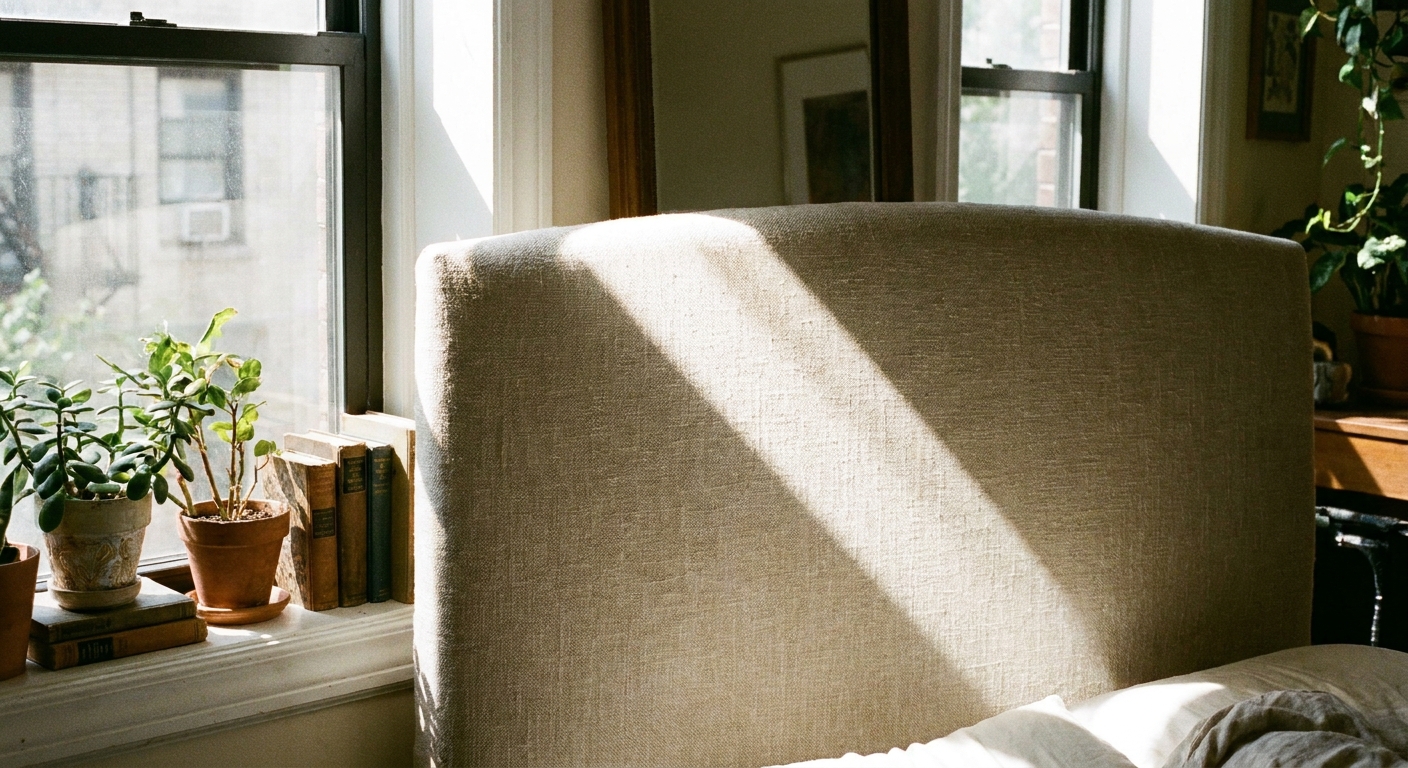
Before you decide: common look-alikes
Not every light band is true UV dye loss. A few look-alikes can mimic a stripe.
Nap reversal
Velvet, velour, microfiber, and some woven fabrics change color when the fibers lay in different directions. A stripe can appear if the nap was brushed, leaned on, or cleaned in a narrow area.
- Try gently brushing the stripe and the surrounding area in the same direction with a clean upholstery brush.
- If the “fade” moves or disappears, it was nap, not sun.
Water marks or cleaning rings
Over-wetting a small area can leave a tideline. This often has a soft edge, not a crisp stripe.
- If your fabric is water-safe (think W or WS), you can sometimes reduce a ring by very lightly dampening a broader area and blotting evenly to avoid a hard edge.
- If your fabric is water-sensitive (common with some rayon or viscose blends, certain velvets, and some antique or delicate upholstery), water-only blending can make staining worse. In that case, stop and consider a pro.
- Always test in an inconspicuous spot first.
Shadow lines
Wall sconces, reading lamps, and even a ceiling fan light can create a consistent “band” that is actually just your lighting pattern. Check the headboard in daylight with overhead lights off.
What to do if it is sun-faded
If the stripe is dye loss, you are choosing between hiding it, minimizing contrast, or re-covering the panel. Since many headboards are stapled and mounted as a single piece, you cannot simply flip or rotate the “cushion” the way you might with sofa cushions.
Option 1: Hide it with a textile layer
This is the quickest fix and it can look intentionally styled.
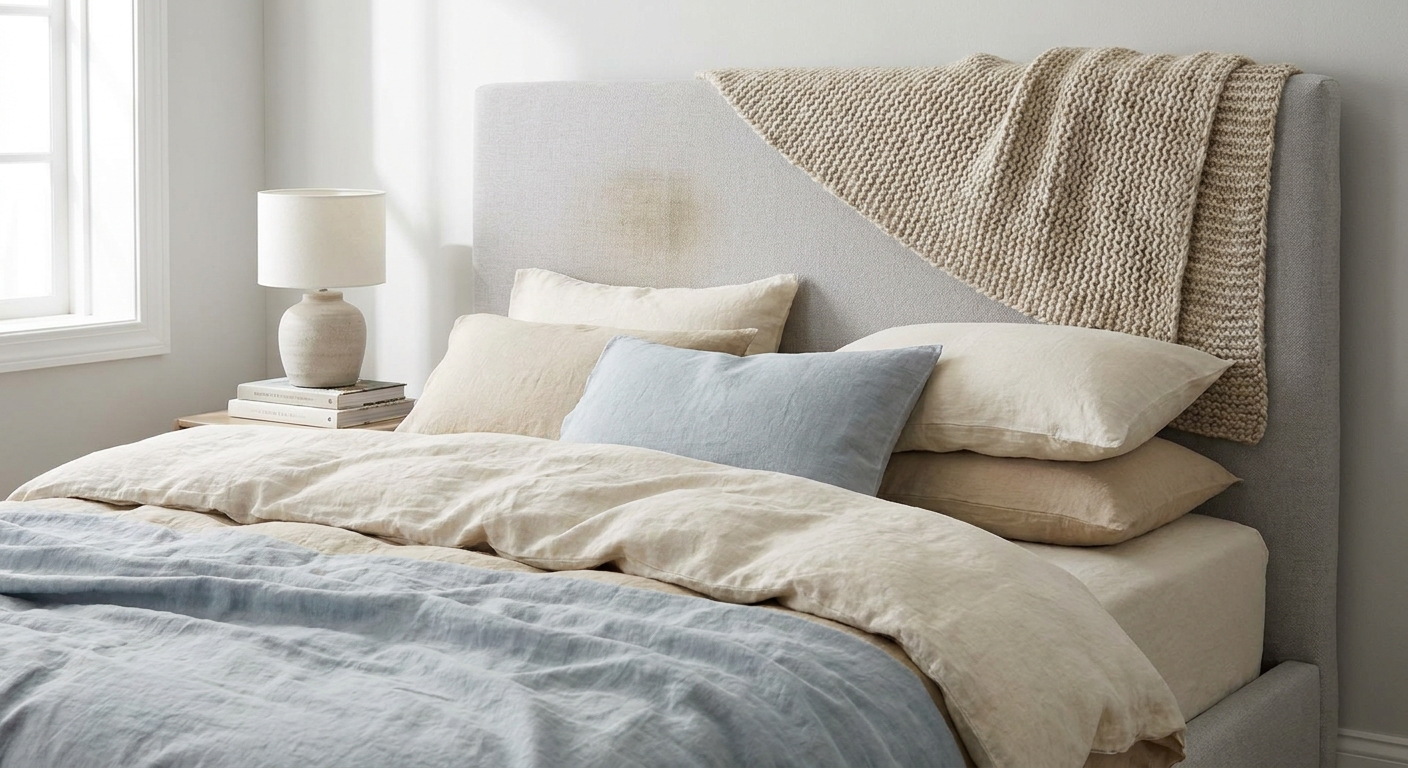
- Drape a throw blanket across the top third of the headboard, like a soft scarf. Choose a fabric with texture (chunky knit, quilted cotton, linen blend) so it reads as decor, not a cover-up.
- Add a long lumbar cushion or two oversized pillows that sit higher, blocking the stripe.
- Try a narrow runner pinned along the top edge if your look leans boho or vintage.
Tip from this wandering wisp: if the stripe is centered, symmetry is your best friend. Centered throws, twin pillows, matching shams. Your eye relaxes when the styling is intentional.
Option 2: Change the light path
If the headboard sits in a sunbeam every afternoon, stop the fade from spreading.
- Pull the bed a few inches left or right if your layout allows. Even a small shift can move the daily sun stripe.
- Add UV-blocking window film (clear options exist) to reduce UV exposure without darkening the room much.
- Use lined curtains or shades during the strongest sun hours. Solar shades are especially good for bright rooms.
- Rearrange if you can so the headboard is not the daily landing spot for direct sun.
Option 3: Blend it carefully
People often reach for fabric dye or markers. These can sometimes reduce the contrast, but matching upholstery color on a vertical surface is tricky, and results vary by fabric type and fiber content.
- Fabric spray dye can shift tone, but it may apply unevenly. Some synthetic or performance fabrics resist recoloring and can look blotchy.
- Upholstery touch-up markers may help on small areas, but a wide stripe can end up looking streaky.
- Professional re-dyeing exists in some markets, but it is not always cost-effective compared to recovering.
If you attempt any color product, test behind the headboard or at a bottom back corner first. Let it dry fully and rub with a white cloth to check for transfer.
When to call a pro
If you are feeling even slightly unsure, this is where a professional upholstery cleaner or upholsterer earns their keep. Consider calling one when:
- The fabric is velvet, viscose, rayon, or otherwise water-sensitive, and you are trying to avoid permanent water marks.
- The headboard is valuable or sentimental, and experimentation would ruin your week.
- The stripe is paired with staining (yellowing, browning, or rings) that keeps returning.
When it needs recovering
Sometimes the kindest choice is a fresh fabric skin.
Recovering is usually the best route when:
- The stripe is large and obvious, especially in the middle where your eye lands first.
- The headboard is a fixed, stapled panel and cannot be rotated like a removable cushion.
- The fabric is also worn, shiny from use, snagged, or stretched. A new cover solves multiple problems at once.
- The fade has spread beyond one stripe into a general unevenness.
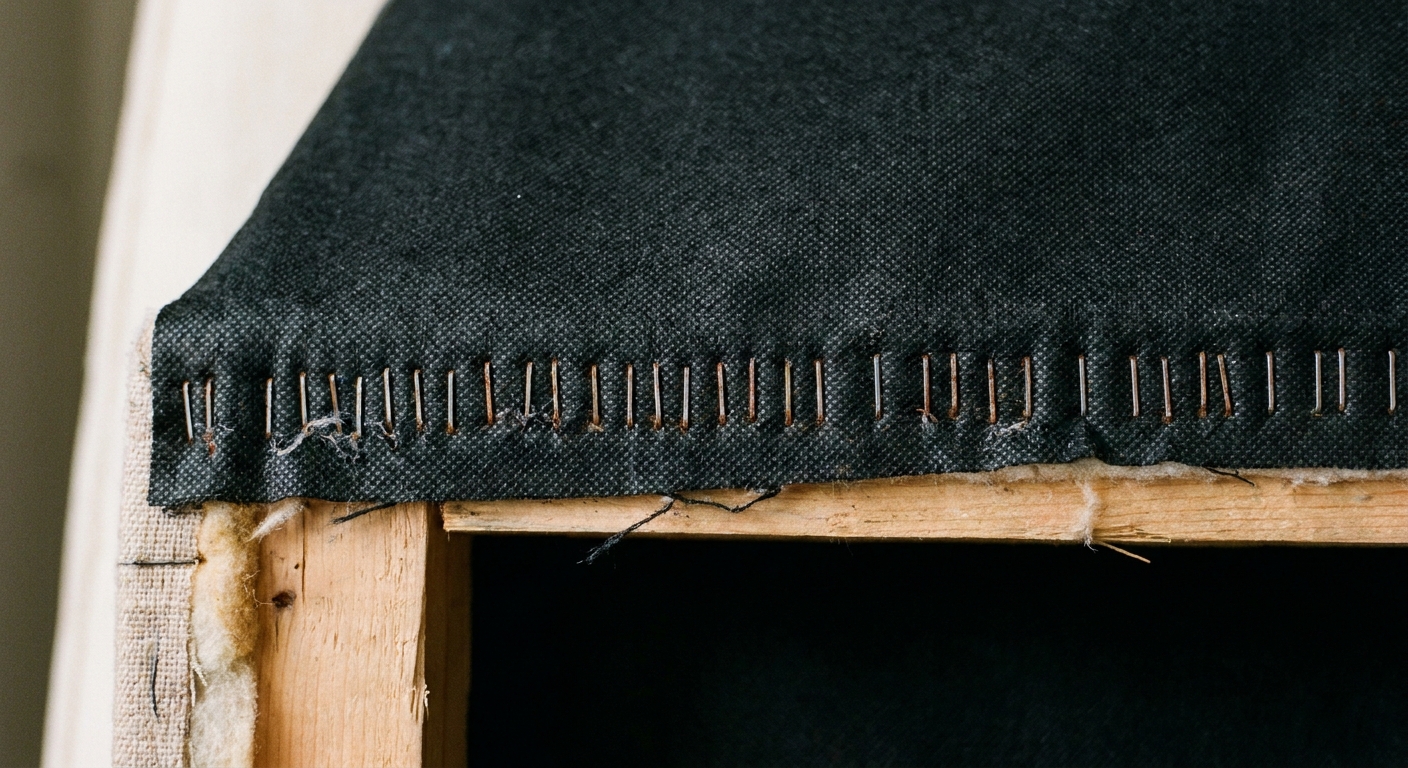
If you love the headboard’s shape and padding, recovering is often simpler than replacing the entire piece. Many upholstered headboards are built like a padded board with batting and fabric stapled on the back. A local upholsterer can usually quote quickly if you provide width, height, thickness, and a photo of the back.
Prevent the next stripe
Once you have a fade stripe, prevention is about slowing down UV exposure so the rest of the headboard does not follow.
- Block or filter UV at the window with film, solar shades, or lined curtains.
- Close window coverings during peak direct sun, even if only for a few hours.
- Move reflective items like mirrors that may bounce light onto the headboard.
- Choose fade-resistant fabrics if you re-cover. Solution-dyed acrylic, solution-dyed polyester, and olefin are often more fade-resistant than many piece-dyed fabrics, though no upholstery is completely sunproof.
Quick FAQ
Can I steam clean a sun-faded stripe out?
Steam cleaning can help with odors and grime, but it cannot restore dye that has faded from UV exposure. It may make the surrounding fabric cleaner and the stripe more noticeable.
Why is the stripe so straight?
Sun often hits in a consistent band due to window shape, blinds, or the daily angle of light. Even the edge of a curtain gap can create a surprisingly crisp line over time.
Could it be bleach from cleaning?
Yes. Some cleaners, acne products, hair lighteners, and certain disinfecting sprays can cause localized color loss. If the stripe appeared suddenly after cleaning or a spill, chemical bleaching is a possibility.
My headboard is attached to the wall. Can it be rotated?
If it is upholstered fabric stapled to a frame or panel, rotation is rarely practical. The mounting hardware, shape, and staple pattern usually assume one orientation. In most cases, you are choosing between hiding, re-covering, or replacing.