Melted Chocolate on a Leather Sofa
Gust
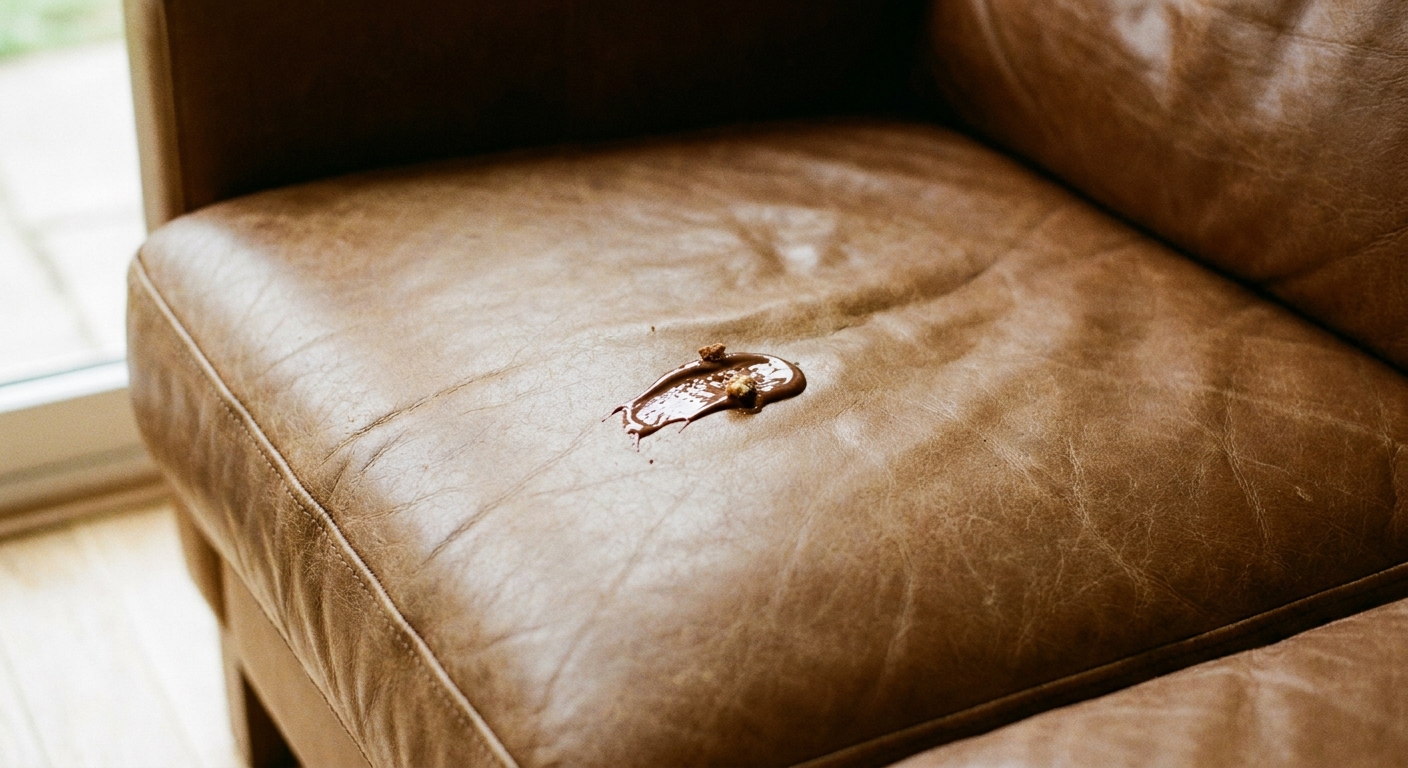
The first time I dealt with melted chocolate on leather, it was on a caramel-colored vintage chair I had been babying like a houseplant. One minute it was movie night, the next it was a glossy brown smear that looked like it had opinions.
The tricky part with leather is that chocolate is two stains in one: color (the brown pigment) and fat (the oily part that loves to cling). Fabric guides often lean on lots of water and blotting. Leather and bonded leather do not appreciate a soak. Too much moisture can leave a tide mark, stress the finish, or contribute to stiffness as it dries.
Below is my gentle, low-water approach that focuses on lifting the oily residue first, then checking whether any dye has stained the finish. I will also show you how to test a hidden spot, and I will stop well before anything harsh that risks cracking the color coat.
Before you touch it: ID your leather
You do not need to become a leather scientist, but you do want one quick reality check because the surface determines how safely you can clean.
Finished leather (most sofas)
Most modern sofas are pigmented and sealed. They have a protective topcoat that behaves a bit like a rain jacket. This is the easiest scenario because the chocolate is usually sitting on top of the finish at first.
Aniline or semi-aniline (more absorbent)
These are more natural looking and often feel buttery. They can absorb oils quickly. You can still use the steps below, but you need to be extra light-handed and quick.
Bonded leather (more delicate coating)
Bonded leather is made from leather scraps or fibers that are bonded with adhesives onto a backing, then finished with a polyurethane (PU) surface coating. It can be more sensitive to rubbing and to anything that stresses the coating. You can clean it, but friction is your enemy.
If your sofa is already peeling or flaking: treat the surface like delicate paint. Blot, do not scrub, and stop early if color transfers to your cloth.
Suede or nubuck (stop and rethink)
If your sofa feels velvety or fuzzy and shows finger marks when you brush it, it may be suede or nubuck. The damp-wipe method below can leave permanent dark spots on these. For suede or nubuck, stick to dry methods first (a suede brush, suede eraser, and light powder for oils) and consider calling a leather professional if the stain is noticeable.
What you need (keep it simple)
- Plastic spoon or an old credit card (for lifting solids)
- Soft microfiber cloths or clean white cotton cloths
- Cotton swabs for seams and stitching
- A small bowl of distilled water (optional, but safer than tap water)
- A drop of mild soap (think gentle hand soap), used very sparingly
- Cornstarch or plain, unscented talc-free baby powder (for absorbing oils)
I know it is tempting to grab whatever cleaner is under the sink. With leather, the goal is to use as little product as possible and to let absorption do the heavy lifting.
Step-by-step: remove melted chocolate
1) Chill the chocolate if it is still soft
If the chocolate is warm or glossy, do not smear it around trying to wipe it up. Instead:
- Place an ice pack on top of a thin cloth and hold it over the spot for a minute or two.
- Or put a few ice cubes in a zip-top bag, wrap it in a cloth, and cool the chocolate until it firms.
This makes the next step cleaner and keeps the oils from spreading.
2) Lift solids gently
Use a plastic spoon or card edge to lift the chocolate off the surface. Work from the outer edge toward the center so you do not widen the stain.
If chocolate has collected in seams, use a dry cotton swab to pick it out rather than digging with anything sharp.
3) Blot the oily sheen, do not rub
Once the solids are gone, you will usually see a darker, slightly shiny area. That is the fat.
- Press a clean dry cloth onto the spot for 10 to 15 seconds.
- Lift straight up.
- Repeat with a fresh area of cloth.
Rubbing creates heat and friction, which can dull or pull the finish, especially on bonded leather.
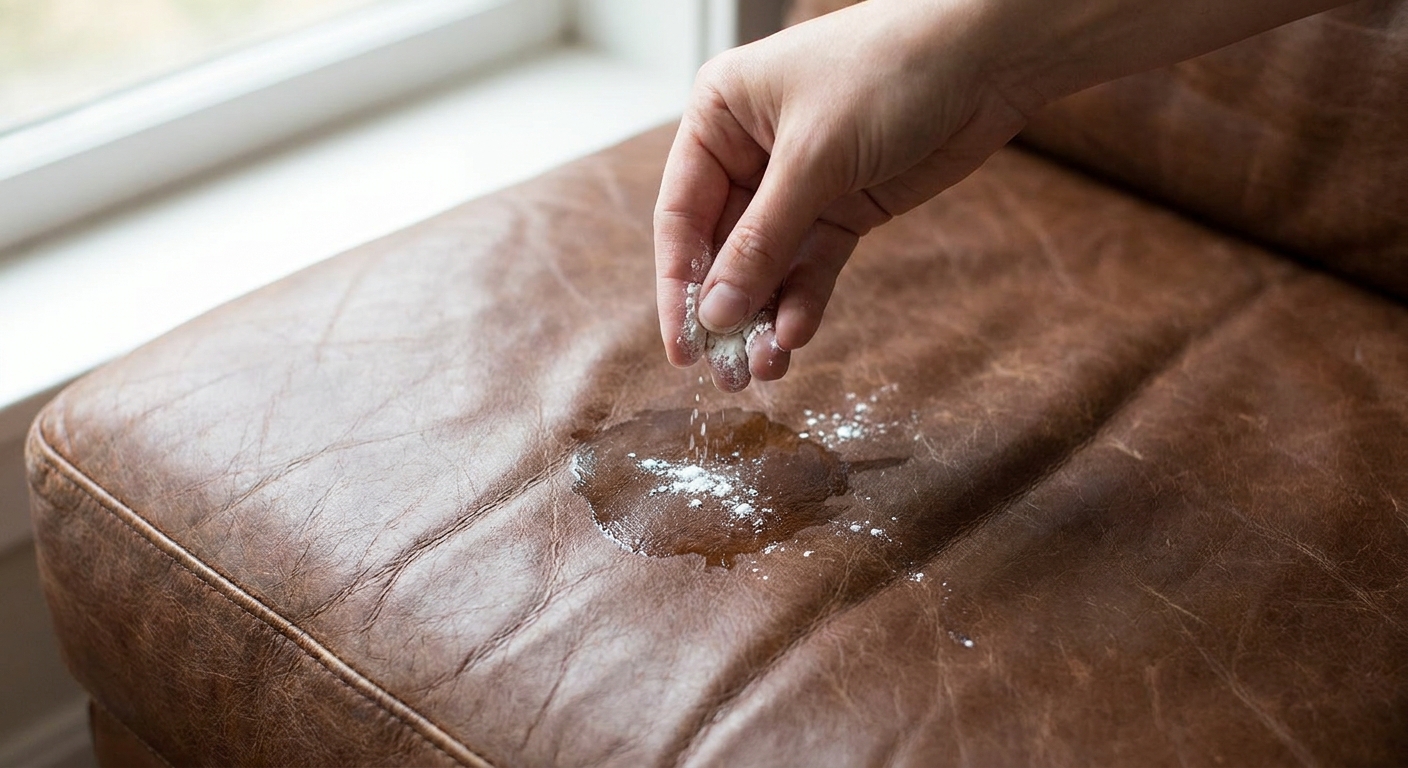
4) Use powder to pull out the oils
This is the no-drama trick that works beautifully on oily residues without adding water.
- Sprinkle a light layer of cornstarch or plain, unscented talc-free baby powder over the spot.
- Let it sit for at least 30 minutes. A few hours is better if the stain is oily and stubborn.
- Gently brush or lift the powder away with a dry cloth. If you have a vacuum with a soft brush attachment, keep it barely touching the surface.
If the leather still looks dark or slick, repeat once more. Two light rounds are safer than one aggressive round.
If you still see residue: a low-moisture wipe
If the surface feels tacky or you see a faint brown film after the powder step, you can do a very controlled, low-water wipe. This step is often about removing sugar residue that leaves a sticky feel, not just the oil.
Mix a gentle solution
- In a small bowl, add a few tablespoons of distilled water.
- Add one tiny drop of mild soap and swirl.
You are not making a bubble bath. You want barely soapy water.
Wipe with a barely damp cloth, then dry
- Dampen a cloth in the bowl and wring it out hard so it is just barely damp.
- Never pour the solution directly onto the leather.
- Wipe the area lightly, using small strokes.
- Switch to a dry cloth immediately and buff dry with gentle pressure.
If you are working on bonded leather, keep this step especially quick. Lingering moisture can stress the coating.
How to spot test safely
Spot testing is not fussy. It is you giving yourself a safe exit ramp.
Where to test
- Behind a seat cushion
- On the back corner near the floor
- Under the skirt or along a hidden seam
How to test
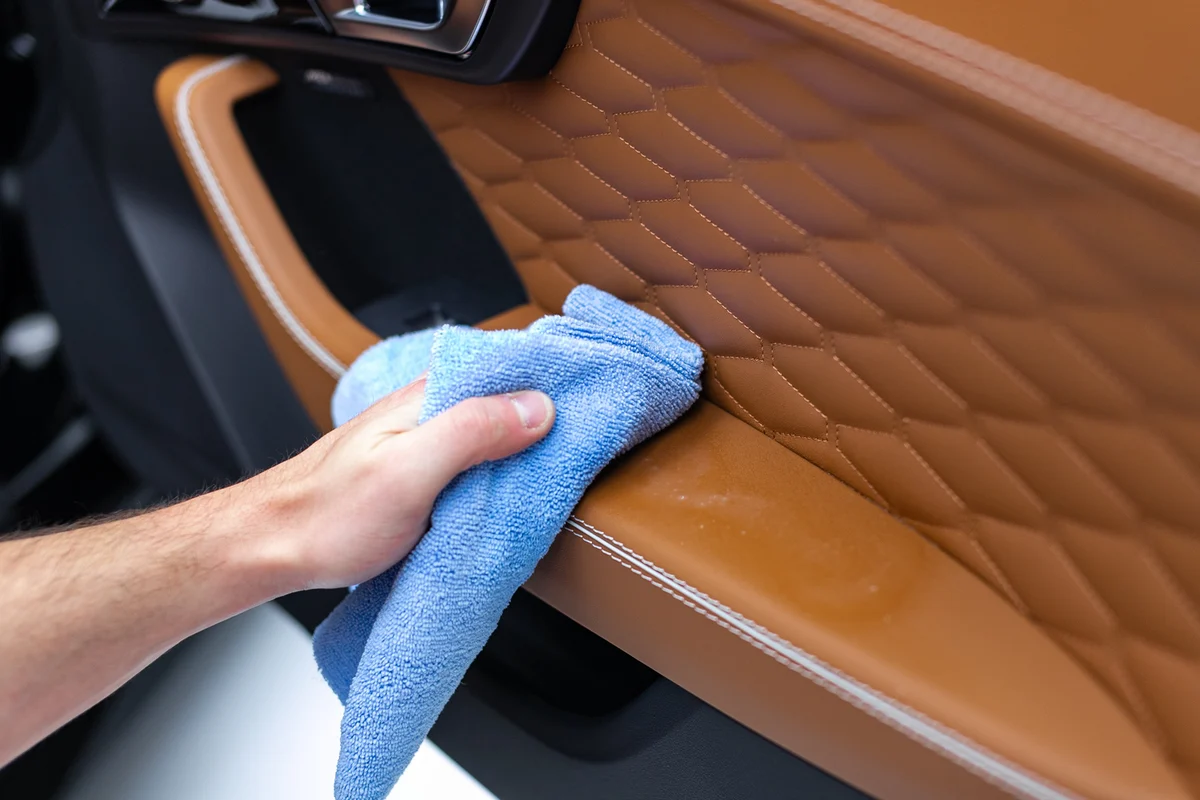
- Use the same cloth you plan to use for cleaning.
- Dab, do not rub, for 10 seconds.
- Check your cloth for color transfer.
- Let the test area dry for 10 to 15 minutes and look for dulling, darkening, or a sticky feel.
If you see dye on your cloth: stop and do not proceed on the visible area. Color transfer suggests the finish is delicate, worn, or not fully sealed.
When the brown color is set
Here is the hard truth: sometimes the chocolate has already tinted the topcoat or migrated into a more absorbent leather, especially if it sat warm for a while.
Signs it is mostly surface oil
- The spot looks darker but not distinctly brown
- It fades as it dries or after the powder step
- The texture still feels normal
Signs the dye has stained
- You see a tan or brown cast that remains even when the area is fully dry
- The stain has a defined edge and does not lighten after oil absorption
- The leather around it is clean but that one patch still looks tinted
If you are at this point, pushing harder can backfire. Aggressive rubbing can abrade the color coat and make a small stain turn into a light, dull patch that catches the light every time you walk by.
For a persistent brown tint that will not lift with the gentle steps above, you are typically looking at either a specialized leather-cleaning system made for finished leather or professional help. I am intentionally stopping here before solvents or strong degreasers that can cloud, soften, or strip the coating.
What not to do
- Do not soak the area or let water sit on leather.
- Do not use a hair dryer to speed-dry. Heat can drive oils deeper and can stress, warp, or dull the finish.
- Do not scrub with a brush, magic eraser, or anything abrasive.
- Do not use household cleaners like bleach, ammonia, or strong all-purpose sprays on leather.
- Do not jump to harsh solvents meant for paint or adhesives. These can cloud, soften, or crack the color coat.
Aftercare: even out the finish
Once the spot is gone, let the area rest for a few hours, then check it in daylight. If it looks slightly matte compared to the surrounding leather, a small amount of a leather conditioner designed for your leather type can help even out the sheen.
Use conditioner sparingly. Think: a pea-sized amount on a cloth, worked over a wider area than the original stain, so the finish blends instead of looking spot-treated.
Quick FAQ
What if the chocolate is in the grain?
Chill it, lift the solids, then use a dry cotton swab to coax residue out of texture lines. Follow with powder for oils. Avoid digging into the grain with anything sharp.
Can I use dish soap?
If it is very mild and used in a very diluted mix, it can work in a pinch. The risk is that stronger dish soaps can be too degreasing and may dull the finish. Keep it minimal and always spot test.
What if it is white chocolate?
White chocolate is mostly oil and sugar. The powder step is your best friend, because you are treating it like a grease spot more than a dye stain.
How long should I wait before deciding it is stained?
Let the area dry completely after each step. Leather can look darker when damp. If the tint remains after it is fully dry and after at least one powder round, it is more likely a set stain in the finish.