Remove Chocolate Stains From Fabric Sofas

Clara Townsend
Clara Townsend is an interior stylist, vintage furniture enthusiast, and the creative voice behind Velvet Abode. With over a decade of experience transforming both cramped city apartments and sprawling fixer-uppers, she believes that a beautiful home is built on personal stories rather than massive budgets. When she isn't hunting for the perfect brass sconce at a local flea market, she can usually be found rearranging her living room for the third time this month.
Chocolate stains feel unfair because they are two problems in one: a greasy smear (cocoa butter, milk fat) and a brown, lingering color (cocoa solids). The trick is to treat the “solid” first, then the oil, and only then chase what is left behind. And yes, your sofa’s cleaning code matters.
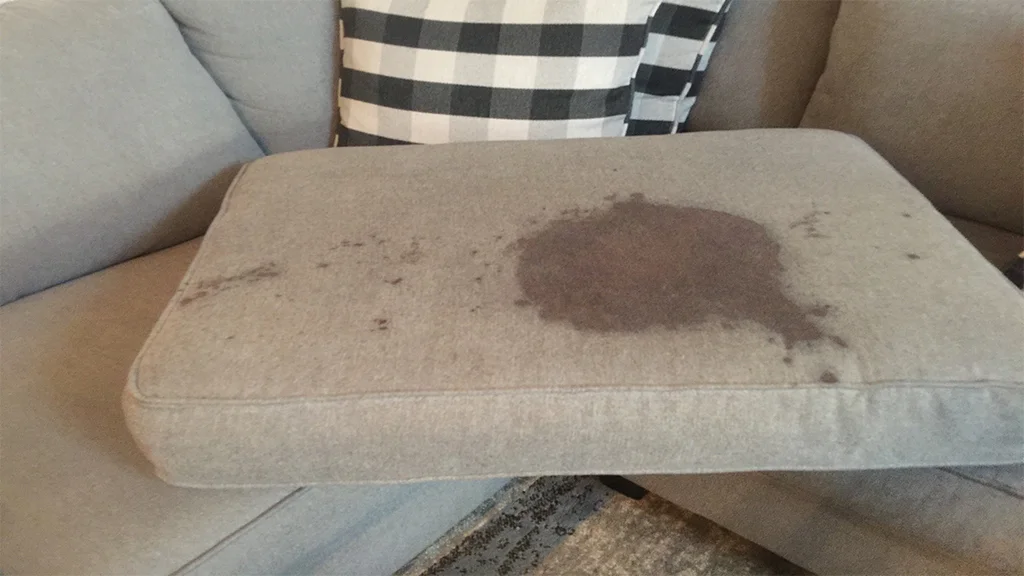
Before you touch the stain
1) Find your sofa’s cleaning code
Look for the manufacturer tag under a seat cushion or along the underside of the frame. You will usually see:
- W: Water-based cleaner is typically safe.
- S: Use solvent-based cleaners (often called “dry-cleaning solvent” for upholstery). Avoid water-based cleaning unless the manufacturer says otherwise.
- WS or SW: Either water-based or solvent-based can work.
- X: Vacuum only. No liquids. Call a pro for spots.
Quick note: These codes are common but not universal, and manufacturers can vary. When in doubt, follow the tag and brand guidance.
2) Patch-test (do not skip)
In a hidden spot (back hem, under a cushion), test your cleaner on a white cloth. Blot, let it fully dry, then check for:
- Color transfer onto the cloth
- Lightening or darkening
- Texture change (especially on microfiber and velvet)
3) Do a 30-second reality check
- Is it velvet, microfiber, linen blend, or performance fabric? Each behaves differently with moisture and agitation.
- Is the chocolate melted? If yes, you want cold first to keep oils from spreading.
- Is it old? Set-in chocolate often needs a second round or professional extraction.
- Any extras? Caramel, nut butters, and oily fillings act even greasier, so expect a little more degreasing and patience.
4) Gather a small, calm “stain kit”
- Dull spoon or butter knife
- White cloths or plain paper towels (no prints)
- A soft brush (like a clean nail brush) for nap fabrics, optional
- Cold water
- Mild dish soap (degreasing) or gentle laundry detergent
- Enzyme cleaner (for dairy components in milk chocolate or hot cocoa), if fabric code allows
- Rubbing alcohol (isopropyl) for many microfibers, if compatible
- Fan for drying
Velvet Abode rule: scrape, then blot. Rubbing turns chocolate into a permanent “shadow” that lives in the fibers like a bad memory.
Step-by-step: fresh chocolate on most fabric sofas
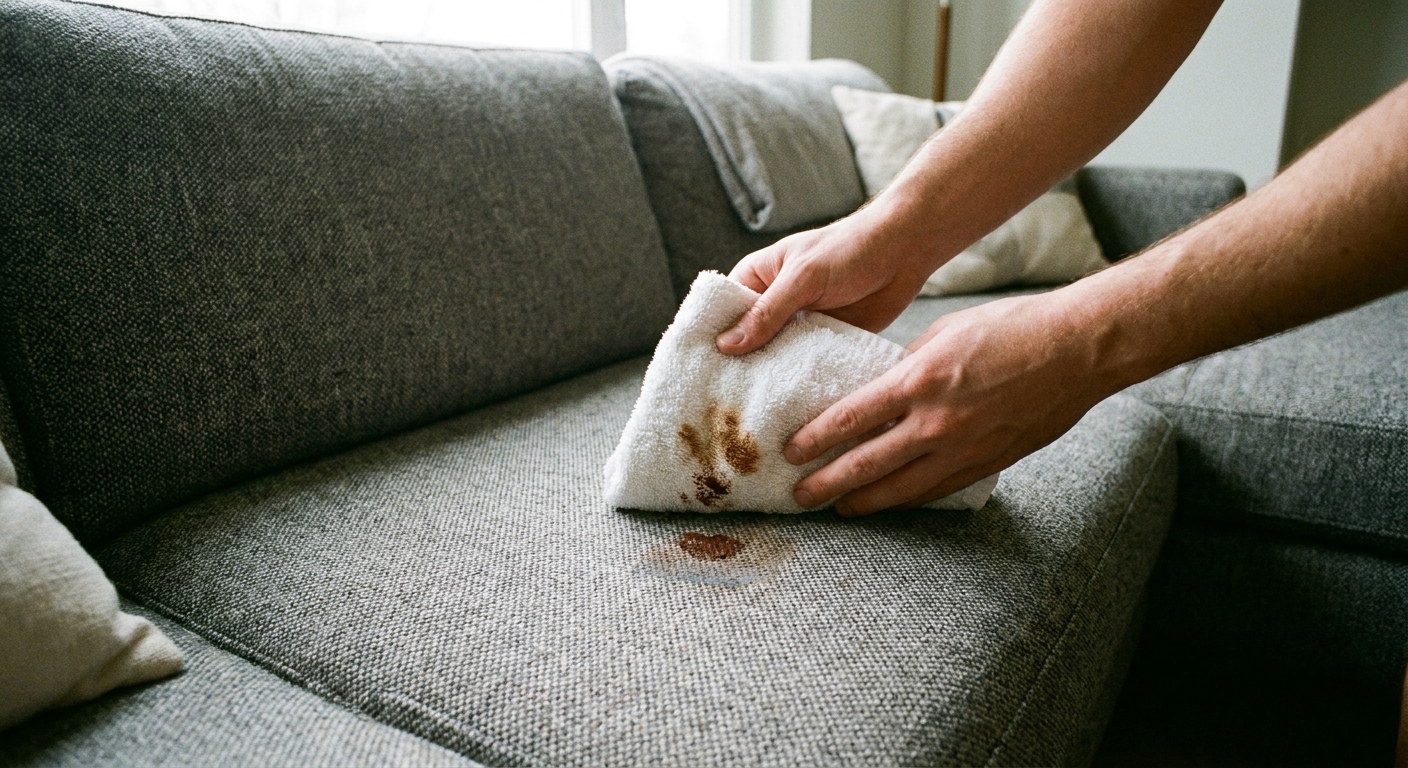
Step 1: Scrape off solids
Use a spoon edge to lift chocolate off the surface. Work from the outside toward the center so you do not widen the stain.
Step 2: Chill if it is melty
If chocolate is soft or glossy, put an ice cube in a plastic bag and hold it on the spot for 1 to 2 minutes. The goal is to firm it up so it lifts cleanly.
Step 3: Blot with cold water (W or WS only)
Dampen a cloth with cold water and blot gently. Use light, repeated presses. Do not grind. Keep switching to a clean area of cloth so you lift, not smear.
Step 4: Degrease the oily part
Mix a few drops of dish soap into a cup of cold water. Dip cloth, wring until barely damp, then blot. If the stain is stubborn, let the sudsy solution sit on the surface for 2 to 3 minutes (not soaking) before you blot again.
- Do not soak cushions. Too much moisture causes rings, water marks, and slow drying that can lead to odor.
- Blot from outside in, then finish with a plain cold-water blot to remove soap residue.
Step 5: Deal with what remains (residue vs color)
After degreasing, you usually see one of two things:
- Smeary or tacky feeling: that is often leftover oils or soap residue. Keep rinse-blotting with cold water and a clean cloth until it feels normal.
- A faint brown cast: that is leftover color in the fibers. For W or WS fabrics, an enzyme cleaner can help if there was dairy involved (milk chocolate, hot cocoa). Enzymes are best for the protein portion, not the fat. Blot it in, then rinse-blot. If the brown cast is truly stubborn, a pro-grade upholstery-safe oxidizer or professional cleaning may be the safer next step than piling on products at home.
Apply products to the cloth first (not directly to the sofa), then blot.
Step 6: Dry with intention
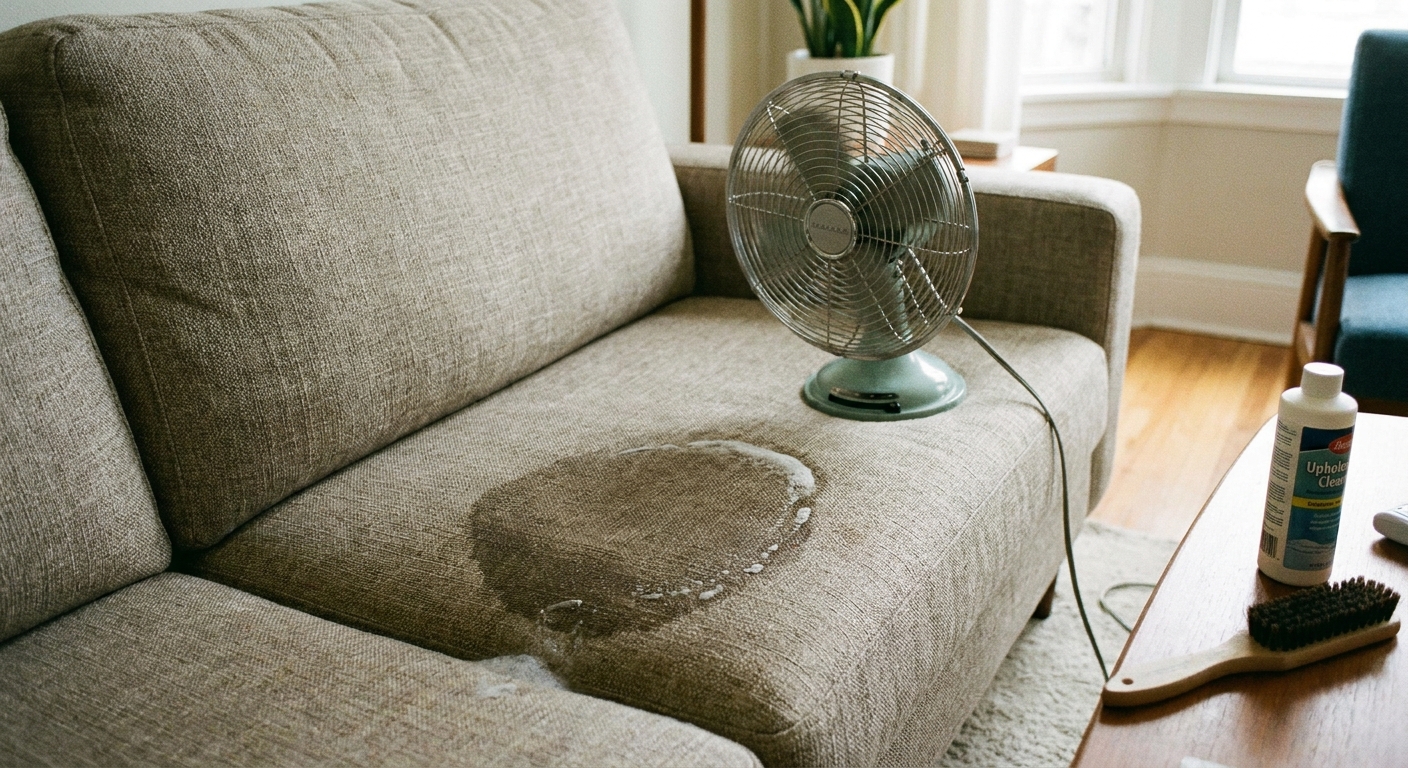
Press a dry cloth into the area to wick moisture, then aim a fan across the cushion. Fast drying is ring prevention.
Cold vs warm
Chocolate’s fat content is why temperature choices matter so much.
- Start cold for fresh or melty chocolate. Cold keeps fats firmer and less mobile.
- Use slightly warm water only after most grease is gone and you are chasing leftover residue on W/WS fabrics. Warm can help rinse away soap, but it can also spread remaining oils if you jump to it too soon.
- Avoid hot water on upholstery. It can set proteins from dairy and can damage some delicate fibers or finishes.
Fabric-specific workflows
Microfiber
Microfiber is a blessing and a curse. It releases stains well, but it loves to leave rings and texture changes.
- If your tag says S: Many microfibers are cleaned with rubbing alcohol. Scrape solids, then lightly blot with alcohol on a white cloth. Work outside to center. Let it dry, then gently brush the nap in one direction. Safety: ventilate the room, keep alcohol away from flames, and patch-test first because not all microfibers behave the same.
- If your tag says W or WS: Use the cold water and soap method, but keep moisture minimal and dry fast with a fan.
- Ring prevention: Lightly feather your damp blotting a little beyond the stain edge, then dry evenly. A hard wet circle is what creates that “halo.”
Velvet (cotton, rayon, or synthetic)
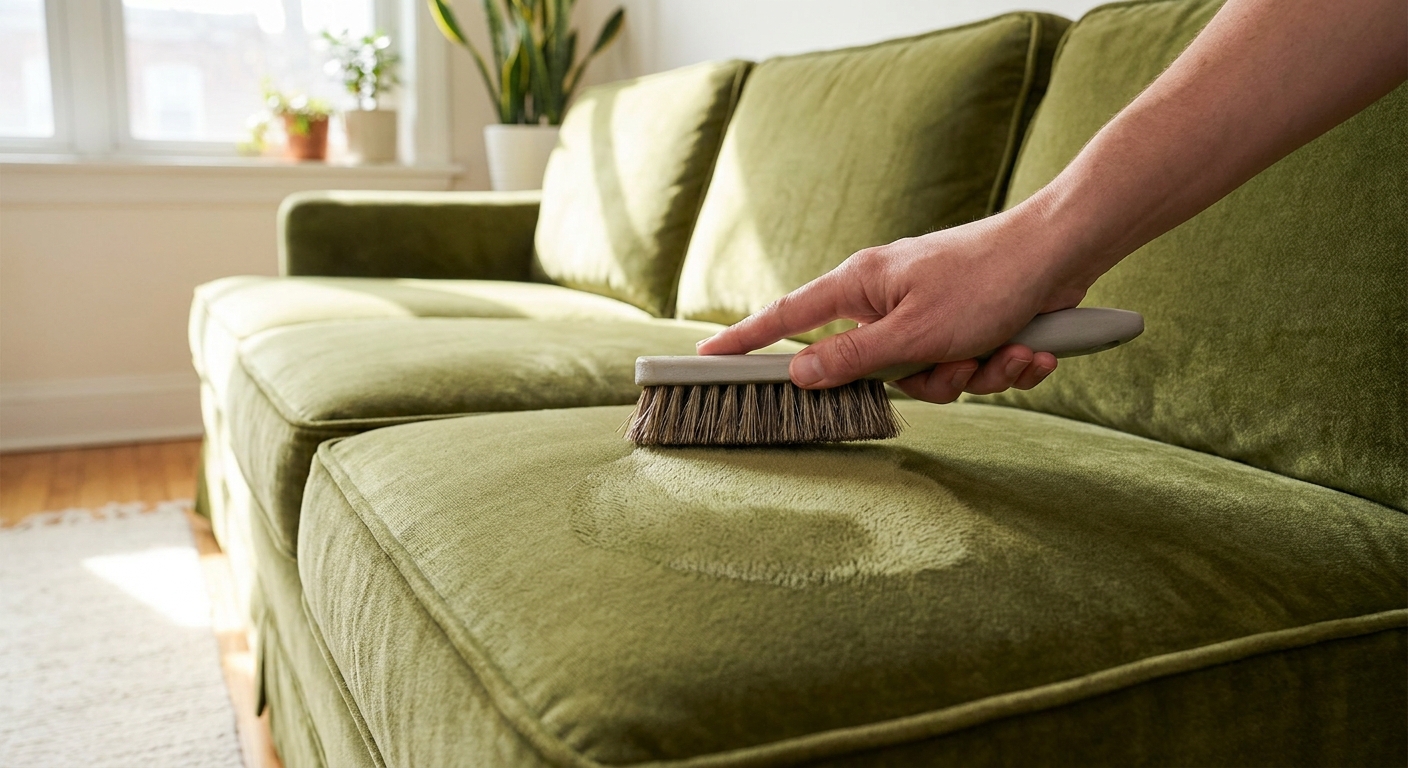
Velvet is all about the nap. Too much liquid or pressure can crush it, and oily chocolate can leave a darkened patch if it is rubbed in.
- Scrape gently, then blot with a barely damp cloth (cold water for W/WS, solvent method for S).
- Do not scrub. Think “kiss the stain” with your cloth, lift, repeat.
- Once dry, use a soft brush to lift the nap, brushing in the direction it naturally lies.
- If the velvet is rayon or silk blend, consider stopping early and calling a pro. Those fibers can watermark and pile-shift easily.
Linen and cotton weaves
Natural fibers can absorb color and show water marks.
- Use minimal moisture, blot often, and dry quickly.
- If your sofa cover is removable and washable, follow the care label. Pre-treat, then wash cold and air dry to avoid shrinkage.
- If a light shadow remains, repeat rather than intensify. Overworking linen is how you get a pale, fuzzy “clean spot.”
Wool blends
Wool can felt and distort with heat and agitation.
- Stay cold, blot gently, and keep detergent mild.
- Avoid heavy alkaline cleaners. They can damage wool fibers.
Performance fabrics (Crypton-type, treated poly blends)
These are often more forgiving, but the process is the same: scrape, cold blot, degrease, then rinse-blot and dry. Follow the brand’s care guidance if you have it, because some finishes prefer specific cleaners.
S-coded fabrics that are not microfiber
If your tag says S and your fabric is a woven upholstery, velvet, or blend, stick to a consumer upholstery cleaner labeled for S-code or “dry-clean only” fabrics. Apply to a cloth, blot gently, and avoid turning this into a wet project. When in doubt, this is a good moment to stop early and call a pro rather than experimenting on a large visible panel.
What to use (and what to avoid)
Good options
- Mild dish soap: Best first-line for the greasy part.
- Upholstery solvent for S-coded fabrics: Choose a product specifically labeled for solvent-safe upholstery use and follow the label directions.
- Enzyme cleaner (W/WS only): Helpful for dairy components in milk chocolate or hot cocoa, after you degrease.
- Rubbing alcohol (often for S-coded microfiber): Cuts oils and dries quickly. Patch-test and ventilate.
- Plain cold water: For blotting and rinsing residue.
Avoid these common mistakes
- Heat (hair dryer on hot, steamer, hot water): can spread oils and set the stain.
- Too much soap: leaves a dingy residue that attracts future dirt.
- Colored towels: dye transfer is heartbreak you do not need.
- Over-wetting cushions: invites rings and slow-dry odors.
- Vinegar as a first step: it can help with some stains, but it does not dissolve fats well. Degrease first.
- Mixing cleaners: keep it simple, rinse between steps, and do not combine products unless the label explicitly allows it.
Prevent rings and water marks
That pale outline after cleaning is usually not “stain coming back.” It is uneven moisture and residue.
- Work bigger than the spot: Feather your damp blotting slightly beyond the visible stain so the transition is gradual.
- Rinse-blot: After using soap or enzymes, do a final blot with plain cold water on a clean cloth.
- Dry evenly: Fan across the whole cushion face. Flip cushions if you can so moisture does not pool in one area.
- Do not press hard in one circle: That creates a compressed “map” on microfiber and velvet.
If the stain is set in
Older chocolate stains usually mean the oils have bonded with dust and the color has had time to cling. You can still improve it, but it may take more patience than force.
Try a two-pass approach (W/WS fabrics)
- Pass one: cold dish-soap blotting to remove remaining oils, then rinse-blot.
- Pass two: if dairy was involved, use an enzyme cleaner to target that component, then rinse-blot and dry fast.
When to stop and call a pro
- Your tag is X or the fabric is delicate velvet, rayon, silk blend, or antique upholstery.
- The stain is large, or it soaked into the cushion core.
- You smell sour milk or cocoa, which can mean it penetrated deeply.
- You see repeated rings after careful drying, which suggests residue in the fill needs extraction.
Professional upholstery cleaners can do controlled extraction and thorough rinsing without over-wetting your sofa, plus they have solvent options for S-coded fabrics. If you have already tried several DIY rounds, that is also your cue. Layering products often makes professional removal harder.
Quick checklist
- Check the tag and patch-test first.
- Scrape solids.
- Chill melty chocolate, then blot.
- Cold water first, not warm.
- Degrease with a tiny amount of dish soap.
- Enzymes are for dairy, not the oily part.
- Feather edges to prevent rings.
- Dry fast with a fan.
Before you start, double-check your sofa’s cleaning code, patch-test in a hidden area, and keep liquids and scrubbing to a minimum. Your goal is gentle lifting, not a wrestling match.