Lampshade Tilting on a Harp? Here’s Why
Gust
A little flutter. A cozier corner.
If your spider fitter lampshade is the right diameter and height but still leans like it is trying to eavesdrop, the problem is often not the shade’s size. It is the way the shade is sitting on the harp and finial, which is a more fussy little relationship than it looks.
First, confirm your setup
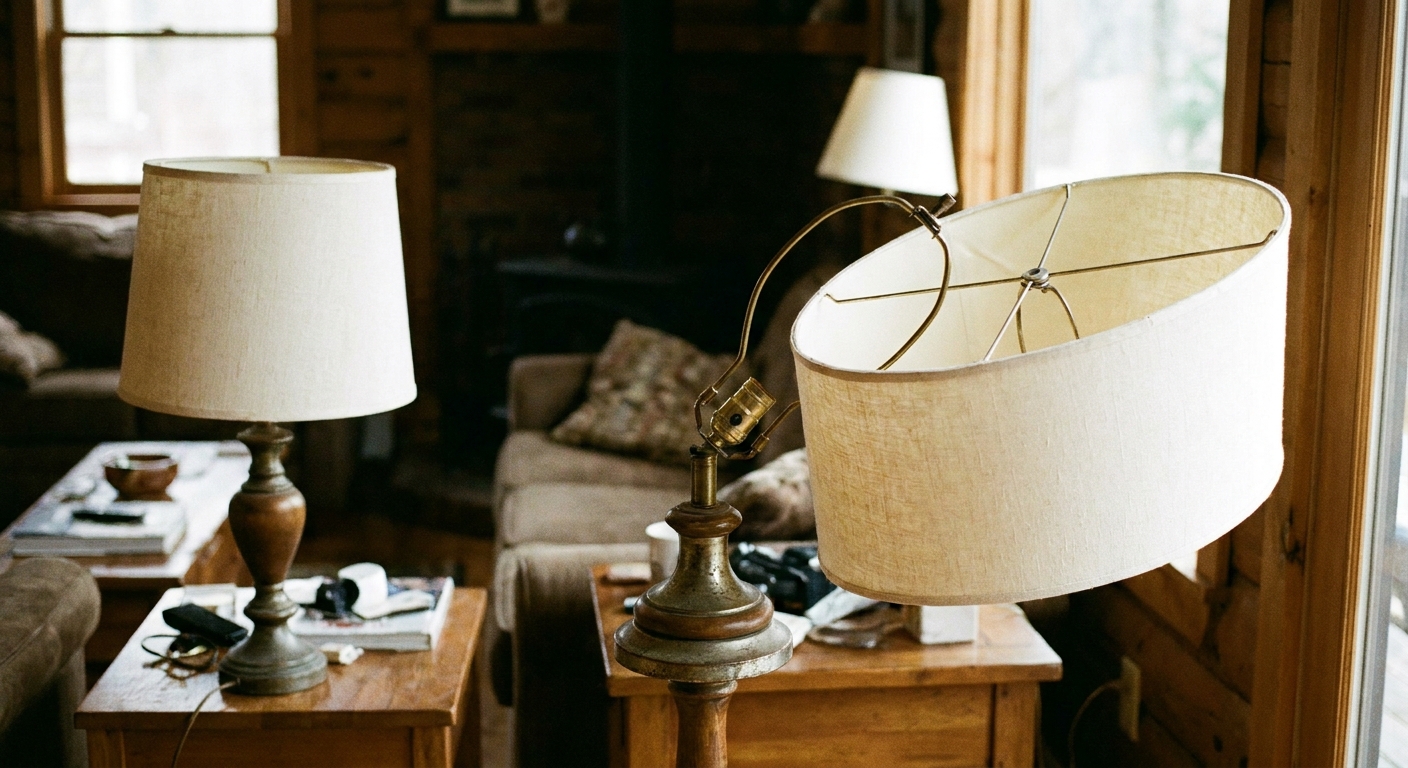
This article is for a common setup:
- Spider fitter shade: a metal ring with spokes (the “spider”) at the top of the shade.
- Harp: the U-shaped metal frame that rises from the lamp base to hold the shade.
- Finial: the knob that screws onto the threaded tip at the top of the harp and clamps the shade in place.
I will also mention the harp saddle, which is the little top crossbar where the shade ring rests.
If that is what you have, keep reading. If not, hop to the section at the end called “This is not the same problem as…” so you do not waste time fixing the wrong thing.
Quick safety pause
Turn the lamp off, unplug it, and let the bulb cool. A crooked shade fix is usually a two-minute job, unless you do it with a hot bulb hovering near your knuckles.
Why a spider shade tilts
Spider shades tilt when the shade ring is not sitting flat and centered on the harp saddle, or when the finial is not clamping down evenly. Here are the most common culprits, in the order I would check them.
1) The harp is bent or twisted
A harp can look fine from the front and still be slightly twisted. Even a small bend can make the top saddle sit at an angle, which forces the spider ring to lean.
What to look for
- The harp leans left or right when viewed straight on.
- The two sides of the harp are not symmetrical.
- The top saddle does not look level compared to the lamp base.
What to do
Remove the shade and finial. With the harp exposed, check it from multiple angles. If it is only slightly out of alignment, you can often gently straighten it by hand. Do not over-bend metal. You can snap a weld, chip a finish, or trade a small tilt for a bigger one.
If it is noticeably bent, replacing the harp is usually easier and cleaner than wrestling the metal back into perfect shape.
Also make sure the harp is fully seated in the harp holder (the base piece near the socket). Some lamps have a small set screw on the holder. If yours does, snug it up so the harp cannot wobble.
2) The harp holder or saddle is loose
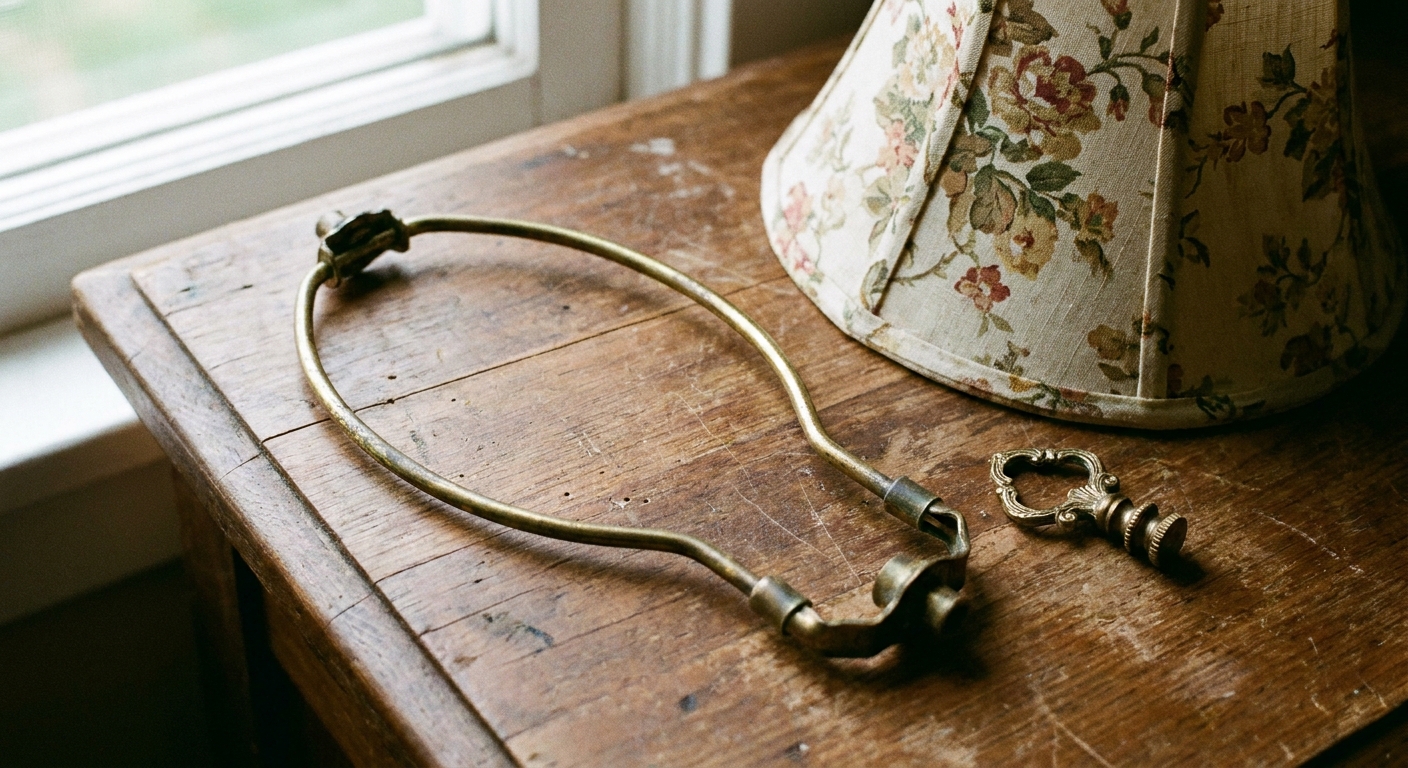
Sometimes the harp is fine, but the holder it sits in has play, or the saddle at the top is a little crooked. That can make a shade lean no matter how perfectly you tighten the finial.
What to look for
- The harp rocks slightly if you wiggle it near the socket area.
- The top saddle looks skewed even when the harp legs look straight.
- The shade straightens temporarily if you press the harp into place, then tilts again.
What to do
Reseat the harp firmly into the holder. If your holder has a set screw, tighten it. If the holder itself is bent, cracked, or will not hold the harp centered, replacement is the calmest fix.
3) A washer would help the finial clamp evenly
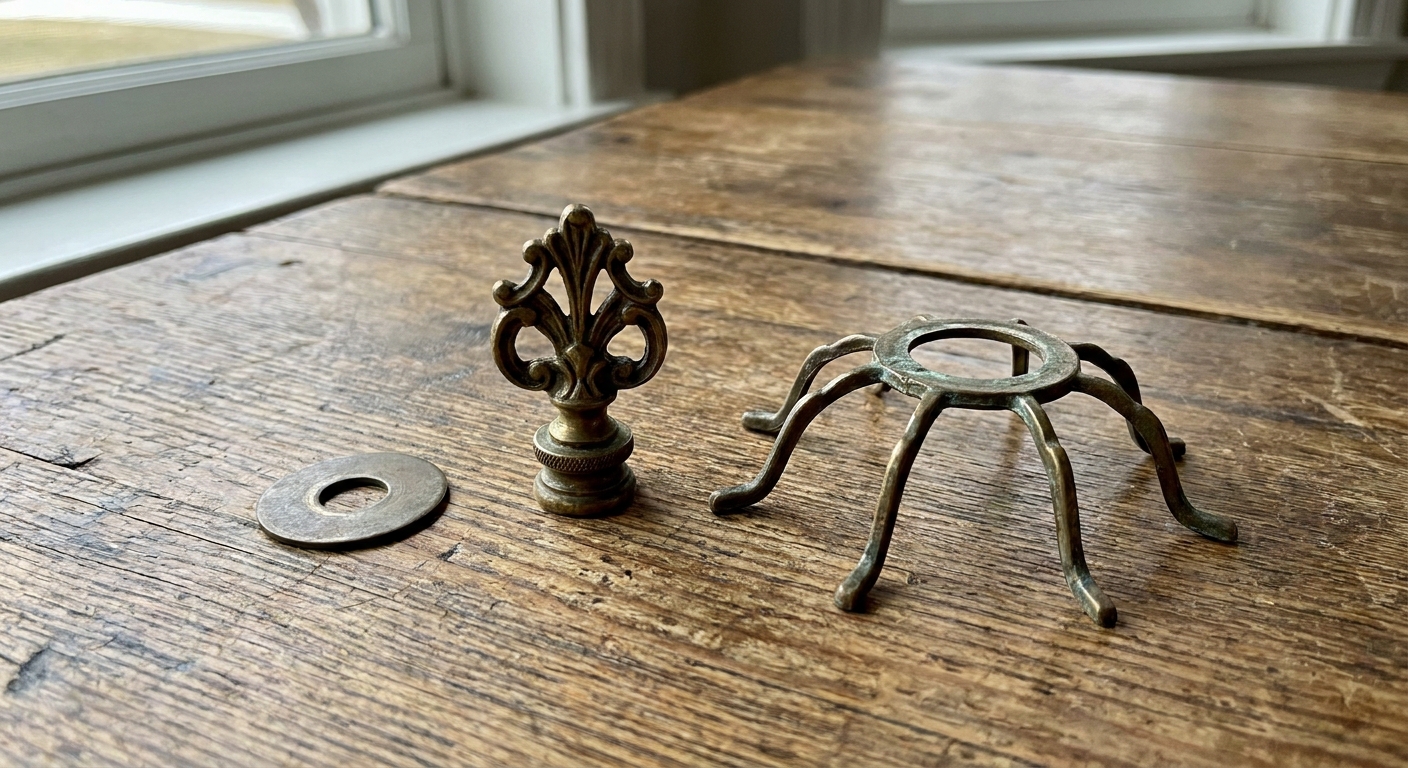
This one is sneaky. Many spider shades clamp perfectly with just a finial. But a lot of setups benefit from a washer between the finial and the spider ring, especially if the finial base is small, rounded, or decorative.
How it causes a tilt
The washer spreads pressure across the spider ring. Without it, the finial can press more on one side than the other, so the ring shifts as you tighten.
What to do
- Unscrew the finial and check whether you have a washer already. They like to disappear during bulb changes.
- If you have a washer, place it on top of the spider ring, then screw the finial down.
- If you do not have one, a standard lampshade washer from a hardware store or lamp parts shop is typically the simplest fix. If your finial has a wide, flat base, you may not need one at all.
The usual sequence is: harp → spider ring → washer (optional) → finial.
4) The finial will not seat straight
If the finial cannot sit squarely, it cannot clamp the shade squarely. A few things can make a finial feel “tight” but still be crooked.
Common reasons
- Cross-threading: the finial starts on the threads at an angle and binds.
- Wrong fit: the finial catches but never truly sits down properly.
- Finial base shape: some finials have a narrow or domed underside that does not press evenly, especially without a washer.
- Threaded rod is bent: less common, but possible if the lamp has been bumped.
What to do
- Remove the finial and start again slowly. If it resists immediately, do not force it.
- Make sure the finial spins smoothly for several turns before it begins to tighten.
- If the finial tightens but the shade shifts as you turn, stop and add or replace the washer, then try again.
A good finial tightening is firm, not a battle. If you have to crank it hard to make it behave, something is mismatched.
5) The spider ring is off-center or bent
Even brand-new shades can have a spider fitter ring that is not perfectly centered, and vintage shades can get gently squished in storage. If the ring is attached a touch off, the shade will look tilted even when the harp is perfectly straight.
How to check
- Set the shade upside down on a flat surface and look at the ring. Does it sit flat?
- Look down into the shade from the top. Does the ring appear centered, or does it drift closer to one side?
- If your shade has a fabric seam, confirm it is aligned where you want it. Sometimes the shade is straight, but the seam placement makes the tilt look more obvious.
What to do
If the ring is only slightly bent, you can sometimes nudge it back into plane with gentle pressure. If it is clearly off-center due to construction, the best fix is usually exchanging the shade or choosing a different one. A crooked ring will keep telling on itself, especially on lamps that sit at eye level.
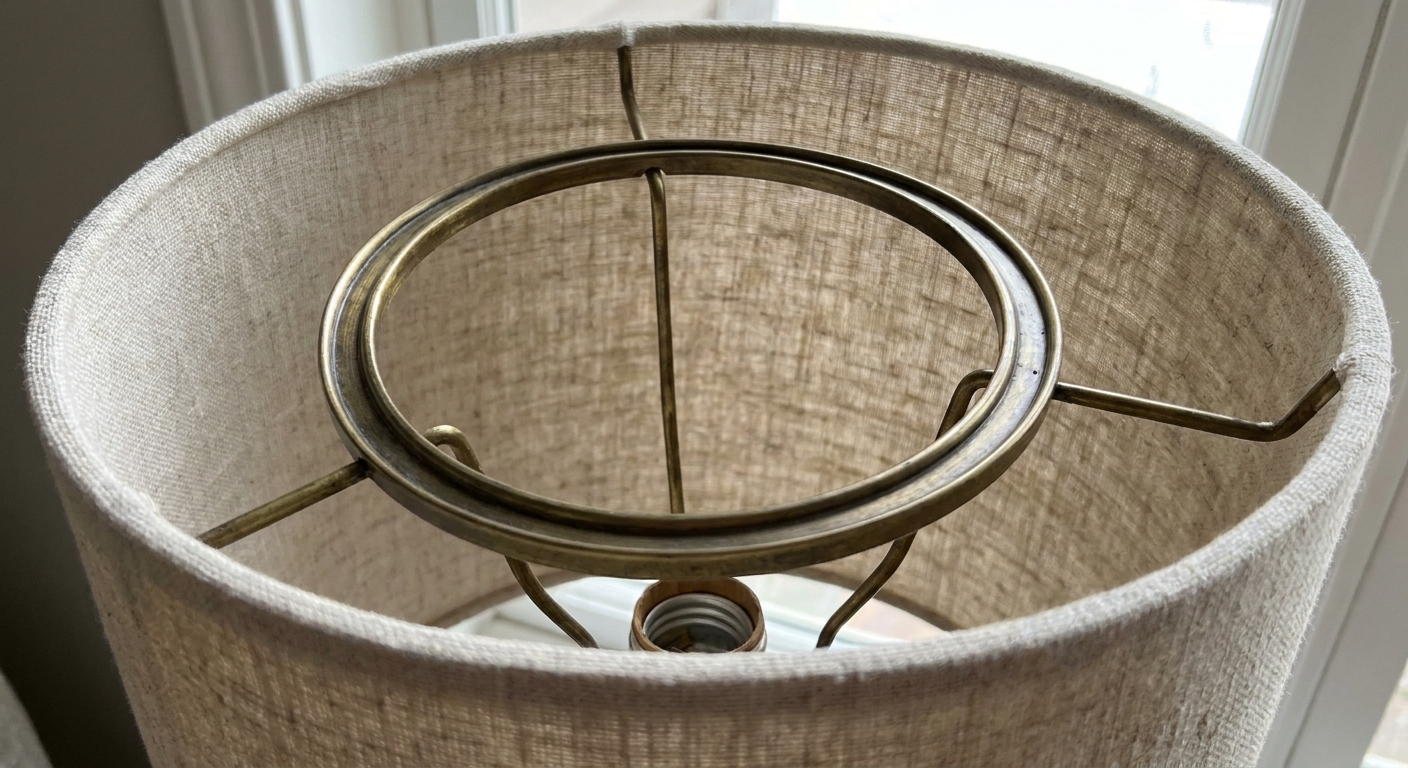
6) The harp height is forcing a tilt
This is an easy one to miss: a too-tall or too-short harp can make a shade sit oddly, even if nothing is bent. If the shade is bumping the socket shell, the bulb, or the lamp neck, it can get pushed to one side and look like a lean.
What to look for
- The shade touches the socket area or lamp neck on one side.
- The bulb is off-center inside the shade.
- The shade looks better when you lift it slightly, but tilts when it drops back down.
What to do
Confirm you have clearance all around the socket and bulb. If the shade is crowding the hardware, swap to a different harp height so the shade sits where it has room to be centered.
Get it straight fast
If you want the quickest route to “why is it leaning,” try this in order:
- Remove finial, washer (if present), and shade.
- Check the harp from the side and front for bends or twist.
- Check the holder near the socket and make sure the harp is seated and not wobbly.
- Place the shade so the spider ring sits flat on the harp saddle.
- Add washer if your finial base is narrow or rounded, or if tightening keeps shifting the shade.
- Screw finial on gently and evenly, watching for the shade to shift as you tighten.
If the shade shifts during step 6, that is your clue. Either the finial is not seating straight, the washer would help, the spider ring is not flat, or the harp holder is letting everything drift.
This is not the same problem as…
A clip-on shade that slips
A clip-on shade grips the bulb itself. If it is slipping, the fix has more to do with clip tension, bulb shape and size, and heat-safe fit. A clip-on does not use a harp and finial in the same way, so the troubleshooting steps above will not apply.
A lamp with no harp
If your lamp does not have a harp (no U-shaped frame rising from the socket area), a spider shade cannot sit correctly until the lamp is fitted with the proper hardware. That is a different project involving a harp, harp holder, and sometimes a different socket setup.
Replace, do not wrestle
Sometimes the most peaceful fix is swapping one small part.
- Replace the harp if it is clearly bent, wobbly, or never sits centered.
- Replace the harp holder if the harp will not seat securely near the socket.
- Replace the finial if it cross-threads, will not tighten smoothly, or is mismatched to the threaded rod.
- Exchange the shade if the spider ring is attached off-center or visibly warped.
A straight shade makes a room feel calmer in a way you cannot unsee once you notice it. Tiny tilt, big mood.
FAQ
Why does my shade look straight until I tighten the finial?
That usually points to an uneven clamp. Check whether a washer would help, whether the finial is seating squarely, and whether the spider ring is slightly bent. Tightening can pull the ring off-center if pressure is concentrated on one side.
Can a shade be the right size and still sit crooked?
Yes. Diameter and height determine proportion and coverage. Crookedness is usually a hardware alignment issue at the top: harp, saddle, holder, washer, finial, or the shade’s ring.
My harp looks straight. What is the next most likely issue?
A loose harp holder near the socket is a big contender, followed closely by a finial that is not seating straight. After that, suspect the spider ring itself or a harp height that is crowding the socket or bulb.