Cat Urine Smell in a Fabric Headboard

Clara Townsend
If you are reading this while side-eyeing your headboard and taking little suspicious sniffs like a detective, I have been there. Cat urine in a fabric headboard is extra rude because so many headboards are built like a sealed sandwich: upholstery fabric on the front, foam in the middle, dust cover fabric on the back, all stapled tight to a wood frame. No zipper. No cushion insert to pull. Nowhere for the odor to go except straight into your life.
The good news is that you can often save the headboard. The honest news is that cat urine is chemistry, not just a “stain,” and if the wall behind the headboard got hit, you have to treat both the upholstered panel and the drywall or the smell keeps ghosting back every humid day.
Why headboards are harder than couches
Most urine-cleanup advice assumes you can unzip a cushion cover and treat the foam separately. With a stapled headboard, the foam is usually glued or tightly wrapped and sealed in place. That changes three key things:
- You cannot fully flush the foam. Enzyme cleaners need contact time with the uric acid salts and other residue, but you do not want to saturate foam you cannot rinse and dry quickly.
- Gravity makes the mess travel. On a vertical panel, liquid will wick downward through batting and along seams. A small “spot” on the front can mean a much larger contaminated area inside.
- The wall becomes part of the problem. Spray can hit the wall directly or seep through the back dust cover. Drywall and baseboard can hold odor even if the front fabric looks fine.
First: figure out what kind of incident you have
Cat spray (small volume, strong odor)
Spray is often concentrated and can be more about odor than visible wetness. It tends to land on vertical surfaces, so headboards are prime targets. Spray can soak in fast, especially on linen-look weaves.
A soak (larger volume, deeper saturation)
This is when a cat actually urinates against or near the headboard. If you pressed a paper towel to the fabric and it came away damp, or the smell is strongest low on a wing or near the floor, assume the foam and the wall both may be involved.
Old urine (it “comes back”)
Old cat urine can seem gone, then reappear when the room is warm or humid. That is usually uric acid salts rehydrating in fabric, foam, wood, or drywall.
How far it can wick
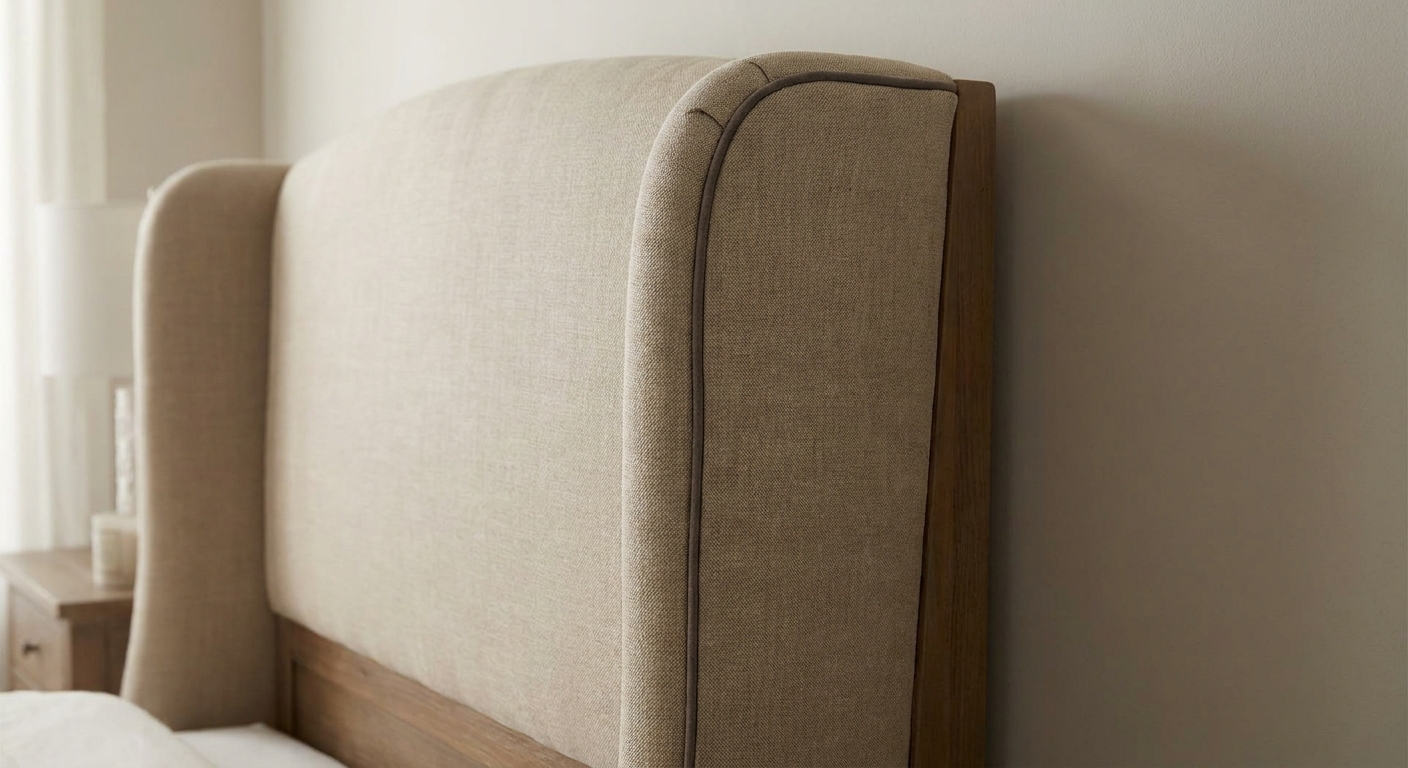
This surprises people. In a wingback-style headboard, liquid can wick inside the padding and migrate down the inside edge like a hidden little waterfall. I have seen a small spray mark at mid-height create odor all the way down near the bottom corner because the urine followed the foam and batting layers and collected where the frame meets the dust cover.
Practical rule: if you detect odor at one point, plan to treat an area at least 8 to 12 inches below it, and include seams, piping, and tufting lines because those are “highways” for wicking.
What you need
- Paper towels or clean white cloths
- Nitrile gloves
- A spray bottle of plain water
- An enzymatic pet urine cleaner (unscented if possible)
- A small bowl and spoon for spot application
- Baking soda (for a dry deodorizing stage, not as the main fix)
- A fan and, ideally, a dehumidifier
- A blacklight flashlight (optional but helpful)
- Screwdriver or hex key if your headboard is mounted
Quick safety note: never mix cleaners. Do not combine vinegar, bleach, peroxide products, or ammonia-based cleaners with anything else. Also skip anything with ammonia. Cat urine can turn ammonia-like as it breaks down, and ammonia-scented cleaners can encourage repeat marking.
Ventilation matters too: crack a window if you can and run a fan while you work, especially if you move on to primers later.
How to treat a sealed headboard
1) Pull it away from the wall
Even a few inches helps. You want airflow, and you need to check whether the wall took a hit. If it is bolted, loosen it enough to peek behind, or remove it completely if you can manage it safely.
2) Find the full affected zone
Use your nose up close, then confirm with a blacklight in a dark room if you have one. Mark the perimeter lightly with painter’s tape so you treat a wide enough area.
3) Do a quick color test
Before you put any cleaner on the main spot, dab a little enzyme cleaner on a hidden area (back edge, inside wing, or along the lower backside) and blot with a white cloth. If you see dye transfer or the fabric texture changes, stop and consider a pro.
4) Blot, do not rub
If anything is still damp, blot firmly with paper towels. Press, lift, rotate to a clean area, repeat. Rubbing drives urine deeper into the weave and padding.
5) Lightly pre-dampen with water
This feels counterintuitive, but a small amount of water can help the enzyme solution spread more evenly instead of sitting on the fabric surface. Mist the area, do not soak it.
6) Apply enzyme cleaner in controlled passes
Here is the limit with headboards: enzymes work best when the contaminated material is thoroughly wet with the product, but foam that cannot be removed can turn into a smelly sponge if you overdo it.
My approach is “multiple controlled passes,” and I go wider than the visible spot:
- Mist the surface until it is evenly damp, including seams and about 8 to 12 inches beyond where you smell it strongest.
- Pause 10 to 15 minutes, then do a quick sniff check. This is just to decide whether you missed an edge, not the final verdict.
- For seams and piping, use a spoon or a small syringe-style applicator if you have one to get product into crevices without flooding the whole panel.
7) Give it real dwell time
Enzymes need time. Always follow your product directions, but many enzyme cleaners work best when they stay wet longer and are allowed to air-dry slowly on the contaminated material. If the area is drying too fast, add a bit more enzyme cleaner (not plain water, unless your product specifically says you can) to keep it damp for the recommended period.
8) Blot again, then dry aggressively
Once the dwell time is up, blot excess moisture. Then aim a fan across the surface and into the gap behind the headboard. If you have a dehumidifier, run it. Drying is not just comfort, it is odor control.
Important: do not judge success until everything is fully dry. Damp fabric can smell worse before it smells better.
9) Optional: dry deodorizing stage
When the fabric is fully dry, you can sprinkle baking soda lightly over the treated zone, let it sit a few hours, then vacuum with an upholstery attachment. This helps mop up lingering smell, but it does not replace the enzyme step.
When enzymes do not solve it
If you did a careful enzyme treatment and the smell is still there after the headboard is completely dry, one of these is usually true:
- The foam or batting is contaminated deeper than you can reach without opening the upholstery.
- The wood frame absorbed urine along the bottom edge or inside a wing.
- The wall behind it is the real culprit.
Next move: open the dust cover
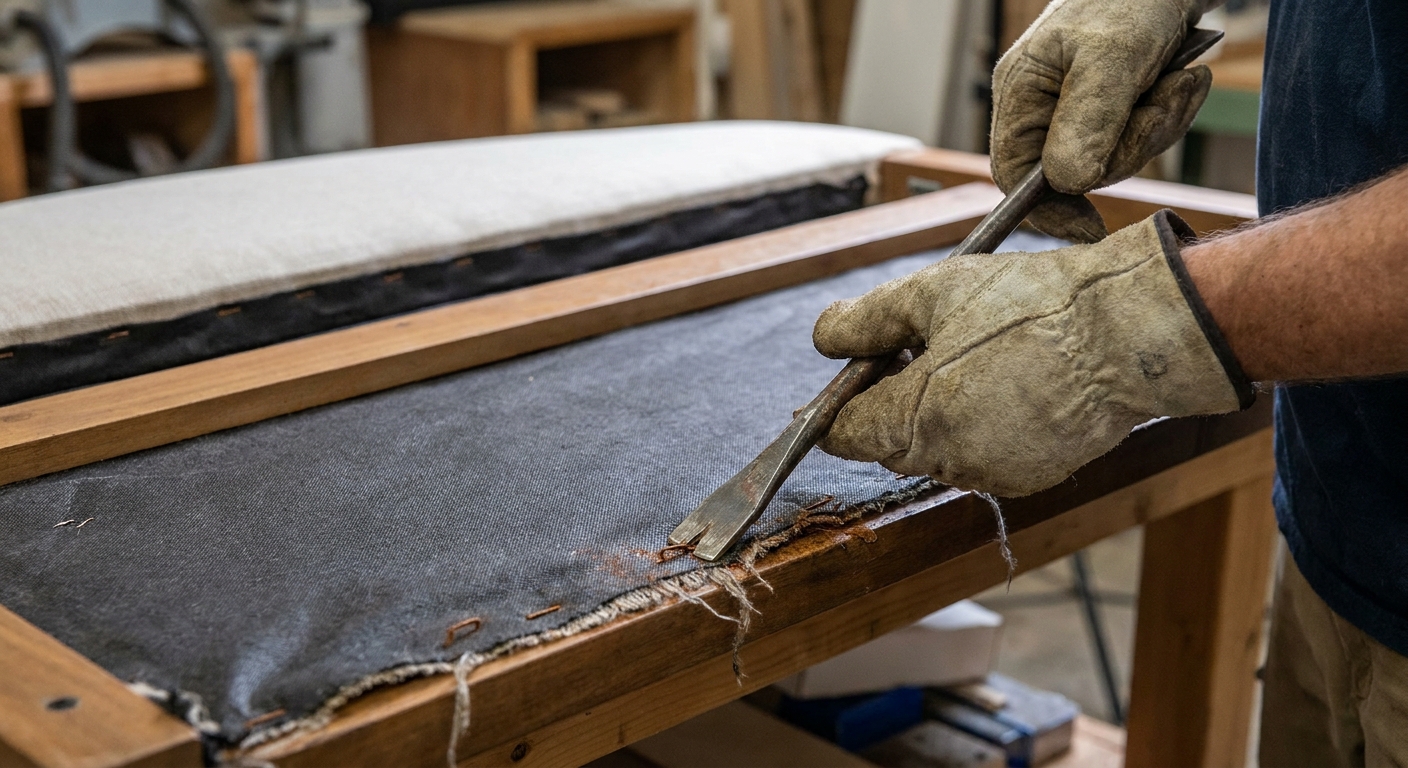
Most upholstered headboards have a thin black or cambric fabric stapled on the back. If you are comfortable doing a little “under the hood” work, carefully remove staples along the lower edge (or one side) so you can peel it back like a flap. You do not have to fully remove it to learn a lot.
What to look for:
- Staining on the inside of the dust cover
- Dampness or stiff, crunchy areas on the foam
- Odor strongest at the bottom rail or inside corners
If the interior foam is clearly saturated or smells strongest inside, you have two realistic options: treat from the inside with controlled enzyme application and strong drying, or replace the foam and batting (often easiest if you already have a staple gun or a local upholsterer you trust).
Do not ignore the wall
This is the part most people skip, and it is why the smell keeps coming back.
How to tell if drywall needs attention
- The odor is stronger behind the headboard than on the front fabric.
- You see drip marks or splatter on the wall, baseboard, or outlet plate area.
- The headboard smells improved, but the room still smells “catty,” especially with the door closed.
- A blacklight shows spots on the wall.
What to do for painted drywall
Start simple:
- Wipe the wall with warm water and a small amount of mild dish soap. Dry fully.
- Apply enzyme cleaner to the wall area, keeping it lightly damp. Let it dwell per label directions, then allow to dry completely.
If the urine soaked into drywall paper or the corner where wall meets baseboard, cleaning alone may not cut it. At that point, odor sealing is often the true fix: a shellac-based or oil-based stain-blocking primer is typically what stops odor migration. Many standard water-based primers underperform on urine odors unless they are specifically formulated and labeled for odor blocking. Once primed and cured, repaint.
When drywall may need to be replaced
Replacement sounds dramatic, but it is sometimes the cleanest answer, especially if the cat repeatedly sprayed the same spot for a long time. Consider cutting out and replacing the affected drywall if:
- The drywall is soft, swollen, or crumbling.
- Urine likely reached the bottom plate or insulation (possible, especially on exterior walls).
- The smell persists after cleaning and sealing.
If you are in a rental, take photos and loop in your landlord or property manager before priming or cutting drywall.
Tricky fabrics and details
Tufted headboards
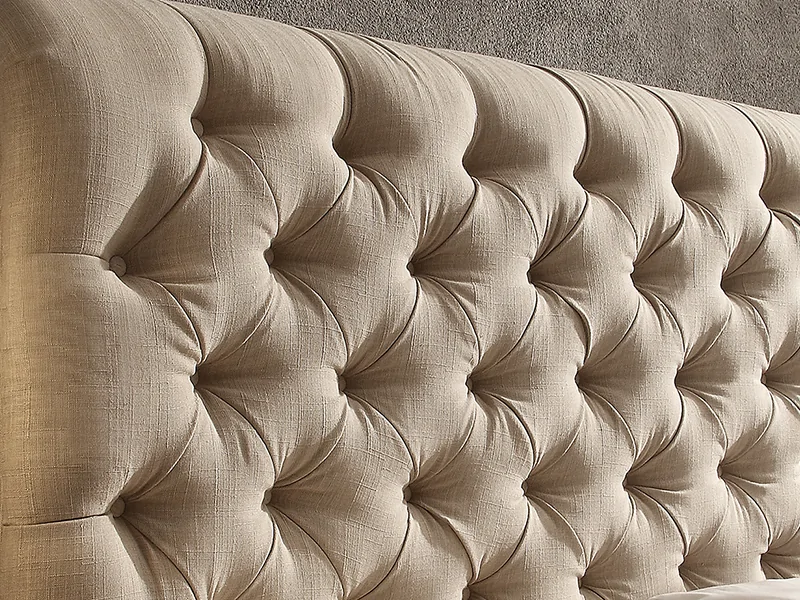
Buttons and tuft channels can funnel urine inward. Treat a wider area than you think, and pay extra attention to the tufts directly above the smell since liquid often travels down inside the padding.
Velvet
Velvet shows water marks easily. Blot fast, apply enzyme cleaner sparingly, and brush the nap gently with a soft upholstery brush once it is dry. If the velvet is viscose or silk velvet, call a professional cleaner, because spot-wetting can permanently change the pile.
“Dry clean only” upholstery
That label is about appearance, not odor chemistry. You can still do careful, minimal-moisture enzyme treatment, but test in a hidden spot first. If dye transfers to your cloth, stop and call a pro.
Mistakes to avoid
- Using steam or heat. Heat can push urine deeper into foam and wood, and it can make the odor harder to eliminate.
- Using vinegar as the main solution. It can help with fresh urine smell on some surfaces, but it does not break down uric acid salts the way enzymes are designed to.
- Masking with fragrance. It makes your bedroom smell like “lavender cat pee,” which is possibly the worst genre of scent.
- Over-saturating sealed foam. If it stays damp inside, you trade urine odor for mildew risk.
Prevent a repeat performance
Once the smell is truly gone, give yourself a little insurance while you figure out the “why.” A few simple things help:
- Block access to the gap behind the headboard temporarily (even pulling the bed a few inches forward can help).
- Add a washable barrier between the headboard and wall for a couple of weeks if your cat seems fixated on that corner.
- Revisit litter box basics: enough boxes, scooped daily, in low-stress locations, with a litter your cat will actually use.
- Reduce stressors where you can, and consider a vet visit if this behavior is new, sudden, or paired with any urinary changes.
When to stop and replace
I love saving things. I am the person who will drag home a sad little vintage chair and spend a weekend coaxing it back to life. But cat urine is one of the few times I will tell you, gently, to consider letting a piece go or rebuilding it.
Replace or reupholster if:
- The foam is heavily contaminated and cannot be dried quickly.
- The wood frame smells like urine even after enzyme treatment.
- The cat marked the same area repeatedly over months.
- You have addressed the wall and the smell still returns in humid weather.
Reupholstering a headboard is usually straightforward for an upholsterer, and sometimes for a confident DIYer with a staple gun. Swapping foam and batting often solves what surface cleaning cannot.
Quick FAQ
How long until the smell is truly gone?
For a fresh spot, you may notice improvement within hours, but give it a full 24 to 48 hours after complete drying to judge. Old urine can take multiple treatment cycles.
Why does it smell worse after I clean it?
As the area becomes damp, dried uric acid salts can rehydrate and smell stronger temporarily. If you used an enzyme cleaner and gave it proper dwell time, the odor should drop again once everything is fully dry.
Can I use hydrogen peroxide?
Peroxide can bleach or discolor fabric, and it is not a reliable solution for uric acid salts compared to enzymes. I reserve peroxide for specific stain situations on colorfast fabrics, not as my first-line urine odor fix on upholstered headboards.
What if the cat keeps returning to the same headboard corner?
That is usually a cue to address both the odor source and the reason for marking. Once you have cleaned and sealed properly, use a washable barrier between the headboard and wall for a while, and talk to your vet about potential stress or medical triggers.