Wool Rug Shiny or Felted After Steaming a Crease

Clara Townsend
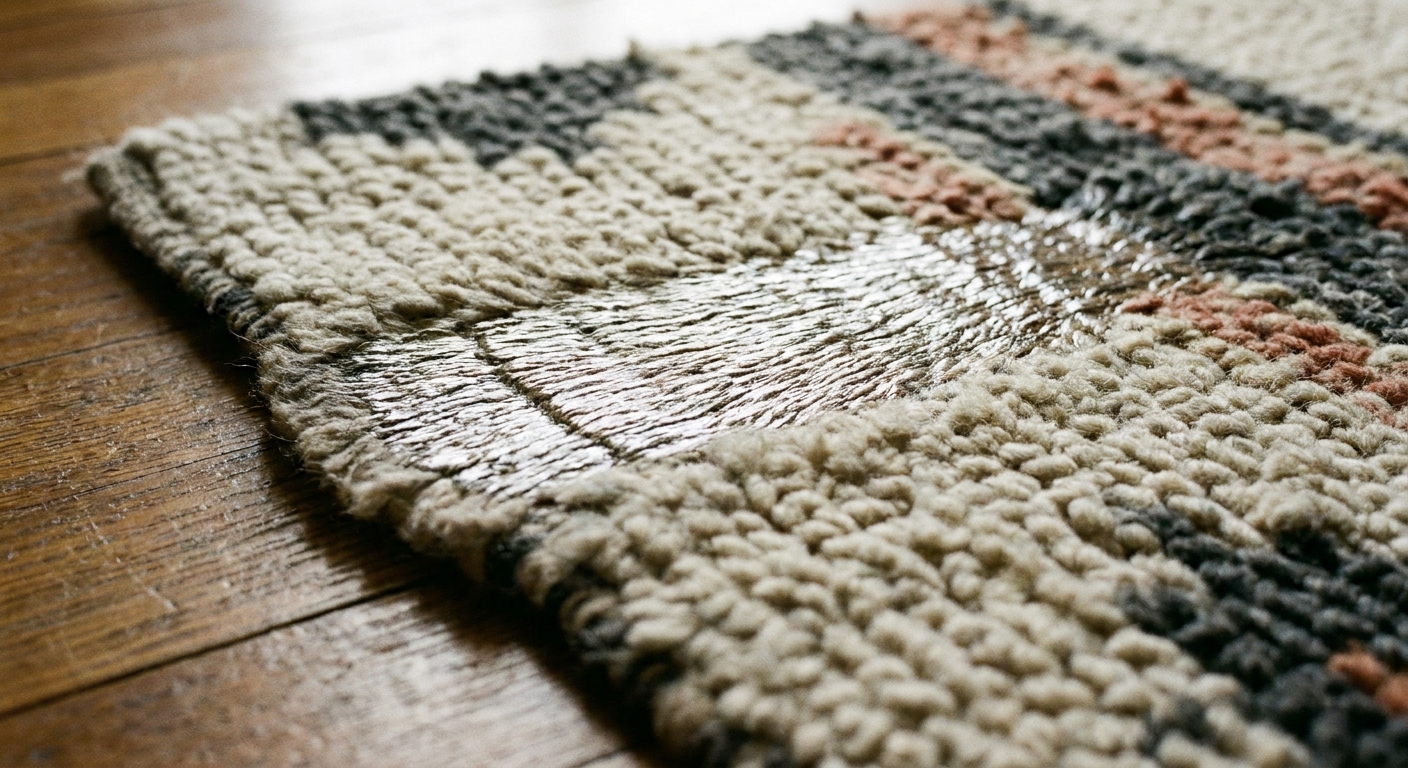
The first time I did this, I was feeling so proud of myself. New rug, stubborn shipping crease, kettle steaming away like a little Victorian train, and I was convinced I was minutes from a perfectly flat living room moment. Then the rug dried and there it was: a patch that looked oddly shiny, slightly darker, and kind of… stiff. Like the wool had decided to put on a waxy coat and never take it off.
If you are staring at a shiny or crunchy spot after steaming a crease, you are not imagining it. Wool is resilient, but it has a very specific weakness: heat plus moisture plus pressure can make the fibers grab onto each other or get compressed and change texture. Once that happens, repeating the same trick that caused the problem often makes it worse, not better.
Why wool turns shiny or stiff after steam
Wool fibers are covered in tiny overlapping scales (cuticle scales). In normal, dry conditions those scales sit quietly and the fibers stay springy. When you add heat and moisture, those scales can lift. Add pressure or friction (your hand pressing, a hot iron hovering too close, a heavy book, even the rug’s own weight on a fold) and the fibers can begin to entangle or get heat-compressed.
You will sometimes hear people say the steam “locked the scales.” That is not really a technical term, but the idea behind it is real: the fiber surface changes under steam and pressure, and the pile can start behaving like it has been lightly felted or polished. It often shows up as one of these:
- Shine: the fibers are flattened in one direction, reflecting light more like hair that has been slicked down.
- Stiffness: the pile feels compacted or crunchy because fibers are holding onto each other or have been compressed.
- Texture change: the area looks smoother, shorter, or slightly “polished” compared to the rest.
This can happen with a garment steamer, a steam iron used too close, or even “gentle” steam if you linger in one spot and then weigh it down while still warm and damp.
Check your fiber first (blends matter)
Before you treat this like a wool-only problem, take one minute to confirm what you are working with. Plenty of rugs sold as “wool” are actually wool blends, and some include viscose (rayon) for sheen or synthetics for durability.
- Look for a tag or listing that says 100% wool, wool/viscose, wool/rayon, wool/poly, or “art silk.”
- If it is a blend, the “shiny patch” may be happening to the viscose or synthetic component, not just the wool.
- If there is any synthetic pile (like polypropylene or polyester), too much heat can create a glazed, plastic-like sheen that is a different kind of damage than felting.
If you are unsure, a rug pro can identify fibers without you doing any risky at-home testing.
Why more steam or more weight usually will not undo it
I know the instinct is to treat it like a shipping crease: steam again, flatten again, wait again. The trouble is that felting and heat compression are not just a temporary bend in the fibers. They are a structural change in how the pile is sitting and how fibers are interacting.
More steam adds more heat and moisture, which can:
- encourage more entangling and make the patch larger
- flatten the pile further, increasing shine
- set the direction of the nap more aggressively if you press or weight it
Weighting has a place for relaxing ripples in a new rug, but once the pile has compacted, pressure tends to reinforce the new, flatter texture.
Is it damage or just pile shading?
Before you panic, let’s separate damage from totally normal wool behavior. Many wool rugs show shading as you walk, vacuum, or brush the pile. That is simply the fibers lying in different directions and reflecting light differently.
Quick checks you can do in two minutes
- The hand test: Rub your palm across the area and then the surrounding rug. If the patch feels noticeably stiffer, denser, or scratchier, that points to compression or partial felting.
- The flip test: Stand in two spots and look from different angles. If the “mark” moves or disappears when you change viewing direction, it is likely shading. If it stays put, it is more likely a texture change.
- The fiber lift test: Use your fingertips to gently lift and separate the pile. Shading still feels fluffy and individual fibers spring back. Compressed or felted areas feel like the fibers have started acting like one unit.
- The edge check: Shading has soft, blended edges. Steam damage often has a clearer boundary that matches where you steamed, pressed, or weighted.
If it looks different but feels basically the same, you may be dealing with pile direction only. If it looks different and feels different, assume the fibers have been altered.

What to do right now (safest at-home steps)
These steps are about minimizing the appearance and preventing the patch from getting worse. They can help if the fibers are mainly flattened or direction-set, and they are low risk if you go gently.
1) Stop adding heat and moisture
Let the rug fully dry if it is even slightly damp. No more steam passes “just to see.” Give it a full 24 hours in a normal, ventilated room.
2) Gently lift the pile, do not scrub it
Use a clean, dry rug brush or a wide-tooth pet comb and work very lightly in the direction that helps the patch blend in. Think: fluffing bangs, not raking a garden bed. If you feel resistance or hear fibers snagging, stop.
3) Vacuum carefully
Vacuuming can help re-align surrounding pile so the contrast is less obvious. Use suction only if your vacuum allows it. Avoid aggressive beater bars on looped or delicate piles.
4) Optional: try a cool mist (only for sturdy, colorfast rugs)
If the issue seems more like direction-set flattening than true compression or felting, a very light mist of distilled water can sometimes help you coax fibers upright with brushing as it dries.
By “sturdy,” I mean a rug that is dense cut pile, appears colorfast, and is not an antique, fragile, or high-value hand-knotted piece. If you have any doubt, skip this and call a pro.
- Test in an inconspicuous corner first.
- Mist from a distance, then brush gently, then let it air dry fully.
- Avoid soaking through to the foundation or backing. If you accidentally overspray, blot with a clean, dry towel.
- Do not place weight on it while damp.
If the patch is already stiff or compacted, skip the mist. Moisture by itself is not the whole story, but moisture plus pressure and friction is how you invite more matting.
What not to do
- Do not iron the rug directly. Even with a cloth, you can polish the fibers further and increase the shine.
- Do not keep steaming the exact spot. This is how small damage becomes a permanent “panel.”
- Do not scrub with a wet cloth. Friction plus moisture encourages more matting.
- Do not use vinegar, fabric softener, or hair conditioner. They can attract soil, affect dyes, and complicate professional cleaning later.
- Do not use a carpet cleaner machine. Over-wetting wool can cause rippling, dye bleed, and more texture change.
When the rug needs a professional
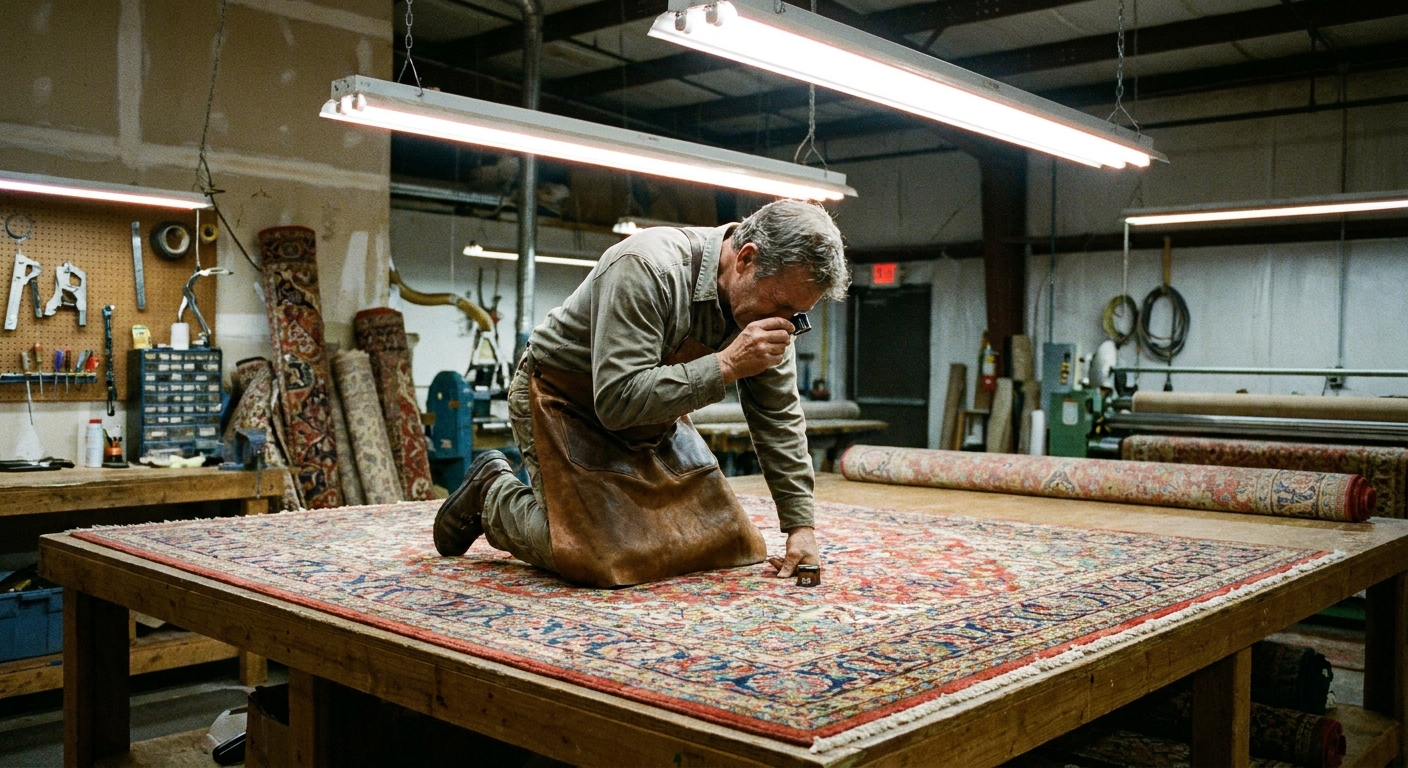
There is a point where this stops being a styling fix and becomes a fiber restoration situation. A reputable rug cleaner or rug repair specialist may be able to improve it with controlled rehydration, pile lifting tools, re-grooming, or (in some cases) careful re-shearing. Not every patch can be fully reversed, but pros can often make it less obvious and help prevent you from making it worse.
Call a pro if any of these are true
- The area feels hard, board-like, or noticeably thinner than the rest.
- The patch is expanding with each attempt to fix it.
- You see color change, dye transfer, or a watermark ring.
- The rug is hand-knotted, antique, or a special investment piece.
- The damage sits in a high-visibility zone (center of the room) and bothers you every time you walk in.
When you call, describe it plainly: “I steamed out a shipping crease and now there is a shiny, stiff patch.” If you can, share a photo taken in indirect daylight from two angles. That helps them tell pile compression from felting, and it also helps them spot blend issues.
How to prevent it next time
If you are still dealing with ripples or folds elsewhere on the rug, you can absolutely keep working on them. Just switch to a slower, gentler approach that does not concentrate steam and pressure in one place.
- Use time first: Often, a rug simply needs a week or two to relax after unrolling.
- Reverse-roll instead of steaming: Roll the rug the opposite way of the curl (not tightly), then let it sit for a few hours.
- If you must steam, keep distance: Hold the steamer head a few inches above the surface and keep it moving.
- Only weight when fully dry and cool: If you use books or a rug pad to help a crease relax, wait until the rug is completely dry and room-temperature, then place a breathable layer (like a cotton towel) between the weight and the rug.
- Work from the back when possible: Gentle heat from the underside reduces the chance of polishing the face fibers.
FAQ
Will the shiny patch go away on its own?
If it is simple pile direction or mild flattening, it can soften and blend over time with normal foot traffic and careful vacuuming. If it is compressed or partially felted, it is more likely to remain visible, though a pro can sometimes improve the texture.
How can I tell if I actually melted something?
Wool does not melt like synthetics, but it can scorch. If you smell burning hair, see browning, or the fibers feel brittle and break easily, assume heat damage and stop experimenting at home. If the rug is a wool-synthetic blend, a shiny glazed spot can also be heat damage to the synthetic fibers.
Is this the same as what happens to viscose or bamboo silk rugs?
Not exactly. Viscose and rayon (including many rugs marketed as “bamboo silk”) can go stiff, wavy, or crunchy from moisture because the fibers can weaken and distort when wet, and they can be difficult to restore once the pile collapses. Wool’s issue is more about scales, entangling under moisture plus pressure, and surface compression.
Should I trim the shiny fibers?
I would not. Snipping can create a low spot that catches light even more, and it is very hard to blend without proper tools. If pile height truly needs leveling, that is a job for someone who does rug shearing and finishing.
A gentle reality check
If you caused a shiny patch with steam, you did not “ruin your rug” as a human being. You just learned the slightly annoying truth about wool: it loves cozy conditions, and it also loves to felt when we give it a spa day plus a heavy book.
Pause the heat, do the gentle fluffing steps, and if the spot still feels dense and wrong, call a rug professional sooner rather than later. The earlier someone sees it, the more options you usually have.