Winter to Spring Decor Switch

Clara Townsend
Clara Townsend is an interior stylist, vintage furniture enthusiast, and the creative voice behind Velvet Abode. With over a decade of experience transforming both cramped city apartments and sprawling fixer-uppers, she believes that a beautiful home is built on personal stories rather than massive budgets. When she isn't hunting for the perfect brass sconce at a local flea market, she can usually be found rearranging her living room for the third time this month.
There is a particular decorating limbo that happens after the holidays. The twinkle lights are gone, the evergreen scent has faded, and yet it still feels too chilly outside for full-on tulips everywhere. If you have ever stared at your living room and thought, “Why does this feel a little… flat?” you are not alone.
The secret is not a dramatic makeover. It is a slow, satisfying handoff. You keep the cozy bones that still make sense for cold mornings, then sprinkle in lighter textures and brighter notes until, one day, your home simply feels like spring.
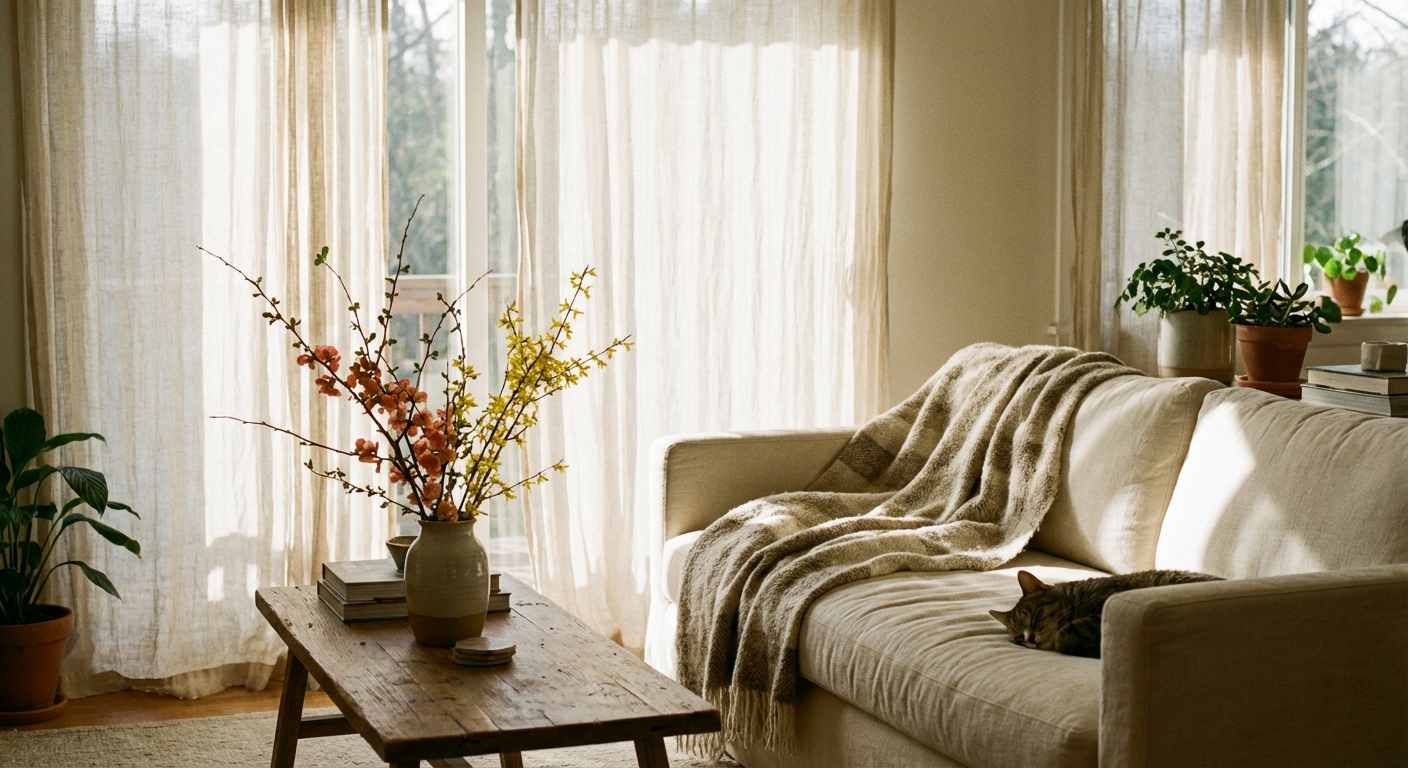
Start with a still-winter edit
Before you add anything new, do a quick lap through your space and pull the pieces that are shouting “deep winter.” You are not banning coziness. You are just lowering the volume.
What to pack away now
- Holiday-specific decor: wreaths, stockings, themed signs, and anything with obvious seasonal motifs.
- Heavy visual weight: very dark plaid throws, bulky faux fur in every seat, and clusters of deep red or forest green that read December.
- Overly warm metallics in excess: a little brass is timeless, but too many coppery accents can feel wintry and dense when you are craving airiness.
My rule of thumb: keep one or two cozy anchors per room, then edit the rest. A knit throw can stay. Six knit throws look like a blanket fort. Charming, yes. Springy, not quite.
Textiles first
If you want the fastest seasonal shift with the least effort, touch the fabrics. Textiles are basically the mood lighting of decor. They change everything without changing anything permanent.
One-room textile checklist
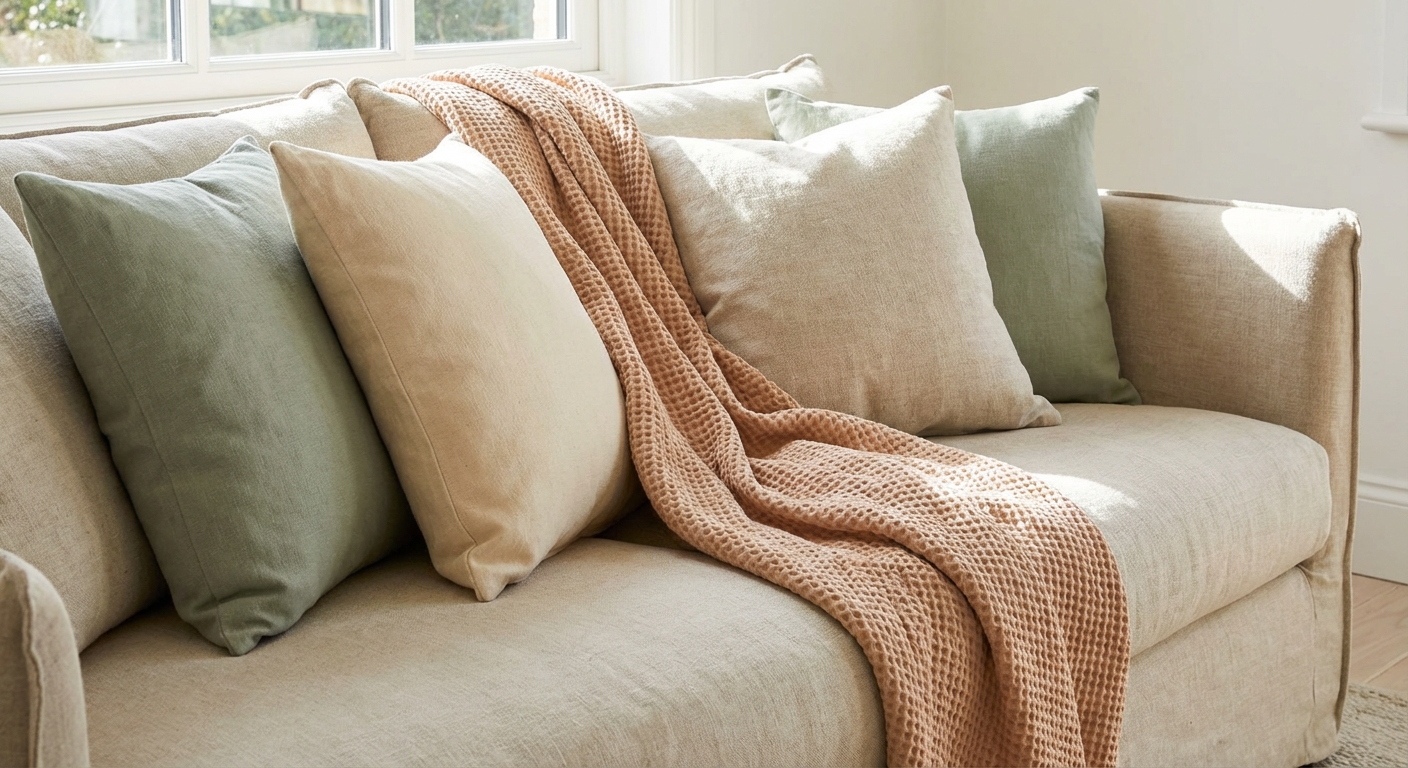
- Throw blankets: trade chunky knits for cotton, lightweight wool, or a washed linen blend.
- Pillow covers: swap velvet and sherpa for linen, cotton canvas, or soft matelassé.
- Rugs: if you have a thick shag or very dark rug, consider rotating to a flatter weave, jute, or a vintage-style printed rug with a lighter ground.
- Curtains: if you can, shift from heavy blackout drapes to a layered look with sheers or lighter panels.
Quick storage tip for bulky winter textiles
- Wash or dry clean first (so you are not storing “last winter” smells).
- Fold knits instead of hanging to avoid shoulder bumps and stretching.
- Use breathable cotton bins or zip bags, then tuck in a cedar block or lavender sachet.
- Label by room (Living Room Throws, Bedroom Pillows) so next year’s swap feels easy.
Lift your color story
Spring color does not have to mean candy pastels. The most seamless transitions happen when you keep your base and simply lift it.
A gentle color formula
- Keep: your everyday neutrals (cream, oat, camel, warm gray, soft white).
- Add: one fresh “bud” color (sage, pale blue, butter yellow, dusty lilac, or terracotta pink).
- Balance: one grounding shade you already own (walnut, black, antique brass, deep brown leather).
If your winter look leans moody, do not fight your personality. Just introduce spring through softer versions of what you love. Think olive instead of pine, clay instead of burgundy, and warm white instead of stark white.
Velvet Abode truth: a single pillow in the right shade can do more than a whole cart of “spring decor” from a big box store.
Believable botanicals
Greenery is where spring starts to feel real. The trick is choosing stems that make sense for the in-between season, especially if it is still cold where you live (or spring arrives later in your climate).
Early spring stems that feel natural
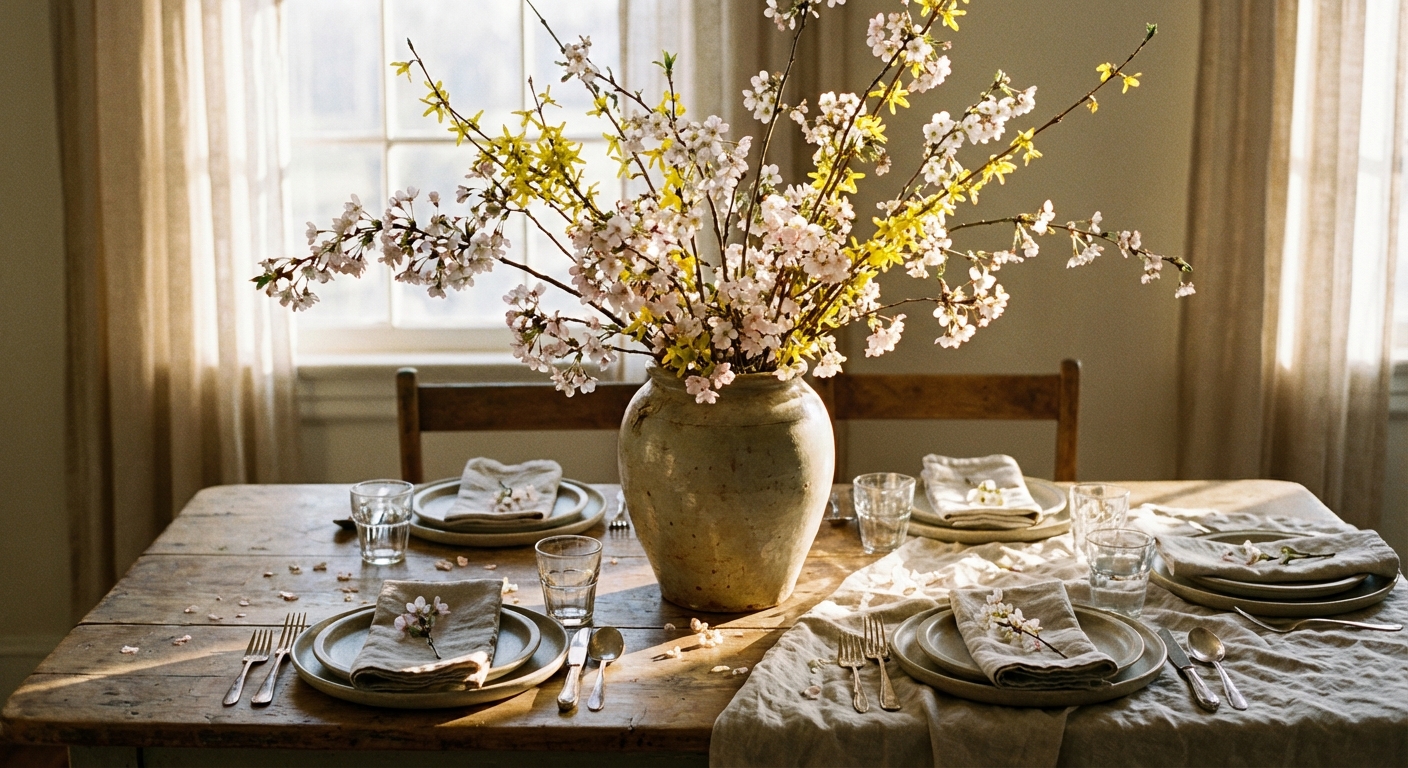
- Flowering branches: cherry, quince, forsythia, or dogwood.
- Bulb flowers: tulips, daffodils, hyacinth in a simple vase or small cluster.
- Soft greens: eucalyptus, ruscus, olive branches.
How to style them so they do not look fussy
- Use one vessel per surface, not three. Let the stems be the moment.
- Choose a vase with some weight: vintage stoneware, clear glass, or an imperfect ceramic crock.
- Keep it asymmetric. A slightly wild arrangement feels like you just brought it home from the market.
Let light help
Winter decor is often about creating a glow against early darkness. As days get longer, you can keep the warmth but brighten the feeling.
Small lighting shifts
- Dust shades, then wipe bulbs carefully: always turn lights off and let bulbs cool fully. Follow manufacturer guidance, and use a dry microfiber cloth unless the fixture specifies otherwise.
- Try slightly higher lumens: stay warm (around 2700 to 3000K), but go brighter if your space feels sleepy.
- Move one lamp: try relocating a table lamp to a darker corner to spread light more evenly.
- Use mirrors intentionally: angle an antique mirror to catch afternoon light, especially near a window.
If you have been eyeing a vintage brass sconce or an amber glass lamp, spring is a lovely time to add it. Natural light plus warm lamp glow is the kind of layered coziness that works year-round.
Open up surfaces
This is my favorite part because it costs nothing and it instantly changes the energy of a room. Winter styling tends to be clustered and dense. Spring styling breathes.
Three quick resets
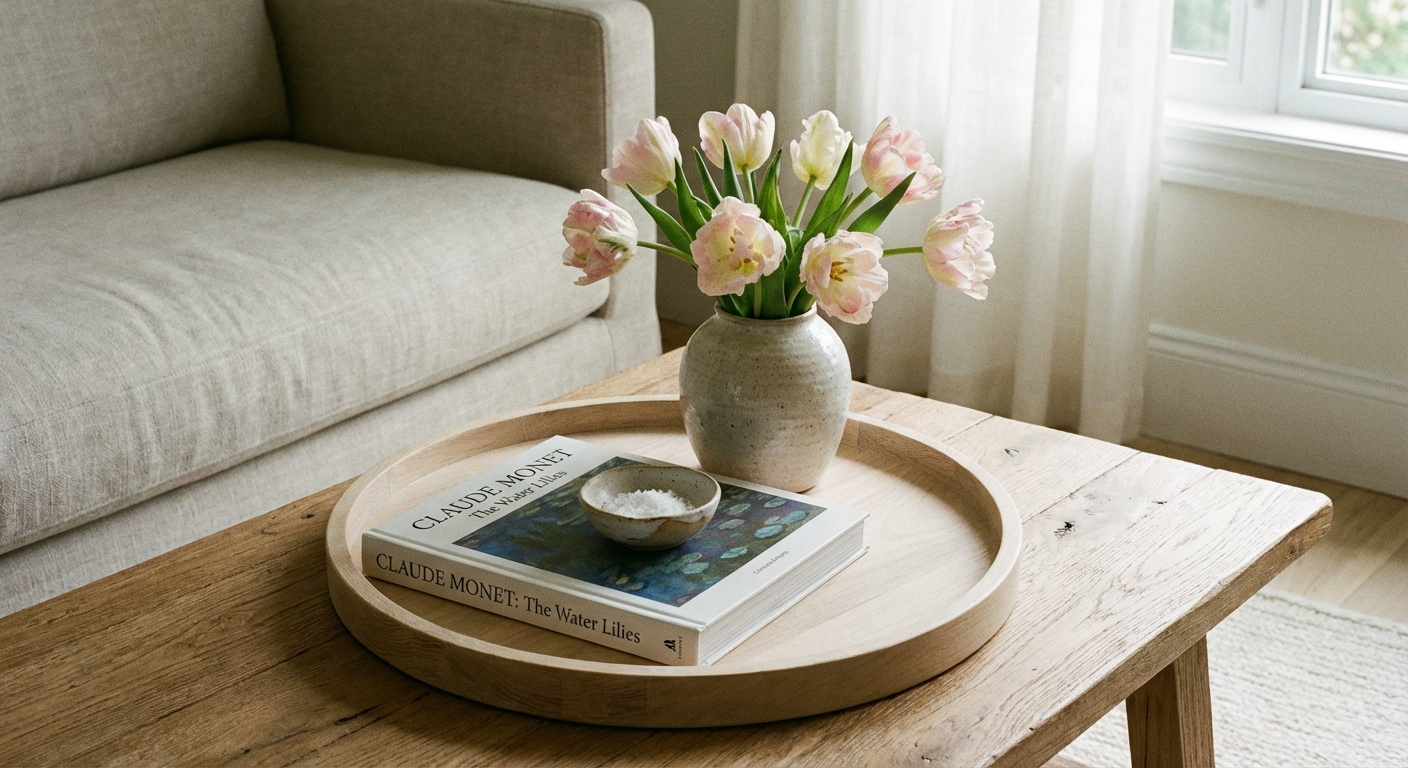
- Coffee table: replace stacks of dark, heavy books with one art book and a simple tray. Add a small bowl for matchsticks or keys.
- Mantel or shelf: create more negative space. Leave a few inches between objects so each piece can be appreciated.
- Entry table: swap a winter candle lineup for a single vase, a small dish, and one framed photo or print.
Fresh cozy texture
The goal is not to make your home feel cold. It is still shoulder season. You just want “fresh cozy” instead of “hibernation cozy.”
Cozy elements that still work
- Wool: keep it in small doses like a thin throw or a vintage kilim.
- Candles: switch scents from smoke, pine, and spice to linen, citrus, herb, or soft florals.
- Wood and patina: vintage pieces shine in spring because they feel collected and lived-in, not theme-y.
If you love texture (I do too), think crisp and tactile: slubby linen, nubby cotton, woven cane, and glazed ceramics that look like they were made by hands, not machines.
One-weekend plan
If you need a little structure, here is a gentle timeline that keeps you from doing everything at once.
Saturday: edit and lighten
- Pack holiday items and anything overly wintry.
- Swap pillow covers and throws.
- Clear and re-style one main surface (coffee table or mantel).
Sunday: add life and glow
- Add one botanical moment (branches or tulips).
- Refresh scent (one candle or diffuser is enough).
- Adjust lighting placement and dust lampshades.
By Sunday evening, your home will feel brighter without losing the comfort you still want in March.
Common mistakes
Mistake: going too pastel, too fast
Fix: start with one spring shade and repeat it twice. For example: a sage pillow, a small vase, and a piece of art with green in it.
Mistake: swapping everything but leaving the clutter
Fix: remove one item for every one you add. Spring decor needs a little breathing room.
Mistake: buying “seasonal decor” that does not feel like you
Fix: choose pieces with year-round potential: a vintage pitcher that can hold flowers, a woven basket, a framed print, a linen table runner.
A home that wakes up
The best winter-to-spring transition is less about buying and more about noticing. Noticing the light shifting across your floor in the afternoon. Noticing you want your hands on linen instead of fleece. Noticing that one little vase of branches can make the whole room feel like it is stretching after a long nap.
Take it slow. Let your decor thaw the way the season does. Your home will get there, and it will feel like you the whole way through.