Will That Sofa Fit?

Clara Townsend
Clara Townsend is an interior stylist, vintage furniture enthusiast, and the creative voice behind Velvet Abode. With over a decade of experience transforming both cramped city apartments and sprawling fixer-uppers, she believes that a beautiful home is built on personal stories rather than massive budgets. When she isn't hunting for the perfect brass sconce at a local flea market, she can usually be found rearranging her living room for the third time this month.
Nothing steals the joy out of a new sofa faster than watching it get stuck halfway through your hallway like a cork in a bottle. The good news is that “will it fit?” is not a vibe. It is math, a tape measure, and a short measuring session before you click “buy.”
This is the exact process I use when I am helping clients in older buildings, narrow walk-ups, and those charming apartments with the surprise 90-degree turn.
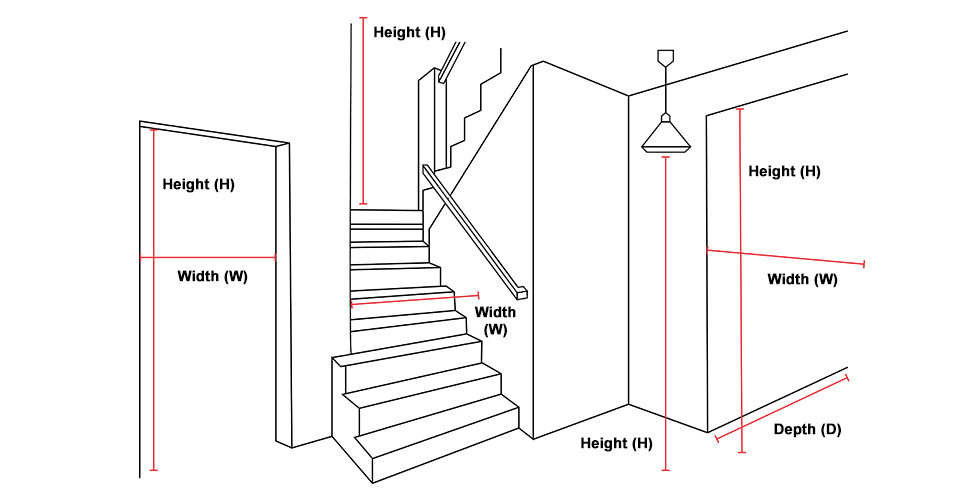
Start with the right measurements
You are measuring two things at once: the sofa and the path it has to travel.
Pick one unit system (inches or centimeters) and stick with it all the way through. Write every number down in the same format, like “32 in clear width.” Mixing units is how confident people end up returning furniture.
Sofa measurements to collect
- Overall width (arm to arm)
- Overall height (floor to top of back)
- Overall depth (front to back)
- Leg height (helps on stairs and over thresholds)
- Seat and back cushions removable? (yes or no)
- Feet removable? (yes or no)
- Detachable back or arms? (yes or no)
- Minimum doorway width if the retailer provides it
If it is a sleeper sofa, also ask for the packaged size and weight. Sleeper mechanisms can turn a manageable sofa into a moving-day villain.
Tools that make this easier
- Tape measure (25 ft is ideal)
- Painter’s tape (to mark widths on floors and walls)
- Phone notes app (write everything down immediately)
- A piece of string (for quick diagonal checks)
- One helpful friend (optional, but nice)
Measure the path like delivery
Do this in order, from outside to inside. If the sofa cannot pass one step, it does not matter that it fits the living room.
Measure the narrowest point each time, and include the stuff that steals inches: trim, handrails, door hardware, radiators, wall sconces, shoe cabinets, built-in mailboxes, and anything that protrudes into the path.
1) Entry and lobby
Measure the narrowest clear opening, not just the door slab. Sometimes the real squeeze is the vestibule, a second interior door that swings the wrong way, or a tight turn right after entry.
- Front door clear width (door fully open)
- Any interior lobby doors
- Hallway pinch points (including railings, built-ins, and trim)
- Clear height if there are low soffits or light fixtures
2) Elevators
Elevators are all about interior cab size, door opening, and yes, sometimes weight limits. Measure everything, and note if the cab has a handrail that steals depth.
- Elevator door width (clear opening)
- Door height (clear opening)
- Cab width (wall to wall)
- Cab depth (door to back wall, minus handrails if they protrude)
- Cab height (floor to ceiling)
- Floor diagonal clearance (front floor corner to back floor corner)
- Posted weight limit (and whether your building enforces it)
- Freight elevator rules (time slots, padding required, COI)
Freight elevators often have a deeper cab, but stricter rules. Many buildings require the delivery company to provide a certificate of insurance and use corner guards.
Doorways and diagonals
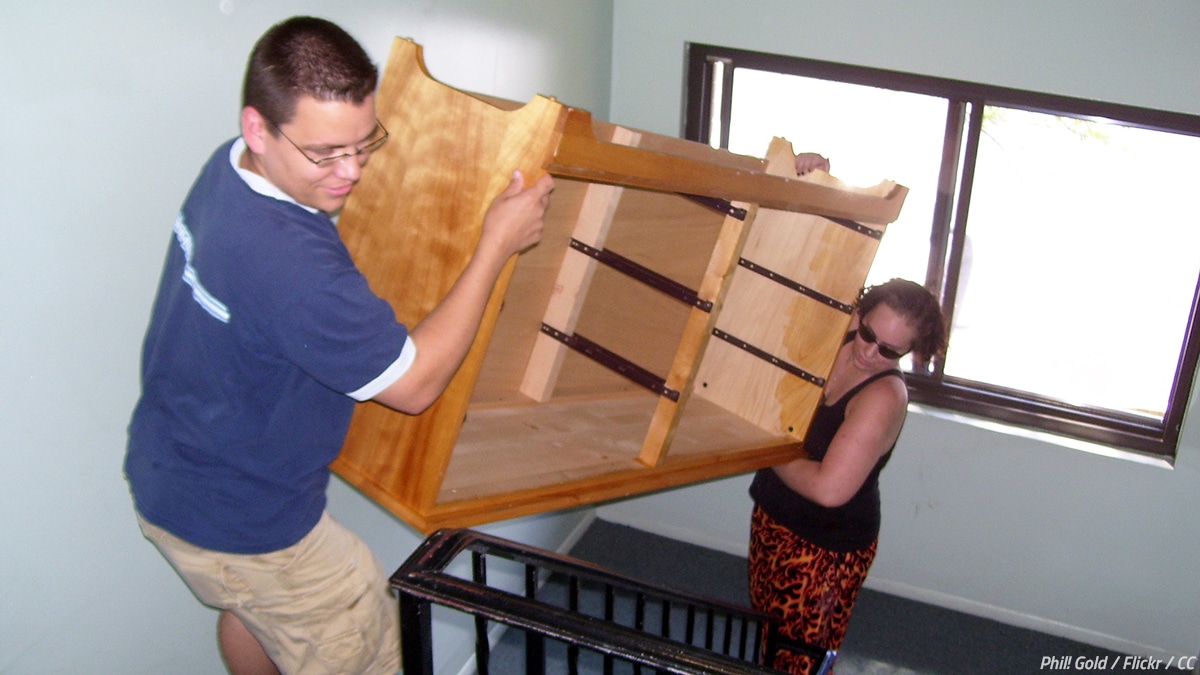
A sofa rarely goes through a doorway perfectly straight. The secret is diagonal clearance, meaning the piece can tilt and rotate to use the longest possible line inside the opening.
One important caveat: doorway diagonals are a great quick screen, not a guarantee. Tight moves often come down to the sofa’s 3D “girth” when rotated (arms, back curve, and upholstery) plus the doorway depth and trim. If your numbers are close, treat that as a sign to get a pro opinion, not a sign to manifest it.
Measure a doorway properly
- Measure the clear width with the door fully open, from the inside edge of one jamb to the inside edge of the other (excluding casing/trim).
- Measure the clear height, from the floor to the top of the opening.
- Measure the doorway depth if there is thick trim, a deep frame, or a tight vestibule that could snag fabric.
- Note hardware and obstructions like knobs, strike plates, closers, and intercom boxes.
Quick diagonal check
If you want a fast reality check, measure the doorway width and height, then test whether the sofa can be angled so its “tallest corner” can pass through. You do not need to calculate anything fancy to get value here.
- Take a piece of string and stretch it from the top corner of the doorway opening to the opposite bottom corner. That gives you the approximate diagonal.
- If the sofa’s tightest tilted profile seems larger than that diagonal, you probably have a problem.
Interior door removal
Removing an interior door can add precious inches. This is often allowed, but it is lease- and landlord-dependent, so check before you start popping hinge pins like you own the place.
- Take photos of the hinges before touching anything.
- Open the door and support its weight with a folded towel underneath.
- Tap hinge pins upward gently with a screwdriver handle or small tool.
- Lift the door off and store it flat, safely away from traffic.
- Put the pins back in the hinges so nothing gets lost.
Do not remove building entry doors or anything with an automatic closer without permission. When in doubt, ask your landlord or super.
Hallways and turns
Most sofa disasters happen at corners, not at straight doorways. You are looking for the smallest turning space, especially at L-shaped hallways and inside apartment entries.
Measure turns
- Hallway width (baseboard to baseboard)
- Corner clearance (turning space)
- Ceiling height if you might need to stand the sofa on end
How to measure corner clearance: stand at the inside corner of the turn and measure to the first obstruction on each hallway leg (wall, trim, railing, built-in, radiator). Those two numbers tell you how much room you actually have to swing the piece.
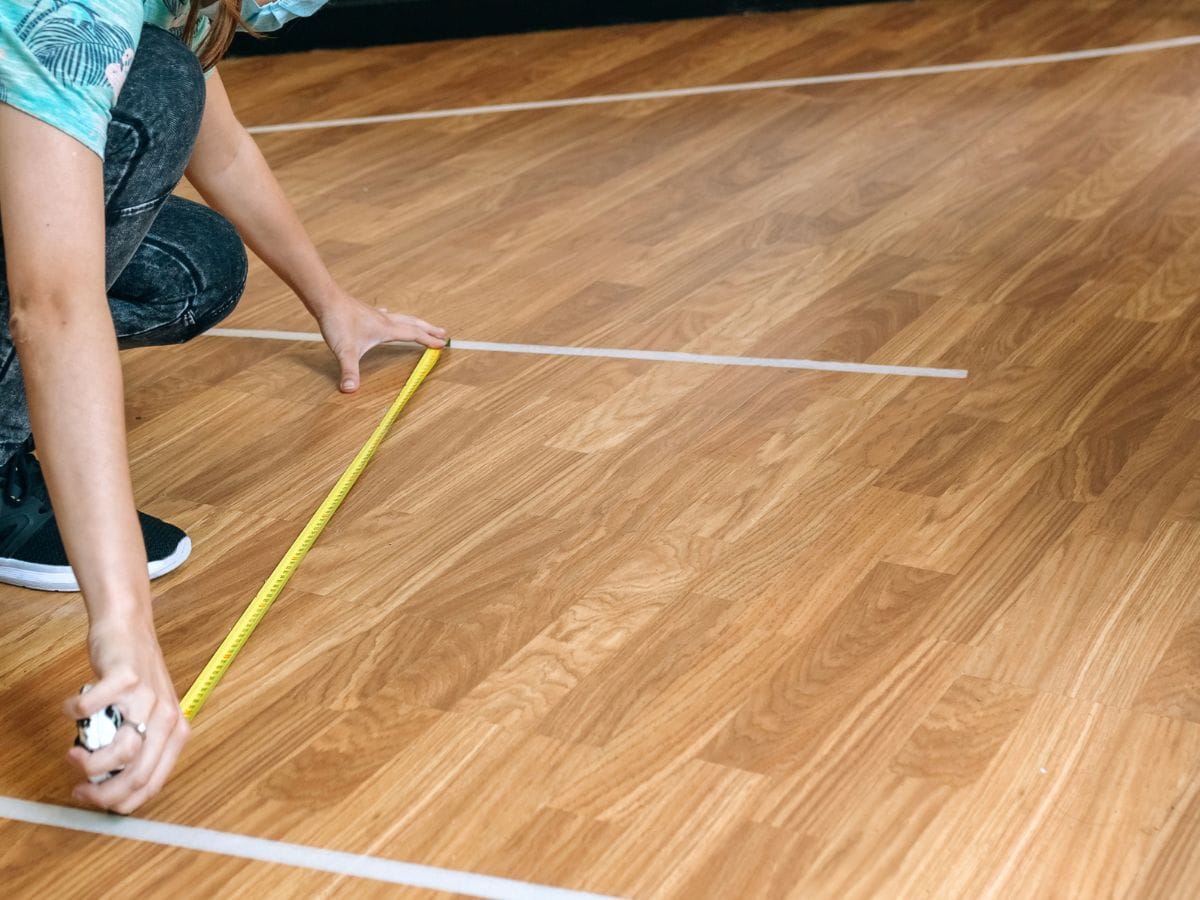
A simple trick: use painter’s tape to mark the sofa’s width and depth on the floor where the turn happens. If the taped rectangle cannot rotate without hitting walls, the real sofa will not either.
Stairs
Stairs are a three-part puzzle: stair width, landing size, and headroom.
What to measure on stairs
- Clear stair width from wall to railing (or railing to railing), not tread to tread
- Landing depth and width at every turn
- Ceiling height over the stairs, especially under a sloped ceiling
- Railing protrusions like newel posts that steal turning space
If the stair has a tight landing, a sofa may need to go up on end. That is where overall height and ceiling clearance become make-or-break.
Packaging matters
Here is the plot twist: the sofa you fell in love with is not what has to fit through your building. The carton (boxed, wrapped, palletized) is what has to survive the lobby, the elevator, and the hallway corners.
Ask for delivery specs
- Carton dimensions (boxed width, height, depth)
- Total package weight
- Number of boxes (sectionals may be easier because they come in pieces)
- Curbside unboxing allowed? (some companies allow this, others do not)
- Stair carry included? If yes, how many flights?
- Old sofa removal included? (and whether it affects maneuvering)
If you are ordering vintage or secondhand, ask the seller to measure the piece at its bulkiest points, including rolled arms, tufting, or any decorative back curve that adds depth.
If it is close
Sometimes you are short by an inch or two. Before you panic, consider the least dramatic fixes first.
Low-effort wins
- Remove cushions to reduce snag risk and sometimes reduce the effective depth for tight turns (the frame depth usually does not change much).
- Remove legs to lower the profile for tight stair headroom or doorway height.
- Remove an interior door for extra clearance (with permission if needed).
- Choose modular that arrives in smaller pieces.
Pro options
- White glove delivery: often includes more experienced crews and better protection for walls.
- Hoisting (through a window or balcony): only with building permission and insured pros. Measure the clear window opening (width and height), and confirm whether screens or storm windows can be removed.
- Disassembly: some sofas have detachable backs or arms, but confirm this before purchase.
If someone suggests “we will just force it,” I want you to picture your drywall and your security deposit holding hands and whispering, “please no.”
These checks reduce the risk, but tight moves can still require an on-site assessment by experienced movers. If your measurements are close, budget for expertise.
Questions before you buy
- What are the carton dimensions and total weight?
- Does it have removable legs, a detachable back, or removable arms?
- What is the minimum doorway width needed, if tested by the manufacturer?
- Is delivery threshold, room of choice, or white glove?
- Will the team go up stairs, and how many flights are included?
- Are there elevator constraints like weight limits, reservation rules, or required padding?
- What happens if it does not fit? Any restocking fee or return shipping cost?
Checklist to screenshot
Before delivery day, confirm all of these:
- Sofa overall dimensions + carton dimensions (in the same units)
- Building entry door clear width (narrowest point, including trim and hardware)
- Elevator door width and height + cab depth + floor diagonal + weight limit
- Apartment door clear width (door removed if needed and allowed)
- Hallway narrowest width (include railings and protrusions)
- Tightest corner turning space (measure to first obstruction on both legs)
- Stair width, landing size, and ceiling height (if applicable)
- Any building rules: COI, elevator padding, delivery windows
If you do all of this and the sofa still refuses to cooperate, you have my permission to be dramatic about it. But ideally, you will be dramatic only about styling the throw pillows.