Wicker and Rattan Patio Care

Clara Townsend
Clara Townsend is an interior stylist, vintage furniture enthusiast, and the creative voice behind Velvet Abode. With over a decade of experience transforming both cramped city apartments and sprawling fixer-uppers, she believes that a beautiful home is built on personal stories rather than massive budgets. When she isn't hunting for the perfect brass sconce at a local flea market, she can usually be found rearranging her living room for the third time this month.
There is a particular kind of heartbreak reserved for the moment you notice your once-honeyed chair has gone chalky, or your woven rocker has started to feel a little… crunchy. Outdoor living is hard on natural fibers. The good news is that most damage comes from a few predictable culprits: dust, UV, standing water, and being stored the wrong way when the seasons change.
This is the care routine I use on patios and tiny balconies alike, especially when I am styling with vintage pieces that deserve a long, handsome life.

First, identify what you have
Before you grab a sponge, take thirty seconds to figure out whether you are dealing with natural woven fiber (often called “wicker,” though wicker is the weaving style) or resin wicker. They can look similar from a distance, but they age and clean very differently.
- Natural woven fiber (rattan, reed, bamboo, willow, seagrass, etc.): Made from plant material. It often has a warm, slightly varied tone and can feel more “dry” or textured to the touch. Many pieces are sealed with lacquer, varnish, paint, or other clear finishes.
- Resin wicker: Synthetic strands woven over a metal or aluminum frame. It is typically marketed as outdoor-friendly. It is often polyethylene (PE), but can also be PVC or other plastics.
If you are unsure, check the underside. Natural fibers usually show subtle fraying, grain, or tonal variation. Resin tends to look more consistent and smooth.
Routine dusting
Dust is not just cosmetic outside. It holds moisture, invites mildew, and acts like sandpaper in the weave when people sit and shift.
Weekly quick clean
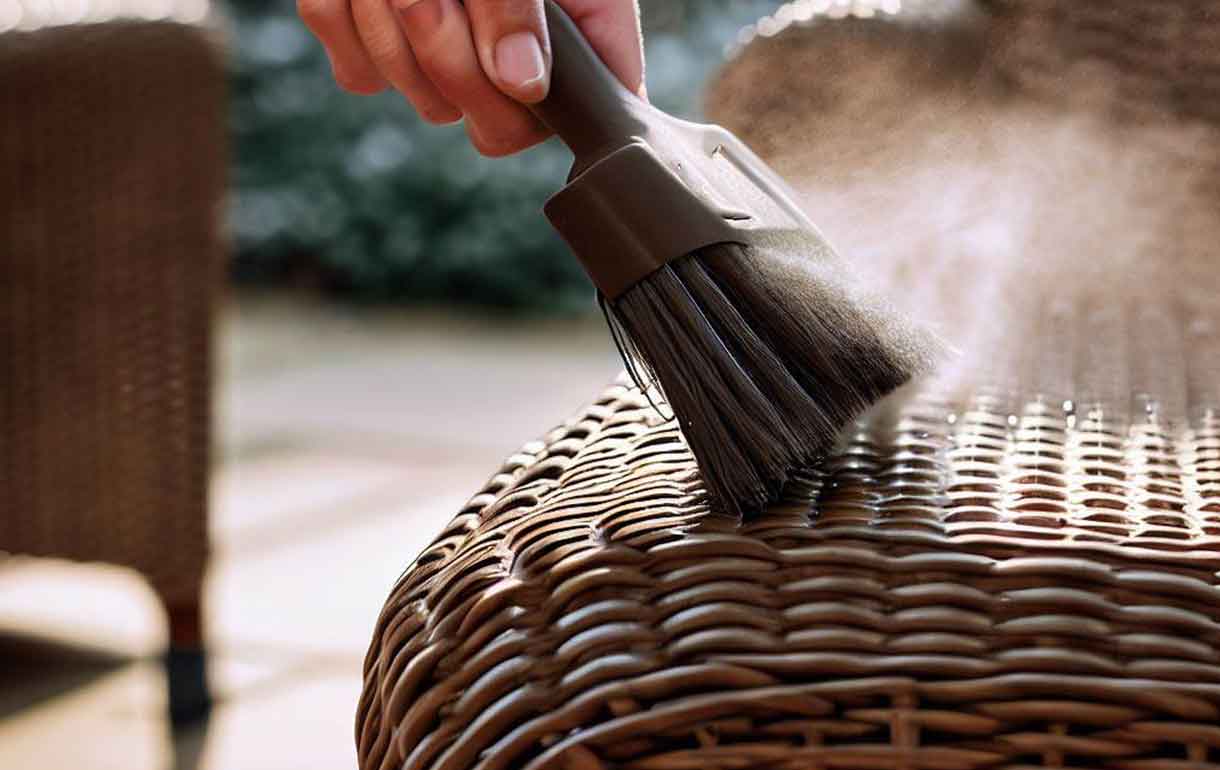
- Use a soft brush attachment on a vacuum to lift grit from the weave, corners, and under arms. (Cushions are their own category, see below.)
- Follow with a dry microfiber cloth or a soft paintbrush to flick dust out of tight corners.
- If the piece lives under trees or heavy pollen, do this twice a week during peak season.
Monthly deeper dusting
- Pull the furniture out of the tight balcony corner if you can.
- Default to brush plus vacuum for natural pieces.
- If you use compressed air (or a hair dryer on cool), keep distance, use short bursts, and do not blast directly into fragile natural fiber. Eye protection is smart here.
Avoid: aggressive pressure washing. It can shred natural fibers, lift paint, and force water into places it cannot dry.
Sun and rain protection
Outdoor woven furniture does best when it gets to be outside, but not fully exposed outside.
Sun (UV) protection
- Avoid prolonged direct sun whenever possible, especially during peak UV hours.
- Use a patio umbrella, shade sail, or even a simple outdoor curtain panel to soften exposure.
- Rotate furniture every few weeks so one arm or side does not bleach faster than the rest.
- For natural pieces, consider a UV-protective clear topcoat that is compatible with the existing finish. Test in a hidden spot first.
Rain protection
- Do not trap dampness. A cover that sits directly on wet weave can create a mildew tent.
- Choose breathable outdoor covers and prop them slightly so air can circulate. Even a small inverted bowl on the seat under the cover helps.
- After heavy rain, wipe pooling water and let the piece dry with airflow, not pressed against a wall.
If you have natural fiber outdoors full time, think of it like a linen shirt. It can go outside, but it needs shade, airflow, and a chance to dry completely.
Safe cleaning by finish
Cleaning is where many well-intentioned people accidentally strip, swell, or weaken fibers. The rule: use as little water as you can get away with, and match your method to the material.
Natural woven fiber (sealed, painted, or stained)
This method is gentle and works for most finishes.
- Mix 1 teaspoon mild dish soap into 1 quart of warm water.
- Dip a microfiber cloth, wring it out very well so it is barely damp.
- Wipe along the weave, working in small sections.
- Use a soft toothbrush for grimy corners.
- Rinse by wiping with a separate cloth dampened with plain water (again, wrung out well).
- Dry immediately with a towel, then let it finish drying in good airflow.
Spot test first on painted or older vintage pieces. Some older finishes can soften if over-wet or scrubbed.
Avoid: soaking, steam cleaning, harsh degreasers, bleach, ammonia, and abrasive scrub pads.
Unsealed natural fiber (more delicate)
If the fiber looks raw, matte, or thirsty, treat it like wood that does not want to be drenched.
- Vacuum and brush first.
- Use a barely damp cloth with plain water or the mild soap mix, keeping moisture minimal.
- Dry immediately and thoroughly.
If it is outdoors and unsealed, consider moving it to a covered spot or sealing it. Unsealed natural fiber in open rain cycles will eventually split and sag.
Resin wicker (synthetic)
Resin is forgiving, which is why it is a patio staple.
- Rinse with a gentle hose spray to remove grit.
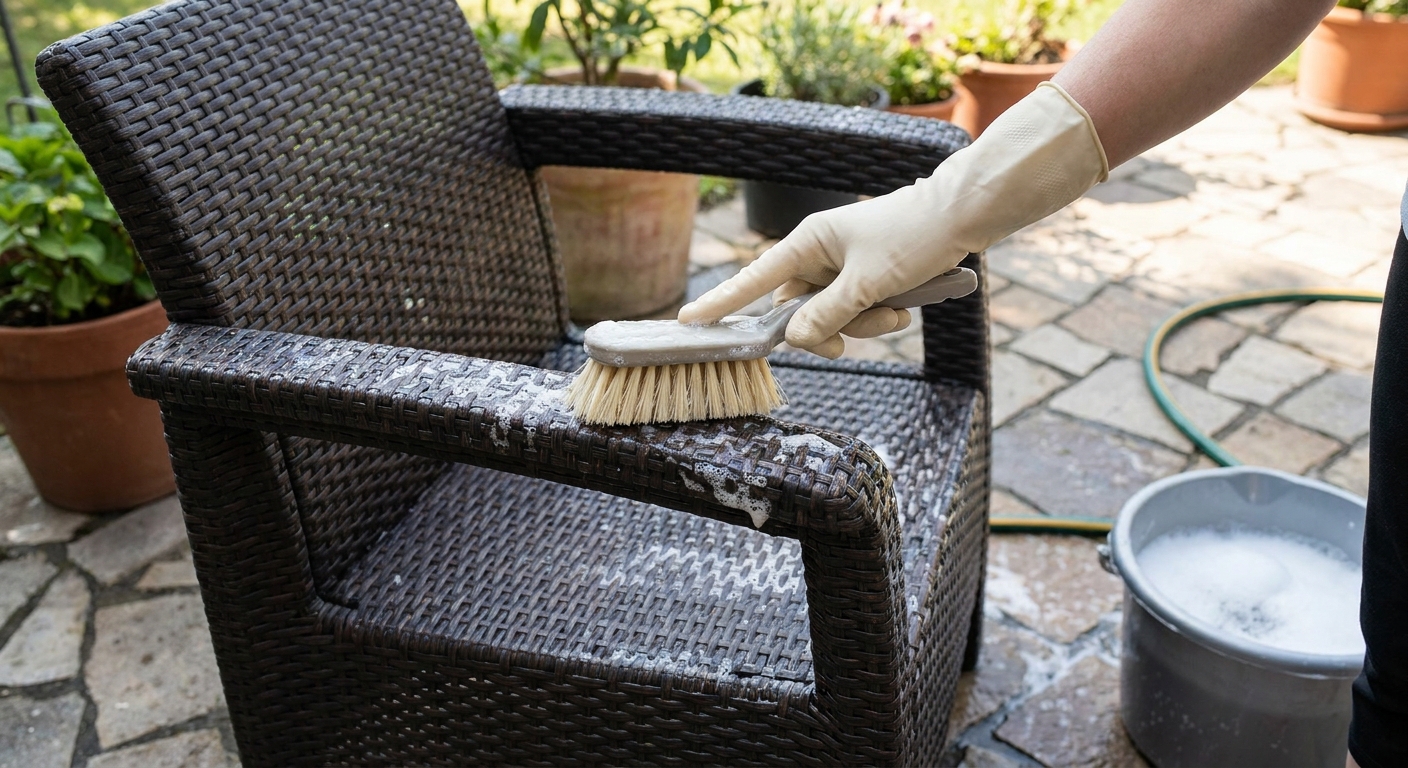
- Wash with mild soap and warm water using a soft brush.
- Rinse thoroughly so no soap film attracts more dirt.
- Air-dry.
Still skip: high-pressure washing at close range, which can loosen strands and drive water into frames or joints.
What not to use
If you are tempted to reach for a miracle product, pause. A lot of quick fixes create long-term problems for woven furniture.
- Oils (including linseed): can stay tacky, attract dirt, and encourage mildew on some natural fibers.
- Silicone sprays and oily furniture polishes: can leave a slippery film, trap grime in the weave, and complicate future refinishing.
- Harsh solvents: can soften finishes and damage synthetic strands.
- Steamers: heat plus moisture can loosen glue, swell fibers, and warp delicate areas.
- Bleach on natural fiber: can weaken strands and cause uneven light spots that never quite blend back in.
Mildew prevention
Balconies can be humid little wind tunnels, especially if your furniture sits tight against a wall. Mildew prevention is less about chemicals and more about dry time.
Daily and weekly habits
- Keep 2 to 4 inches of space between furniture and exterior walls for airflow.
- After rain or heavy dew, wipe seats and arms so moisture does not sit in the weave.
- Do not leave damp towels or swimsuits draped over rattan.
- Store cushions separately when storms are coming. Cushions hold moisture right against the frame.
If you spot mildew
For natural woven fiber: start with the mild soap method. If the mildew remains, step up carefully.
- Try a solution of equal parts white vinegar and water on a cloth, dab the affected area, then wipe again with a cloth dampened with plain water to remove residue.
- Spot test first. Vinegar can dull certain paints or clear finishes.
- Dry quickly and completely. A little sun can help, but do not bake a fragile finish for hours in harsh direct light.
For resin wicker: you can use the vinegar solution as well, then rinse thoroughly.
Tightening and sag
A little looseness does not always mean the piece is done. Many woven pieces can be coaxed back into shape, especially if the issue is dryness or slight movement over time.
Quick checks
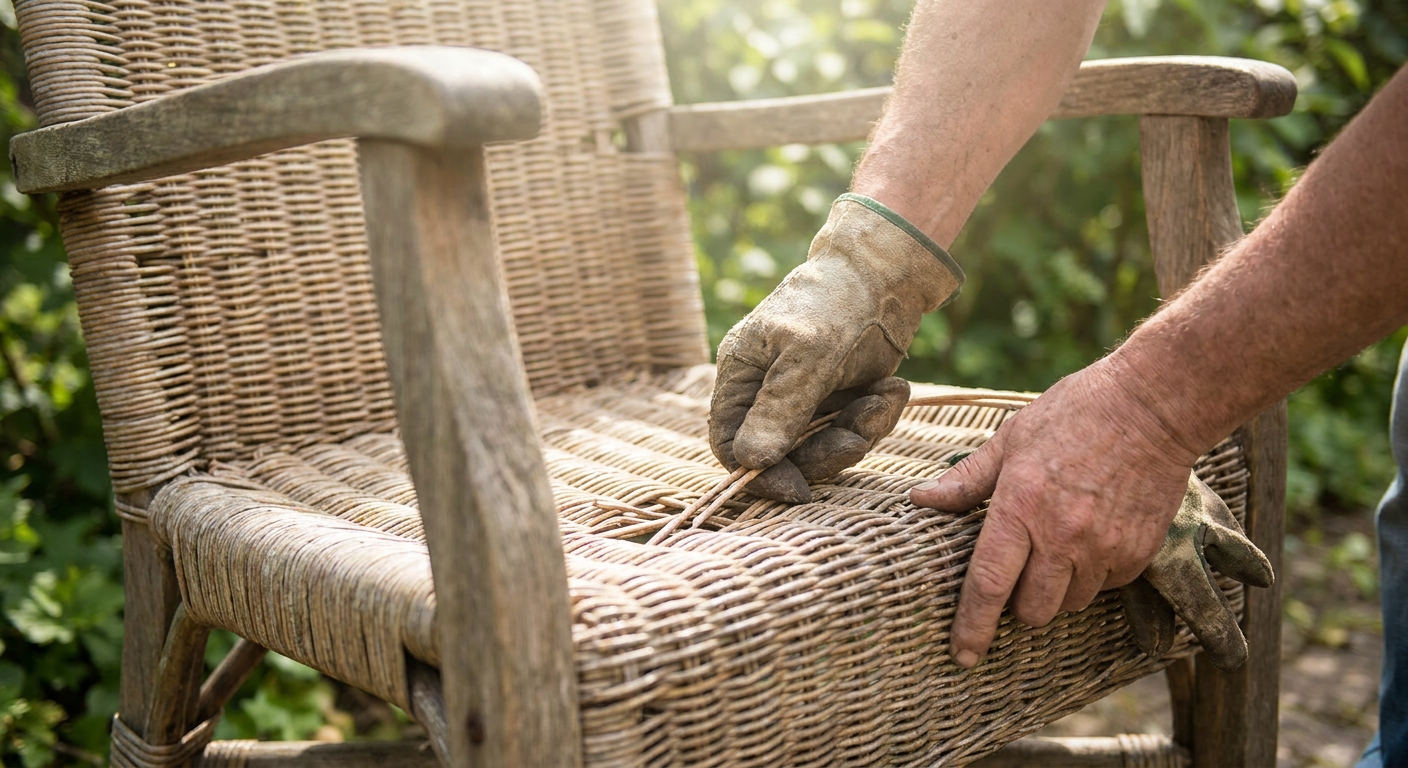
- Look for a loose strand end. Sometimes it is simply a tucked tail that has popped out.
- Check the frame. If the frame is wobbling, the weave will never feel tight until the structure is stable.
Natural fiber: gentle rehydration
Natural fiber can tighten slightly with controlled moisture, but results vary. Over-wetting can also loosen a weave, warp sections, or stress older joints and glue.
- Lightly mist the area with water from a spray bottle (a fine mist, not a spray-soak).
- Wait a few minutes, then gently press the weave back into place with your hands.
- Let it dry fully with airflow. Do not cover it while drying.
If the strand is broken or the weave is structurally failing, a local furniture repair shop or a cane and wicker specialist can often reweave sections. It is frequently cheaper than replacing a quality piece, and it keeps good bones out of the landfill.
Resin wicker: securing a loose strand
- Tuck the strand back in if possible.
- If it repeatedly pops out, a small zip tie on the underside or an outdoor-rated adhesive used sparingly can help. Test placement so it is invisible and does not create a sharp edge.
Frames and rust checks
Many resin wicker pieces have metal frames hiding underneath. They are usually powder-coated, but water can still sneak in.
- After washing or heavy rain, tip chairs slightly (when safe) to encourage trapped water to drain.
- Check feet, end caps, and any drain holes for blockage.
- If you see rust starting, dry the area, lightly sand, and touch up with an outdoor-rated rust-inhibiting primer and paint. If the frame is soft or cracking, consult a pro.
Off-season storage
Most outdoor woven furniture tragedies happen in storage: bone-dry garages, damp sheds, plastic wrap that traps moisture, or pieces stacked in ways that bend the frame.
Before you store anything
- Clean gently and let it dry completely.
- Remove cushions and store them separately once fully dry.
- Tighten visible screws and check feet glides so you do not start next season with a wobble.
Best storage conditions
- Dry, ventilated, and moderate temperature is ideal.
- A basement can be fine if it is not humid. A garage is fine if it does not swing wildly between damp and desert-dry.
- Keep pieces off concrete floors if possible using wood blocks or a pallet. Concrete can wick moisture.
Covering the right way
- Use breathable covers or cotton sheets indoors.
- Avoid sealing in plastic if there is any chance of residual moisture.
Stacking and pressure points
- Do not stack heavy items on seats or arms.
- If you must stack chairs, place a towel between them to prevent rub marks and distribute weight evenly.
If your natural fiber lives in a very dry climate indoors over winter, a light wipe with a barely damp cloth once in a while can help prevent that parched, crack-prone feeling. Again, think “sip,” not “soak.”
Cushion care basics
Cushions are often the reason wicker furniture feels like it “suddenly” got musty. The frame is innocent. The cushion stored damp is the culprit.
- After rain, stand cushions on edge to dry faster, and do not put them back on the seat until they are fully dry.
- If covers are removable, follow the care label. When in doubt: gentle wash, extra rinse, and air-dry.
- For mild mildew smell, sunlight and airflow do a lot. For visible mildew, spot treat per fabric guidance, and make sure the insert dries completely before re-covering.
- Store off-season cushions in a breathable bag or vented bin with a moisture absorber if your storage area runs humid.
When to refinish
If a natural piece looks dull, chalky, or starts to feel “thirsty” even after cleaning, it may be asking for a refresh rather than a replacement.
- Recoat: If the finish is intact but tired, a compatible outdoor clear coat can help. Clean first, let it dry fully, then spot test for adhesion and sheen.
- Repaint: If paint is flaking or sticky-soft, it is usually better to scrape loose areas, sand lightly, and repaint with an exterior-rated paint rather than keep layering products.
- Call a pro: For valuable vintage pieces, extensive peeling, or structural weave damage, a specialist is worth it.
The secret is prep and patience. Clean, dry, and test before you commit to a whole chair.
Seasonal checklist
If you want the low-effort version, here is your rhythm.
Every week
- Brush or vacuum out dust and grit
- Wipe obvious spills or pollen buildup
Every month (or after storms)
- Finish-appropriate wash
- Check shady corners for mildew starting points
- Rotate pieces for even sun exposure
Start and end of season
- Deeper clean and complete dry
- Inspect for loose weave, popped strands, or wobbly joints
- Cover with breathable protection or move into proper storage
Your patio and balcony pieces do not need perfection. They need consistency. A little brushing, a little shade, and a little respect for drying time will keep woven furniture looking warm and welcoming, like the kind of seat that always seems to catch the golden hour.