Why Your Living Room Still Feels Cluttered After You Decluttered

Clara Townsend
Clara Townsend is an interior stylist, vintage furniture enthusiast, and the creative voice behind Velvet Abode. With over a decade of experience transforming both cramped city apartments and sprawling fixer-uppers, she believes that a beautiful home is built on personal stories rather than massive budgets. When she isn't hunting for the perfect brass sconce at a local flea market, she can usually be found rearranging her living room for the third time this month.
You did it. You filled donation bags, cleared the surfaces, and swore you could finally breathe again. And yet, somehow, your living room still reads as… cluttered. Not necessarily dirty, not necessarily packed, just visually loud. Like your eyes cannot land anywhere and your shoulders stay a tiny bit raised.
This is one of my most common client complaints, especially in real, lived-in homes where the living room has to do everything: TV room, reading nook, toy zone, work-from-home overflow, and the place your friends inevitably gather. The good news is that if you already decluttered, you have done the hardest part. What’s left is usually about visual organization, not owning less.
Quick diagnosis
Think of “clutter” as what your brain has to process when you walk into a room. You can have very few items and still feel cluttered if those items are:
- scattered rather than grouped
- all similar in size (lots of smalls)
- poorly scaled to the room (tiny rug, oversized chair)
- fighting for attention (multiple focal points)
- lit in a way that can highlight every edge and pile
- interrupting how you move through the space
Below are the most common culprits I see, plus fixes you can do in an afternoon with what you already own.
Cause #1: Lopsided visual weight
Even a minimalist room can feel “messy” when the visual weight is uneven. Visual weight is how heavy something feels to the eye. Dark colors, busy patterns, shiny finishes, chunky shapes, and high contrast all add weight.
Signs
- One side of the room feels crowded even though there’s empty space elsewhere.
- Everything seems to lean toward the TV wall, the window wall, or the entry corner.
- You have a few bold pieces, but they are all clustered together.
Fix
- Spread out high-contrast pieces. If you have black frames, dark lamps, or bold patterned pillows, distribute them across the room.
- Anchor one side with a taller element. A floor lamp, plant, or narrow bookcase can counterbalance a heavy sofa or media unit.
- Quiet one surface on purpose. If your coffee table is styled, let the side table be calm. If the mantel is full, keep the media console simple.
Cause #2: Too many small objects
This is the sneakiest one because it happens after decluttering. You kept only what you love, but what you love is… a dozen small things. Little decor items are sweet up close, but from across the room they can read like visual static.
Signs
- Your shelves look busy even though nothing is overflowing.
- Your coffee table has lots of little items instead of a few intentional ones.
- Every surface has “a little something.”
Fix
Here’s the reset I use constantly: corral, stack, and scale up.
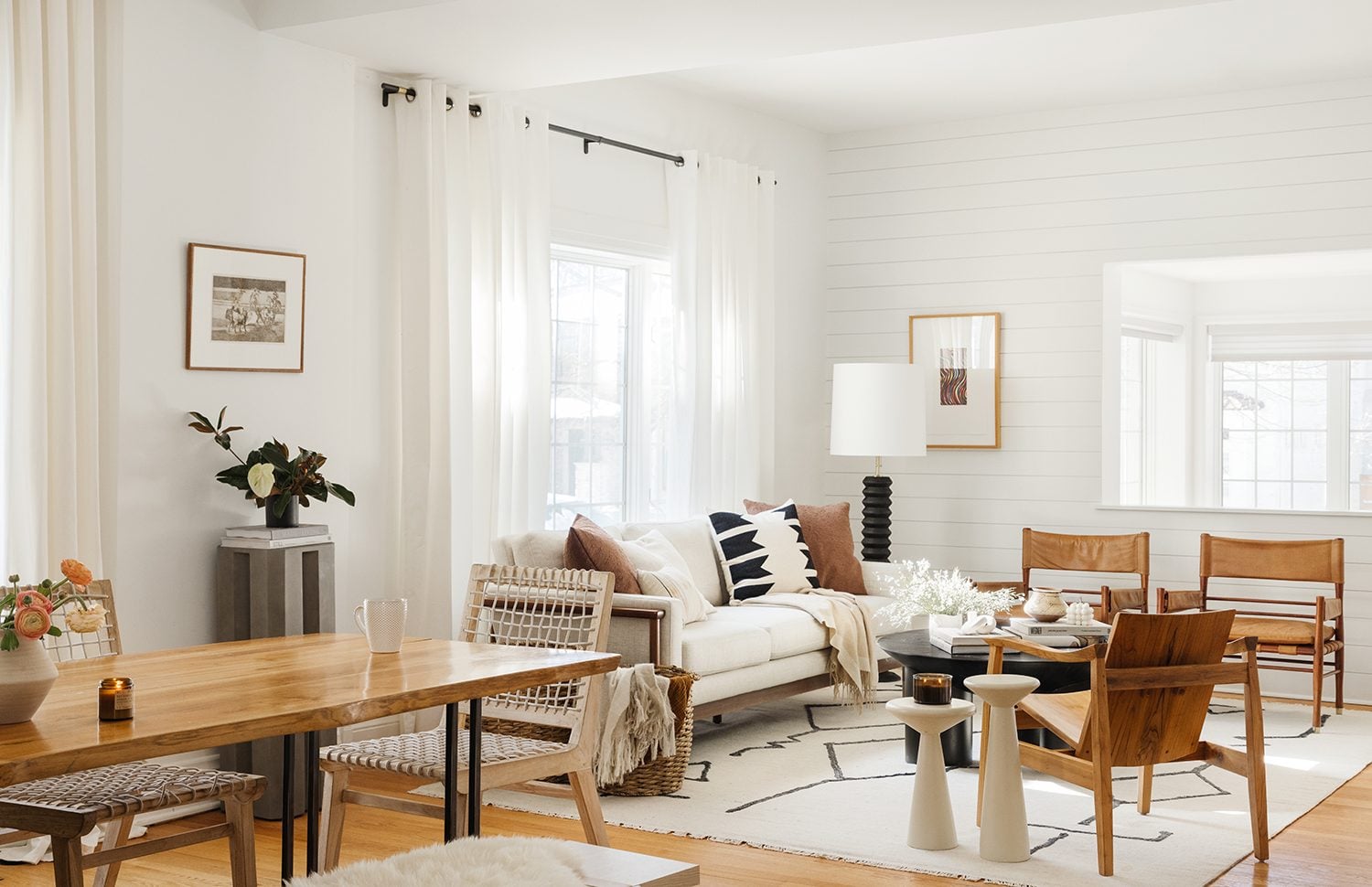
- Corral: Put small items on a tray or in a shallow bowl. One contained cluster reads calmer than five separate items.
- Stack: Use two to three coffee table books as a platform. It adds height and creates a single “unit.”
- Scale up: Add one larger object (a substantial vase, a ceramic bowl, a lantern) so your eye sees a clear focal point.
If you want a simple formula, try this on any surface:
- 1 tray or bowl
- 2 to 3 books (optional)
- 1 tall thing (lamp, vase with branches)
- 1 personal thing (framed photo, small sculpture)

Cause #3: Awkward traffic flow
A room can feel cluttered simply because moving through it feels tight. When you have to sidestep a chair corner or weave around a coffee table, it often feels like there is too much stuff, even if the room is technically tidy.
Signs
- You bump into the coffee table regularly.
- There’s a chair that becomes a catchall because it’s in the way.
- The walkway from entry to sofa or sofa to hallway feels narrow.
Fix
- Use a rule of thumb for walkways. Aim for about 30 to 36 inches for main paths when you can. If you have the space (or lots of traffic), 36 to 42 inches can feel even better.
- Give the coffee table breathing room. About 16 to 18 inches between sofa and table is a comfy sweet spot. In tight rooms, you can go down to roughly 14 inches.
- If it’s a tight room, go lighter. Swap a bulky ottoman for a visually open base, or choose one small side table instead of a pair.
My favorite trick in small apartments: pull one piece away. Remove the extra accent chair for two weeks and see if the room feels calmer. You can always bring it back once you’ve re-established flow.
Cause #4: Rug too small
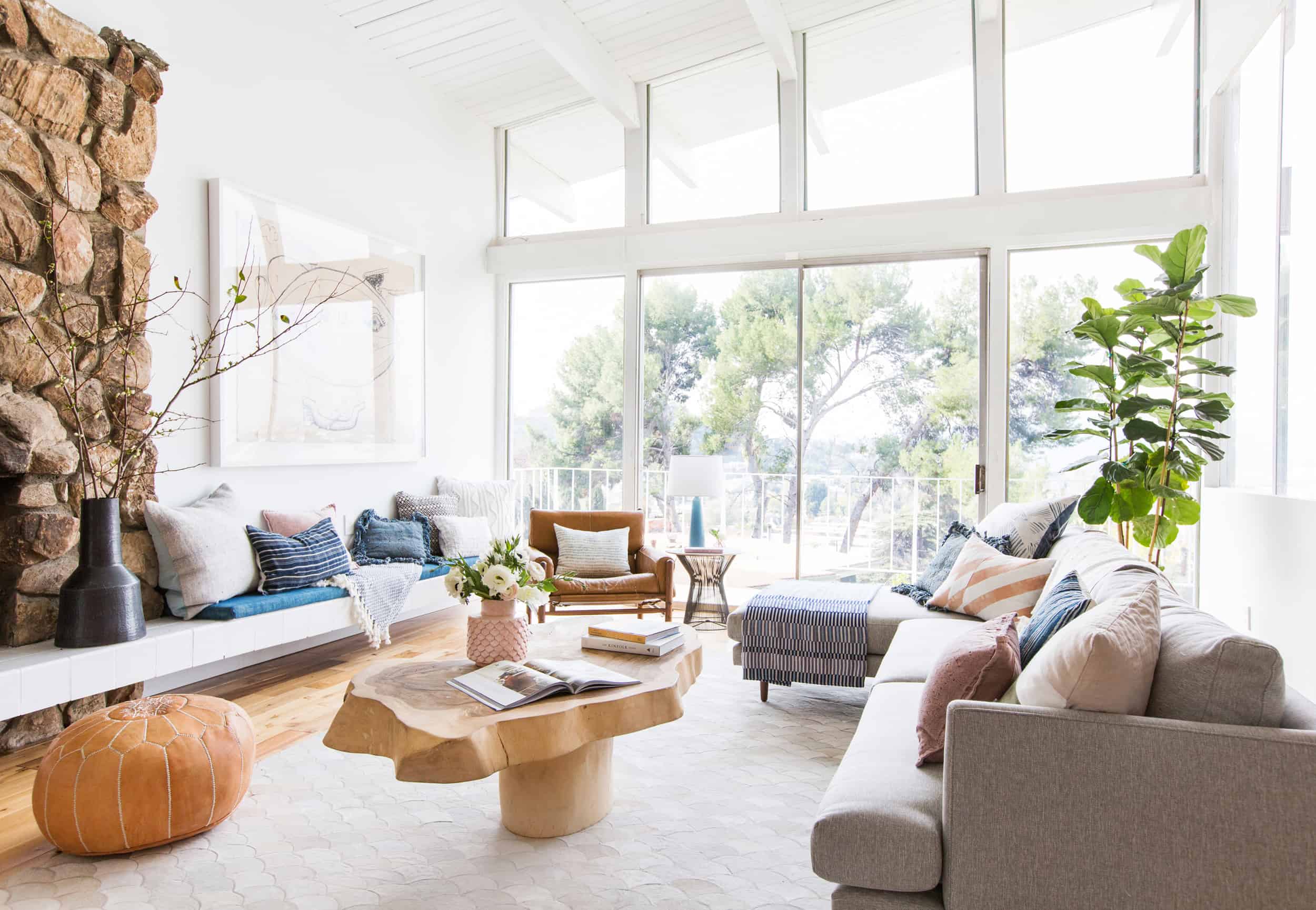
A too-small rug makes furniture feel like it’s floating. Floating furniture tends to read as less settled, which can make a room feel visually cluttered. The rug is the quiet hero that tells everything where to “sit.”
Signs
- Your rug only fits under the coffee table.
- The front legs of the sofa and chairs are on bare floor.
- The seating area doesn’t feel like a defined zone.
Fix
- At minimum: front legs of the sofa and any chairs should sit on the rug.
- Ideal: all furniture legs in the seating zone are on the rug, or at least the front legs of every piece.
- Budget-friendly option: layer. Place a larger, simple jute or flatweave rug under the smaller vintage rug you love.
Cause #5: Competing focal points
Your living room wants one clear “lead actor.” When you have multiple focal points at equal volume, the room can feel restless, like everyone is talking at once.
Common clashes
- TV plus a busy gallery wall plus a bold fireplace mantel
- A statement bookcase on one wall and statement wallpaper on another
- Two large art pieces facing each other, both high contrast
Fix
Pick the feature that makes the most sense for how you live. For most people, it’s either the fireplace or the TV wall.
- If the TV is the hero: keep the media console styling simple, reduce high-contrast decor nearby, and let art be calmer in color.
- If the fireplace is the hero: simplify the mantel, move bold art slightly away, and make the TV wall visually quieter (lower contrast, fewer objects).
- If a window view is the hero: use lighter window treatments and avoid tall pieces that block the light.
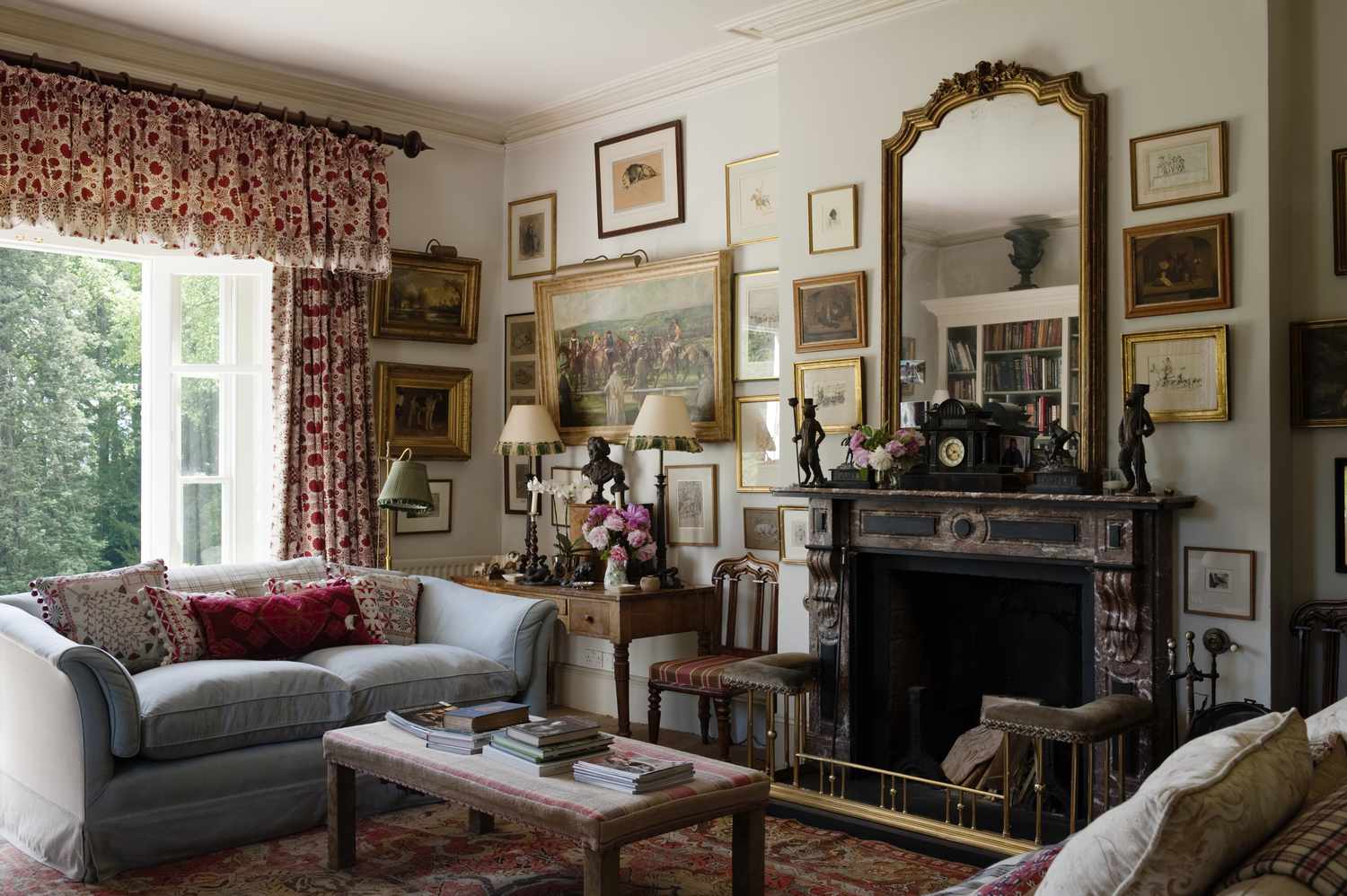
One of my favorite “supporting cast” moves is to repeat a single finish across the room. For example: one warm brass picture light, one brass floor lamp, and one brass frame. It creates calm continuity without matching everything.
Cause #6: Harsh lighting
Overhead lighting can be a little too honest. Cool bulbs and a single ceiling fixture can create sharp shadows that exaggerate edges and visual noise. Even tidy rooms can look messier in unforgiving light.
Signs
- The room looks better in daylight than at night.
- At night, every item on every surface feels a little “outlined.”
- You rely on one ceiling light for the whole room.
Fix
- Use at least two light sources besides overhead. A floor lamp plus a table lamp is a great start.
- Go warm. Look for bulbs around 2700K to 3000K for a cozy, forgiving glow.
- Use shades that diffuse. Linen, paper, and frosted glass soften the scene and help everything feel calmer.
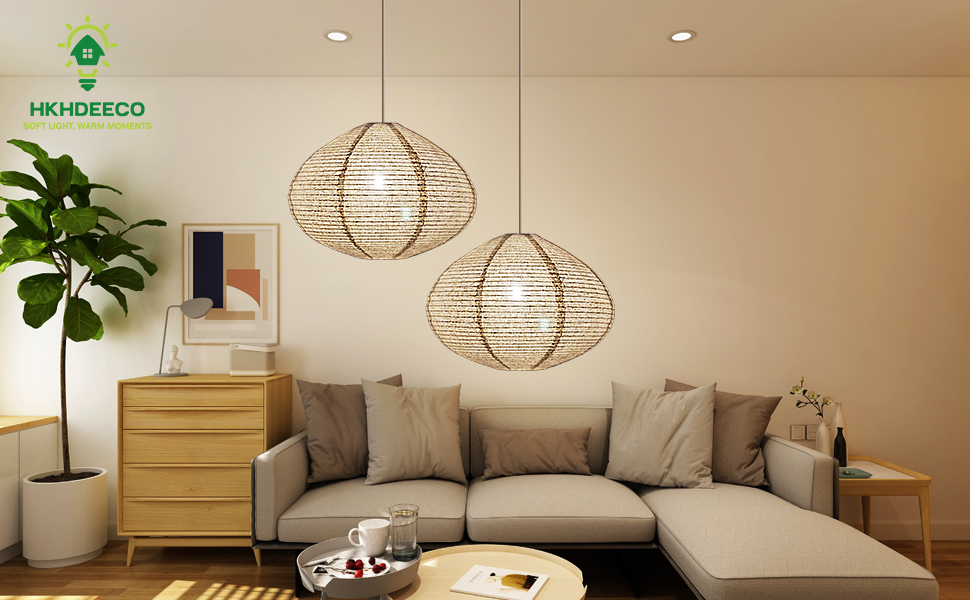
Cause #7: Cords and chargers
Nothing spikes “visual noise” like a tangle of cords. This is especially true around TV consoles, side tables, and that one outlet everyone fights over.
Signs
- You can see a bundle of wires behind the TV or along the baseboard.
- Chargers live on the sofa arm or drape across a side table.
- Your power strip is always on display.
Fix
- Hide the power strip. Mount it to the back of the console or place it in a cord box.
- Shorten the look. Use shorter charging cables where you can, or clip extra length behind furniture.
- Create one charging home. A lidded box, basket, or drawer with a charger hub instantly calms the “floating cord” effect.
Cause #8: Too many patterns
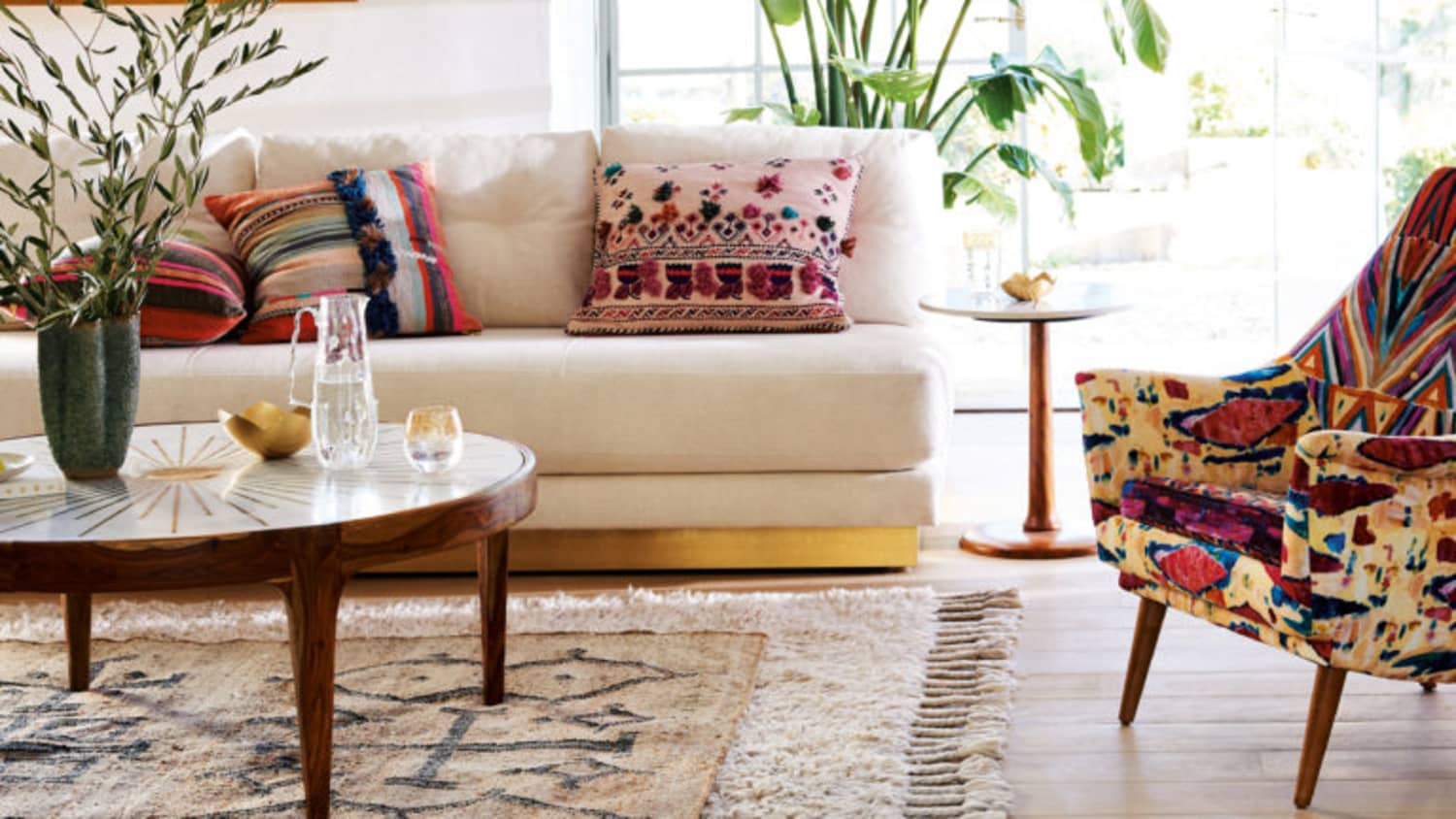
You can declutter perfectly and still feel visually overwhelmed if every textile is trying to be the star. Pattern is wonderful. Too many bold patterns in the same sightline can make the room feel busy.
Signs
- Your eye keeps bouncing between pillows, rug, curtains, and art.
- Nothing feels like a “resting place.”
- You love each piece, but together it feels like a lot.
Fix
- Choose one main pattern per zone. Let the rug be bold and keep pillows calmer, or vice versa.
- Add solids and texture. Linen, chunky knits, boucle, and matte ceramics read as quiet even when they are interesting.
- Repeat one color. Pull one color from the busiest pattern and echo it in two other places for instant cohesion.
20-minute reset
If you only do one thing from this article, do this. It’s my go-to when a room is technically decluttered but still visually busy.
Step 1: Pick your zones
- Seating zone (sofa, chairs, coffee table)
- Media zone (TV, console)
- Reading zone (chair, lamp, side table)
- Drop zone (entry edge of the room, if you have one)
Step 2: Choose one hero surface per zone
Examples: the coffee table, the mantel, the media console, the side table. Each zone gets one intentional moment. Everything else should be calm and functional.
Step 3: Edit the supporting surfaces
- Leave one side table empty except for a lamp.
- Limit shelves to a few larger groupings instead of many small standalones.
- Put “daily life” items (remotes, chargers, kid stuff) into a lidded box or basket within reach.
A quick example
Coffee table: one tray + two books + one tall vase, then put remotes in a small lidded box on the console (or inside the coffee table if it has storage). Same items, less visual chatter.
A living room feels pulled together when your eye can rest. You are not aiming for empty. You are aiming for intentional.
Easy storage upgrades
Sometimes the room feels cluttered because the everyday items have nowhere graceful to land. A few “pretty containers” can do more than another full declutter session.
Low-effort favorites
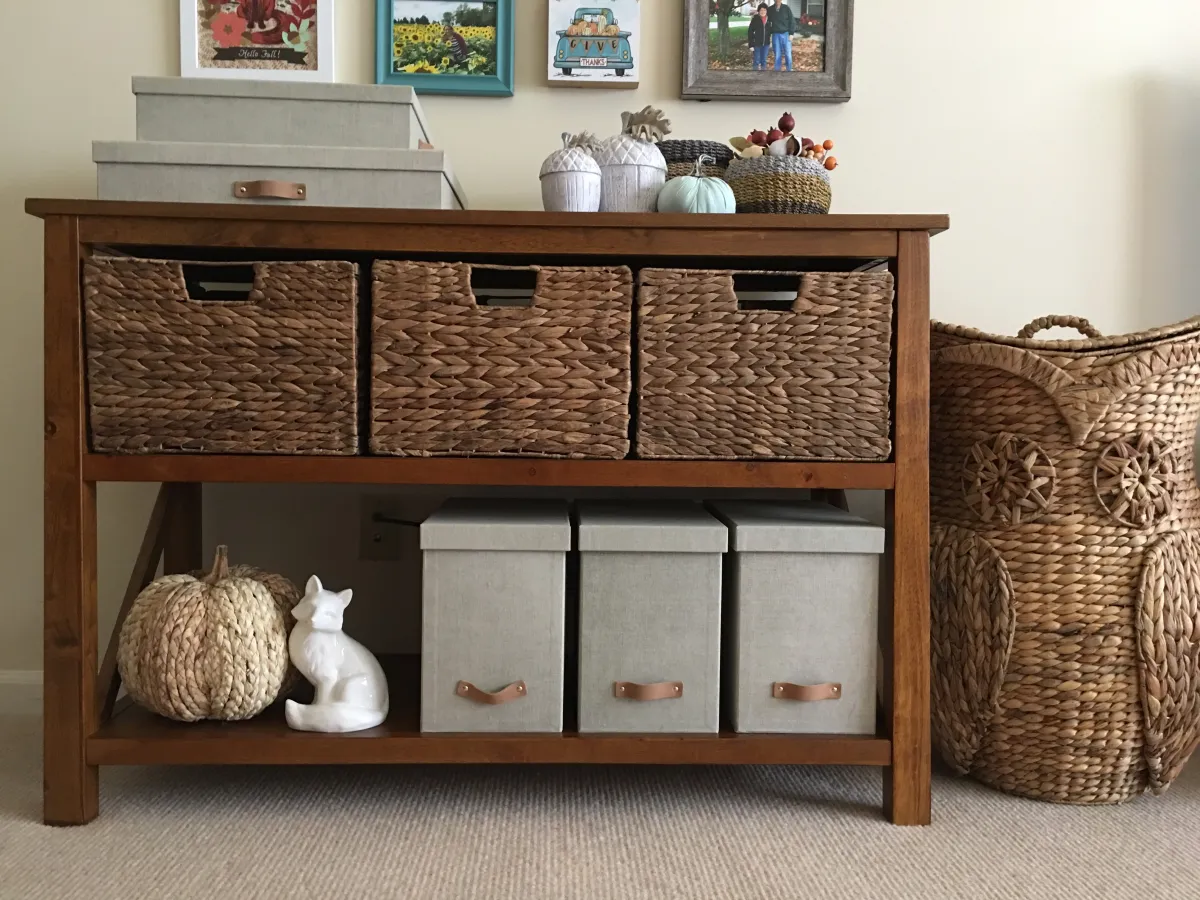
- One oversized basket: for throws, pillows, or toy cleanup before company arrives.
- A lidded box on the console: the home for remotes, matches, and cords. Lids are magic for visual calm.
- Vertical storage: a tall bookcase or wall-mounted shelves draw the eye up and free floor space.
- An entry tray: if your living room is also the drop zone, give keys and sunglasses one dedicated spot.
Checklist before you buy
- Is my rug large enough to anchor the seating area?
- Do I have clear walkways, or am I weaving around furniture?
- Are small items scattered instead of grouped?
- Do I have one focal point, or are multiple walls competing?
- Do I have layered lighting, especially at night?
- Are cords contained around the TV and charging spots?
- Is one pattern leading, with the rest supporting?
- Does each zone have one hero arrangement and one calm surface?
If you want the most bang for your effort, start with: rug size, then grouping small objects, then lighting. Those three fix the “still cluttered” feeling faster than almost anything else.
Keep it from creeping back
Clutter creep is not a character flaw. It’s usually a missing habit or a missing home for something.
Two tiny routines
- The 2-minute night reset: corral remotes, fluff pillows, fold throws, clear the coffee table into the tray or box.
- The Sunday surface edit: once a week, remove anything that migrated to a surface and does not belong there.
Your living room does not need to look like a catalog. It just needs to feel like you can exhale. And that comes from a room that supports your life, not from a room where you have to tiptoe around your own things.