Why Your Gray Sofa Living Room Feels Cold (And How to Warm It Up)

Clara Townsend
Clara Townsend is an interior stylist, vintage furniture enthusiast, and the creative voice behind Velvet Abode. With over a decade of experience transforming both cramped city apartments and sprawling fixer-uppers, she believes that a beautiful home is built on personal stories rather than massive budgets. When she isn't hunting for the perfect brass sconce at a local flea market, she can usually be found rearranging her living room for the third time this month.
Gray sofas are the jeans of the living room. They go with everything, they hide real life beautifully, and somehow they can still make a space feel a little… frosty. If you’ve ever looked at your room at night and thought, “Why does this feel like a waiting room?” you’re not alone.
The good news: a cold-feeling gray sofa living room is almost never a “bad sofa” problem. It’s usually a handful of small, fixable mismatches in undertones, lighting, and contrast. Let’s diagnose what’s happening and warm it up without a full makeover budget.
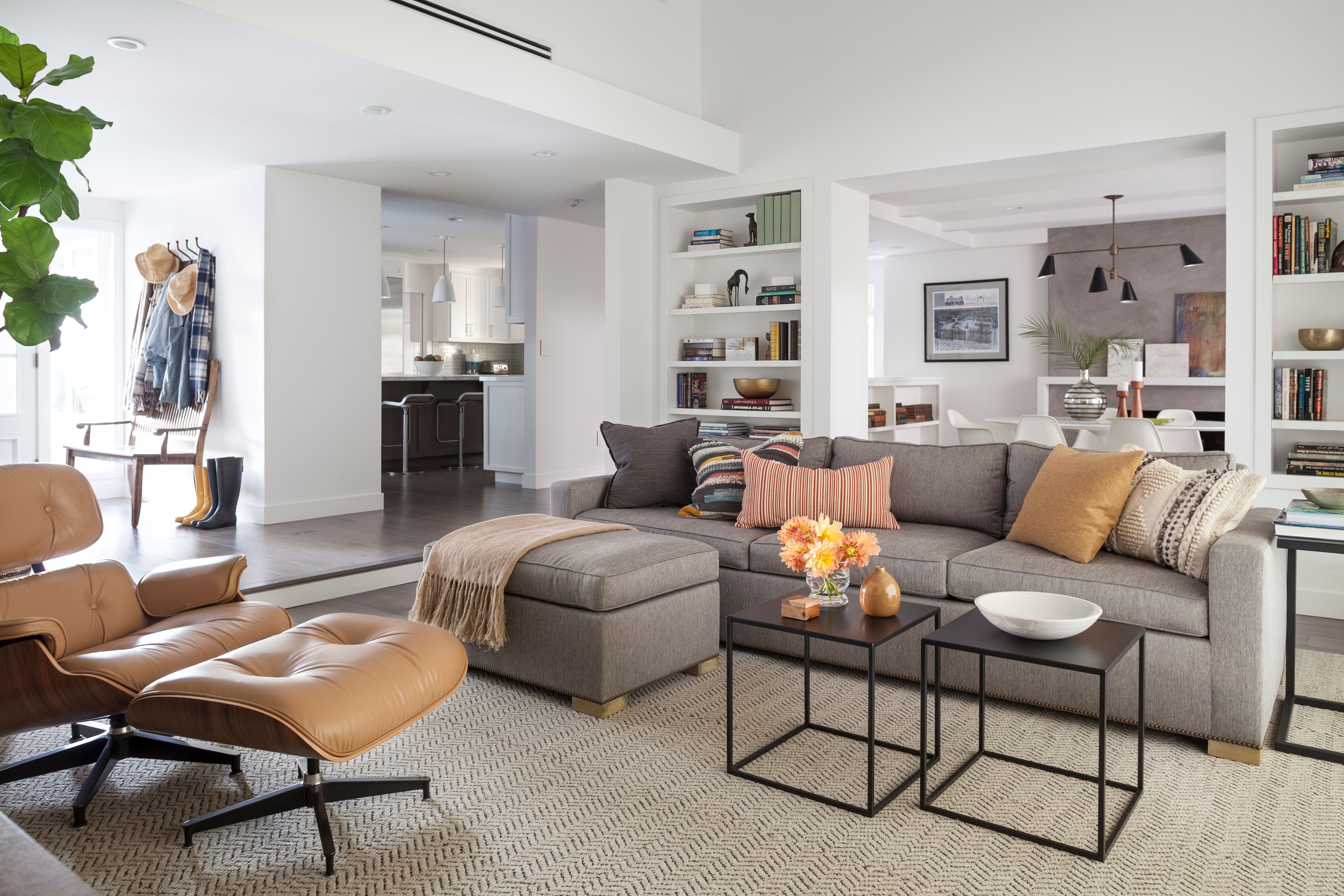
What “cold” really means
When people say a room feels cold, they’re usually reacting to one or more of these:
- Cool undertones dominating (blue-gray, icy white, silvery metals).
- Light that’s too white (daylight LEDs at night can make everything look clinical).
- Not enough warm contrast (everything sits in the same mid-gray zone, so the room feels flat).
- Hard surfaces and sharp lines (lots of glass, metal, bare floors, or minimal texture).
Warming up a gray sofa room usually means adding warmth in at least two places: color temperature (undertones and lighting) and tactile comfort (texture, softness, and depth).
The big culprit: undertones
Gray isn’t just gray. Most gray sofas lean one of three ways:
- Cool gray: blue, steel, slate, sometimes a hint of purple.
- Warm gray: greige, taupe, mushroom, sometimes a hint of brown or green.
- Balanced gray: still has an undertone, it’s just more subtle.
A room starts to feel cold when a cool gray sofa gets paired with other cool “neutrals” that sound safe but stack the chill. Think bright white walls, a blue-white rug, silvery chrome, and black accents. Individually they’re fine. Together they read icy.
Quick undertone check (30 seconds)
- Hold a cream item and a bright white item next to the sofa in daylight. If the sofa suddenly looks bluer next to cream, it’s likely a cool gray.
- Hold something camel, cognac, or warm wood near it. If the sofa looks crisp and a little colder, it’s cool gray. If it looks richer and calmer, it’s likely warm gray.
Quick caveat: do this once in daylight and once at night with your usual lamps on. Undertones can shift a lot depending on your bulb temperature.
Fix: If your sofa is cool gray, choose warming partners on purpose: creamy whites instead of stark whites, aged brass instead of polished chrome, and warm woods instead of ashy or gray-washed woods.
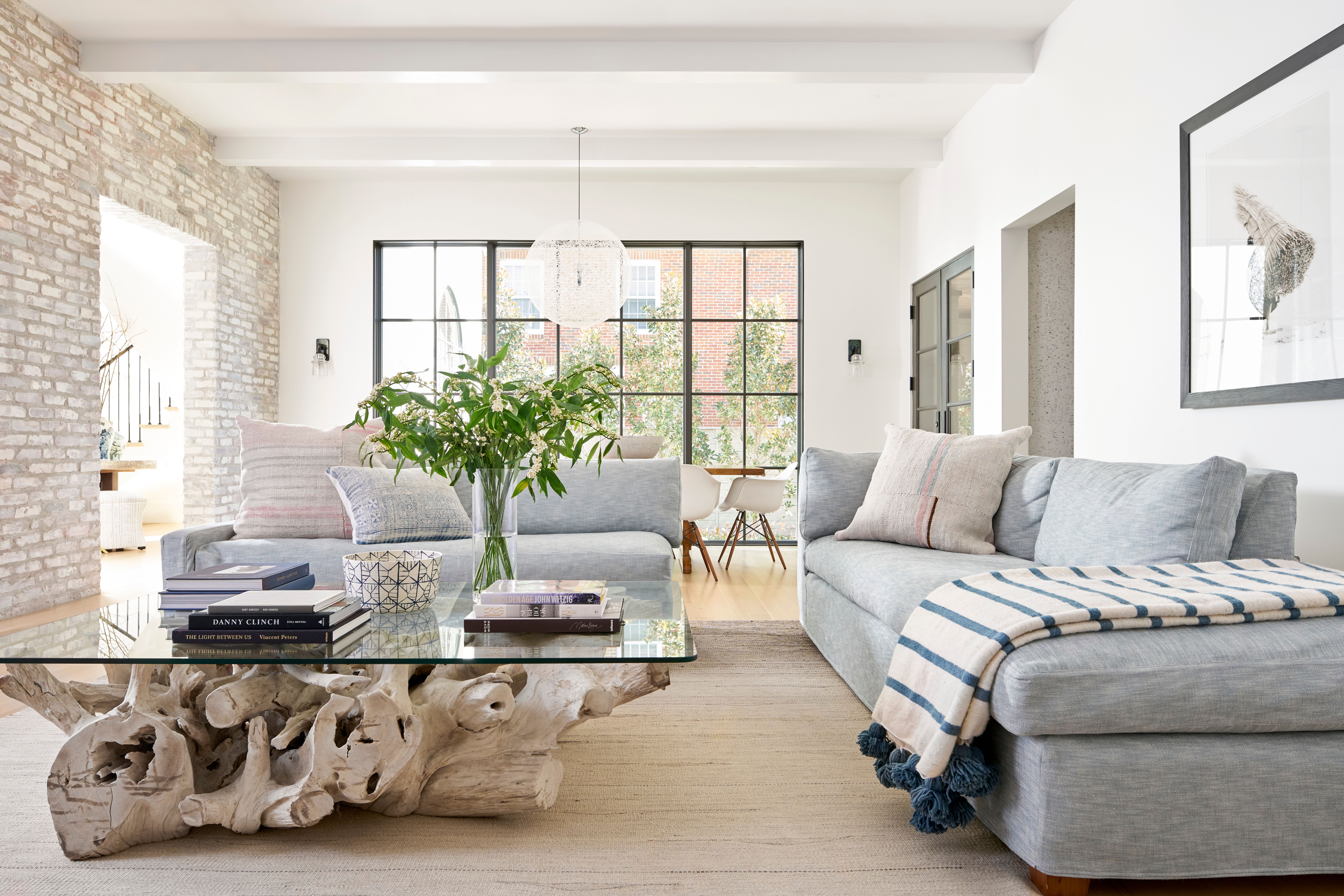
Lighting can cool everything down
Lighting is the sneaky one. A gray sofa that looks soft and inviting at 2 p.m. can look bluish and harsh at 8 p.m. if your bulbs are too cool or your light is coming from one intense overhead source.
Signs lighting is the issue
- The room looks best only in daylight.
- At night, whites look slightly blue and skin tones look washed out.
- Shadows feel sharp and the room lacks a gentle glow.
Fixes that cost less than a new rug
- Switch to warmer bulbs: 2700K often works beautifully in living rooms. If you like a slightly cleaner look, 3000K can still feel warm, especially with lamps and dimming.
- Layer your light: Aim for a practical baseline of two to three light sources in the room, ideally at different heights (table lamp, floor lamp, plus something ambient).
- Choose soft shades: Linen, paper, or parchment shades diffuse light and instantly soften a gray sofa’s edges.
- Add dimming if you can: A dimmer switch is great, but renters can use plug-in dimmers or smart bulbs for the same cozy effect.
Design secret: gray loves candlelight. Even a small cluster of real or flameless candles can make a gray sofa area feel warmly lived-in.
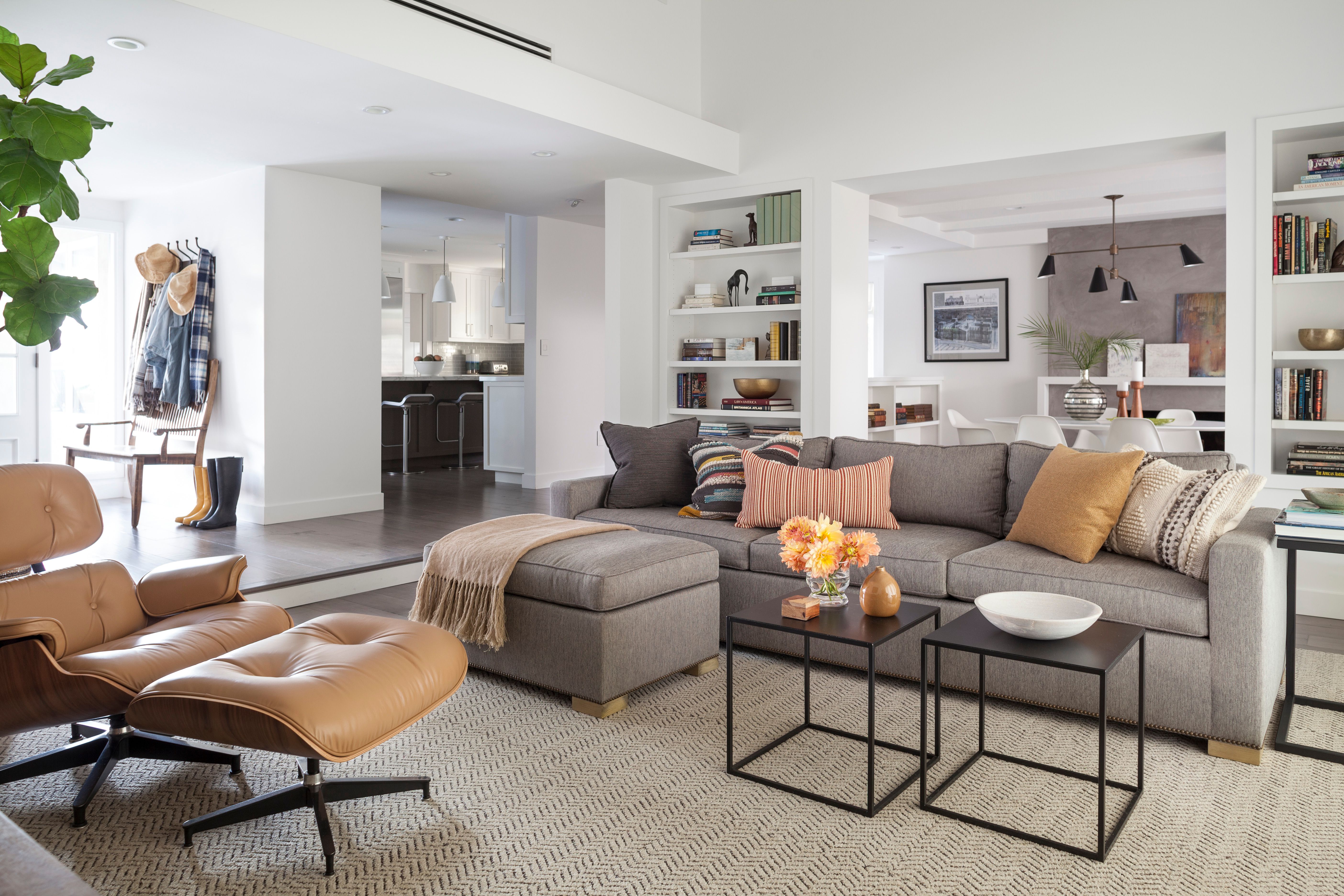
Your rug might be the ice cube
Rugs do a lot of emotional heavy lifting. If your rug is cool-toned, too small, or too low-contrast, the whole seating area can feel like it’s floating in a chilly puddle of gray.
Common rug issues
- Too small: Furniture legs sit off the rug, making the room feel sparse and a bit empty.
- Too gray: A gray sofa on a gray rug can go flat and cold fast.
- Cool pattern colors: Blue-grays, icy whites, and charcoal can dominate.
Rug moves that warm it up
- Go bigger: Ideally, the front legs of the sofa and chairs sit on the rug. Bigger rugs read calmer and more enveloping.
- Pick warm neutrals: Cream, oatmeal, sand, and warm taupe are gorgeous with gray.
- Add subtle warmth in the pattern: Look for hints of rust, terracotta, muted gold, tobacco, or warm brown.
- Try texture: Nubby wool, plush pile, or a flatweave with dimension adds instant comfort even if the colors are neutral.

Wood and metals matter
Not all wood reads warm. If your coffee table, TV console, or floors have a gray wash, a very pale blonde finish, or an ashy undertone, they can reinforce the coolness around a gray sofa.
Fix: add warmer notes
- Add one warm wood anchor: A side table, coffee table, or even a vintage tray in walnut, honey oak, or a medium brown finish.
- Use woven materials: Rattan, cane, seagrass, and wicker lean warm and cozy next to gray upholstery.
- Balance black accents: Black is great, but too much black with cool gray and white can feel stark. Add a warm element near black pieces (wood, brass, camel leather, or a warm textile).
- Swap in warm metal: Aged brass, antique gold, and bronze read warm and flattering next to gray.
If you already own cool-toned wood pieces, you don’t need to replace them. Just introduce a warmer finish in smaller doses so the room has a heartbeat.
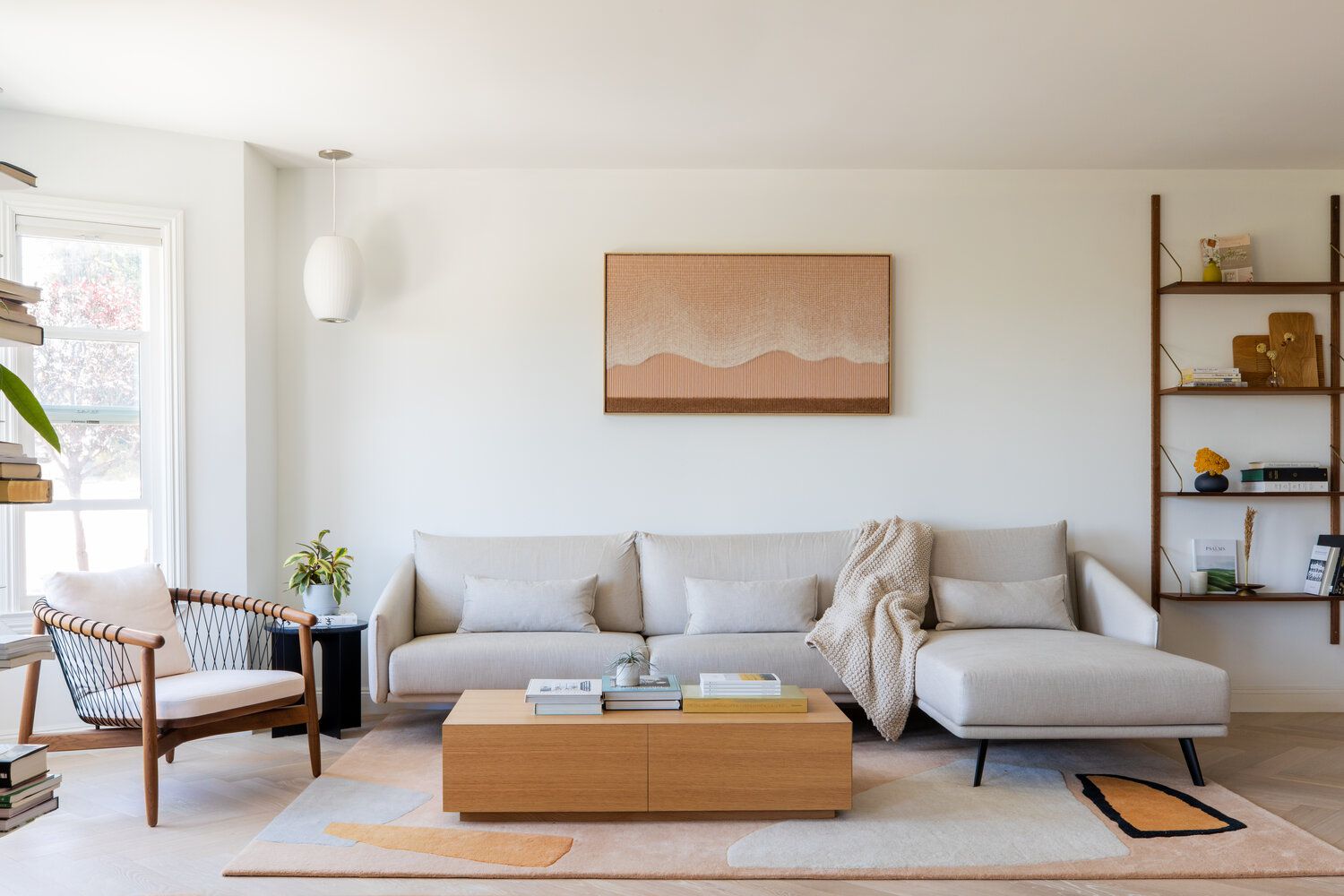
Contrast keeps gray from feeling chilly
A lot of gray sofa rooms accidentally land in the middle of the value scale: mid-gray sofa, mid-tone walls, mid-tone rug, mid-tone curtains. It’s not wrong, it’s just visually lukewarm. And that can feel cold because nothing feels grounded or glowing.
Fix: add contrast in 3 layers
- Light: Creamy curtains, a lighter rug, or light pillows to lift the room.
- Dark: A charcoal or deep olive accent, a dark wood frame, or a moody piece of art to add depth.
- Warm: One or two warmer colors to humanize everything. Think camel, rust, terracotta, muted mustard, warm blush, or tobacco.
This is why a gray sofa can look incredible with a single caramel leather pillow or a warm-toned vintage print nearby. Gray’s a perfect supporting actor. It just needs a lead.
Paint and curtains (quick wins)
If you can change two things that touch the whole room, it’s wall color and window treatments.
Paint directions
- Creamy off-whites: softer than stark white, instantly warmer next to cool gray upholstery.
- Warm greiges: a bridge color that makes gray feel intentional, not icy.
- Warm taupes: cozy, especially with warm wood and brass.
Sample first. Paint a big swatch on the wall nearest the sofa and look at it in daylight and in your evening lighting before committing.
Window treatments
- Go warmer and softer: oatmeal, warm white, flax, and beige tend to flatter gray.
- Add weight and texture: linen-look panels, woven shades, or layered sheers make the room feel more finished and less stark.
- Renters: try peel-and-stick light-filtering shades or simple curtain panels hung high and wide to soften the edges.
Layout makes it feel less “floaty”
Even with perfect colors, a room can feel cold if the seating zone isn’t anchored.
- Bring tables closer: Side tables should be within easy reach of the sofa and chairs. If you have to lean, it’s too far.
- Place lamps where you sit: A lamp near the sofa (not across the room) creates a warm pocket of light that makes gray feel softer.
- Close the gaps: If everything hugs the walls, pull the seating in a few inches. It reads more conversational, and oddly, warmer.
Fast styling moves
If you want the quickest wins, start here. These are the small changes that make people walk in and say, “Oh, this feels nice.”
1) Swap pillow covers
Choose two warm textures and one pattern for depth.
- Texture ideas: washed linen, velvet, boucle, wool, chunky knit.
- Warm colors: camel, clay, rust, warm cream, olive, mustard.
- Pattern ideas: a soft stripe, a vintage-inspired floral, or a small-scale geometric with warm tones.
2) Add a throw with a story
A single generous throw can change the whole mood. Look for something with a visible weave or a brushed finish. Drape it casually so it breaks up the sofa’s flat plane.
3) Use art to add warmth
Gray needs storytelling. Choose art with warm pigments or warm paper tones. Vintage prints, landscapes at golden hour, or anything with terracotta, ochre, or soft brown will do the work.
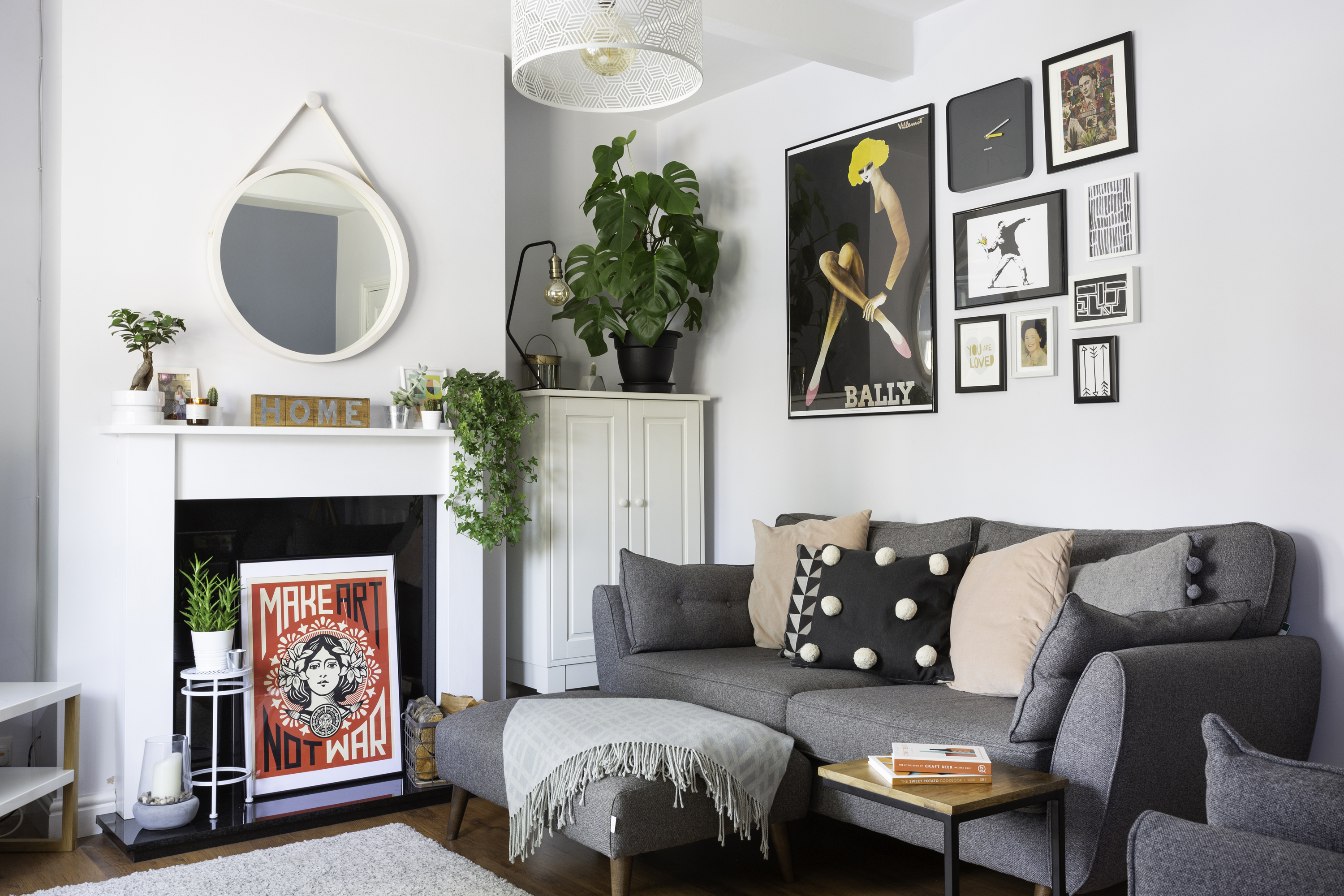
Plants thaw a cool palette
If your room feels cold, add something alive. Greenery cuts through gray in the most comforting way, and it makes the space feel cared for.
- For corners: a taller floor plant adds height and softness.
- For coffee tables: a small leafy plant or a simple vase of stems creates an instant focal point.
- For shelves: trailing plants soften hard lines.
If you’re plant-shy, start with one sturdy option and put it where you’ll actually see it. The goal isn’t a jungle. The goal is warmth.

3 easy palette recipes
If you’d rather copy and paste than overthink, try one of these:
- Cool gray sofa + cream rug + walnut table + rust pillows + brass lamp
- Warm gray sofa + oatmeal curtains + jute or textured wool rug + olive pillows + black frames (with warm art)
- Mid-gray sofa + warm taupe walls + camel throw + deep green accent + woven baskets
Warm vs cool checklist
If your gray sofa living room feels cold, walk through this quick checklist and adjust two items first. Two is usually enough to feel a real shift.
Warm it up if you have:
- Bulbs that look bright white at night (try warmer bulbs like 2700K)
- Stark white walls and cool gray upholstery
- A rug with icy whites, blue-grays, or lots of charcoal
- Mostly chrome, nickel, or glossy black accents
- Gray-washed or ashy wood tones
- Little texture (smooth everything)
You’re on track if you have:
- Creamy whites and warm neutrals near the sofa
- At least two lamps with soft shades
- A rug that’s large enough and has warmth in it
- Warm wood, woven pieces, or aged metals
- Textiles with visible texture
- One earthy accent color and one deeper grounding tone
A simple cozy formula
If you want a no-overthinking formula, try this:
- 1 warm neutral (cream, oatmeal, camel)
- 1 earthy color (rust, terracotta, olive, muted mustard)
- 1 grounding dark (charcoal, espresso, deep green)
- 3 textures (linen, wool, velvet, knit, jute)
- 2 to 3 light sources (warm bulbs, layered)
Your gray sofa becomes the calm center, and the rest of the room starts to feel like a real exhale.
If you only do three things this week: switch to warmer bulbs, make sure your rug is big enough (and not icy), and add one warm-toned textile to the sofa. Those are the fastest “why does this feel nicer?” changes I know.