Why Is My Quartz Countertop Turning Yellow?
Gust
A little flutter. A cozier corner.
Quartz is supposed to be the easygoing one. So when a white or pale quartz countertop starts warming up into a buttery yellow, especially near a window or the toaster, it feels personal. The good news is that some “yellowing” is actually surface film and can improve with the right cleaning. The less cozy news is that some yellowing is a change inside the material itself, and it is not really reversible.
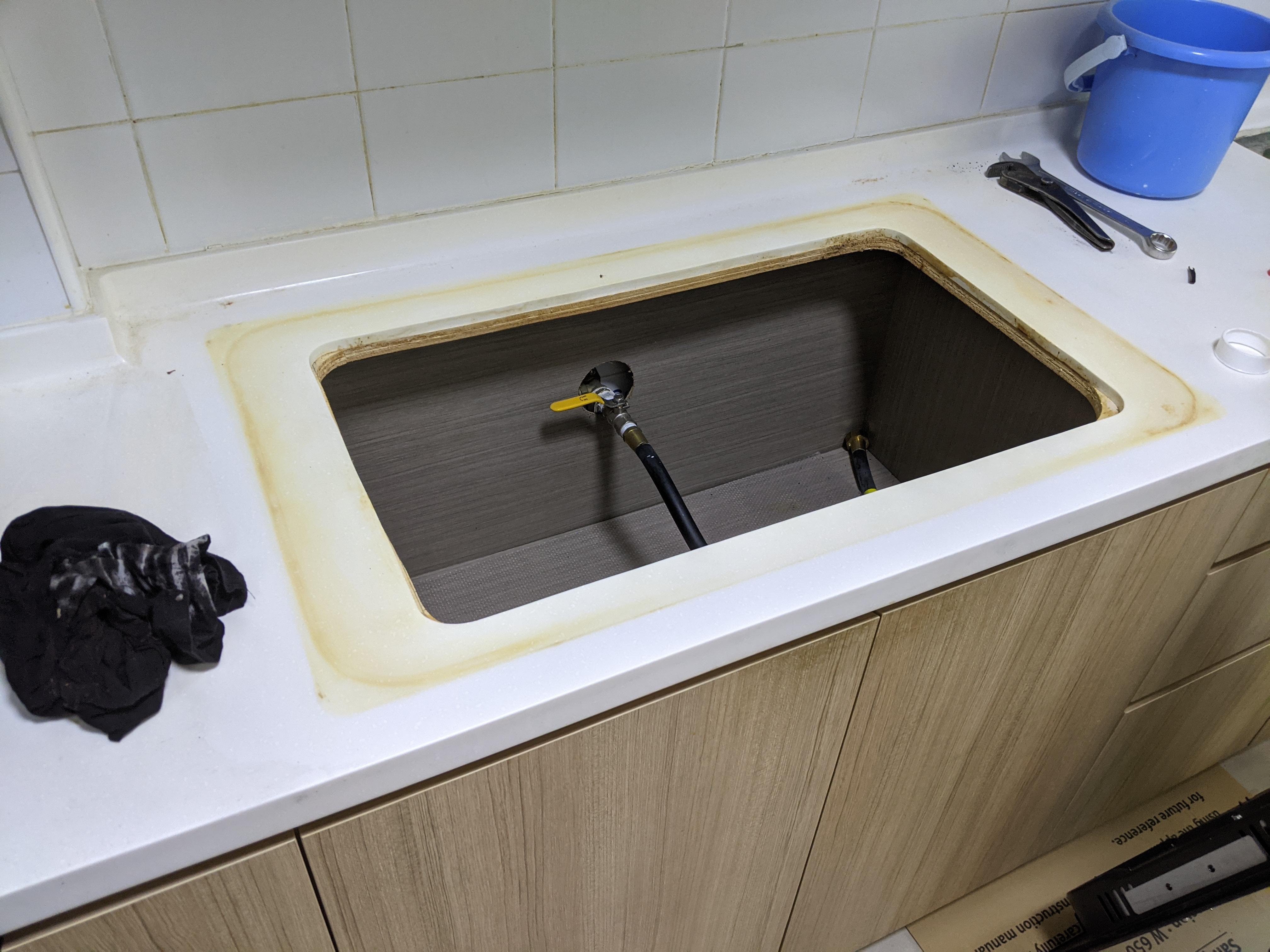
Let’s sort out what you are looking at, what usually causes it, which cleaners can make it worse, what renters can try without causing damage, and when it is time to document the change for your landlord or installer.
First: Is it yellowing, or just a film?
Before you blame the slab, do a quick reality check. A lot of “my quartz is turning yellow” situations are actually one of these:
- Cooking film: airborne grease that lands and oxidizes over time, especially near the stove.
- Hard water or soap residue: a hazy layer that can look warm-toned under certain lighting.
- Product buildup: stone sprays, waxy cleaners, or leave-behind disinfectants that slowly tint.
- Lighting or contrast effects: very warm under-cabinet bulbs, a new cream backsplash, or warmer wall paint can make a white countertop read more yellow, especially at night.
Try this tiny test: Clean a 12-inch by 12-inch square with warm water and a drop of mild dish soap, rinse, then dry completely with a microfiber cloth. If the color looks noticeably better once it is truly dry, you were dealing with surface film more than permanent yellowing.
If you want one more reality check, look at the area in neutral daylight with the under-cabinet lights off. Sometimes the countertop did not change as much as the room around it did.
Why quartz can yellow over time
Quartz countertops are engineered stone. That means they are made from natural quartz mineral plus binders (usually resins) and pigments. The quartz itself is very stable. Most long-term color shift happens because of what is holding everything together, what is sitting on top of it, or what has transferred onto it.
1) Sun and UV exposure
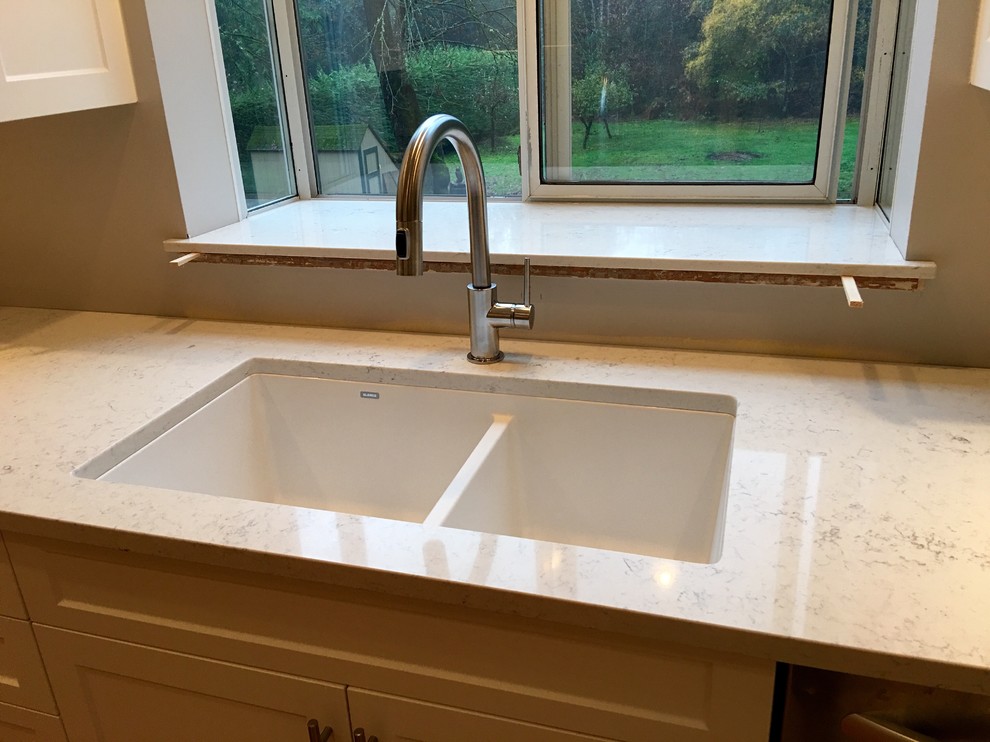
White or light quartz placed in strong sunlight can slowly shift warmer over time. The culprit is typically UV light interacting with the resins and sometimes pigments used to achieve very bright whites.
One important caveat: performance varies by manufacturer and color. Some brands offer “UV-resistant” lines or specific whites designed to hold up better in sunny rooms. If you can find your install paperwork, it is worth checking your exact product and care guide.
Clues it is UV-related:
- The yellowing is strongest closest to the window or along an exposed edge.
- It looks like a gradual tint, not a spot or ring.
- It becomes more obvious over months or years, especially in very bright rooms.
2) Heat exposure
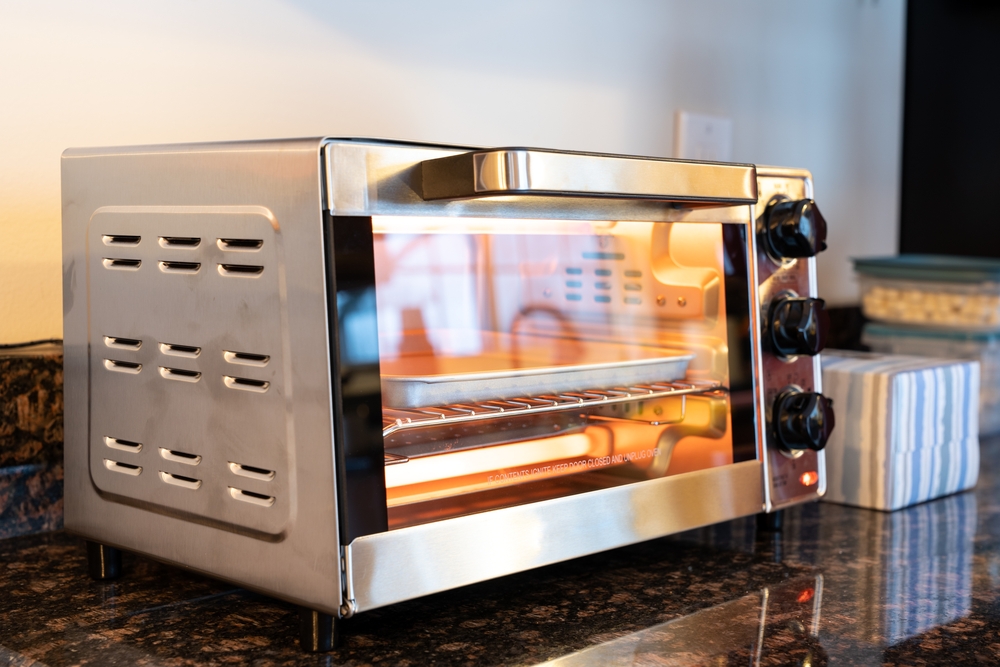
Quartz is not heatproof. Sometimes a brief heat encounter leaves no visible mark, and sometimes one very hot pan is enough to scorch resin immediately. More often, repeated heat in the same location slowly discolors the resin portion of the slab and can dull the finish.
Common heat zones:
- Next to the range where hot pans get parked for “just a second”
- Behind a toaster or toaster oven where heat vents upward
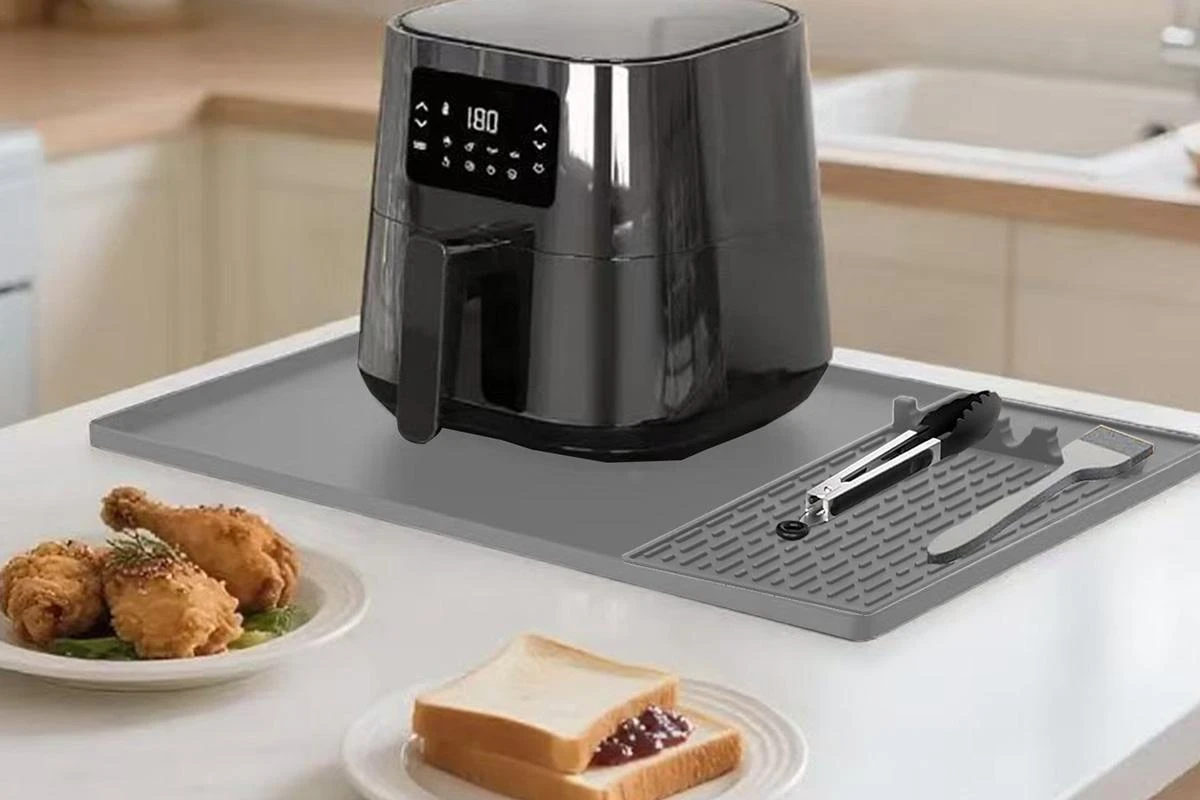
- Under an air fryer exhaust
- Under a slow cooker or electric griddle that runs for hours
Clues it is heat-related:
- The yellowing is in a localized patch, often near a small appliance footprint.
- You may also see a slight dullness compared to surrounding gloss.
- It may repeat in a pattern, like a rectangle where an appliance lives.
3) Cleaner and chemical reactions
Quartz is often described as non-porous. In normal use, it is very low-porosity compared with many natural stones. Still, the surface can react to harsh chemicals or repeated chemical exposure. Some products can etch, haze, or alter the resin, changing how light reflects and making the area look warmer or more yellow.
In other cases, the cleaner leaves behind a residue that grabs kitchen grease and dust. Over time, that film can oxidize and shift color.
4) Metal transfer and rust tones
Not all yellow-orange discoloration is resin. Sometimes it is transfer.
- Cast iron and carbon steel: tiny metal particles can leave gray-to-orange marks, especially if there is moisture.
- Steel wool remnants: a stray fragment can rust and leave an orange bloom.
- Cans and cookware rings: metal bases can leave marks that read tan or yellow under warm light.
Clue it is transfer: the mark looks more like a spot, streak, or ring than a gradual tint, and it is often near where you set pans, cans, or utensils.
5) Rubber, plastic, and dye transfer
Some “yellowing” is actually something leaching onto the counter.
- Rubber feet and appliance mats: certain rubbers and soft plastics can transfer plasticizers over time, leaving a yellow or amber shadow.
- Non-slip liners and drying mats: dyes can migrate, especially with heat.
- Bright sponges or silicone items: less common, but possible if they stay damp and in one spot for days.
If the discoloration matches the exact outline of a mat or appliance feet, suspect transfer first.
Cleaners and habits that can worsen it
If your quartz is light-colored, avoid the “stronger must be better” trap. These are common troublemakers:
- Bleach or bleach-based sprays: repeated use can dull or damage resin and worsen uneven appearance. It is not a reliable whitening fix.
- Ammonia-heavy cleaners: may leave stubborn residue and can be too harsh for some resins over time. Manufacturer guidance varies, so check your brand’s care sheet if you have it.
- Oven cleaner and high-alkaline degreasers: generally too aggressive for engineered stone surfaces.
- Abrasive powders and scrub creams: can micro-scratch the surface, making buildup cling more easily.
- Magic eraser type melamine sponges: they are micro-abrasive. Occasional gentle use may not ruin a counter, but frequent rubbing in one spot can create a dull patch that reads as discoloration.
- Stone polishes, waxes, and “shine boosters”: often create a sticky film that attracts grime and can yellow as it ages.
If you have been using any of these regularly in the yellowed area, stop for now. Switch to the gentlest, no-residue routine while you troubleshoot. And if you can identify your countertop brand and color name, follow that manufacturer’s care instructions first.
Renter-safe steps to try
If you rent, your goal is simple: clean and diagnose without creating damage you could be blamed for later. These steps are typically safe for quartz when done gently and with common sense.
Step 1: Deep clean the area
- Wash with warm water plus a few drops of mild dish soap.
- Wipe with a soft sponge or microfiber cloth.
- Rinse with clean water.
- Dry completely.
Drying matters. A damp surface can temporarily look darker and warmer, which can mimic staining.
Step 2: Degrease gently near the stove
If the yellowing is along the cooktop run or backsplash line, grease film is a prime suspect. Use a gentle degreasing dish soap solution and repeat a couple of times rather than using a harsh product once.
Step 3: Try isopropyl alcohol for residue (spot test)
For unknown residue or haze, a small amount of isopropyl alcohol (around 70%) on a microfiber cloth can help lift film. Work in a small area, rinse afterward, and dry.
Use alcohol sparingly, and if you know your brand, check the care guide. Some manufacturers prefer limited solvent use.
Step 4: Check for rubber or metal transfer
- Pick up the mat, trivet, drying pad, or appliance that sits there and look at the underside.
- If the mark matches feet or a mat pattern, stop using that item in that spot.
- If you suspect metal transfer, avoid abrasives and document it before you try anything stronger.
Step 5: Remove heat and direct sun for two weeks
This is a quiet but useful diagnostic step.
- Move the toaster, air fryer, coffee maker, or slow cooker to a different spot.
- Use a trivet or a silicone mat under any heat appliance that must stay.
- Close blinds during peak sun or add UV-filtering window film if allowed.
If the color continues to deepen even after you remove the source, you are more likely dealing with resin shift that has already occurred, not new film forming.
Step 6: Do not sand, polish, or buff
Quartz does not respond to DIY polishing like natural stone sometimes can. Aggressive rubbing can create a permanent dull spot that makes discoloration more obvious. If a fix involves power tools, it is no longer renter-safe.
When it is permanent
Here is the honest part: some quartz yellowing is a material change. Once the resin has discolored from UV or heat, cleaning the surface will not make it white again.
Signs it is likely permanent:
- The warm tone looks within the slab, not on top. It looks uniform and does not feel different.
- You have removed film and residue, and the color does not change.
- The pattern matches a sun patch or a repeated heat zone.
- There is also subtle loss of shine in the area.
In permanent cases, a fabricator may suggest a professional assessment, a repair attempt (often limited), or replacement. If the counter is under warranty, documentation and your specific brand details matter.
How to document it for a landlord or installer
If you rent, or if the countertop was recently installed, do not wait until it becomes undeniable. Document early, calmly, and clearly.
What to photograph
- The yellowed area straight on and from above
- A wider shot showing its location relative to window, stove, or appliance
- A comparison photo of a normal-looking area of the same counter
- If relevant, the underside of small appliances or mats that sit there (to show heat vents, rubber feet, or dye transfer)
How to make photos useful
- Use natural daylight, but avoid harsh glare from direct sun.
- Turn off warm under-cabinet lighting for one set of photos, then take a second set with your usual lighting.
- Place a plain white sheet of paper near the spot for color reference.
What to write down
- When you first noticed the change
- What sits in that spot (toaster oven, air fryer, plant, mat)
- Any cleaning products used regularly
- Whether the area gets direct sun at specific times of day
- If you have it, the countertop brand and color name from your paperwork
Send one concise message to your landlord or property manager with photos attached, asking for next steps. Keep the tone practical. You are not accusing, you are recording.
Preventing more yellowing
- Soften UV: sheer curtains, blinds, or UV-filtering film (if allowed) help more than you would think.
- Relocate hot appliances: especially anything with a rear or top exhaust.
- Use trivets and mats: choose heat-rated silicone, and avoid leaving unknown rubber or vinyl mats in one spot long-term.
- Stick with gentle daily cleaning: mild dish soap and water, then rinse and dry.
- Avoid leave-behind sprays: if a product says “no rinse,” your quartz may disagree over time.
Quick FAQ
Can white quartz turn yellow from sunlight?
Yes. Prolonged UV exposure can discolor resin and sometimes affect pigments, especially in very bright whites. It often shows up near windows as a gradual warm tint. Some products are more UV-resistant than others, so check your specific brand if you can.
Can I use bleach to whiten it back?
Bleach is not a reliable fix for quartz discoloration. Repeated use can dull or damage resin and make the finish look worse. If the yellow tone is from resin change, bleach will not reverse it.
Why is it yellow near my toaster or stove?
Heat and airborne grease are a common double team. Heat can affect resin over time, and grease film can oxidize and tint. Start by deep cleaning, then move the appliance or add a heat barrier.
Could it be a mat or rubber feet?
Yes. Some rubber and soft plastics can leave an amber or yellow shadow, especially with warmth. If the discoloration matches the outline of a mat or appliance feet, stop using that item there and document the mark.
Is yellowing a manufacturing defect?
Sometimes, but not always. UV and heat sensitivity varies by brand, color, and resin formulation. If the countertop is newer or under warranty, take photos, locate the brand and color name, and contact the installer or manufacturer with your documentation.
What if I am renting and the counter is already yellow?
Document it anyway, ideally as soon as you notice it. Take photos in consistent lighting and notify your landlord in writing. That protects you if the discoloration is later treated as damage.
A last little breeze of reassurance
Yellowing feels like the countertop is breaking a promise. But it usually comes down to a very specific cause: sun, heat, chemistry, or transfer from something sitting there. Once you identify what is at work, you can either clean it back, slow it down, or document it properly and let the right person take it from there.