Washing Machine Shaking or Walking: Renter Fixes

Clara Townsend
Clara Townsend is an interior stylist, vintage furniture enthusiast, and the creative voice behind Velvet Abode. With over a decade of experience transforming both cramped city apartments and sprawling fixer-uppers, she believes that a beautiful home is built on personal stories rather than massive budgets. When she isn't hunting for the perfect brass sconce at a local flea market, she can usually be found rearranging her living room for the third time this month.
There is a special kind of chaos reserved for a washing machine that decides to audition for a tap-dance routine mid-spin. The good news: most shaking, banging, or slow “walking” across the floor comes down to a few fixable things, and renters can handle the majority of them without tools that look like they belong on a construction site.
Below, I will walk you through quick safety checks, leveling basics, load fixes, and the big “new washer” gotcha that catches people all the time: shipping bolts.
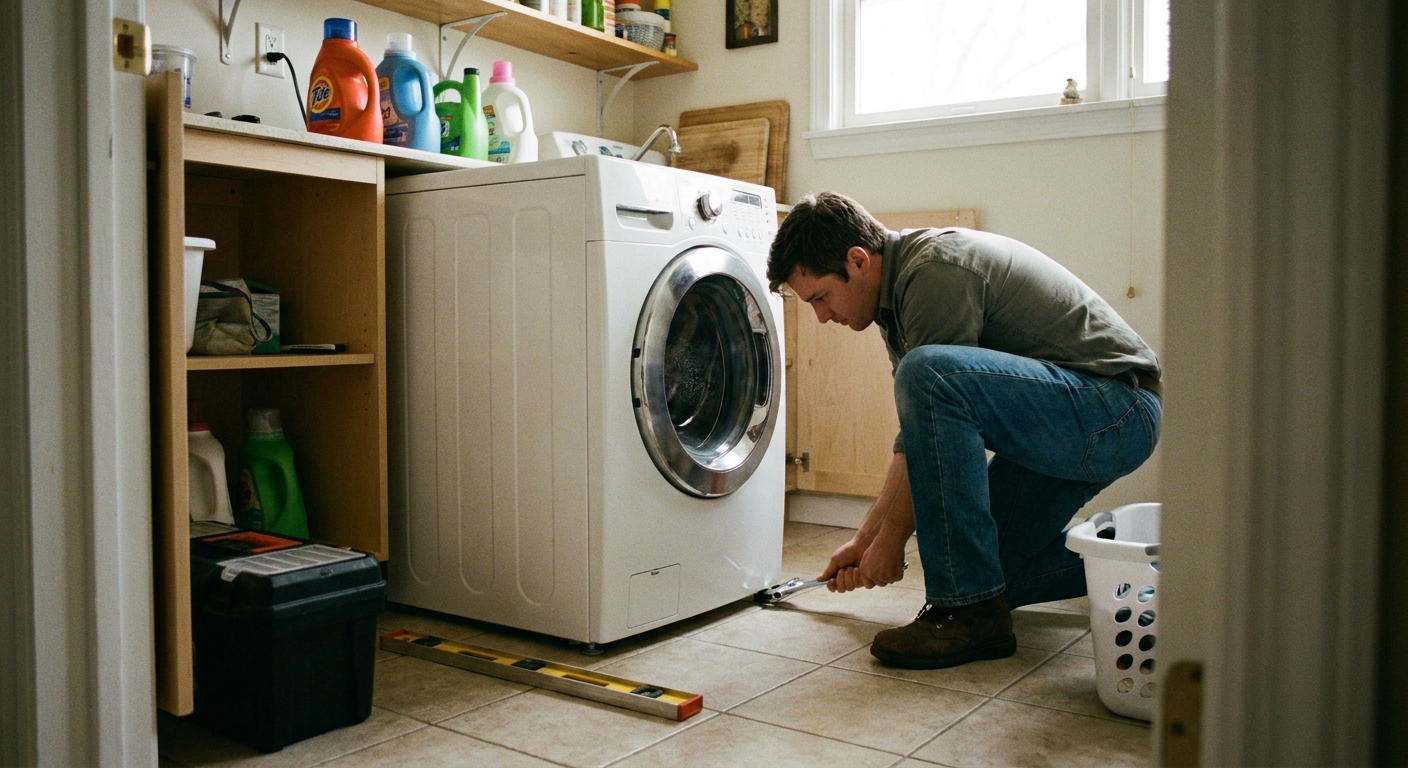
First, a quick safety reset
Before you start poking around, do this mini reset. It takes two minutes and makes everything safer.
- Pause and power down: Turn the washer off. Unplug it if you will be reaching behind or underneath.
- Turn off water if needed: If you plan to move the machine out far, turn the supply valves off first.
- Give it space: If the washer is jammed into a closet, pull it forward just enough to work safely without straining hoses.
- Protect the floor: A towel under the front edge helps if you are nudging the washer in and out on tile or vinyl.
- Move it gently: Avoid over-tilting the washer. When sliding it back, watch for pinched hoses or a cord caught under a foot.
Match the symptom to the fix
A washer can misbehave in a few different ways. Pinpointing the pattern helps you fix it faster.
- Violent shaking during spin: Most commonly an unbalanced load or the washer is not level.
- Thumping or banging: Often heavy items clumping on one side, or the drum hitting the cabinet because the machine is tilted.
- Slowly “walking” forward: Usually poor leveling, slick flooring, or feet that are not gripping evenly.
- Brand-new install is wild: Shipping bolts may still be installed on a front-loader, or a stacked setup is not secured correctly.
The renter MVP: leveling the feet
Leveling is not glamorous, but it is the foundation. A washer that is even slightly off can vibrate like it is trying to escape.
How to check if it is level
- Do the corner test: With the washer empty, press down on each front corner. If it rocks or clicks, it is not stable.
- Use a simple level if you have one: Place it across the top, then front-to-back and side-to-side.
Adjust the feet step-by-step
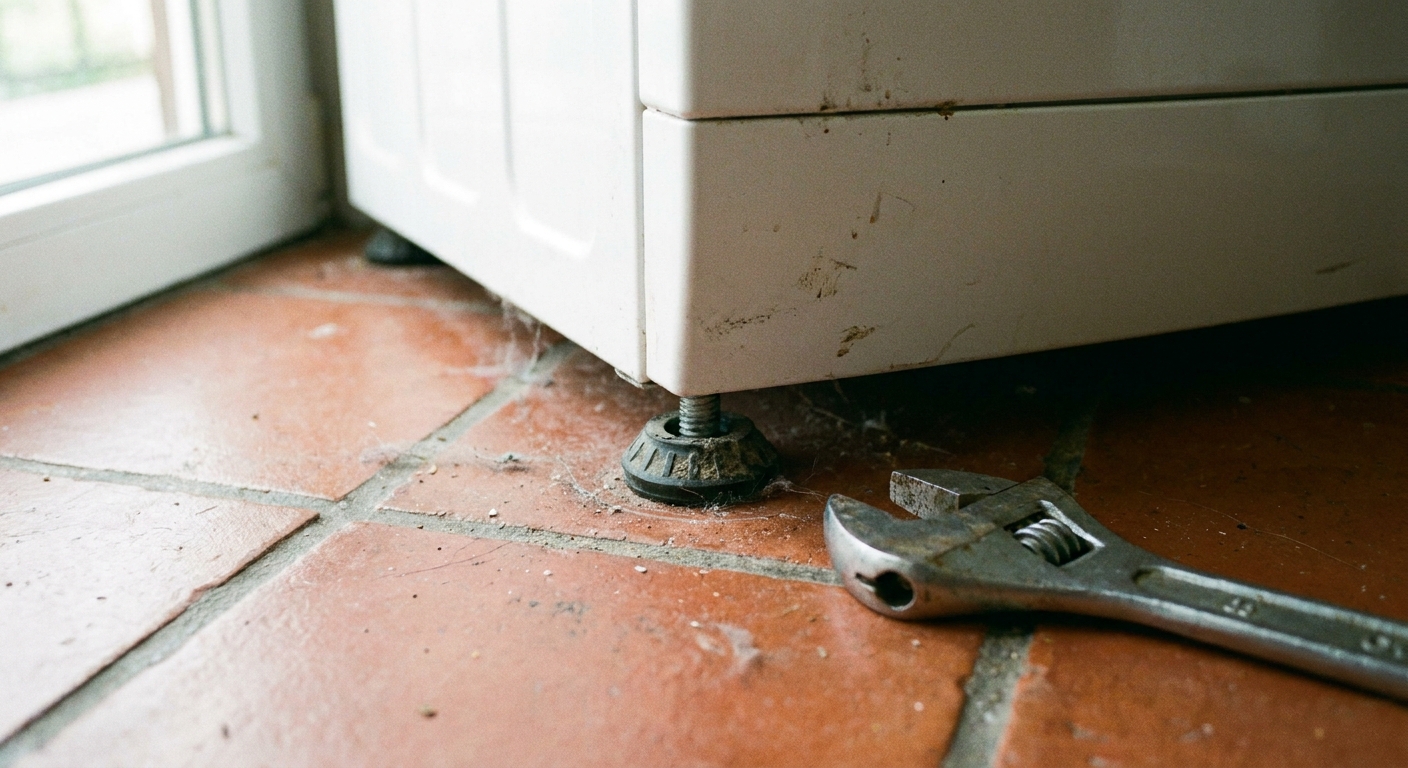
Most washers have adjustable feet, often on all four corners. Some models only adjust in front, and the locking method can vary, so check your manual if something looks different.
- Tip the washer slightly: Just enough to take weight off a foot. If it is heavy, ask a friend. Protect your back.
- Turn the foot: Typically, turning one way raises the corner and the other lowers it. Go in small adjustments.
- Re-test for rocking: Repeat until the washer feels planted.
- Tighten the lock nut (if your model has one): Many feet have a lock nut above the foot. Tighten it snugly against the base to keep the adjustment from drifting during spin cycles.
Tip from my own apartment years: If your laundry closet floor is slightly sloped, aim for no rocking first, even if the bubble is not perfect. Stability beats perfection.
Load fixes that actually stop the shake
Even a perfectly level washer will throw a tantrum if the load is lopsided. Front-loaders especially like balanced, evenly distributed laundry. Top-loaders can go off-balance too, especially with bulky, water-heavy items.
Redistribute heavy items
- Pause the cycle if the machine starts slamming around during spin.
- Break up the clump: Towels, sweatshirts, and jeans love to ball up.
- Mix weights: Wash one heavy item with a few medium items, not a lonely comforter all by itself unless the machine is rated for it.
Avoid the two classic mistakes
- Overloading: Clothes need room to tumble. Stuffing the drum can create imbalance and stress the suspension.
- Underloading: One wet bath mat can become a wrecking ball. Adding a few towels may help it distribute, but some machines will still struggle and may stop to rebalance.
Special note: bulky bedding
If you are washing a comforter, check the care tag and your machine capacity. If your washer is compact, it might be kinder to your machine and your nerves to use a laundromat for bulky items.
Anti-vibration pads: when they help
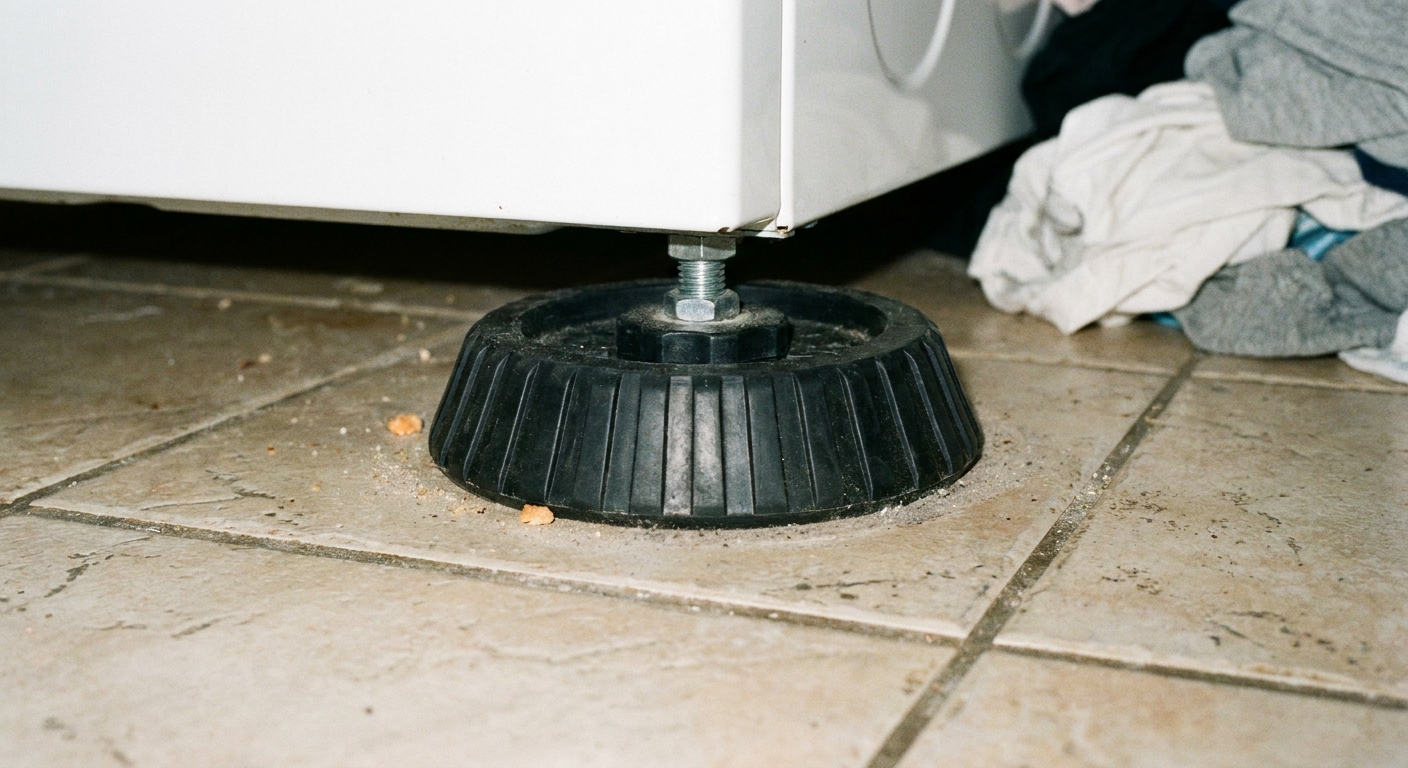
Anti-vibration pads can be a renter-friendly upgrade, especially on slick surfaces like tile, laminate, or sealed concrete. They are not a magic wand, but they can reduce vibration and keep a washer from creeping forward.
- Best for: A washer that is already level but still buzzes, hums, or migrates slightly during spin.
- Not enough for: A washer that rocks, bangs violently, or is clearly unbalanced. Leveling and load fixes come first.
When you install pads, lift the washer just enough to slide each pad under a foot. Make sure each foot sits centered on its pad so the rubber can grip evenly.
Floors, drip pans, and feet
Sometimes the washer is not the main problem. It is what the washer is sitting on.
- Check the drip pan: If your washer sits in a plastic drain pan (common in apartments), make sure it is flat, not cracked, and not warped. A warped pan can make a perfectly good washer wobble.
- Look at the feet: If a rubber pad is missing, cracked, or worn smooth, that corner may slip and “walk” during spin. Make sure each foot is making solid contact.
- Know your floor: Older raised floors, shaky platforms, or bouncy upstairs laundry areas can amplify vibration. Pads can help a little, but leveling and smart loads matter even more.
The new-install reminder: shipping bolts
If your washer is new to you, newly delivered, or recently moved, and it shakes like crazy from the first spin, shipping bolts are a prime suspect. This is mostly a front-load issue.
What they are: Shipping bolts lock the drum in place for transport. Front-load washers often have several bolts on the back panel.
Why it matters: Running the machine with shipping bolts installed can cause extreme vibration and potential damage.
- Look at the back panel: You may see large bolts or plastic spacers where bolts were removed.
- Check the manual: If you do not have it, search your model number online and look for “shipping bolts removal.”
- If you rent: If it is a landlord-provided appliance and you suspect shipping bolts are still in, it is reasonable to ask maintenance to confirm and remove them.
Do not ignore this one. If you are unsure, pause use and get help. It is the rare “small part” that can create a very big problem.
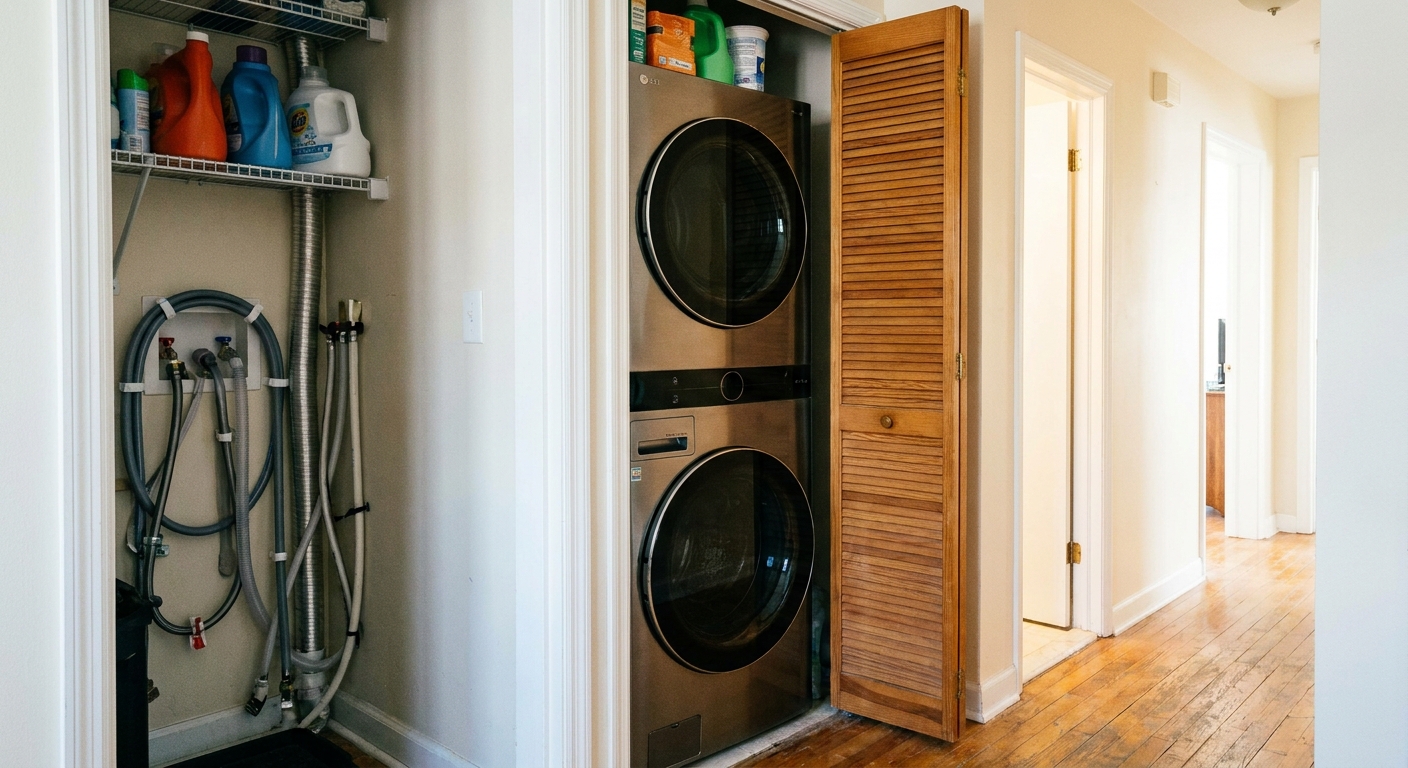
Closet laundry and stacked units
Laundry closets are cozy, but they leave little room for a machine to wobble safely.
Make sure nothing is touching
- Side gaps matter: If the washer is rubbing the wall, shelving, or dryer, vibrations get louder and more damaging.
- Check hoses and cords: A hose tapping the back wall can sound like the washer is banging.
If you have a stacked washer and dryer
- Confirm the stacking kit: A proper stacking kit secures the dryer to the washer. Stacking without one is unsafe.
- Do not DIY risky adjustments: If the stack feels unstable, stop using it and contact maintenance or the installer.
- Keep the floor stable: Closet platforms and older raised floors can amplify vibration. Pads may help, but only after leveling.
When to call maintenance
Most renter situations are solved with leveling, lock nuts, and smarter loading. But if you notice any of the issues below, it is time to bring in help.
- New loud grinding or metal-on-metal sounds
- Visible leaking around the front, back, or under the washer
- Burning smell or tripped breakers
- The drum seems loose when you gently lift it by hand (with the washer off)
- Severe shaking even when empty (or with a small, balanced load)
Document what you are seeing. A quick phone video of the spin cycle can help maintenance diagnose it faster.
A calm, repeatable checklist
If you want the short version to save for later, here is my go-to order of operations:
- Run a test cycle and note when the shaking starts. A rinse and spin with a few items often behaves more realistically than a totally empty drum, but use whatever test your model allows.
- Level the washer and tighten any lock nuts.
- Rebalance the load and avoid single heavy items.
- Add anti-vibration pads if the washer is level but still creeps or hums.
- For new installs: confirm shipping bolts are removed (front-loaders).
- For stacked units: confirm a stacking kit is installed and stable.
Your home should feel like a comforting hug, not like it is bracing for lift-off every laundry day. Once your machine is stable and your loads are balanced, the whole space gets quieter, calmer, and honestly, a little more livable.