Washing Machine Leaking Water on the Floor

Clara Townsend
The first time I saw water creeping out from under a washing machine, my brain immediately went to worst case scenario: ruined floors, angry neighbors, and a very expensive problem I did not budget for. The good news is that a puddle around a washer is often something simple: a loose hose, an over-sudsy load, a drawer that is not seated right. This is one of those moments where a calm, methodical check beats panic.
Below is a renter-safe path to follow. No taking panels off, no electrical heroics. Just smart, quick detective work that helps you stop the water fast and give maintenance the clearest possible information.
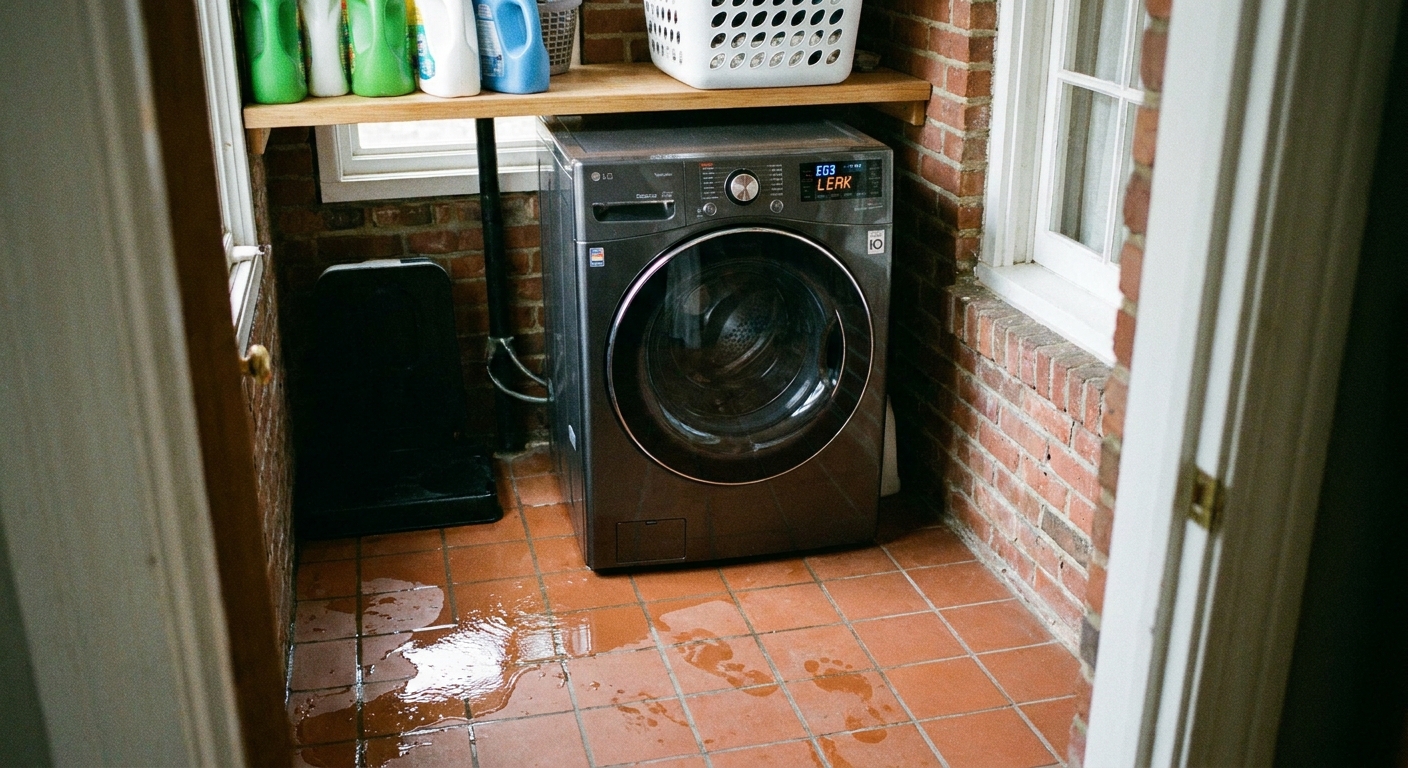
Do this first: stop the leak and protect your space
If there is standing water, assume it could reach an outlet, power strip, or the machine itself. Your goal is to stop incoming water and prevent slipping.
1) Pause the cycle
Hit Pause or Power. If the machine is actively filling, stopping it reduces the amount of water immediately.
2) Shut off the water supply valves
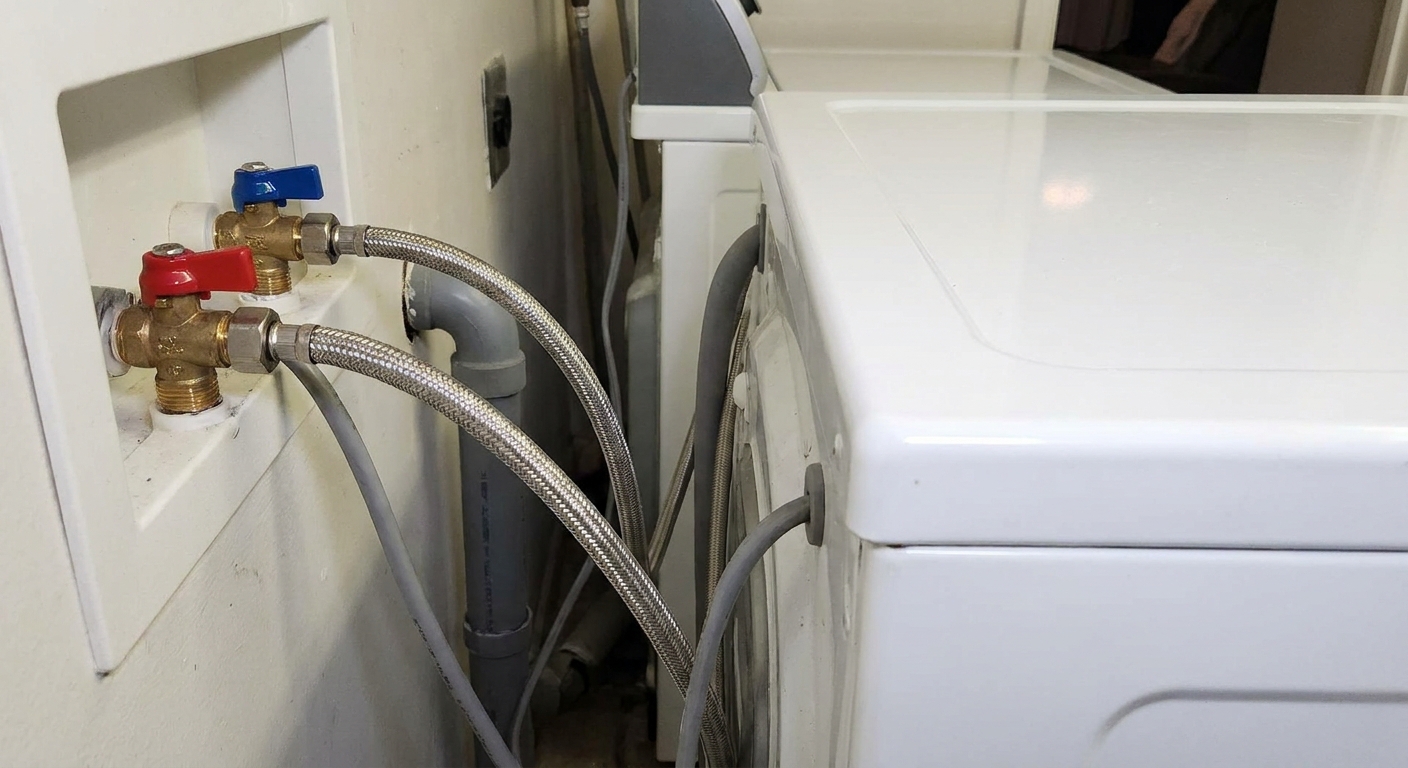
Behind the washer you will typically see two small valves: hot and cold. On most setups, you shut them off by turning clockwise until they stop. Do not force them past resistance.
- If you cannot reach behind the machine safely, skip it and call maintenance. Do not yank the washer forward if it is sitting in water or if the outlet is near the puddle.
- If valves are stiff, use slow, steady pressure. If they will not budge, stop and call maintenance rather than snapping a valve stem.
3) Unplug only if it is safe
If the plug and outlet are dry and you can reach them without stepping in water, unplug the washer. If water is near the outlet, leave it alone and call for help.
4) Contain the water
Throw down towels, a bath mat you can sacrifice, or even a baking tray under the drip point if you can spot it. If you have a wet/dry vac, this is its moment. Otherwise, towels and a bucket work fine.
Renter note: If you share walls or live above someone, it is worth giving the neighbor below a quick heads up if the leak is substantial. Water travels in rude little ways.
Find the source: a simple puddle map
Before you wipe everything up completely, take 10 seconds to notice where the water is emerging. This helps you narrow the cause fast.
- Water at the front of a front-load washer often points to the door gasket or an over-sudsy load pushing water out.
- Water at the back often points to supply hoses, the drain hose, or the standpipe overflowing.
- Water that appears during fill only suggests hoses, inlet connections, or detergent drawer overflow.
- Water that appears during drain or spin suggests the drain hose, standpipe, pump area, or an internal leak aggravated by vibration. For renters, this usually means document and call maintenance.
Renter-safe checks you can do in minutes
Work through these in order. Most are simple visual checks plus tightening by hand.
Door gasket and door area (front-load)
The rubber gasket around a front-load door is basically a little moat. If it is twisted, dirty, or holding a stray sock, water can sneak past.
- Check for debris: run your fingers around the gasket folds. Look for lint, coins, hair ties, or a tiny item stuck at the bottom.
- Check for a gap: make sure the gasket is sitting flat against the glass and frame, not folded inward.
- Wipe and dry: use a towel to dry the gasket and the door glass, then try a short rinse cycle while watching the front edge.
If you see a tear or split in the rubber, that is a maintenance job. Take a photo and stop running loads until it is repaired.
Detergent drawer (especially if the leak happens during filling)
If the puddle appears early in the cycle, the detergent drawer is a prime suspect. Too much detergent, gummy buildup, or a drawer that is not fully seated can make water overflow down the front.
- Pull the drawer out and rinse it in the sink. Warm water and an old toothbrush work wonders.
- Check the drawer cavity for sludge or a stray detergent pod wrapper.
- Use less detergent, especially in high-efficiency machines. Too many suds can push water where it does not belong.
- Slide the drawer in firmly until it clicks or feels fully seated.
If your machine uses powdered detergent, clumps can act like a little dam. Cleaning that drawer is boring but often effective.
Supply hoses (hot and cold) and connections
Leaks at the back can be as simple as a loose connection. You are looking for drips at the wall valve, along the hose, and where the hose connects to the machine.
- Look for moisture beads at threaded connections.
- Hand tighten the hose coupling at the wall and at the washer. Snug is enough. Over-tightening can damage washers or threads.
- Check for bulges or fraying on rubber hoses. If you see a bubble, call maintenance immediately.
Braided stainless hoses tend to be more durable than plain rubber, but any hose can fail with age.
Drain hose and standpipe overflow
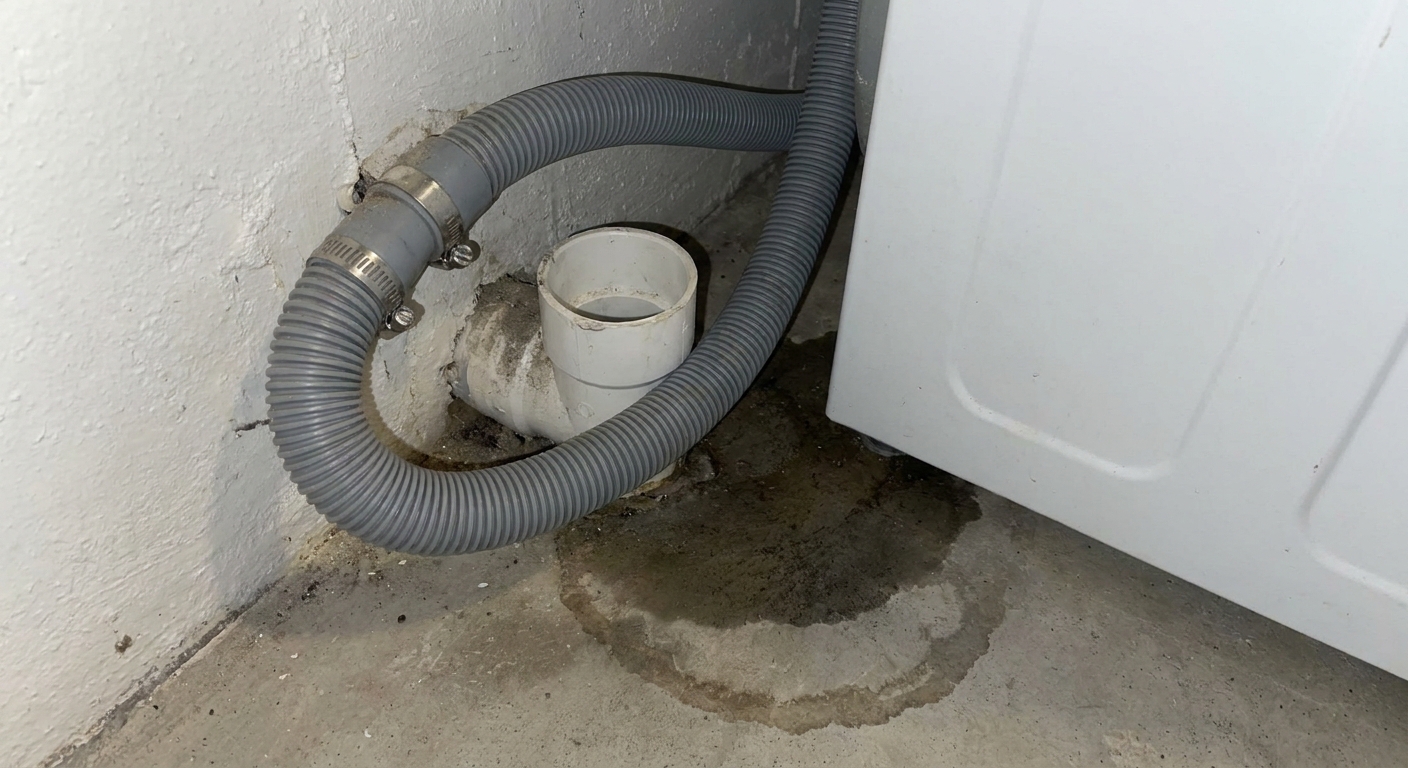
Sometimes the washer is not leaking. The drain is. If the standpipe cannot handle the flow, water spills out as the machine drains. The underlying reason is often a partial clog or a standpipe or plumbing issue (height, diameter, venting).
- Check the drain hose placement: it should be secured in the standpipe or laundry sink, not lying loose on the floor.
- Check insertion depth: too shallow can let it pop out and spray. Too deep can contribute to siphoning or messy backflow on some setups. You want it seated securely, usually held with a strap, clamp, or hook.
- Look for water marks on the wall behind the drain area, which can hint at splashing or overflow.
- Listen during drain: if you hear gurgling or see water rise fast in a laundry sink, you may have a partial clog.
Do not snake drains unless your lease explicitly allows it. A quick message to maintenance like, "Water overflows at the standpipe during drain" gets you taken seriously and fixes the right thing.
Top-load washer: lid area, rim, and splashing
Top-loaders can toss water up and out if the load is unbalanced or if the tub ring (the plastic rim at the top of the tub) is loose.
- Check the load size: one heavy item can cause sloshing. Redistribute and try again.
- Check for oversudsing: too much detergent can create foam that escapes more easily.
- Look for water trails down the outside of the tub or cabinet. That suggests splashing or overflow rather than a bottom leak.
Pump filter or coin trap (some front-loaders)
Some front-load washers have a small access door near the bottom front that leads to a pump filter, sometimes called a coin trap. If it is clogged or not seated right after cleaning, it can leak.
This can be renter-safe only if your manual and lease allow it and you can do it without removing panels or putting yourself in a risky situation. If you are unsure, skip this and call maintenance. If you do open it, put down towels and a shallow tray first because water can come out fast.
Possible tub or internal leak (when to stop experimenting)
If you see water coming from underneath the machine even when the hoses look dry, you may be dealing with an internal hose, pump, or tub seal issue.
That is firmly in maintenance territory for renters. Running more cycles can worsen damage fast, especially on wood subfloors.
Quick triage: what the timing can tell you
If you are trying to describe the problem clearly, timing is your friend.
- Leaks only when filling: supply hoses, inlet connection, detergent drawer overflow.
- Leaks mid-wash: oversudsing, door gasket seepage, top-load splashing.
- Leaks when draining: standpipe overflow, drain hose slipping out, plumbing restriction.
- Leaks during spin: top-load slosh and imbalance, internal leak aggravated by vibration.
If possible, snap a photo of the puddle location and a second photo of the back hookups. That is the easiest way to speed up a repair request.
When to call maintenance right away
As a renter, your superpower is knowing when to stop. Call maintenance promptly if any of the following are true.
- You cannot shut off the water supply valves.
- Water is near an outlet, power strip, or breaker area.
- The leak is heavy, continuous, or spreads rapidly.
- You see a torn door gasket or water pouring from the door area.
- The standpipe overflows or you suspect a drain blockage.
- Water appears to be coming from under the machine rather than from hoses or the drawer.
- You are in an upstairs unit and any water could reach the unit below.
When you submit the request, include: when it leaks (fill, wash, drain, spin), where the puddle starts (front left, back right), and whether you have already shut off the valves.
After the leak: dry-out basics to avoid odors and damage
Even a small leak can leave that sour, humid smell if it sits under the washer.
- Dry the floor thoroughly, including along baseboards.
- Pull the washer forward only once the area is dry and it is safe to move. If it is stacked or very heavy, ask for help.
- Air it out with a fan pointed at the area for a few hours.
- Check nearby items like a laundry basket, rug, or stored linens for dampness.
If you have laminate or wood flooring, do not let water sit. Wipe, dry, repeat. It is tedious, but it prevents swelling and warping.
FAQ
Why is my washer leaking only sometimes?
Intermittent leaks often come down to load size, imbalance, or oversudsing. A small load might behave, while a bulky comforter can push water to the edge of the gasket or splash over a tub ring. If it happens only during drain, the standpipe may be right on the edge of overflowing and only fails when the machine drains a fuller load.
Can too much detergent cause a leak?
Yes. Too much detergent can create excess suds and foaming that escape past the door seal or out of the detergent drawer area and look exactly like a leak. If you see lots of foam in the drum or around the door, cut your detergent amount down and stick to HE detergent if your machine requires it.
I found water in front of my front-load washer. Is the gasket always the problem?
Not always. The gasket is common, but the detergent drawer can also overflow and send water down the front. Watch a short rinse cycle with a flashlight and see whether water appears near the drawer first or at the bottom of the door.
Should I keep running cycles to test it?
Only if the leak is minor, you have towels down, and you have already shut off and then carefully turned the valves back on for a controlled test. If water is coming from underneath the machine, if you cannot identify the source quickly, or if you live above another unit, stop and call maintenance.