Tree Sap on Fabric Upholstery

Clara Townsend
Clara Townsend is an interior stylist, vintage furniture enthusiast, and the creative voice behind Velvet Abode. With over a decade of experience transforming both cramped city apartments and sprawling fixer-uppers, she believes that a beautiful home is built on personal stories rather than massive budgets. When she isn't hunting for the perfect brass sconce at a local flea market, she can usually be found rearranging her living room for the third time this month.
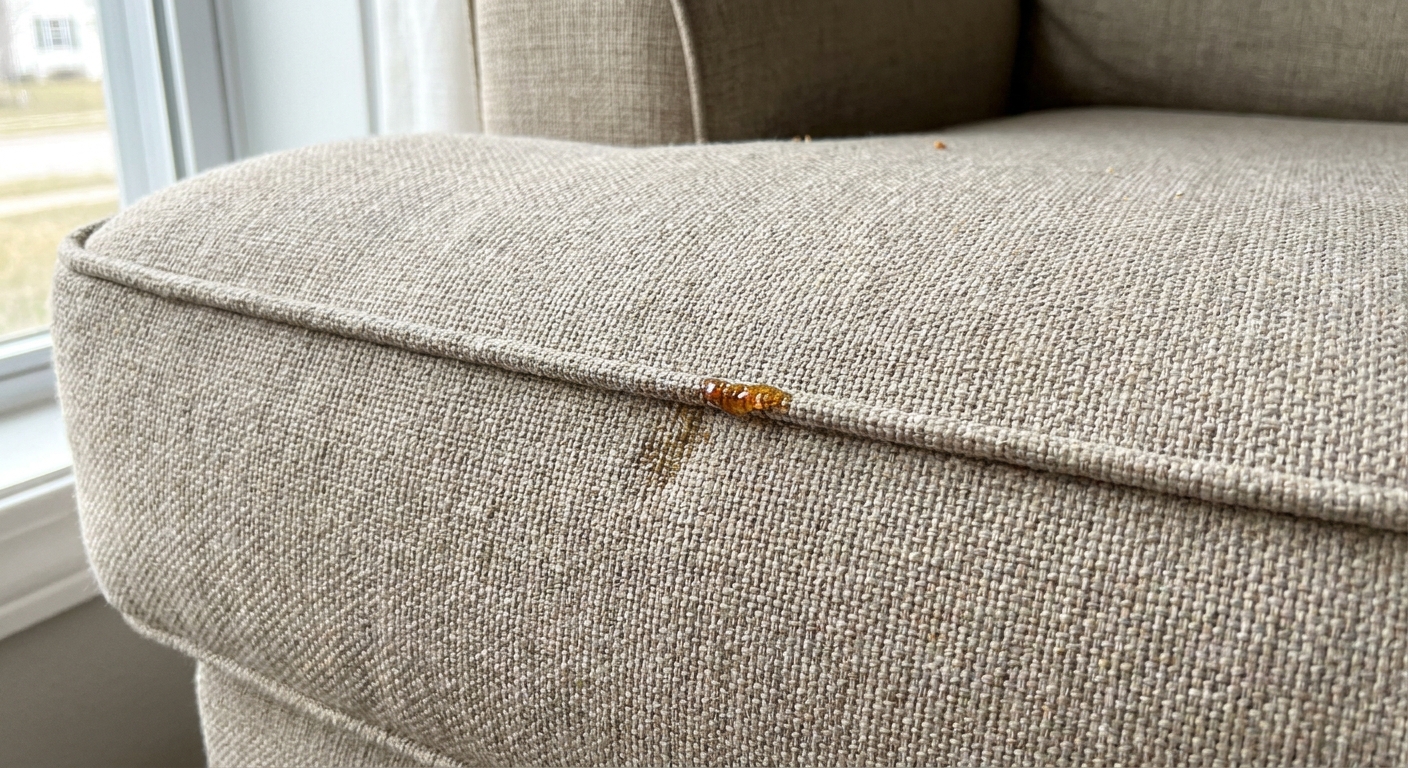
Tree sap has a special talent for finding the one chair you love most. One quick sit after a backyard hang, a sticky branch brushed on the way in, a kiddo perched on the armrest, and suddenly your sofa has a glossy, grabby spot that seems to hold on tighter the more you fuss with it.
The good news: most sap and outdoor stickiness can be removed without ruining your fabric. The trick is to work in the right order. First you harden and lift , then you use the gentlest cleaner that actually works, and only then do you carefully step up to a solvent if your upholstery care code allows it.
Note: This guide is for fabric upholstery. For leather or vinyl, use a leather or vinyl specific cleaner and skip solvents unless the manufacturer recommends them.
Before you start: two rules that save sofas
1) Do not rub when it is tacky
Fresh sap is like glue mixed with sugar. Rubbing warms it up, pushes it deeper between fibers, and spreads it into a bigger, shinier problem.
2) Always patch test, even with “gentle” products
Outdoor residue can be a mix of sap, pollen, sunscreen, bug spray, adhesive from tape, or spilled drinks. Different chemicals react differently with dyes and finishes.
- Patch test location: the back of a cushion or under the skirt where no one will notice.
- How: apply a tiny amount of your chosen product to a white cloth, dab a 1 inch spot, wait 10 minutes, then blot with water (if allowed) and air dry.
- What you are checking: color transfer onto the cloth, lightening, a dark ring, or a stiff crunchy feel.
If your sofa is vintage, expensive, or made from a touchy fabric (silk, wool, rayon or viscose, velvet, or acetate blends), it is often smartest to stop after Step 1 and call a professional upholstery cleaner.
Know your upholstery care code
If your sofa has a tag (often under seat cushions), look for one of these codes.
- W: water-based cleaners are safe.
- S: solvent-based cleaners only (no water).
- WS or SW: water or solvent can be used.
- X: vacuum only. No liquids. Professional cleaning recommended.
If you cannot find the tag: assume the fabric is delicate. Start with dry methods only (ice, lift, vacuum). If you need to go further, use the least liquid possible and consider calling a pro, especially if the fabric is natural, textured, or deeply colored.
If you have a performance fabric with a brand-specific system (Crypton, Sunbrella upholstery, etc.), follow the manufacturer’s cleaning guidance first. Many are forgiving, but sap can still stain if you scrub.
Quick pick guide
- W: ice and lift, then mild soap and water.
- WS: ice and lift, then mild soap and water or an upholstery solvent.
- S: ice and lift, then an upholstery solvent. Avoid water, including 70% rubbing alcohol.
- X: ice and lift only, then a professional.
Step 1: Harden and lift
Your first goal is to turn sticky into brittle. Once it is hard, you can remove a surprising amount without any cleaner at all.
Option A: Ice method
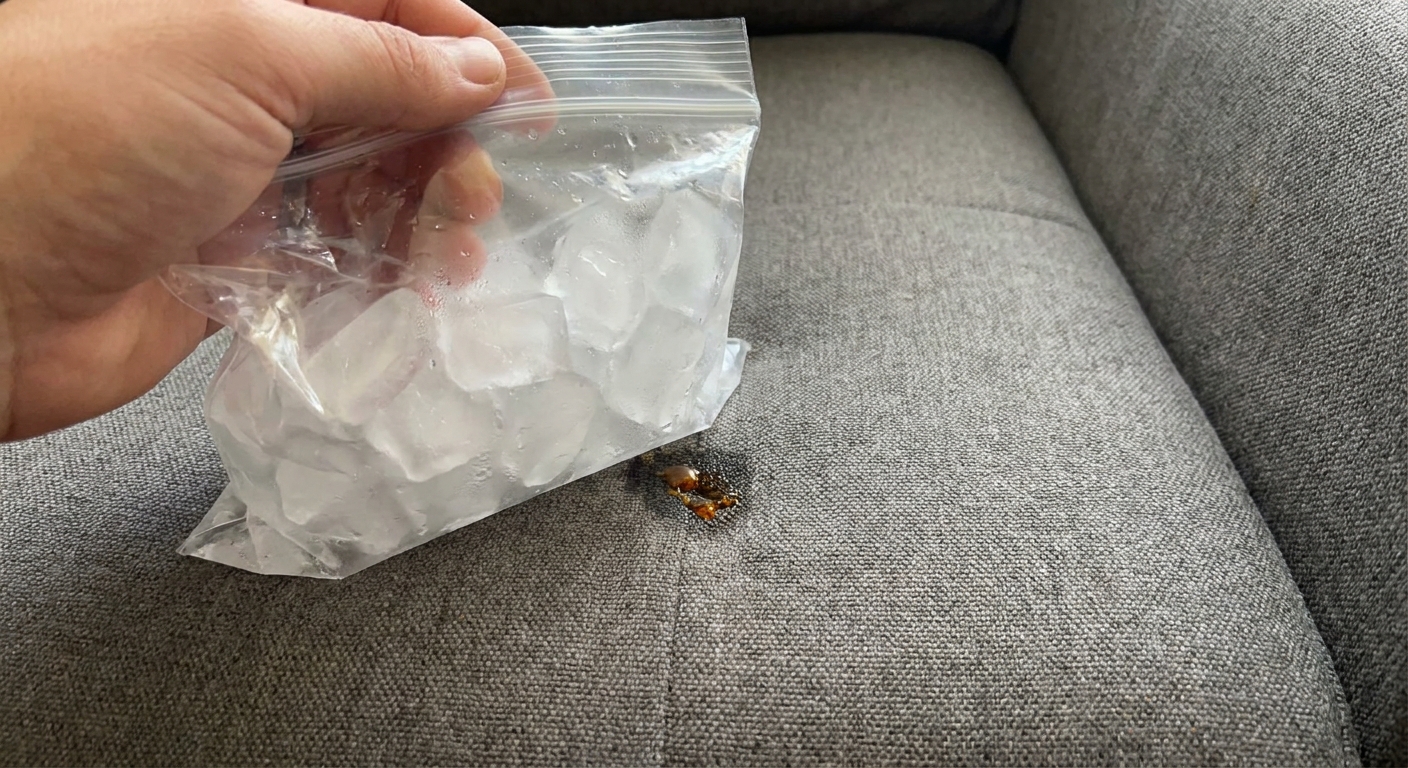
- Put ice cubes in a zip-top bag so you do not soak the fabric.
- Hold against the sap for 3 to 5 minutes, then re-chill as needed until the spot feels firm.
- Use a dull edge (a spoon or an old gift card) to gently lift flakes from the surface.
- Vacuum the crumbs with an upholstery attachment. If the weave is delicate, hover the nozzle or use a brush attachment so you do not drag across the fibers.
Option B: Chill and pinch
For textured fabrics (think tweeds, bouclé, linen blends), scraping can snag. After icing, try gently pinching hardened sap fragments between your fingernails or soft-tipped tweezers and lifting upward.
Step 2: Remove leftover residue
After you lift what you can, you will usually see a faint sticky halo. Work from the outside in and keep your touch light. Think blotting and lifting, not scrubbing.
For care code W or WS: mild soap and warm water
This is the safest first “wet” approach for sap that is mostly gone but still tacky.
- Mix a few drops of clear dish soap in a cup of warm water.
- Dip a white cloth, wring it well so it is damp, not wet.
- Blot the spot, then blot with a clean damp cloth of plain water to rinse.
- Press with a dry towel to pull out moisture.
- Let it air dry fully, then brush the nap gently with a soft brush if needed.
If the fabric is prone to water rings (some velvets, silks, and certain rayons or viscoses), skip water and move to the solvent section only if your care code allows it, or call a pro. Water can leave a tide mark even if it removes the sap.
For care code S or X: avoid water
If your tag says S, water can leave a ring or change the look of the fabric on some materials. If it says X, even solvents can create damage. For X, your safest move is harden and lift only, then consult a professional upholstery cleaner.
Step 3: Use a solvent ladder
Sap and adhesive-like outdoor goo usually respond to solvents that dissolve sticky resins and oils. The key is to start with the least aggressive option and step up only if needed.
Ventilation: open windows, run a fan, and keep products away from flames or heat sources. Wear gloves if you have sensitive skin.
Also important: consumer products are not the same as professional dry-cleaning solvents. Even “natural” solvents can strip finishes or shift dye. Patch testing stays the boss here.
Ladder rung 1: Upholstery solvent spot cleaner
- Look for a dry-cleaning style upholstery spot remover labeled for code S fabrics.
- Apply to a white cloth, not directly to the upholstery.
- Blot from the outside edge toward the center.
- Switch to a fresh section of cloth often so you do not re-deposit residue.
Ladder rung 2: Isopropyl alcohol
Alcohol can work well on many synthetics (polyester, microfiber) and some blends, but it can affect dyes and finishes. Patch test is non-negotiable.
- For W or WS fabrics: you can try 70% isopropyl alcohol (rubbing alcohol).
- For S fabrics: skip 70% since it contains water. If you and your patch test decide to use alcohol at all, choose 91% or 99% isopropyl alcohol and use it sparingly.
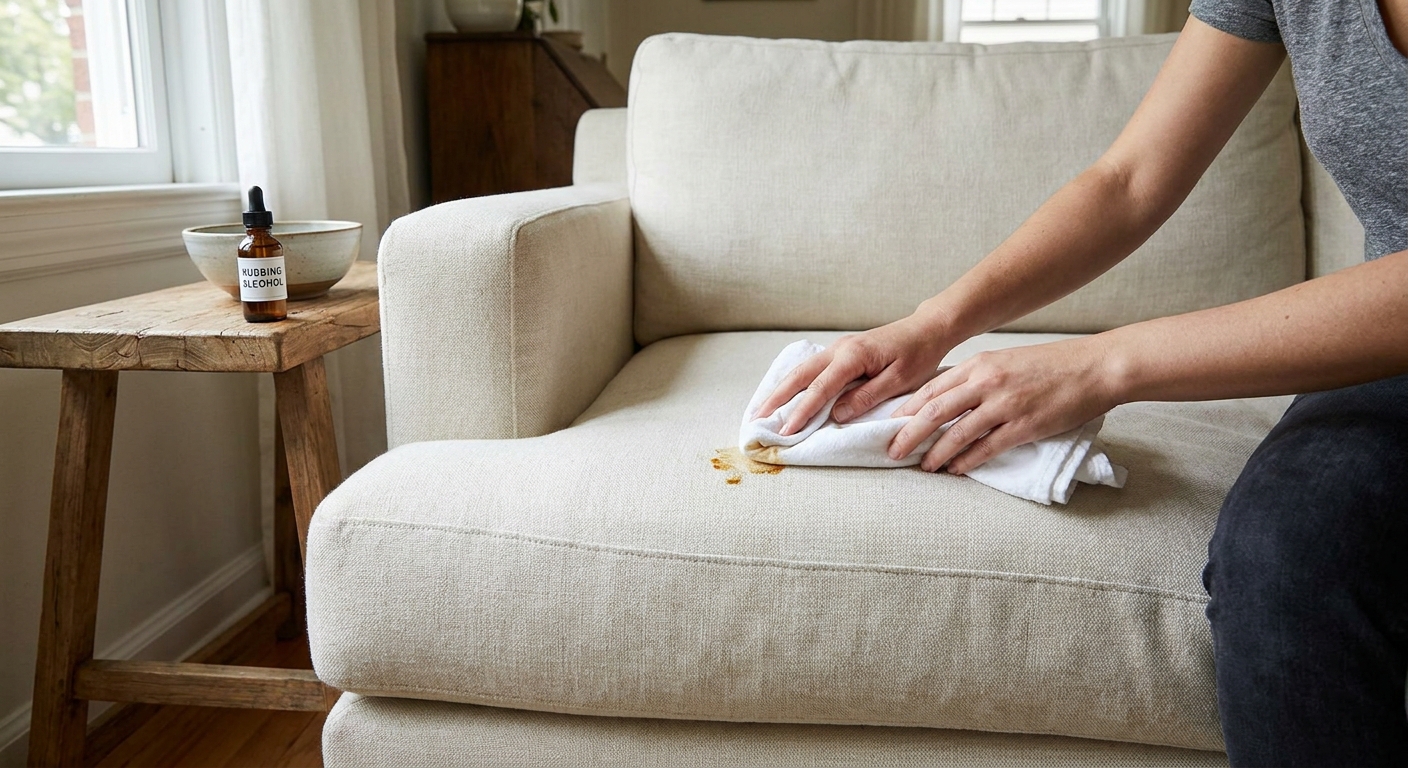
- Dampen a cloth, then blot the sap residue until it releases.
- For W or WS: follow with a light blot of plain water to remove alcohol, then dry blot.
Ladder rung 3: Mineral spirits
Mineral spirits can cut through stubborn sap, but it is stronger and slower to evaporate. Use sparingly, with excellent airflow, and avoid over-wetting the cushion interior (too much liquid can loosen some backings or adhesives and can create lingering odor).
- Apply a small amount to a cloth.
- Blot gently, then blot with a dry cloth to lift dissolved residue.
- Allow to air out thoroughly.
Avoid: acetone or nail polish remover (can dissolve or warp some fibers, and can strip dye or finish), lacquer thinner, or strong citrus degreasers unless a professional directs you. They can turn one spot into a permanently changed patch.
Safety note: do not mix chemicals, and never combine solvents with bleach or ammonia based products.
Other sticky messes
Not all sticky spots are sap. Patio life adds its own little souvenirs: adhesive from event wristbands, packing tape, price stickers from a vintage find, even melted popsicle sugar that feels sticky once it dries.
- If it feels rubbery and smears: treat like adhesive. Chill first, then try an upholstery solvent (S or WS) or alcohol that matches your care code (see Step 3). For W or WS, you can also try the mild soap solution after lifting.
- If it feels gritty with a yellow cast: could be sap mixed with pollen. Vacuum after chilling to remove loose grit before any liquid touches it.
- If it feels sticky but looks dull, not shiny: often sugar or drink residue. Start with the mild soap and water route if code W or WS.
When in doubt, treat it like sap: harden, lift, then blot with the mildest appropriate cleaner.
Prevent rings and shadows
Sometimes you remove the stickiness and are left with a faint darker outline. That is usually residue plus uneven moisture, not a failure.
For W or WS: feather and dry evenly
- Dampen a clean cloth with plain water and lightly blot beyond the cleaned area to feather the edges.
- Press with a dry towel.
- Speed dry with a fan, aiming airflow across the cushion, not directly into one small point.
For S: keep treatment even
Use your solvent sparingly but evenly. Blot slightly beyond the spot to avoid a crisp edge, then let it evaporate fully with airflow.
When a stain is permanent
Here is the honest bit: sap can sometimes leave a yellow, amber, or gray-brown stain that is not sticky anymore. That is because the resin has oxidized or the fabric dye has been altered by sun and time.
You may be dealing with a permanent stain if:
- The area is no longer tacky at all, but discoloration remains.
- You have tried cleaning and the cloth no longer picks up anything.
- The fabric looks lighter (dye loss) rather than darker (residue).
At that point, your best options are:
- Professional upholstery cleaning: they can use controlled solvents and extraction without over-wetting.
- Cushion cover replacement: if your sofa has removable covers, ordering one new cover can be cheaper than repeated experiments.
- Intentional styling: a textured throw or lumbar pillow can cover a small spot while keeping the room feeling polished, not “hidden.”
Quick checklist
- Zip-top bag and ice cubes
- Dull scraper (old gift card) or spoon
- Vacuum with upholstery attachment
- White cotton cloths or plain paper towels
- Clear dish soap (for W or WS)
- Isopropyl alcohol: 70% for W or WS, 91% or 99% only if appropriate for S and patch tested
- Upholstery solvent spot cleaner (for S or WS)
- Fan and open windows for ventilation
Common mistakes
- Scrubbing while sticky: pushes sap deeper and frays fibers.
- Pouring cleaner directly onto the cushion: over-wets the foam and can create lingering odor, backing issues, and rings.
- Using heat to “melt it out”: warms the resin and helps it spread.
- Ignoring the care code: using the wrong type of cleaner can leave a mark that looks worse than the sap.
- Mixing chemicals: keep products separate and never combine solvents with bleach or ammonia based cleaners.
The simplest path
If you are standing there with a cold coffee in one hand and a sticky cushion in the other, this is the calm, safe order to follow:
- Ice, harden, lift.
- Vacuum crumbs.
- Match your care code: mild soap water for W or WS, upholstery solvent for S.
- Step up only if needed: patch-tested alcohol or mineral spirits only when your fabric and care code allow it.
- Dry evenly with airflow.
Your sofa does not need perfection. It needs steady, gentle steps. And you deserve a living room that can handle real life, trees included.