Travertine Countertop Care

Clara Townsend
Clara Townsend is an interior stylist, vintage furniture enthusiast, and the creative voice behind Velvet Abode. With over a decade of experience transforming both cramped city apartments and sprawling fixer-uppers, she believes that a beautiful home is built on personal stories rather than massive budgets. When she isn't hunting for the perfect brass sconce at a local flea market, she can usually be found rearranging her living room for the third time this month.
Travertine is one of those surfaces that looks like it has a life story. Warm, creamy movement. Tiny natural pits. A soft, matte glow when the light hits it just right. It is also, very honestly, a little high-maintenance compared to some other stones. The good news: caring for travertine is less about fancy products and more about a few calm habits that keep it from soaking up spills or getting dulled by acids.
What makes travertine different
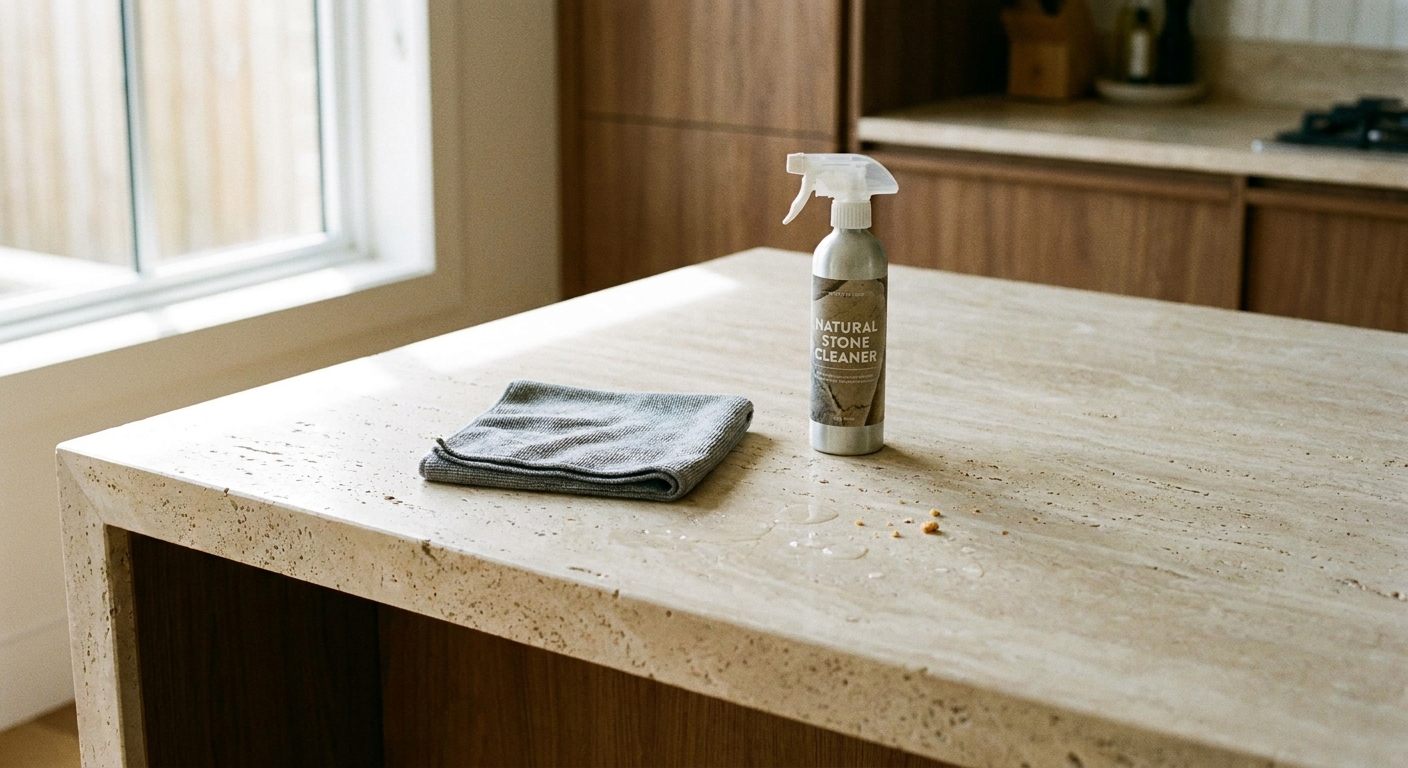
Travertine is a natural limestone formed with lots of tiny pores and voids. Those little pinholes you see are not flaws. They are literally part of the stone’s structure. Sometimes they are filled and polished at the factory, sometimes left more open for a rustic look.
That porous nature is the headline. It means travertine can:
- Absorb liquids more readily than granite or quartzite.
- Stain if oils, pigments, or dirty water sit too long.
- Etch when acids react with the calcium in the stone, leaving dull or lighter marks.
Filled vs unfilled (why gentleness matters)
- Filled travertine has factory filler in pits to create a smoother surface. Aggressive scrubbing and abrasive tools can loosen filler or make the finish look uneven over time.
- Unfilled travertine is more textured and can trap grime in open pores. It still wants gentle tools, plus a little extra patience in the nooks.
Travertine vs granite vs marble
- Granite: Typically denser and more forgiving day-to-day. It can still stain if unsealed, but it is generally less porous than travertine.
- Marble: Often etches very easily. Travertine behaves similarly because both are calcium-based stones, but travertine’s pores add another layer of vulnerability to staining.
- Engineered quartz: Not porous like natural stone and does not etch from acid the same way. It can still dull or discolor with harsh chemicals or prolonged exposure, so it is not invincible, just different.
Daily cleaning that works
Your goal is simple: remove grit and spills without feeding the stone anything harsh. Travertine likes gentle.
Your everyday routine
- Dry wipe first with a soft microfiber cloth to pick up crumbs and grit. Grit is what creates that slow, sandy-looking wear over time.
- Damp wipe with warm water and a clean cloth.
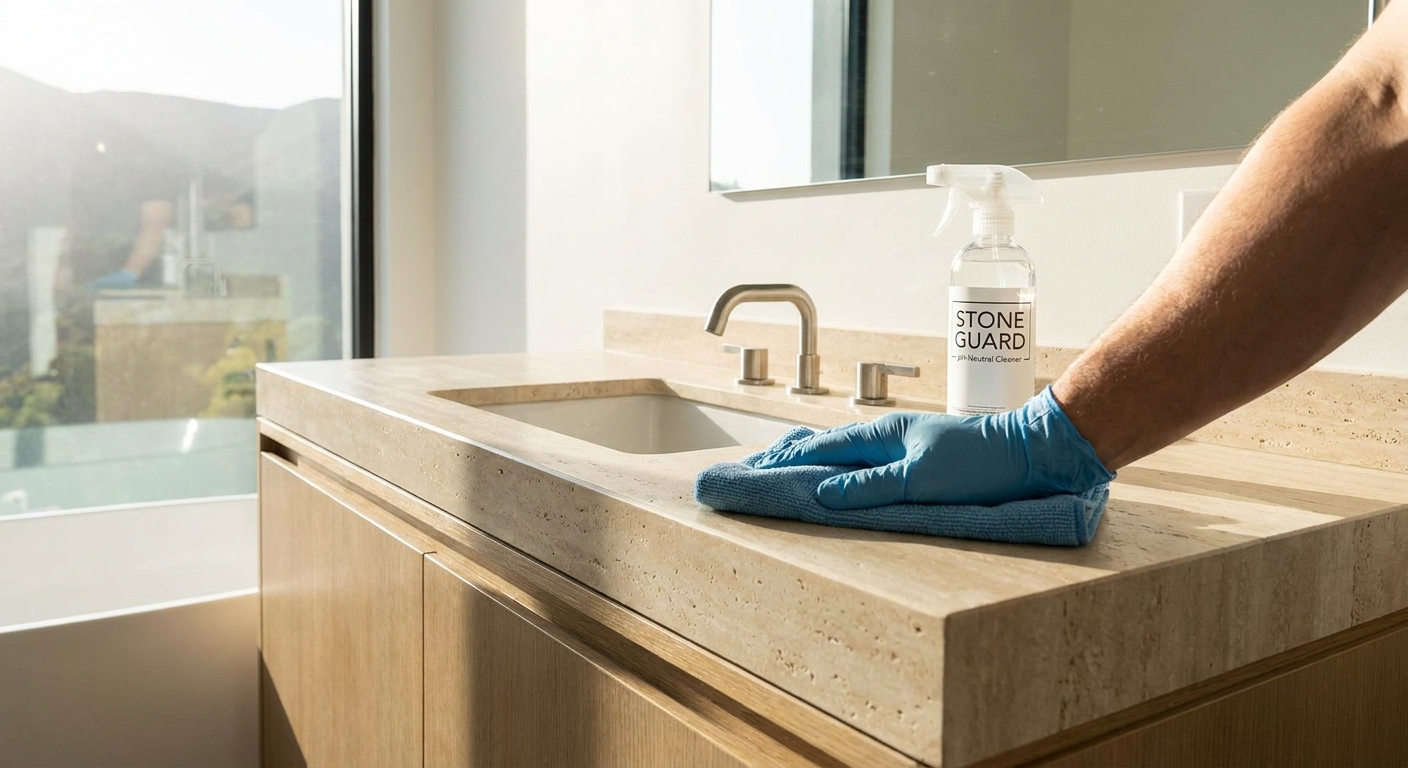
- Use a pH-neutral stone cleaner for anything greasy or sticky. Mist lightly, then wipe. Avoid soaking the surface.
- Buff dry with a second cloth, especially around the sink where water likes to linger.
If you only take one thing from this page, let it be this: travertine and acid do not mix. Skip vinegar and lemon, and avoid harsh disinfectants like bleach or ammonia unless a product clearly says it is pH-neutral and safe for natural stone.
Quick label test: if a cleaner fizzes on contact with stone, it is a hard no.
Safe tools
- Microfiber cloths
- Soft sponge
- Non-scratch pad labeled safe for stone (test first, especially on polished finishes)
Do not use list
- Vinegar or vinegar-based “natural” cleaners
- Lemon or citric acid cleaners
- Bathroom descalers, limescale removers, or anything that claims to “dissolve mineral deposits”
- Abrasive powders or scrub creams
- Magic Eraser-type melamine sponges (they can micro-abraid and dull finishes, especially polished ones)
Spill rules: blot, do not wipe
With travertine, the first 30 seconds matter. Wiping can spread a stain and push liquid into pores. Blotting lifts it.
When something spills
- Blot immediately with paper towels or a clean absorbent cloth. Press down, lift straight up.
- Rinse with water (especially for sugary or acidic spills), then blot again.
- Clean gently with pH-neutral stone cleaner, then dry.
Common culprits
- Oils: olive oil, cooking grease, lotion, makeup remover
- Pigments: coffee, tea, red wine, curry, hair dye, self tanner
- Acids that etch: citrus, tomato sauce, vinegar dressings, many cleaning sprays, some shampoo and facial products
Etching: what it is
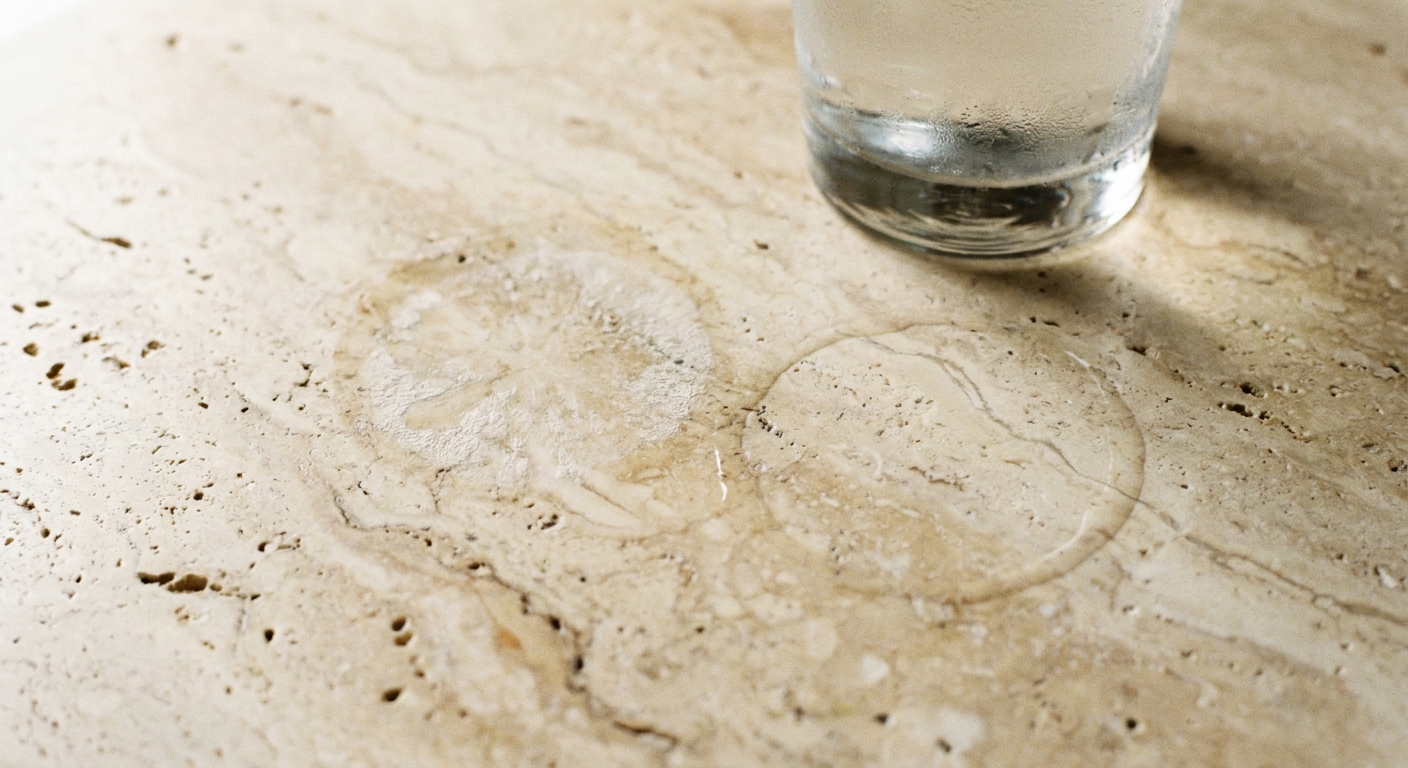
Etching is not a stain. It is a chemical reaction that changes the surface of the stone. That is why “stain remover” often does nothing for it. On honed travertine, etches can look like a pale, dull patch. On polished travertine, they can look like a spot where the shine disappears.
How to prevent etches
- Use coasters for wine, citrus water, kombucha, and anything fizzy.
- Use trays under soap dispensers, perfumes, skincare, and toiletries.
- Wipe around the sink and faucet base daily. Water itself is not acidic, but it carries toothpaste, hand soap, and grime.
- Skip acidic “natural hacks” like cleaning with lemon or vinegar. Travertine reads that as an attack.
If you already have etching, the fix is usually polishing or refinishing, not cleaning. Light etching can sometimes be improved with a stone polishing powder made for calcium-based stone, but it is easy to make things patchy if you are not experienced. For noticeable etching on a large area, a stone pro is the safest route.
Stains: what you are seeing
Before you treat, do a tiny bit of detective work. The right approach depends on the stain type.
- Dark spot that looks wet: often water absorbed into the stone. It may fade as it dries.
- Yellow or brown cast: often oil-based (cooking oil, lotion) or built-up grime.
- Colored spot: coffee, wine, makeup, spices, hair dye.
- Dull or light spot: likely etching, not staining.
Poultice basics
A poultice is a paste that pulls a stain out of porous stone as it dries. It is slow, slightly annoying, and surprisingly effective when used correctly.
Before you start
- Test in an inconspicuous spot first, especially if your travertine is filled, polished, or has a special finish.
- Be patient: you may need more than one application.
- Avoid acids: do not use vinegar or lemon in a poultice on travertine.
Match the poultice to the stain
- Oil-based stains (grease, lotion): a solvent-based poultice is usually more effective than water. Many stone pros use acetone or isopropyl alcohol with a stone-safe poultice powder. Follow product directions and ventilate well.
- Organic stains (coffee, tea, wine): hydrogen peroxide is commonly used as the liquid with a poultice base. Use the typical household 3% kind unless a stone product directs otherwise.
- General grime or water-based staining: water can be enough as the mixing liquid.
Simple poultice method
- Clean the area with pH-neutral stone cleaner and let it dry.
- Mix an absorbent base (like an unscented, additive-free clay poultice powder designed for stone, or baking soda if your stone tolerates it) with the right liquid for the stain to form a thick paste.
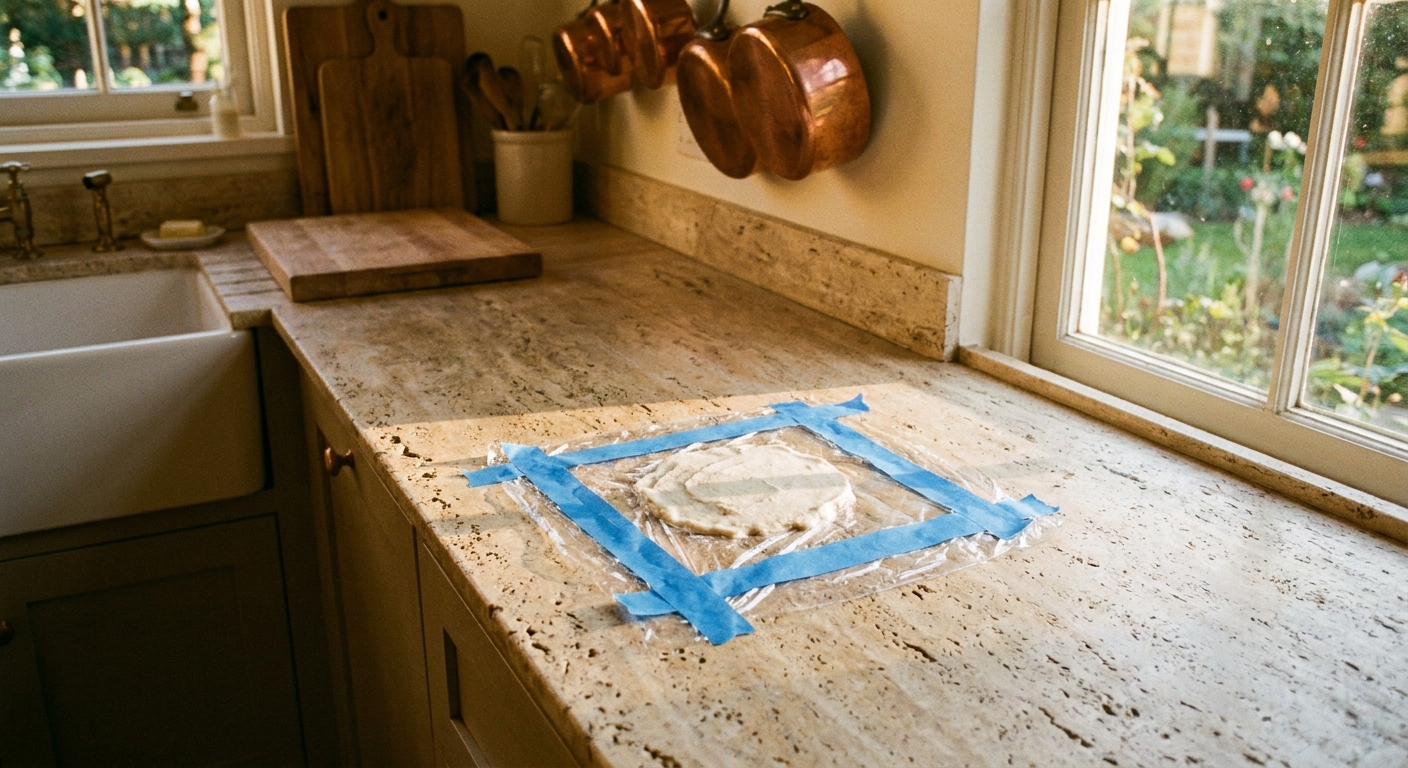
- Spread paste about 1/4 inch thick over the stain, slightly beyond the edges.
- Cover with plastic wrap and tape the edges down, then poke a few small holes for slow drying.
- Leave 24 to 48 hours, then remove and let the area fully dry.
- Evaluate. Repeat if needed.
Important: baking soda is mildly alkaline and often used as a gentle absorbent, but stone varies. If you are nervous, choose a commercial stone poultice product labeled safe for travertine and follow the manufacturer’s directions. If you are in a rental, it is also fair to pause and ask before you start experimenting with solvents.
Sealing: realistic expectations
Sealer is not a force field. It is a breathing room strategy. A penetrating sealer helps slow absorption so you can wipe up spills before they become stains. It does not prevent etching because etching is a chemical reaction at the surface.
How often to seal
It depends on use, finish, and the sealer itself. A lot of travertine does well with resealing every 1 to 3 years, but heavy-use kitchens can be closer to 6 to 12 months, and low-use areas may go 3 to 5+ years. Trust the water test more than the calendar.
Sealer check
- Put a few drops of water on the countertop in a low-visibility spot.
- If the water darkens the stone within a few minutes, it is time to reseal.
If you rent
- Do not assume you should seal it yourself. Some leases treat sealing as owner maintenance. Some stones have specialty finishes that require specific products.
- Ask in writing if the countertop is sealed, when it was last sealed, and whether you are allowed to reseal.
- If approved, use a penetrating sealer labeled safe for travertine and follow cure times carefully. Keep water off the surface until fully cured.
Hard water and soap scum
This is where people get in trouble, because the obvious products are usually the wrong ones.
- Do not use acidic descalers or limescale removers on travertine.
- Do use a stone-safe soap scum remover or a pH-neutral stone cleaner with a little dwell time, then wipe and fully dry.
- If deposits are stubborn, call a stone pro. Scraping and harsh chemicals can turn a fixable film into permanent dull spots.
When to tell your landlord
I am all for a confident DIY moment, but rentals are a different ballgame. Travertine can change quickly with the wrong cleaner, and “fixing” can accidentally make it worse.
Contact your landlord or property manager if:
- You notice large etched areas (for example, a whole ring around the sink or a widespread dull patch).
- There is a deep stain that does not improve after gentle cleaning and one poultice attempt.
- The stone is cracking, chipping, or flaking, especially along edges.
- You suspect the countertop needs resealing and your lease does not clearly allow you to do it.
- You used a product that may have damaged the finish. Tell them sooner, not later, and share what was used.
If you are documenting, take photos in natural light, plus one close-up and one wider shot showing location (near sink, stove, etc.). It helps speed up the right repair.
Small habits that help
- Cutting boards always. Not just for the stone, but for your knives too.
- Trivets for hot pans. Heat damage is less common than etching, but thermal shock can be risky with natural stone. Some sealers can also be heat-sensitive, so skip parking hot appliances directly on the surface.
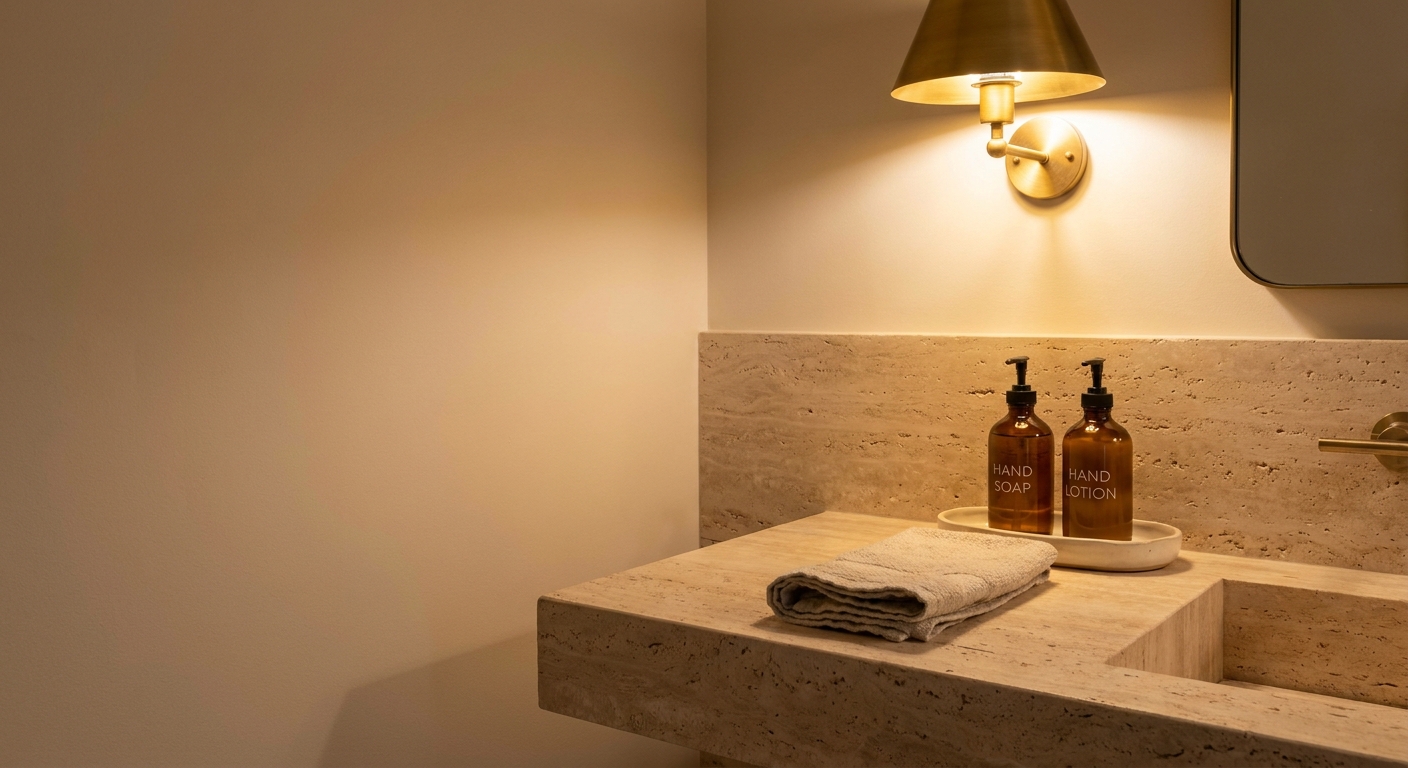
- One pretty tray by the sink for soap and hand lotion. Containment is half the battle.
- Microfiber cloths on rotation. A clean cloth prevents that hazy film you get from re-spreading residue.
Quick troubleshooting
- My countertop looks cloudy. Often leftover cleaner residue or hard water film. Rinse with clean water, wipe with a damp microfiber, then buff dry. If it persists, switch to a stone-specific pH-neutral cleaner and avoid over-applying product.
- There is a dark ring under a bottle. Likely moisture or oil trapped. Remove the item, let the area fully dry, then treat with a poultice if it does not fade.
- A spot won’t come out. If it is lighter and dull, it is probably etching. Cleaning will not fix it. Consider professional refinishing, especially if it is in a high-visibility area.
The calm takeaway
Travertine rewards gentle routines. Keep a pH-neutral stone cleaner handy, blot spills like you mean it, and protect the surface from acids with simple barriers like coasters and trays. If you rent, treat sealing and major repairs as a team sport with your landlord. With those basics, travertine stays what it is meant to be: warm, timeless, and quietly luxurious without trying too hard.