Transitional vs. Traditional Interior Design

Clara Townsend
Clara Townsend is an interior stylist, vintage furniture enthusiast, and the creative voice behind Velvet Abode. With over a decade of experience transforming both cramped city apartments and sprawling fixer-uppers, she believes that a beautiful home is built on personal stories rather than massive budgets. When she isn't hunting for the perfect brass sconce at a local flea market, she can usually be found rearranging her living room for the third time this month.
If traditional design is a string quartet in a candlelit room, transitional is the same melody with the windows open and a little more breathing space. Both styles are rooted in classic, time-tested shapes. The difference is how “formal” the story feels once you add color, pattern, and the finishing touches.
Below, I’m going to walk you through what separates traditional from transitional, what they share, and how to borrow from either style without your home feeling like a furniture showroom.
The quick definition
Traditional interior design
Traditional style leans into history. Think tailored symmetry, decorative detailing, rich wood tones, classic patterns, and a sense of “collected over time” formality. It often references Georgian, Neoclassical, English country, and American Colonial influences, even in a modern home.
Transitional interior design
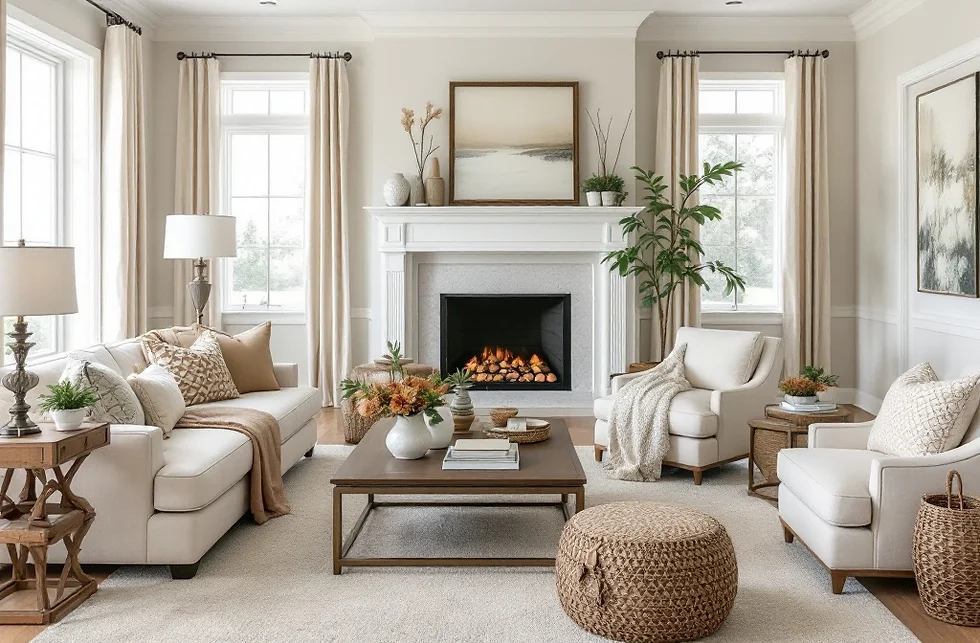
Transitional style is the bridge between traditional and contemporary. It keeps the comforting, classic bones but simplifies the silhouettes, lightens the visual weight, and edits the ornamentation. It tends to feel relaxed, calm, and current without being trendy.
Traditional vs. transitional: key differences
1) Furniture shapes
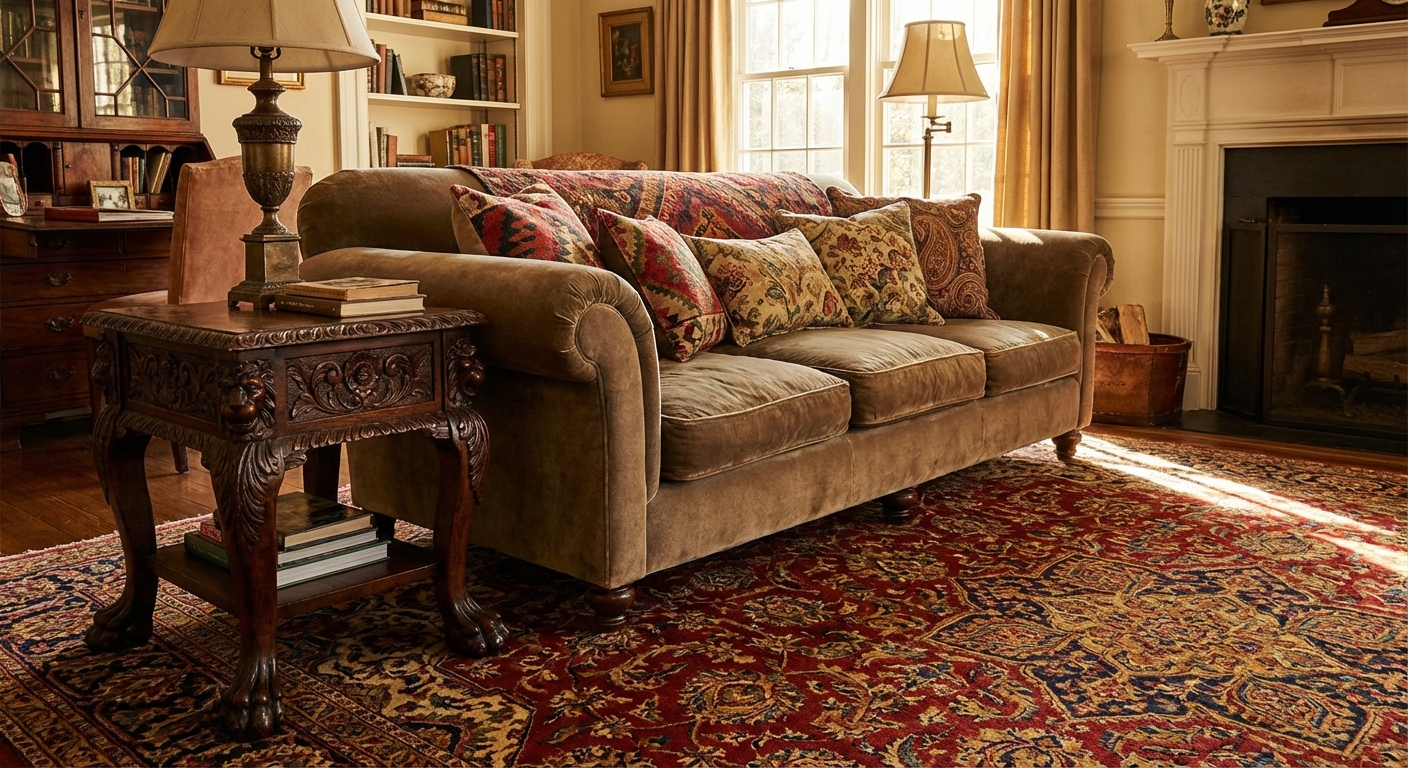
Traditional furniture often has more decorative curves and carving. You will see rolled arms, cabriole legs, tufting, ornate wood trim, and heavier visual weight.
Transitional furniture keeps classic proportions but cleans up the lines. Arms are straighter, legs are simpler, and profiles feel quieter. Upholstery still matters, but the shape is less fussy.
- Traditional sofa: rolled arms, skirted base, nailheads, patterned fabric.
- Transitional sofa: track arms or a subtle roll, exposed tapered legs, solid or lightly textured fabric.
2) Color palette
Traditional palettes can be deeper and more layered: warm creams, burgundy, forest green, navy, tobacco brown, and plenty of burnished wood. Even when the walls are neutral, the overall effect often feels richer and more saturated.
Transitional palettes often live in the soft, breathable neutrals: warm whites, greige, taupe, sandy beige, gentle gray, and muted blues or sages. That said, transitional can absolutely go darker. The difference is usually in the restraint: fewer competing colors, cleaner contrast, and more emphasis on texture.
- If you love cozy drama, traditional will feel like home.
- If you crave calm and airy, transitional tends to land better.
3) Patterns and prints
Traditional rooms are often pattern-forward: florals, damask, toile, plaid, stripes, and Persian-style rugs. Patterns show up on drapery, upholstery, wallpaper, and even lampshades, often layered together.
Transitional rooms still use pattern, but more selectively. You might see a classic rug paired with solid upholstery, or a subtle stripe on pillows rather than a full floral sofa.
My rule of thumb: Traditional layers patterns across big surfaces. Transitional keeps pattern to accents and lets texture do some of the talking.
4) Materials and finishes
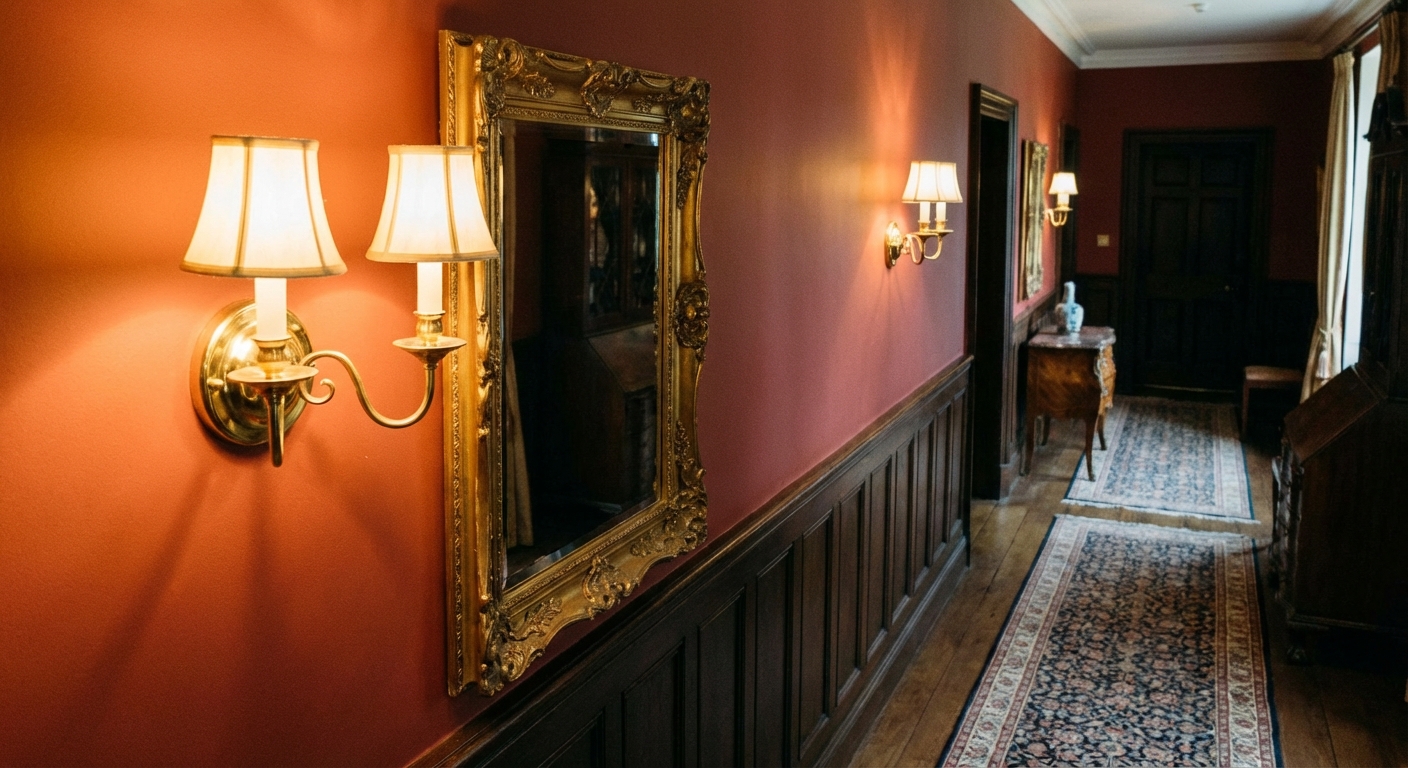
Traditional style loves patina: polished wood, carved details, antique brass, glossy lacquer, and more visibly crafted surfaces. You might see dark-stained mahogany or cherry, plus gilded touches and sparkle from crystal or cut glass.
Transitional style still appreciates quality materials, but finishes tend to be more understated: lighter woods, matte black, satin or brushed brass, aged bronze, honed stone, and simple ceramics.
- Traditional metals: polished brass, warmer gold tones, ornate bronze.
- Traditional sparkle: crystal and cut glass details in lighting and decor.
- Transitional metals: brushed brass, matte black, softer mixed finishes.
5) Layout and styling
Traditional spaces often rely on symmetry and clear pairs: matching lamps, twin chairs, coordinated side tables. Styling is fuller, with more accessories and a sense of intentional arrangement.
Transitional spaces still look pulled together, but with a lighter hand. The layout can be symmetrical, but it is not required. Styling is more edited: fewer objects, more negative space, and a little more emphasis on comfort.
If traditional feels like “everything has its place,” transitional feels like “everything has a place, but we also live here.”
Fast tells in a real room
- Look at the legs: cabriole and carved usually read traditional; tapered and simple often read transitional.
- Scan the big surfaces: patterned drapes and upholstered prints lean traditional; solid upholstery with one statement rug leans transitional.
- Check the shine: glossy, ornate, and sparkly feels more traditional; matte and quiet feels more transitional.
- Count the pairs: lots of matched sets signals traditional; fewer, larger pieces signals transitional.
- Notice the negative space: more breathing room usually points transitional.
What they share
This part matters because transitional and traditional are not enemies. They share a lot of DNA.
- Timeless foundations: classic shapes and proportions that tend to age well.
- Quality over novelty: well-made pieces, real wood, thoughtful upholstery.
- Warmth: both styles aim for welcoming rooms, not sterile minimalism.
- History-friendly: both can incorporate vintage or antique pieces beautifully.
A note on architecture
Decor matters, but your home’s “bones” often steer the style more than a sofa ever will. More ornate crown molding, paneling, ceiling medallions, and detailed trim naturally support traditional rooms. Simpler millwork, cleaner door profiles, and open layouts often make transitional feel like the easy answer. Either way, you can work with what you have. You just choose how edited or embellished you want the layers on top to be.
Which style fits you
Choose traditional if you love…
- Ornate details, curved lines, and heirloom vibes
- Pattern mixing, especially florals and classic motifs
- Darker woods and a richer color story
- Symmetry and a more formal, put-together look
Choose transitional if you love…
- Classic shapes with cleaner lines
- Neutral, softly layered palettes and calmer rooms
- A mix of vintage charm and modern simplicity
- Spaces that feel elevated but easygoing
Room examples
Living room
Traditional living room: rolled-arm sofa, ornate wood coffee table, Persian rug, patterned drapery, matching lamps, layered accessories.
Transitional living room: tailored sofa, streamlined chairs, a vintage rug as the statement, simple linen drapes, one bold art piece, fewer but larger decor items.
Kitchen
Traditional kitchen: raised-panel cabinets, detailed crown molding, warmer stone, decorative hardware, possibly a furniture-style island.
Transitional kitchen: shaker or simple recessed cabinets, cleaner lines, mixed metals, classic tile in a more minimal layout, often lighter overall.
Bedroom
Traditional bedroom: upholstered headboard with tufting, layered prints, skirted bedding, ornate nightstands.
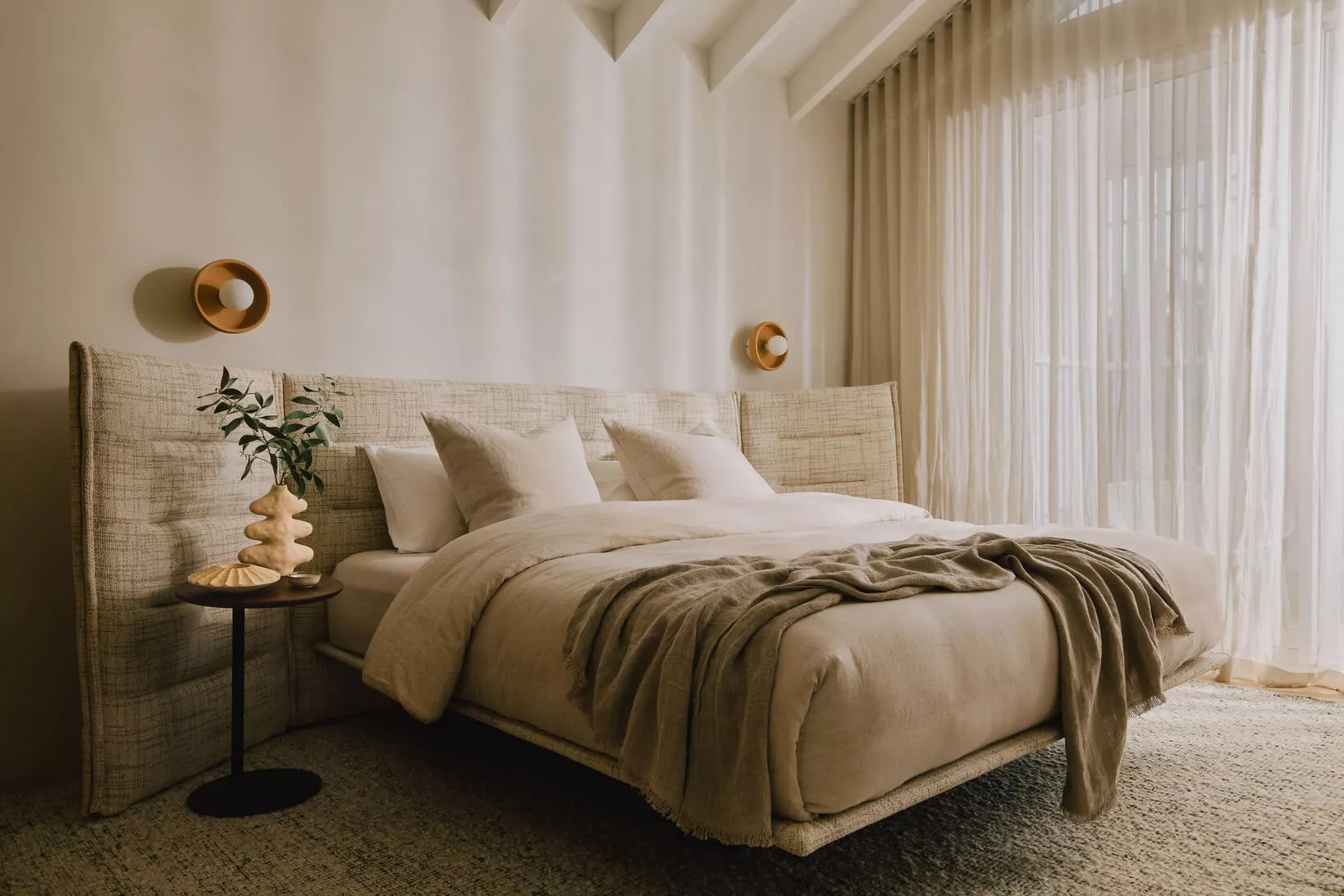
Transitional bedroom: simple upholstered headboard or clean wood frame, crisp bedding with textured layers, nightstands that can lean modern or vintage but not overly ornate.
Easy upgrades on a budget
For a more traditional look
- Bring in one classic patterned anchor, like a Persian-style rug or floral drapery.
- Prioritize wood and patina. A vintage sideboard with a few nicks adds instant authenticity.
- Use pairs. Two matching lamps can make even a basic console look intentional.
- Layer lighting with warm bulbs and shades that glow, not glare.
For a more transitional look
- Edit the room. Keep what you love, then remove 20 percent of the smaller decor.
- Swap heavy fabrics for softer ones. Linen, cotton, and nubby wools read relaxed and current.
- Choose classic shapes in quieter finishes, like a traditional sconce in aged brass instead of shiny gold.
- Let one vintage piece be the star, then keep the rest streamlined so it can breathe.
Mixing the two without the mess
This is where the magic happens, especially if you are vintage-curious but still want your home to feel fresh.
Use the 70/30 rule
Pick a dominant direction (70 percent) and let the other style be the accent (30 percent). For example, a transitional base with one traditional rug, one antique mirror, and a classic lamp.
Keep one period influence in the lead
If you are going traditional, it helps to choose a primary “reference point” (English country, American Colonial, Neoclassical) and let everything else support it. Mixing is beautiful. Too many eras fighting for attention can tip into themed.
Keep a consistent color story
If your palette is calm and cohesive, you can mix more freely. Even ornate pieces can look current when they are surrounded by soft neutrals and clean lines.
Repeat finishes on purpose
If you introduce polished brass, repeat it once or twice. If you mix metals, make it feel like a choice, not an accident.
Match the visual weight
A delicate modern sofa next to a bulky, heavily carved armoire can feel unbalanced. Pair heavyweight with heavyweight, or lighten the antique with airier neighbors like a simple rug, neutral walls, and streamlined lighting.
Common myths
“Transitional is boring.”
It can be if everything is beige and brand new. The fix is easy: bring in texture, a vintage rug, and one soulful piece with a story, like an antique mirror with patina or an oil painting you found for $20 and love anyway.
“Traditional means stuffy.”
Only if comfort is ignored. Traditional can feel incredibly welcoming when you use softer upholstery, warm lighting, and personal items, not just perfect accessories.
“I have to commit to one style forever.”
Nope. Your home is allowed to evolve. In fact, the most beautiful spaces usually do.
So what should you choose?
If you want your home to feel like a beautifully buttoned-up classic, lean traditional. If you want classic bones with a relaxed, updated exhale, lean transitional. And if you are somewhere in the middle, welcome. That is where most real homes live.
When in doubt, start with one decision you can feel in your body: Do you want more pattern and polish, or more calm and clean lines? Build from there, one lamp, one rug, one flea market find at a time.