Toilet Won’t Stop Running? Renter-Safe Checks First

Clara Townsend
Clara Townsend is an interior stylist, vintage furniture enthusiast, and the creative voice behind Velvet Abode. With over a decade of experience transforming both cramped city apartments and sprawling fixer-uppers, she believes that a beautiful home is built on personal stories rather than massive budgets. When she isn't hunting for the perfect brass sconce at a local flea market, she can usually be found rearranging her living room for the third time this month.
A toilet that won’t stop running is the home equivalent of a dripping tap in a silent apartment. You hear it across the room, it feels wasteful, and it can quietly nudge your water bill upward. The good news is that many causes are simple, renter-safe tweaks you can try in minutes, no special tools or bravado required.
This guide walks you through the usual suspects inside the tank: the flapper, fill valve, chain, and float. I will also show you how to shut the water off safely so you can troubleshoot without panic.
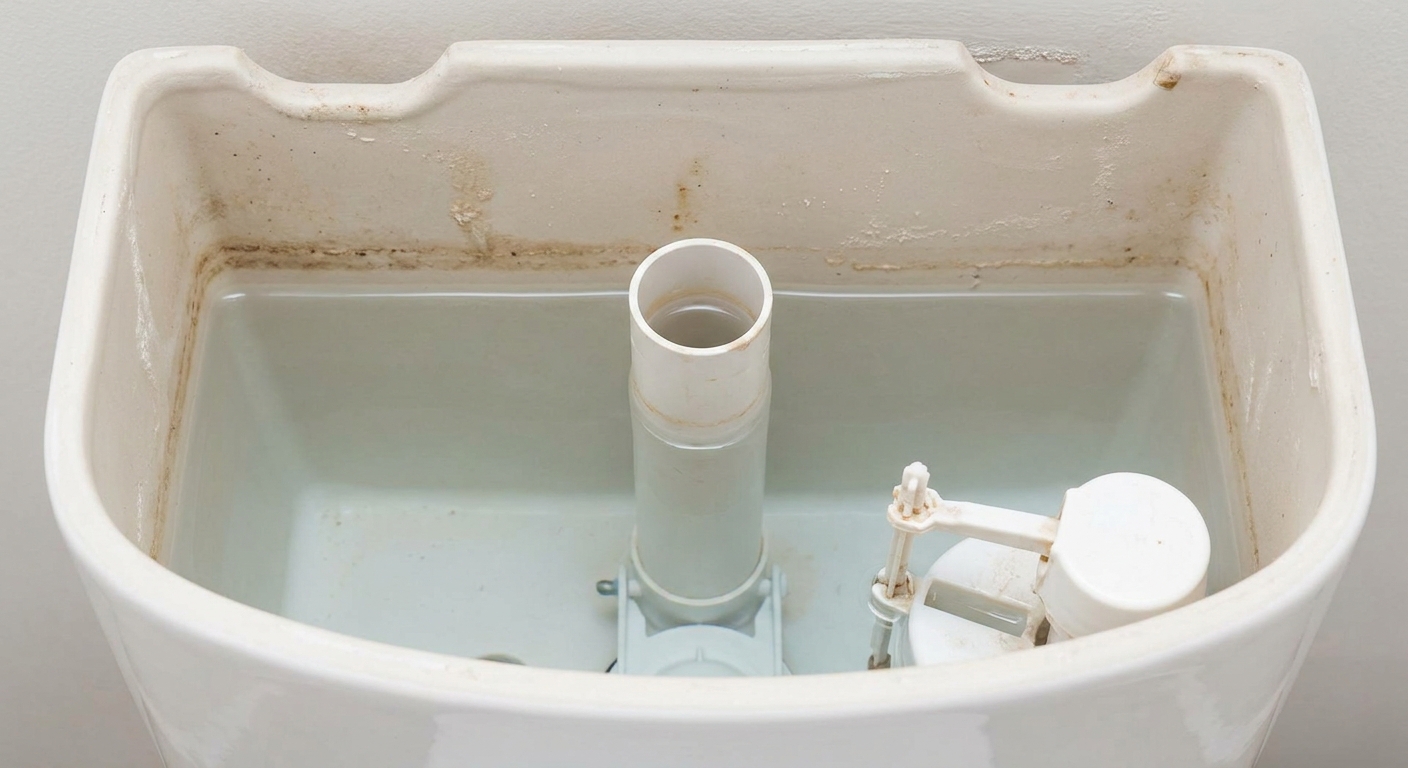
Quick note: Some newer toilets use a canister-style flush valve (a round tower) instead of a classic flapper. The same logic still applies (a worn seal lets water leak into the bowl), but the part looks different. If you do not see a flapper, you can still use the checks below, and it may be best to loop in maintenance for any part swaps.
First: stop the noise and protect your floors
How to shut off the water (safely)
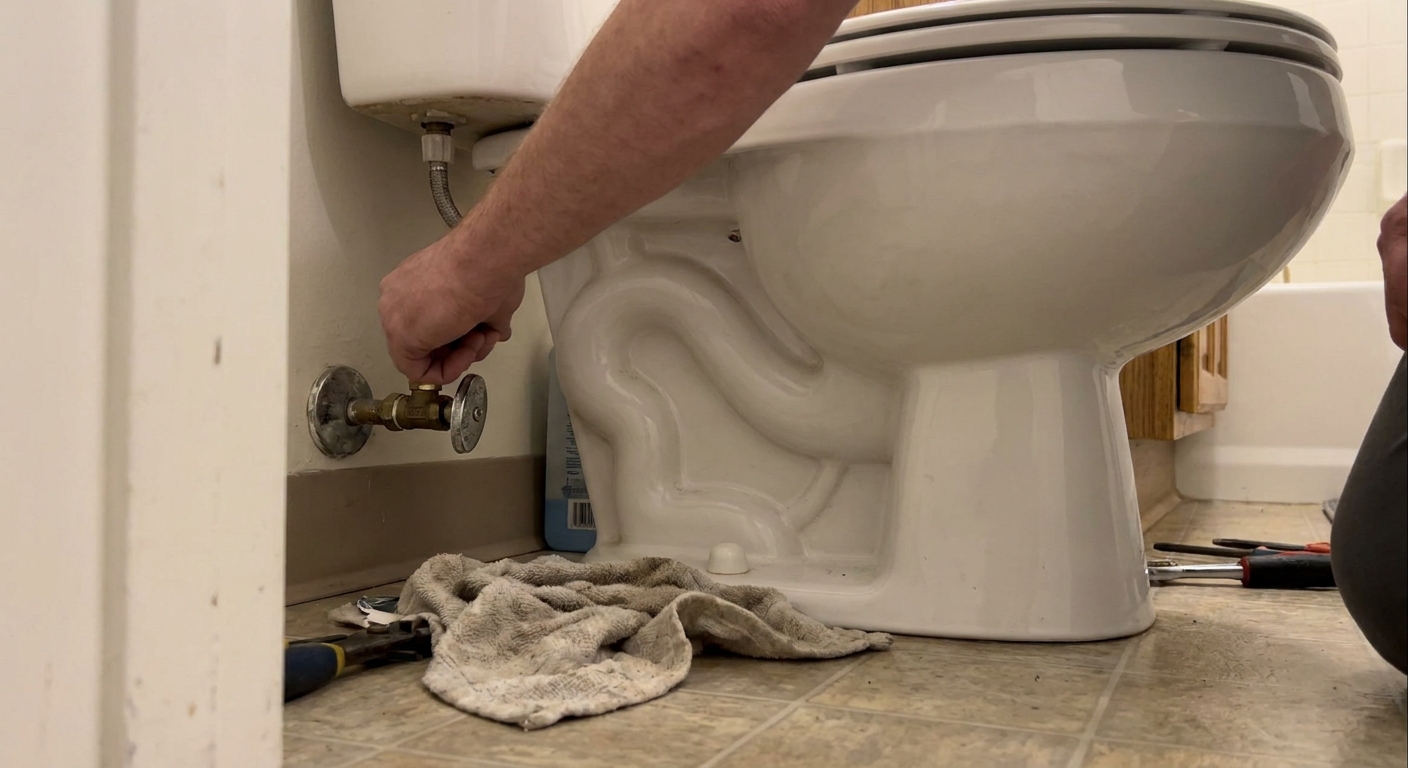
Look for the shutoff valve behind the toilet, usually a small oval or round handle coming out of the wall (or floor) with a metal hose leading to the tank.
- Turn the valve clockwise (righty tighty) until it stops. Do not force it. If it will not turn easily (stuck, corroded, or scary crunchy), stop and call maintenance.
- Flush once to empty most of the tank. (A little water will remain at the bottom, and that is normal.)
- If the tank keeps refilling, the valve may not be fully closing. Place a towel on the floor and move to the “When to call maintenance” section below.
Quick overflow prevention
If water is rising close to the top of the tank or you hear aggressive refilling, do this immediately:
- Lift the tank lid and raise the float gently. If the water stops, the float or fill valve needs adjustment.
- If the water does not stop, turn off the shutoff valve as above (and do not force it).
- Keep a towel handy to protect the floor.
Quick hygiene note: If you have cuts on your hands, avoid putting them in tank water. Wash your hands after you finish.
Know the parts (plain English version)
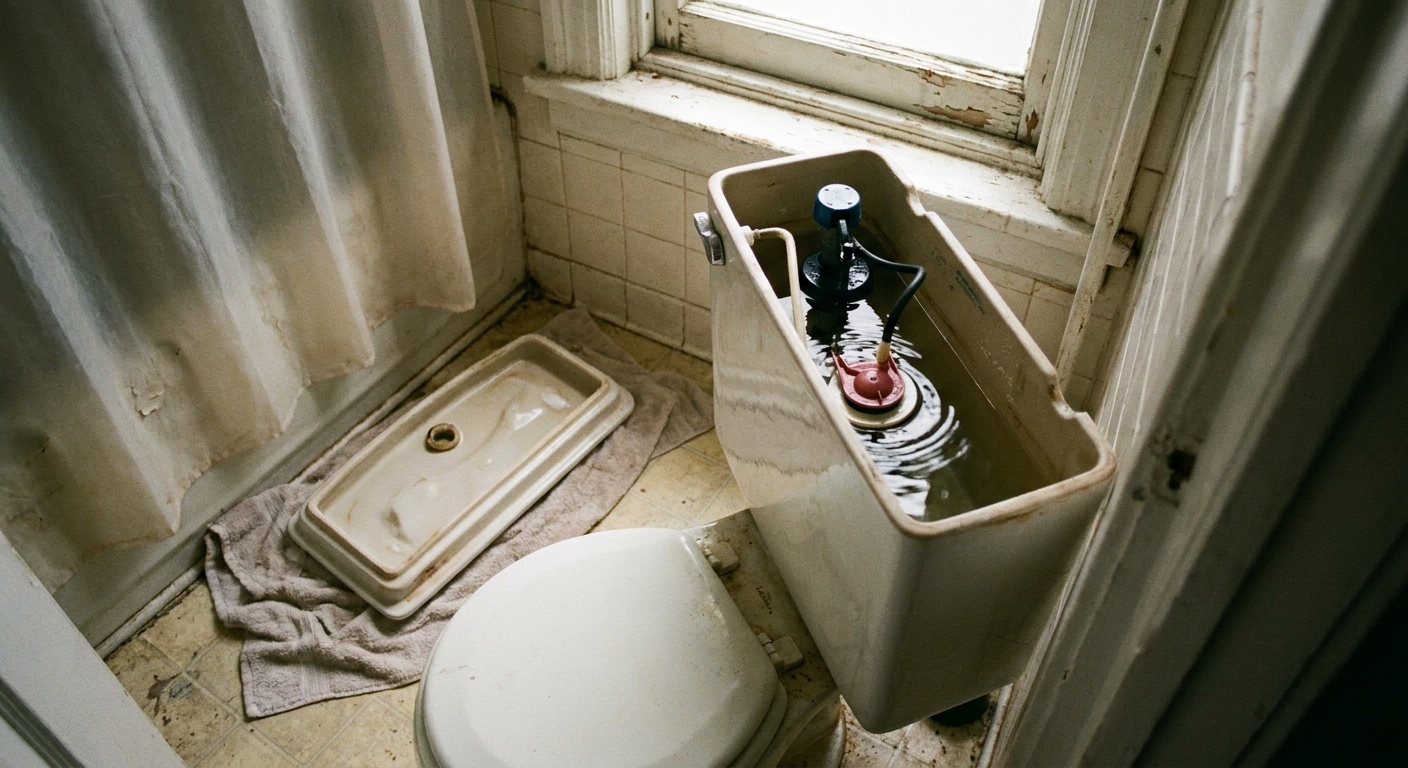
Pop the lid off the tank and set it on a folded towel. Inside you will see:
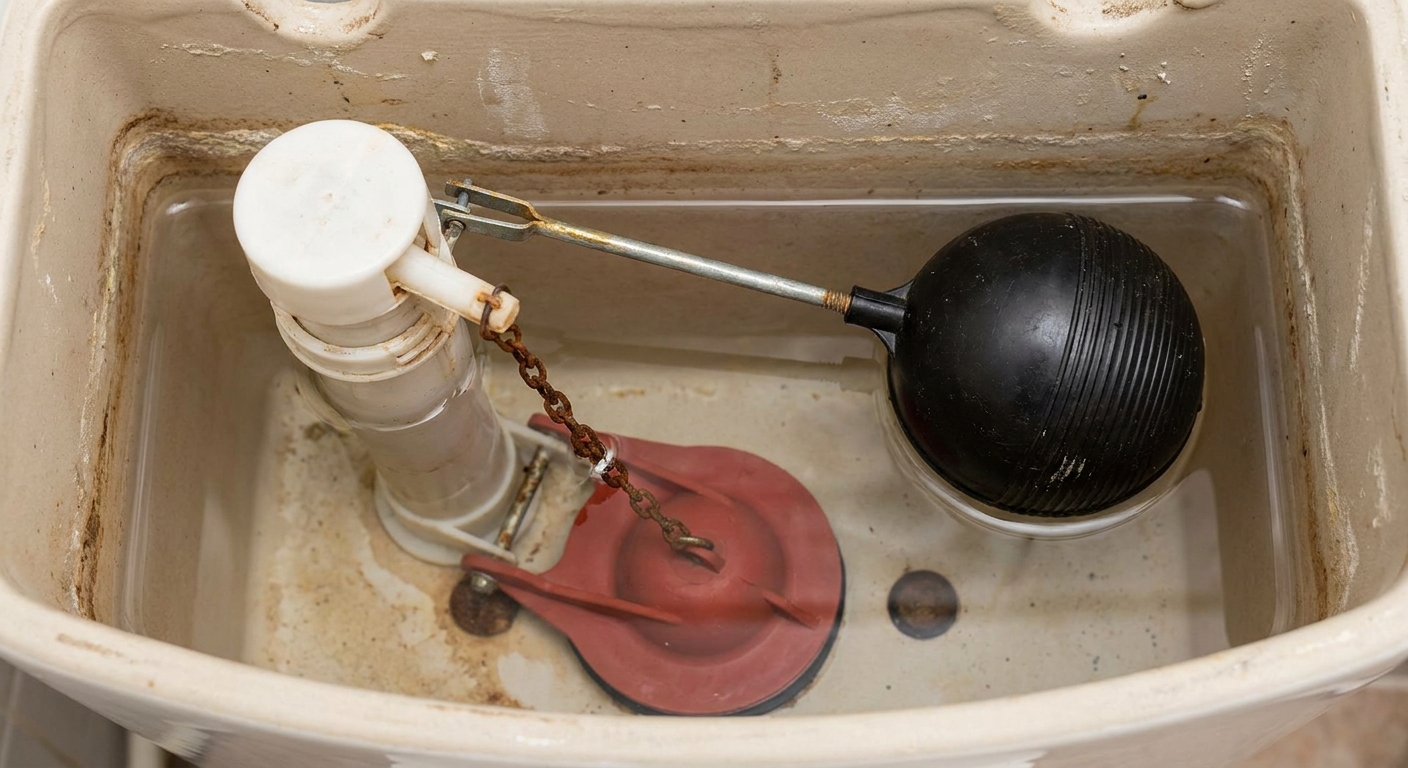
- Flapper: a rubber or silicone piece at the bottom that lifts when you flush, letting water rush into the bowl. It should seal tightly afterward.
- Chain: connects the flush handle arm to the flapper.
- Fill valve: the tall assembly that refills the tank after a flush. This is usually where the “hiss” comes from.
- Float: a cup or ball that rises with the water level and tells the fill valve when to stop.
- Overflow tube: the vertical tube near the center. If the tank overfills, extra water goes down this tube into the bowl.
Most running-toilet issues are either: (1) water leaking past the flapper (or canister seal) into the bowl, so the tank keeps refilling, or (2) the fill valve never gets the message to stop.
The flapper: the most common culprit
What it looks and sounds like
If the toilet “refills” for a few seconds every few minutes, the flapper is often not sealing. Water slowly leaks from the tank into the bowl, and the fill valve periodically tops the tank back up.
Renter-safe checks
- Press down gently on the flapper after a flush (with clean hands). If the running stops, the flapper is not sealing consistently.
- Check for gunk: mineral buildup, grit, or a warped edge can break the seal. Wipe the flapper and the round seat it rests on with a soft cloth or paper towel.
- Look for age: if the flapper is soft, slimy, cracked, or curled like a potato chip, it is likely due for replacement.
Adjust vs. replace
Adjust (usually renter-safe): clean the seating surface; make sure the flapper is centered; ensure the chain has slight slack (more on that below).
Replace (often needs approval): flapper replacement is inexpensive and simple, but it does involve swapping a part. Many landlords prefer maintenance to do it to avoid the wrong size or accidental leaks. If you want to DIY, ask first and keep the receipt.
Easy test: the dye trick
If you have food coloring:
- Add a few drops to the tank (not the bowl).
- Wait 10 to 30 minutes without flushing.
- If color appears in the bowl, water is leaking past the flapper (or seal).
The chain: tiny part, big drama
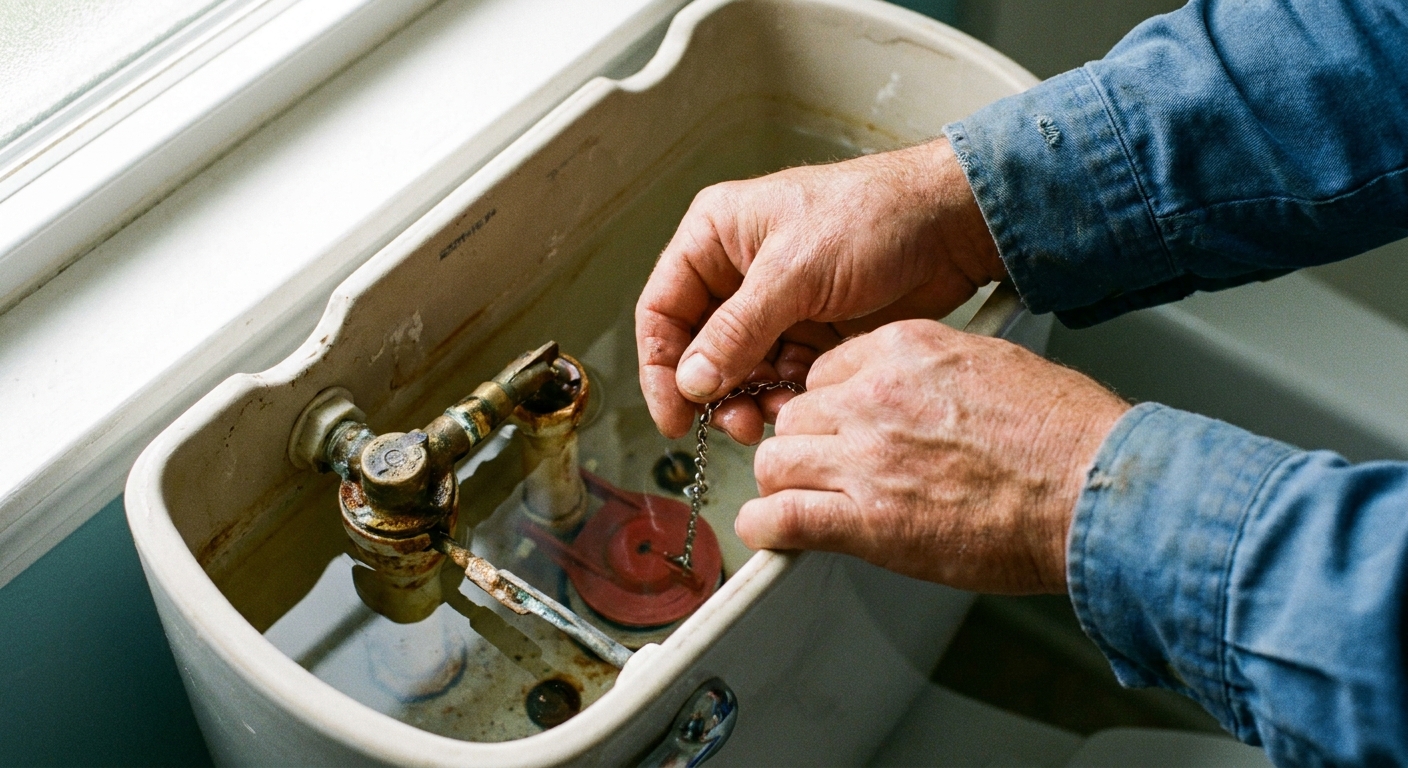
A chain that is too tight can hold the flapper slightly open. A chain that is too loose can get caught under the flapper, also preventing a proper seal.
Renter-safe chain adjustment
- The chain should have about 1/2 inch of slack when the flapper is closed.
- If it is taut, move the chain hook to a slightly looser link.
- If it droops a lot, move it to a tighter link so it cannot slip under the flapper.
Flush once and watch the flapper close. You want a clean lift, then a smooth, full settle.
The float: set the water level
If the tank water level is set too high, water can spill into the overflow tube, triggering constant refilling. You might hear steady running and see water trickling down inside the bowl.
What to look for
- Most tanks have a waterline mark, or a manufacturer label. Aim for at or slightly below that mark.
- If there is no mark, a common rule is roughly 1 inch (or a little less) below the top of the overflow tube.
- Direct clue: If you see water flowing into the overflow tube when the toilet is not being flushed, the water level is too high or the fill valve is not shutting off.
Renter-safe adjustments
There are two common float styles:
- Float cup (slides up and down on the fill valve): look for a small screw or clip. Lowering the float lowers the water level.
- Float ball (a ball on a metal rod): a screw adjustment may be near the valve. In rentals, skip bending the rod and use the screw if available.
After adjusting, flush and let it refill. If the running stops and the bowl does not constantly trickle, you likely found your fix.
The fill valve: when it never stops
If the sound is a constant hiss and the tank water level never stabilizes, the fill valve may be sticking, worn out, or dealing with debris.
Renter-safe checks
- Gently wiggle the float. If the valve shuts off, the float was sticking.
- Lightly tap the fill valve with your knuckle. This may help temporarily if a small piece of grit is keeping it from closing. If it comes back, plan on maintenance.
- Check the refill tube: a small tube should direct water into the overflow tube. If it has slipped out and is spraying, it can sound alarming and splash. Pop it back into place so it points into the overflow tube.
What usually needs approval
Replacing the fill valve is a common repair, but it involves disconnecting the supply line and can cause leaks if done improperly. In most rentals, this is maintenance territory. If your shutoff valve is stiff, corroded, or does not fully close, that is also a landlord call.
What you can do vs. ask first
Usually renter-safe, no parts
- Turn off the toilet shutoff valve (do not force it).
- Remove the tank lid and inspect parts.
- Clean mineral buildup on the flapper seat.
- Adjust chain slack.
- Adjust the float to correct the water level.
- Reposition the refill tube into the overflow tube.
Ask permission first
- Replacing the flapper (or canister seal).
- Replacing the fill valve.
- Replacing the shutoff valve or supply line.
- Any repair requiring tools on plumbing connections.
If you do get approval to replace a simple part, take a quick photo of the inside of your tank before buying anything. Toilet parts are not one-size-fits-all, and that photo helps maintenance or a hardware associate match what you have.
When to call maintenance now
- You cannot shut the water off, the shutoff valve will not turn, or the shutoff valve is leaking.
- Water is rising toward the top of the tank or threatening overflow.
- You see water pooling at the base of the toilet or dripping from the supply line.
- The tank has a crack, even a hairline one.
- You adjusted the chain and float, cleaned the flapper seat, and it still runs.
Little renter tip: when you submit a maintenance request, include one sentence about what you observed, plus one photo of the tank parts. “Water level sits above overflow tube and continuously runs” is music to a maintenance tech’s ears.
Quick troubleshooting checklist
- Periodic refill every few minutes: suspect flapper seal or chain snag.
- Constant hiss, tank never settles: suspect fill valve or float sticking.
- Water trickling into bowl nonstop: water level too high and going into the overflow tube, or a flapper leak.
- Handle feels loose: chain might be disconnected or too slack.
One last thing
A running toilet is annoying, yes. But it is also one of those quietly fixable apartment hiccups that responds well to a calm, step-by-step look inside the tank. Start by shutting off the water if you need a breather, then check the flapper seal, chain slack, and water level. If the fill valve is the issue, you have done the detective work that makes maintenance faster.
And when it is finally silent again? That hush feels almost luxurious.