Toilet Won't Flush or Is Clogged? Renter-Safe Fixes First

Clara Townsend
Clara Townsend is an interior stylist, vintage furniture enthusiast, and the creative voice behind Velvet Abode. With over a decade of experience transforming both cramped city apartments and sprawling fixer-uppers, she believes that a beautiful home is built on personal stories rather than massive budgets. When she isn't hunting for the perfect brass sconce at a local flea market, she can usually be found rearranging her living room for the third time this month.
If your toilet suddenly will not flush, flushes halfway, or threatens to overflow, I want you to do two things before you panic-text your group chat: protect your floors and get a clear read on what kind of problem this is. Most renter toilet disasters fall into two buckets: a true clog in the trapway or drain, or a tank issue that never sends enough water to do the job.
This guide is renter-safe triage. No removing the toilet, no mystery chemicals, no “let me just take the plumbing apart” energy. Just the fixes you can do in slippers, with a towel under your elbow, and the confidence that you are not making things worse.
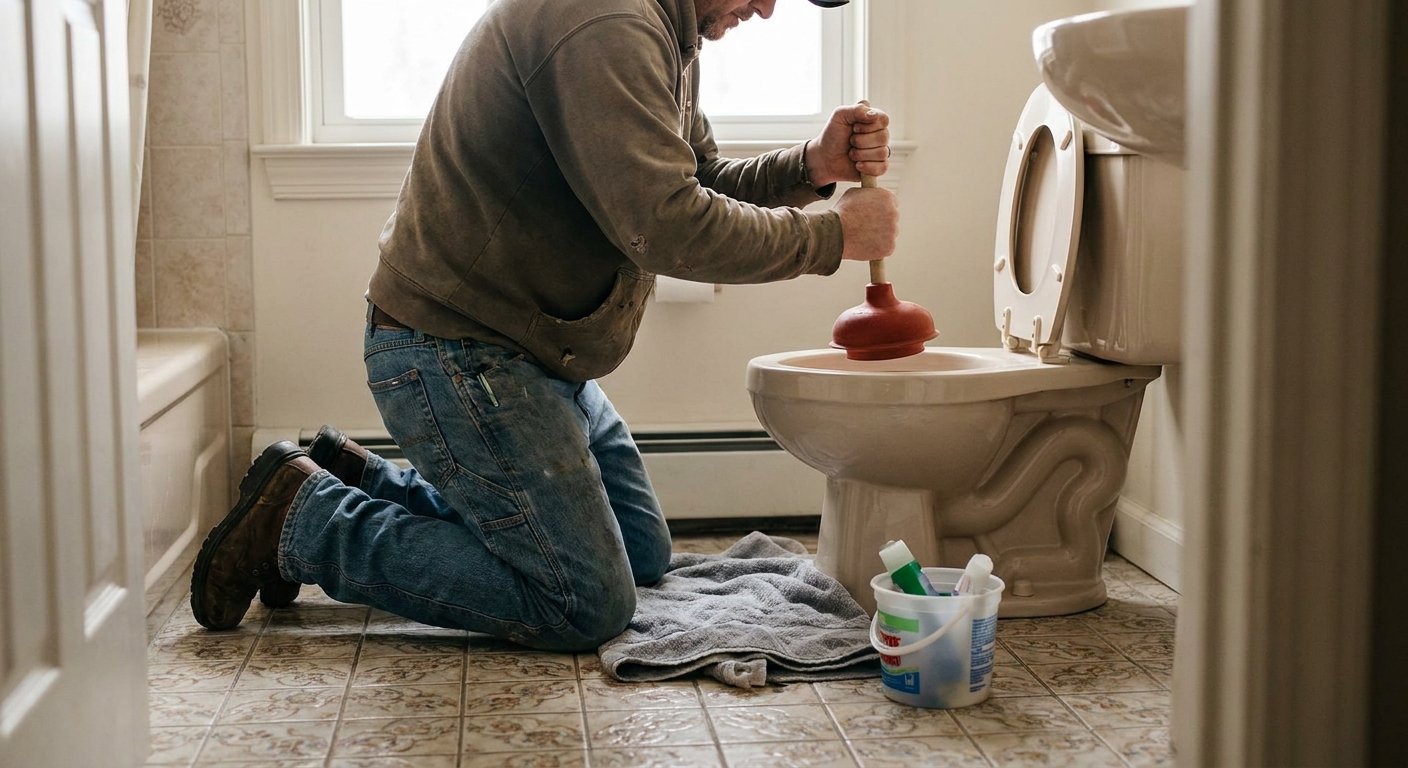
First: stop the overflow (the 60-second safety routine)
When a toilet is backing up, the goal is not to fix it faster. The goal is to keep water where it belongs.
1) Turn the shutoff valve clockwise
Look for the small valve behind the toilet where the supply line meets the wall. Turn it clockwise until it stops. If it is stiff, do not force it hard enough to feel like you might snap something. Slow and steady, then stop.
2) Stop tank-to-bowl flow (quick backup)
If the valve is stuck, slow, or you need an immediate pause while you wait for help, use the tank controls.
- Take the lid off the tank and set it somewhere safe. (A folded towel on the vanity is perfect. Tank lids chip easily, and they never chip in a convenient way.) If you are in a true panic and the lid feels slippery, skip this and focus on the shutoff valve.
- Push the flapper down if it is still letting water rush from the tank into the bowl.
- Lift the float to stop the fill valve from refilling the tank. This pauses incoming water so you can breathe.
3) Contain and protect
- Lay towels around the base of the toilet.
- Keep a small trash bag handy for wet paper towels.
- If the water is close to the rim, do not flush again “just to see.”
Renter note: If water is actively spilling onto the floor or leaking from the base, this is a stop rule. Turn off the valve and call maintenance immediately.
Quick diagnosis: clog or tank problem?
Here is the simplest way to tell what you are dealing with.
If you see this, it is likely a clog
- The bowl water rises when you flush, then slowly drops.
- The flush sounds weak, then you hear a slow glug.
- You recently used extra toilet paper, wipes, or anything “technically flushable.” (Friendly reminder: “flushable” wipes are rarely plumbing-friendly.)
- One flush made it worse, not better.
If you see this, it may be a tank issue (not a clog)
- The bowl water sits low and a flush barely moves anything.
- The tank does not refill, refills very slowly, or keeps running and will not stop.
- You flush and nothing happens because the chain has slipped off.
- The handle feels loose or does not lift the flapper.
Renter-safe fix #1: plunge like you mean it
Most “clogs” are really a stubborn plug in the toilet’s built-in S-curve. A good plunge is about pressure and seal, not frantic splashing.
Use the right plunger
You want a flange plunger (the one with the soft inner ring that fits into the toilet drain). A flat sink plunger rarely seals well enough to help.
Set up the bowl for success
- Water should cover the rubber cup. If the bowl is low, add water from a bucket. If the bowl is high, remove some with a small cup into a bucket.
- If you have a low-flow toilet and the bowl level is safely low, add hot tap water to the bowl first. Not boiling. Add it slowly and stop well below the rim. This can soften paper clogs and adds useful volume for the next attempt.
The low-flow plunging technique
- Place the plunger, press down gently first to push out air and form a seal.
- Do 10 to 15 strong plunges with steady rhythm. Think push and pull, keeping the seal.
- Pull up sharply on the last one to help dislodge the clog.
- Wait 30 seconds, then try a brief handle press, not a full send. Keep the shutoff valve within reach in case the bowl rises.
If nothing changes after 2 to 3 rounds, stop and move on. If the toilet is already loose or rocking, or the seal is compromised, repeated forceful plunging can worsen leaks and turn a simple clog into a “why is the bathroom floor damp” situation.
Renter-safe fix #2: hot water and dish soap
This is my calm, low-drama option for paper-heavy clogs, especially in older buildings where the plumbing seems to catch feelings.
- Add a few generous squirts of dish soap (about 2 to 3 tablespoons) into the bowl.
- If the bowl is low, add hot tap water from a bucket until the bowl is about halfway to two-thirds full. Pour slowly and stop well below the rim. If the bowl is already high, skip the water and just let the soap sit.
- Let it sit for 20 to 30 minutes.
- Try plunging again, then a controlled, brief handle press.
Avoid: boiling water (thermal shock can crack some porcelain, especially if the bowl is cold), and mixing this with chemical drain cleaners (which can create dangerous splash risks later).
Closet auger: when it helps, and when it can hurt
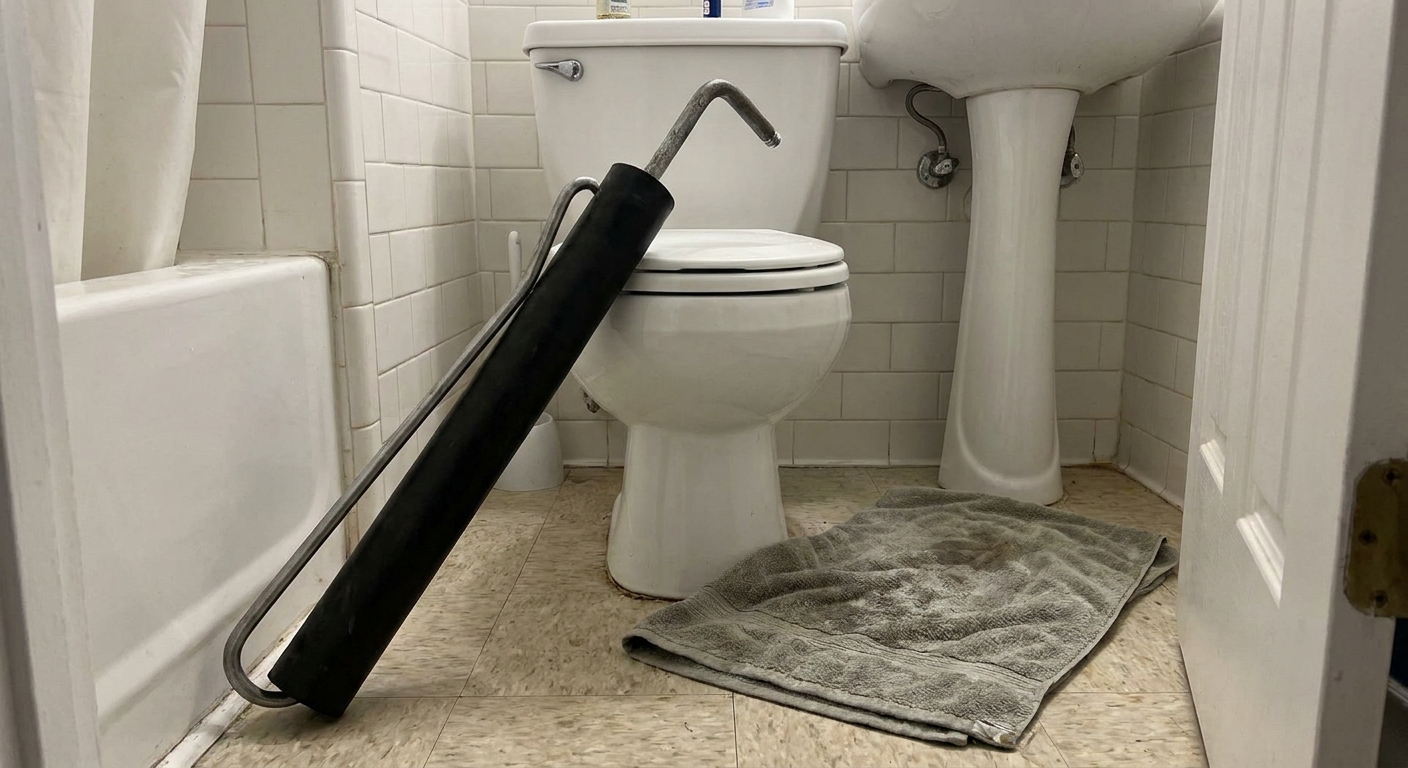
A closet auger is the hand-crank tool designed specifically for toilets. It can be renter-safe if you use it gently and you stop when you feel true resistance. It is also the moment many people accidentally scratch the porcelain or jam something deeper, so let’s keep it tidy.
Use a closet auger if
- Plunging changes nothing.
- You suspect something solid: a child’s toy, a bottle cap, a makeup sponge, or an absurd amount of wipes.
- The toilet is close to overflowing with each attempt, meaning you need a more direct tool.
Do not use a closet auger if
- You feel unsure about the tool and your lease is strict about “no repairs.”
- The toilet is gurgling and multiple drains are slow, suggesting a main line issue (maintenance territory).
- There is standing sewage backup in the tub or shower (stop rule).
How to use it without hurting the toilet
- Choose an auger with a rubber sleeve or protective boot near the bend.
- Feed the curved end into the bowl opening and down into the trap gently.
- Crank slowly. When you feel resistance, do small forward and back motions, then pull out slightly and try again.
- When you think it cleared, retract the cable while still turning to reduce mess.
What not to do: Do not use a standard drain snake meant for sinks. It can scratch the bowl and is harder to control in the toilet trap.
Not a clog? Check these tank culprits
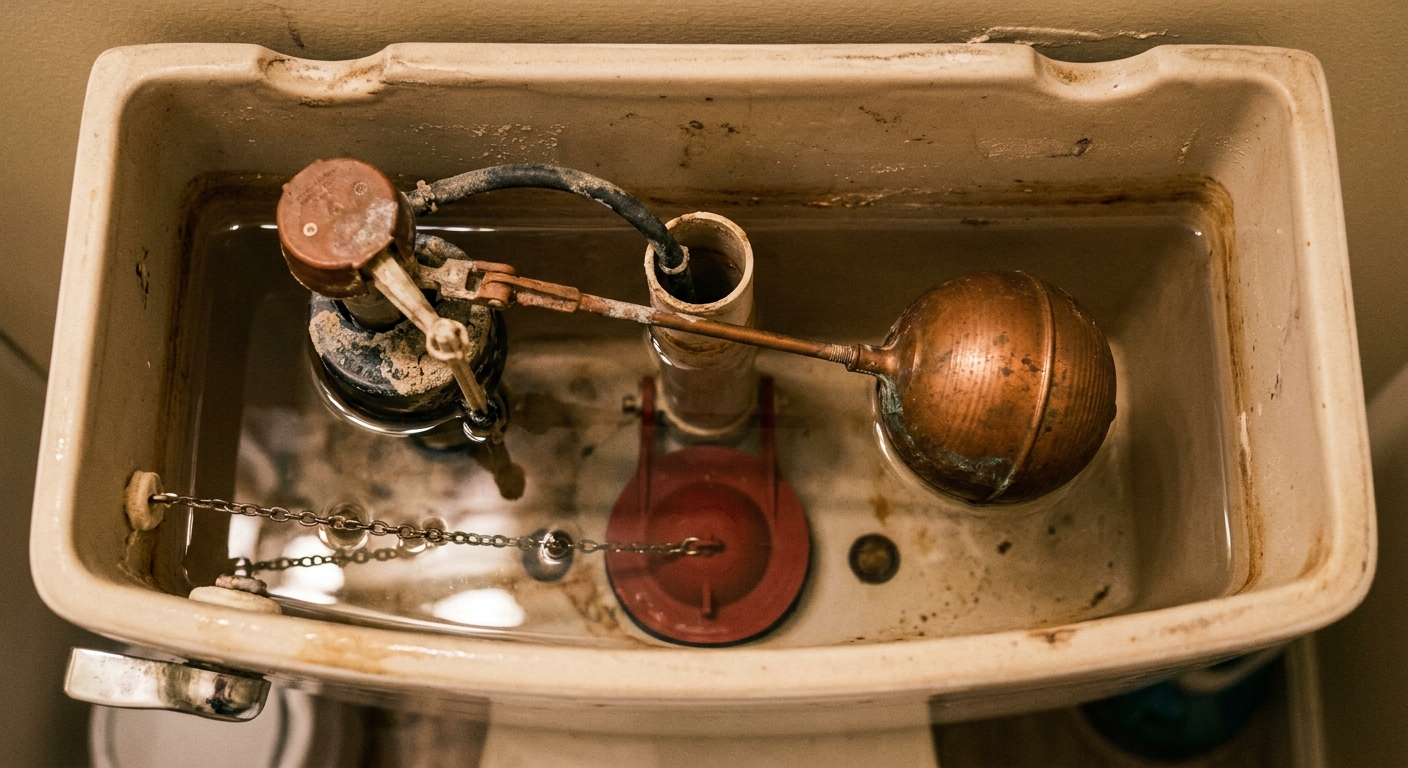
If the bowl is not rising, the toilet may simply not be sending enough water. Pop the tank lid and look for these easy fixes.
1) Flapper not lifting or not sealing
- Symptom: Handle feels floppy, or you flush and almost nothing happens.
- Fix: Reattach the chain to the flush lever if it slipped. Leave a little slack. Too tight and the flapper cannot seal. Too loose and it will not lift well.
2) Chain tangled under the flapper
- Symptom: Toilet runs, the tank empties oddly, or the flush is weak.
- Fix: Untangle and ensure the chain hangs straight.
3) Water level too low in the tank
- Symptom: Weak flush, especially in low-flow models.
- Fix: Look for the water line mark inside the tank. The water should be about 1/2 to 1 inch below the overflow tube top. If it is low, the fill valve may be turned down. Many have an adjustment screw or sliding clip.
4) Float stuck
- Symptom: Tank does not refill after a flush, or refills then stops too soon.
- Fix: Gently wiggle the float. Make sure it is not catching on the tank wall.
5) Clogged rim jets
Mineral buildup around the holes under the rim can reduce flush power over time.
- Renter-safe approach: Scrub the rim holes with a small brush and a little vinegar, then flush. Keep it mild and skip harsh acids or aggressive products unless your landlord okays it.
If you see cracked parts, constant leaking, or anything that looks like it is falling apart, that is a maintenance ticket. You are not being “high maintenance.” Toilets should be boring.
Clear stop rules: call maintenance now
I love a DIY moment, but I love your security deposit more. Stop troubleshooting and contact your landlord or maintenance if any of these are true:
- Overflowing water that you cannot stop with the shutoff valve (or by holding the float up or flapper down).
- Water leaking at the base of the toilet (possible seal or flange issue).
- The toilet rocks or feels loose when you sit or when you press the bowl. Do not keep plunging.
- Sewage smell or sewage backup in the tub, shower, or floor drain.
- Multiple drains are slow or gurgling when you flush (possible main line issue).
- No improvement after: 2 to 3 solid plunging rounds plus one other method (soap and hot water or a careful auger attempt).
- Any sign of a cracked tank or bowl (even hairline cracks can worsen quickly).
Safety note: If sewage is backing up, avoid skin contact, keep pets and kids out, ventilate, and do not run water in other fixtures until you get guidance. This is not the time for “one more try.”
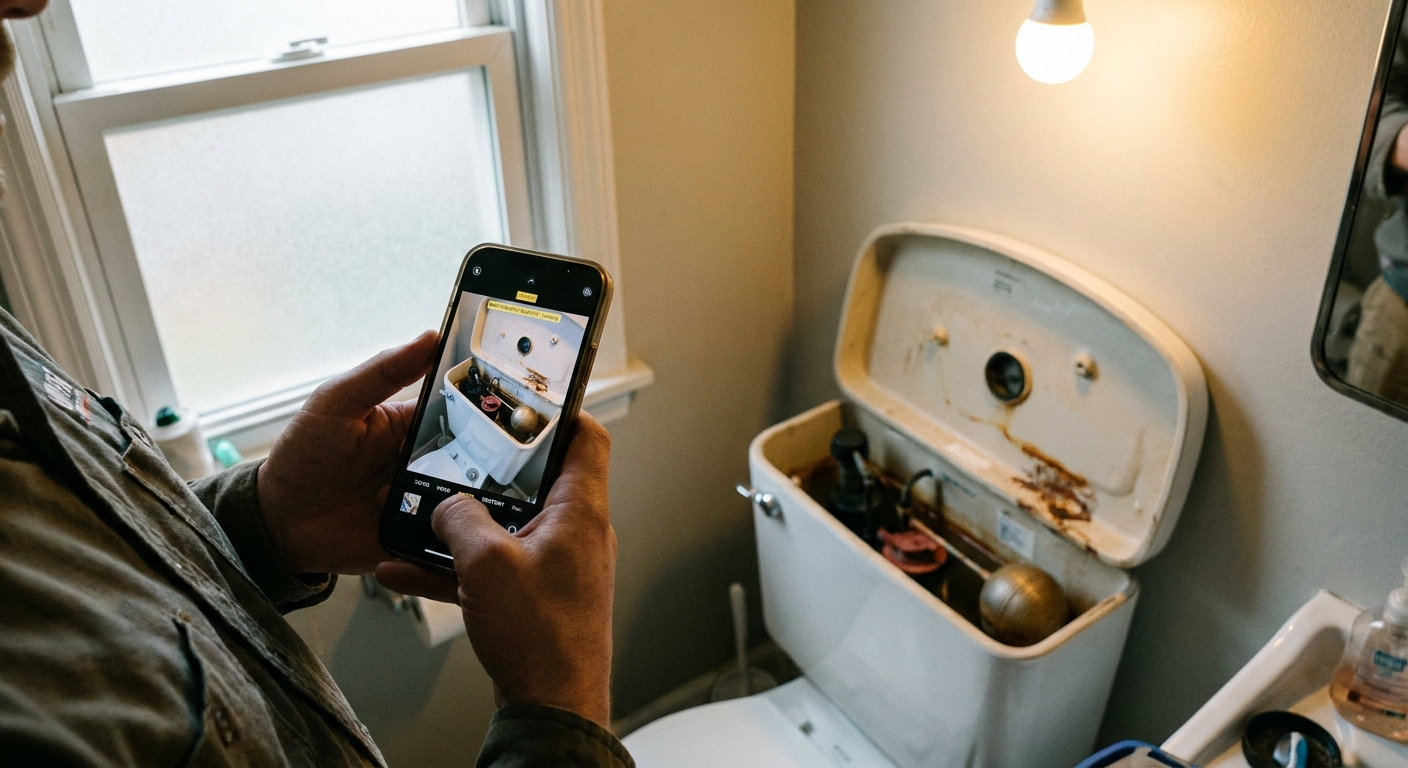
How to document it for your landlord
Good documentation speeds up repairs and keeps things friendly and factual. Think of it like taking tidy “before” photos when you move in, but in a plumbing context.
What to photograph
- The bowl water level after a flush attempt (only if safe and not overflowing).
- The tank with the lid off, showing the water level and parts (flapper, chain, float).
- The shutoff valve position and any visible drips under the supply line.
- Any water on the floor, especially near the base (include a clear view of where it is pooling).
- If relevant, the tub or shower showing backup or gurgling.
What to write in your message
- When it started and what happened (one sentence).
- What you tried (plunger, soap and hot water, turned off shutoff valve).
- Whether there is overflow, leakage, rocking, or other drains affected.
- Whether the toilet is usable at all.
Keep it simple and calm. Landlords respond faster to clear details than to a panicked novel.
What not to do
- Do not use chemical drain cleaners in a toilet. They can damage plumbing, and the bowl becomes dangerous to plunge afterward.
- Do not flush repeatedly when the bowl is rising.
- Do not pour boiling water into the bowl.
- Do not try to remove the toilet unless you are explicitly allowed and confident. Wax rings and flange bolts are not casual.
- Do not use a wire hanger or random metal tool that can scratch the porcelain and snag deeper.
A calm finishing checklist
If you want the renter-safe flow in one place, here it is:
- Turn off the water if the bowl is rising.
- Diagnose: clog signs vs tank issue signs.
- Plunge with a flange plunger using a steady, sealed rhythm.
- Try dish soap plus hot tap water (only if bowl level is low), then plunge again.
- Use a closet auger carefully if plunging fails and you suspect a solid obstruction.
- Stop and call maintenance if you see leakage, sewage backup, multiple drains affected, the toilet is rocking, or there is no improvement after reasonable attempts.
- Take clear photos and send a concise message.
Your home should feel like a comforting hug, not a bathroom standoff. Once this is sorted, open a window, take a breath, and let the room go back to being blissfully unremarkable.