Tighten a Loose Interior Door Knob or Handle

Clara Townsend
Clara Townsend is an interior stylist, vintage furniture enthusiast, and the creative voice behind Velvet Abode. With over a decade of experience transforming both cramped city apartments and sprawling fixer-uppers, she believes that a beautiful home is built on personal stories rather than massive budgets. When she isn't hunting for the perfect brass sconce at a local flea market, she can usually be found rearranging her living room for the third time this month.
A loose door knob has a way of making your whole home feel slightly unsettled. Every wiggle says, “I might abandon you at the worst possible moment.” The good news is that most loose interior knobs and lever handles are simple, very fixable, and you can tighten them without chewing up screw heads or cracking a pretty backplate.
Below, I will help you figure out what is actually loose (the handle, the rosette, the spindle, or the latch), then walk you through tightening in the order that prevents stripped screws. I will also share a few renter-reversible tricks for worn screw holes, plus the signs that the latch needs its own fix.
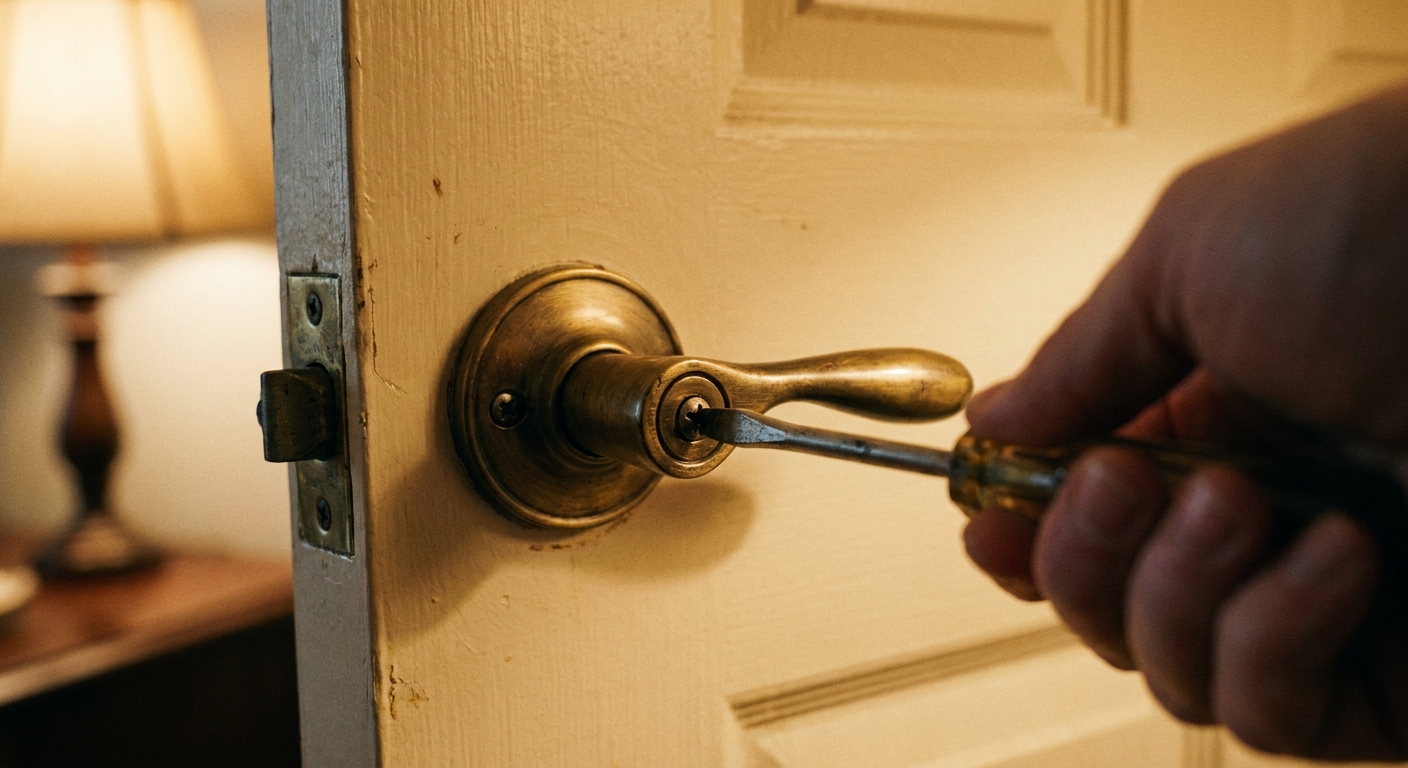
First, diagnose what is loose
Before you grab the nearest screwdriver and go full hero mode, take 30 seconds to feel what is moving. This tells you which screws matter and which ones you should not touch yet.
Loose knob vs. loose lever handle
- Knob feels wobbly but the round plate stays put: the knob is likely loose on the spindle or the set screw is loose.
- Lever droops downward or feels “saggy”: the lever’s set screw may be loose, or the return spring inside the handle is failing.
- Whole knob and plate move together: the mounting screws (the long through-bolts) are loose, or the door’s screw holes are stripped.
Check the latch, too
Hold the handle steady with one hand and gently push the door in and out with the other.
- If the handle stays firm but the door still pops open or will not latch, the issue is usually alignment or a tired latch, not the knob tightness.
- If everything shifts and rattles, start with tightening the hardware before you chase latch alignment.
Tools that prevent stripping
Stripped screws are not a personality trait. They are usually a tool mismatch.
- Screwdriver: Use a #2 Phillips for most interior hardware. If it looks like a star, it may be Torx. If it is a flat slot, use a flathead that fills the slot completely.
- Allen key (hex key): Common for lever handle set screws.
- Flashlight: Hidden set screws love dim hallways.
- Painter’s tape: To protect the finish around a rosette or backplate.
- Small container: For tiny screws that will absolutely try to disappear.
Clara tip: If the driver wiggles inside the screw head, stop and switch sizes. That little wiggle is how stripping starts.
Find the hidden set screw
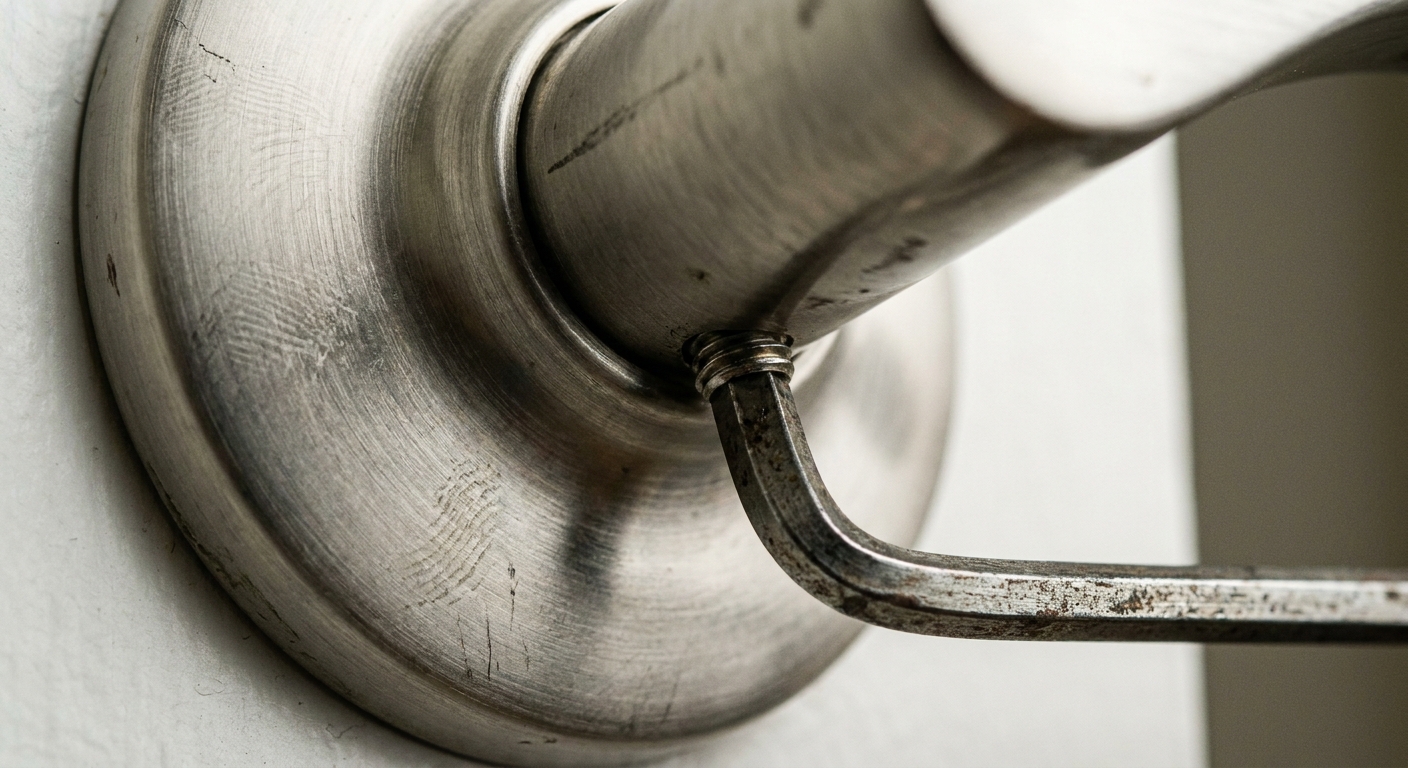
Many modern levers and some knobs are held onto a spindle with a small set screw. It is often on the underside of the lever, facing the floor, where it gathers dust and secrets.
Where to look
- Lever handles: Under the lever near the base, or on the side of the lever neck.
- Knobs: Sometimes on the side of the knob shaft near the rose, sometimes a small push-pin release hole instead.
How to expose it safely
- Wipe the underside with a dry cloth first so your tool seats cleanly.
- Add a ring of painter’s tape around the base if your screwdriver tends to slip.
- If there is a decorative cover (a snap-on rose), look for a tiny notch. Use a thin flathead gently at the notch and twist slowly.
Tighten in the right order
This order matters because tightening the wrong thing first can mask the real looseness, and you end up over-torquing one sad little screw.
Step 1: Tighten the handle set screw
If you found a set screw:
- Hold the lever or knob in its natural position.
- Turn the set screw clockwise until snug.
- Stop when it is firm. Set screws are tiny and they strip fast if you muscle them.
If the handle still slides on and off, the set screw may be missing or the spindle is worn. Skip to the section on when to replace parts.
Step 2: Tighten the mounting screws
Most interior knob and lever sets clamp together through the door with two long screws. You usually access them on the interior side once you remove the decorative rose or handle cover.
- Expose the two mounting screws.
- Tighten each screw a few turns, alternating between them like you would tighten a jar lid evenly.
- Do not crank one all the way down first. That can tilt the assembly and stress the door.
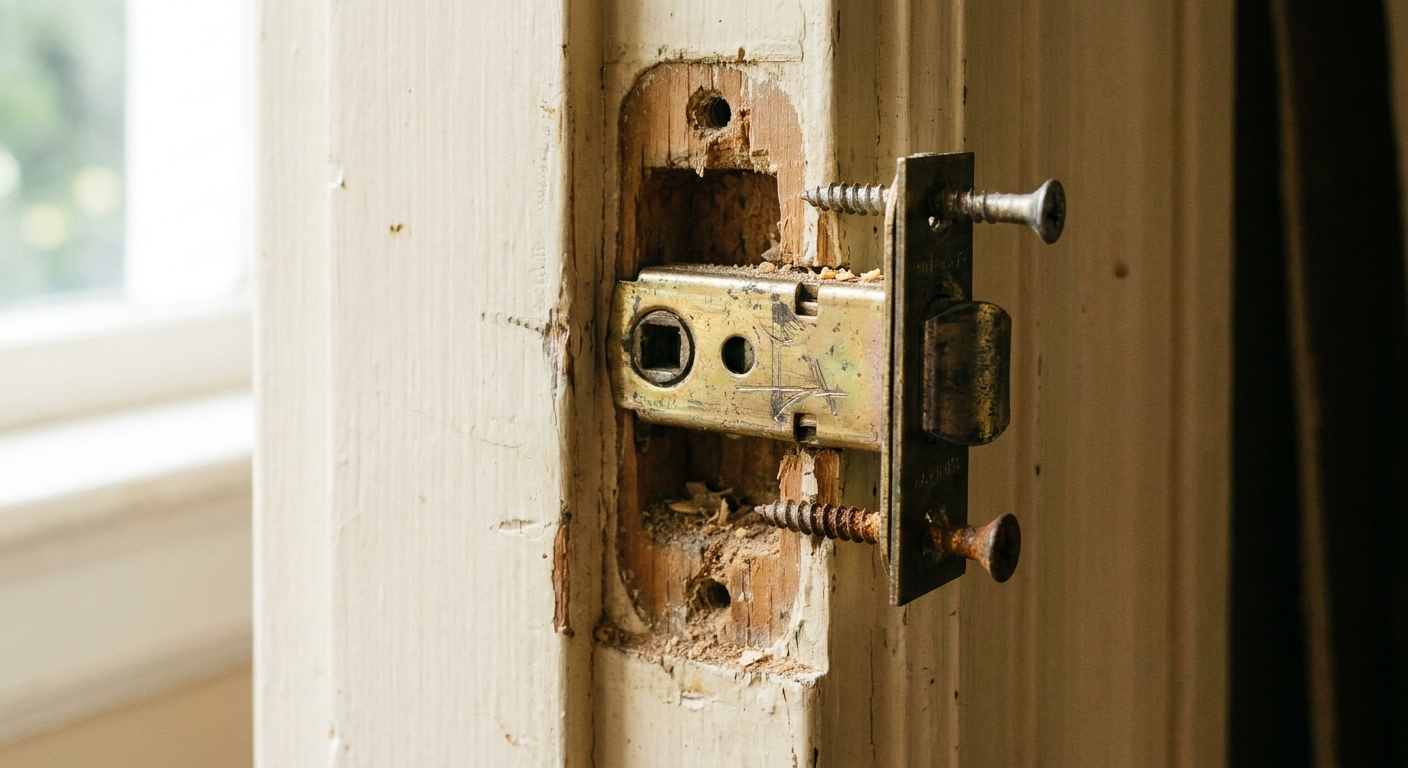
Step 3: Check the latch screws
On the door edge, the latch faceplate has two screws. If they are loose, the latch can shift and make everything feel sloppy.
- Tighten until snug.
- If the latch faceplate sits proud of the door edge, do not force it flat with screws. The mortise may be shallow or painted over, and forcing it can strip the holes.
Step 4: Test and fine-tune
Close the door gently, turn the handle, and release it. It should return smoothly and feel solid. If the rosette still wiggles, you likely have stripped screw holes or a cracked mounting plate.
If screws keep spinning
If you tighten and tighten and the screw just spins like it is auditioning for a ballet, the hole is stripped. You have a few fixes that do not require wood filler and a weekend identity crisis.
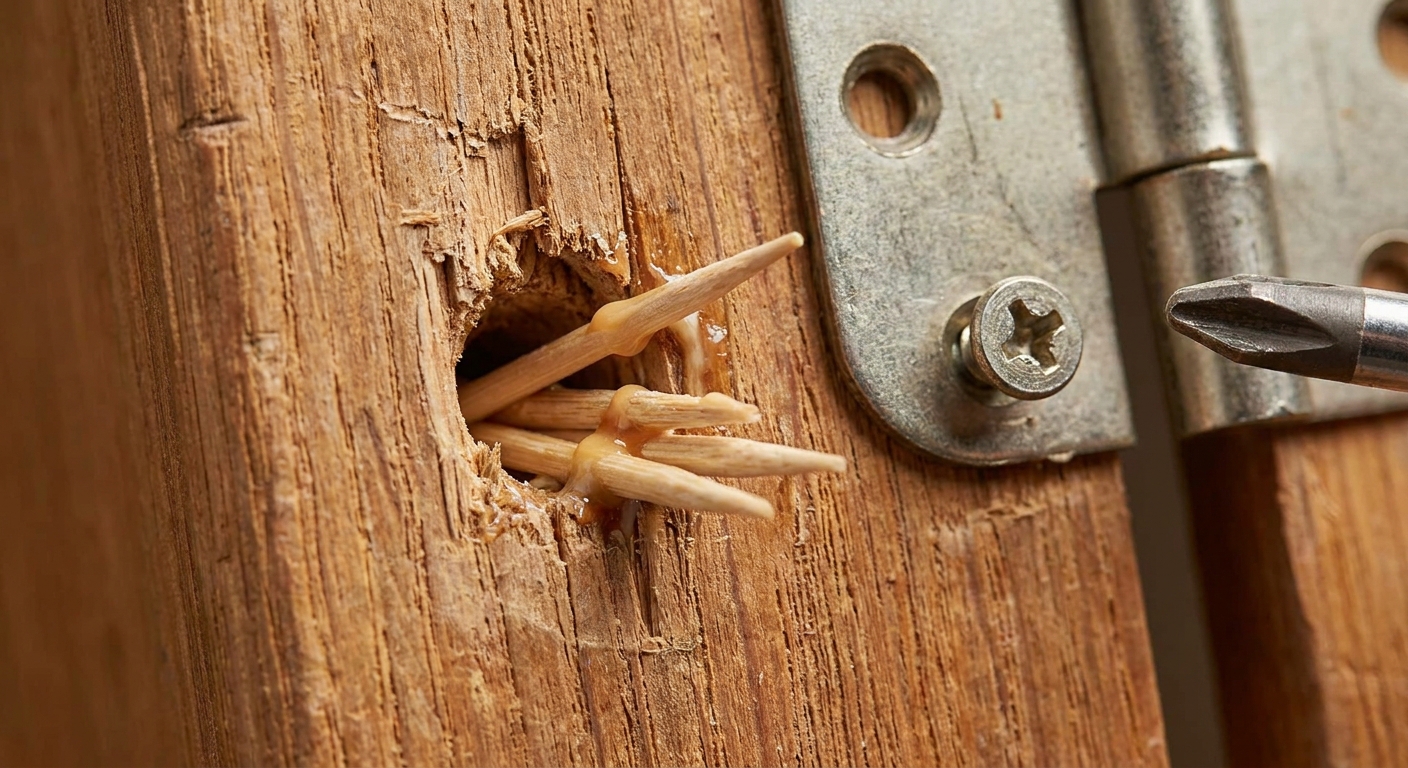
Option 1: Toothpicks and glue
This is my favorite “sturdy but still simple” fix.
- Remove the loose screw.
- Dip 2 to 4 toothpicks (or a sliver of bamboo skewer) in a tiny amount of wood glue.
- Press them into the hole until it feels packed.
- Snap or trim flush, wait 20 to 30 minutes if you can, then reinsert the screw.
Renter note: This is minimally invasive and typically acceptable, but if you are concerned, skip the glue and use dry toothpicks. It will be less durable but more reversible.
Option 2: Longer screws
If the door material is solid enough, a slightly longer screw can bite into fresh wood behind the stripped area.
- Bring one original screw to the hardware store.
- Match the diameter and head type, then go 1/4 to 1/2 inch longer.
- Avoid going so long that it pokes through the other side of the door.
Option 3: Thicker screws
If a screw spins, it often means the wood inside the hole is worn out. On hollow-core doors, this usually happens in the solid lock block area where the hardware mounts (yes, there is wood there on purpose). A slightly thicker screw can grab fresh material without changing anything visible.
- Take one of the spinning screws with you so you match the head style and length.
- Go up one size in diameter, for example #6 to #8, as long as the hardware hole allows it.
- Drive it in by hand at the end so you do not cross-thread or strip the new bite immediately.
Clara tip: Skip plastic anchors here. A door handle gets constant push and pull, and anchors are a short-lived peace treaty at best.
Option 4: Matchsticks, no glue
If you are renting and want a “today fix,” push a few wooden matchsticks (no heads) into the hole and reinstall the screw. It is not forever, but it often stops the wobble until you can do a sturdier repair.
Droopy lever handle
If your lever handle points slightly downward even after tightening, the return spring inside the lever assembly may be worn. You can sometimes improve things by tightening the mounting screws and set screw, but a drooping lever often needs a replacement spring cassette or a new handle set.
Clues it is not just loose screws
- The lever does not spring back to level after you let go.
- The lever feels “mushy” rather than simply wobbly.
- It improves briefly after tightening, then droops again within days.
In that case, tightening harder will not help, and it can strip the door. Plan for a replacement handle or internal spring module if your brand sells one.
When the latch is the issue
Sometimes the knob is fine. The door just will not catch because the latch is not lining up with the strike plate, or the latch itself is sticking.
Signs it is latch-related
- The knob feels solid, but the door bounces open unless you push hard.
- The latch bolt does not extend fully unless you jiggle the handle.
- You see scrape marks on the strike plate where the latch is hitting too high or too low.
Quick checks
- Strike plate alignment: Close the door slowly and watch where the latch meets the strike opening. If it is off, you may need to adjust the strike plate position.
- Sticky latch: If the latch bolt feels gritty, a small puff of dry lubricant (like graphite) can help. Avoid oily sprays that attract dust.
If you want the deeper latch rabbit hole, that is a separate fix from tightening hardware. Treat them as two different problems, even though they feel related in your hand.
Mistakes that strip screws
- Using a drill on high torque: Hand-tighten first. If you must use a drill, use the lowest clutch setting and finish by hand.
- Wrong screwdriver size: A #1 Phillips in a #2 screw head will chew it up fast.
- Tightening only one mounting screw: Alternate between screws to keep the hardware straight.
- Over-tightening into stripped holes: If it spins, stop. Repair the hole first.
- Forcing decorative covers: If a rose will not pop off, find the notch or release slot instead of prying around the entire edge.
When to replace parts
I love a repair. I also love knowing when a repair is just a temporary peace treaty.
Replace the handle set if:
- The spindle is visibly worn or the handle no longer grips even with a tight set screw.
- The internal spring has failed and the lever droops consistently.
- The mounting plate is cracked or bent.
- The latch bolt sticks even when the handle is tight and the latch is clean.
Replace the latch if:
- The latch bolt does not extend smoothly when you turn the handle.
- You feel grinding or hear metal scraping from inside the door edge.
- The latch bolt is loose in its housing.
If your home leans vintage, take the old set with you when you shop. Backset measurements and spindle shapes can vary, and matching them saves you from an “it almost fits” situation at 9 p.m.
Quick final checklist
- Identify what moves: handle, rose, or latch.
- Find and snug the set screw first (if present).
- Tighten mounting screws evenly, alternating turns.
- Tighten latch faceplate screws on the door edge.
- If screws spin, fix the hole before tightening again.
- If a lever droops after tightening, suspect a spring or handle failure.
If you want, tell me whether you have a knob or a lever, and whether you can see a set screw. I can walk you through the exact style of hardware you are looking at, like we are standing in your hallway with a screwdriver and a cup of coffee.