Sun-Faded Sofa Arms and Cushions

Clara Townsend
Clara Townsend is an interior stylist, vintage furniture enthusiast, and the creative voice behind Velvet Abode. With over a decade of experience transforming both cramped city apartments and sprawling fixer-uppers, she believes that a beautiful home is built on personal stories rather than massive budgets. When she isn't hunting for the perfect brass sconce at a local flea market, she can usually be found rearranging her living room for the third time this month.
If your sofa looks like it has a “bright side” and a “sad side” (hello, sunny window seats), you are not alone. I see this all the time: arms that have gone chalky (think dull or ashy), cushions that look two shades lighter on top, and a mysterious dark band where everyone’s head rests. The good news is that some of what you’re seeing is cleanable. The not so fun news is that true UV fading is basically fabric sunburn, and it cannot be reversed by cleaning.
Let’s sort out what is happening, how to confirm it, and what you can do at home that actually makes a visible difference.

UV fading vs. soil contrast
When a sofa looks uneven, it is usually one of these situations, or a mix of both.
True UV fading
Ultraviolet light breaks down dye and can weaken fibers over time. UV fading tends to look:
- Bleached or washed-out, especially on the top of arms, the top front edge of the seat, and the cushion surfaces closest to windows.
- Evenly lighter in the exposed zones, with a slightly flat or dusty appearance.
- Persistent after cleaning. If dye has faded, cleaning will not bring the original color back.
Soil contrast (a fancy way to say “it is dirty in a pattern”)
Sometimes the “darker” areas are just body oils, hair product, pet residue, and airborne dust that have slowly tinted the fabric. Soil contrast tends to look:
- Grayer, yellower, or browner rather than simply lighter.
- Heaviest where you touch: headrests, arm fronts, seat fronts, and the side you always sit on.
- Improves with cleaning, at least a little.
One more curveball: sometimes the unfaded part looks “too dark,” because everything else has faded. Your eyes read it as grime, but it is just the original color still hanging on.
Nap and pile changes (the sneaky third option)
On velvet, microfiber, and some chenilles, “fading” can simply be crushed pile or the nap brushed in a different direction. It can look lighter from one angle and darker from another. Before you do anything wet, try gently brushing with a soft upholstery brush (or a clean, dry white cloth) to see if the color evens out.
Do this first: test clean
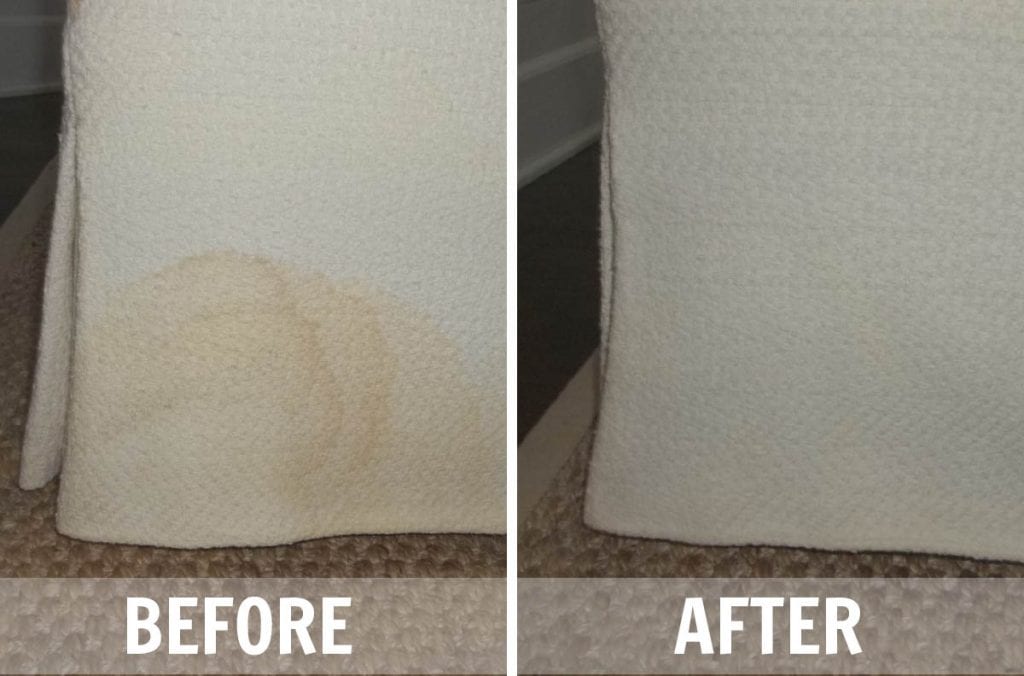
Before you decide whether you need a slipcover or a whole new sofa, do a gentle clean in one small area. The goal is not to deep-shampoo your entire couch in a panic. It is to figure out what portion of the mismatch is removable soil.
Step 1: Check the care code
- W: water-based cleaner is typically okay.
- S: solvent-based cleaner only (no water).
- WS or SW: either is typically okay.
- X: vacuum only. Do not use water or solvent cleaners unless a manufacturer or a pro confirms it is safe for your specific fabric and finish.
If you cannot find the tag, default to the safest approach: vacuum thoroughly and test in a hidden spot first.
Step 2: Vacuum like you mean it
Use the upholstery attachment and go slowly. Dust and grit increase abrasion, and you do not want to grind them deeper into the fibers.
Step 3: Mix a gentle water-based solution (for W or WS fabrics)
In a bowl, combine:
- 2 cups lukewarm distilled water
- A few drops of clear, gentle dish soap (seriously, keep it light)
Optional but sometimes helpful for oily arm grime: add up to 1 teaspoon white vinegar. If you are unsure about your fabric (especially delicate natural fibers), skip the vinegar and keep it simple. Too much soap can leave a sticky residue that attracts more dirt, so less is more.
Step 4: Blot, do not soak
Dampen a white microfiber cloth, wring it out well, and blot a small section. Work in small passes, and switch to a clean area of cloth often. Avoid colored cloths, which can transfer dye. Then blot with a second cloth dampened with plain distilled water to lightly “rinse.”
Step 5: Dry and reassess
Press with a dry towel, then air-dry fully. Once dry, compare. If the color difference shrinks noticeably, you are dealing with soil contrast. If it looks identical, that points to UV fading or a permanent change in the fibers.
Avoid at-home pitfalls: steam cleaners on unknown fabrics, heavy saturation (water rings), bleach, and aggressive scrubbing. Those can create a bigger problem fast.
If your tag says S
Skip water. If you want to DIY, use a store-bought upholstery solvent labeled for S-code fabrics and follow the label exactly. Work with good ventilation, keep it away from flames (many solvents are flammable), and test in a hidden spot. If in doubt, call a pro. S-code fabrics are where “one wrong move” can get expensive.
Quick wins: rotate and shift
If your sofa has removable cushions, you have more power than you think. Rotating does not reverse fading, but it can redistribute the visual impact so the difference reads intentional instead of accidental.
Rotate cushions on a schedule
- Weekly if your sofa gets direct sun for hours each day.
- Monthly for moderate sun or if you use the sofa evenly. If you do nothing else, aim for at least monthly.
Do a simple pattern:
- Flip each cushion (top to bottom) if both sides are upholstered.
- Swap left and right cushions.
- Rotate back cushions too, if they are reversible.
Rearrange the “sun map”
Sometimes the fix is moving the sofa six inches, not buying new fabric.
- Shift the sofa so one arm is not permanently parked in a sunbeam.
- Angle the sofa slightly to change the light path.
- Add a small side table or floor lamp between the window and the most exposed arm to create a bit of shade.
Styling that looks intentional
I am all for a practical disguise, but I want it to feel like a design choice. Here are my favorite “this is cozy and curated” solutions.
Throw placement that helps
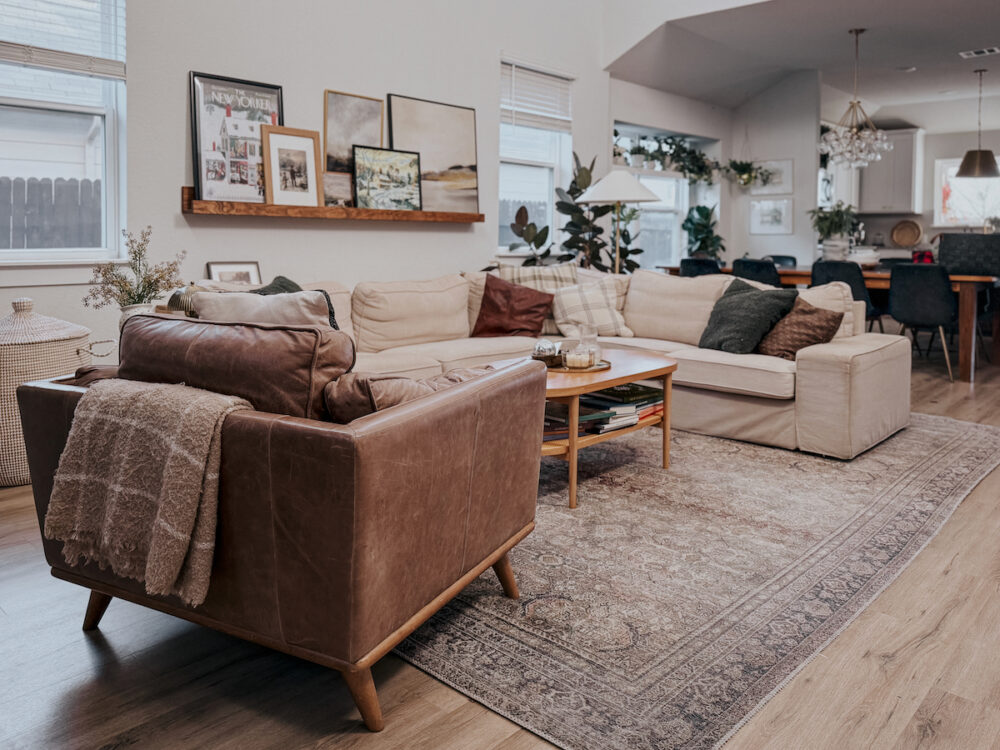
- Arm drape: Fold a throw lengthwise and drape it over the faded arm so it looks tailored, not tossed.
- Seat runner: Place a long, textured throw across the seat cushions where the sun hits hardest. Linen and cotton weaves look relaxed and elevated.
- Back cushion wrap: If headrest areas are darker from oils, a throw along the top back can soften the contrast.
Use texture to distract the eye
Fading is most obvious on flat, smooth fabrics. Add texture nearby so your eye reads the space as layered.
- Chunky knit pillow covers
- Nubby bouclé pillows (especially good if the sofa is smooth)
- Woven basket nearby for warmth and “purpose”
Dyeing: manage expectations
This is the part where I gently take your hand and tell you the truth: dyeing upholstery in place is rarely the tidy, even-color miracle people hope for.
Why it is tricky
- Fibers matter. Cotton and linen take certain dyes better than polyester. Many modern upholstery fabrics are blends that resist dye.
- Stain guards and finishes can block absorption and create blotches.
- Uneven fading means dye can grab differently across the sofa.
- Cushion piping and thread may not dye the same, leaving contrast outlines.
When at-home dye might be worth considering
If you have removable, washable cotton covers (like some slipcovered sofas) and you are willing to accept “beautifully imperfect,” dye can work. Even then, test first and follow the dye manufacturer’s fiber guidance closely.
Fabric spray dyes and “color restorers”
These can offer a temporary improvement on small areas, but they are the most likely to look streaky on large sofa arms and seats. They can also transfer if not fully set and cured. If you try one:
- Test on a hidden area first.
- Expect to do multiple light coats.
- Be prepared for some rub-off risk on light clothing.
My realistic take: Dye is best reserved for small upholstered pieces, removable covers, or brave experimental souls. For a main living room sofa, most people are happier with a slipcover or reupholstery.
Slipcovers: the forgiving fix
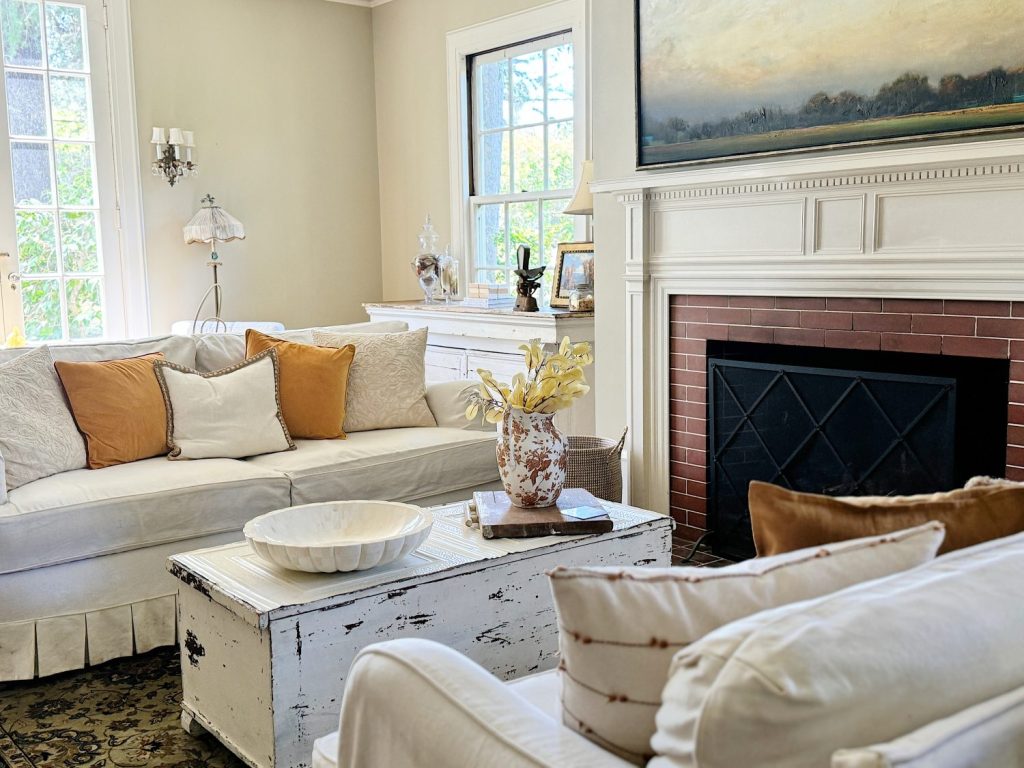
If you want the biggest visual change with the least heartbreak, slipcovers are your friend. They protect the original upholstery from daily wear and a lot of the sunlight exposure, though the slipcover itself can still fade over time.
What to look for
- Made-to-measure if you want a clean, tailored look.
- Thick cotton, canvas, or linen blends for durability and a more expensive drape.
- Machine-washable if you have pets, kids, or an iced coffee habit.
Color and pattern tips
- Mid-tones hide life better than bright white or very dark charcoal.
- Small patterns and heathered weaves camouflage unevenness and daily wear.
- If your room is sun-drenched, consider a slightly warmer neutral so the light looks flattering rather than stark.
When to reupholster or replace
Sometimes the kindest thing you can do for yourself is stop fighting a losing battle. Here is when I would move past at-home fixes.
Consider reupholstery if
- The sofa frame is solid hardwood and still feels sturdy.
- The cushions are comfortable and the shape is worth keeping.
- The piece is vintage or sentimental, and you truly love it.
Consider replacing if
- The frame creaks, sags, or feels unstable.
- The cushion foam is collapsing and replacements cost a lot.
- The fabric is faded and also shredding, thinning, or pilling heavily in high-use areas.
If you go the replacement route, treat it like a fresh start with sun in mind. A sofa near a bright window benefits from UV-filtering window film, lined curtains, or at least a cushion rotation habit from day one.
Prevent future fading
Even if you cannot reverse UV damage, you can absolutely slow it down.
- Rotate and flip cushions regularly.
- Use curtains or shades during the brightest hours, especially in summer.
- Consider UV-filtering window film if you love your sunlight but not what it does to textiles. It can help reduce fading, and it may also reduce heat and glare, but it can slightly change the look of your view depending on the film.
- Vacuum often so grit does not wear fibers down faster.
- Keep throws in “sun zones” so they take the hit instead of the upholstery.
A sun-faded sofa is not a moral failing. It is evidence of a room that gets used and a home that has light pouring into it. With a little cleaning detective work and a few strategic choices, you can make it look intentional again, and keep it that way.