Stop Your Headboard From Banging the Wall

Clara Townsend
The first time I heard a headboard thunk against the wall in the middle of the night, I thought something in my apartment had shifted. It was just me rolling over. If your bed announces every sit-up, pillow fluff, or midnight water run with a hollow knock, you are not alone.
The good news is that headboard banging most often comes from a handful of fixable issues: the bed is creeping forward, the headboard is flexing because the connection is loose, the headboard is simply too close to the wall, or the wall area behind it is getting dented and “amplifying” the hit. Let’s fix the impact noise at the source, with solutions that range from five-minute simple to more permanent and rock-solid.
First: confirm it is impact noise, not a squeak
This article is for the deep, blunt knock of the headboard contacting the wall. If what you hear is a chirp, creak, or squeal coming from slats, bolts, or joints even when nothing touches the wall, that is a different fix.
- Impact: you can recreate it by pushing the headboard toward the wall with your hands. You may see scuff marks or dents at contact points.
- Squeak: you hear it when weight shifts, often from the middle of the frame. No wall contact required.
If you have both, handle the banging first. Quieting impact often makes the remaining squeaks easier to pinpoint.
Why headboards bang the wall
1) The bed frame creeps forward
On smooth floors, especially hardwood or laminate, the bed can migrate inch by inch. Eventually the headboard meets the wall, then every movement becomes percussion.
2) The headboard is flexing on a loose connection
Even if the bed is not sliding, a slightly loose bolt, bracket, or hook-on rail allows the headboard to sway. That sway translates into wall contact.
3) The headboard sits too close to the wall
Some headboards are designed with a bit of clearance in mind, but real rooms have baseboards, outlets, and uneven walls. If the headboard starts out nearly touching, it will hit the moment you lean back.
4) The floor or frame is slightly out of true
An uneven floor, a warped rail, or a missing or loose center support can let the whole bed rack side to side. That movement can turn a “barely touching” headboard into a repeat offender.
5) The wall itself is vulnerable
Drywall can dent easily. Plaster can chip. A knock might be mild at first, but wall damage can make the contact louder and more noticeable over time.
Five-minute fixes (start here)
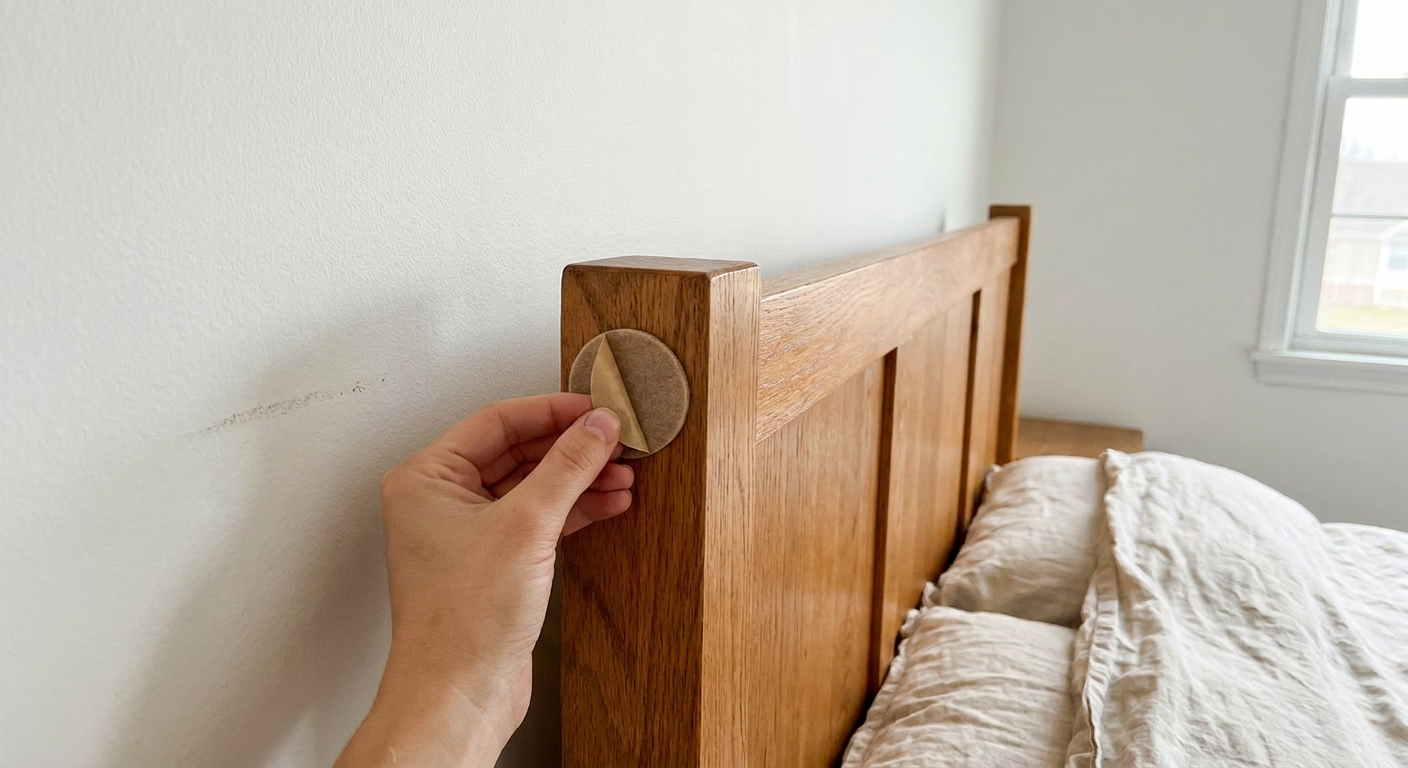
Add soft bumpers at wall-contact points
If your headboard only hits in one or two spots, this is the simplest win. You are not just protecting the wall. You are replacing a hard hit with a cushioned contact.
- Felt pads: best for painted walls and light contact. Choose thick ones, not the paper-thin kind.
- Rubber or silicone bumpers: best for heavier headboards or more frequent impact.
- Foam weatherstripping (thin strips): great if the headboard makes contact along a wider area instead of points.
How to place them: pull the bed forward a few inches, find the exact wall-contact points (look for scuffs or have someone gently rock the bed), clean the back of the headboard with rubbing alcohol, then apply bumpers. Press firmly and follow the package cure time before you shove the bed back tight to the wall. Many adhesives grab quickly but reach full bond hours later.
Create a small gap
One of my favorite quiet-home tricks is to stop fighting for perfectly flush furniture. Beds like a little breathing room.
Move the bed forward 1 to 2 inches
If you can spare the space, simply pulling the bed forward often solves the problem immediately, and it looks intentional if you keep the gap consistent.
Account for baseboards
Baseboards can push the lower part of the bed outward while the top of the headboard leans back toward the wall. In that case, the headboard can still tap even when the frame looks pulled forward.
Two easy options:
- Use thicker bumpers: place them higher up so the headboard gently rests against them, not the paint.
- Add a spacer behind the legs: if your headboard has legs that land on the floor, a thin rubber shim behind each leg can change the angle so the top does not swing into the wall. Some frames are also designed to sit off the wall for baseboard clearance, so do not force a “flush” fit if the geometry is telling you otherwise.
Stop the bed from sliding
If you keep pushing the bed back and it keeps crawling forward, you need grip.
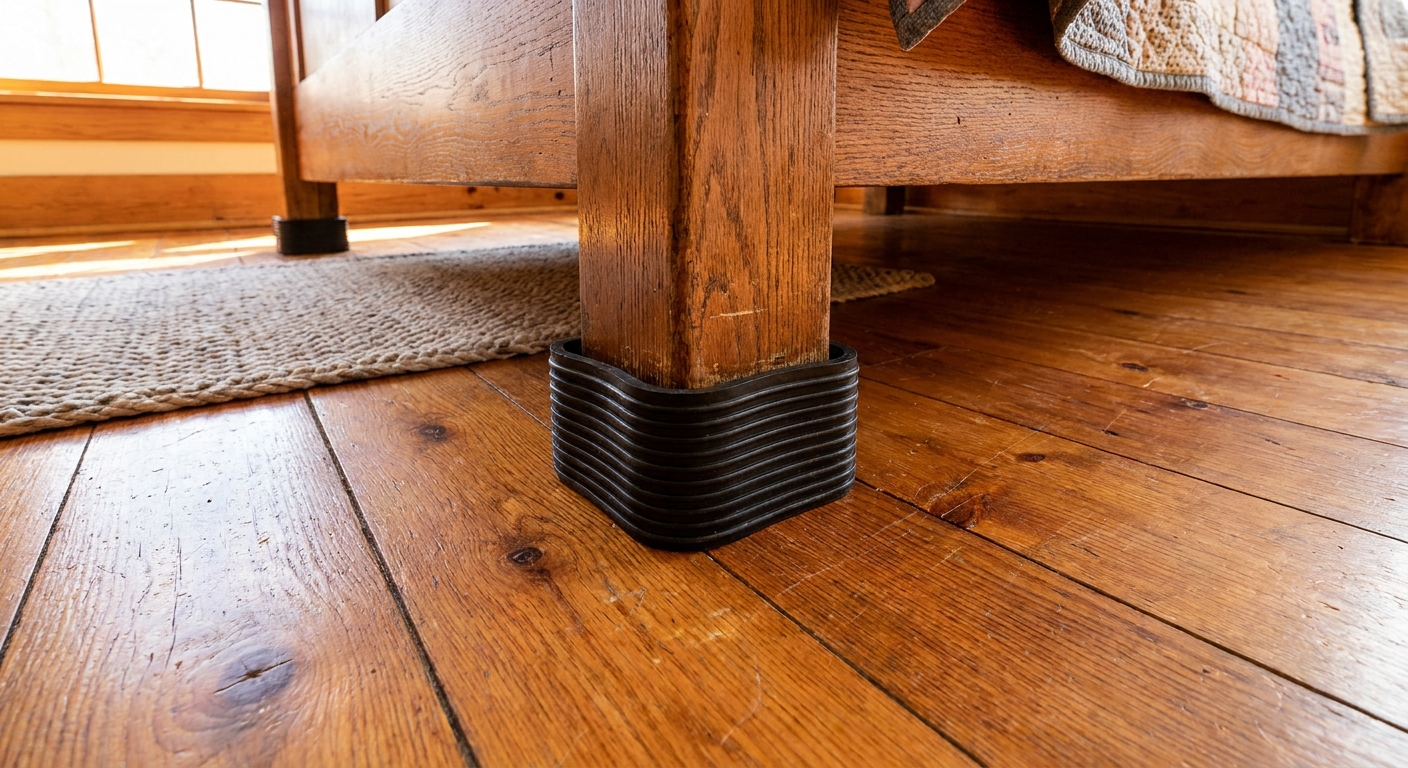
Put grippers under the legs
- On hardwood or laminate: rubber furniture grippers or anti-slip pads under each leg work well.
- On tile: rubber pads help, and keeping dust swept away matters more than you think.
- On carpet: you may need caster cups designed for carpet. Spiked versions can work, but use judgment if there is hardwood under the carpet or if you have a delicate rug you do not want punctured.
Tip from my styling kit: if your bed has tiny feet that sink into soft pads, choose a gripper with a slightly raised edge so the leg stays centered and does not drift.
Tighten what is actually loose
If the headboard bangs when you sit up but the bed is not moving across the floor, your issue is usually in the connection between the headboard, frame, and rails.
Important: do not overtighten into particleboard or MDF. If a screw spins without tightening, you may need a larger screw, a threaded insert, or wood repair, depending on the bed design.
Do this quick test
- Stand at the side of the bed.
- Grab the headboard near the top corner.
- Gently rock it toward and away from the wall.
If you feel a little clunk before it moves, that is play in the joint.
What to tighten
- Headboard bolts: most metal frames have adjustable brackets where the headboard attaches. Tighten the bolts and recheck after a few days.
- Hook-on rails: if your bed has side rails that hook into slots, make sure they are fully seated. Sometimes they look connected but are not dropped all the way into place.
- Center support and legs: if the center support is loose or missing, the whole bed can flex and throw the headboard into motion.
- Slats and platforms: if slats shift, the mattress can “walk” and change how the frame loads. Re-seat slats, add any missing retaining straps, and confirm nothing is bowed or cracked.
Anchor options
If your headboard is tall, heavy, or especially prone to sway, a little anchoring can change everything. The goal is not to glue your bed to the wall. The goal is to remove the ability for the headboard to swing and strike.
Option A: Lock the headboard to the frame
Some setups rely on a couple of small bolts and hope. If your headboard has multiple mounting heights, use the lowest stable position and confirm all hardware is installed. A more rigid headboard-to-frame connection reduces movement at the wall.
Option B: Protect the wall at the contact zone
If you cannot avoid light contact, protect the wall where it happens.
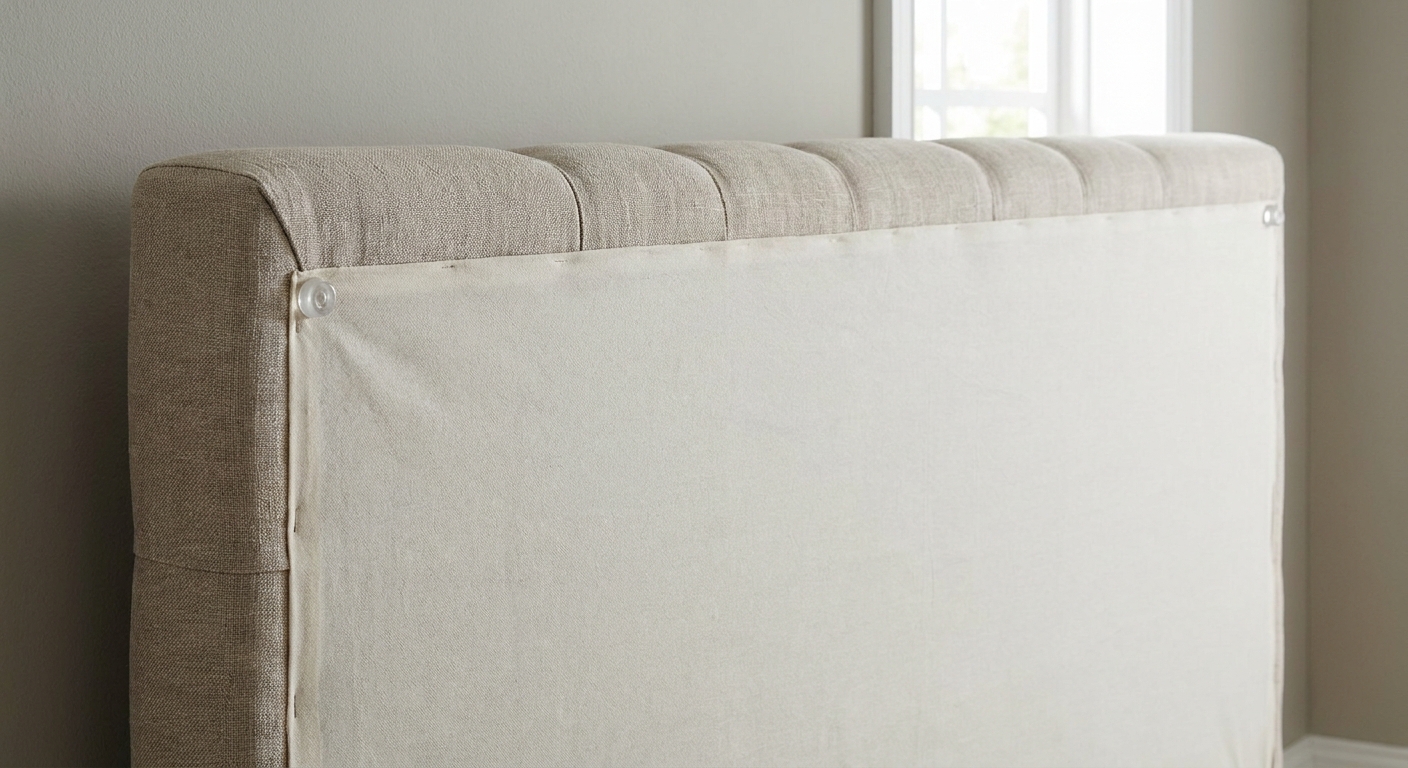
- Clear wall bumpers: small, discreet, and good for point contact.
- A thin felt strip: can be nearly invisible on the back of a headboard and softens impact.
Option C: Wall anchoring for very tall headboards
If you have a freestanding headboard that is not truly locked to the frame, or a very tall piece that wobbles, anchoring it to the wall can be the safest fix.
This may involve drilling. In rentals, check your lease first. When possible, anchor into studs. If you cannot hit a stud, use anchors that match your wall type (drywall versus plaster) and the load you are asking them to hold. Do not rely on a small, generic drywall anchor for a heavy, top-heavy headboard. If you are not sure what is behind the wall, it is worth calling in a handyman rather than guessing.
Stylist tricks that stop the knocking
Add a thin buffer behind the headboard
If your headboard is a flat panel that sits close, a slim buffer can absorb contact without changing the look from the front.
- Foam strip behind the top edge: especially useful for upholstered headboards that lightly tap.
- Felt along the back perimeter: keeps things quiet and prevents scuffs.
Use a rug (with grip)
A rug under the bed can do two helpful things: it adds friction, and it slightly cushions movement. On slippery floors, that often reduces creep a lot. The one caveat is that the rug itself can slide, so if you try this and still get bed migration, add a rug pad or anti-slip underlay beneath the rug.

If you have an adjustable base or wall-mounted headboard
Adjustable bases and separate, wall-mounted headboards change the mechanics.
- Adjustable base: the base can shift during articulation, especially on smooth floors. Prioritize grippers or cups under the base legs, then add bumpers where the headboard or pillows might contact the wall.
- Wall-mounted headboard: if the headboard is fixed to the wall and the bed frame is moving, treat it like a “bed creep” issue. Create a small gap and stop the frame from sliding so it is not repeatedly tapping the mounted piece.
When the wall is already damaged
If you have dents, chipped paint, or little crescent scuffs where the headboard has been hitting, fix the banging first. Then:
- For scuffs: a gentle cleanser and a soft cloth often removes rubbery transfer marks.
- For dents: lightweight spackle, sanding, and touch-up paint usually does it.
- For repeat impact spots: keep bumpers in place even after you repaint, or the mark will return.
Quick checklist
- Pull the bed forward and confirm where contact happens.
- Add bumpers to the headboard (and wall bumpers if needed).
- Stop bed creep with grippers or cups under the legs.
- Tighten the headboard connection to remove sway.
- Only if necessary, consider a more secure anchoring approach for tall or wobbly headboards.
FAQ
Why does my headboard bang when I sit up?
Most often it is a loose headboard-to-frame connection that allows the headboard to rock backward. Tightening bolts and adding bumpers at contact points usually solves it.
Will felt pads ruin paint?
Quality felt pads generally do not damage fully cured paint when removed carefully, but adhesives vary and matte paint can be delicate. If you are worried, put the pads on the headboard rather than the wall and test one in an unseen spot first.
How far should my bed be from the wall?
Even 1 inch helps. For headboards that flex, 1 to 2 inches plus bumpers is the sweet spot in most rooms.
My headboard is upholstered. What should I use?
Clear rubber bumpers or felt pads placed on a hard back surface work well. If the back is fabric-covered and you cannot find a solid spot, adhesion can be unreliable. In that case, attach a small smooth plate or strip to the back (following the headboard manufacturer’s guidance), then place the bumpers on that hard surface. Strap-on pads or Velcro solutions can also work if you want something removable.
What if I fixed the banging and now I notice squeaks?
That is common. Once the thud is gone, smaller noises stand out. Squeaks usually come from slats, bolts, or joints and need a different set of fixes than wall impact.