Stop Interior Doors From Slamming

Clara Townsend
Clara Townsend is an interior stylist, vintage furniture enthusiast, and the creative voice behind Velvet Abode. With over a decade of experience transforming both cramped city apartments and sprawling fixer-uppers, she believes that a beautiful home is built on personal stories rather than massive budgets. When she isn't hunting for the perfect brass sconce at a local flea market, she can usually be found rearranging her living room for the third time this month.
There are few apartment sounds more startling than a door that bangs shut like it is mad at you. It is jarring, it can mark up paint and trim, and if you share walls, it can turn into a neighborly stress spiral fast.
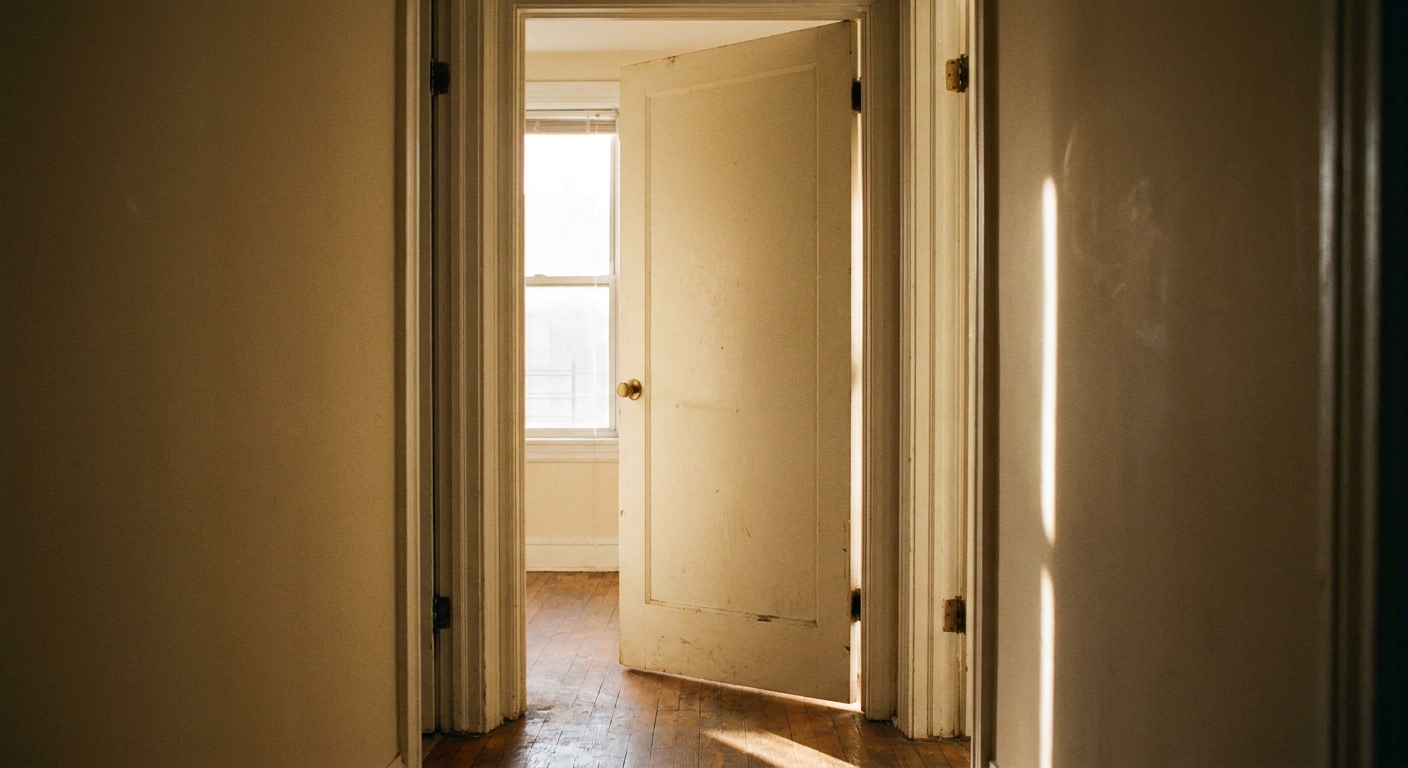
The good news is that most interior door slams come from a small set of causes: the door is closing too freely at the hinges , the latch is pulling it in with extra enthusiasm, or air pressure is giving it a little shove. You do not need to replace the door or drill into anything to make a big difference.
Why doors slam
If you can understand the “why,” you can pick the gentlest fix instead of throwing random pads at every surface.
- Low hinge friction: Many modern butt hinges swing very freely. Add a slightly unlevel door or a tiny draft and it is basically a pendulum.
- Air pressure and drafts: HVAC turning on, a window open, or another door closing in the same room can create a pressure change that pulls a door shut.
- Seasonal movement: In humid months, wood doors and frames can swell, then shrink back when it is dry. This can change how quickly the door “catches” and how hard it hits.
- Latch pull: If the latch and strike plate meet at an angle, the latch can tug the door that last half-inch with a snap.
Fast renter-friendly fixes
1) Felt pads: tiny, cheap, surprisingly effective
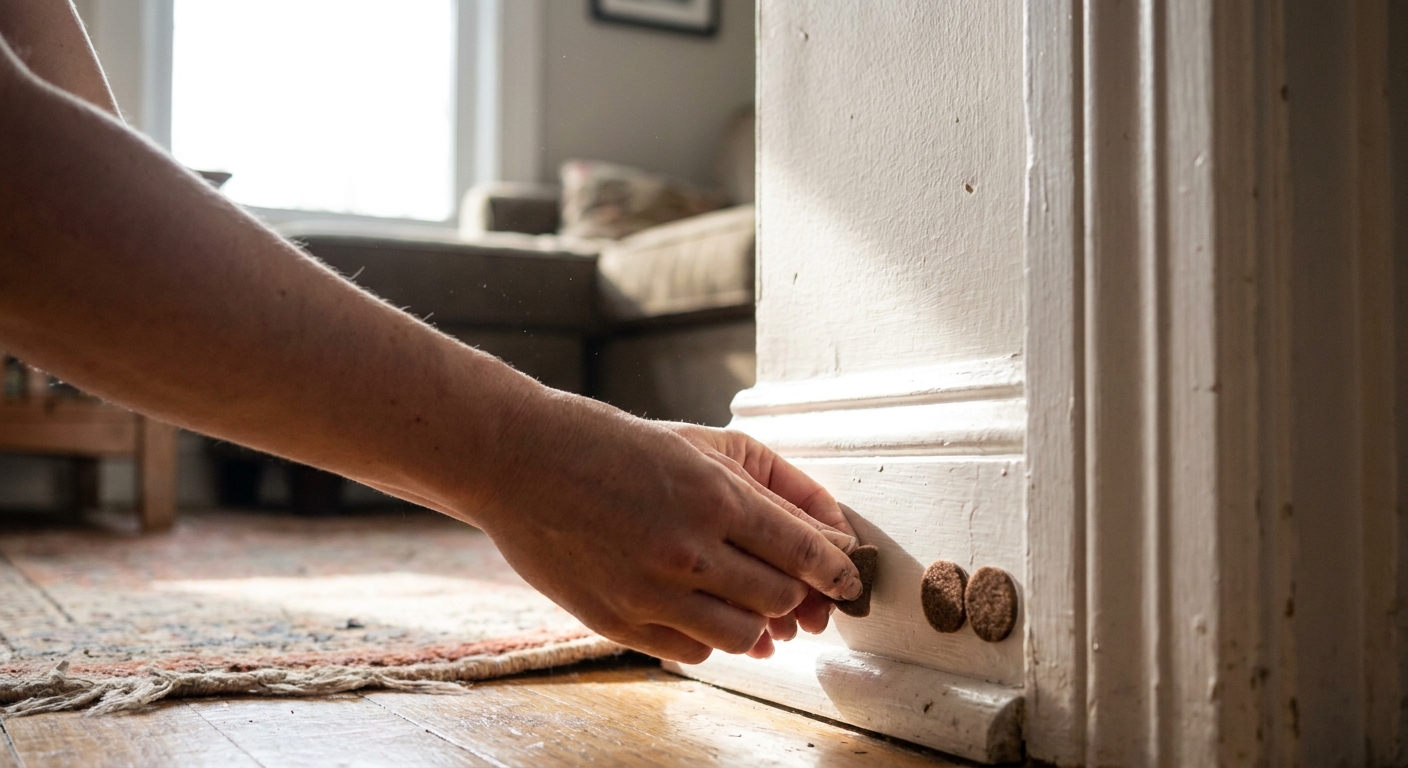
Felt pads are my favorite “coffee money” solution because you can test placement in minutes and adjust until the close feels soft. Look for small, self-adhesive felt circles or squares.
Where to place them:
- On the door stop molding: Place one pad where the door first touches the stop, usually near the latch side around handle height. Add a second near the top corner if needed.
- Behind the strike area: If the door rattles after closing, a small pad on the stop near the latch can take up the micro-gap.
Clara tip: Clean the paint with a little rubbing alcohol first. Adhesive pads fall off fastest when they stick to hand oils or dust.
2) Soft, no-wall-contact door stops
If your door swings and hits a wall or baseboard before it slams, you need a stop that absorbs impact without punching a dent in drywall.
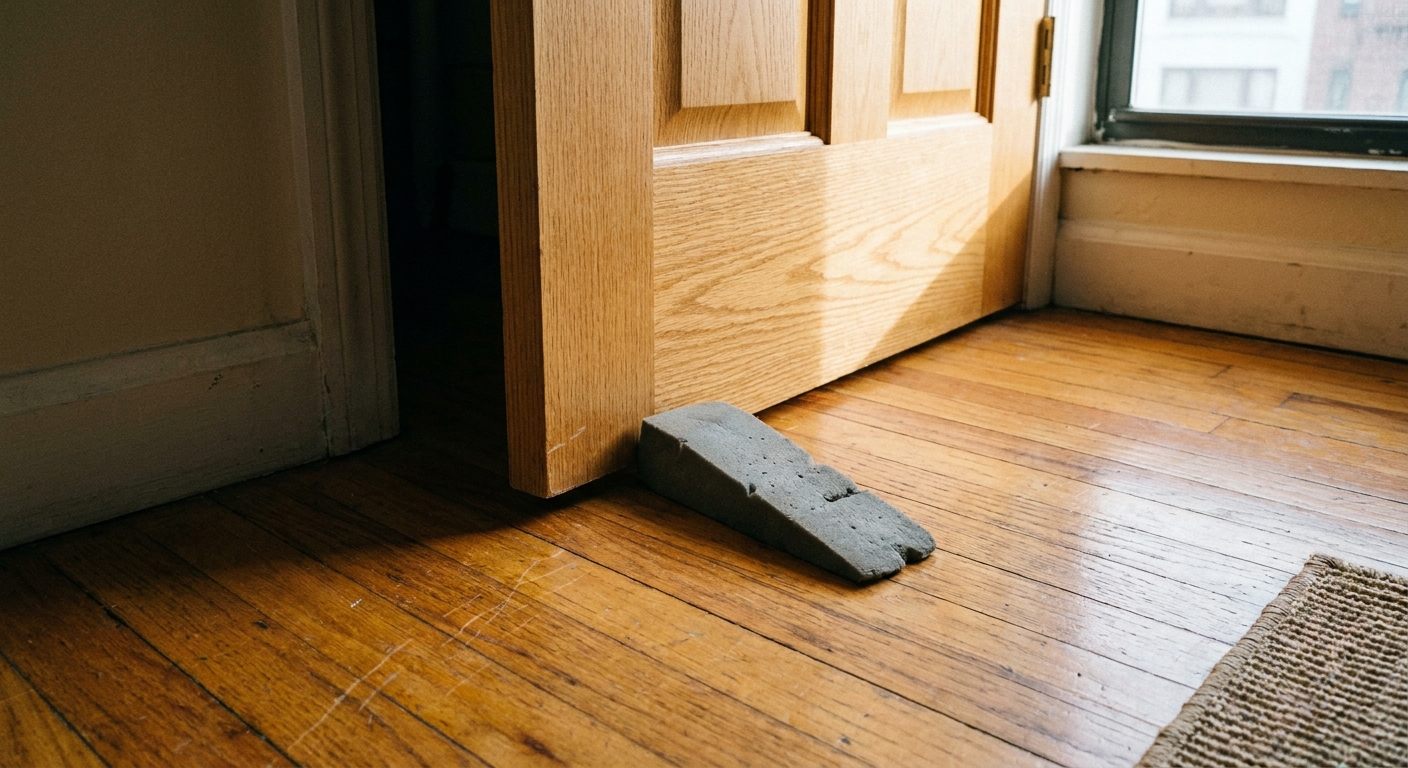
- Foam wedge door stop: Slides under the door, stops movement by friction. Great for bedrooms and offices.
- Over-the-knob foam bumper: A thick foam ring that sits behind the knob and cushions if it hits a wall. Works only if the knob is the contact point.
- Hinge-side pinch guard (foam or silicone): Often sold as a kid-safety item. It can also limit how far the door can swing so it never reaches “slam speed.”
The bent hinge pin trick
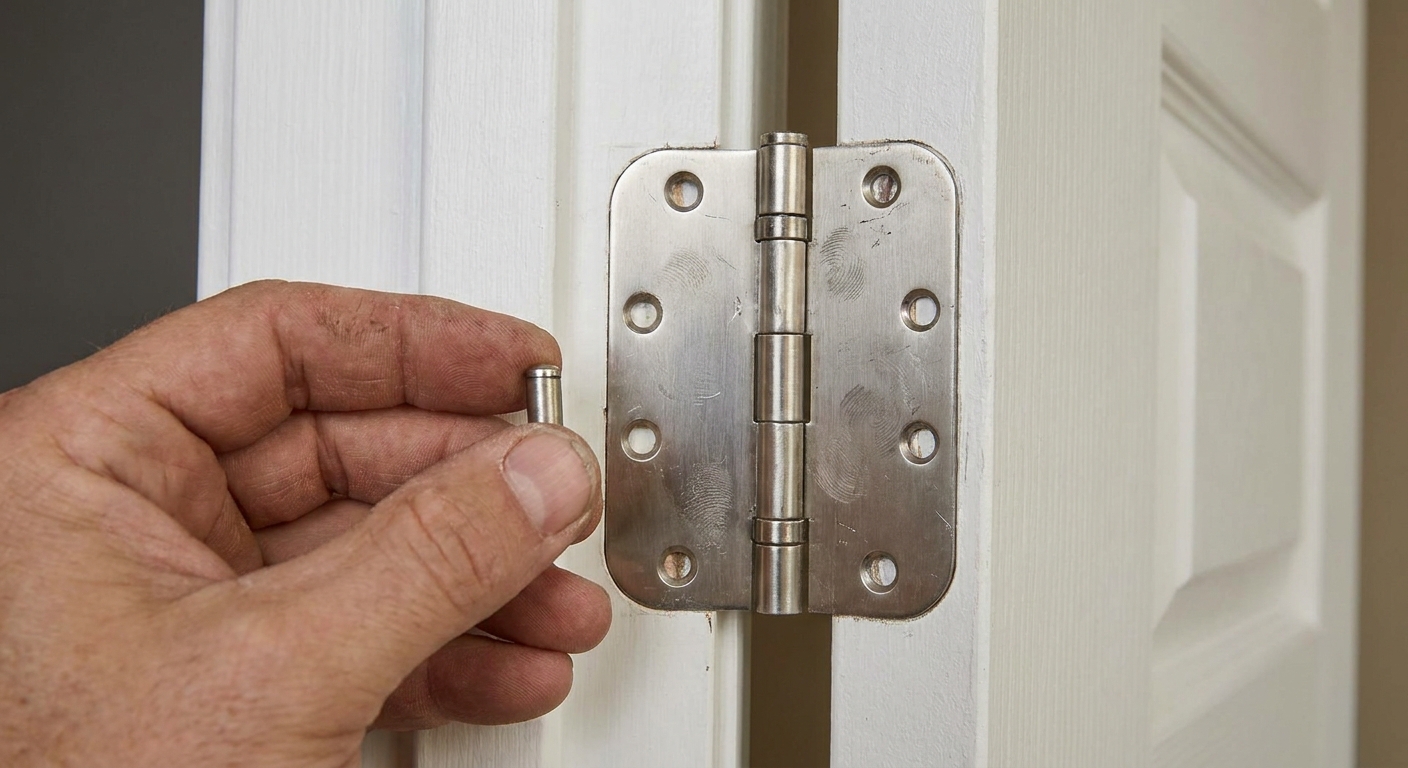
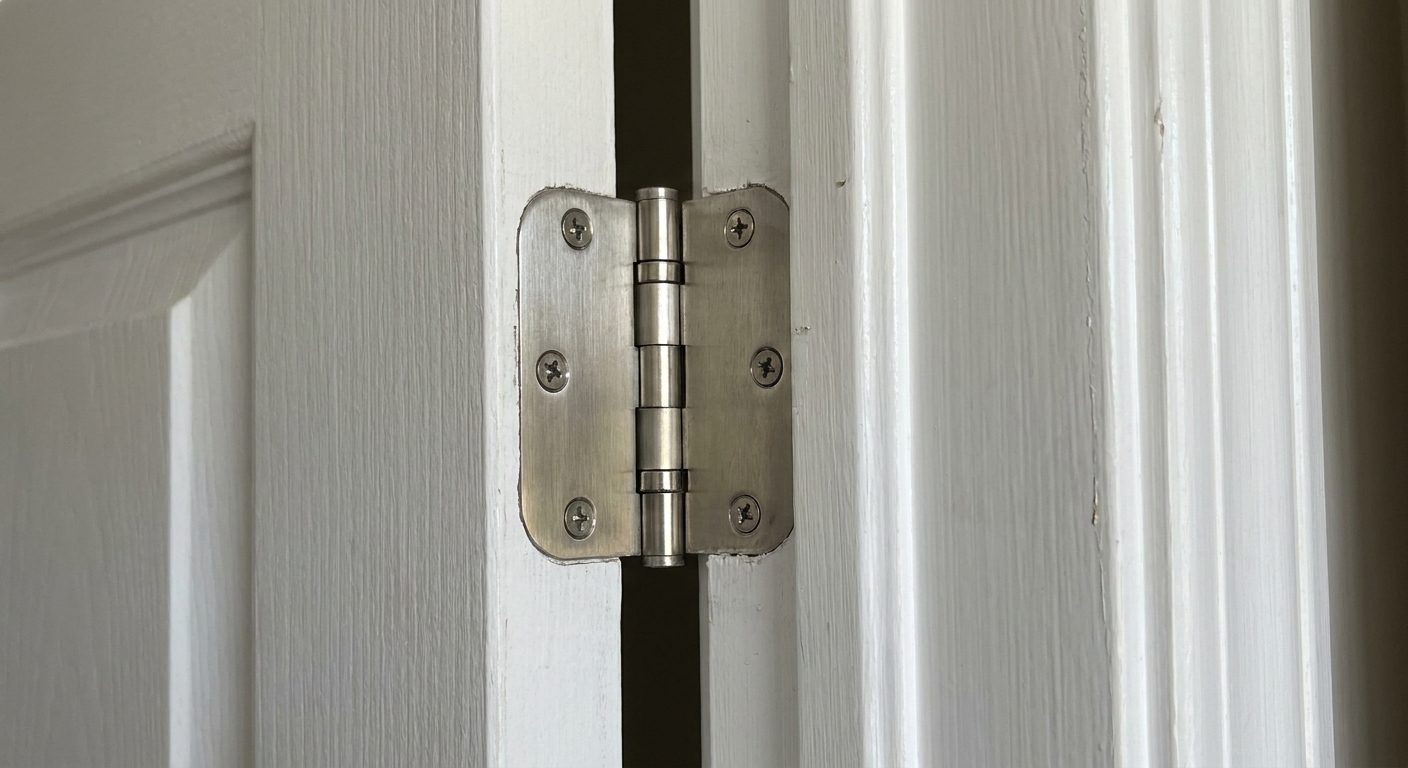
If you have a typical interior door, you probably have standard butt hinges with a removable hinge pin. When a door swings too freely, the classic carpenter move is simple: put a tiny bend in the hinge pin so the hinge has a bit more resistance. That little bit of friction slows the door so it cannot build momentum.
This is not new hardware, it is not a gimmick, and it can be reversed by swapping in a fresh hinge pin if you ever need to.
Check your hinges first
- If you can see a hinge pin head at the top, you are likely in business.
- If the hinges are painted over, you can still often remove the pin, but go slowly so you do not chip paint .
- If you have spring hinges or self-closing hinges, skip this and jump to the closer alternatives section.
How to do it (renter-safe steps)
- Support the door: Keep it closed or mostly closed so it is stable.
- Tap the pin up: Use a small nail and a hammer, or the tip of a screwdriver. Tap from the bottom of the hinge pin upward, then pull it out.
- Make a micro-bend: Lay the pin on a hard surface (like concrete, a brick, or a sturdy vise). Tap the middle of the pin once or twice with a hammer. You are not trying to curve it like a banana. You want a barely-there bend you can almost talk yourself out of seeing.
- Reinsert the pin: Tap it back down gently until fully seated. If it is hard to start, the bend is probably too much. Pull it out and straighten it slightly.
- Test the swing: If you need more slowdown, repeat with one more light tap. Most doors only need the top hinge pin adjusted.
What if the door squeaks? A little added friction can reveal squeaks that were already brewing. Use a dry lubricant like graphite if you can. Avoid oily sprays that drip onto paint or flooring.
Small hinge checks
Sometimes you can calm a slam by fixing the boring stuff.
Tighten what is loose
Loose hinge screws can make the door sit slightly off, causing it to swing on its own.
- Check all hinge screws. Tighten by hand, not with a drill set to full power.
- If a screw spins without tightening, swap it for a slightly longer screw only if your lease allows. Otherwise, ask maintenance.
Skip the pliers method
You may see advice online about squeezing hinge knuckles with pliers to add friction. In a rental, I do not recommend it. It can mar the finish, misalign the door, and create new problems that are harder to undo than a simple hinge pin adjustment.
Soft-close options
If you want something that feels more controlled than pads, there are soft-close options that can be renter-friendly.
Adhesive soft-close add-ons
- Adhesive soft-close door dampers: Small devices that mount on the frame and catch the door near the end of its swing. Choose versions designed for wood trim and removable adhesive.
- Silicone bumper strips: Clear strips that stick to the stop molding and create a cushioned landing zone. Subtle and easy to remove.
Patch-test first: Some adhesives can lift old paint. Test behind the door where it is not visible.
Magnetic catch (when the latch snap is the issue)
If your door slams because the latch is “grabbing,” a light-duty magnetic catch can reduce the need to push the door hard. Many require screws, so for rentals, this is best as a maintenance request rather than a DIY.
Seasonal changes
Doors are moody. Not emotionally, structurally. A humid summer can make a door slightly heavier and tighter against the frame, then a dry winter can shrink things just enough that the door suddenly swings freely and builds speed.
If slamming is new and seasonal:
- Start with felt on the stop since it is easy to remove when the season shifts.
- Try the bent hinge pin trick next if the door is basically free-falling shut.
- Check for drafts . If your HVAC is blasting, a simple door draft stopper can calm the airflow that is “pushing” the door.
- If the door is also sticking or rubbing, do not force it. That is a different issue and usually needs hinge tightening or a maintenance adjustment.
Troubleshooting checklist
If the door slams even with a tiny nudge
- Add a felt pad on the stop at handle height.
- Do the bent hinge pin trick on the top hinge first.
- Check if a vent is blowing directly toward the door.
If the slam happens at the very end, right before latching
- Add felt to the stop near the latch side.
- Check strike plate alignment. If it looks off, request maintenance rather than filing metal yourself.
If the door hits the wall and bounces
- Use a foam wedge or an over-the-knob bumper.
- Avoid hard, screw-in wall stops unless your lease allows it.
Shared-wall etiquette
I love a beautiful home, but I also love not being the person whose hallway door can be heard three units over. If you share walls, a few small habits can help while you work on the hardware side.
- Close with your hand on the knob: It slows the final inch and reduces the latch snap.
- Mind the “draft effect”: If you open a window, doors can start moving on their own. Use a wedge temporarily.
- Late-night courtesy: Add the softest solution you can near bedrooms, like a felt pad on the stop plus a small soft-close damper if needed. That combo tends to sound more like a gentle thud than a knock.
If you feel awkward bringing it up with housemates or neighbors, blame the building. “The pressure in this place makes the doors slam, I’m adding little pads this weekend” is friendly, true, and non-defensive.
What I would do
If you want the simplest path with the least fuss, here is my personal order of operations:
- One felt pad on the door stop at handle height.
- If the door still swings like a pendulum, do the bent hinge pin trick on the top hinge.
- If the wall is getting hit, add a foam wedge or over-the-knob bumper.
- If nothing helps, submit a maintenance request. Mention airflow, alignment, and that the door is slamming hard enough to risk damage.
Quiet doors are one of those small-home luxuries that feel like exhaling. And in a rental, the best fixes are the ones that work beautifully, then disappear without a trace when you move out.