Stop Cats From Scratching Sofa Corners

Clara Townsend
Clara Townsend is an interior stylist, vintage furniture enthusiast, and the creative voice behind Velvet Abode. With over a decade of experience transforming both cramped city apartments and sprawling fixer-uppers, she believes that a beautiful home is built on personal stories rather than massive budgets. When she isn't hunting for the perfect brass sconce at a local flea market, she can usually be found rearranging her living room for the third time this month.
There are few sounds more personally offensive than the little rrrrrip of a cat claw catching the exact corner of your sofa you look at all day. And the annoying part is that your cat is not being “bad”. They are acting on normal instincts: marking territory, stretching shoulders, claw maintenance, and releasing a bit of stress.
The good news is you can absolutely stop corner scratching without turning your living room into a fortress. The trick is to pair behavior help (give them a better place to scratch) with physical protection (so the sofa stops being rewarding).
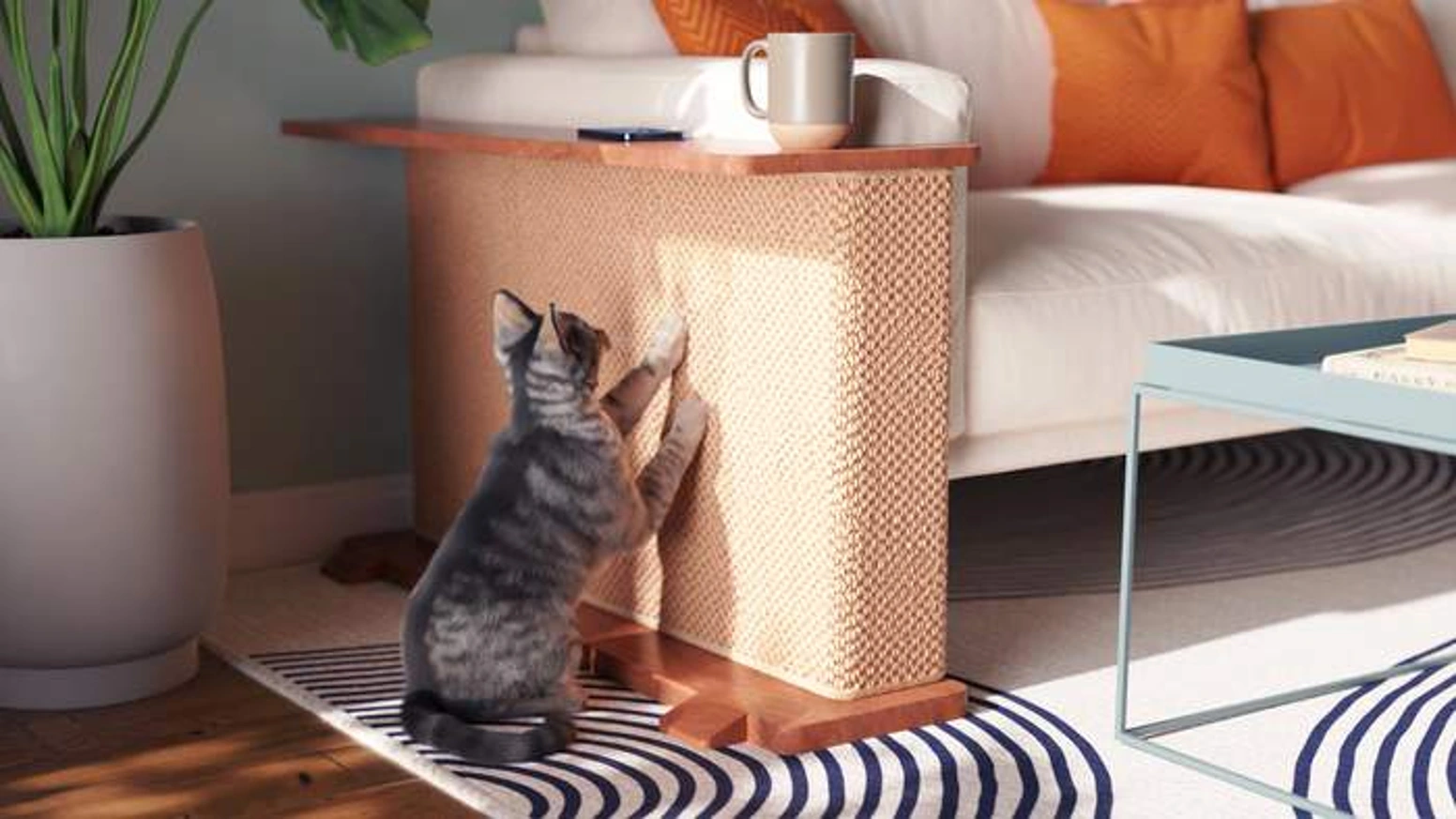
Velvet Abode philosophy: We are not here to fight the cat. We are here to make the sofa boring and the scratcher irresistible.
Why corners win
Corners check every box a cat wants in a scratching spot:
- They are vertical and stable, perfect for a full-body stretch.
- They are high-traffic, which makes them great for scent marking.
- They have satisfying texture, especially woven fabrics that “grab” a claw.
- They become a habit. If scratching the corner feels good once, your cat will come back.
So the goal is not just “stop scratching”. The goal is “give a better corner” right next to the current one, then protect the original while the habit fades.
Start here: build a scratch station at the problem corner
If you take only one thing from this article, let it be this: place the scratcher where the scratching is already happening. Many cats do not generalize well in training. A perfect scratching post across the room can feel unrelated to the sofa corner they love.
Placement that works
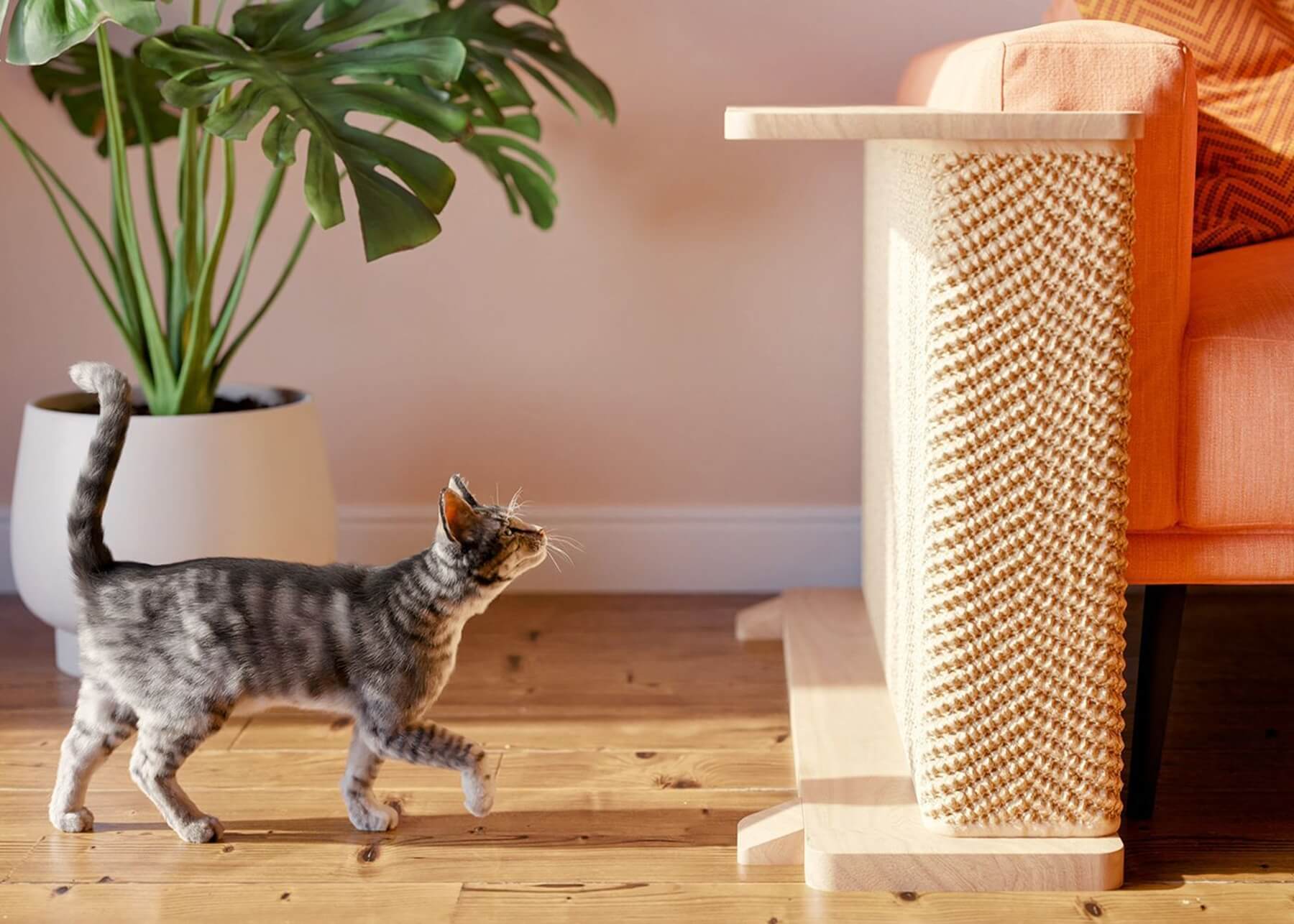
Choose the right scratcher shape. If the cat is using a sofa corner, they often want a tall vertical scratcher with a heavy base and no wobble.
Height tip: aim for tall enough for a full stretch. For many adult cats, that is often around 28 to 32 inches (70 to 80 cm), but taller is fine if it stays stable.
Put it flush with the corner. Place the post so it “covers” the corner from the cat’s viewpoint, almost like it is guarding it.
Make it the best seat in the house. Sprinkle catnip (if your cat responds to it), or rub a little silvervine on the scratcher. Praise calmly when they use it.
Protect the sofa immediately. Use a temporary barrier, tape, or a corner guard right away so the sofa stops paying out.
After 2 to 3 weeks, you can try scooting the scratcher an inch at a time to a more aesthetic spot if needed. Not every cat will allow this, and that is okay.
Training and deterrents that do not backfire
Deterrents work best when they are paired with an approved scratching option. If you only make the sofa unpleasant, many cats simply pick a different forbidden object.
Instead of yelling or spraying
- Interrupt softly, redirect quickly. If you catch them scratching the sofa, make a brief sound (a clap or “ah-ah”), then immediately guide them to the scratcher and reward with praise or a treat.
- Catch the “about to scratch” moment. Many cats sniff the corner first. Redirect at the sniff, not mid-scratch.
- Reward the scratcher for a while. A tiny treat right after using the post can change habits faster than you think.
Deterrents that are usually safe and effective
- Double-sided furniture tape. Often my top recommendation for fabric sofas. Cats dislike the sticky feel. It is temporary, but very effective while you build the new habit.
- Clear plastic corner shields or panels. Great for strong scratchers and for smooth materials like leather and vinyl where tape can be risky.
- Scent deterrents, used carefully. Some cats avoid citrus scents. Do not spray unknown mixtures on upholstery. Test any pet-safe product on an inconspicuous area first.
Extra support for stress scratching
If scratching spikes during changes (new baby, move, construction, new pet), a vet-recommended feline facial pheromone diffuser or spray can help some cats feel more settled. Think of it as an add-on, not a replacement for a good scratch setup.
A note on claw caps and declawing: Soft nail caps can reduce damage for some households, but many cats dislike them and they require upkeep. Declawing is a medical amputation and is not recommended by most veterinary organizations due to pain and behavior risks. If your cat seems frantic or destructive, it can help to talk to a veterinarian about stress, pain, and enrichment.
Corner protection that works
Even with the best training, you want a physical pause between claws and upholstery while the habit is changing. The best protection depends on your sofa material.
Quick protection options
- Clear corner protectors (plastic shields). Usually attach with twist pins (fabric only) or removable adhesive.
- Double-sided anti-scratch tape sheets. Flexible and nearly invisible from a few feet away.
- Slipcover or arm cover. A washable layer is wonderful if you are also battling fur and biscuits.
- Sisal corner wrap. A more design-friendly option: wrap a scratching material around the corner so the cat can scratch, but the sofa stays safe underneath.
Pin safety note: If you use twist pins, install them fully flush so there are no sharp points. Place them where humans and pets will not brush against them, and skip pins entirely if you have delicate, loosely woven upholstery.
My styling tip: if you hate the look of clear plastic, choose a pretty throw draped over the arm plus a structured scratcher beside it. The room reads intentional, not “pet proofed”.
Fabric sofas
Fabric is the most common victim because it offers grip. Different weaves behave differently, which matters when you choose protection.
Common damage
- Looped fabrics (like some bouclés) can snag when claws catch loops.
- Tight weaves can fuzz or pill from repeated abrasion.
- Velvet and microfiber can show directional marks where the nap is disturbed.
Best prevention
- Double-sided tape on the exact scratching zone, refreshed as needed.
- Clear plastic corner guards with twist pins if your sofa allows tiny pinholes (often great for sturdy woven upholstery).
- Arm covers or a fitted slipcover if your cat is persistent or you have multiple cats.
What to avoid
- Harsh spray repellents without testing. Some can discolor or leave rings.
- Anything that encourages pulling, like loose woven throws that snag easily right where your cat scratches.
Leather sofas
Leather is tricky because it can look pristine for months and then suddenly show obvious scratches. Some cats scratch leather less than fabric because it is slippery, but others learn they can dig in at seams or corners and turn it into a habit.
Common damage
- Surface scratches that lighten the color (especially on darker leather).
- Gouges if claws puncture the top coat.
- Seam picking at the arm edge where leather is thinnest.
Best prevention
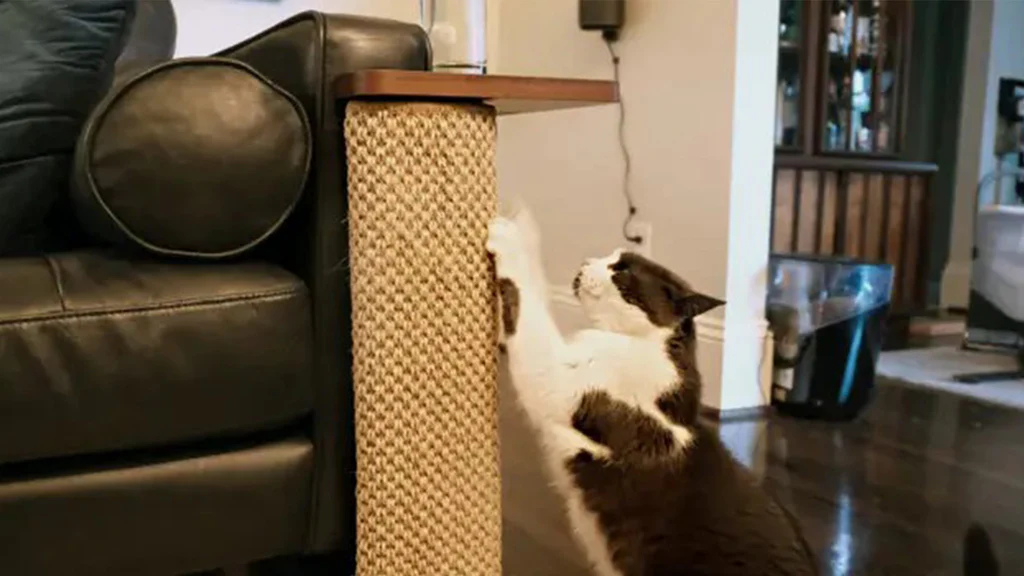
- Freestanding corner shields or plastic panels that do not rely on adhesive.
- A tall, heavy scratcher right next to the arm so the cat can stretch fully.
- Trim claws regularly (or have a groomer or vet tech help). Shorter claws do less damage even during accidental contact.
What to avoid
- Adhesive tapes on leather. Even “removable” adhesives can mark or lift finishes, especially on aniline or softer leathers. If you must try something, test first in a hidden spot and avoid direct adhesion when possible.
- Oils and DIY mixes as “deterrents”. Many household oils can stain or alter leather’s finish.
Vinyl and faux leather
Vinyl and faux leather are often marketed as “pet friendly” because they wipe clean. But claws can puncture them, and once punctured, the material can tear more easily.
Common damage
- Punctures that become small tears.
- Peeling or flaking if the top layer is already aging.
- Edge splitting along seams.
Best prevention
- Rigid corner guards that create a physical barrier.
- Slipcovers or arm caps that take the wear instead of the vinyl.
- Place a scratcher even closer than you think, because vinyl corners are often the most “corner-like” spot in the room.
What to avoid
- Heat-based methods near the corner (vinyl can warp).
- Solvent cleaners used as deterrents. They can dry out or damage the surface.
Keep it pretty
I am a vintage girl, which means I care how things look. You can protect a sofa and still keep your space calm and cohesive.
Styling tricks that also help
- Choose scratchers in natural materials like sisal, jute, or wood tones that blend with furniture.
- Use a “landing zone” beside the sofa: a basket, plant stand (pet-safe plant), or small side table can block a corner while still feeling intentional.
- Make the scratch zone cozy. A small rug, a predictable corner setup, and a nearby perch can make the scratcher area feel like “theirs”. If you want to add a soft lamp for ambiance, do it for you first, not because lighting alone is a proven scratching fix.
- Rotate textures. If your cat loves the sofa’s weave, offer a scratcher with similar resistance (sisal is often the winner).

If they ignore the scratcher
If your cat snubs the brand-new scratch post like it personally offended them, try these quick fixes.
Common issues
- The post wobbles. Many cats avoid instability. Choose heavier, taller posts or brace it beside the sofa.
- It is too short. Many cats want a full stretch. Taller is better.
- Wrong texture. Some prefer sisal, some prefer cardboard, some prefer carpet. Offer two options near the problem corner for a week and see who wins.
- Wrong direction. Some cats are horizontal scratchers. If a vertical post keeps failing, put a flat cardboard scratcher or sisal mat right at the base of the corner (literally where their paws land).
- Wrong location. Move it closer. Yes, closer than that.
- Not enough enrichment. Add play sessions and a window perch. A bored cat scratches more.
If scratching increases suddenly, or your cat seems anxious, it is worth checking in with a vet. Stress, pain, and changes in the home can all ramp up scratching behavior.
What not to do
- Do not punish. Yelling or spraying water can increase anxiety and make the behavior sneakier, not better.
- Be careful with scare tactics. Things like foil or noisy traps can startle cats and may create stress around the sofa or the whole room. Some cats also just walk right over them.
- Do not rely on “one weird spray”. If it is not clearly pet-safe and upholstery-safe, skip it.
7-day plan
Day 1
- Apply temporary protection to the scratched corner (tape or shield).
- Place a tall scratcher flush beside the corner.
Days 2 to 3
- Reward scratcher use with treats or praise.
- Trim claws if your cat tolerates it.
Days 4 to 5
- Add a second scratch option if needed (cardboard lounger or another post, including a horizontal option if that seems to be their style).
- Increase play by 10 minutes a day to reduce stress energy.
Days 6 to 7
- Keep protection on the sofa corner.
- Observe when scratching happens (morning zoomies, after meals) and pre-redirect to the scratcher.
With a consistent setup, many households see improvement within 1 to 3 weeks. Some cats take longer, especially if the corner has been “the spot” for months or years. Consistency wins.
One last cozy reminder
Your cat scratches because your home is home. That is also why you want it to feel beautiful. With a scratch station in the right place, a little protection on the corners, and a few weeks of consistency, you can keep your sofa intact and your cat happy, which is the dream combo.
If you want, tell me what your sofa is made of (tight weave fabric, velvet, leather, vinyl) and whether your cat scratches vertically, horizontally, or along the edge, and I will suggest the most discreet protection setup.