Stop a Sectional From Sliding Apart on Hard Floors

Clara Townsend
Clara Townsend is an interior stylist, vintage furniture enthusiast, and the creative voice behind Velvet Abode. With over a decade of experience transforming both cramped city apartments and sprawling fixer-uppers, she believes that a beautiful home is built on personal stories rather than massive budgets. When she isn't hunting for the perfect brass sconce at a local flea market, she can usually be found rearranging her living room for the third time this month.
If your sectional keeps creeping open on hardwood, laminate, vinyl plank, or tile, you are not imagining it. Smooth floors plus a little everyday momentum (sitting, flopping, vacuuming, kids launching themselves like tiny gymnasts) can turn a cozy L shape into two awkward islands.
The good news is that most “drifting apart” problems come down to one of three things: the connectors are not fully engaged , the sofa’s feet or base are too slick on your floor, or something in the frame or legs has loosened over time. Let’s fix it in a way that stays put and still looks pretty.

What kind of drift is it?
A sectional can separate in a few different ways, and the best solution depends on what you are seeing.
- Gap at the seam: the two pieces pull away from each other, usually at the inside corner.
- Whole sectional slides: the entire arrangement creeps across the room over time.
- One piece moves, one stays: common when one side sits on a rug edge or different floor material.
- It locks, but still wiggles: connectors are engaged, but worn, bent, undersized, or mounted into loose wood.
- It feels wobbly: loose legs, an uneven floor, or a slightly sagging base can make the sectional “walk” apart.
Once you know which one you have, you can stack solutions. The most reliable combo is a solid connector plus traction under the legs or frame.
Tools and materials
You may not need all of this, but having it on hand makes the fix faster.
- Screwdriver or bit set (Phillips, square, or Torx depending on your sofa)
- Measuring tape (for hole spacing)
- Flashlight
- Rubber or silicone furniture grippers (non-marking)
- Rug pad (if using a rug)
- Firm shims or adjustable furniture levelers
- Wood glue plus toothpicks, or a small dowel (for stripped holes)
- Drill and small pilot bit (optional, but helpful)
Safety note: Sectional pieces are heavier than they look. If you are pulling sections apart or lifting to engage connectors, grab a second person to protect your back and your floors.
Check and engage the connectors
Most sectionals are designed to be held together by hidden hardware. If yours is drifting, start by assuming the connectors are not fully seated, slightly misaligned, or mounted into wood that has loosened.
Common connector types
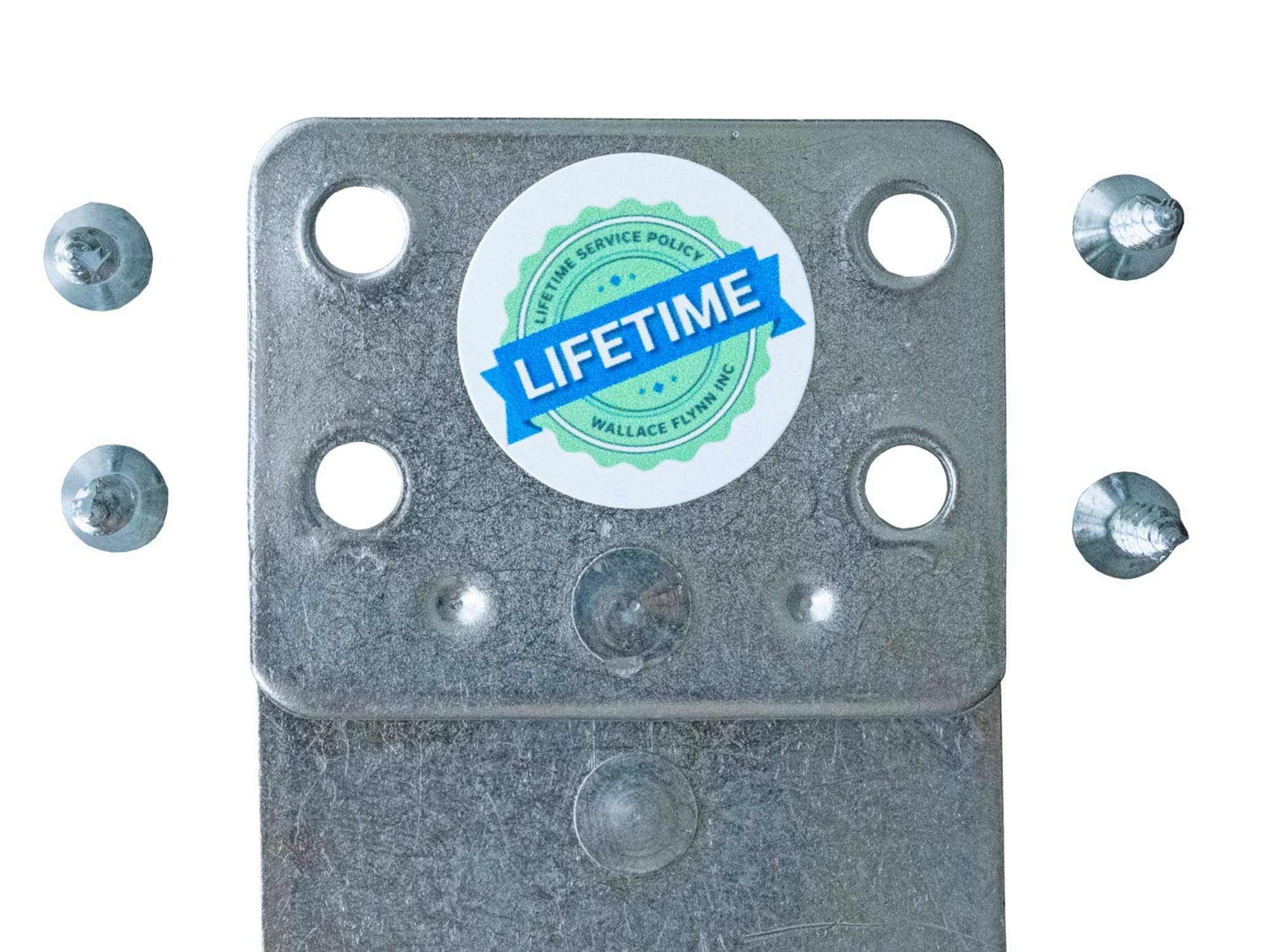
- Interlocking plates (male and female): two flat metal plates that slide together from above or from the side.
- Claw clips: metal “teeth” that grab into a receiving bracket.
- Hook and pin: a hook drops over a pin or bar on the other piece.
- Latch or bolt systems: less common, usually on higher-end modular sectionals.
- Under-seat brackets or straps: some modular sectionals hide brackets under the cushions or use strap style connectors. You may need to remove seat cushions to access them.
Quick hardware checklist
- Pull the pieces apart and look underneath: confirm both halves of the connector are present and mounted to solid framing.
- Tighten any screws: use the right bit so you do not strip them.
- Check alignment: if the plates sit at different heights, they will not seat correctly. Even a few millimeters matters.
- Inspect for bending or cracking: a small bend changes how the connector locks.
- Look for looseness beyond the connector: loose leg brackets, a wobbly corner block, or a flexy rail can also let the seam open up.
Pro tip: If you have to muscle the pieces together, lift the legs slightly off the floor while you align and drop the connectors into place. Dragging heavy upholstery across hardwood is exactly what creates slow drift.
When to replace connectors
Connectors are small, but they do a big job. Replace them if you notice any of the following:
- Metal is bent, cracked, or the “hook” no longer holds tension
- Screws will not stay tight, even after retightening
- The pieces lock briefly but pop apart with normal sitting
- You are missing one half of the connector on one section
How to buy replacements
- Match the existing type: interlocking plates should be replaced with the same style whenever possible.
- Measure hole spacing: take a quick photo and measure the distance between screw holes on the old plate.
- Upgrade thoughtfully: thicker steel plates can help on heavy or high-traffic sectionals.
- Choose screw length carefully: longer is not always better. Match screw length to the thickness of the frame rail so you do not punch through wood or into upholstery, webbing, or springs. When in doubt, remove one screw and measure it.
- Pre-drill pilot holes: especially in hardwood frames, to prevent splitting and help screws bite cleanly.
If your sectional is under warranty, check with the manufacturer before swapping hardware. Many brands will send compatible replacement connectors.
Fix stripped screw holes
If a screw spins or will not tighten, the wood underneath is usually stripped. This is common and very fixable.
Quick repair options
- Toothpicks and wood glue: remove the screw, add a few toothpicks dipped in wood glue into the hole, snap them flush, let dry, then re-drive the screw.
- Small dowel plug: for a more durable fix, glue in a small dowel, let dry, then pre-drill a new pilot hole.
- Slightly larger screw: works if the frame wood is solid. Do not jump sizes too aggressively, and still confirm length is safe.
Once the connector is mounted into solid wood again, it is much less likely to pop loose.
Add traction under the feet
Even with perfect connectors, slick floors can let the whole sectional migrate. The simplest fix is friction where the sofa meets the floor.
Felt pads
Felt is lovely for protecting hardwood, but it can also make furniture more glide-y. If your sectional already slides, felt alone is usually not your hero.
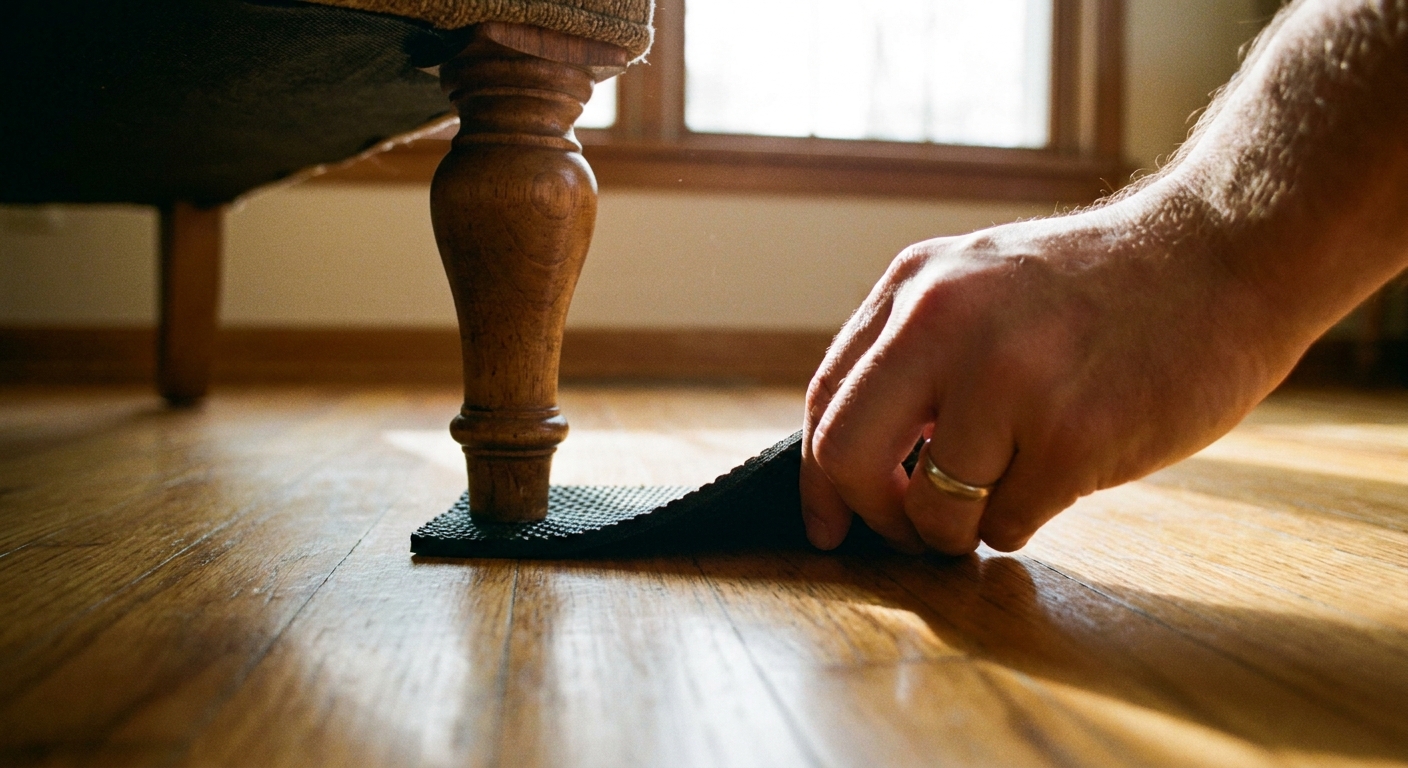
Rubber or silicone grips
Look for non-marking rubber or silicone furniture grips designed for hard floors. They add real grip, but there is one important caveat: some rubber, latex, PVC, and dark dyes can discolor or react with certain finishes over time.
- Use grips if the sectional slides when people sit down or stand up.
- Place them under legs or under the frame corners if your sofa has a continuous base.
- Clean first: wipe the floor and the leg bottoms so dust does not turn your grip pad into a skating rink.
- Test first: try one pad in an inconspicuous spot for 24 to 48 hours before committing, especially on engineered hardwood, oil-finished wood, and luxury vinyl plank.
Felt plus grip
If you want both protection and traction, layer smartly: felt against the furniture, then a thin gripper between felt and floor. Or choose combo pads made for this purpose.
Anchor with a rug
A rug is not just a softness choice. It is a traction system in disguise.
Best rug placement
- Front legs on the rug: Put at least the front legs of both sectional pieces on the rug so they share the same surface.
- Go bigger than you think: If only one piece is on the rug, uneven friction can encourage twisting and drifting at the seam.
- Avoid edges at the seam: Try not to place a rug edge directly under the sectional connection point.
If you have a small rug you love and cannot replace right now, you can still use it. Just be extra intentional about adding grip under the piece that is off the rug.

Use anti-slip pads or mats
There are two different “anti-slip” products that help here, and they do different jobs.
1) Rug pad under the rug
If you are anchoring with a rug, put a quality non-slip rug pad underneath it. This keeps the rug from creeping, which keeps the sectional from creeping.
- For hardwood: choose non-staining pads labeled safe for sealed wood floors.
- For tile or stone: check pad recommendations for your surface and room. In damp spaces, prioritize materials that do not trap moisture.
- Heated floors: if you have radiant heat, only use pads rated for heated floors.
2) Grippy mat under the sectional
If you do not want a rug, you can still add friction by placing a thin anti-slip mat beneath the sectional’s contact points.
- Cut a non-slip mat into smaller rectangles and place them under each leg or under key frame corners.
- Keep mats slightly hidden behind the base so they are not visible from standing height.
- Avoid very soft foam-like mats that compress too much. Compression can allow movement over time.
Note: Always confirm the mat material is floor-safe for your finish, and test in a hidden area first. Some rubbers and plastics can discolor certain finishes if left in place for long periods.
Fix wobble and uneven floors
If your sectional rocks even a little, it can slowly “walk” itself apart. This is especially common in older homes and apartments where floors slope just enough to be annoying.
What to do
- Level the legs: If your sectional has adjustable feet, use them. If it does not, add firm shims under the short leg.
- Check the connector height: If one piece sits lower, the connector can disengage with normal movement.
- Inspect the leg hardware: loose legs or wobbly brackets make the whole base shift.
- Look for frame looseness: if a corner block is cracked or a rail is flexing, you may need a simple reinforcement (or a furniture repair pro) in addition to new connectors.
Do this in order
If you want the fastest path to a sectional that stays put, do this:
- Engage and tighten connectors: align, lock, and tighten everything underneath (with help if needed).
- Repair stripped holes: toothpicks and glue or a dowel plug, then reattach hardware.
- Replace damaged connectors: bent plates and worn hooks will keep failing.
- Add grip under legs or frame: rubber or silicone grips, not plain felt. Test first for floor compatibility.
- Anchor with a rug and rug pad: get both pieces on the rug if possible.
- Recheck after a week: heavy sitting can settle pads and shift alignment slightly. A quick tighten can make the fix permanent.
Quick FAQ
Why does my sectional separate even with connectors?
Usually because the connectors are not fully seated, are misaligned by a few millimeters, or the metal is worn. It can also happen when the base is slick on the floor, when a leg mount is loose, or when part of the frame has started to wobble.
Will double-sided tape work?
On floors, I avoid it. Adhesives can leave residue or damage finish. If you want a temporary solution, choose floor-safe, removable gripper pads instead.
What if my sectional has no connectors?
Some modular sectionals rely on weight and friction alone, or hide brackets under the seats. Check under the cushions and along the underside for attachment points. If there truly are none, adding a manufacturer-approved connector kit (if available) plus grippers under the base is your best bet.
One seamless seat
A sectional should feel like one generous, welcoming landing spot, not two pieces that bicker every time someone sits down. Once the connectors are solid, the mounting holes are snug, and the base has real traction, the whole room relaxes. Your pillows stay styled, your throw blanket stays draped, and your living room stops playing furniture Tetris when you least want it.