Sticky Deadbolt Key Hard to Turn

Clara Townsend
Clara Townsend is an interior stylist, vintage furniture enthusiast, and the creative voice behind Velvet Abode. With over a decade of experience transforming both cramped city apartments and sprawling fixer-uppers, she believes that a beautiful home is built on personal stories rather than massive budgets. When she isn't hunting for the perfect brass sconce at a local flea market, she can usually be found rearranging her living room for the third time this month.
There is a particular kind of stress that comes from standing in your hallway with groceries cutting into your fingers while your deadbolt key decides to play hard-to-get. Before you panic or start forcing it, take a breath. A sticky deadbolt usually comes down to one of three things: the lock cylinder is binding , the deadbolt is not lining up with the hole in the frame, or the door and frame have shifted a little with time and weather.
This guide keeps you on the safe, tenant-friendly side of troubleshooting. You will learn what you can try yourself, what you should not do, and exactly when it is time to call building management or maintenance.
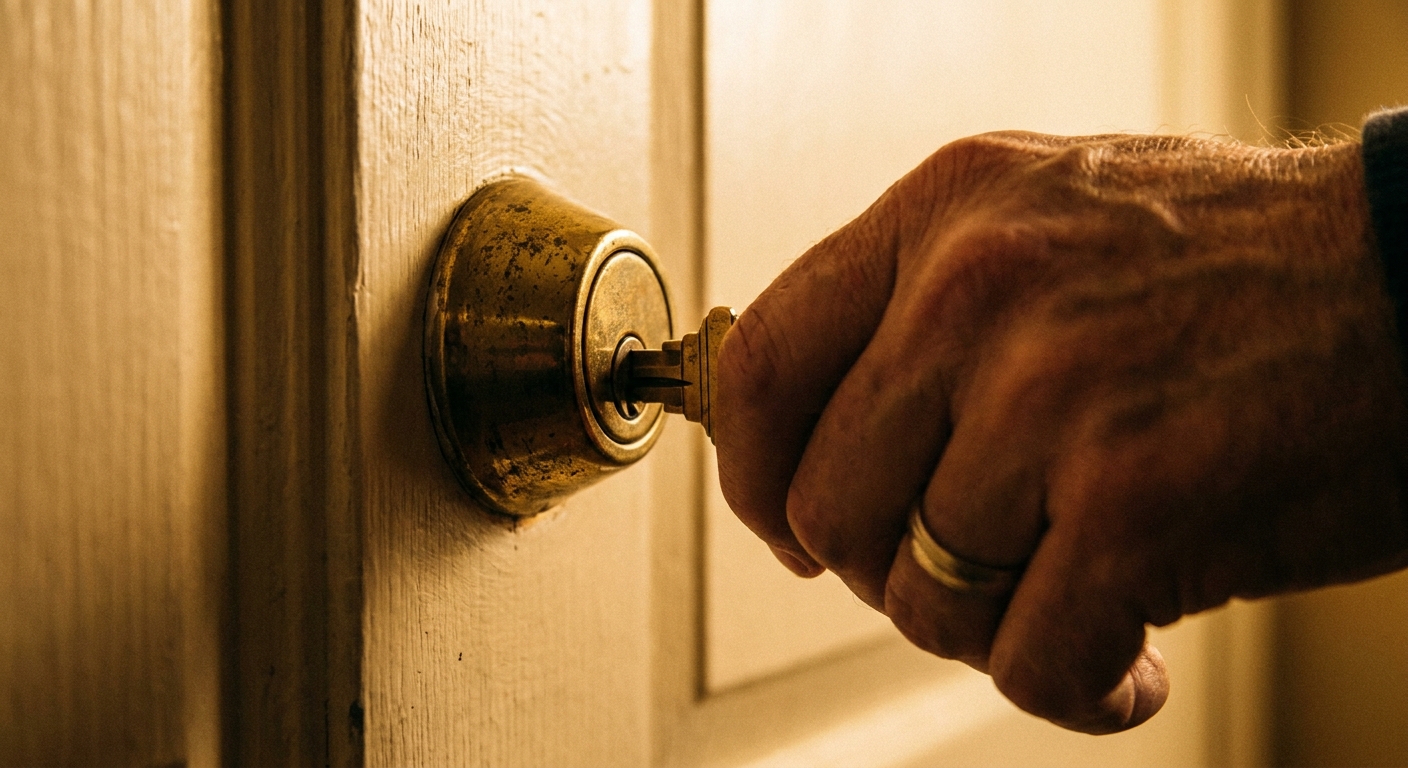
Quick safety note
If this is your main entry door and the key is already struggling, do not force it. Forcing can snap the key in the cylinder or jam internal pins, which turns a small annoyance into an urgent lockout.
- If the door or frame appears fire-damaged, or the door is part of a fire-rated assembly, stop and call management. Do not modify anything.
- If you cannot secure the door (deadbolt will not extend or retract), treat it as a security issue and notify maintenance right away.
- If you are locked out, call the building’s emergency maintenance line first if you have one.
The 3 most common causes
Deadbolt problems can feel mysterious because the symptoms overlap. Use these small tests to narrow it down without taking anything apart.
1) Cylinder binding
What it feels like: The key is hard to insert, hard to turn, or turns with a gritty, hesitant drag even when the door is open.
Common triggers: dust and grit inside the cylinder, a dry cylinder, a worn key, or a cheap copy that does not match the original cuts cleanly.
Clue: If the deadbolt is difficult with the door open, alignment is not the main problem.
2) Misaligned strike plate
What it feels like: The key turns, then hits a hard stop or requires extra muscle only at the moment the bolt should extend into the frame.
Common triggers: the strike plate shifted slightly, the door settled, hinges loosened, weatherstripping is pushing the door off-center, or the building moved with seasonal changes.
Clue: If the deadbolt turns easily when you gently push or pull the door while turning the key, this is your likely culprit.
3) Door and frame movement
What it feels like: Everything works better on dry days and worse on humid days. The deadbolt may extend, but it feels tight and stubborn.
Common triggers: humidity and temperature changes (wood can swell, weatherstripping can compress, and even metal doors and frames can shift slightly), paint buildup in the bolt hole, or general settling over time.
Clue: The deadbolt behaves differently depending on the weather or time of day, even with the same key.
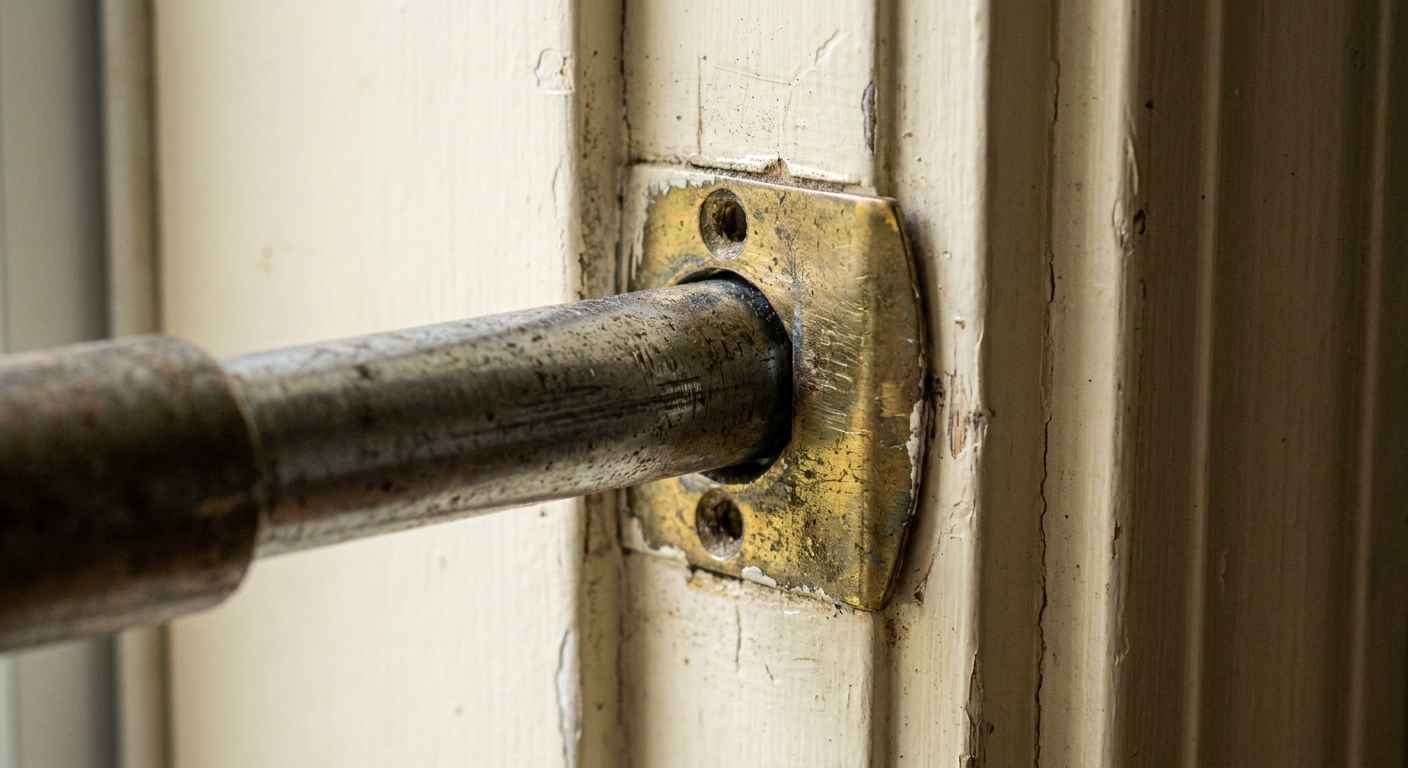
60-second diagnosis
- Test with the door open. Turn the key to extend and retract the bolt while the door is open. If it is still sticky, think cylinder binding or key issues.
- Test with the door closed but not latched. Close the door until it sits in the frame, but do not let the spring latch click. If needed, hold the lever as you close it so the latch stays retracted. Now try the deadbolt. Then gently pull the door toward you and try again, and gently push it inward and try again. If one direction suddenly makes it easy, you are dealing with alignment.
- Try your spare key if you have one. If the spare turns smoothly, your everyday key is likely worn or a bad copy.
These three little checks save you from spraying mystery products into your lock and hoping for the best.
Tenant-safe lubrication
I know it is tempting to grab whatever is under the sink, but deadbolt cylinders are picky. The wrong product can trap dust, gum up pins, and make the problem worse over time.
Best choices for most deadbolts
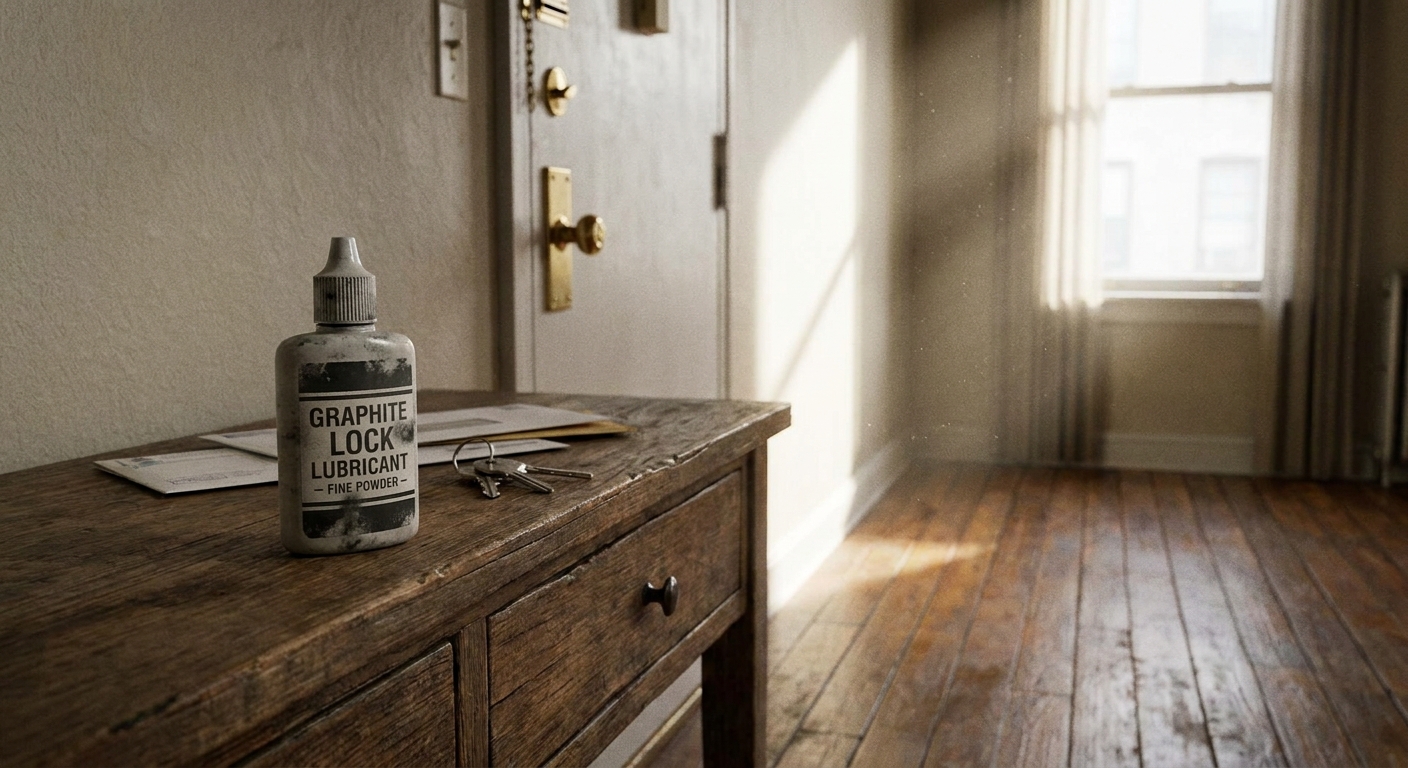
- Lock-specific dry lubricant (often PTFE-based). This is usually the best first choice, especially for modern cylinders, because it is designed to go on light and dry.
- Graphite powder (dry). Often recommended for older pin tumbler locks, but use it sparingly. Graphite can cake over time if it mixes with moisture or old oily residue, so a little goes a long way.
How to apply dry lube neatly
- Wipe your key clean with a dry cloth.
- Apply a tiny amount into the keyway (the slot where the key goes). If your bottle has a tube, even better.
- Insert the key, pull it out, then insert again. Do this a few times to distribute it.
- Turn the key slowly to cycle the bolt several times.
- Wipe off any excess around the cylinder to avoid smudges on your door and hands.
Quick caution: Use the smallest amount that gets results, avoid breathing in any powder or mist, and keep products off painted surfaces.
What to avoid spraying into a deadbolt
- Cooking oils or household oils. They attract dust and can turn into sticky sludge.
- Grease. Too heavy for the fine tolerances inside a cylinder.
- General penetrating oils (like the common ones people grab to “fix everything”). They are often misused as lubricants and can leave residue that collects grit. Note that some brands sell purpose-made lock lubricants, which are different from their general penetrating oils.
If you already used an oily spray and now the lock feels worse, that is a good moment to stop experimenting and call maintenance. It may need cleaning or cylinder replacement.
Alignment checks without tools
If your deadbolt only struggles when the door is closed, try these gentle, reversible steps.
Try the push-pull test
Close the door and, with your non-key hand, apply light pressure:
- Pull the door toward you while turning the key, then try the opposite.
- Lift the knob or handle slightly while turning if your entry set has play. Sometimes the door is sagging a hair.
If one of these makes it smooth, you have confirmed misalignment. That is useful information for maintenance, and it also keeps you from forcing the key.
Check for obvious obstructions
- Look into the strike hole with a flashlight. Paint drips or little chips can partially block it.
- Check weatherstripping for a loose flap that is pushing the door out of position.
- Make sure the knob or lever latch is not sticking. If the latch does not retract smoothly, the door may not sit fully flush, and the deadbolt will fight alignment.
Do not start filing the strike plate or sanding the frame in a rental unless your lease explicitly allows it. That is usually a maintenance job.
Key-copy quality
In vintage-loving homes, I am all about patina. In keys, patina is just wear. A worn key can round off the crisp little peaks and valleys that lift the lock pins to the right height.
Signs your key is the problem
- The key looks visibly rounded or shiny on the teeth.
- The key works better if you jiggle it up and down in the cylinder.
- A spare key works noticeably better.
What to do as a tenant
- Compare your key to the freshest copy you have. If the teeth look different, that matters.
- Try a copy made from the original, not from a copy of a copy. Each generation can lose precision.
- Use a reputable hardware store or locksmith you trust. The cheapest copy is often the one that sticks.
If your building uses restricted or patented keyways, do not attempt unauthorized copies. Ask management for an approved duplicate.
Cold weather note
If it is below freezing and the bolt feels stuck, moisture can freeze in or around the bolt and strike area. Do not use open flame. Your safest move is to call maintenance, especially if you cannot secure the door.
Smart locks note
If you have a keypad or smart deadbolt, binding can still be mechanical, but low batteries or a struggling motor can mimic stiffness. Follow the manufacturer’s guidance on lubrication, and call maintenance if the lock is building-provided.
When to call maintenance
Here is my rule: if a lock problem affects security, consistency, or your ability to exit quickly, it is not a DIY project. It is a maintenance ticket.
Call maintenance immediately if
- The key is bending, cracking, or threatening to snap.
- The deadbolt will not fully extend or fully retract.
- The lock is intermittently failing, especially at night or in cold weather.
- You see visible damage: a loose cylinder, a wobbly deadbolt, or signs of attempted forced entry.
- You have to use two hands and shoulder pressure to make it work.
Submit a routine request if
- Dry lube helped only for a day or two, then the stiffness returned.
- The lock works with the door open but binds when closed (likely strike alignment).
- The issue is clearly seasonal and repeating.
A message you can copy and paste
Use specifics so maintenance arrives prepared:
Hi, my entry deadbolt key is hard to turn. It turns smoothly with the door open, but binds when the door is closed unless I pull the door toward me. I tried a small amount of lock-specific dry lubricant and it helped briefly. Could maintenance check strike alignment and the deadbolt hardware? Thank you.
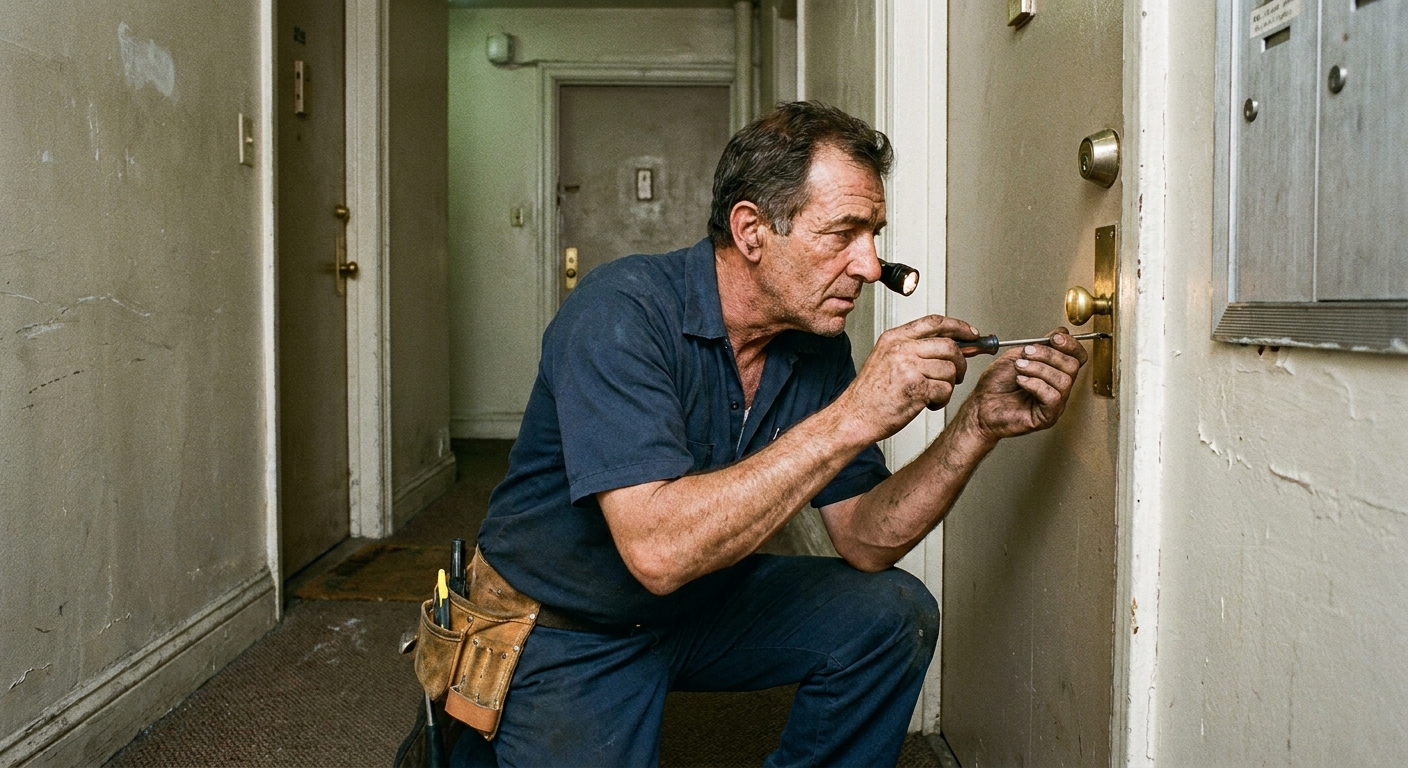
What not to do
- Do not force the key. A snapped key can require drilling the cylinder.
- Do not disassemble the lock. Many leases prohibit tenant repairs to entry hardware.
- Do not enlarge the strike hole with tools. It can weaken security and create liability.
- Do not spray heavy lubricants. They can trap debris and stain doors.
If you are at the point where you feel like you need tools, that is your cue to call maintenance.
A tiny checklist for next time
- Keep one good spare key indoors.
- Use a lock-specific dry lubricant once in a while if your building is dusty.
- If the lock only sticks when the door is closed, note whether pushing or pulling helps. That single detail makes maintenance much faster.
- When in doubt, protect the lock. Gentle is always the fastest route.
Your home should feel like a comforting hug, not a wrestling match at the front door. With a little careful diagnosing and the right dry lubrication, most sticky deadbolts become a quick fix. And when they do not, you will know exactly how to explain it to maintenance without sounding like you are guessing.