Soft-Close Hinges That Bang, Gap, or Won’t Stay Shut

Clara Townsend
Clara Townsend is an interior stylist, vintage furniture enthusiast, and the creative voice behind Velvet Abode. With over a decade of experience transforming both cramped city apartments and sprawling fixer-uppers, she believes that a beautiful home is built on personal stories rather than massive budgets. When she isn't hunting for the perfect brass sconce at a local flea market, she can usually be found rearranging her living room for the third time this month.
Soft-close cabinet doors are supposed to feel like a gentle exhale: a quiet glide, a soft kiss, done. So when they bang , sit with a weird gap, or pop back open like they have opinions, it is usually not “your cabinets are cursed.” It is typically one of three things: the door is out of alignment, the soft-close damper is set wrong or failing, or the hinge is dirty and binding.
Below is the exact order I use when I am styling a kitchen and a door suddenly starts acting up after a hardware swap or deep clean. No jargon, just practical steps.
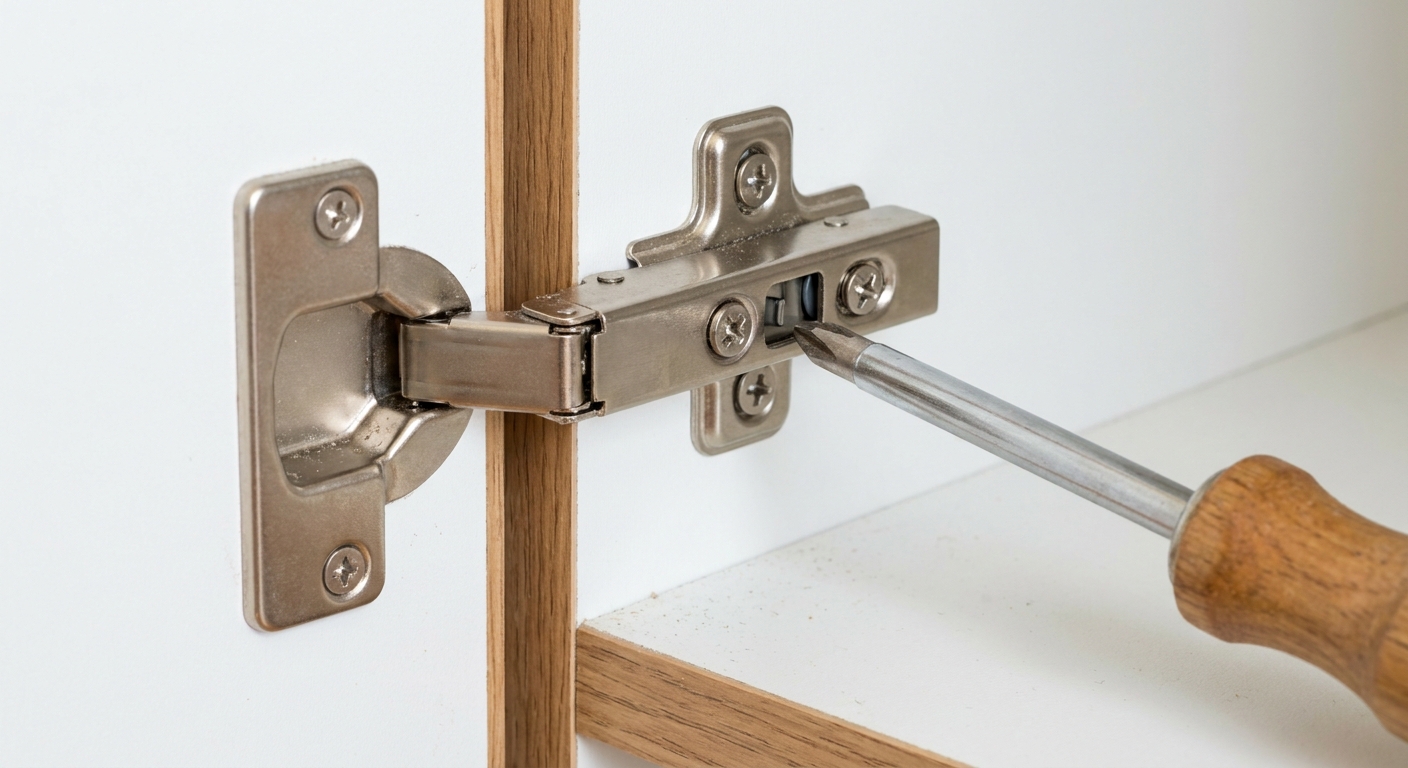
Before you adjust anything
Quick tools
- #2 Phillips screwdriver (most common)
- Small flathead screwdriver (for some damper dials)
- Flashlight or phone light
- Pencil and painter’s tape (optional but very renter-friendly)
- Microfiber cloth and mild cleaner
Two sanity checks that solve a lot
- Check for interference: A trash pull-out, spice rack, or a new shelf liner can keep a door from closing fully and make it “bang” on the rebound. Remove anything rubbing first.
- Tighten the basics: Snug up the screws that mount the hinge to the cabinet box and the door. Do not crank them so hard you strip the particleboard, just firm.
Identify your soft-close hinge type
Most soft-close cabinet doors use a concealed “Euro” hinge with a cup that sits inside a 35 mm hole in the door. The soft-close feature will be either built into the hinge arm or added as a clip-on damper.
Common setups you will see
- Integrated soft-close hinge: The hinge itself has a little switch or dial on the arm.
- Clip-on soft-close damper: A small plastic module attached near the hinge or inside the cabinet.
- Face-frame adapter plates: In some kitchens the hinge mounts to a plate attached to a face frame. The adjustments are the same, just a slightly different base.
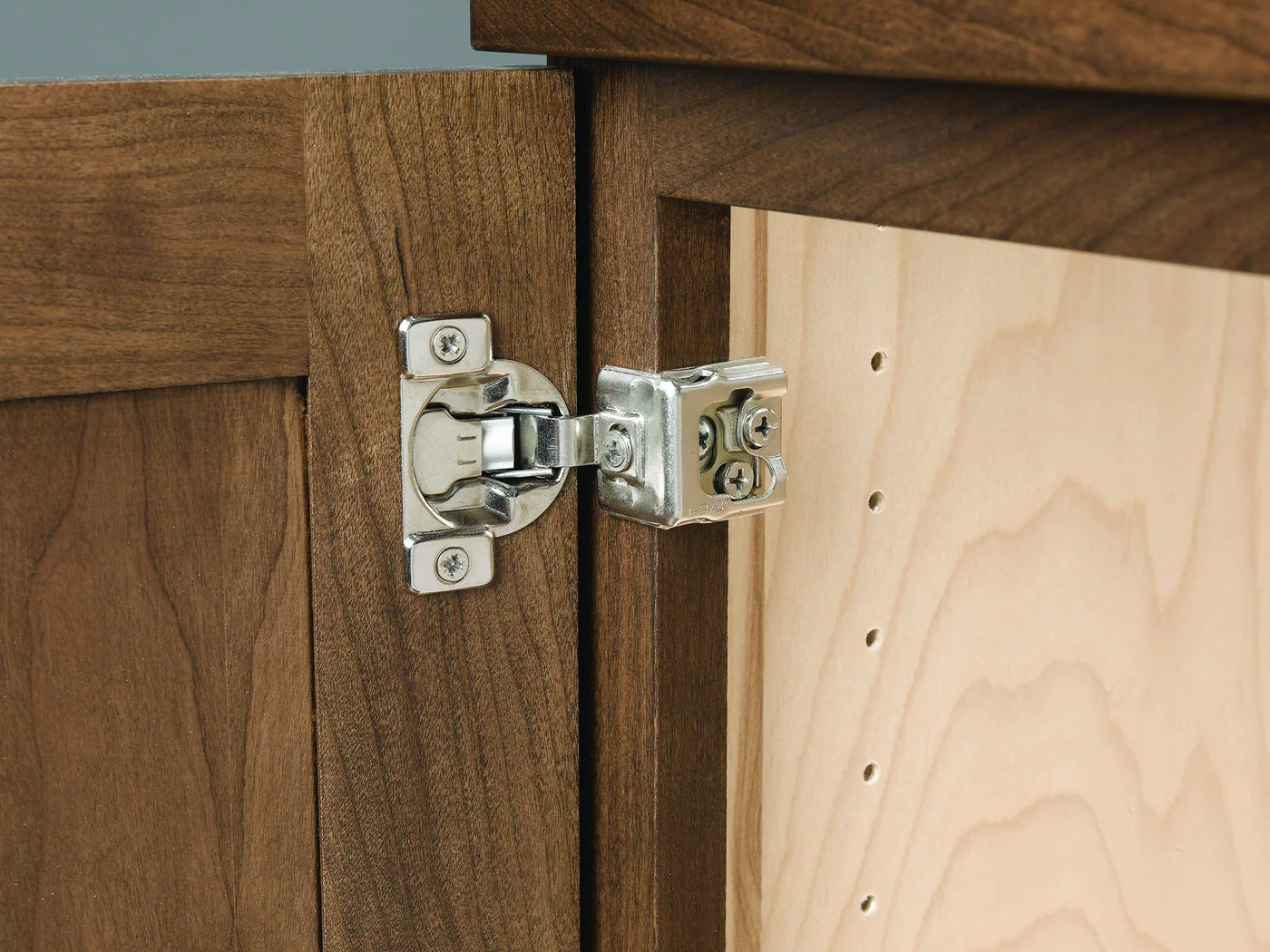
If your cabinet has visible hinges on the outside (butterfly, strap, or old-school partial wrap), it can still be “soft close” via a separate damper. The alignment ideas below still apply, but the exact screws will differ.
What each adjustment does (the three-screw map)
Most concealed hinges give you three main adjustments: side-to-side, depth (in and out), and height (up and down). Think of it like tailoring a shirt: you are not rebuilding the cabinet, you are just dialing in the fit.
1) Side-to-side: fixes uneven gaps between doors
This is the adjustment you reach for when two doors meet in the middle and one is stealing space from the other, or when the reveal looks tight at the top but wide at the bottom.
2) Depth (in and out): fixes doors that hit, rub, or won’t stay shut
Depth adjustment changes how tightly the door pulls to the cabinet box. If the door is not latching , bouncing open, or the soft-close is not catching, depth is often the hero.
3) Height: fixes a door that looks “dropped”
Height is usually adjusted at the mounting plate. This is what you tweak when the top edges of adjacent doors are misaligned.
Fix 1: Soft-close hinge bangs instead of gliding
When a “soft-close” door still slams, it is usually because the damper is not engaging, the closing speed is set too light, or the door is out of position so the soft-close cannot catch properly.
Step-by-step
- Look for the soft-close switch or dial. Many hinges have a tiny on-off switch on the hinge arm. Make sure it is turned on.
- If there is a dial, increase damping gradually. Turn a little, test, then turn again. Tiny changes matter.
- Adjust depth so the door closes fully. If the door stops short, the damper cannot do its slow finish. Turn the depth screw so the door sits slightly closer to the cabinet box, then test.
- Test with a gentle push from halfway closed. Soft-close should “catch” in the last few inches. If it only soft-closes when you baby it, damping may be set too strong or the damper may be tired.
If only one hinge is slamming: many doors have two hinges, sometimes three. If one damper fails, you can get an uneven close that feels like a bang. Try switching the soft-close off on the working hinge temporarily and see if the behavior changes. That helps confirm whether a damper is failing.
Fix 2: Door has a gap, looks crooked, or rubs
Gaps are usually alignment, not “bad cabinets.” The goal is even spacing all the way around, and doors that do not kiss or scrape each other when they swing.
Start with this order (it saves time)
- Height first if the top edges do not line up with neighboring doors.
- Side-to-side next to even out the gap between doors and along the cabinet frame.
- Depth last to stop rubbing and make the door sit flush.
Micro-adjusting tip
Make quarter turns, not full rotations. After each quarter turn, close the door and look at the gap again. It is slower for about 3 minutes, then dramatically faster than chasing the problem for an hour.
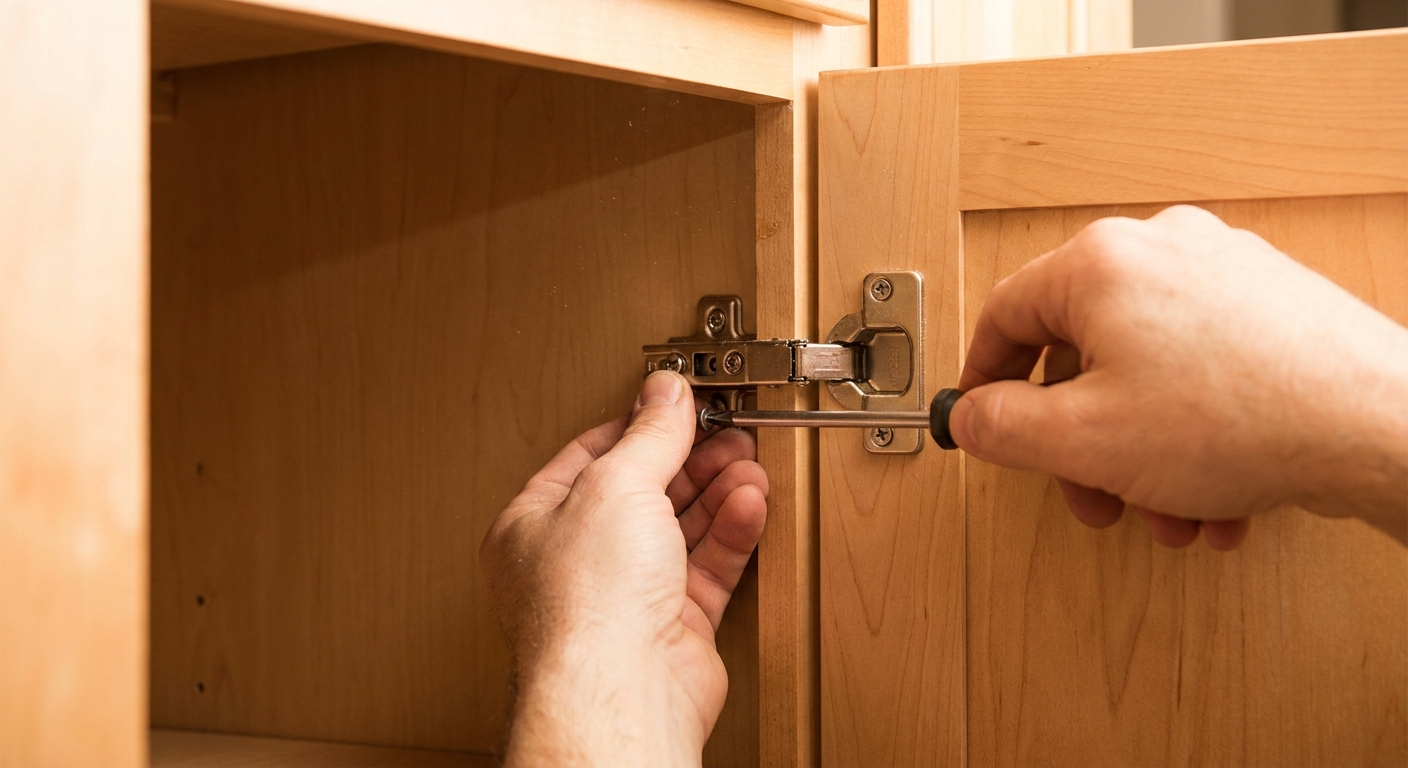
Fix 3: Soft-close door won’t stay shut (pops open)
This one is surprisingly common after you clean cabinets or add new bumpers. A soft-close door that refuses to stay shut is usually fighting one of these: mis-set depth, a sticky latch, too-thick bumpers, or a warped door.
Try this sequence
- Check bumpers. If someone added extra felt pads or thick silicone bumpers, the door may never reach the “closed” point. Remove extras and keep just the original style bumpers.
- Adjust depth outward slightly. If the depth is set too far in, the hinge-side edge of the door can bind against the cabinet frame or box and act like a little springboard that pops the door back open. Turn the depth screw so the door sits a hair farther out, test, then repeat in tiny increments until it closes and stays closed.
- Inspect the catch system. Some cabinets use a magnetic catch or roller latch in addition to hinges. If it is misaligned or loose, it can cause the pop-open effect.
- Check for cabinet box shift. If the cabinet is slightly out of square (common in older homes), you may need a combination of height plus side-to-side to get a consistent seal.
Note on push-to-open hardware: If you have touch-latch push-to-open devices, they can fight soft-close hinges. You usually want one system, not both.
Lubrication: when it helps and when it makes things worse
I love a satisfying maintenance moment, but lubrication is only helpful for metal-on-metal squeaks or hinges that feel gritty. It does not fix a dying soft-close damper, and the wrong product can attract dust and turn your hinge into a sticky lint magnet.
Use lubrication if
- The hinge squeaks during movement.
- The hinge feels stiff or crunchy even when alignment is correct.
- You see obvious grime buildup at pivot points.
Skip lubrication if
- The issue is a slam or no soft-close action. That is usually the damper, not friction.
- The cabinet is in a greasy cooking zone and you cannot clean first. Oil on top of grease is not a vibe.
What to use
- Silicone spray or a dry PTFE spray, applied sparingly to pivot points, then wiped.
- Avoid heavy oils that stay wet and collect dust.
How: Clean first, spray a tiny amount onto a cloth, wipe the hinge joints, open and close the door several times, then wipe off any excess. You want “quiet,” not “shiny and slippery.”
When the hinge needs replacement (not another tweak)
Sometimes a hinge is simply done. Soft-close mechanisms can wear out, especially on heavy doors or high-traffic cabinets.
Signs it is time
- The door still slams even with the soft-close turned on and properly adjusted.
- One hinge closes softly and the other does not, even after you swap settings.
- You see cracks in plastic damper parts, leaking oil-like residue, or a hinge arm that looks bent.
- The door will not hold alignment because the hinge has play (wiggle) in the mechanism.
How to buy the right replacement
- Take a photo of the hinge open and a photo of the mounting plate.
- Look for a brand stamp (Blum, Salice, Grass, Hettich are common) on the hinge arm or cup.
- Match overlay type: full overlay, half overlay, or inset. If you are unsure, bring the old hinge to the hardware store and match it directly.
- Count hinges per door: replace in pairs (or all on that door) for consistent closing.
Renter-safe documentation tips (so you get your deposit back)
If you rent, adjustments are usually fine, but I always recommend leaving a tidy paper trail for your future self.
- Take before photos and a 10-second video of the problem door closing.
- Use painter’s tape marks inside the cabinet to note the original hinge plate position. Remove it when you are done.
- Do not drill new holes without written permission. If the hinge holes are stripped, flag it to maintenance.
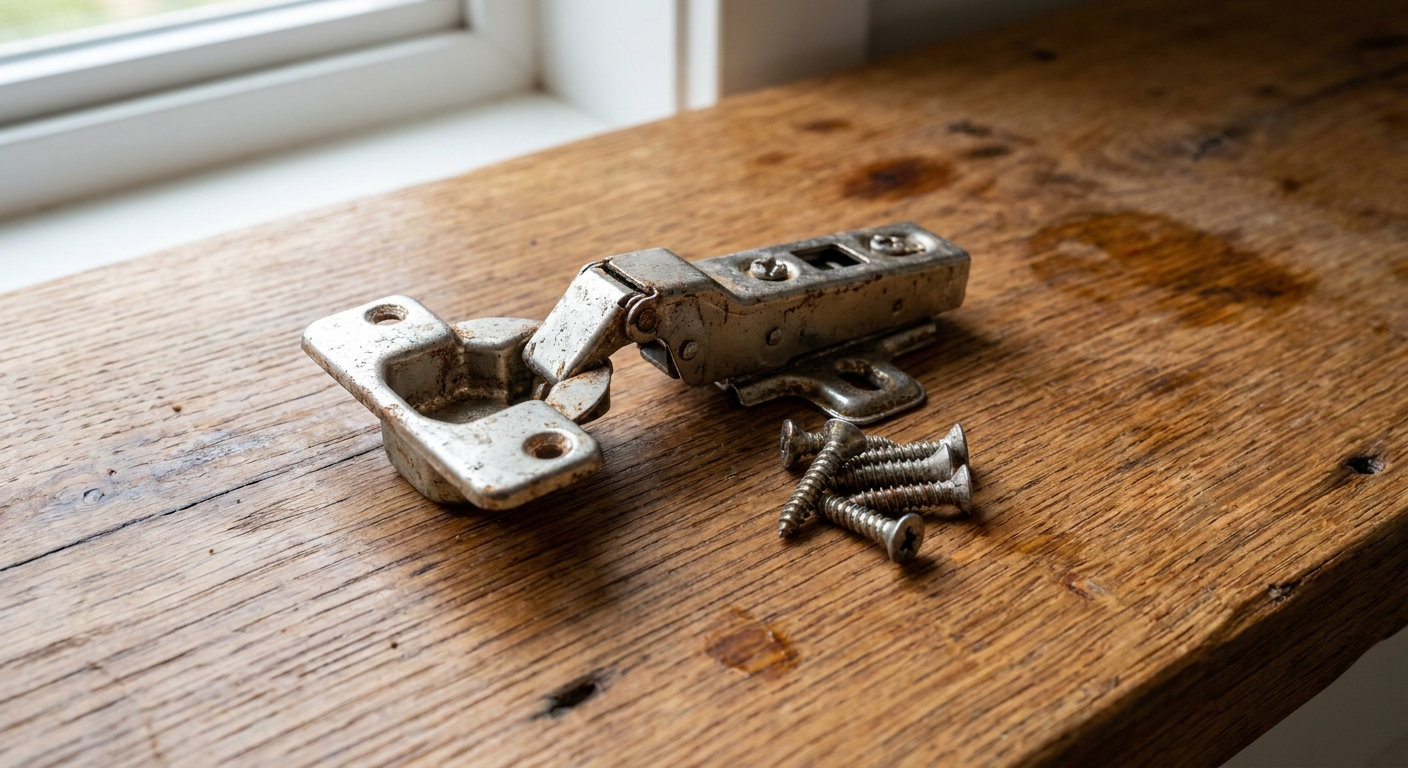
- Save the original parts if you replace anything. Put the old hinge in a labeled bag.
A simple test to confirm you fixed it
Once you are happy with the gaps and the close, do this quick check:
- Close the door from halfway. It should catch and glide.
- Close the door gently from almost closed. It should still latch and stay shut.
- Open and close it five times. Listen for rubbing and watch the gap. Consistency matters more than perfection on a single close.
If it passes, you are done. Go enjoy the oddly luxurious feeling of a quiet kitchen. It is one of those small home fixes that makes everything feel calmer.