Soapstone Countertop Care for Renters

Clara Townsend
Clara Townsend is an interior stylist, vintage furniture enthusiast, and the creative voice behind Velvet Abode. With over a decade of experience transforming both cramped city apartments and sprawling fixer-uppers, she believes that a beautiful home is built on personal stories rather than massive budgets. When she isn't hunting for the perfect brass sconce at a local flea market, she can usually be found rearranging her living room for the third time this month.
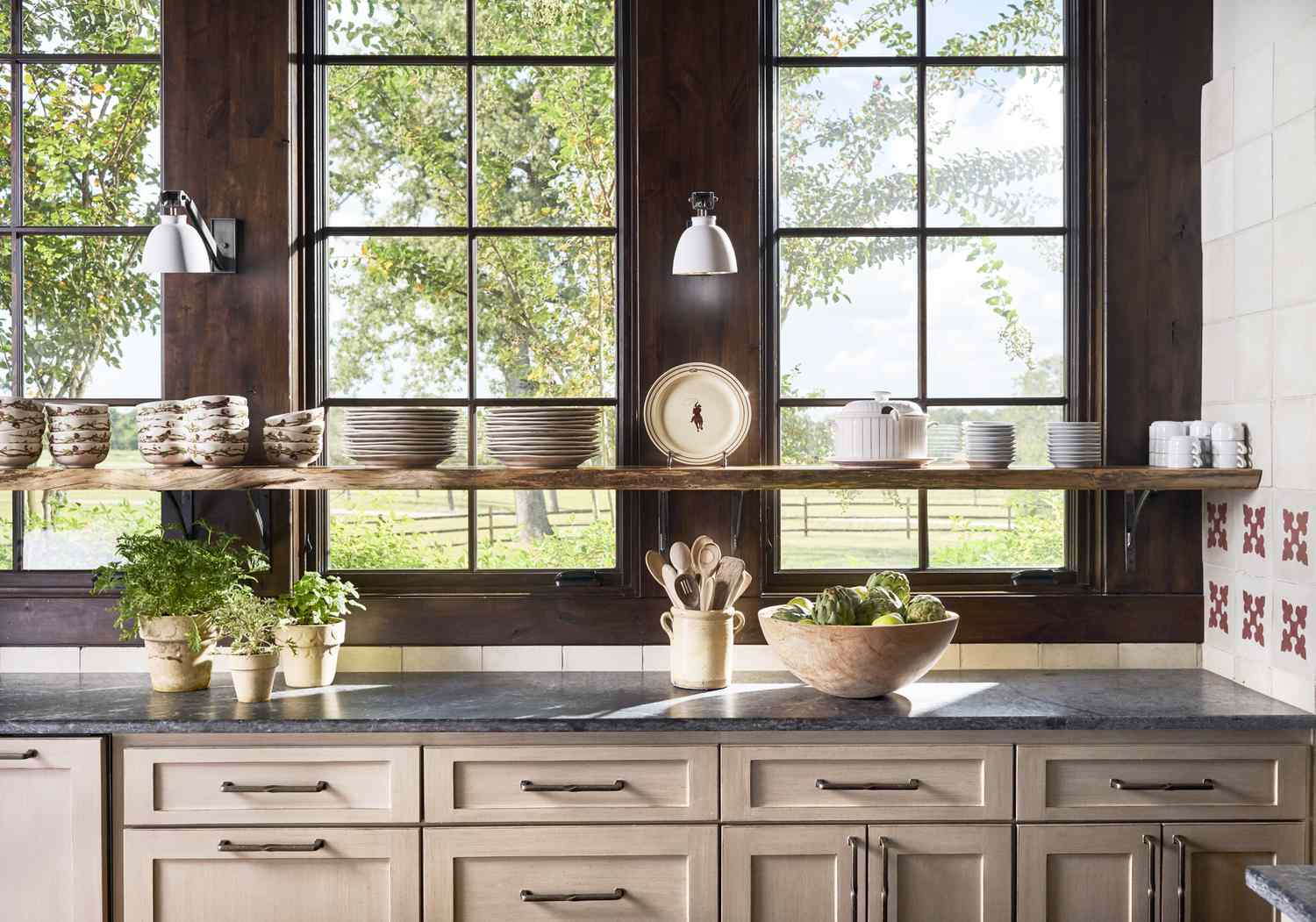
Soapstone has that moody, old-world charm that makes a kitchen feel instantly calmer. It is also one of the more forgiving natural stones. The renter wrinkle is real though: you want the cozy patina, not a security deposit debate. This guide keeps everything low-risk, reversible when possible, and easy to explain to a landlord if you ever need to.
What soapstone is (and why it acts the way it does)
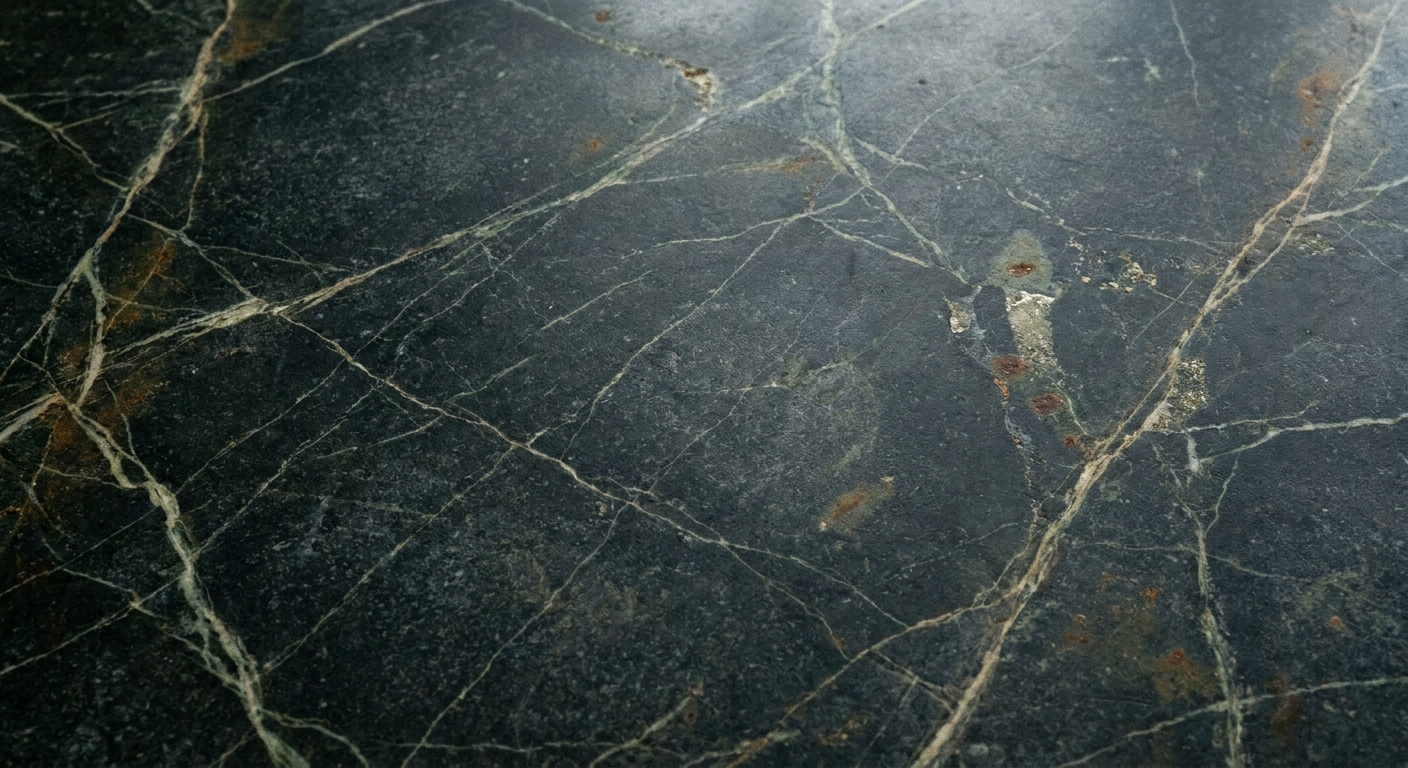
Soapstone is a natural stone made mostly of talc, plus varying amounts of minerals like magnesite and chlorite. In plain English: it has very low porosity compared to marble, it typically does not need sealing like many granites, and it tends to darken with oil and show scratches more readily because it is relatively soft. Some slabs can still absorb oils or water temporarily, which is why you may see dark spots that fade as they dry.
- Low porosity feel: Liquids are less likely to soak in quickly, so many “stains” are actually surface residue.
- Soft stone: It can scratch, but scratches are often blendable.
- Heat tolerant: The slab handles heat well, but renters should still use a trivet to protect seam epoxy, adhesives, caulk, and nearby materials like wood trim and paint.
Know your finish: Soapstone is commonly honed (matte). Some counters are routinely oiled or waxed, which changes the sheen and how “patchiness” shows up. As a renter, your best move is to match what is already there rather than reinventing the finish.
Daily and weekly cleaning (deposit-safe)
If you only do one thing, do this: keep it simple and consistent. Soapstone does not want harsh chemicals, and it definitely does not need specialty sprays that leave shiny buildup.
Everyday wipe down
- Warm water + a few drops of pH-neutral dish soap.
- A soft sponge or microfiber cloth.
- Dry with a towel if you have hard water, since mineral spots can read like “stains.”
What to avoid
- Abrasive powders and scrub pads that can create uneven dull patches.
- Strong degreasers, bleach, or solvent-heavy cleaners, especially near seams and around the sink where caulk lives.
- Vinegar left to sit. It is not likely to etch soapstone the way it etches marble, but soaking acidic solutions can damage grout, metal finishes, and surrounding surfaces, and can leave its own residue.
Oiling soapstone: how often, how to do it, and whether you even should
Oiling is optional, but it is the fastest way to make soapstone look richer and more uniform. It does not “protect” the stone the way a sealant protects porous stone. It mainly darkens and evens out the appearance while your counters develop a natural patina from daily life.
Quick visual truth: Water-darkening is usually temporary and fades as it dries. Oiling-darkening is intentional and tends to last longer (then slowly softens).
How often should renters oil?
- Newer-looking, pale soapstone: once a week for the first month if you want it to darken evenly, then monthly.
- Already dark, already lived-in: every 2 to 3 months, or whenever it looks patchy.
- If you like the lighter, chalky look: skip oiling and just clean normally. This is the most reversible choice.
Renter-safe oil choice
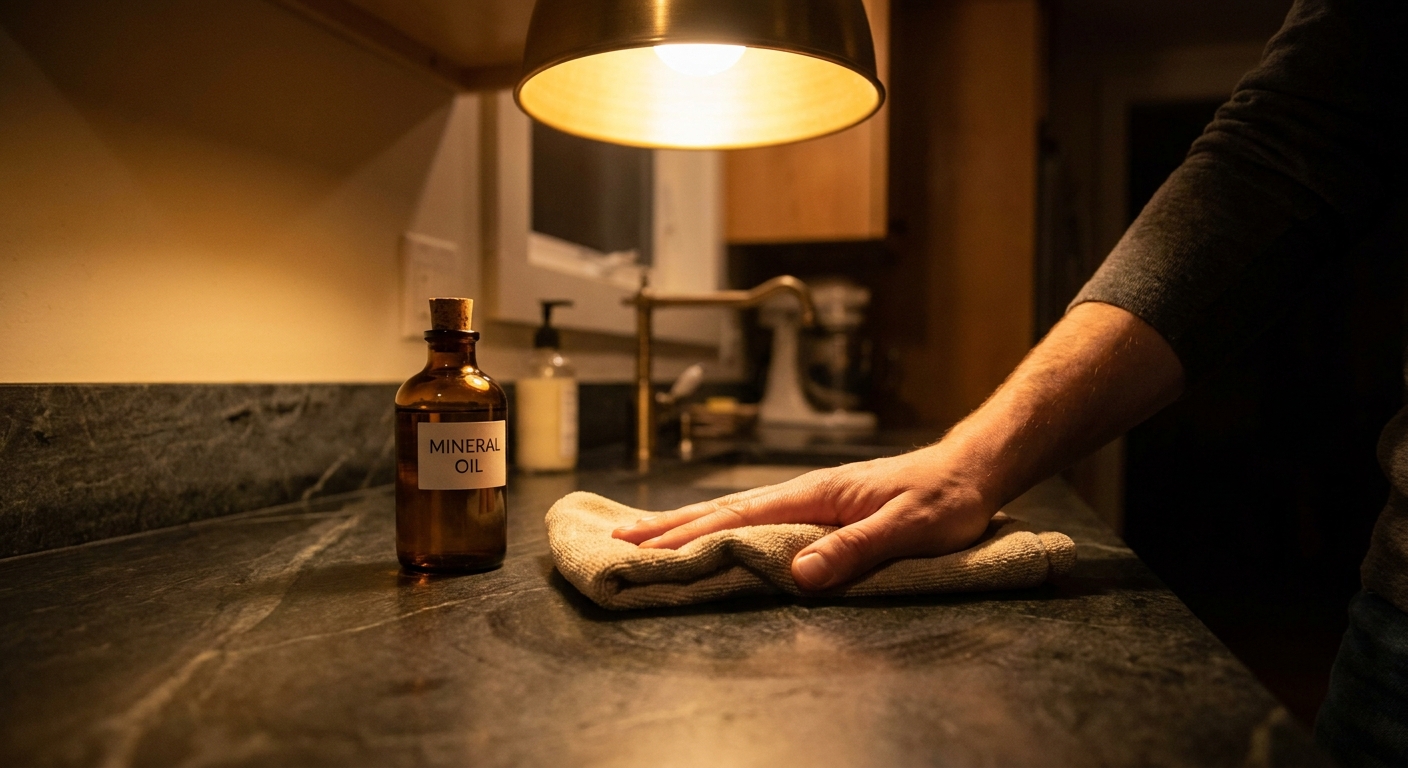
Use food-grade mineral oil. It is stable, widely available, and predictable. Avoid cooking oils like olive oil, which can go sticky or rancid.
Step-by-step oiling (low drama)
- Clean the counter with dish soap and water, then dry fully.
- Apply a small amount of mineral oil to a soft cloth.
- Wipe a very thin layer over the stone. Think “moisturizer,” not “marinade.”
- Let it sit 20 to 30 minutes.
- Buff off any excess until it feels dry to the touch.
Important renter note: Oil can darken unevenly at first, especially around the sink and prep zones. That is normal. If you are close to move-out and want a more neutral look, stop oiling a few months ahead and let everyday cleaning and time soften the contrast.
Waxing soapstone: a good option for renters?
Wax can give a slightly more polished, water-shedding feel than mineral oil, and it tends to last longer. The tradeoff is that wax can build up and look cloudy if over-applied. If your landlord is particular, wax is best used sparingly and only if you are confident you can maintain it evenly.
When wax makes sense
- You want a little more sheen and water beading.
- Your counters are already waxed and you are simply maintaining the existing finish.
Food-contact note
Mineral oil is food-safe. Waxes vary. If you prep food directly on the counter (not recommended anyway), choose a wax labeled safe for food-contact surfaces, or keep waxed areas to low-contact zones and use cutting boards.
Wax etiquette
- Use a stone-safe wax recommended for soapstone.
- Apply a very thin coat and buff well.
- Do a small test spot first, ideally behind a coffee maker.
If you want a real “reset”
Wax is not a true reset, and it can complicate future cleaning if layered. For a calmer, renter-safe reset: stop oiling, wash thoroughly with pH-neutral soap and warm water for a couple of weeks, and let the counter even out naturally. If the surface looks truly gummed up or blotchy beyond that, check with your landlord or the installer before using any stronger remover.
Stains: what they usually are and how to remove them safely
Most soapstone “stains” fall into one of two categories: surface residue (like oil splatter, soap scum, or hard-water minerals) or temporary darkening where water or oil is sitting on the surface. Because soapstone is low porosity, true deep staining is less common than on marble, but temporary absorption and color shift can still happen.
First pass: the gentle reset
- Wash with dish soap and warm water.
- Rinse and dry.
- If it still looks weird, give it 24 hours. Water-darkened areas often lighten as they dry.
Grease or cooking oil marks
Try a little dish soap directly on the spot, let it sit for 5 minutes, then wipe with warm water and dry. If you oil your counters, keep in mind: the “fix” for a lighter spot is often simply re-oiling the whole section so it blends.
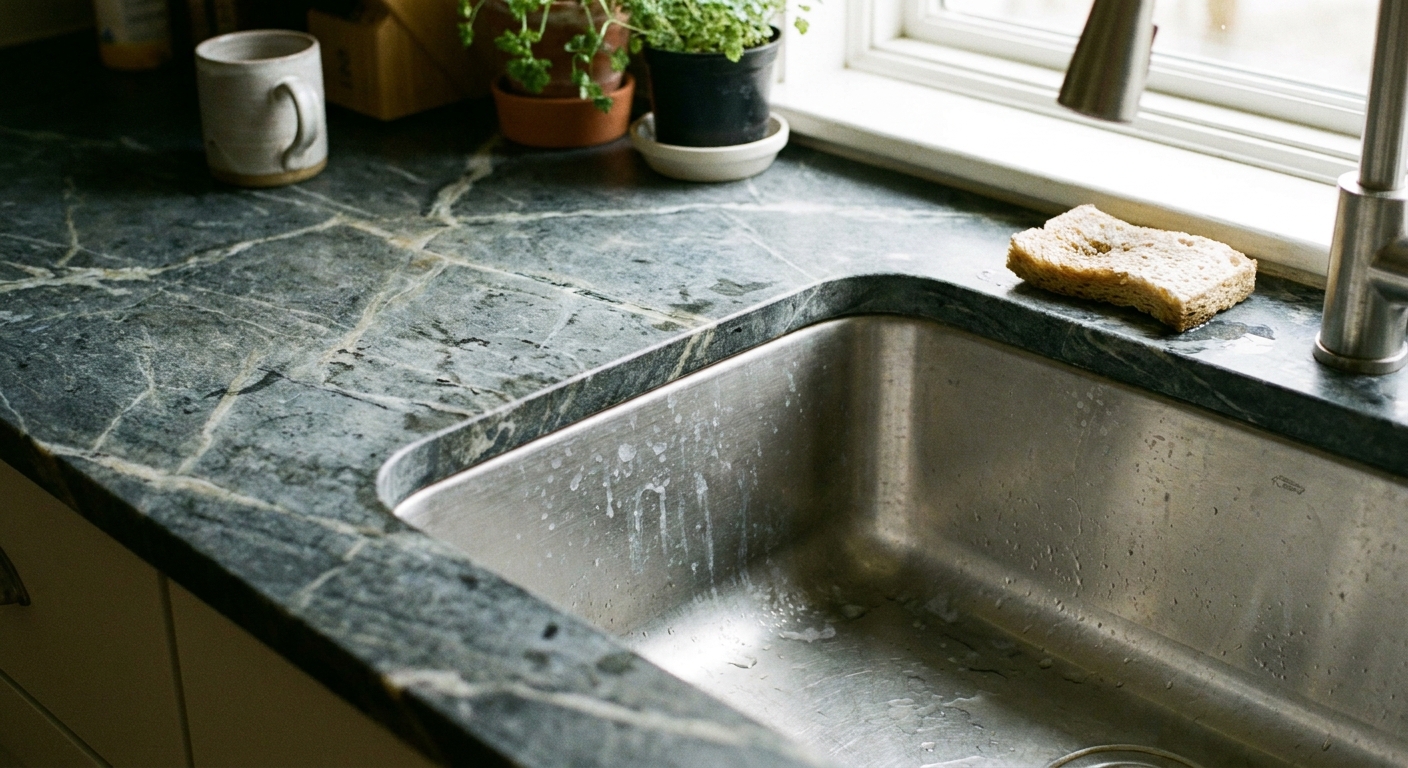
Hard-water haze near the sink
Hard water can leave a pale, chalky film. Start with dish soap, then try a paste of baking soda and water using a soft cloth. Use very light pressure, rinse, and dry. Baking soda is a mild abrasive, so test first and avoid over-scrubbing (that is how you get a sheen mismatch).
Rust rings from cans or cast iron
Remove the source first, then use baking soda paste and gentle rubbing with a soft cloth. Again: light pressure, test first. If the mark is stubborn, stop and check your lease or ask your landlord before moving to stronger options. Many “rust stains” are actually residue that will lift with patience.
What not to do (especially as a renter)
- Do not use oven cleaner.
- Do not use straight bleach or ammonia mixes.
- Skip pumice stones and heavy-duty abrasive pads.
Scratches: the renter-safe way to think about them
Soapstone scratches more easily than granite or quartz. The good news is that it is usually cosmetic and often blends into the stone’s patina. The renter-safe approach is to decide what is “character” versus what is worth addressing.
Before you sand anything, do this
- Clean the area so you are not sanding grit into the surface.
- Assess the depth with your fingertip. If you can barely feel it, it will likely fade with time and oiling.
- Check your lease for alteration language. Sanding changes the finish, even if it looks better.
Sanding etiquette (only with permission)
If your landlord approves, small scratches are typically blended with very fine sandpaper and a light touch, then re-oiled to match. Use the least aggressive method and treat it like spot correcting a vintage table, not refinishing a floor.
- Mask off nearby wood edges and caulk lines to avoid accidental scuffing.
- Feather outward so you do not create a visible “patch.”
- Expect the sanded area to look lighter until you oil and the patina returns.
No-permission alternative: camouflage
- Live with it. Soapstone is charming because it looks lived-in.
- Oil the full counter or at least the full section (for example, the whole run between sink and stove) so the finish reads intentional.
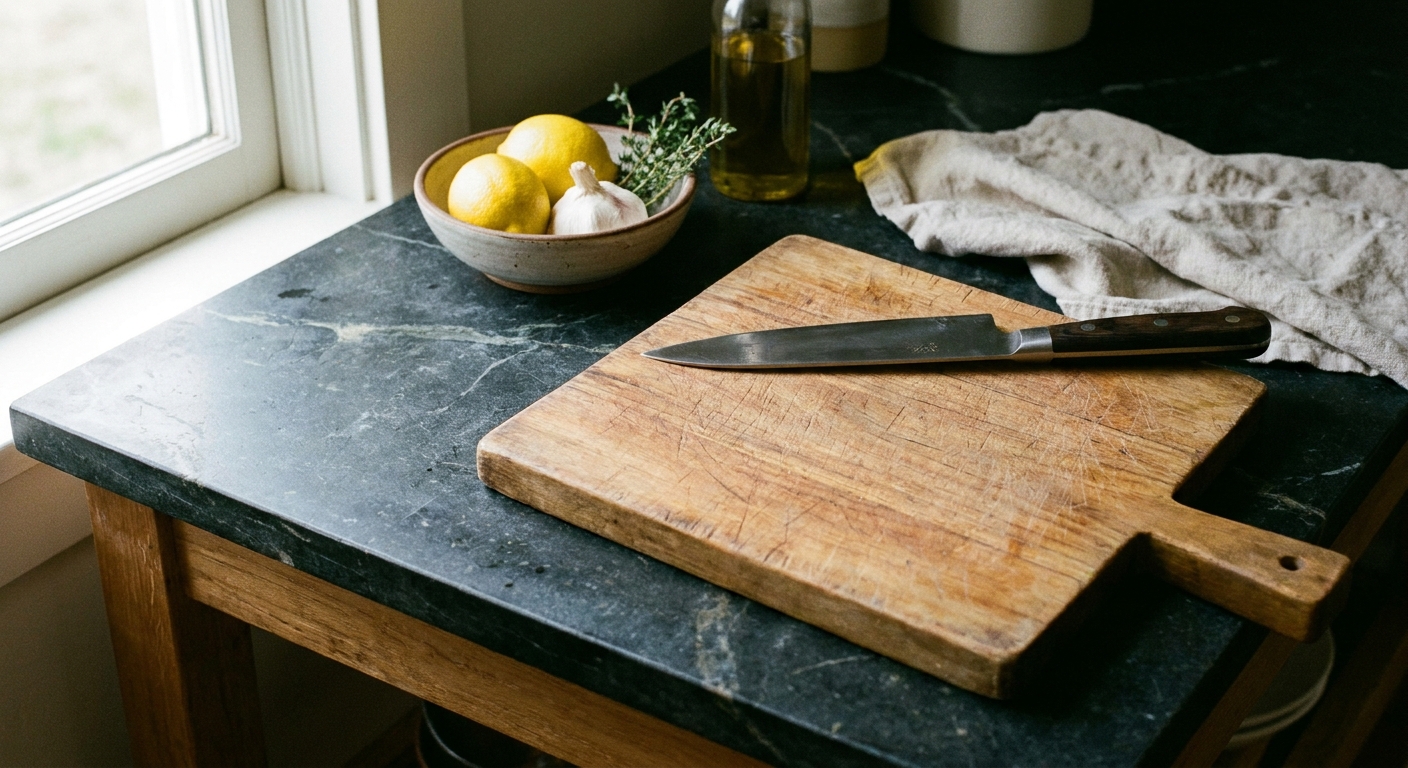
- Use cutting boards, trays, and a designated prep zone to prevent a scratch “constellation.”
Habits that prevent problems
Soapstone is famously heat tolerant, but renter-safe care is about protecting the entire installation, not just the stone slab. Think seams, adhesives, caulk, and whatever cabinetry is underneath.
- Use trivets anyway: Not because soapstone cannot take heat, but because it protects seam epoxy, caulk, and nearby materials.
- Do not leave wet items parked: Dish-drying mats, wet sponges, and leaky soap bottles can create dark rings or mineral outlines.
- Watch rubber and suction cups: Sink mats, suction cup caddies, and rubber-backed drying mats can leave dark patches on some soapstone if left in place. Rotate and dry underneath.
- Lift, do not drag: Cast iron pans and ceramic planters are the sneaky scratch-makers.
- Use felt pads under heavy decor: Especially anything gritty on the bottom, like terracotta.
- Make a “landing zone”: A tray near the stove for oils and utensils keeps splatter from becoming a daily scrub situation.
When to call maintenance or your landlord
Small marks are normal. Installation issues are not your job to quietly DIY. Flag these early, especially in rentals:
- Caulk pulling away around the sink or backsplash.
- A seam that looks lifted, widened, or feels sharp on the edge.
- Cracks or chips that grow or suddenly appear.
- Persistent rust staining that seems to be coming from under-mount sink hardware or fasteners.
- Water getting under the counter near the sink (swollen wood, soft spots, recurring dark areas that never dry).
Move-out mindset
If you are renting, the goal is not perfection. It is consistency. Patchy oiling, aggressive spot-sanding, or using harsh cleaners can make a counter look more “messed with” than gently worn.
- Stick with mild soap and water as your default.
- If you oil, oil on a schedule and apply thin coats.
- Take a quick photo today so you have a baseline of what “normal” looks like for your unit.
- If you inherit existing scratches or stains, document them early.
Soapstone is the vintage leather jacket of countertops. It picks up stories. Your job as a renter is to keep those stories looking like a gentle patina, not a panicked DIY repair.
Quick cheat sheet
- Clean: pH-neutral dish soap + warm water, then dry.
- Oil: food-grade mineral oil, thin coat, buff well. Weekly for the first month if you want darkening, then monthly or every few months.
- Wax: optional, thin and well-buffed, test first. Confirm food-contact safety if you use it near prep areas.
- Stains: most are residue or temporary darkening. Try gentle cleaning, then baking soda paste with light pressure for mineral haze (test first).
- Scratches: often part of the look. Sand only with landlord permission.
- Habits: use trivets, do not park wet items, rotate rubber mats, lift heavy pieces, use cutting boards.
- Call maintenance: loose caulk, lifting seams, cracks, or rust that seems to come from hardware.