Smoke or CO Alarm Chirping in a Rental: What to Do Before You Remove It

Clara Townsend
Clara Townsend is an interior stylist, vintage furniture enthusiast, and the creative voice behind Velvet Abode. With over a decade of experience transforming both cramped city apartments and sprawling fixer-uppers, she believes that a beautiful home is built on personal stories rather than massive budgets. When she isn't hunting for the perfect brass sconce at a local flea market, she can usually be found rearranging her living room for the third time this month.
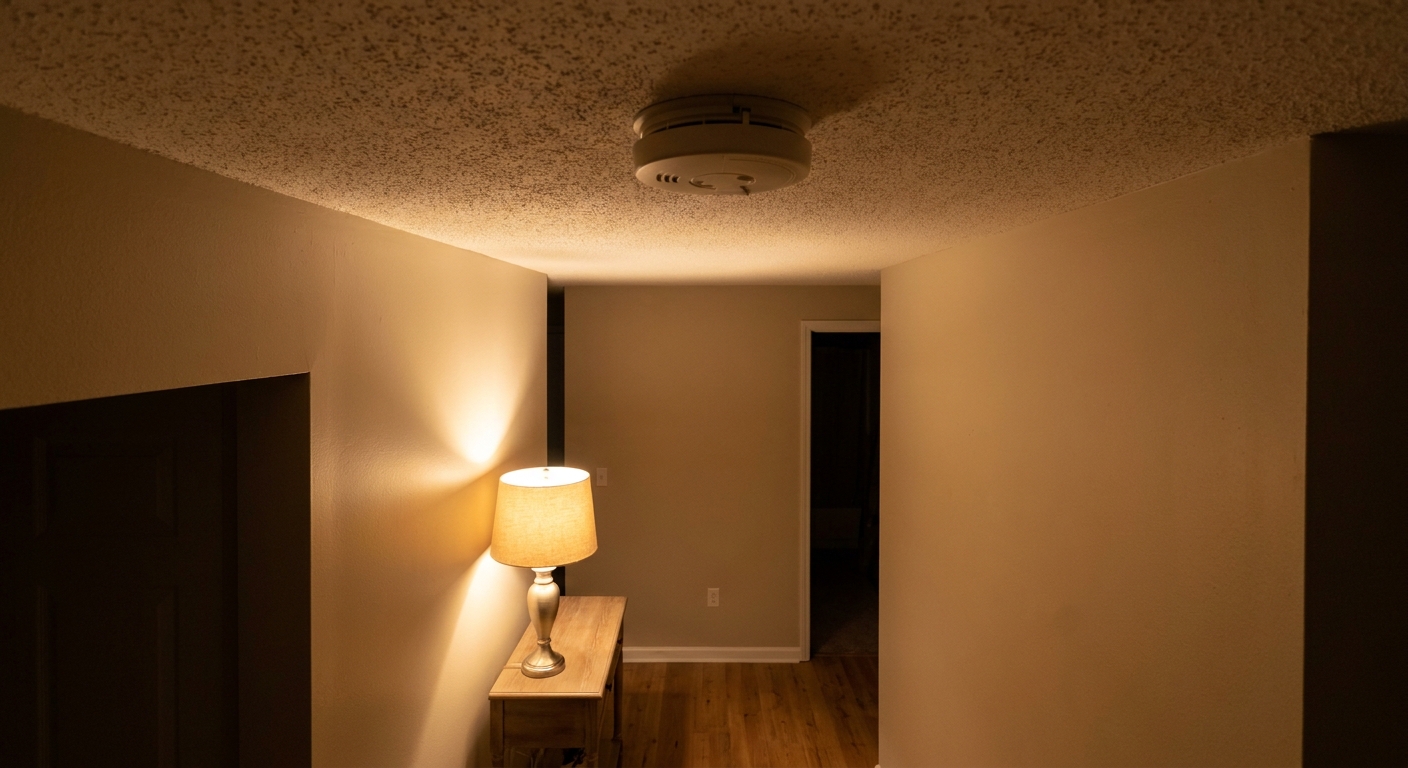
That tiny chirp can feel like it is bouncing off every wall in your home, especially at 2 a.m. If you are renting, it also comes with an extra layer of stress: What am I allowed to touch?
Let’s keep this simple and safe. A chirping smoke alarm or carbon monoxide (CO) alarm is usually telling you one of a few things: the battery is low, the unit is at the end of its lifespan, the sensor is dusty, the unit has lost AC power (hardwired models), or there is a fault. What you should not do is disable protection in your home. Instead, use the renter-friendly checks below and loop in your landlord promptly when needed.
First: Chirp or real alarm?
Before you troubleshoot, make sure you are not ignoring a real hazard.
- Chirping is usually a short, single beep spaced out (often about once a minute, but it varies by model). This commonly signals low battery, end-of-life, loss of AC power (hardwired models), or a fault.
- An alarm pattern is louder and more urgent, often repeating in sets. Many units use three beeps + pause for smoke and four beeps + pause for CO (some also speak), but patterns vary. Follow your model’s label/manual if you can.
If you smell smoke, see haze, feel unwell (headache, nausea, dizziness), or you suspect CO even without an alarm: get fresh air immediately, leave the unit, and call emergency services. Then contact your landlord.
What alarm do you have?
Knowing what is on your ceiling makes the next steps much easier.
Battery-only alarm
These are typically fully powered by a removable battery. They are common in older buildings or specific rooms.
Hardwired alarm with battery backup
These are connected to your home’s electrical system, but they still usually have a backup battery. When that backup battery gets weak, the unit can chirp even though it is wired. Many models also chirp when they lose AC power, even if the backup battery is fine.
Plug-in CO alarm (often with battery backup)
Many CO alarms plug into a wall outlet. Some have a battery backup, and some are battery-only.
Combo smoke and CO alarm
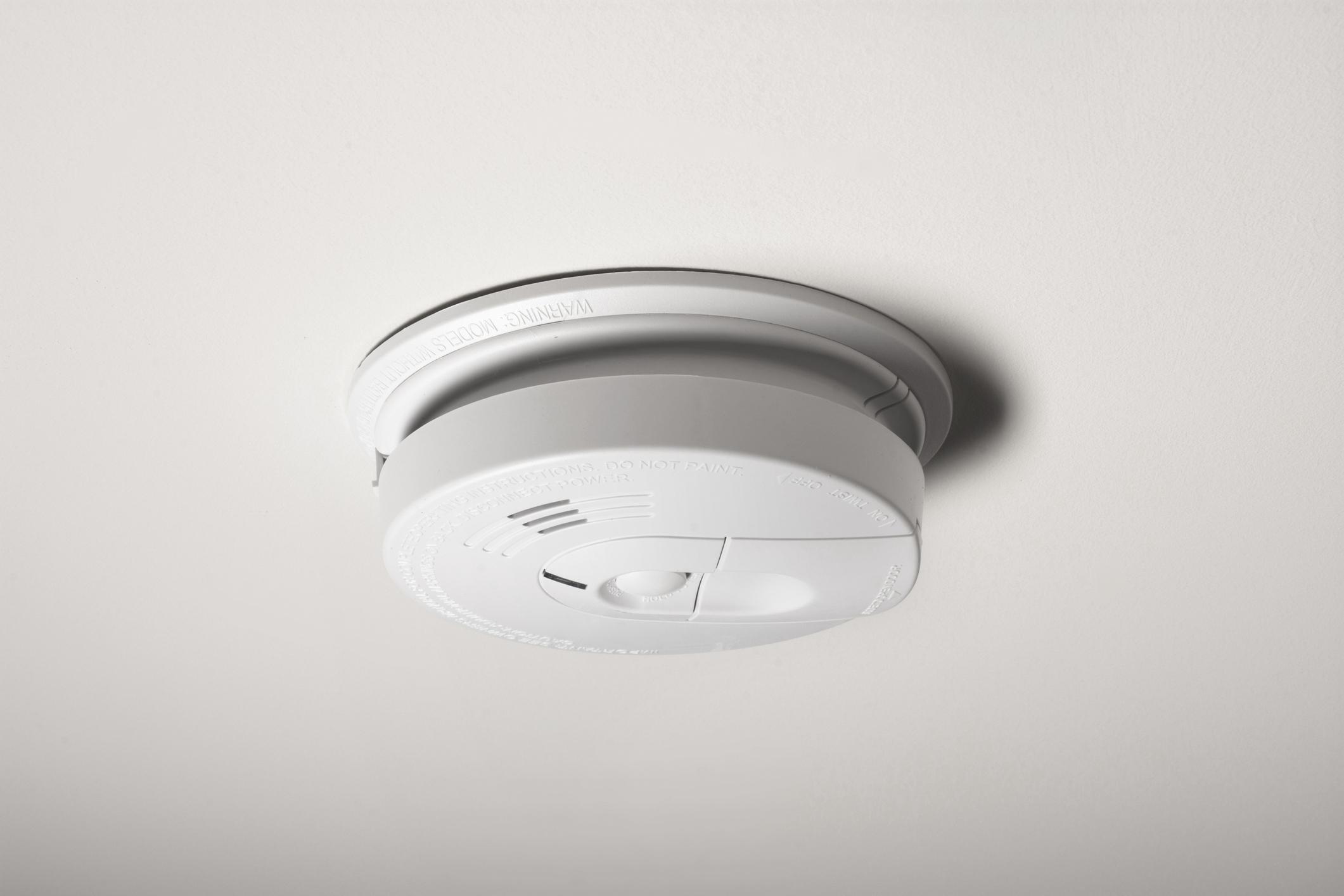
Combo units can be confusing because they may use different lights, voice prompts, or beep patterns for smoke vs CO. If yours is a combo, check the front label for quick cues (and take a photo for your landlord if needed).
Common chirp causes
Exact beep codes vary by brand. If you can, look for the brand and model number on the alarm body and check the manufacturer’s website or the label inside the battery door. Meanwhile, these are the most common scenarios renters run into.
1) Low battery chirp
Often a single chirp at regular intervals. If your alarm has a backup battery, this can happen even on hardwired units.
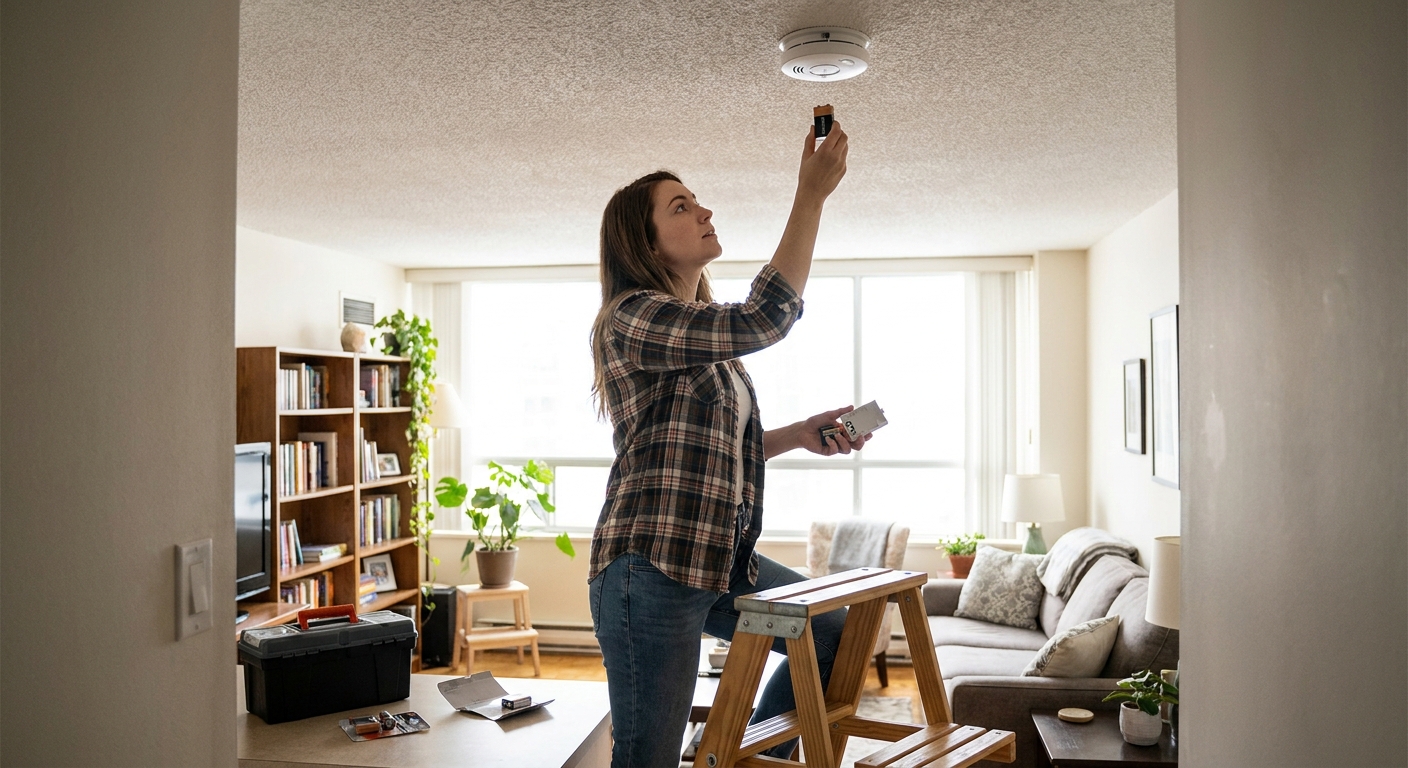
- Replace the battery with a fresh one (many use 9V, AA, or lithium cells).
- Make sure the battery door fully closes. Some alarms will chirp if the battery drawer is not seated.
- Press the Test button after replacing the battery.
2) End-of-life (EOL) warning
Many smoke alarms are designed to be replaced around 10 years. Many CO alarms are often 5 to 7 years, and some last up to 10 years depending on the model. When a unit reaches end-of-life, it may chirp even with a brand-new battery.
- Look for a manufacturing date or “replace by” date on the back or side.
- If it is near or past that date, the fix is usually replacement, not another battery.
- In a rental, replacement is typically a landlord responsibility. Document and report it.
3) Dust, bugs, or sensor contamination
Dust and tiny insects can cause faults, nuisance beeps, or false alarms, especially in older units or homes near kitchens and bathrooms.
- Use a vacuum with a soft brush attachment around the vents.
- Use a gentle burst of compressed air around the openings (do not soak it with cleaning sprays).
- Wipe the exterior with a dry or slightly damp microfiber cloth.
4) AC power loss (hardwired)
Hardwired alarms often chirp when they are not receiving AC power. This can happen after an outage, a tripped breaker, loose connection, or building electrical work.
- Check whether other lights or outlets are acting strange.
- If you have access and feel safe doing so, check your breaker panel for a tripped circuit and reset it if appropriate.
- If chirping continues, report it since hardwired issues may involve electrical troubleshooting.
5) Backup battery low (hardwired)
Even when AC power is working, the backup battery can be low. Many hardwired units chirp specifically for a low backup battery.
- Replace the backup battery with the exact type listed on the alarm.
- Make sure the battery compartment fully closes, then press Test.
- If it still chirps, check the date label and report it as likely end-of-life or a fault.
Safe renter troubleshooting
Here is the order I recommend when you want to stay safe and avoid doing anything that could be considered tampering.
Step 1: Find the chirping unit
In multi-alarm homes, the sound can travel. Stand under each alarm and listen closely. If your alarms are interconnected, one device may chirp while another actually needs attention.
Step 2: Press Test briefly
Most alarms should emit a loud test sound when working. It can be very loud, and it may set off interconnected alarms, so do this in the daytime if you can. If pressing Test does nothing, note that. It can help your landlord or maintenance team diagnose quickly.
Step 3: Replace the battery (if applicable)
- Use a fresh battery from a sealed pack.
- Match the battery type exactly.
- After replacing, close the compartment firmly and press Test.
Step 4: Reset it (the common way)
If the chirp continues after a battery swap, some alarms need a full reset to clear residual charge.
- Remove the battery.
- Press and hold the Test button for 15 to 30 seconds (or per your model) to drain any stored charge.
- Reinstall the battery, close the compartment fully, then press Test once.
If your alarm is hardwired and you are not comfortable removing it from the mounting bracket to access the battery, stop here and contact maintenance. Safety first, and you do not want to damage wiring or the base.
Step 5: Clean the vents gently
Vacuum the vent openings and wipe the exterior. Avoid household cleaners, essential oils, or anything that leaves residue near the sensor.
Step 6: Handle nuisance alarms (not chirps)
Cooking smoke and shower steam usually trigger alarms (the loud pattern), not maintenance chirps. If you are dealing with nuisance alarms:
- Use the Hush or Silence button if your unit has one. It is temporary and is not a fix for real smoke or CO.
- Vent the area (range hood, open window), and avoid running hot showers with the bathroom door open if the alarm is right outside.
- If placement is the issue (too close to kitchen, bathroom, or a draft), do not relocate alarms yourself unless your lease and local rules explicitly allow it. Document it and ask maintenance to evaluate placement.
Sealed 10-year battery alarms
Some newer alarms have a sealed battery designed to last about 10 years. If one of these starts chirping, it may be at end-of-life, have a power issue, or be malfunctioning.
- Look for wording like “10-year sealed battery” on the front or side.
- Check for a date label on the alarm body.
- Report it to your landlord. These units are typically replaced as a whole.
What not to do
I get it. When the chirp is relentless, your nervous system starts bargaining. But these are safety devices, and leases plus local codes generally require them to remain installed and operational.
- Do not remove the alarm and leave it off the ceiling to “deal with it later.”
- Do not take out the battery as a workaround.
- Do not cover it (with tape, plastic, fabric, or paint) to quiet it.
- Do not ignore CO symptoms or assume it is “just the alarm being annoying.”
If the chirping is constant and you cannot stop it with a battery replacement, a proper reset, and gentle cleaning, treat it as a maintenance issue that needs a real fix, often replacement.
Contact your landlord
If you have tried the safe steps above and the chirp continues, it is time to reach out. You are not being “high maintenance.” You are documenting a safety system that is not functioning correctly. Also, local rules and some leases specify who supplies batteries, so when in doubt, ask.
What to document
- Which alarm is chirping (room and location).
- Whether it is smoke, CO, or combo (often printed on the front).
- Brand and model number (photo helps).
- Date label or manufacturing date (photo helps).
- What you tried: battery replaced, reset (battery removed, Test held), cleaned vents, tested button.
- Frequency of chirp and approximate start time.
- For hardwired units: whether there was a recent outage, and whether any breaker appeared tripped (if you can check).
Copy and paste message
Hi [Name], the [smoke/CO/combination] alarm in the [location] has been chirping consistently since [date/time]. I replaced the battery (if applicable), removed and reinstalled it to reset (held Test for 15 to 30 seconds with the battery out), and gently cleaned the vents, but the chirping continues. The unit is [brand/model], and the manufacturing/replace date appears to be [date]. Can maintenance please inspect and replace or repair it as needed? I can provide photos and am available [times].
Quick recap
- Single periodic chirp: often low battery, end-of-life, AC power loss (hardwired), or a fault.
- Chirping after a new battery: check battery seating, do a proper reset, then suspect end-of-life or a fault.
- Loud repeating pattern: treat as smoke or CO until proven otherwise. Many units use 3-beep (smoke) and 4-beep (CO) patterns, but follow your model.
- Hardwired units: chirps can mean AC power loss or backup battery low. If you can safely check the breaker, do so, then report.
- When in doubt: document and contact your landlord promptly.
Your home should feel calm, not like a sleep-deprivation experiment. The goal here is not to silence the alarm at any cost. It is to get it back to doing its quiet, protective job so you can get back to living.