Slow Shower Drain Fixes (Renter-Safe)

Clara Townsend
Clara Townsend is an interior stylist, vintage furniture enthusiast, and the creative voice behind Velvet Abode. With over a decade of experience transforming both cramped city apartments and sprawling fixer-uppers, she believes that a beautiful home is built on personal stories rather than massive budgets. When she isn't hunting for the perfect brass sconce at a local flea market, she can usually be found rearranging her living room for the third time this month.
A slow shower drain has a very specific vibe. You start out relaxed, then you look down and realize you’re standing in a tiny, lukewarm pond like a disappointed houseplant.
The good news: many slow shower drains are a mix of hair and soap scum hanging out close to the surface. You can often fix them without harsh chemicals, without damage, and without turning your rental into a plumbing crime scene.
That said, slow drains can also come from hard water mineral scale, leftover construction debris, a stopper that isn’t opening fully, or a deeper restriction in a shared line. This guide helps you rule out the easy stuff first, renter-safely.
Why shower drains clog
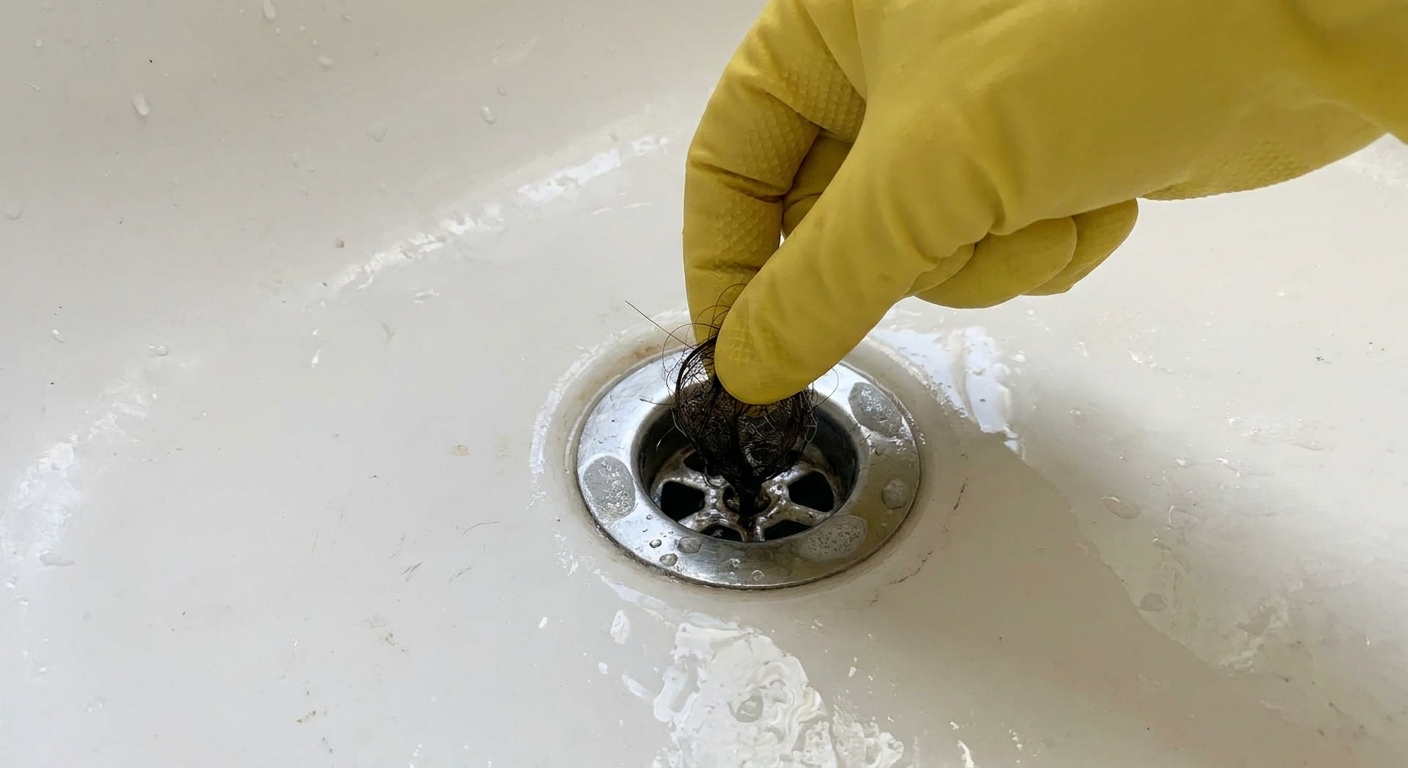
Bathroom sink clogs tend to be toothpaste, skincare residue, and a little hair, often caught in the sink pop-up and P-trap. Shower and tub drains, on the other hand, are basically hair magnets plus soap scum. The plumbing layout can also include longer horizontal sections with minimal slope after the trap, which makes buildup more likely.
Translation: showers respond best to gentle, physical removal first, then a hot tap water flush, then optional enzymatic help. Chemical battles are the last resort and usually not renter-friendly.
Quick safety setup
- Put a towel down so you’re not kneeling in splashback.
- Wear gloves, and consider eye protection if you’re splash-prone.
- Keep a small trash bag nearby for hair and gunk.
- If you use any cleaner, ventilate and never mix products (especially bleach with anything).
60-second diagnosis
- Slow right away, every shower: likely a partial clog near the drain opening, stopper, or hair catcher.
- Slow only after a few minutes: could be hair and soap scum further down the line, or a partial restriction that can’t keep up with steady flow.
- Gurgling sounds: could be a venting issue or a deeper restriction. In apartments, it can also hint at shared stack drama.
- Water backs up in the tub when someone runs the sink or flushes: stop DIY and notify the landlord. That points to a bigger line problem.
Renter-safe tools
You don’t need a toolbox the size of a suitcase. These are the simplest, safest helpers for a shower drain:
- Rubber gloves and paper towels for the glamor part.
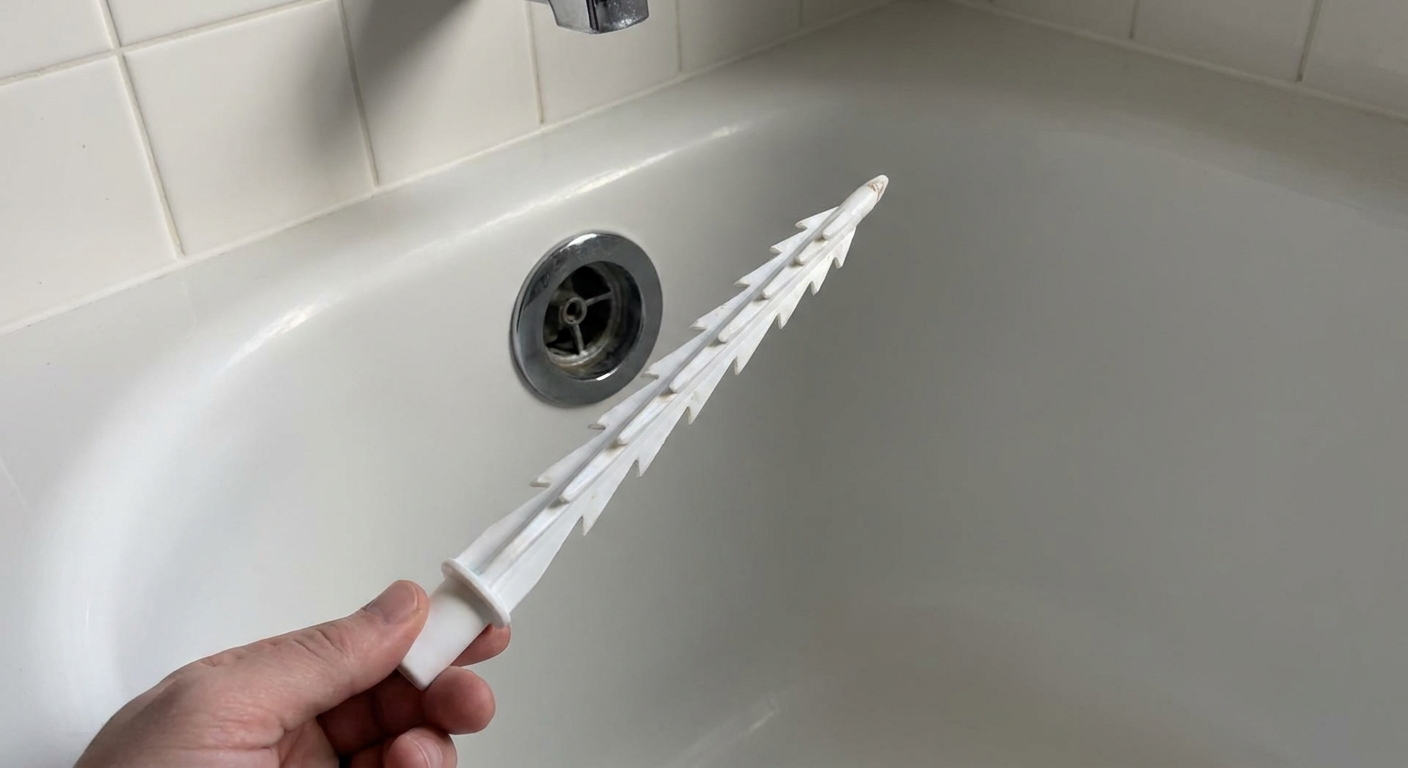
- Plastic drain snake (the flat, barbed zip-tie style). Cheap and surprisingly effective.
- Small cup for bailing standing water.
- Microfiber cloth for cleaning the stopper parts and drain cover.
- Cup plunger (the basic sink-style one, not a flange toilet plunger).
- Silicone or rubber jar gripper to twist a stuck stopper gently without scratching.
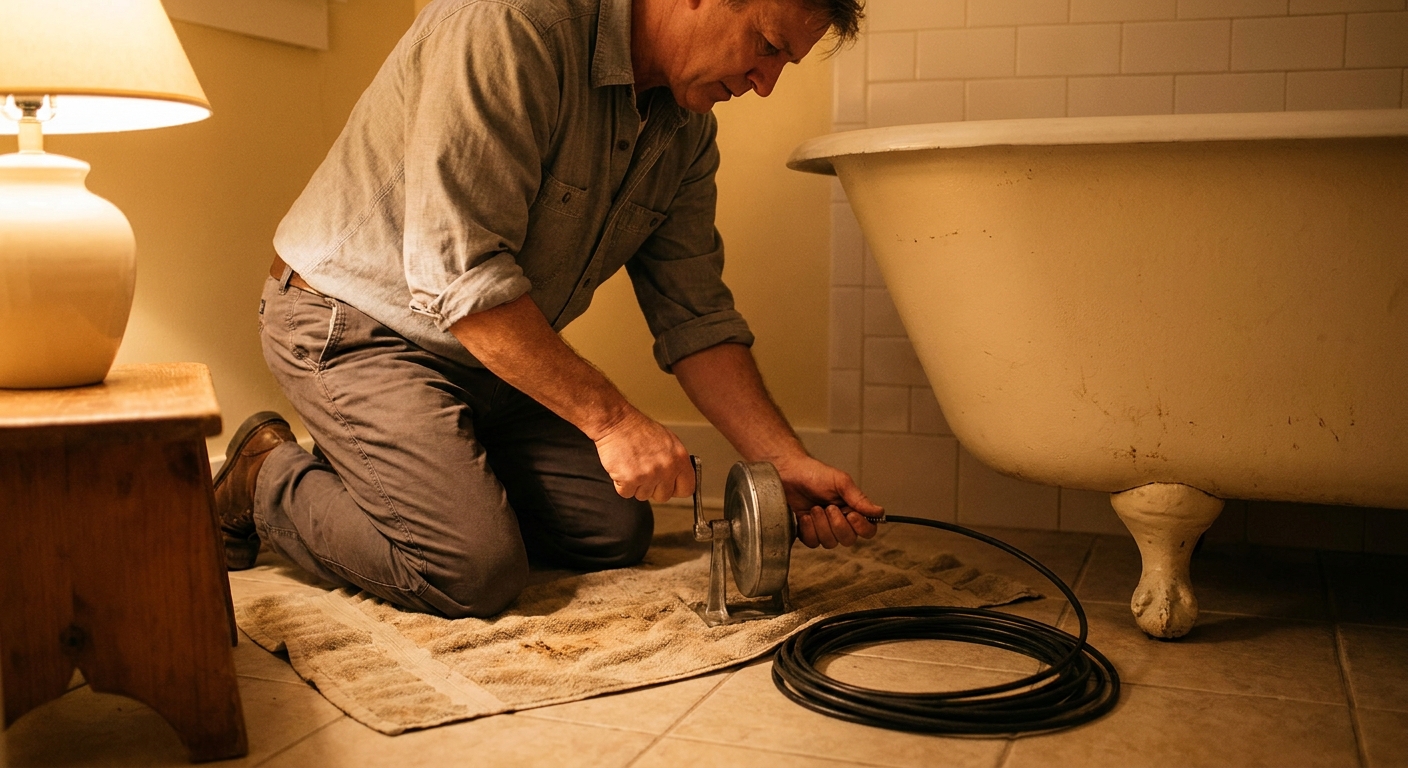
- Mini hand auger (optional) if the plastic snake comes up clean but the drain is still slow.
Step 1: Clear the surface stuff
Time: 5 to 10 minutes. Success looks like: you pull out hair and the water starts clearing faster.
If you have a drain cover
Many tubs have a simple cover held by one or two screws. If it’s screwed in, remove it carefully and set the screws in a cup so they don’t disappear into the void.
Pull out visible hair clumps with a gloved hand or paper towel. Yes, it’s gross. Put on music. You’ll survive.
If you have a stopper
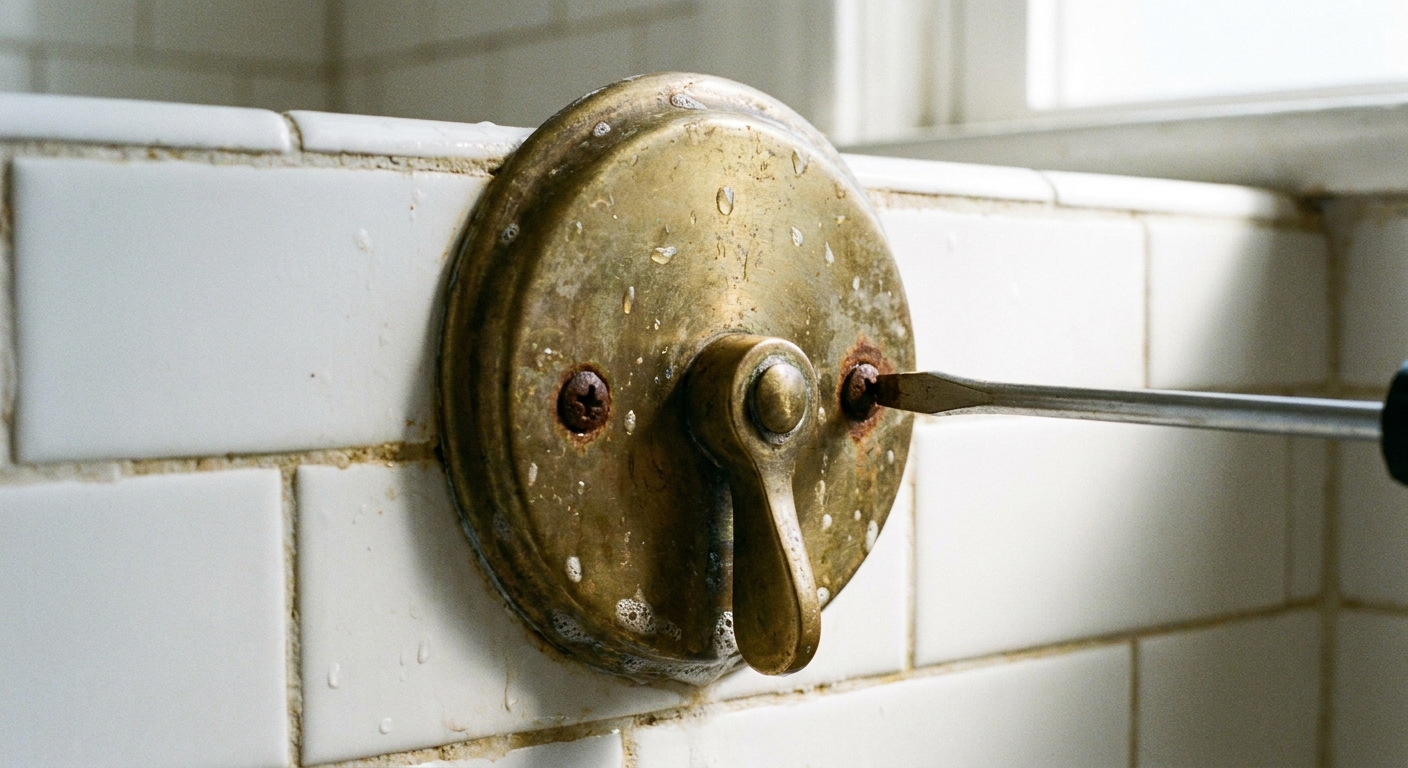
- Lift-and-turn stopper: Lift it up, look for a tiny set screw on the side. Loosen with a small Allen key or screwdriver, then lift the stopper off.
- Toe-touch stopper: Unscrew the top cap (counterclockwise). Under it, there’s often a small screw holding the stopper body. Remove and lift off.
- Push-pull stopper: Some have a visible center screw under the knob or cap. Hold the stopper steady and remove the screw, then lift off.
- Trip lever (overflow plate with a lever): Remove the overflow plate screws and gently pull the linkage assembly out. Expect hair. Keep a firm grip so it doesn’t slip and drop down into the overflow pipe. Clean it, then slide it back in the same orientation.
Renter note: If anything feels like it’s forcing or grinding, stop. Many rental stoppers get cross-threaded over the years, and muscling it can strip threads.
Step 2: Check the stopper
Time: 5 minutes. Success looks like: the stopper moves freely and isn’t blocking the opening.
Sometimes it’s not the drain at all. A stopper that’s misaligned, not lifting fully, or packed with soap scum can slow everything down.
If your stopper was hard to unscrew, wobbly, or wouldn’t seat correctly, it may be cross-threaded. This isn’t the most common cause of slow draining, but it can happen, and it’s worth fixing gently because a crooked stopper can trap debris and reduce flow.
How to re-thread without damage
- Clean first: Soap scum can mimic “bad threads.” Wipe the stopper and any threaded post with a microfiber cloth and a little dish soap.
- Start by hand only: Place the part straight, turn counterclockwise slowly until you feel a tiny “drop” where threads align, then turn clockwise gently.
- Don’t over-tighten: Snug is enough. Over-tightening is what strips plastic and soft metal fittings.
- If it keeps binding: stop and report it. A cross-threaded tub stopper assembly can become a bigger repair than a clog, and that’s landlord territory.
Step 3: Plastic drain snake
Time: 10 to 20 minutes. Success looks like: the tub drains within about 30 to 60 seconds after you turn off the water.
This is the best ratio of effort to results for shower drains.
Remove the stopper or cover so you can access the drain opening.
Insert the plastic snake straight down. If it meets resistance quickly, pull back slightly and re-angle. You’re trying to get past the first bend, not spear the pipe wall.
Twist and pull slowly. Expect hair plus grayish soap scum. Wipe it off into the trash, not the sink.
Repeat until the snake comes up mostly clean.
Flush with hot tap water for 1 to 2 minutes.
If you pull out a satisfying amount of hair and the drain improves immediately, you probably solved it.
Step 4: Plunge it (yes, really)
Time: 5 to 10 minutes. Success looks like: the water level drops quickly and you hear the line clear.
If the snake helped but things are still sluggish, a gentle plunge can move loosened gunk through the trap.
- Use a cup plunger (flat bottom). Make sure there’s enough water in the tub to cover the plunger lip.
- Block the overflow with a wet rag held firmly in place (or tape plastic over it). If you don’t, you’ll just push air in and out of the overflow instead of through the drain.
- Plunge gently in short bursts, then check drainage.
If plunging causes water to burp into another fixture, stop and contact maintenance.
Hot water and cleaners
Hot tap water: yes
Hot tap water is your safe default. It softens soap scum and helps flush small debris without stressing unknown pipe materials.
Boiling water: usually skip it
In rentals, you often don’t know whether you’ve got PVC, older seals, or quirky fittings behind the wall. Boiling water can soften or warp plastic and compromise seals. Unless you know your drain lines are metal and rated for it, stick with hot tap water.
Enzyme or bacterial drain cleaners: sometimes helpful, always slow
Enzyme and bacterial products are designed to break down organic buildup like hair and soap scum over time. They’re typically safer for pipes than caustic chemical openers, but results vary and they work best for maintenance or mild slow drains, not a full blockage.
- Follow label directions exactly.
- Use overnight when the shower won’t be used.
- Don’t mix with bleach or other cleaners.
Chemical drain openers: avoid if you can
Strong caustic or acid drain openers can damage pipes, soften older seals, and create a hazardous situation for whoever has to open the line later. In shared buildings, they can also complicate maintenance if the issue is deeper in a shared main. If you’re considering them, it’s usually time to contact the landlord instead.
Step 5: Mini hand auger (only if needed)
Time: 20 to 40 minutes. Success looks like: drainage improves after you pull out debris and flush with hot tap water.
If the plastic snake pulled up very little and the drain is still slow, a small hand auger can help. This is a step up from the zip tool, and it comes with a bigger “don’t get heroic” warning label.
How to use it safely
- Choose the right size: a 1/4 inch cable is typical for tub drains.
- Go slowly: feed a little cable, rotate the handle, then feed more.
- Don’t force through hard stops: a hard stop can be a fitting, not a clog.
- Pull out and clean the cable frequently so you’re not just packing gunk tighter.
Stop immediately if
- You meet a solid obstruction that won’t budge with gentle rotation.
- The cable kinks or binds.
- You feel strong vibration like the cable is whipping.
- Water begins backing up in another fixture.
In apartments, over-aggressive cabling can scratch older pipes, snag fittings, or push debris into a bigger shared problem. Slow and gentle wins.
When to call the landlord
Sometimes the most renter-safe fix is simply knowing when to stop. Notify your landlord or property manager if you notice any of the following:
- Recurring clogs every week or two even after you remove hair.
- Multiple drains affected (tub plus sink, tub plus toilet).
- Sewage smell or water that looks dirty when it backs up.
- Gurgling combined with slow draining that keeps coming back.
- Leaks around the tub, under the bathroom floor, or in the ceiling below.
- Damaged or cross-threaded hardware you can’t re-seat by hand.
If you want a simple script:
Hi, my bathtub drain is consistently slow. I’ve removed hair from the drain opening, cleaned the stopper, and tried a basic snake. It’s still backing up and I’m hearing gurgling. Can maintenance check for a deeper blockage or venting issue?
Keep it fast
Once it’s draining well again, a little prevention goes a long way. Think of it like keeping the shower enjoyable: small care, big comfort.
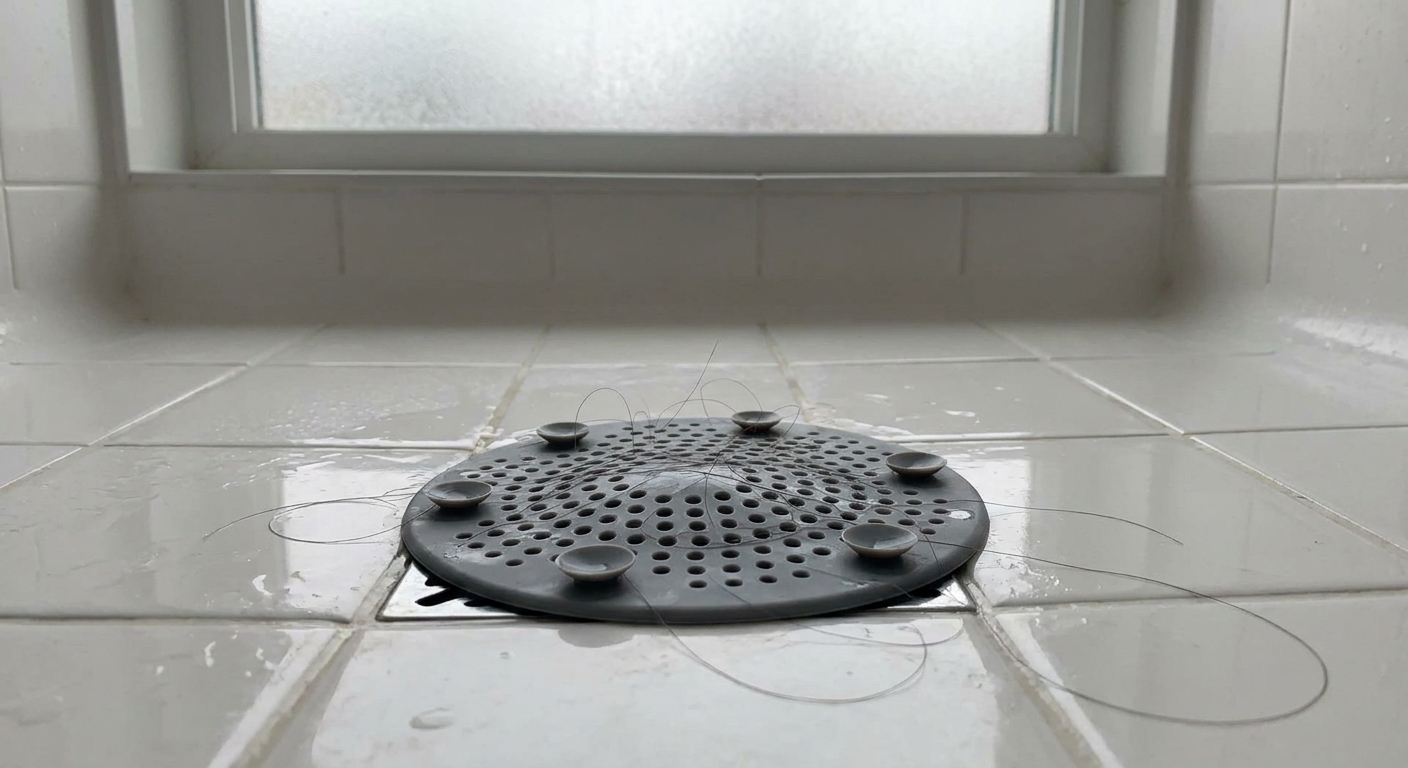
- Use a hair catcher that sits flat and doesn’t wobble. Clean it after each shower.
- Weekly hot tap water flush: run hot tap water for 1 to 2 minutes.
- Monthly stopper clean: remove and wipe soap scum before it becomes sticky glue.
- If you’ve got hard water: expect faster mineral buildup. You may need more frequent cleaning.
Quick checklist
- Pull visible hair and clean the cover or stopper.
- Make sure the stopper is opening fully (and re-thread gently if needed).
- Plastic drain snake, repeat until mostly clean.
- Flush with hot tap water.
- Plunge gently with the overflow blocked.
- Optional enzyme or bacterial cleaner overnight for lingering slow flow.
- Mini hand auger only if you’re comfortable and it still drains slowly.
- Stop and notify the landlord if multiple fixtures back up, gurgling persists, or you hit hard resistance.
And when it finally drains the way it should, take a second to enjoy the small luxury of a shower that feels like a fresh start, not a science experiment.