Slow Bathtub Drain Fixes Renters Can Try First

Clara Townsend
Clara Townsend is an interior stylist, vintage furniture enthusiast, and the creative voice behind Velvet Abode. With over a decade of experience transforming both cramped city apartments and sprawling fixer-uppers, she believes that a beautiful home is built on personal stories rather than massive budgets. When she isn't hunting for the perfect brass sconce at a local flea market, she can usually be found rearranging her living room for the third time this month.
A slow bathtub drain has a very specific kind of drama. You step in for a relaxing soak and suddenly you are ankle-deep in water that refuses to leave, like it pays rent.
The good news: most bathtub clogs start as a very ordinary mix of hair, soap scum, and product buildup near the drain opening or in the stopper and trap area. If you rent, you can often improve flow with a few gentle, low-risk steps before you escalate to a bigger tool or a maintenance request.
Quick safety notes
- Skip harsh chemical drain openers unless your lease or building specifically recommends them. They can be dangerous, may violate building policy, and can damage pipes or seals, especially in older systems.
- Be careful with very hot water. Hot tap water can help with soap buildup, but near-boiling water can soften or warp some PVC, loosen older seals, and even stress some tub finishes. Start with very hot tap water first.
- Do not mix cleaners. If you already poured a chemical product down the drain, do not add vinegar, bleach, or anything else on top. Ventilate and wait, or call maintenance.
- Protect the tub finish. Use a soft cloth or plastic tool when prying stoppers. Avoid metal tools directly on enamel or acrylic.
Where tub clogs usually live
Bathtub clogs often form fairly close to the drain opening, especially where hair and soap scum catch around the stopper or in the trap. That is why the most renter-friendly fix is often the least glamorous one: remove the stopper, pull out the hair, and rinse away the gunk. If the tub drains slowly and gurgles, or the toilet bubbles when the tub drains, the clog may be deeper in a shared line or related to venting. That is when you stop DIY and call maintenance.
Step 1: Pull hair (use a plastic mini snake)
Before you plunge, try the cheap, low-drama tool that works on most tub clogs: a barbed plastic drain snake (often sold as a Zip-It tool). It is designed to grab hair in the first stretch of pipe without scraping or damaging anything.
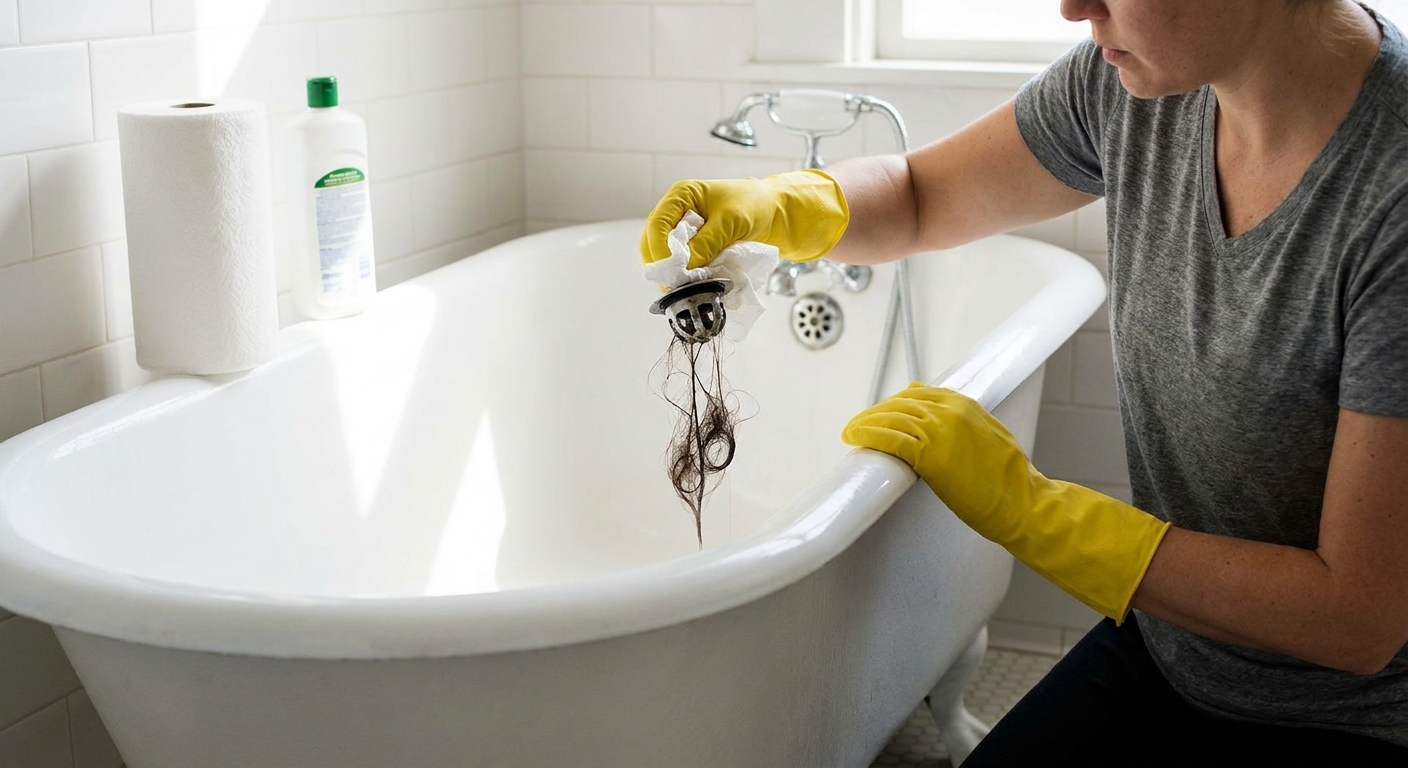
- Remove any hair catcher and as much visible hair as you can by hand first.
- Slide the plastic tool into the drain, wiggle gently, then pull it back out slowly.
- Wipe off the gunk, repeat a few times, then flush with hot tap water for 30 to 60 seconds.
If you meet hard resistance right away, do not force it. Different drains have different shapes, and jamming a tool can turn a small clog into a stuck-tool situation.
Most tubs also have one of a few common stopper styles. Pick the section that looks like yours and work slowly. Put a washcloth in the bottom of the tub to protect the surface and catch tiny screws.
Push-pull (toe-touch)
This stopper sits in the drain and opens or closes when you push it.
- Twist the stopper counterclockwise to unscrew it. Some models have a small set screw on the side of the stopper. If you see one, loosen it gently with a small Allen key.
- If it does not unscrew easily, do not force it. Look for a set screw you missed, search the model, or call maintenance.
- Lift the stopper off and look for a cylinder or post with hair wrapped around it.
- Pull hair out with a paper towel or a plastic drain tool, then wipe the parts clean and reattach.
Lift-and-turn
This one has a small knob you lift and twist to close.
- Open the stopper (lift it) and look for a tiny set screw on the knob. Loosen it, then lift the stopper off.
- If something feels stuck, stop. Forcing a small set screw is a fast way to strip it.
- Remove hair from the stopper body and the drain opening beneath.
- Reinstall and tighten the set screw gently.
Trip lever (lever on the overflow plate)
This is the classic tub lever on the wall under the faucet. The stopper mechanism is connected to a linkage behind the overflow plate.
- Flip the lever to the open position.
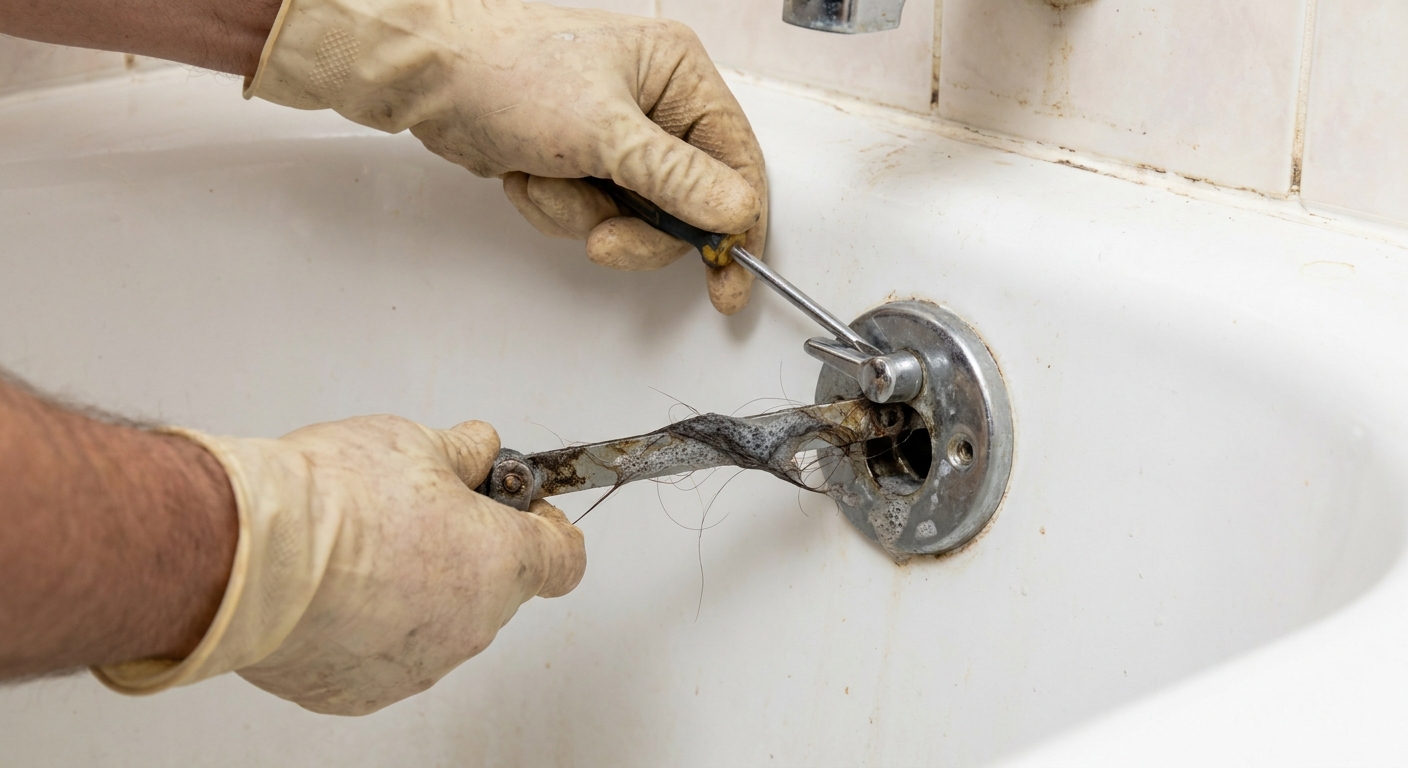
- Unscrew the overflow plate (usually two screws) and slowly pull the plate and linkage straight out.
- Remove hair from the linkage and wipe off soap scum. This is often where the clog is hiding.
- Slide it back in carefully and reattach the plate.
- If the linkage will not come out smoothly, do not yank. Call maintenance.
Pop-up stopper (built into the drain)
Some pop-up styles can be lifted out once you open them.
- Open the stopper and try lifting it straight up. If it resists, look for a set screw or a release slot.
- If it does not lift out easily, stop and look up the model. Do not pry aggressively against the tub finish.
- Pull out hair and rinse the stopper under warm water.
- Wipe the drain rim clean before putting it back.
Step 2: Dish soap + hot water
If your tub is slow but not fully blocked, you may be dealing with a soft clog made of soap scum and product residue. A simple flush can help:
- Squirt about 1 to 2 tablespoons of dish soap into the drain.
- Wait 5 to 10 minutes so it can slick up the buildup.
- Run very hot tap water for 2 to 3 minutes. If you have a kettle, you can add hot water that is not at a rolling boil.
If your building has older plumbing, this is often the sweet spot: effective, but not aggressive.
What about baking soda and vinegar?
It is popular for a reason: it feels satisfying. In reality, baking soda and vinegar is usually better for deodorizing and light buildup than for real hair clogs. If you want to try it, do it gently: pour a small amount of baking soda, then vinegar, let it fizz 10 to 15 minutes, and flush with hot tap water. If you are choosing one method, dish soap plus hot water is often the more useful first step for soap scum.
Step 3: Plunge a tub the right way
Plunging can be surprisingly effective for a tub, but the technique matters. You want pressure focused on the drain, not escaping out the overflow opening. The overflow is basically a second opening to the drain system, so if it is not sealed, your plunging force can leak out there instead of pushing the clog.
What you need
- A standard cup plunger (flat bottom). A toilet flange plunger can work too, but the cup style fits tubs nicely.
- A damp rag or washcloth.
- A little petroleum jelly (optional) to help the plunger seal.
How to do it
- Remove anything blocking the seal. Take off a hair catcher. If your stopper sits in the drain and prevents a good seal, remove it first.
- Cover the overflow. Press a wet rag firmly over the overflow opening (the oval opening under the faucet). This is key.
- Add water. You need enough water to cover the plunger cup by about an inch.
- Seal and plunge. Place the plunger over the drain, press down gently to seal, then pump 10 to 15 times with steady force.
- Check flow. Lift the plunger and see if the water drains faster. Repeat a few rounds if needed.
If you feel strong resistance and then a sudden release, you probably broke up a hair-and-soap plug. Run hot water for a minute to carry loosened debris away.
Step 4: Wet-dry vacuum (if safe)
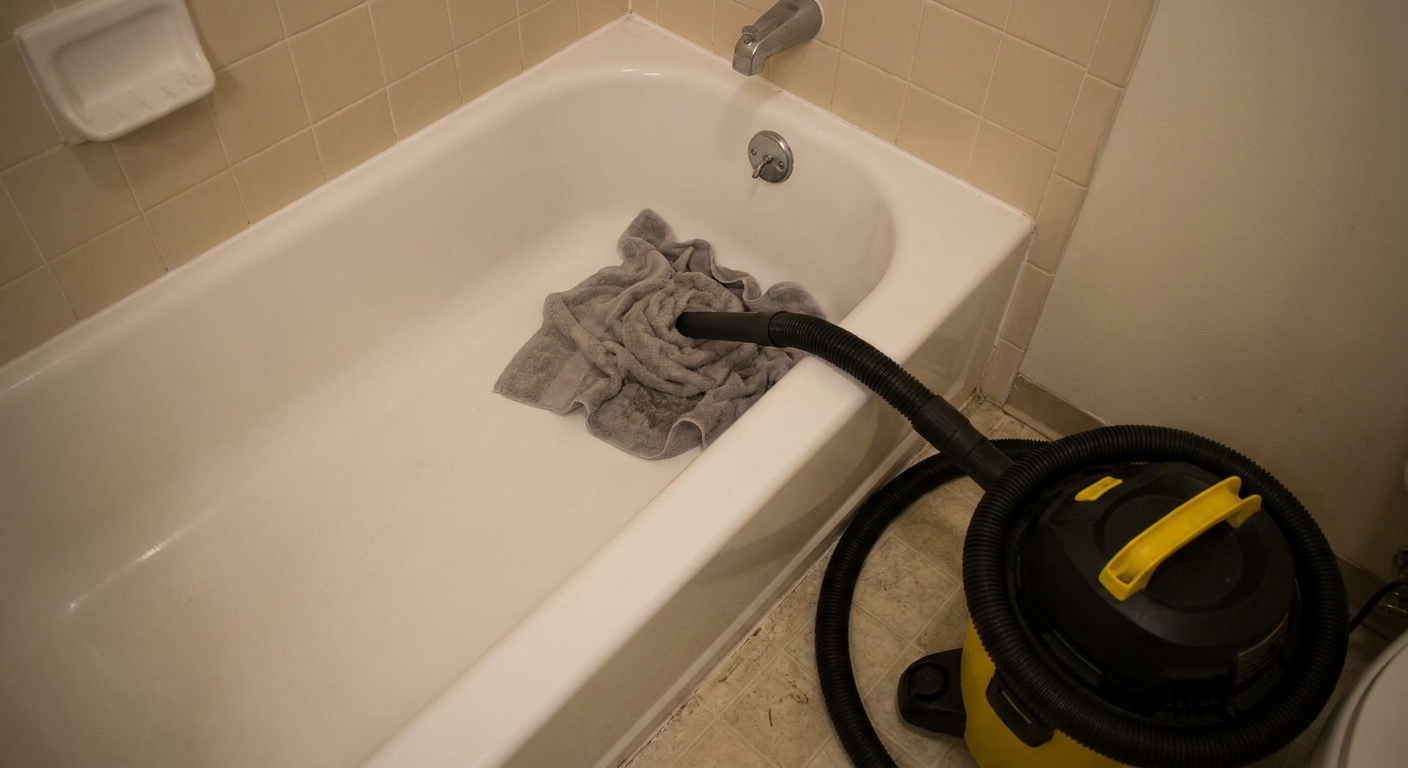
If you have access to a true wet-dry shop vacuum and your lease allows it, you can sometimes pull a shallow clog out without snaking.
- Confirm it is a wet-dry vacuum and set it to wet pickup.
- Block the overflow opening with a wet rag.
- Create a tight seal at the drain using the hose and a damp towel wrapped around the connection.
- Run the vacuum in short bursts of 10 to 20 seconds.
- Stop immediately if you suspect a bigger backup (multiple drains affected, sewage smell, rising water elsewhere). That is a maintenance problem, not a vacuum problem.
This method is best for clogs close to the opening. If you hear rattling or see hair and gunk appear in the vacuum canister, you did it. Flush the drain with hot tap water afterward.
What to avoid in rentals
- Caustic or corrosive drain openers (including lye- or acid-based formulas). Even when they are effective, they can be hazardous and may damage plumbing, especially if misused or left sitting in the line.
- Repeated near-boiling water dumps, especially in older buildings or acrylic tubs. Too much heat can soften PVC and stress seals.
- Metal coat hangers. They can scratch tubs, puncture older pipes, or get stuck and turn a small clog into a maintenance emergency.
- Overtightening stopper screws. Stripped hardware is a fast way to lose your deposit.
If you want a gentler chemical option and your lease allows it, consider an enzymatic or bio drain cleaner. It works slowly (think overnight), but it can help with organic gunk without the same risk level as corrosive openers.
When to call maintenance
I am all for a cozy, capable renter moment, but there are times you should stop and hand it off. Submit a maintenance request if you notice any of these:
- The tub is fully blocked and standing water will not move at all.
- The clog returns within a day or two after you clear hair and plunge.
- You hear gurgling from other drains, or the toilet bubbles when the tub drains (possible shared line or venting issue).
- There is a sewage smell coming from the tub drain.
- You see any sign of leaking under the tub, near the access panel, or in the ceiling below.
- You previously used a chemical product and the drain is still slow.
When you message maintenance, include: how long it has been slow, whether it is a full blockage, and what you already tried (hair removal, plastic drain snake, hot water, plunging). It signals that you did the safe basics and helps them choose the right fix.
Keep it flowing
Once your tub is draining happily again, a few tiny routines can keep it that way. Think of them as the houseplant-level maintenance of plumbing.
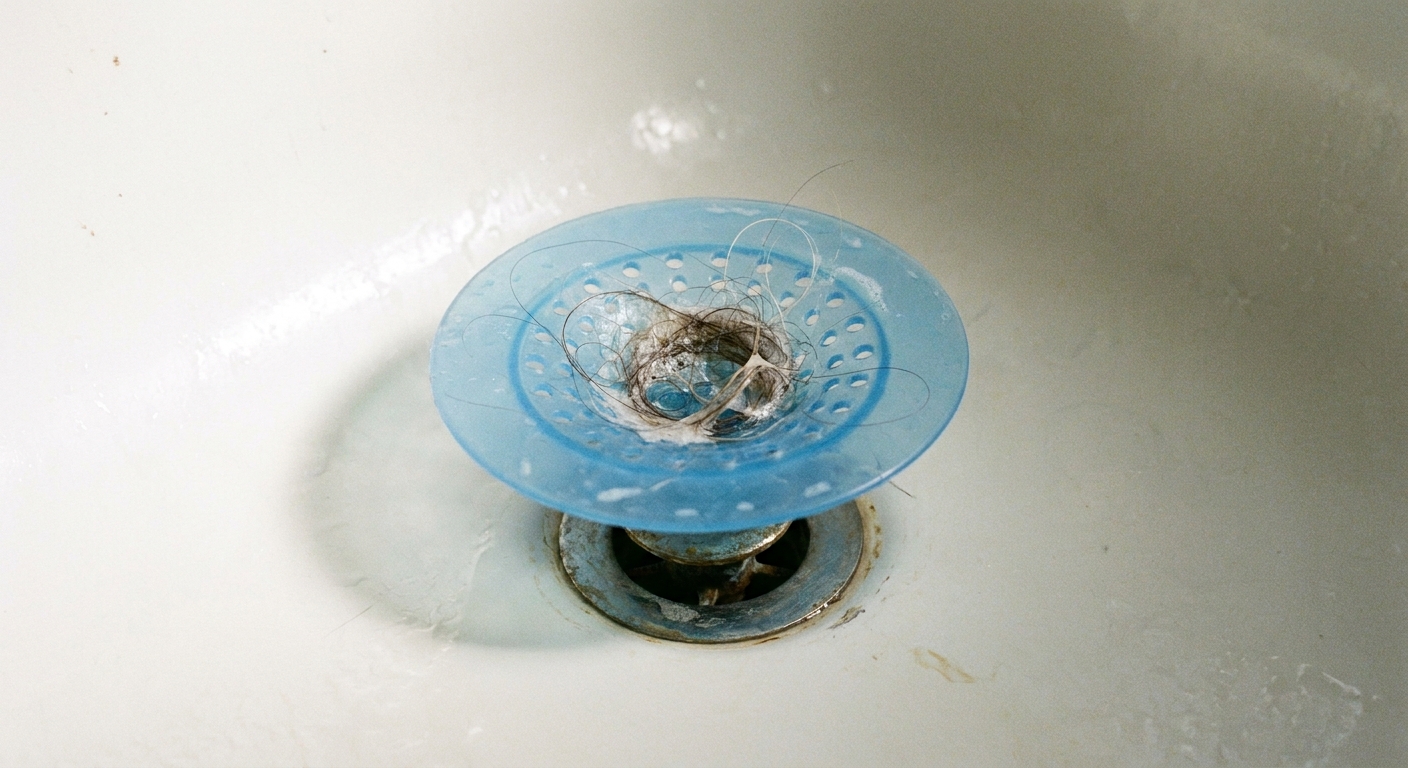
- Use a hair catcher. Choose one that sits flat and is easy to clean. The best one is the one you will actually rinse out.
- Weekly rinse. After a hair wash day, run hot water for 30 seconds to move leftover suds through.
- Monthly stopper check. Pull the stopper and remove buildup before it becomes a plug.
- Go easy on heavy oils and butters. They feel luxurious, but they cling to pipes and trap lint and hair.
Renter-friendly checklist
- Remove visible hair and use a barbed plastic drain snake.
- Flush with dish soap plus very hot tap water.
- Plunge with the overflow covered.
- Try a wet-dry vacuum only if available, permitted, and safe.
- Escalate to maintenance for repeat clogs, gurgling, sewage smells, or full blockages.
Your tub does not need to drain like a waterfall to feel like a little sanctuary. It just needs to stop holding your bathwater hostage.