Sliding Glass Door Track Won’t Glide? Clean and Lubricate It (Renter-Safe)

Clara Townsend
Clara Townsend is an interior stylist, vintage furniture enthusiast, and the creative voice behind Velvet Abode. With over a decade of experience transforming both cramped city apartments and sprawling fixer-uppers, she believes that a beautiful home is built on personal stories rather than massive budgets. When she isn't hunting for the perfect brass sconce at a local flea market, she can usually be found rearranging her living room for the third time this month.
Nothing kills the cozy faster than a sliding glass door that shrieks, sticks, and makes you use your whole body like a battering ram. The good news is that most “won’t glide” doors are not broken, they are just gritty. Think beach sand, pet hair, dead leaves, and that mysterious gray paste that appears when dust meets moisture.
This is my renter-safe routine: remove the grit, dissolve the buildup, check the rollers gently, then use the right lubricant in the smallest amount possible. No harsh solvents, no drilling, no “let’s take the whole door off its track and hope for the best” energy.
Before you start: identify your door type
“Sliding door” can mean a few different mechanisms. Your cleaning and lube steps are similar, but the checkpoints change.
- Standard slider (most common patio door): One panel slides on rollers along a bottom track. This guide focuses here.
- Pocket door: The panel disappears into the wall. Many have a top track, with a bottom guide to keep it aligned (but hardware varies, so follow manufacturer guidance if you have it).
- Barn-style slider: Visible top rail, door hangs from rollers. Typically no bottom track, just a floor guide.
What to use (and what to avoid)
Renter-safe supplies
- Vacuum with crevice tool
- Stiff nylon brush or old toothbrush
- Microfiber cloths or paper towels
- Warm water + a drop of dish soap
- White vinegar (optional, for mineral grime)
- Plastic putty knife or old gift card (for scraping without gouging)
- Lubricant: PTFE (dry) spray or 100% silicone spray
Skip these
- WD-40 as a “final lubricant”: It can leave residue and attract grit over time, so it is not ideal as the last step. It is fine as a temporary water-displacer or cleaner in a pinch, but follow with proper dry lube if needed.
- Grease or petroleum jelly: Works for about five minutes, then becomes a grit magnet.
- Harsh solvents (acetone, lacquer thinner): Can haze some plastics and soften or discolor vinyl frames and finishes.
- Steel wool or metal scrapers: They leave burrs that catch rollers and make everything worse.
Quick compatibility note: If your door frame is vinyl, treat it gently. Stick to warm soapy water first, then vinegar only if needed, and test any spray lube in a hidden spot.
Quick safety note: If you use sprays, ventilate the area and consider eye protection. Overspray is sneaky.
Step-by-step: the 20-minute clean that fixes most sliders
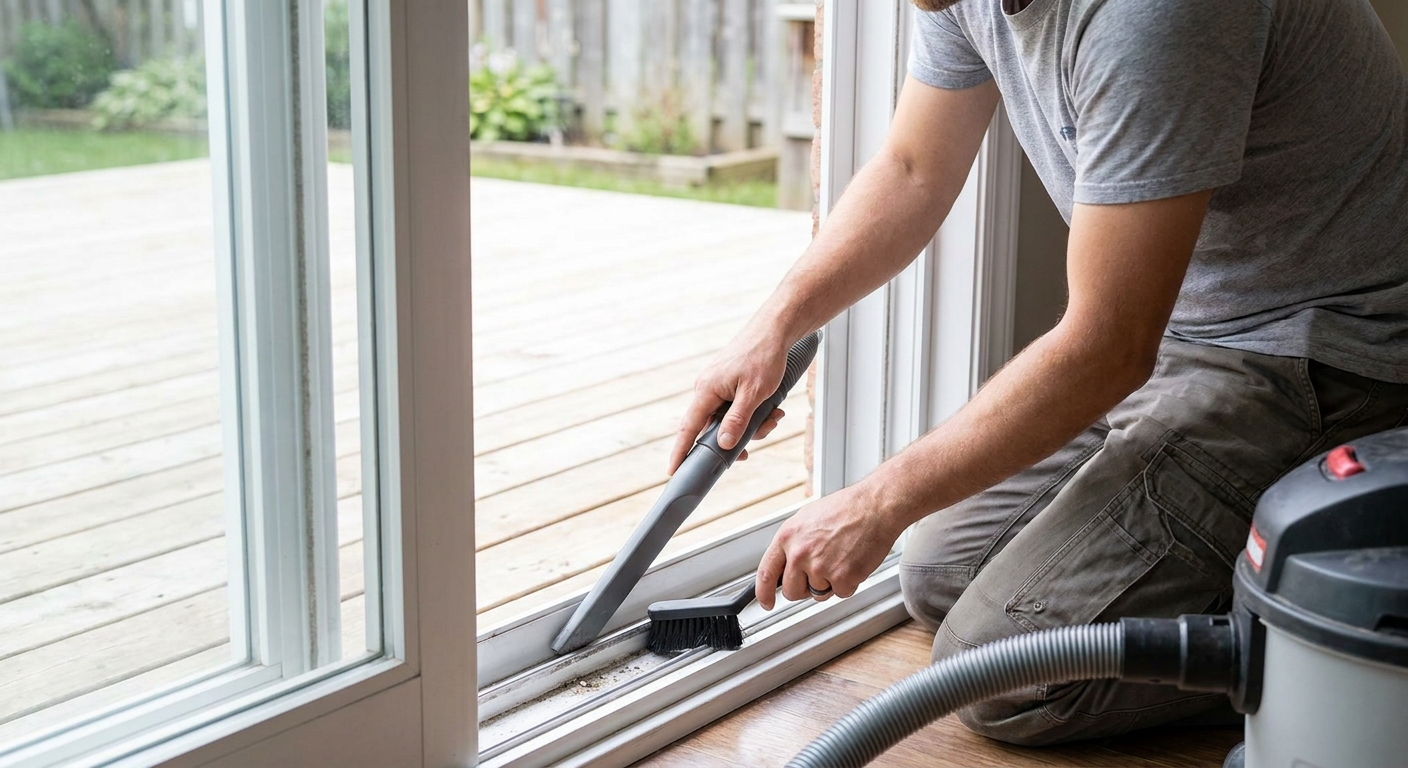
1) Vacuum the track like you mean it
Open the door and vacuum the full length of the bottom track, including the corners. Use the crevice tool, then run a dry toothbrush along the channel while vacuuming again to lift embedded grit.
Tip: Pay attention to the “rail” the rollers ride on. That raised ridge is where tiny stones love to hide.
2) Lift sticky buildup without damaging vinyl
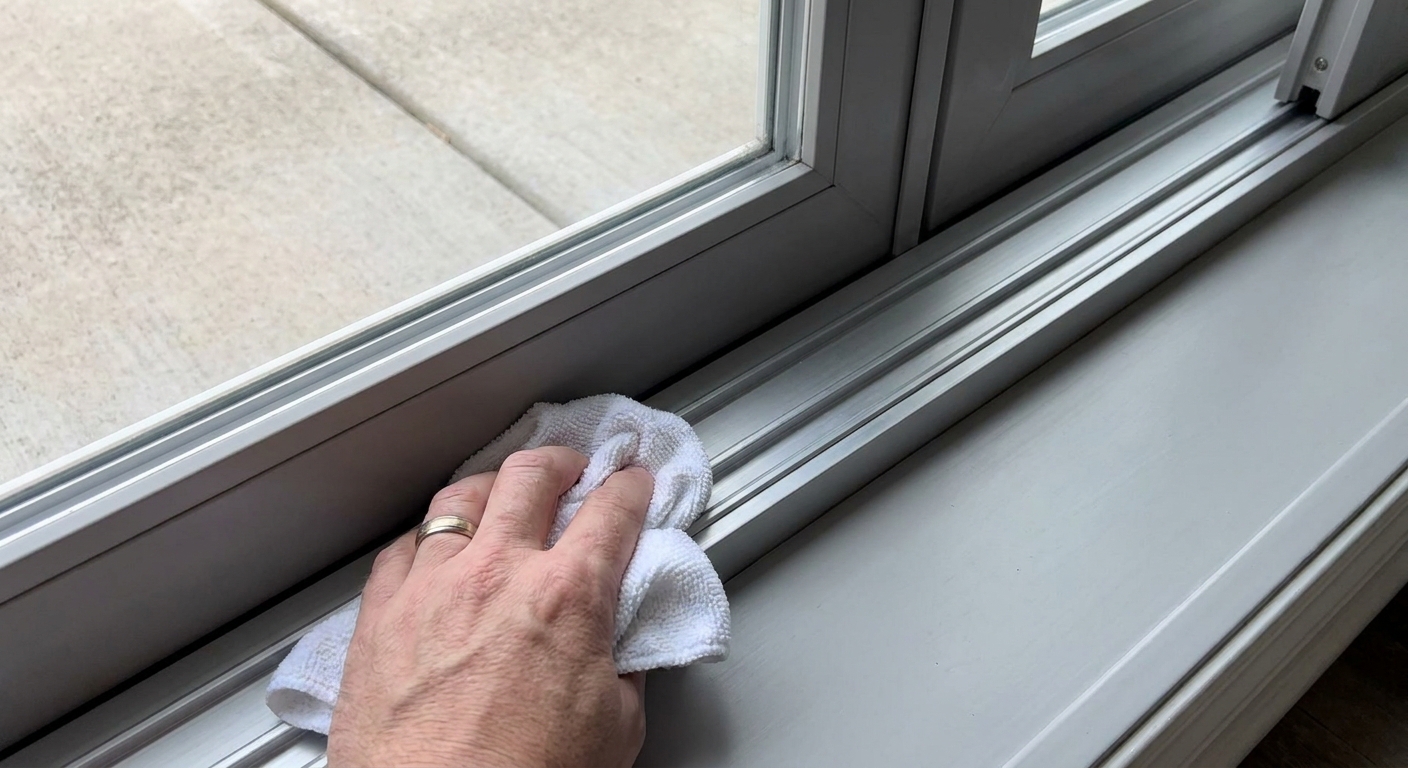
Mix warm water with a small drop of dish soap. Dampen a microfiber cloth and wipe the track, then use your toothbrush to scrub the channel.
If you have crusty residue or mineral spots, use a 50/50 mix of white vinegar and warm water sparingly. Let it sit for 2 to 3 minutes, then scrub and wipe.
Important: Avoid pouring liquid directly into the track. You want damp, not drenched. Excess water can seep under flooring or into the frame.
3) Scrape carefully, then wipe dry
For stubborn gunk, use a plastic putty knife or an old gift card to gently scrape along the rail. Wipe away the loosened grime, then finish with a clean, dry cloth. The track must be fully dry before lubricant goes on, otherwise you get sludge.
Also check: If the rail is deeply grooved, dented, or peeling up, cleaning and lube will only do so much. That is often a roller or track repair situation.
Still heavy? Rollers and alignment (gentle checks)
If the track is clean and the door still drags, the rollers may be seized, flattened, or misadjusted. You can do a couple of renter-friendly checks without removing the door.
Check for obvious drag points
- Look at the bottom edge: Is it scraping the track or frame?
- Listen as you slide: A crunchy sound suggests grit. A dull rubbery scrape suggests misalignment.
- Check the weatherstripping: Torn or bunched stripping can catch and mimic a roller issue.
Find the adjustment screws (if accessible)
Many standard sliders have small adjustment screws near the bottom corners of the sliding panel, often behind a small cap. Turning them slightly raises or lowers the door on its rollers.
- If the door scrapes at the bottom: a small adjustment to raise it can help.
- If the door wobbles and feels loose: it may be set too high.
Renter-safe rule: Only do this if your lease allows basic adjustments. Make tiny changes, one quarter turn at a time, and stop if you feel resistance. If screws are stripped, rusted solid, or missing, that is a maintenance call.
Loosen mildly seized rollers (no door removal)
After cleaning, slide the door back and forth slowly a few times. Sometimes that motion alone frees a roller that was glued in place by grime. If it improves but still sticks, move on to lubrication below.
Lubrication: less is more
Your goal is a thin, invisible layer that reduces friction without creating a dust trap.
Manufacturer note: Some door makers prefer you only clean the track and lubricate the rollers or roller bearings (not the track surface). If you can find your door brand and instructions, follow them.
Pick one: PTFE dry lube or silicone
- PTFE dry lube: My favorite for tracks and running surfaces. It dries slick and is less likely to collect dirt.
- 100% silicone spray: Great for vinyl and rubber, and works well if applied lightly.
Apply it the clean way
Spray onto a cloth first, not directly into the track. This prevents overspray on flooring and keeps lubricant out of places it should not be, like your lock and handle.
Wipe the rail where the rollers contact, plus a light wipe inside the channel.
Slide the door open and closed 10 to 15 times to distribute.
Buff off excess with a dry cloth. If you can see wet shine, it is probably too much.
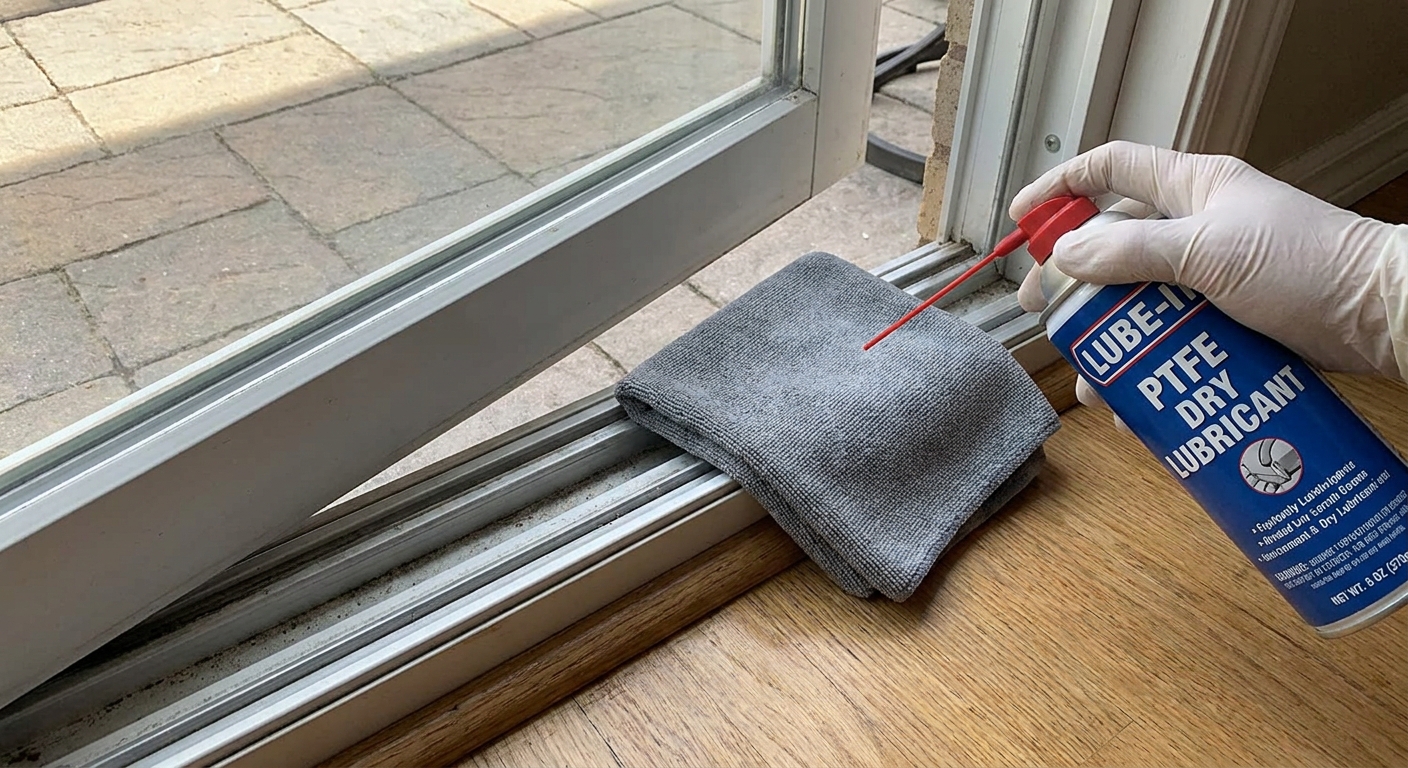
Do not oil the fuzzy weatherstripping or the lock hardware. Those parts want to stay grippy and clean.
Pocket vs. barn vs. standard: quick checklists
Standard patio slider checklist
- Vacuum and scrub bottom track thoroughly.
- Dry completely.
- Light PTFE or silicone on the rail (or per manufacturer guidance).
- Check bottom corners for roller adjustment screws (only if lease allows).
- Inspect weatherstripping for tears or bunching.
Pocket sliding door checklist
- Clean the bottom guide (the little fin or bracket that keeps the door from swinging).
- If you can access the top track opening, vacuum carefully with a narrow attachment.
- Use dry PTFE sparingly on the running surface if the manufacturer allows.
- If it scrapes inside the wall pocket, stop and call maintenance; pockets hide fastener and alignment issues.
Barn door slider checklist
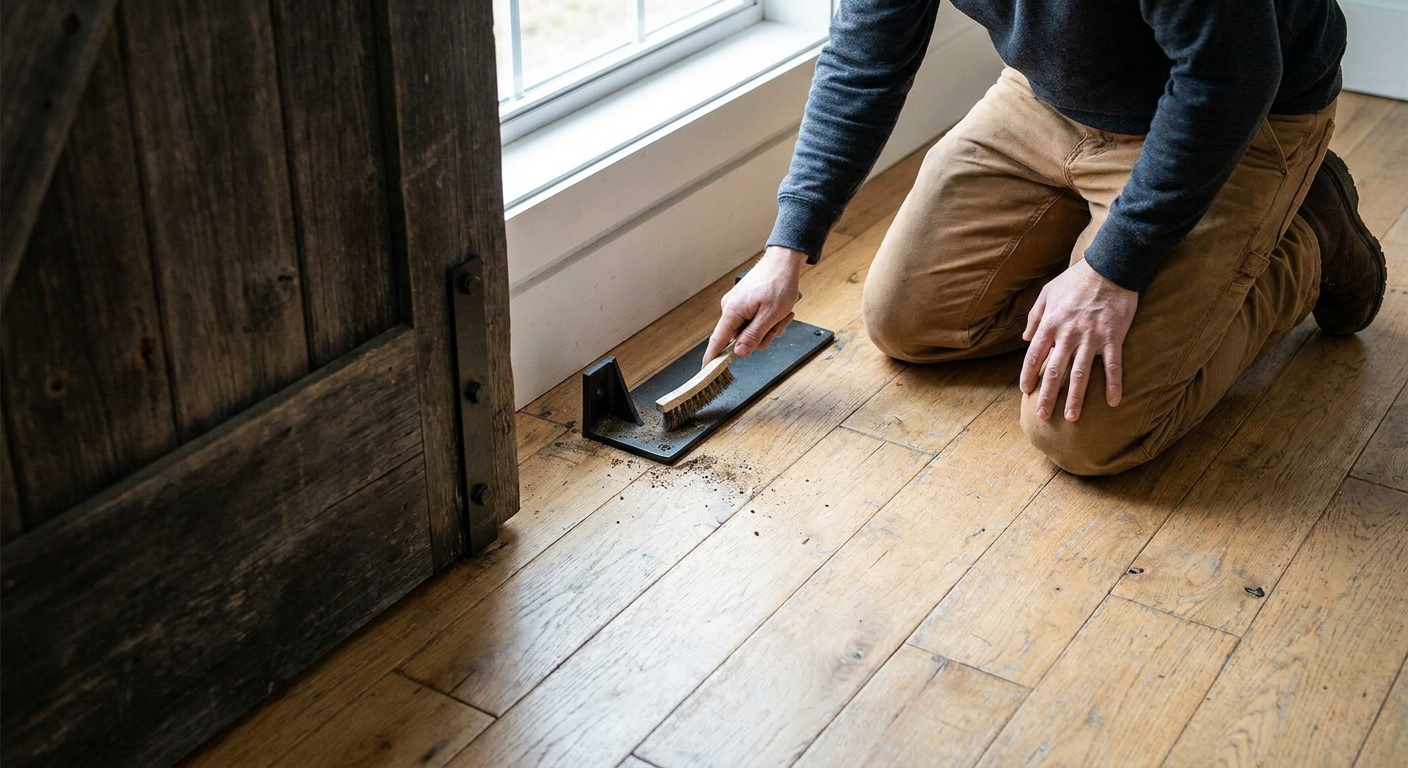
- Vacuum the top rail and wipe the running surface.
- Check the floor guide for hair and grit. This is a common drag culprit.
- Use a small amount of silicone or PTFE on the rail where rollers run.
- Tighten visible bolts only if they are clearly loose and you are allowed to; otherwise, call maintenance.
When to call maintenance (and what to say)
Sometimes a sticky slider is not a cleaning problem. It is a worn roller, bent track, or a door that has settled out of square.
Escalate if you notice any of these
- The door lifts up and down noticeably when you push on it.
- A loud clunk or grinding that persists after cleaning.
- Visible flat spots, cracks, or missing chunks on rollers (if you can see them).
- The bottom rail is dented, bent, deeply grooved, or peeling up.
- The lock no longer lines up because the panel is sagging.
- Water intrusion around the frame or soft flooring near the track.
A renter-friendly message you can send
Hi, my sliding glass door is difficult to open and appears to be dragging even after I cleaned the track. It may need roller replacement or alignment. Could maintenance inspect the rollers and track and adjust or replace as needed?
That wording signals you did the simple care step, and it nudges them toward the parts that actually fail.
Keep it gliding: a tiny rhythm
- Weekly: quick vacuum pass in the track, especially if you have pets or a breezy patio.
- Monthly: wipe with warm soapy water, dry well.
- Every 3 to 6 months: reapply a whisper-thin coat of PTFE or silicone, only after cleaning (and per manufacturer guidance).
A smooth sliding door is one of those small home comforts that makes the whole room feel calmer, like linen curtains moving in a soft draft. Clean first, lube second, and if it still fights you, let maintenance do the heavy lifting.