Sliding Closet Door Off Track? Renter-Friendly Fixes That Usually Work

Clara Townsend
Clara Townsend is an interior stylist, vintage furniture enthusiast, and the creative voice behind Velvet Abode. With over a decade of experience transforming both cramped city apartments and sprawling fixer-uppers, she believes that a beautiful home is built on personal stories rather than massive budgets. When she isn't hunting for the perfect brass sconce at a local flea market, she can usually be found rearranging her living room for the third time this month.
A sliding closet door that keeps jumping the track is the kind of small but maddening apartment problem that can make you feel like you are losing a tug-of-war with your own home. The good news: most off-track issues come down to grime, a slightly crooked guide, or rollers that need a quick tweak. The better news: you can usually fix it without drilling new holes or doing anything that will make a landlord nervous.
Below is my renter-friendly, “do the simplest thing first” checklist. I will also tell you exactly when to stop, because the fastest way to turn a small fix into a bigger mess is forcing a door that is already telling you something is wrong.
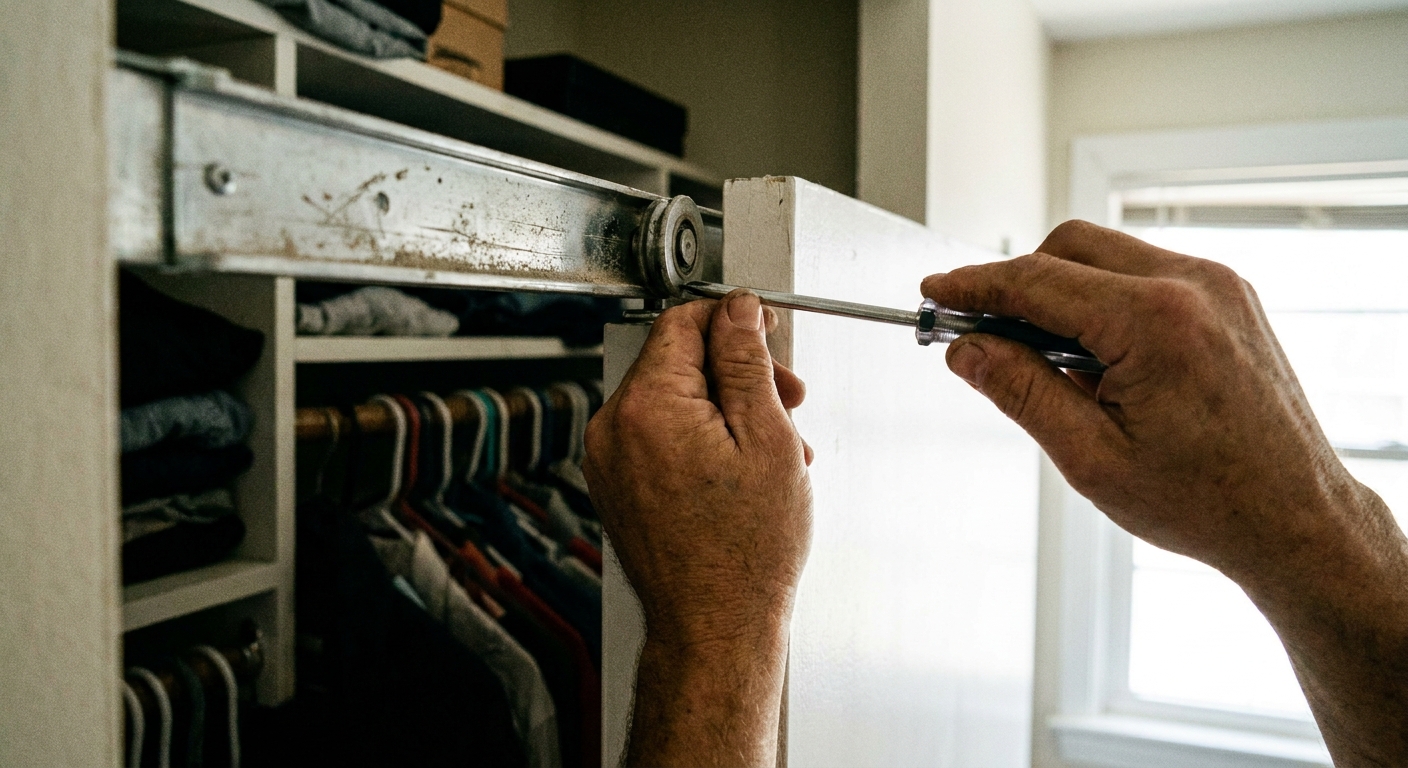
What you may need
- Vacuum with a crevice tool
- Microfiber cloth or rag
- Dish soap and an old toothbrush
- Flashlight
- Phillips screwdriver (sometimes flathead)
- Tweezers (for hair and lint)
- Optional: silicone-based lubricant, used sparingly
Before you start: a 90-second safety check
Sliding doors can be surprisingly heavy, especially mirrored ones. Give yourself a little room and a little grace.
- Clear the floor so you are not stepping on shoes, hangers, or a stray belt while holding a door.
- Get a helper if the door is mirrored or solid wood. If you are alone, move slowly and keep one hand on the door at all times.
- Look for cracks in mirror panels or a loose frame. If you see damage, stop and notify your landlord. A cracked mirror is not a DIY moment.
- Do not force it. If the door is grinding metal-on-metal, something is misaligned or broken.
Know your setup: common door types
Most closet sliders fall into a few common setups:
- Top-hung: the door hangs from rollers in the top track. The bottom has a small guide to keep it from swinging.
- Bottom-rolling: the weight rides on wheels in the bottom track. The top track mainly steadies the door.
- Hybrid bypass systems: many “standard” bypass closets use top rollers and a bottom guide, and may share the load between top and bottom depending on the hardware.
Why it matters: if your door is bottom-rolling, a dirty or dented bottom track is often the culprit. If it is top-hung, the top rollers and their height adjustment are usually the suspects.
General clue: gently lift the door. If it lifts easily and feels like it is hanging, that often points to top-hung. If it feels more planted, that often points to bottom-rolling. But this is not foolproof. Some bottom-rolling doors lift a bit, and some top-hung doors have anti-lift blocks that limit lift. The most reliable check is simple: use a flashlight and look for the wheels. Are the wheels at the top corners, bottom corners, or both?
Fix #1: Clean the track like you mean it
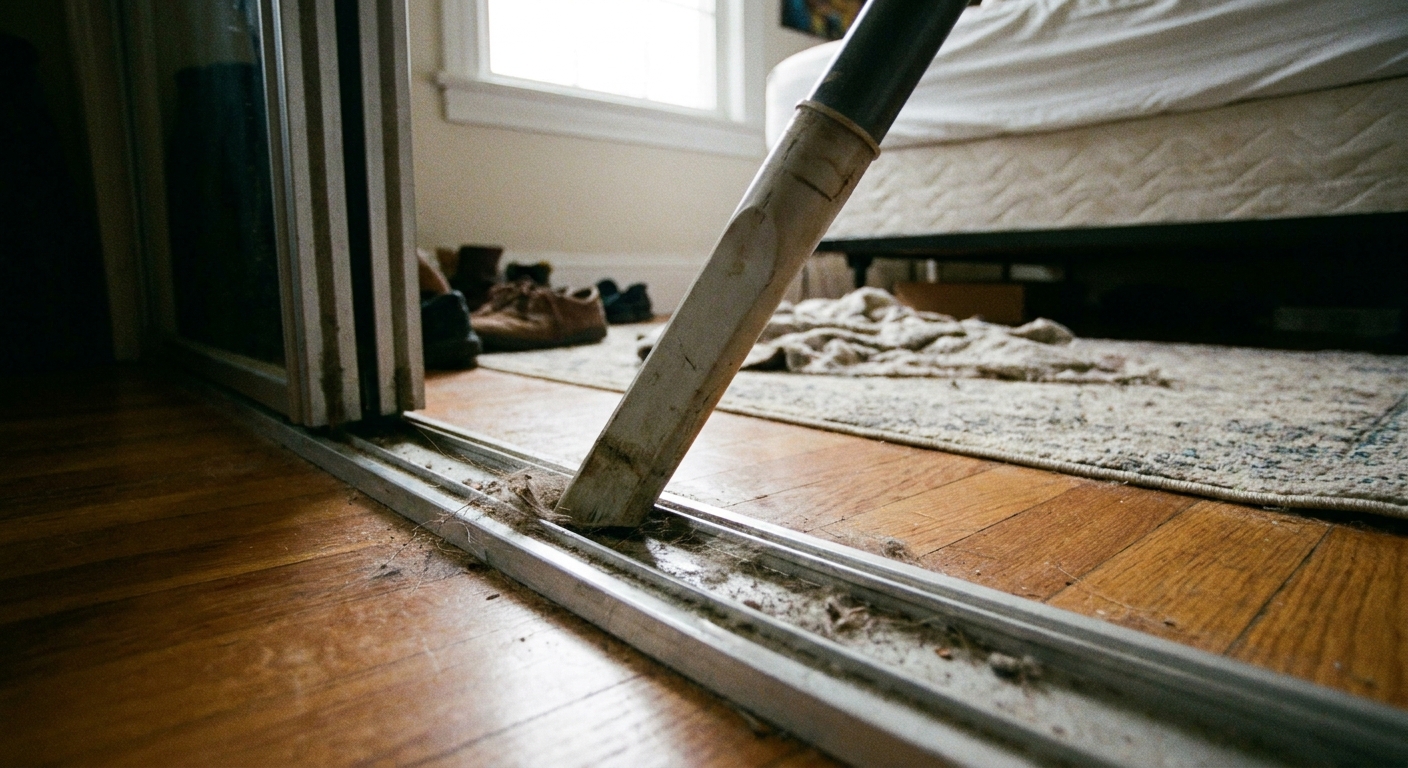
I know. Cleaning sounds too basic to be the answer. But tracks collect a weird mix of dust bunnies, pet hair, grit, and tiny bits of paint or plaster from past repairs. That debris acts like a speed bump under wheels and a wedge under guides.
What to do
- Vacuum first with a crevice tool. Get into corners where the track meets the frame.
- Wipe with a damp cloth and a drop of dish soap. Use a toothbrush for stubborn grime.
- Dry completely. Even if your track is aluminum, drying helps prevent corrosion on hardware and keeps new grime from turning into sludge.
- Optional: use a tiny amount of silicone-based lubricant on the track or rollers, then wipe away excess. Some manufacturers prefer no lubricant at all because it can attract dust, so keep it minimal and stop if it seems to make things worse.
Renter note: Skip anything permanent like glue-on “track covers.” A clean track and correctly adjusted rollers do most of the work.
Fix #2: Pop it back on track the right way
If the door is already off the track, you typically need to re-seat it rather than shove it sideways. The order matters, and it depends on which kind of system you have.
How to re-seat a sliding closet door
Line it up and angle it gently so the edge can meet the channel.
If you have top-hung (or top-roller bypass) doors: lift slightly and set the top rollers into the top track first, then guide the bottom into the floor guide.
If you have bottom-rolling doors: set the bottom wheels into the bottom track first, then tip the top into the upper guide channel.
Gently slide back and forth a few inches to confirm it is seated and moving smoothly.
If it keeps jumping off immediately, do not keep repeating the same move. That is your sign that a guide is bent, an anti-lift clip is mis-set, a roller is loose, or the track is damaged.
Door removal note: fully removing a closet door is usually a two-person job and a last-resort step in a rental. If you think you need to take the door off completely to keep going, that is a good place to stop and call maintenance.
Fix #3: Check the bottom guide (the most common “tiny villain”)
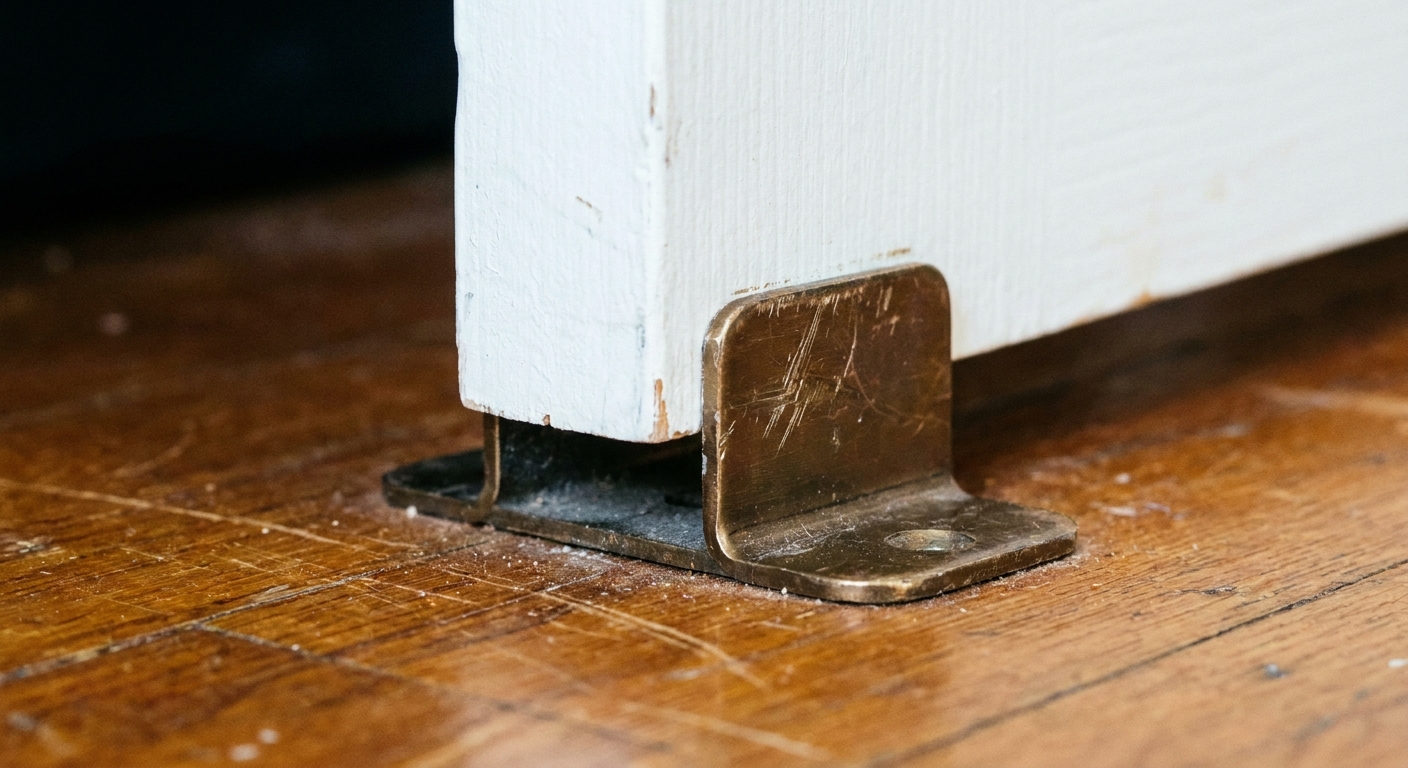
Many closet doors have a small floor guide: usually a plastic or metal piece that straddles the bottom edge of the door to keep it from swinging. If it is bent, shifted, or missing a screw, the door can drift out of alignment and pop off track.
What to look for
- Guide is crooked or no longer centered under the door.
- Guide is bent inward so it pinches the door.
- Screws are loose so the guide walks over time.
- Cracked plastic that no longer holds shape.
Renter-friendly fixes
- Tighten loose screws with a screwdriver.
- Gently straighten a slightly bent metal guide using pliers, very carefully. If it feels like it will snap or crease, stop.
- If a screw hole is stripped, that is a landlord fix. Avoid oversized screws unless your landlord approves, because that can be considered damage.
Fix #4: Look for anti-lift or anti-jump clips
Many bypass closet doors have small anti-lift (anti-jump) clips near the top track. Their job is to stop the door from bouncing up and out of the track. If one is bent, loose, or set too tight, it can cause repeated derailments or make the door feel like it is catching.
What to check
- Look along the top track near the ends for small brackets or clips.
- Check for looseness. If a screw is visibly loose and tightens normally, snug it up.
- Check clearance. Clips should not press hard into the door or roller. If it looks jammed or misaligned, stop and call maintenance rather than bending hardware.
Fix #5: Inspect the rollers (top and bottom)
Rollers are the little wheels that make the magic happen. When they are dirty, worn flat, or misadjusted, the door starts dragging, wobbling, or hopping out of the channel.
How to check without fully removing the door
- Find the wheels: use a flashlight and look at the top corners and bottom corners.
- Watch the door as you slide it: if one side dips, that roller may be loose or broken.
- Listen: a rhythmic clicking can mean a damaged wheel.
Quick cleaning
If you can access the wheel, remove lint and hair with tweezers, then wipe with a damp cloth. A small dab of silicone lubricant can help, but if the wheel is cracked or wobbly on its axle, it needs replacement.
When replacement is likely: the wheel does not spin freely, looks flattened, or the door sags even after adjustment.
Fix #6: Adjust the roller height
This is the fix that makes a closet door feel brand new. If your door is rubbing at the bottom, scraping the frame, or popping off one side, it often needs a tiny height adjustment.
What you need
- Phillips screwdriver (sometimes flathead)
- Flashlight
How to adjust
Find the adjustment screw. On top-hung doors, it is often near the top corners or top edge. On bottom-rolling doors, it is almost always at the bottom corners near the wheels.
Turn in small increments, about a quarter turn at a time.
Adjust both sides until the gap looks even and the door feels stable.
Test-slide slowly. You want smooth movement with no wobble and no scraping.
Tip from too many personal battles with closet doors: if the door is repeatedly coming off on the same side, start by adjusting that side’s roller first.
Fix #7: Check for a bent track or damaged stop
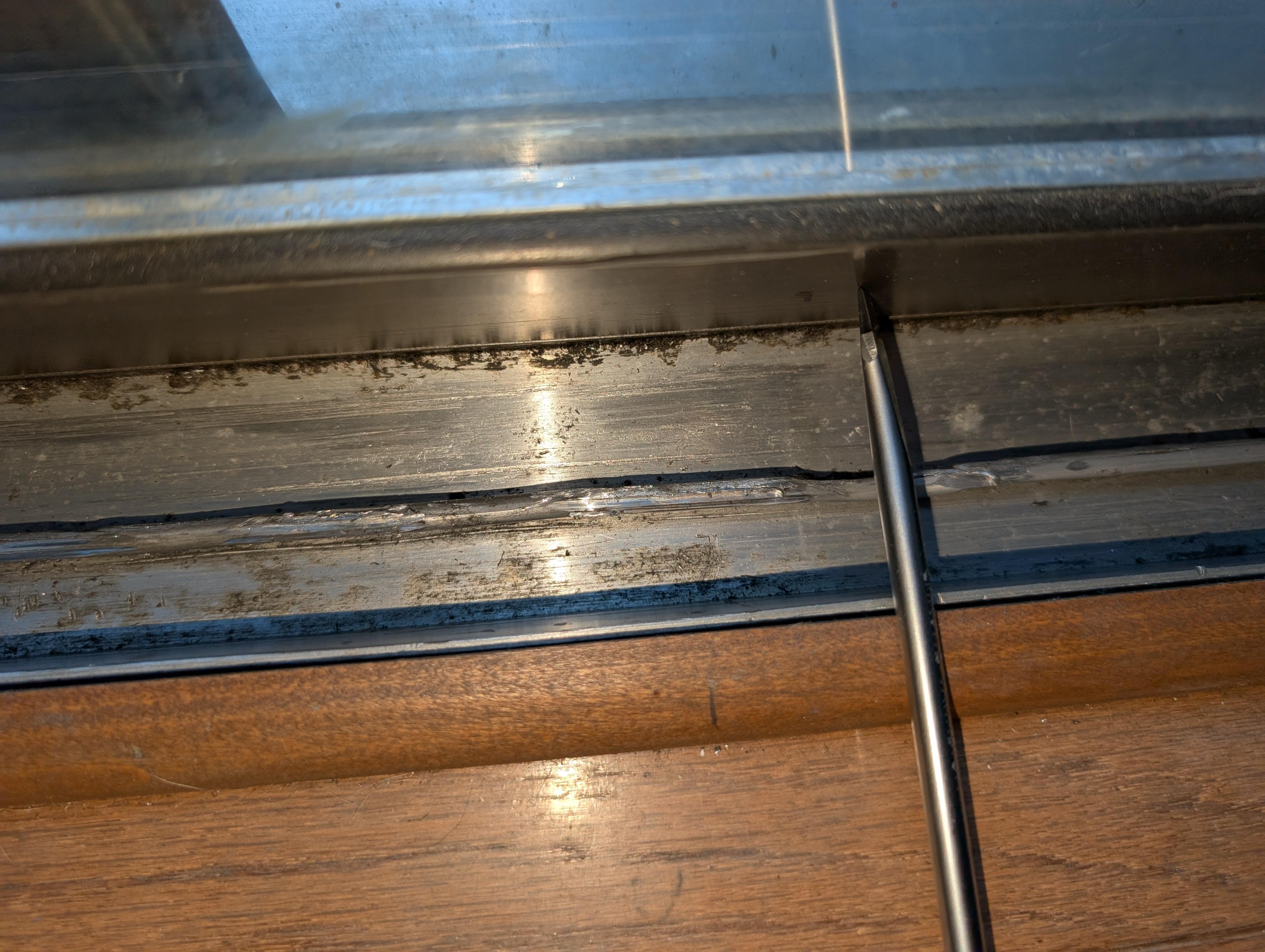
If cleaning and roller adjustments do not help, inspect the track itself. Tracks can bend from a hard slam, a moving day bump, or years of being nudged back into place.
What you might see
- Dents in the channel where the wheel runs.
- Bowed metal near the ends.
- Loose track screws causing the track to sag.
- Missing or shifted door stops (small pieces that keep the door from rolling too far).
What you can do as a renter
- Tighten visible screws if they are clearly loose and accessible.
- Do not hammer dents out. It can warp the channel further and make the problem worse.
- Do not pry the track with a screwdriver. That is how tracks get kinked.
If the track is visibly bent, that is a landlord or maintenance call. Tracks are replaceable, but it is not a fun DIY in a rental.
Also worth knowing: if the opening is out of square (building settling, shifted header, uneven floors), doors can derail repeatedly even with perfect rollers. That is another “call maintenance” scenario.
When to stop
I love a confident DIY moment, but closet doors have a line where “quick fix” becomes “accident report.” Stop and contact your landlord or building maintenance if:
- The door is mirrored and the frame is loose or the mirror shows cracking.
- A roller is broken, missing, or dangling.
- The track is bent or pulling away from the frame.
- Screws are stripped and will not tighten.
- The door keeps falling even after cleaning and careful adjustment.
- You have to lift hard to get it on track. That usually means something is misaligned or the opening is out of square.
If your fix requires force, it is probably not the right fix.
How to notify your landlord
You do not need a novel. A calm, specific message gets faster results and protects you if the issue worsens.
Send this kind of note
Include: what is happening, what you tried, and any safety concern.
- “Sliding closet door came off track and keeps popping out when sliding.”
- “I cleaned the track and checked the bottom guide, but it still won’t stay seated.”
- “Roller appears loose/broken” or “top/bottom track looks bent” or “anti-lift clip may be misaligned.”
Take photos
Snap a clear photo of the track, the roller area (if visible), and any bent guide or clip. This speeds up maintenance and creates a paper trail.
Ask for the right fix
You can request: “Could maintenance adjust or replace the rollers, check the anti-lift clips, and confirm the track is secure?” That is specific, reasonable, and hard to dismiss.
Keep it from happening again
- Vacuum the tracks when you do floors, especially if you have pets.
- Slide, do not slam. Closet doors hate being treated like front doors.
- Keep the floor guide clear of rugs that push against it.
- Watch for early signs like scraping sounds or a new wobble. A quarter-turn adjustment today can prevent a full derailment later.
A smoothly gliding closet door is not glamorous, but it is the kind of quiet home comfort that makes your space feel cared for. And you deserve that, even in a rental.