Shower Head Won’t Stop Dripping

Clara Townsend
Clara Townsend is an interior stylist, vintage furniture enthusiast, and the creative voice behind Velvet Abode. With over a decade of experience transforming both cramped city apartments and sprawling fixer-uppers, she believes that a beautiful home is built on personal stories rather than massive budgets. When she isn't hunting for the perfect brass sconce at a local flea market, she can usually be found rearranging her living room for the third time this month.
A dripping shower head can feel like the universe is testing your patience one tiny plink at a time. Before you spiral into “my water bill is about to become a personality,” let’s slow down and figure out what’s actually happening. Some dripping is often normal drainage. Some is a real leak hiding inside the valve. And if you rent, the smartest move is to do a few low-risk checks first, then hand it off to maintenance with clear notes.
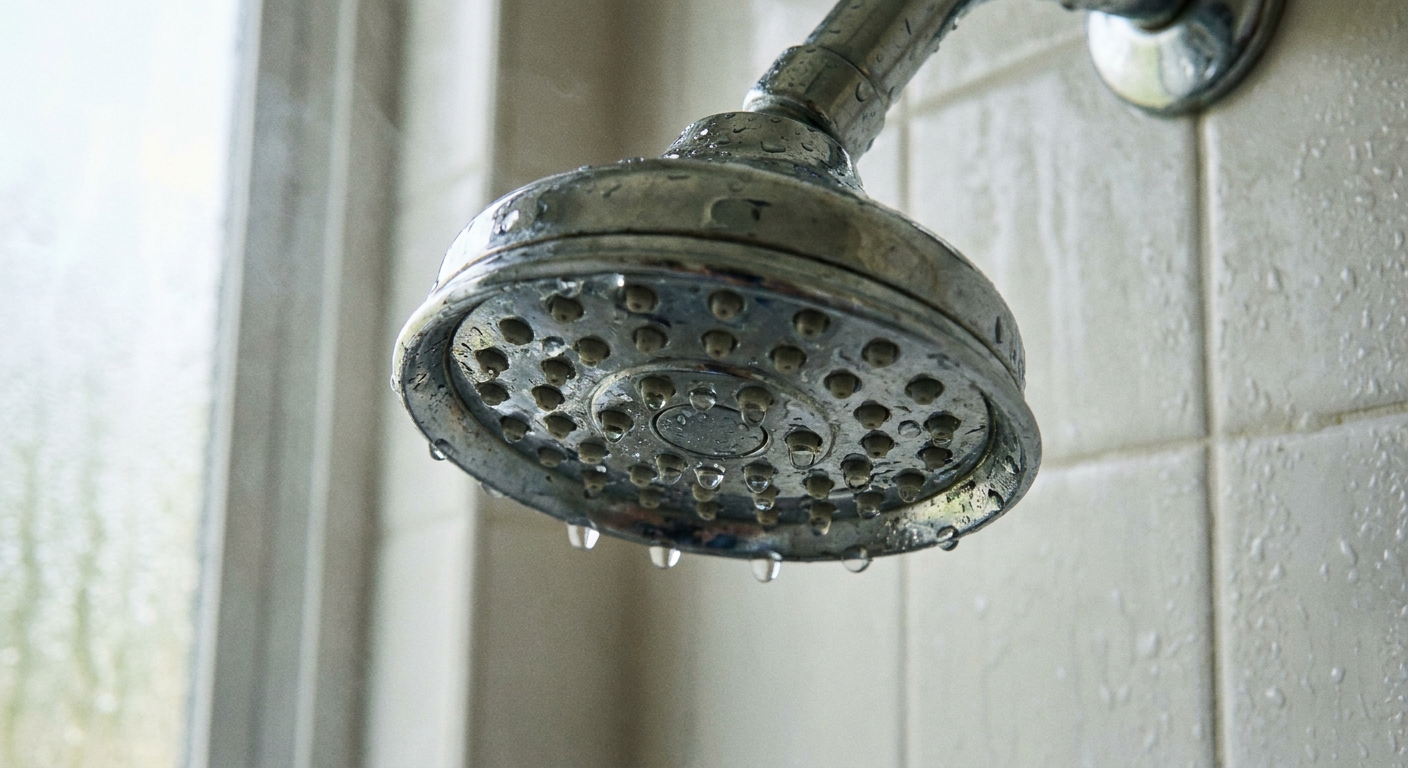
First: normal drainage or a leak?
After a shower, water sits in the shower head, the shower arm, and the pipe leading up to it. Gravity does its thing and you get a little post-shower drip session. That is not automatically a problem. How long it lasts can vary a lot depending on your shower head style (rain head, handheld with a long hose, flow restrictors) and your plumbing layout.
Normal post-shower drainage often looks like
- Drips that slow down and stop within a few minutes.
- A short burst of drips right after you shut the water off, especially if you used a handheld sprayer or a rain head.
- More short-term dripping after a hot shower since hot water drains a bit faster and heat can loosen small debris or soften buildup slightly.
A true leak usually looks like
- Dripping that continues well past about 10 minutes after shutoff, or never fully stops.
- A steady rhythm that does not taper off.
- Dripping that returns hours later when no one used the shower.
- Sounds in the wall like a faint hiss, trickle, or constant water movement when everything is “off.”
Quick test: Dry the shower head and the tub floor. Set a timer for 10 minutes. If it is still dripping at about the same pace (or it stops and then comes back later), treat it like a leak and keep going through the checks below.
Do the simple handle checks
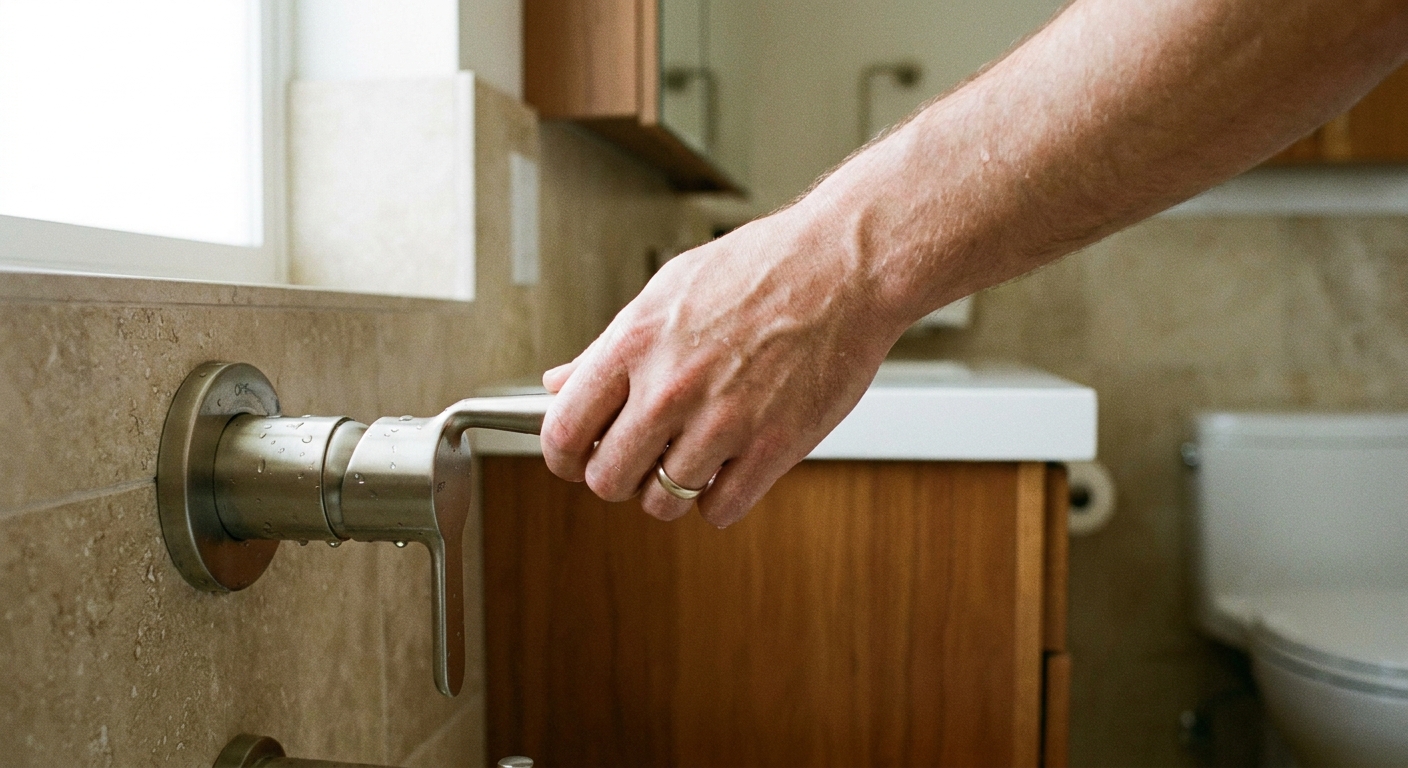
This sounds obvious, but it solves a surprising number of “leaks.” Many shower valves only shut fully when the handle is correctly indexed and the internal stop is in good shape. If the handle is worn, slightly misaligned, or the valve is getting tired, “off” might not be fully closed.
- Push the handle firmly to off without forcing it. If the drip changes, that is useful info for maintenance.
- Turn the handle on and off once to help reseat the internal seals.
- If you have separate hot and cold knobs, make sure both are fully off. A slightly open hot side can keep a drip going.
Find the true source
Not all “shower head drips” are actually from the shower head. A slow leak higher up can travel along the arm and collect at the lowest point.
- Run your finger along the shower arm (the curved pipe coming out of the wall). If it is wet near the wall, you may have a connection leak.
- Check the tub spout if you have a tub-shower combo. If the tub spout drips for a long time after shutoff, that often points back to a valve or cartridge that is not sealing fully.
- Think about the diverter (the little pull-up or lever on the tub spout). A failing diverter more commonly shows up as water leaking out of the tub spout while the shower is running, but it can also allow water to bleed in ways that make shower head dripping seem worse or more confusing.
- Look for mineral tracks: white or greenish crust around joints often points to a slow seep at a threaded connection.
Mineral buildup: a drip amplifier
If you have hard water, mineral deposits can mess with spray patterns and flow. They can also make the shower head hold onto water longer, which can look like a never-ending drip even when it is just slow drainage. That said, if water is still dripping long after shutoff or comes back hours later, the valve or cartridge is the prime suspect.
Low-risk clean: the vinegar bag method
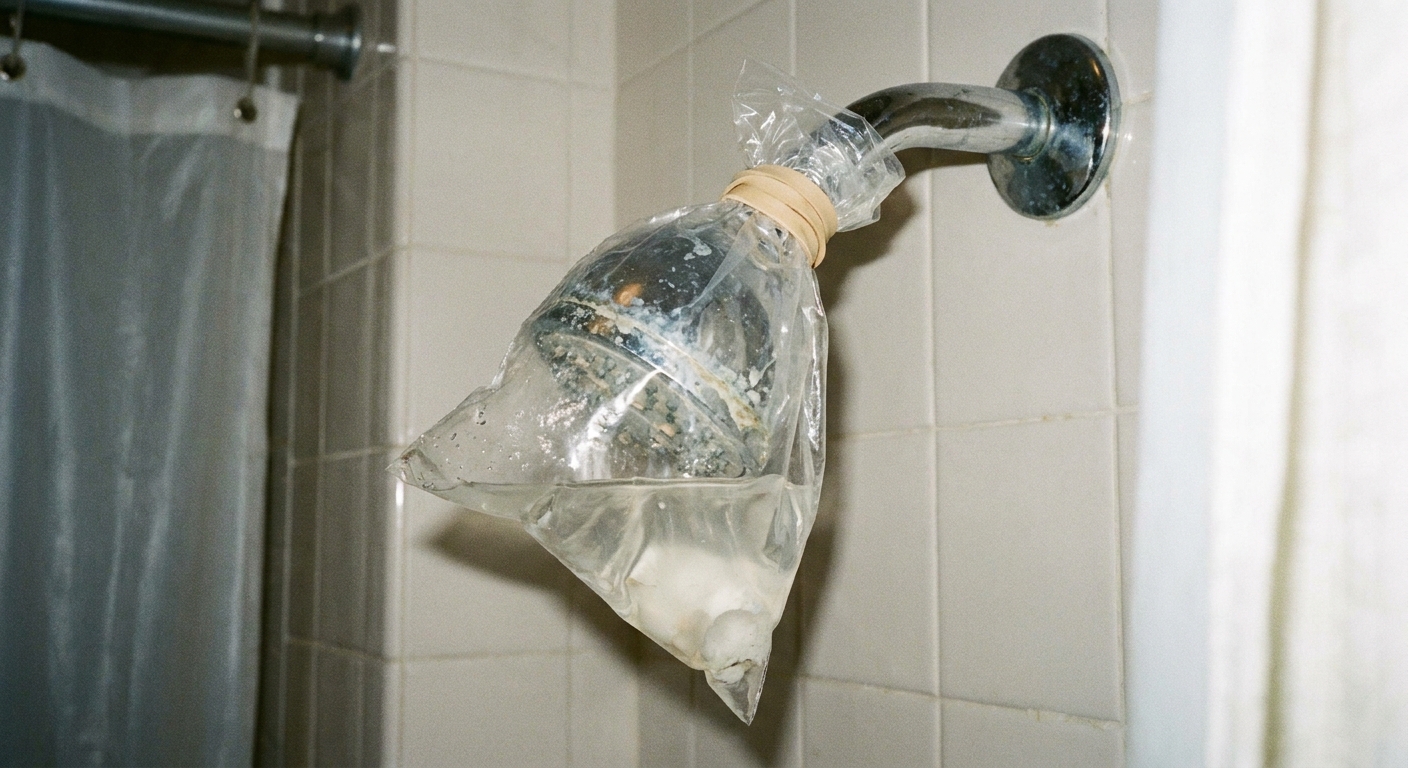
- Fill a small plastic bag with plain white vinegar.
- Slip it over the shower head so the nozzles are submerged.
- Secure with a rubber band or hair tie.
- Let it soak 30 to 60 minutes (shorter if your finishes are delicate).
- Remove the bag, run hot water for 30 seconds, then gently rub the nozzles with a soft toothbrush or cloth.
Finish-friendly note: If your shower head is matte black, unlacquered brass, or a “special finish,” ask your landlord or check the manufacturer first. Vinegar can dull certain coatings. When in doubt, do a shorter soak and rinse thoroughly.
Handheld heads note: Some handheld setups include check valves or backflow preventers. Those can change how water drains from the hose and head, so a little extra post-shower drip can be normal.
Cartridges and washers (renter limits)
If the shower head keeps dripping long after shutoff, the most common culprit is the valve cartridge (many single-handle showers, including pressure-balancing and thermostatic styles) or rubber washers and seats (some two-handle setups). These parts live behind the handle and trim plate, and when they wear out, water slips through even when “off.”
What you can do as a renter
- Gather evidence: note how long it drips, whether hot or cold makes it worse, and whether the handle feels loose, gritty, or inconsistent.
- Take a quick video of the drip pace after shutoff. Maintenance loves proof because it saves them guesswork.
What you should usually avoid
- Removing the handle or trim unless you have explicit permission. Stripped screws, cracked plates, and missing set screws are common “oops” moments.
- Digging into the wall valve yourself. Cartridge replacement is straightforward for a plumber, but the wrong move can create a bigger leak fast.
If your shower drips constantly, it is almost never “just the shower head.” It is typically the valve not sealing, and that is a maintenance request, not a renter craft project.
Tighten the shower head connection
If your drip is actually coming from the threaded connection where the shower head meets the shower arm, you can sometimes fix it with a careful snug. This is renter-safe as long as you do not crank like you are opening a pickle jar sealed by destiny.
How to do it without scratches
- Make sure the shower is fully off. If you have an actual shutoff for the bathroom or an access panel shutoff (rare in rentals, but it happens), use it.
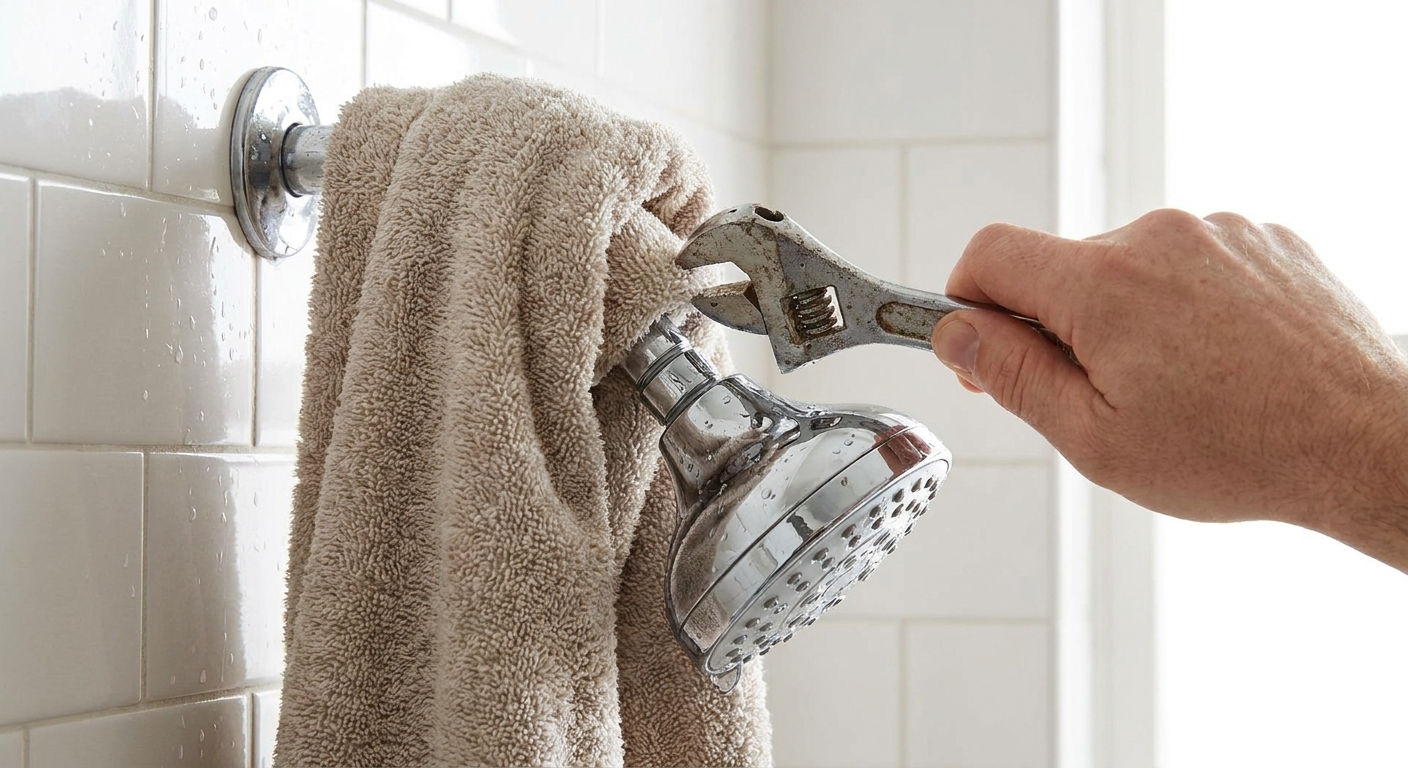
- Wrap a soft cloth around the shower head nut.
- Use an adjustable wrench over the cloth and tighten just a quarter turn.
- Test. If it still seeps, stop and move to the tape step below.
PTFE tape cautions (use sparingly)
Plumber’s tape, also called PTFE or Teflon tape, can help seal threads. But in rentals, treat it like nail polish. Helpful in a pinch, best used neatly, and you should not be “rebuilding” anything.
- Only use tape on the threaded joint between shower arm and shower head.
- Remove the shower head, clean old tape off the threads, and wrap 2 to 3 turns of tape in the direction you will screw the head back on.
- Do not overwrap. Too much tape can prevent proper threading and cause leaks.
- If you meet resistance, stop. Cross-threading is a fast way to turn a small drip into a landlord call plus regret.
When to call management
Call maintenance sooner rather than later if any of the situations below apply. A persistent drip can waste a surprising amount of water and sometimes signals a valve issue that can worsen.
- Dripping lasts well past about 10 minutes after the shower is off, or it stops and then comes back later.
- The drip rate is steady (not slowing) or you see a thin stream.
- The shower handle feels loose, squeaks, or does not stop cleanly.
- You notice damp drywall, bubbling paint, or a musty smell near the shower wall.
- There is moisture at the trim plate (the escutcheon) or signs of leaking behind the wall.
Urgent note: If you see active leaking at the wall or ceiling below, or water pooling where it should not, shut off water to the unit if you can and contact management right away.
Copy-paste maintenance message
Use this to make the request clear and quick:
Hi [Maintenance/Manager],

Our shower head has been dripping after shutoff. It drips for about [X minutes / does not stop], and the drip rate is [steady/slows but continues].

I cleaned the shower head for mineral buildup and confirmed the handle is fully off. The drip persists.

Could someone check the shower valve/cartridge (and the shower arm connection if needed)? I can share a short video if helpful.

Thanks,
[Your Name]
Small comfort upgrades
If you are stuck with the drip until someone can come by, a few little tweaks can make the bathroom feel calmer, even if the plumbing is being dramatic.
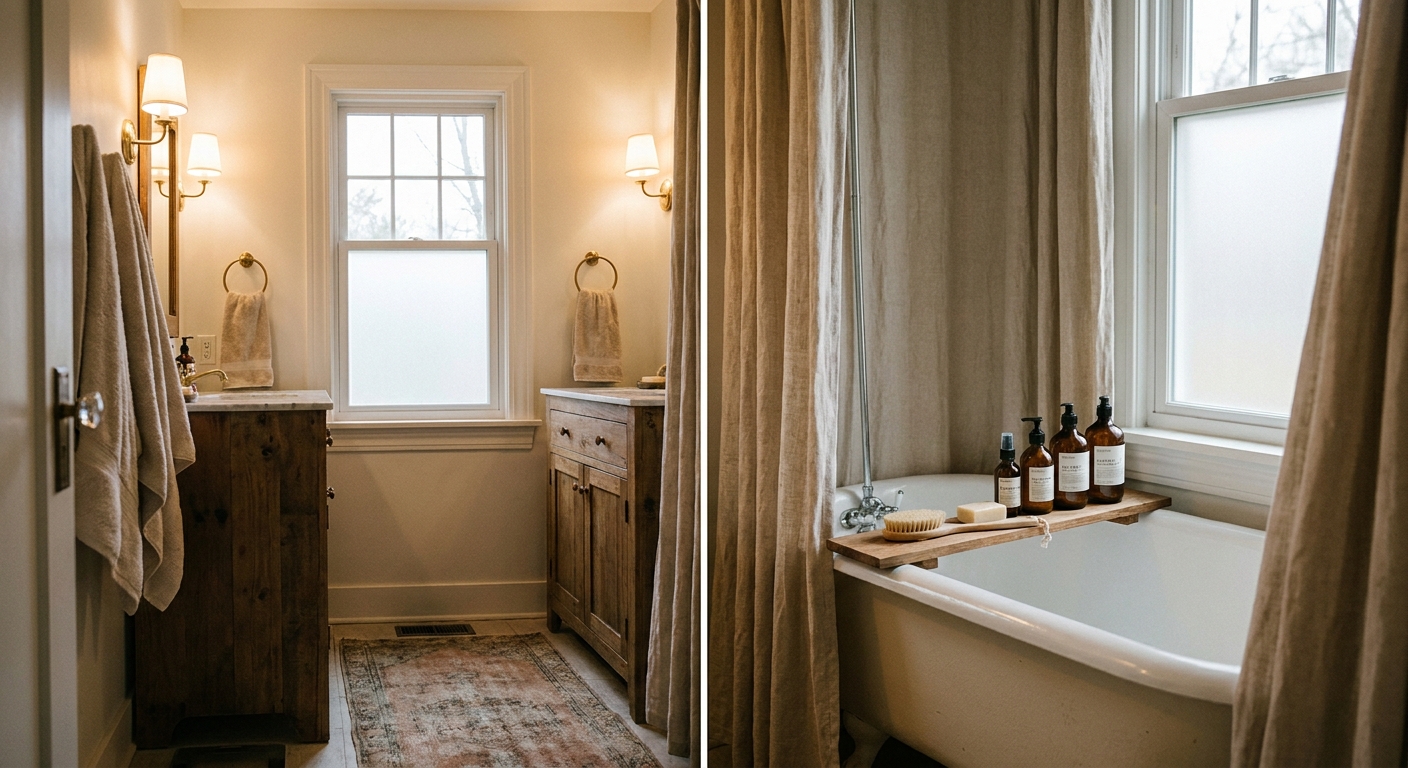
- Add a thicker shower curtain liner so the sound of dripping is less sharp.
- Set a small tray on the tub ledge for your shampoo and soap so you are not constantly adjusting bottles around the drip zone.
- Try a warmer bulb in the bathroom fixture. A soft amber glow makes even a “maintenance week” feel more like a spa night.
Bottom line
If your shower head drips briefly after you turn it off, it is often just normal drainage and the exact timing varies by setup. If it keeps dripping well past about 10 minutes, stays steady, or returns later, think valve seal, cartridge, or washer. Do the low-risk checks, clean mineral buildup, gently address obvious connection leaks, and then escalate to management with specific notes. The goal is not to become your building’s unofficial plumber. The goal is to get your bathroom back to quiet.