Sheers and Drapes on a Double Curtain Rod
Gust
A little flutter. A cozier corner.
If your window wants two different jobs, daytime privacy plus nighttime coverage, a double curtain rod is the tidy little trick that keeps both layers behaving. The secret is not fancy fabric. It is spacing, length, and leaving enough room for each layer to scoot aside without sulking in the glass.
The basic setup
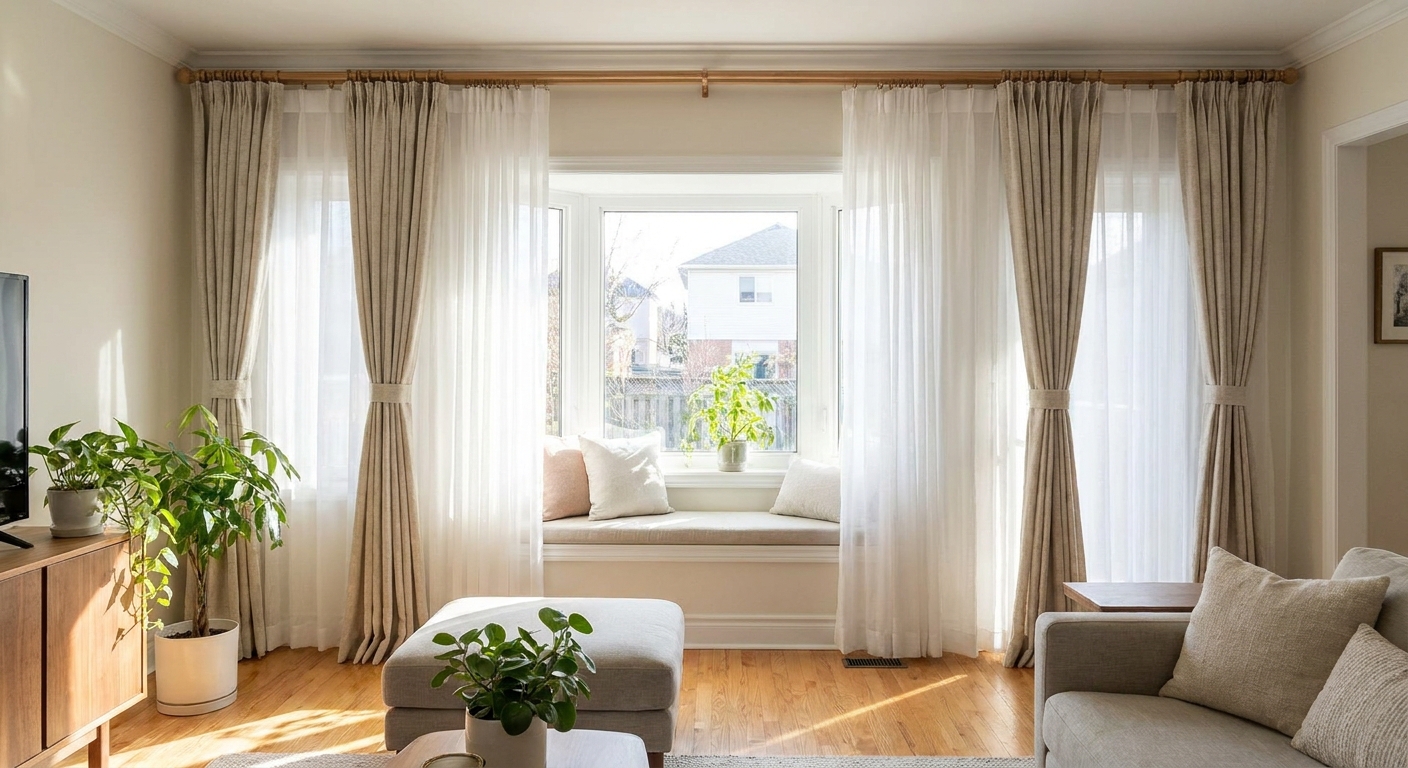
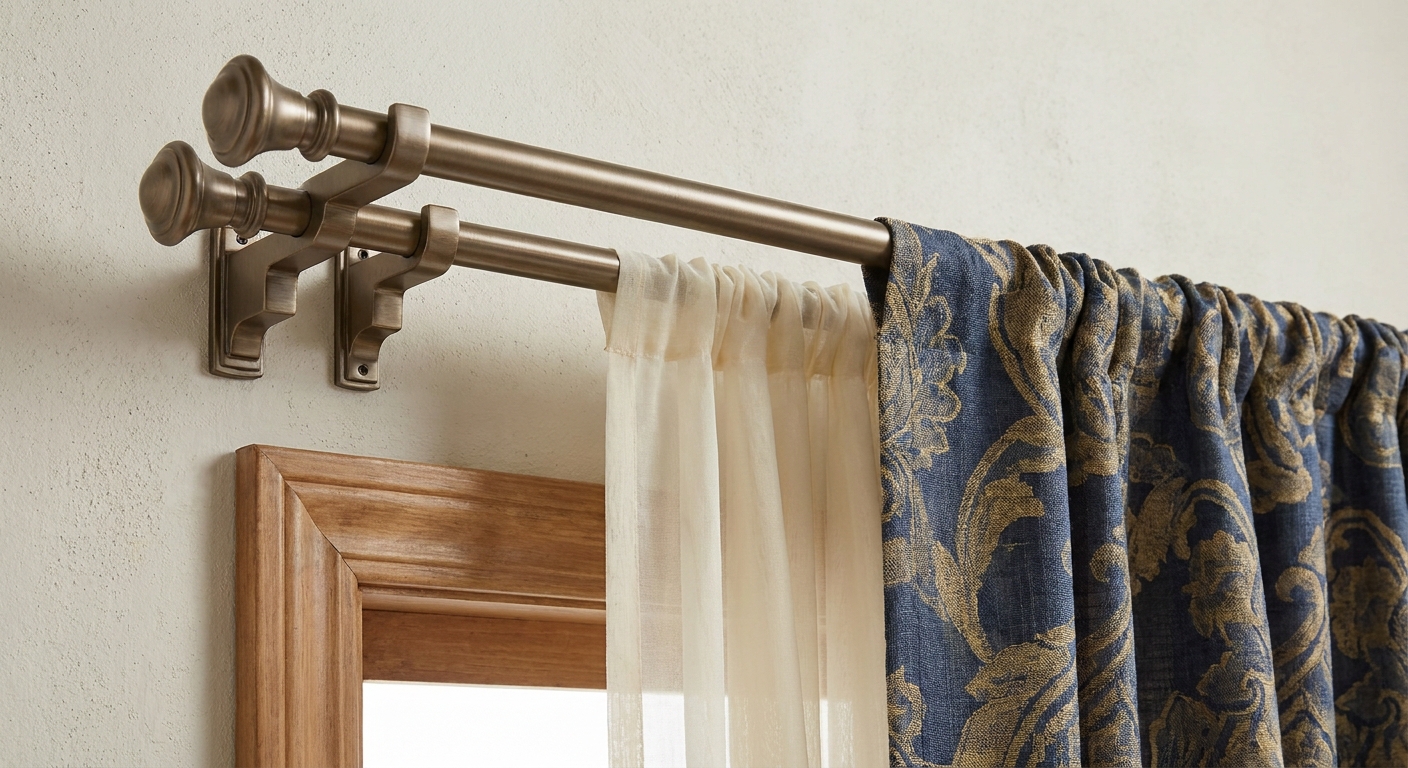
A double curtain rod is two rods sharing one set of brackets:
- Back rod: usually for the sheer (closest to the window).
- Front rod: for the drape (the decorative, fuller layer that closes at night).
This order is not just tradition. It keeps the sheer close to the glass where it can soften light and blur views, and it gives the drape room to hang in a straighter line without catching on the sheer every time you open or close it.
Bracket projection
Bracket projection is how far the rods sit out from the wall. On a double rod, you are managing two projections:
- Back rod projection (sheer): needs enough space so the sheer clears window trim, handles, and any blinds you plan to keep.
- Front rod projection (drape): needs enough space so the drape hangs freely and does not press into the sheer, the window frame, or a radiator.
Quick rule of thumb
Plan on at least 1 to 2 inches of clearance between each layer and whatever is behind it.
- Wall to sheer: enough to clear trim and hardware.
- Sheer to drape: enough that the drape does not snag or “print” the sheer’s folds.
How to sanity-check before drilling
- Check depth obstacles: deep trim, a chunky window sill, a crank handle, an AC unit, or a roman shade mount all steal space.
- Hold a panel up: even without hanging it, you can see if fabric will brush the trim or fall in front of it.
- Look at your header style: grommets and large rings stick out farther than rod pockets or back tabs, so they need a touch more breathing room.
If the bracket projection is too shallow, the best fabrics in the world will still look fussy because they are literally fighting the window.
Which layer is longer?
This is where the room either looks crisp or quietly chaotic.
Most homes
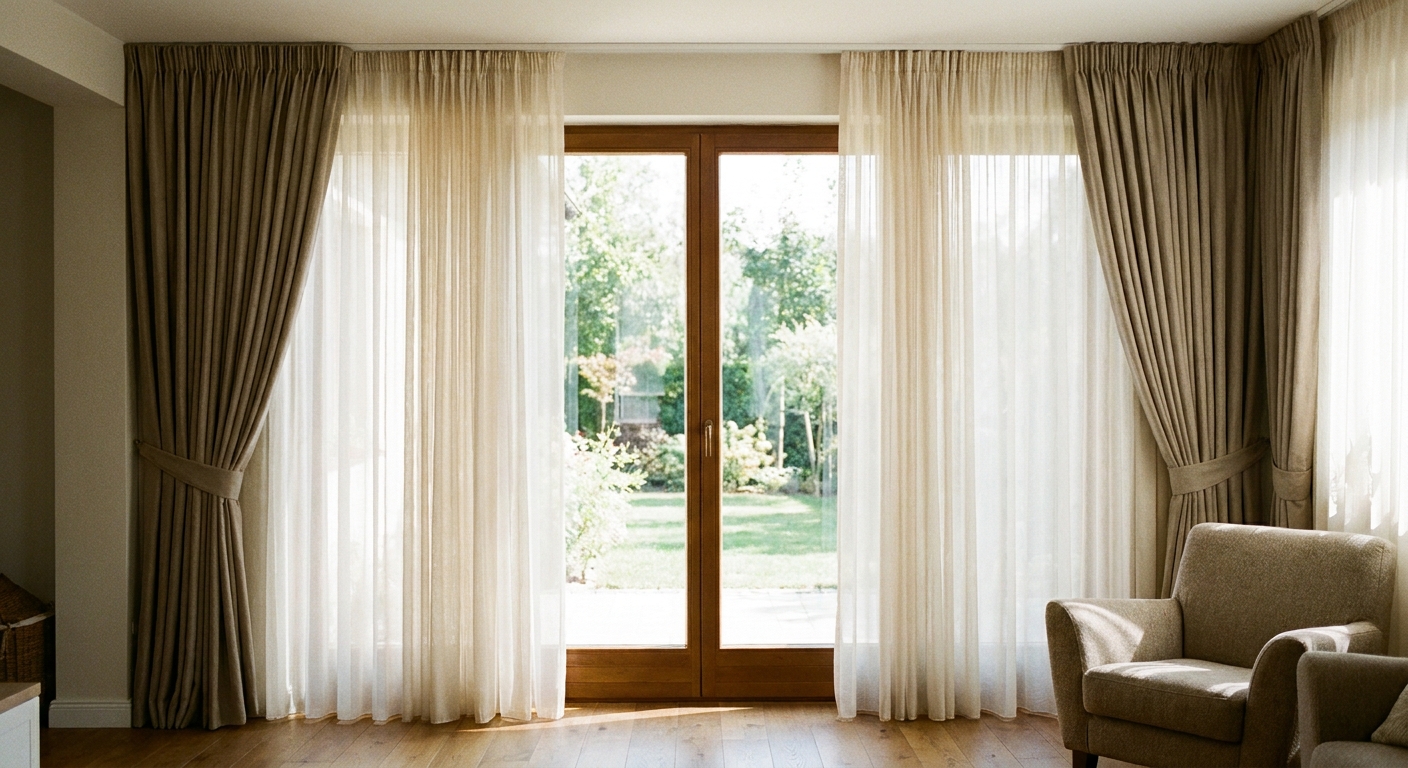
- Drapes: floor length, either just grazing the floor or about 1/2 inch above it for a tailored look.
- Sheers: about 1/2 to 1 inch shorter than the drapes.
Why this works: the front layer reads as the “frame” of the window, and the sheer avoids getting trapped under the drape hem. If both layers are exactly the same length, the sheer can peek out unevenly or bunch when you close the drapes.
When the sheer can be longer
There are a few situations where you can flip it:
- You want the sheer to kiss the sill and the drapes to stop at the sill (common for kitchens).
- You are intentionally puddling drapes and want the sheer to remain clean and float just above the floor.
Even then, aim for a clear hierarchy. Two hems competing for the same exact line is where windows start looking busy.
How to measure lengths
Measure each layer from its own rod to where you want it to end. On most standard double-rod brackets, the back rod sits slightly lower (or level) and closer to the wall, while the front rod sits farther out. That small offset is intentional. It helps the front drapes hide the sheer's header and hardware. It also means you do not want to blindly copy one measurement for both layers.
Step by step
- Decide rod height: Many people mount rods higher and wider than the window trim to make the window feel larger.
- Measure drape length: from the front rod (or the ring clip line, if you are using rings) down to floor-graze or just-above-floor.
- Measure sheer length: from the back rod down to your chosen endpoint, usually 1/2 to 1 inch shorter than the drape.
- Account for the heading: grommets, rings, pleat hooks, rod pockets, and back tabs all change where the fabric actually starts.
If you are hemming, hang everything first and pin. Fabric has opinions. Let it settle, then decide.
How far panels stack
Stack back is the space your curtains occupy when fully open. With two layers, stacking gets crowded fast, especially on small windows.
What to plan for
- Sheers: typically stack back less because they are lighter and often less full.
- Drapes: stack back more because they are heavier and usually fuller.
A practical estimate
Without getting overly mathy, plan for:
- Drapes: roughly one-quarter to one-third of the window width per side once stacked, depending on fullness and fabric thickness.
- Sheers: roughly one-fifth to one-quarter of the window width per side.
Translation: if your rods are only as wide as your trim, you may lose a noticeable chunk of glass to stacked fabric. If you can, mount the rod wider so the open curtains live mostly on the wall, not over the window.
Hanging order
To keep the layers gliding instead of grabbing:
- Hang the sheer first on the back rod.
- Hang the drape second on the front rod.
- Close both layers once and adjust the panel spacing so the seams land where you want them.
- Open both layers fully and check that nothing catches on the bracket arms.
Two small details
- Center overlap: Make sure the drapes overlap slightly at the center when closed, so you do not get a bright little “light leak” stripe.
- Return: The outer edge of each drape should sit close to the wall, not flare forward. If your hardware allows it, use a return hook or wrap the leading edge around the rod toward the wall.
Common problems
Drapes brush the sheer
- Fix: you need more projection or less fullness on one layer. Sometimes switching the drape to rings helps it hang straighter and slightly forward.
Sheer gets caught
- Fix: make the sheer slightly shorter and ensure the drape is not dragging. Also check that the sheer is not overstuffed on the back rod.
Too much glass is covered
- Fix: mount the rod wider so both layers can stack on the wall. If you cannot move the brackets, reduce panel width or choose a less bulky drape fabric.
Layers feel busy
- Fix: simplify contrast. Try a sheer in a tone close to the wall color and let the drape carry the main color or texture.
Small-space notes
In a tight room, two layers can still look airy if you keep the silhouette clean:
- Choose a low-bulk sheer: a simple voile or linen-look sheer stacks back neatly.
- Keep the drape tailored: too much puddle reads like visual spillover in a small space.
- Give the stack a home: widen the rod so open curtains rest on the wall, not on the glass.
The goal is a window that changes mood with the time of day, without constantly reminding you there are two separate fabrics involved.
FAQ
Can sheer and drape be the same length?
Yes, but it is fussier. If you want them equal, make sure the drape is not dragging and that the sheer is not so long it gets trapped under the drape hem. Most windows look calmer when the sheer is 1/2 to 1 inch shorter.
Do I need a double rod?
You can layer on one rod, but the fabrics will rub and tangle more, and the sheer will not sit as close to the glass. A double rod is the smoother option for everyday open and close routines.
Should the sheer go inside the frame?
If you have an inside-mount shade and you want super clean lines, yes, that can be lovely. But for a true two-layer curtain look, keeping both layers on the double rod makes operation easier and the styling more consistent.
How do I stop drapes blocking the window?
Widen the rod so the panels stack on the wall. If that is not possible, reduce fullness or choose a less bulky drape fabric so the stack is slimmer.