Sheepskin and Mongolian Wool Throw Care

Clara Townsend
Clara Townsend is an interior stylist, vintage furniture enthusiast, and the creative voice behind Velvet Abode. With over a decade of experience transforming both cramped city apartments and sprawling fixer-uppers, she believes that a beautiful home is built on personal stories rather than massive budgets. When she isn't hunting for the perfect brass sconce at a local flea market, she can usually be found rearranging her living room for the third time this month.
Sheepskin and Mongolian wool throws are the interior equivalent of candlelight. Instant warmth, instant softness, instant “stay awhile.” But they are also real, natural fibers with opinions. The good news is you do not need a huge cleaning routine or fancy products. Most of the time, the best care is gentle, boring, and consistent: shake, brush, spot clean, dry properly, store like you mean it.
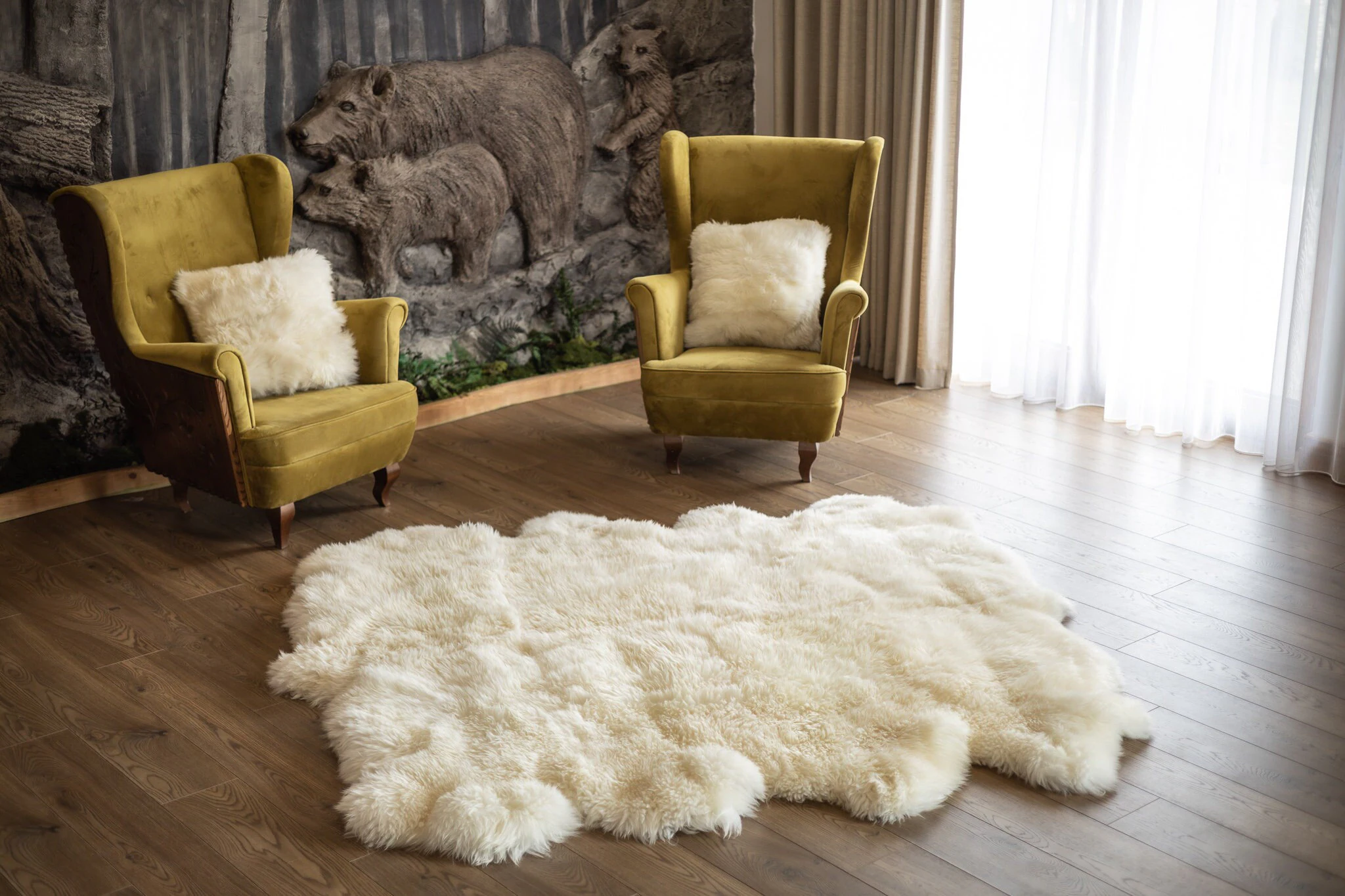
This guide focuses on day-to-day upkeep and small messes. Always check the care tag first, especially if your throw is dyed, backed, or has a removable cover. And when in doubt, spot test any method on a hidden area first.
Know what you have
Care gets easier when you know which fiber you are working with.
- Sheepskin (pelt): Wool fibers attached to a hide. The hide side can stiffen or crack if soaked, overheated, or dried too fast.
- Mongolian wool: Usually long, silky curls. It can be a pelt (attached to hide) or a woven or knitted piece made from long wool. The signature look is airy curl, which can get crushed or tangled if handled roughly.
- Removable covers: Some throws are essentially a cover over an insert. The insert might be down, polyfill, or another material. Covers often have specific washing instructions and can be easier to clean than pelts.
If you are not sure, flip it over. A suede-like underside often indicates a pelt, but some items use faux suede backings or linings too. A fabric backing or seams like a regular blanket usually means woven construction or a cover.
The everyday routine: shake and air
Shaking
Shaking is the simplest care step and it does more than you think. It releases dust, crumbs, and loose fiber before they work their way down into the pile.
- Take the throw outside (or over a bathtub).
- Hold it by two corners and give 3 to 5 firm shakes.
- If you are dealing with a pelt, support the hide so you are not yanking one spot repeatedly.
Airing
Natural fibers love fresh air. If your throw smells a bit “warm” after a movie marathon, air it instead of washing it.
- Drape it over a chair or railing in a shaded, breezy spot for a few hours.
- Avoid direct hot sun for long periods, especially for dyed throws, since it can fade color and dry out the hide.

Brushing and detangling
Think of brushing like styling hair. You are not scrubbing, you are coaxing.
Tools that work
- Wide-tooth comb: Ideal for Mongolian curls and long wool.
- Slicker brush (pet brush): Good for fluffing, especially on shorter, denser sheepskin. Use a light hand.
- Your fingers: Honestly underrated for separating curls and loosening small tangles.
How to brush
- Start with the throw dry.
- Work in small sections.
- Hold the base of the fibers with one hand and brush with the other so you are not tugging at the hide or stitching.
- For Mongolian wool, start detangling at the tips and gradually work your way up toward the base, always combing downward with the direction of the curl. The goal is to loosen tangles without yanking or “backcombing.”
- If you want to preserve ringlets, focus on tip detangling and finger-separating rather than combing every curl all the way down.
- Finish with a light shake to re-fluff.
If the curls look slightly frizzy, stop. Over-brushing can make long wool look less “ringlet” and more “static cloud.”
Spot cleaning: cold water, patient hands
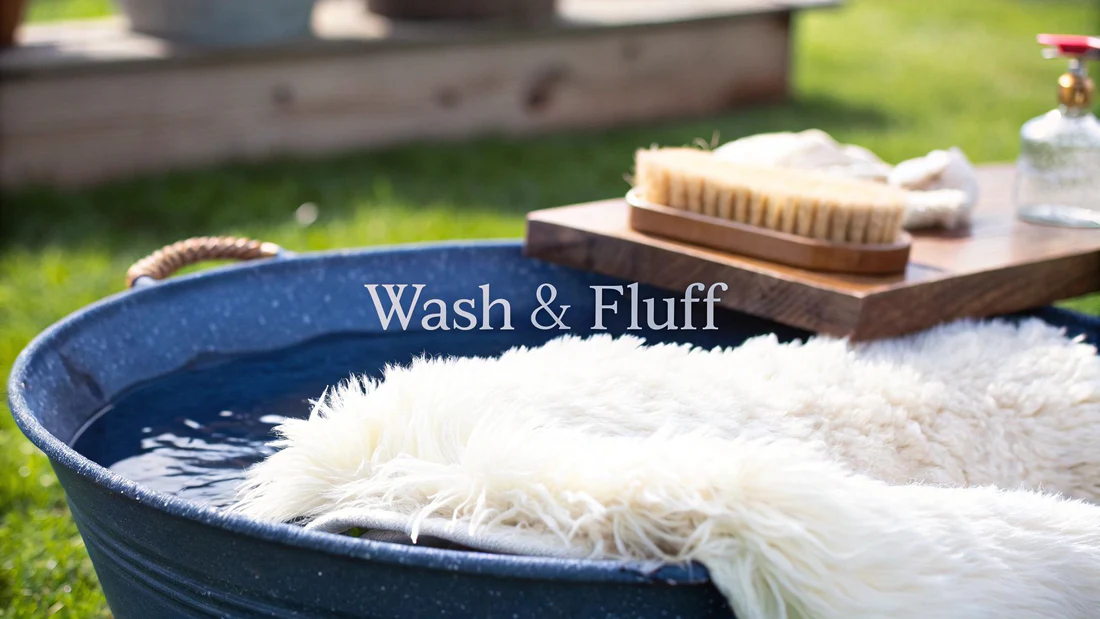
For spills and small marks, spot cleaning is usually safer than a full wash, especially for pelts. Your goals are to lift the stain, keep the hide from getting soaked, and let it dry slowly and evenly.
What you need
- Two clean white cloths
- A bowl of cold water
- A tiny amount of wool wash or a gentle shampoo
- A dry towel
Cold-water spot method
- Blot immediately. Press with a dry cloth. Do not rub. Rubbing pushes the mess deeper and can felt the fibers.
- Dilute and dab. Dampen a cloth with cold water (not dripping) and dab from the outside of the stain toward the center.
- Add a drop of gentle cleanser if needed. Mix a tiny amount into cold water, then dab with a fresh cloth.
- Rinse by dabbing. Use a cloth dampened with plain cold water to remove soap residue.
- Blot dry. Press with a dry towel until it feels barely damp.
Important: Avoid hot water. Heat plus agitation can shrink, felt, or permanently change the texture of wool.
Greasy spots (butter, lotion, food oil)
Oil does not love water, so do not chase it around with wet cloths. Instead:
- Blot what you can.
- Sprinkle a small amount of cornstarch on the spot.
- Let it sit a few hours or overnight.
- Shake it out, then brush lightly.
If a faint shadow remains, repeat once or twice. For older or larger oil stains, a professional cleaner is often the fastest path to “actually gone.”
Mud or tracked-in dirt
- Let it dry completely.
- Shake well.
- Gently brush the fibers to release remaining grit.
- Spot clean any shadowy stain with cold water dabbing.
Odor (smoke, pets, “stored closet”)
- Start with airing in shade.
- If it still lingers, sprinkle a light layer of baking soda on the wool side only and let it sit for a few hours.
- Shake thoroughly outdoors, then gently comb or brush to remove any remaining powder.
Avoid getting baking soda into the hide side or seams, and do not leave it on for days.
Pet mess and other protein stains
For urine, milk, or other protein-based stains, cold blotting is step one. If a mark or odor remains, use an enzyme cleaner only if it is labeled wool-safe, and spot test first. When in doubt, call a pro. Protein stains can set if treated the wrong way.
Drying: flat, fluffy, no heat
Drying is where most wool throws get into trouble. Your best friend is slow, even drying with good ventilation.
- Dry flat on a towel, with the wool side up.
- Reshape while damp. Gently pull it back into its original outline.
- Keep away from heat sources like radiators, fireplaces, and hair dryers. Heat can dry out fibers, flatten the pile, and stiffen the hide.
- Flip if needed once the surface feels less damp so the underside can breathe, but avoid stretching.
- Expect time. Depending on thickness and humidity, drying can take 24 to 48 hours (sometimes longer for pelts).
- Brush lightly when fully dry to restore loft and separate curls.
If you accidentally soak a pelt, blot as much moisture as possible, dry flat, and be patient. The hide may feel stiff as it dries. Gentle flexing and light brushing once fully dry can help, but rushing it with heat usually makes it worse.
Shedding expectations (yes, it is normal)
New sheepskin and Mongolian wool throws often shed at first. You are meeting the “loose neighbor hairs” that did not fully release during processing. A little shedding is normal, especially with longer fibers.
- What helps: regular shaking, gentle brushing, and vacuuming the surrounding area.
- What not to do: aggressive vacuuming with a beater bar, or pulling tufts by hand.
If shedding is heavy and continuous for months, check for damage to the hide or backing, or reach out to the maker. Quality varies, and a poorly secured backing can shed more than it should.
Vacuuming: only when you must
If you need to vacuum, do it gently. Think “dusting,” not “deep clean.”
- Use suction only with an upholstery attachment.
- Use the lowest suction setting that still picks up surface dust.
- Skip the rotating brush or beater bar. Those can tangle long curls and pull fibers.
- Work in the direction the wool naturally lies.
Full washing: when to skip it
A lot of people look for a simple “just wash it” answer. For most pelts, full washing at home is where things go sideways (soaked hide, stiff backing, texture changes). If the throw needs more than spot cleaning, professional cleaning is usually the safest option, especially for dyed, backed, or investment pieces.
If you have a removable cover, wash the cover according to its label and keep the insert or pelt out of the machine.
Washing removable covers
If your throw has a removable cover, you have a little more flexibility, but you still want to protect texture.
Best practices
- Zip or fasten closures before washing to prevent snagging.
- Turn the cover inside out so the wool or faux-shearling side gets less direct abrasion.
- Cold water, gentle cycle with a wool-safe detergent.
- Minimal spin if your machine allows it. High spin can mat or crush long curls.
- Air dry flat, then shake and gently comb to revive the pile.
If the cover is truly Mongolian-style long curl, avoid stuffing it into a tight washer. Crowding is what crushes the curl and creates those awkward flat patches.
Storage: keep pests out
Natural fibers are a moth’s favorite snack, and long wool loves to be crushed into a sad pancake if stored badly. Here is how to avoid both.
Before storing
- Make sure it is completely clean and completely dry. Even tiny food traces can attract pests.
- Shake and lightly brush.
How to store
- Store in a breathable cotton bag or an acid-free archival box that protects from dust without trapping moisture.
- Add cedar blocks or lavender sachets to help deter moths, but do not let oils touch the wool directly. (Clean, dry storage is the real hero here.)
- Avoid heavy stacking. Let the throw keep its loft.
- Choose a cool, dry place away from humidity.

Quick do and do not list
- Do: shake regularly, air out, spot clean with cold water, dry flat, comb curls gently.
- Do: expect a little initial shedding and let time plus light grooming handle it.
- Do: keep it clean before storing and use deterrents as a bonus, not a guarantee.
- Do not: use hot water, bleach, or harsh stain removers.
- Do not: tumble dry or place on a radiator.
- Do not: use a vacuum beater bar on long wool.
- Do not: store dirty, damp, or tightly compressed.
When to call a pro
If the stain is large, the hide feels stiff or warped after a spill, or the throw is an heirloom or investment piece, it is worth calling a professional cleaner who has experience with sheepskin pelts and wool. Be specific when you ask. “Wool rug and sheepskin cleaning” experience is the phrase you are looking for.
If you remember only one thing: treat sheepskin and Mongolian wool like you would treat good hair and good leather. Gentle, cool, slow, and never panicked.