Sharpie on a Fabric Sofa: What to Try First (and What to Skip)

Clara Townsend
Clara Townsend is an interior stylist, vintage furniture enthusiast, and the creative voice behind Velvet Abode. With over a decade of experience transforming both cramped city apartments and sprawling fixer-uppers, she believes that a beautiful home is built on personal stories rather than massive budgets. When she isn't hunting for the perfect brass sconce at a local flea market, she can usually be found rearranging her living room for the third time this month.
There are stains that feel like a little accident, and then there is the unmistakable panic of permanent marker on the sofa . Usually it is a kid “signing” their artwork. Sometimes it is an office pen that uncaps in your bag, then politely transfers itself onto the cushion during a meeting. Either way, you do not need to start pricing a new couch.
The trick with Sharpie and most permanent markers is chemistry and patience, not force. Your job is to move the ink out without spreading it, setting it, or stripping the dye out of your upholstery.
Quick scope note: This guide is for fabric upholstery. If your sofa is leather or vinyl (or you are not sure), skip to “When to stop and call upholstery cleaning” for the safest next move.
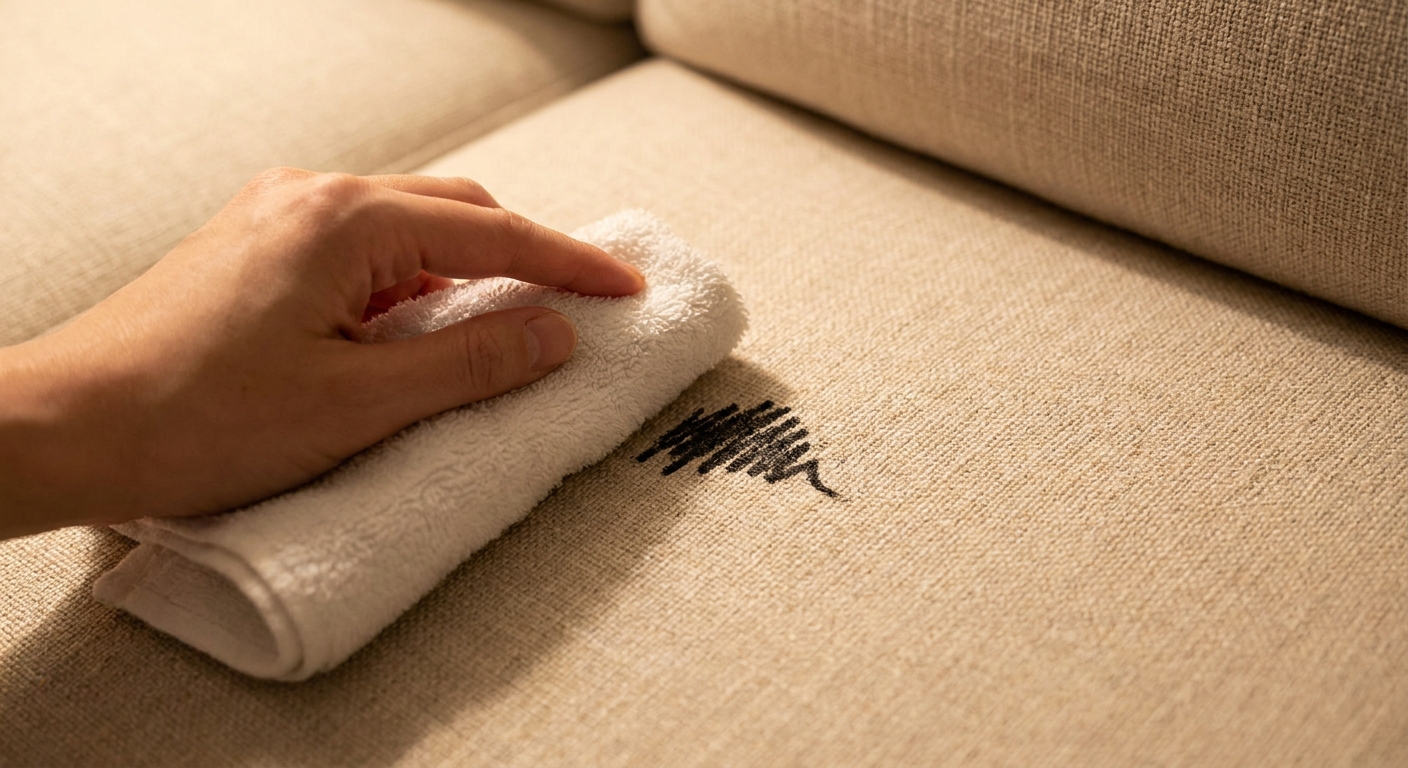
Before you touch the stain
1) Identify what you are dealing with
- Permanent marker (Sharpie-style): often solvent-based (commonly alcohol-based) dye plus binders. It can respond to controlled alcohol application, but it can also spread fast.
- Washable marker: typically water-based. Often comes out with mild soap and water.
- Paint marker: thicker, opaque, and behaves like paint. Solvents can smear it. These often need professional help, especially on porous fabrics.
2) Find the upholstery care code
Look under the cushions or on the underside of the sofa for the tag. The code matters, but treat it as guidance, not a guarantee. Manufacturers sometimes use variations (like SW), and real-world fabrics can still react differently. If you can find the brand’s care page, follow that first.
- W: water-based cleaners only.
- S: solvent-based cleaners only (avoid water). Some S fabrics can still show water spotting even from humidity, so keep moisture minimal.
- WS or SW: water-based or solvent-based, but still test.
- X: vacuum only. No DIY liquids. Call a pro.
3) Set up a test spot
Pick a hidden area (back skirt, underside, or behind a cushion). Apply your chosen cleaner to a white cloth, dab the test area, and wait 10 minutes. You are checking for:
- color transfer onto the cloth
- lightening or “halo” rings
- texture change (stiffness, fuzzing, or shine)
If the fabric color lifts or the texture changes, stop and skip to the “when to call a pro” section.
What to try first
Marker removal is one of those moments where being gentle is actually the fastest path to success.
Step 1: Blot, do not rub
Use a clean white cotton cloth (or a lint-free towel). Press and lift. No circles. No scrubbing. Rubbing drives dye deeper and creates a larger problem with very confident edges.
If you only have paper towels, they can work, but they may shed lint. Cloth is usually cleaner and easier to control.
Step 2: Dry-absorb if the ink is fresh
If the marker is still a bit wet, place a folded white cloth or paper towel on the spot and lightly press. Replace as it picks up ink. This is simple, but it prevents the “smear zone” from expanding.
Step 3: Put a barrier behind the fabric (if you can)
If you have a removable cushion cover or you can access the underside of the fabric, slide a clean white towel behind the stain area. This helps prevent ink and cleaner from soaking into foam and “ghosting” back up later.
Step 4: Use the correct cleaner for your fabric code
This is where most internet advice goes off the rails. The right first cleaner depends on what your sofa can tolerate.
- For W or WS fabrics: start with mild dish soap + cool water (a few drops in a cup). Dab from the outside of the stain inward. Blot with a dry cloth after.
- For S or WS fabrics: start with a small amount of isopropyl alcohol on a white cloth, then dab. Many people start with 70% when they are being cautious, but test. 91% flashes off faster and can reduce water marking on some fabrics, but it can also be harsher on certain dyes. Your test spot decides.
- For X fabrics: do not apply liquids. Call upholstery cleaning.
Important: Do not pour cleaner directly on the stain. Put it on the cloth first. Think of this like coaxing the ink out, not flooding it into the cushion.
If alcohol is not appropriate for your fabric (or it fails your test), a commercial upholstery solvent or ink remover labeled for upholstery may be an option. Use it only if it matches your care code and still patch-test first.
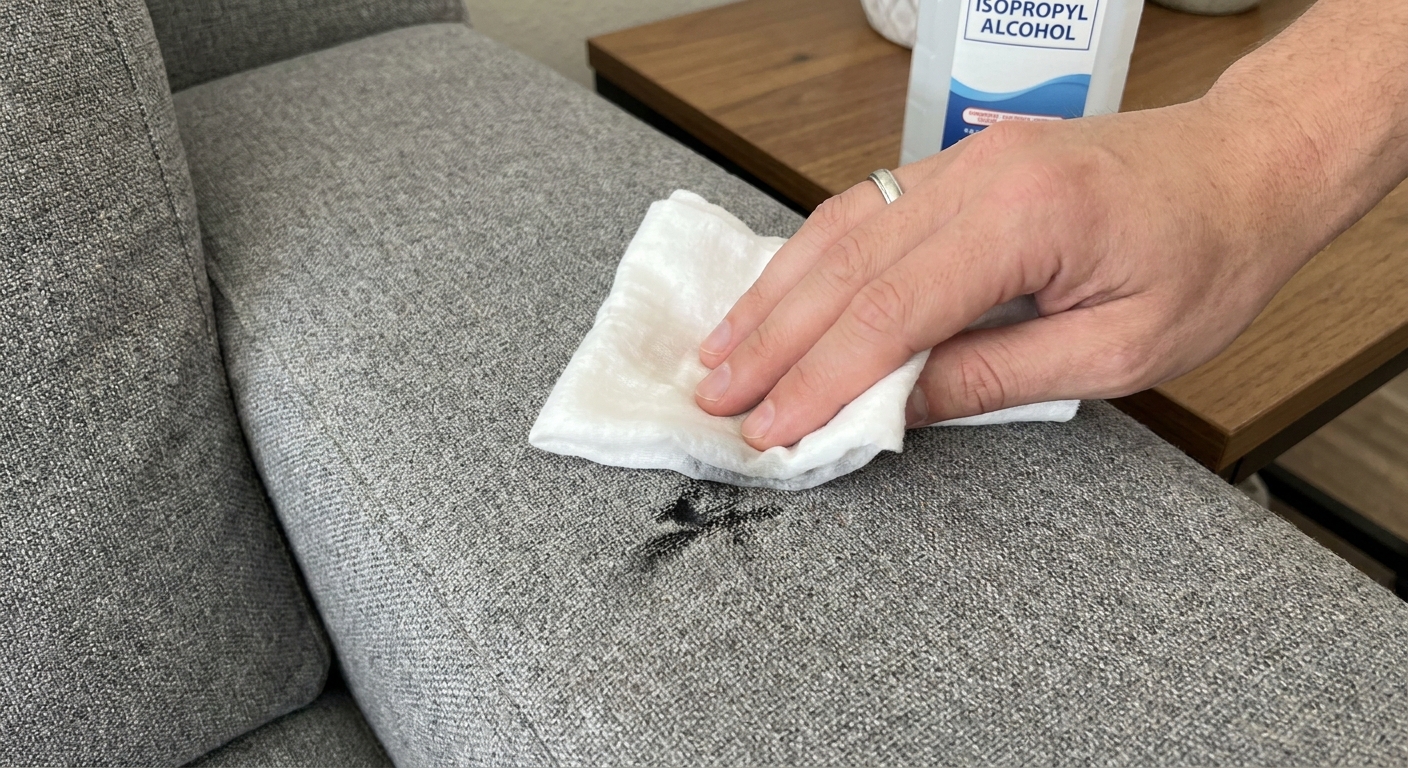
Common fabric types
Microfiber
Microfiber is lovable and dramatic. It can clean up beautifully, but it also shows water marks and brush direction changes.
- Best first move: for S-coded microfiber, use isopropyl alcohol on a cloth and dab gently.
- Work in tiny sections: microfiber can create a larger “clean spot” if you over-wet one area.
- After it dries: restore the nap with a soft brush (a clean, dry upholstery brush works well), brushing in one consistent direction.
If your microfiber is W-coded (less common), stick to minimal moisture and be prepared to blend outward to avoid rings.
Tight-weave fabrics
Tight weaves often keep marker closer to the surface, but they can also wick dye sideways and create a shadow.
- Best first move: start mild (soap and water for W/WS), then graduate to alcohol only if the tag allows and your test spot passes.
- Guard the edges: blot from outside inward to avoid creating a larger halo.
Performance fabrics
Many performance fabrics are engineered for stains, but permanent marker is still a special case.
- Check the manufacturer instructions: some brands have specific ink-removal protocols, and the “approved” cleaner can vary by finish.
- Start with mild soap and water: even if the fabric is tough, the finish can be compromised by aggressive solvents.
- Avoid over-scrubbing: friction can dull the finish or roughen the texture.
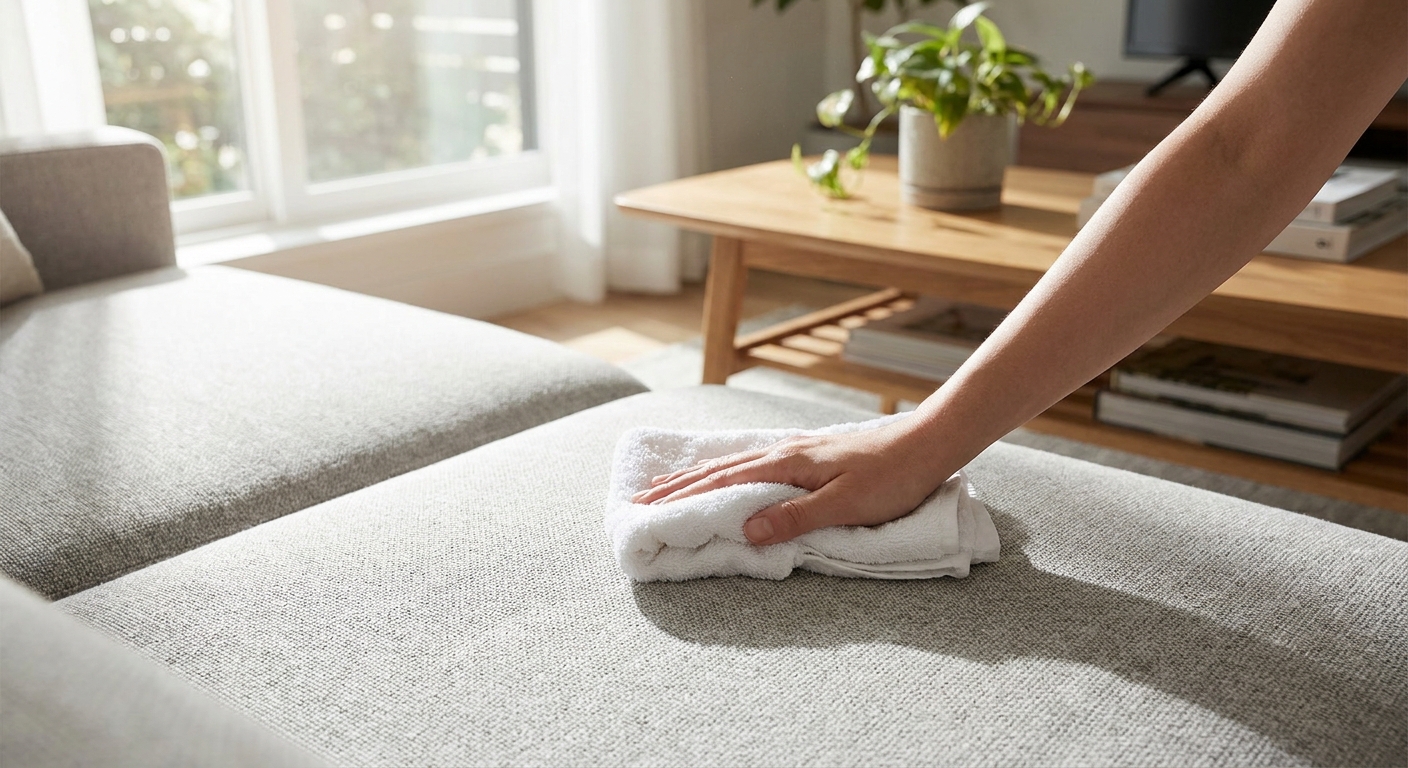
Sharpie removal steps
If your test spot is good and your fabric code allows it, this is the method I use when I am styling homes for real people with real lives and real marker mishaps.
- Vacuum crumbs and grit first so you do not grind debris into the fabric while blotting.
- Blot to pick up any loose ink with a white cloth. Press and lift.
- Dab cleaner onto the ink (soap mix for W/WS, alcohol for S/WS). Never pour.
- Blot immediately with a fresh dry cloth to pull ink up and out.
- Rotate cloth sections constantly. Using a clean part of the cloth is how you avoid re-depositing ink.
- Repeat in short rounds rather than soaking the area.
- Rinse only if appropriate: for W/WS fabrics, lightly dab with plain cool water to remove soap residue, then blot dry.
- Let it air dry fully, then reassess in natural light.
Expect progress, not perfection, in the first pass. Permanent marker often lifts in stages.
What to skip
- Hairspray: older formulas sometimes worked because they contained alcohol. Many modern hairsprays do not, and the sticky residue can attract dirt and create a new stain.
- Acetone or nail polish remover: can melt synthetics, damage finishes, and strip dye. Especially risky on microfiber and performance fabrics.
- Chlorine bleach: can remove color from your sofa faster than it removes the marker. Also can weaken fibers. Some performance fabrics allow diluted bleach for certain stains, but ink removal is brand-specific, so check the manufacturer before you even consider it.
- Magic erasers: they are micro-abrasive. On upholstery they can fuzz fibers, create shiny patches, and make the area look “scrubbed” even if the ink fades.
- Heat (hair dryer, iron): heat can make dyes harder to remove and can lock in discoloration. It is an avoidable risk.
- Rubbing aggressively: spreads ink, damages fibers, and turns a small mark into a haze.
Safety notes
Ventilation and flammability
If you are using isopropyl alcohol or any solvent cleaner, open a window. Keep it away from candles, pilot lights, and space heaters. Let the area dry fully.
Gloves and sensitivities
If your skin is sensitive, wear nitrile gloves. Avoid breathing fumes up close, and never mix cleaning products.
Mind the cushion insert
If liquid soaks through to foam, the stain can migrate back up as it dries. That is another reason to work with minimal moisture and blot often. Using a towel barrier behind the fabric helps, too.
Color loss is a bigger risk than the ink
Permanent marker is bold, but some upholstery dyes are surprisingly delicate. If you see fabric color on your cloth, pause. A slightly lighter marker stain is often better than a bleached patch you cannot unsee.
When to call a pro
There is no gold star for DIY if it turns into a bigger repair. Call a pro (or at least pause) if:
- the care code is X
- the sofa is leather or vinyl (or you cannot confirm it is fabric)
- the marker is paint marker or industrial ink
- your test spot shows dye transfer or texture change
- the stain is large, on the armrest, or in a high-visibility area
- you have repeated two or three gentle rounds with minimal improvement
- the ink has soaked into the cushion and keeps “ghosting” back
Professional upholstery cleaners have stronger, more targeted solvents and extraction tools that pull ink out instead of pushing it around.
Quick cheat sheet
- First move: blot, do not rub.
- Check tag: W, S, WS, X (and follow the manufacturer page if you have it).
- Use cloth first: cleaner goes on the cloth, not straight on the sofa.
- Add a barrier: towel behind the fabric if you can access it.
- Microfiber: often does best with alcohol dabbing (if S/WS), then brush nap after drying.
- Tight weaves: start mild, protect edges, work outside-in.
- Performance fabric: start gentle, and check brand ink protocols.
- Skip: hairspray, acetone, bleach, heat, aggressive scrubbing.
If you want, tell me your sofa’s care code and fabric type (microfiber, linen blend, performance fabric, etc.), plus whether the marker is fresh or old, and I will suggest the safest starting method for your exact situation.