Sewer or Drain Smell in an Apartment: First Checks for Renters

Clara Townsend
Clara Townsend is an interior stylist, vintage furniture enthusiast, and the creative voice behind Velvet Abode. With over a decade of experience transforming both cramped city apartments and sprawling fixer-uppers, she believes that a beautiful home is built on personal stories rather than massive budgets. When she isn't hunting for the perfect brass sconce at a local flea market, she can usually be found rearranging her living room for the third time this month.
That sour, sewer-y odor in an apartment has a special talent for making an otherwise cozy home feel instantly “off.” The good news is that many drain smells come from a few predictable, fixable places. The even better news is you can do a handful of safe checks before you panic, buy ten candles, or start blaming your neighbor.
This guide is renter-first: quick observations, low-risk fixes, and clear stop points where maintenance should take over.
First, make sure it is really a drain smell
Before you chase pipes, do a two-minute sniff test. It sounds silly, but it narrows everything down fast.
- Start at each drain opening: hover near the sink, tub, shower, and any floor drain. If it is strongest right at a drain, it is often a trap issue or buildup in that drain.
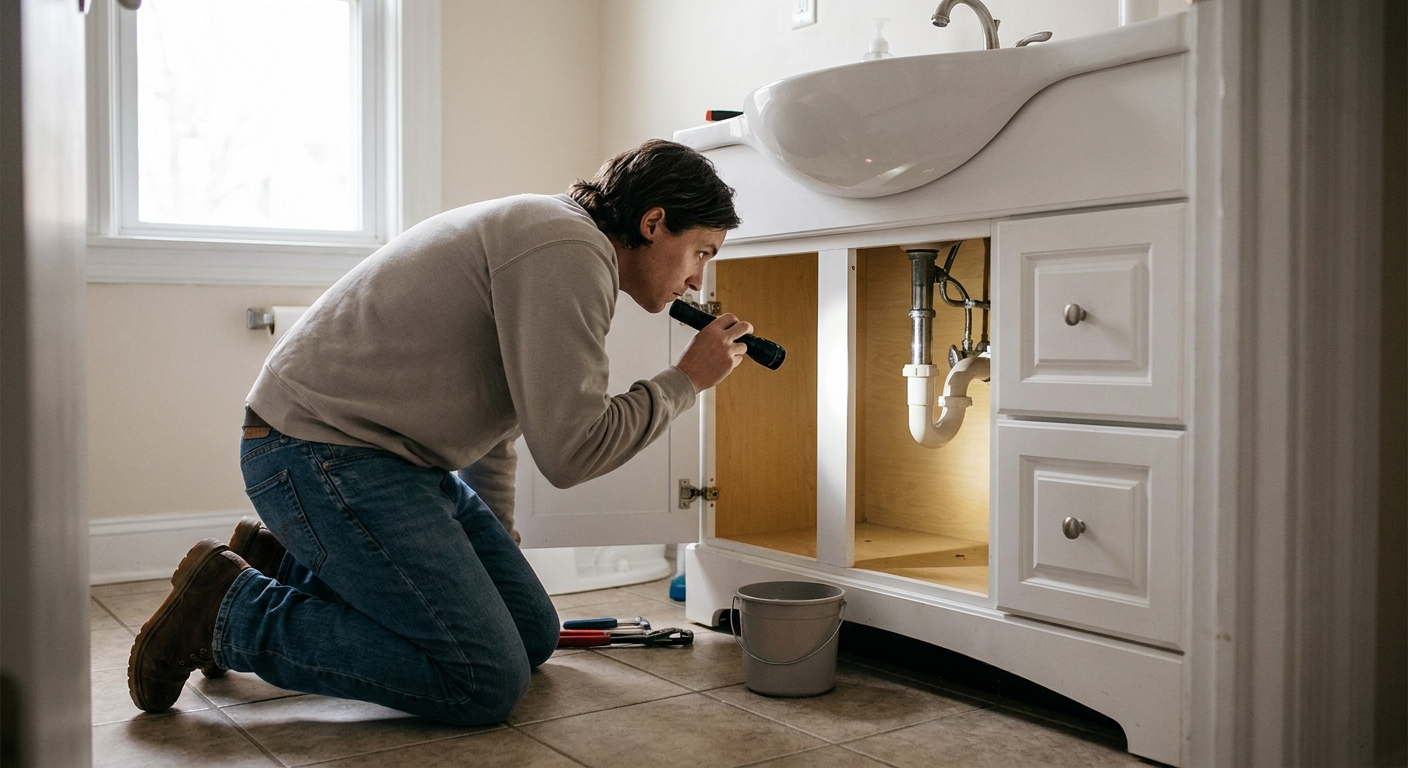
- Check under-sink cabinets: open the doors and sniff near the P-trap and wall connection. A loose fitting or slow leak can smell “sewer-ish.”
- Sniff near the toilet base (not the bowl): odor strongest at the base can mean a failing wax ring or loose toilet. This is a maintenance call.
- Smell strongest near the kitchen sink: often disposal gunk, dishwasher filter or drain-hose funk, or food residue in the drain line.
- Smell shows up when it is windy or after heavy rain: can point to venting or pressure issues in the plumbing system. Maintenance territory.
- Smell comes and goes with AC or heat running: the odor may be pulled from a bathroom or wall cavity into the air stream. Still often plumbing related, but note this pattern for your landlord.
Safety note: Sewer gas can contain methane and small amounts of hydrogen sulfide. At low levels it is usually “just” gross, but strong odors and irritation are a sign to take it seriously. If you feel dizzy, nauseated, or get headaches, open windows, leave the space, and call emergency maintenance.
The safe troubleshooting order
If you only do one thing from this article, do this: start with the simplest, least invasive checks that solve the most common causes.
- Run water in every drain to refill dry traps.
- Check for “forgotten” drains like floor drains, guest showers, and laundry standpipes.
- Clean the drain opening and overflow (hair, soap scum, biofilm).
- Address disposal and sink baffle gunk in the kitchen.
- Look for leaks under sinks and obvious loose fittings.
- Stop and call maintenance if odor persists or you spot red flags.
Common causes renters can check
1) Dry trap (most common, especially in unused bathrooms)
Most sinks, tubs, showers, and floor drains have a trap (often a P-trap) that holds a little water. That water is the “plug” that keeps sewer gas from wafting back into your home. If a drain is rarely used, the water can evaporate and the smell can drift in like it pays rent.
What to do:
- Run the water for 30 to 60 seconds in every sink and tub.
- Flush toilets and run the shower in any rarely used bathroom.
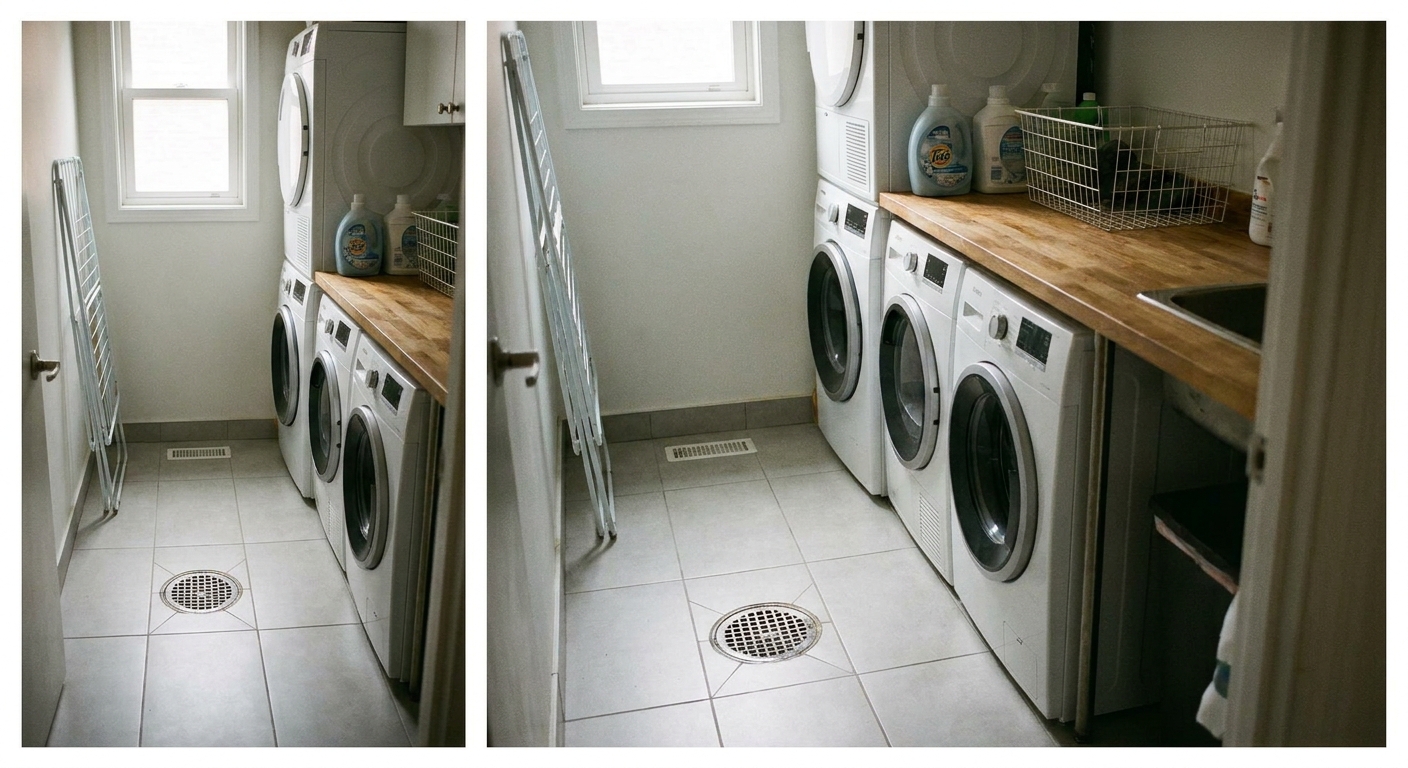
- If you have a floor drain (laundry room, utility closet, older bathroom), slowly pour about 2 cups of water into it.
Helpful trick for rarely used floor drains: If your building rules allow it, after adding water, pour 1 to 2 tablespoons of mineral oil into the drain. The oil floats on top and slows evaporation. Do not use cooking oil, which can go rancid.
2) Garbage disposal or kitchen drain biofilm
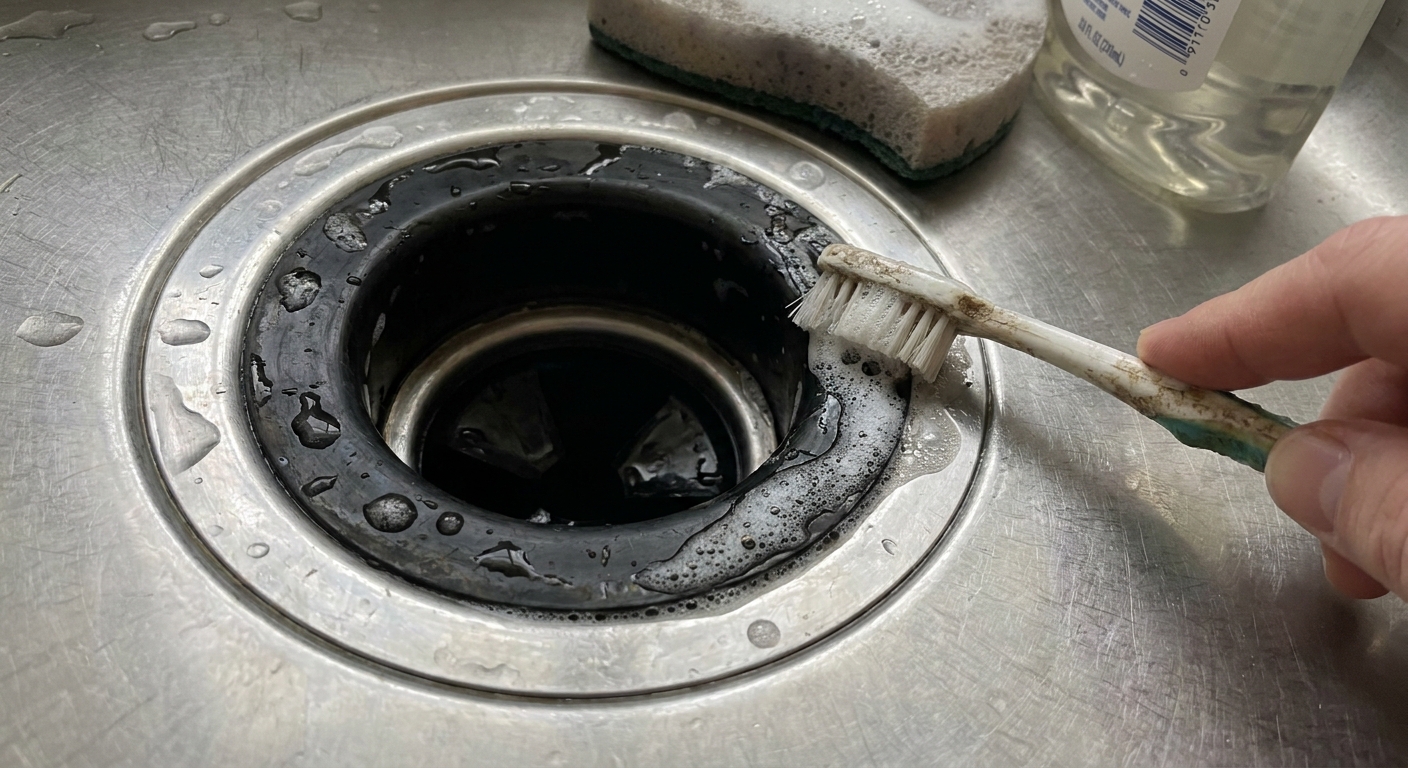
Even a “clean” kitchen can hide a very specific swampy smell. Often the culprit is the rubber splash guard (the black flappy ring), the underside of the sink flange, greasy buildup in the drain line, or food residue trapped in the dishwasher filter.
What to do (no fancy products required):
- Cut power first: unplug the disposal (or switch it off at the breaker) before you put hands near it.
- Lift and scrub the rubber splash guard with dish soap and an old toothbrush.
- With water running, run hot water, add a squirt of dish soap, and run the disposal for 15 to 30 seconds.
- If odors seem connected to the dishwasher, clean the dishwasher filter (if accessible) and run it empty on hot with a dishwasher cleaner tablet.
Avoid: throwing a mountain of citrus peels into the disposal. It can freshen briefly, but it does not remove the greasy film that holds the odor. Also avoid relying on vinegar and baking soda in a closed drain as a “fix.” The fizz is satisfying, but it is rarely strong enough to remove biofilm deep in the line.
3) Hair, soap scum, and overflow funk
That musty, sewer-adjacent smell in a bathroom is often not sewer gas at all. It is bacteria feeding on hair, toothpaste, shaving cream, and soap scum, especially in the sink overflow channel and on sink and tub stoppers.
What to do:
- Remove visible hair from tub and shower strainers.
- Clean the drain opening with a small brush and warm soapy water.
- For a sink overflow, gently scrub inside the overflow hole with a narrow bottle brush and soapy water.
- Check the stopper: If your sink or tub has a lift-out stopper, pull it out and wipe off the slime and hair. If it is not easily removable without tools, do not force it. Put in a maintenance request.
- Run hot water for a minute afterward to flush loosened gunk.
4) Laundry standpipes
If your washer drains into a standpipe (a vertical pipe in a laundry closet), it usually has a trap too, and it can dry out or get funky if the washer is rarely used.
What to do: Run a quick rinse cycle or carefully pour 1 to 2 cups of water into the standpipe to refresh the trap. If you notice gurgling, slow draining, or any backup, stop and call maintenance.
5) Floor drains
Floor drains are the sneaky ones. They sit quietly, doing nothing, until the trap dries out and your whole place smells like “old building plumbing.” Some buildings also use trap primers (devices that automatically add water). If a floor drain keeps going dry, that is useful information for maintenance.
What to do: Pour water into the floor drain as described above. If the smell improves quickly, you likely found it. If it dries out again fast, tell maintenance. A primer may be missing or not working.
6) Loose or leaking under-sink plumbing
If the trap or slip nuts under the sink are loose, you can get odor and moisture. Sometimes you will see a slow drip. Sometimes it is just a damp cabinet that smells off.
What to do:
- Look for dampness, stains, or warped cabinet bottoms.
- Place a dry paper towel under the trap and run water for 30 seconds. Check for fresh wet spots.
- Do not disassemble plumbing as a renter unless your lease explicitly allows it. If you suspect a leak, document and call maintenance.
7) Venting issues (usually not DIY for renters)
Plumbing vents (often routed to the roof) help drains flow properly and keep trap water from being siphoned out. When venting is compromised, you might notice gurgling drains, slow draining, or smells that worsen with wind or when other units use water.
What to do: Note the symptoms and call maintenance. Vent work is not a renter project.
8) Toilet wax ring or loose toilet base (stop and call)
A sewer smell that is strongest at the base of the toilet, especially with any rocking or moisture, can mean the wax ring seal has failed.
What to do: Stop using that toilet if there is leaking, take photos, and call maintenance promptly.
9) Hot-water-only “rotten egg” smell
If the odor shows up only when you run hot water (and not at the cold tap), it may be related to the building’s hot water system, such as the water heater or anode rod. This is more common in houses, but it can happen in some apartment buildings too.
What to do: Note that it is hot-water-only and tell maintenance. This is not a drain cleaning issue.
Temporary odor control
I love a candle as much as the next homebody, but masking can keep you from locating the source. Try these instead while you work through checks.
- Ventilate: crack windows and run the bathroom fan for 20 to 30 minutes.
- Use an air purifier with a carbon filter if you have one.
- Set out baking soda in a shallow bowl near the problem area (not down the drain as your main fix).
- Cover a suspect drain temporarily: place a damp washcloth over the drain opening for an hour. If the smell reduces, that drain is likely your culprit.
Skip chemical drain openers unless your lease and building explicitly allow them. They can damage some pipes and fixtures (especially older plumbing), create hazardous fumes, and make a later snaking job harder for maintenance. When in doubt, ask first.
What to document for your landlord
Maintenance moves faster when you hand them clear clues. You are not just saying “it smells weird,” you are pointing to where and when it happens.
- Date and time patterns: “Worse in the mornings,” “after rain,” “when neighbors use water,” “only when AC runs.”
- Exact location: “Strongest at guest bath sink drain,” “laundry room floor drain,” “toilet base.”
- What you tried: “Ran water in all drains,” “cleaned splash guard,” “poured water into floor drain,” “cleaned sink overflow.”
- Photos or short video: leaks under sinks, water stains, bubbling in toilet bowl, gurgling sounds.
- Impact: if it is affecting sleep, causing headaches, or making a room unusable, say so plainly.
Red flags: call maintenance
- Persistent sewer smell after refilling traps in all drains and checking floor drains and standpipes.
- Gurgling drains plus odors, especially when other fixtures run.
- Slow drains across multiple fixtures (could indicate a main line issue).
- Water around the base of a toilet, a rocking toilet, or odor strongest at the toilet base.
- Any sign of sewage backup in a tub, shower, or floor drain.
- Dizziness, headaches, nausea, or the smell is strong enough to make you want to leave the apartment.
- Visible mold or damp drywall near plumbing lines.
If any of these are happening, you are past the “quick checks” stage. Call building maintenance or your landlord. If your building has an emergency line and you suspect a backup, use it.
Quick renter checklist
- Run water in every sink, tub, shower, and toilet.
- Do not forget floor drains and laundry standpipes.
- Clean hair and gunk at drain openings, stoppers, and overflows.
- Scrub the disposal splash guard and run hot water with dish soap (with water running).
- Check under sinks for dampness.
- Document patterns and call maintenance if it persists.
FAQ
Why does the smell come and go?
Odors can shift with humidity, temperature, wind pressure, and when other units use water. A partially dry trap might only smell at certain times, and venting issues often show up during wind or storms.
Is it safe to pour bleach down the drain?
Occasional diluted bleach may reduce bacteria smells, but it will not fix a dry trap, vent problem, or failing seal. Bleach fumes can also be irritating in small bathrooms. If you use it, ventilate well and never mix it with other cleaners.
What if I tried everything and it still smells?
At that point, assume a building-level issue: venting, a partial blockage, a broken seal, or a problem in a wall cavity. Document what you tried and contact maintenance with specific notes on where the smell is strongest.