Robot Vacuum Keeps Flipping Rug Corners

Clara Townsend
The first time my robot vacuum flipped the corner of a vintage runner, it looked like the rug had tried to wave hello and gotten stuck mid-greeting. Two minutes later, the vacuum was sulking, beeping, and chewing at the edge like it had a personal grudge. If this is happening in your home, you are not alone. Robots are excellent at routine cleaning, but they are not great at reading the room, especially when a rug edge lifts even a little.
The good news: you can almost always fix this without replacing your rug. The trick is figuring out why the corner is lifting in the first place, then choosing a solution your robot can actually cross.
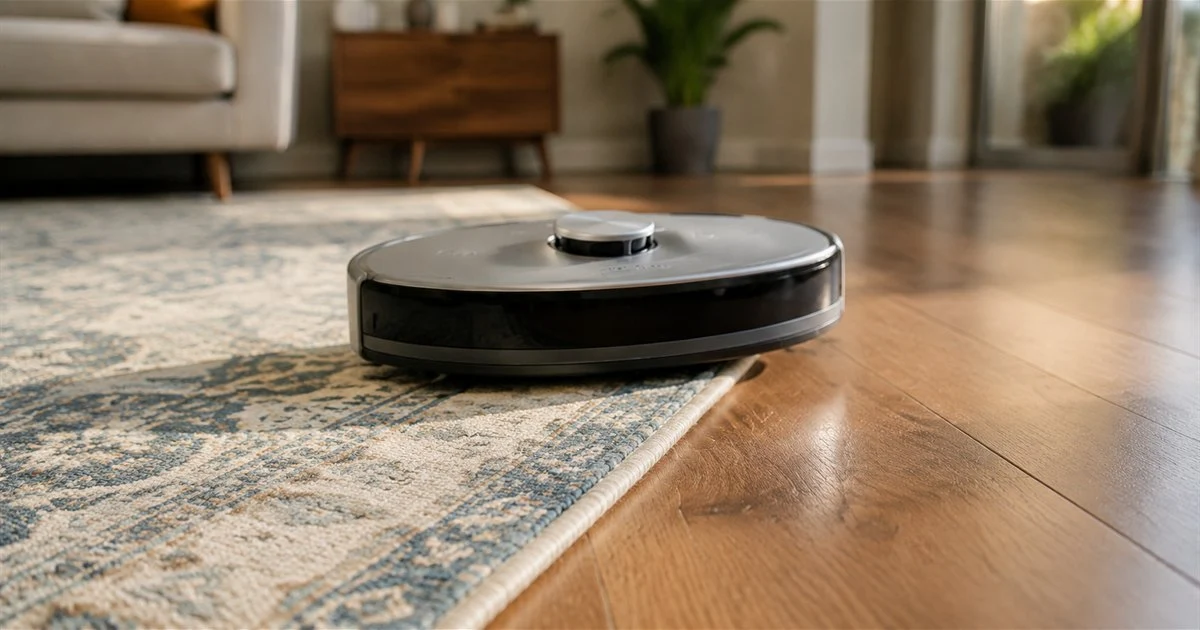
Why robot vacuums flip rug corners
Robot vacuums tend to flip corners for a few predictable reasons. Once you spot the culprit, the right fix becomes obvious.
- The corner is already slightly curled. Even a small lift becomes a ramp the robot tries to climb, then it shoves the corner upward.
- The rug edge is thicker than the robot can clear. Threshold and edge performance varies a lot by model. Many robots handle modest transitions, but a thick binding, layered rugs, or a plush pad can turn the edge into a little curb.
- The rug is too light for the floor it is on. Flatweaves and thin cotton rugs can shift when the robot’s brush, wheels, or bumper nudges them.
- Fringe and tassels confuse the brushes. Side brushes love fringe. Unfortunately, they love it in the way a toddler loves pulling tape off a wrapped gift.
- Doorways and transitions amplify the problem. Corners near a doorway or transition strip get more foot traffic and more chances to catch a toe, a chair leg, or a robot wheel. If you also have noticeable drafts from a door gap or HVAC register, very light rugs can flutter and inch out of place over time.
Quick test: curl or clearance?
Before you buy anything, do this tiny diagnostic:
- Step 1: Press the corner down firmly with your palm. If it springs back up, you have curl memory or a stiff binding that needs taming.
- Step 2: Check the height at the edge. If you know your robot’s stated threshold or clearance, compare the rug edge and pad to that spec. If you do not, use a ruler and a couple of coins as a quick gauge. If the edge is close to (or higher than) what your robot can climb, it is likely to catch.
- Step 3: Watch one cleaning pass. If the robot bumps, reverses, then tries again at a slightly different angle, it is struggling with clearance. If it climbs partway and then flips the corner, it is using the rug edge as a ramp.
Quick model note: Navigation style matters. LiDAR robots can be more consistent about approach angles, while bumper-led robots sometimes ram edges until something gives. Combo vacuum-mop models can also snag more easily on fringe or soft, floppy ends because they are dragging extra hardware.
Fixes that robots can cross
1) Flatten curl without adhesives first
If the corner is curled from storage or age, I like to start with the gentlest fix before I stick anything to a floor or a vintage backing.
- Reverse-roll the corner: Roll the corner in the opposite direction (gently), leave it for a few hours or overnight, then unroll and test.
- Use temporary weight: A heavy book overnight is a surprisingly effective “is this worth fixing?” test. If it helps, move on to grips or a pad for a cleaner long-term solution.
- Use heat and moisture with caution: For some rugs, light steam or low heat can relax curl. But wool, silk, and older/vintage rugs can be finicky, and too much heat can do real damage. If the rug is precious, ask a rug cleaner before you try this at home.
2) Use corner grips made for rugs
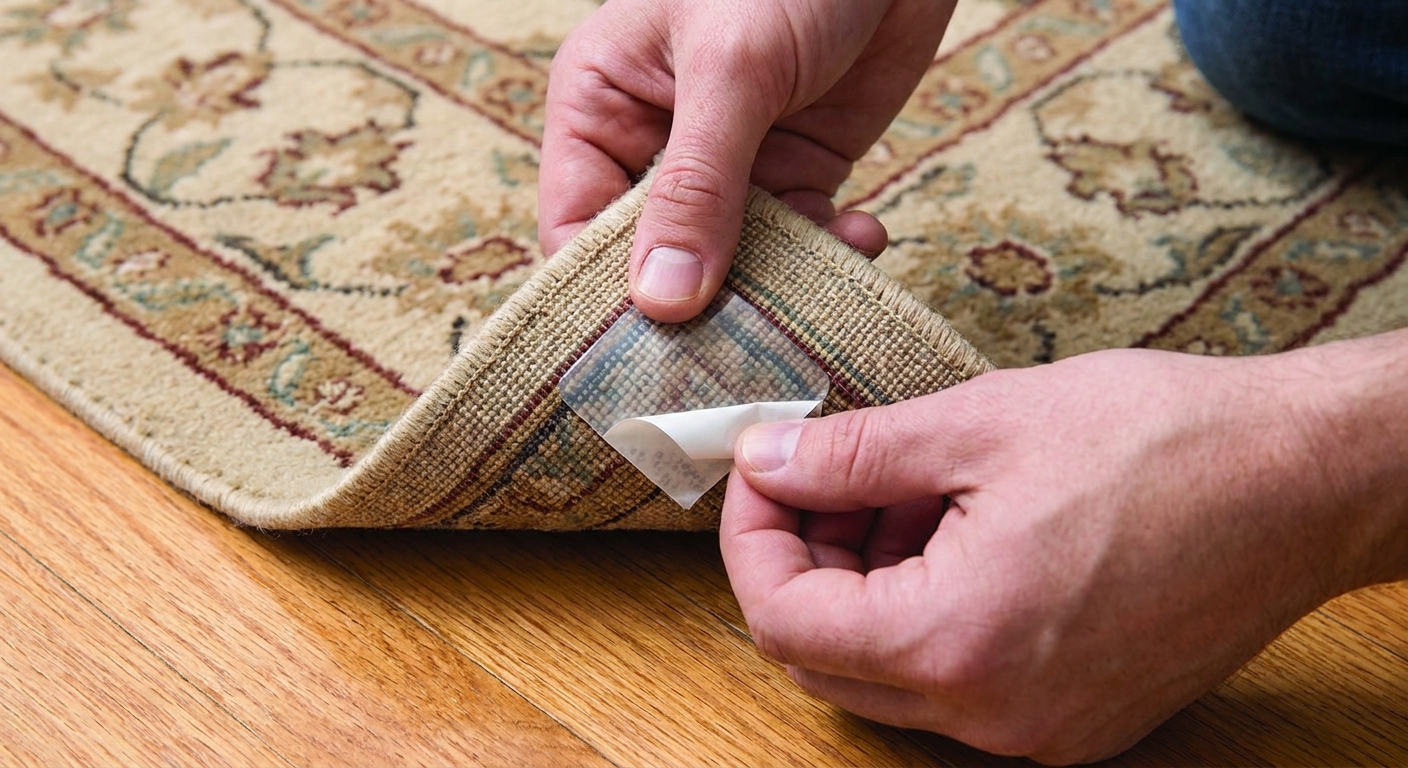
My favorite low-fuss fix is a set of thin corner grips designed for area rugs. They stick the corner down without creating a thick ridge that your robot will trip over.
- Look for low-profile, flexible grips that adhere to both rug backing and hard floors.
- Clean the floor first so the adhesive bonds to the surface, not to dust.
- If your rug has a delicate or vintage backing, test one corner for a day before committing to all four.
3) Apply rug tape only where it helps
Double-sided rug tape can work beautifully, but it is easiest to overdo. Thick tape, overlapped tape, or tape placed right on the edge can collect lint and build up into a tiny speed bump.
- Use short strips under the first 4 to 8 inches of each corner.
- Place tape slightly in from the very edge so it does not become a fuzzy ridge.
- Be picky about surfaces: Some adhesives can leave residue or pull finish, especially on delicate floor coatings (including some oil-finished hardwoods) and certain vinyls. Test in a hidden spot and choose tape labeled for your floor type.
- Avoid aggressive tapes on fragile antique rugs or latex backings that are already degrading.
4) Upgrade the rug pad for thin rugs
A thin flatweave on hardwood is basically an ice skate for a robot vacuum. A better pad adds grip and stability so the robot is not pushing the rug around until a corner lifts.
- For hard floors, choose a pad with a rubber or felt-rubber blend that grips without adding bulky height.
- Trim the pad so it sits about 1 inch smaller than the rug on all sides. If the pad peeks out, your robot may catch the pad edge instead.
- Avoid very squishy pads under low-profile robots. Too much cushion can make the edge feel like a soft hill.
5) Make the edge easier to climb
If your rug has a thick binding, or you are layering rugs, your robot may be failing the climb. Think of this as giving the robot a smoother on-ramp. You can do that by reducing height, stabilizing the edge, or guiding where the robot enters.
- If the rug is layered, try a thinner top rug or remove the pad under the top layer so the edge is not a double-decker.
- Rotate the rug so the robot approaches from a flatter, straighter edge rather than a corner that naturally wants to lift.
- If you are committed to the rug but the binding is very bulky, a professional can sometimes rebind with a lower-profile binding. This is especially helpful for rugs in robot-heavy zones like kitchens and hallways.
6) Tame fringe before it becomes a snack
If your robot is eating fringe, the safest choice is to keep the fringe out of its path. Fringe is charming. Robot side brushes are not.
- Fold fringe neatly under the rug and secure it with small pieces of rug tape placed farther in from the edge.
- If the fringe is long and precious, consider using a no-go zone just along that side.
- If the rug is inexpensive and purely practical, you can have fringe professionally removed and the edge bound for a clean, robot-friendly finish.
7) Use no-go zones for trouble spots
I love a robot that cleans on its own schedule. I do not love rearranging my style choices around it. A targeted no-go zone lets you keep the rug and stop the corner drama.
- Block off one problematic corner or the fringe side only.
- If your robot supports it, try an invisible boundary or map edit rather than a physical barrier. It looks cleaner and you will not trip over it.
- After you add grips or tape, you can often remove the no-go zone later.
Small robot tweaks that help
Once the rug is physically stable, your robot’s settings and maintenance can make the situation better or worse.
- Reduce suction on lightweight rugs if your model allows it. High suction can tug at looser edges or fringe on thinner, lighter rugs.
- Turn off carpet boost for thin flatweaves that are prone to lifting.
- Change the cleaning direction. Some apps let you set a room clean pattern. Approaching the rug edge head-on can be smoother than catching a corner at an angle.
- Check and clean the brushes. A worn main brush or tangled side brush can grab fibers and edges more aggressively.
- Inspect the underside. Clear hair from the front caster wheel, wipe gunk from the bumper area, and check for any rough spots or stuck debris that could snag a binding.
When it is the rug
Sometimes, your robot is simply exposing a rug that is not well-suited to frequent robotic cleaning in a high-traffic zone. If any of these sound familiar, you may want to adjust the rug choice or placement.
- Very light cotton flatweaves in hallways: they shift easily.
- High-pile or shag: many robots will struggle, stall, or chew at the edge.
- Loose, floppy edges from wear: even with tape, the edge can remain tempting.
- Fragile vintage rugs with delicate ends: better to protect them and clean them more gently.
If you love the rug and it is a keeper, consider relocating it to a lower-robot zone and placing a more robot-friendly rug where the vacuum runs daily.
Robot-friendly rug edges
If you are shopping for a rug with a robot vacuum in mind, here are the details that make life easier:
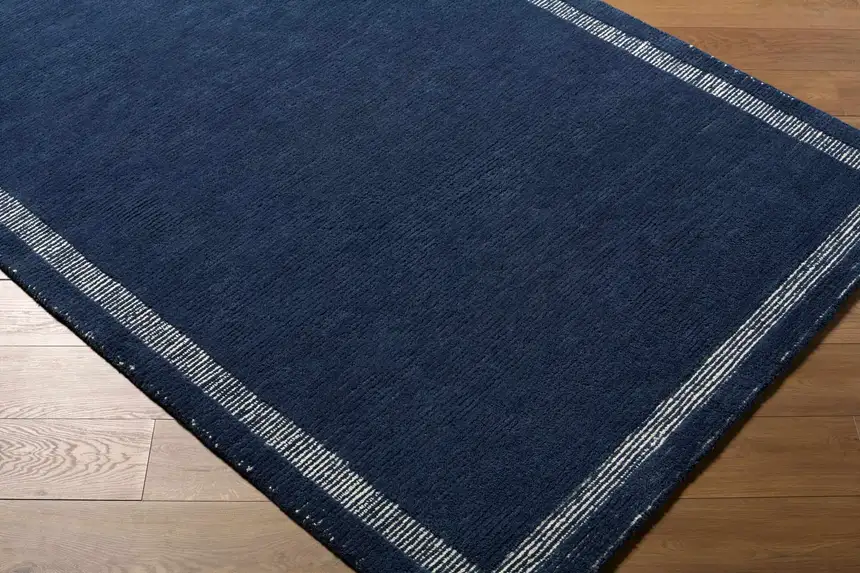
- Low-profile binding rather than thick folded edges.
- Short fringe or no fringe, especially for kitchens and entryways.
- Medium weight so the rug has enough body to resist being pushed around.
- Low pile with a firm weave that does not pucker at the edge.
Troubleshooting checklist
- If the robot flips one corner repeatedly: Flatten curl first, then corner grip, then a small no-go zone if needed.
- If the robot stalls at the edge: Compare the edge height to your robot’s threshold spec, then reduce pad bulk, de-layer, or consider a lower-profile rebind.
- If fringe is getting tangled: Fold and tape fringe under, or block off the fringe side.
- If the rug shifts and then flips: Upgrade the rug pad for better grip.
FAQ
Will rug tape damage my floors?
It can, depending on your finish and the tape adhesive. Choose tape labeled for your floor type, apply it to a clean, dry surface, and test in a hidden spot first. If you have delicate finishes (including some oil-finished hardwoods) or newer floors you are babying, corner grips or a better rug pad are often safer.
Why does my robot only flip the rug when it turns?
Turning is when the robot’s wheels and side brush create sideways force. If the rug corner is even slightly loose, that pivot can lift it. Stabilizing the corner with grips or a small piece of tape usually solves this specific pattern.
Is it better to add weight to the corners?
In the short term, yes, but it is not my favorite everyday solution because it can look cluttered and becomes one more thing to move. If you want to test whether weight will help, place a heavy book on the corner overnight. If it improves, graduate to corner grips or tape for a cleaner fix.
Can I just keep the robot off the rug?
Absolutely. If it is a delicate vintage rug or a long-fringe piece you truly want to protect, a no-go zone is a perfectly stylish boundary. I do this in homes where the rug is art as much as it is flooring.