Replace Couch Cushion Foam

Clara Townsend
Clara Townsend is an interior stylist, vintage furniture enthusiast, and the creative voice behind Velvet Abode. With over a decade of experience transforming both cramped city apartments and sprawling fixer-uppers, she believes that a beautiful home is built on personal stories rather than massive budgets. When she isn't hunting for the perfect brass sconce at a local flea market, she can usually be found rearranging her living room for the third time this month.
There is a very specific kind of disappointment that hits when you sit down and your couch basically sighs back. If your cushions look fine but feel like they have given up, replacing the foam insert is often the fastest way to bring a sofa back to life without buying a whole new piece.
Below I will walk you through the whole process: how to decide whether you should replace or just restuff, how to measure (correctly, which is most of the battle), how to pick foam density and ILD for seat versus back cushions, how to wrap with Dacron for that tailored, boutique feel, and how to get the zipper closed cleanly without stressing the seams.
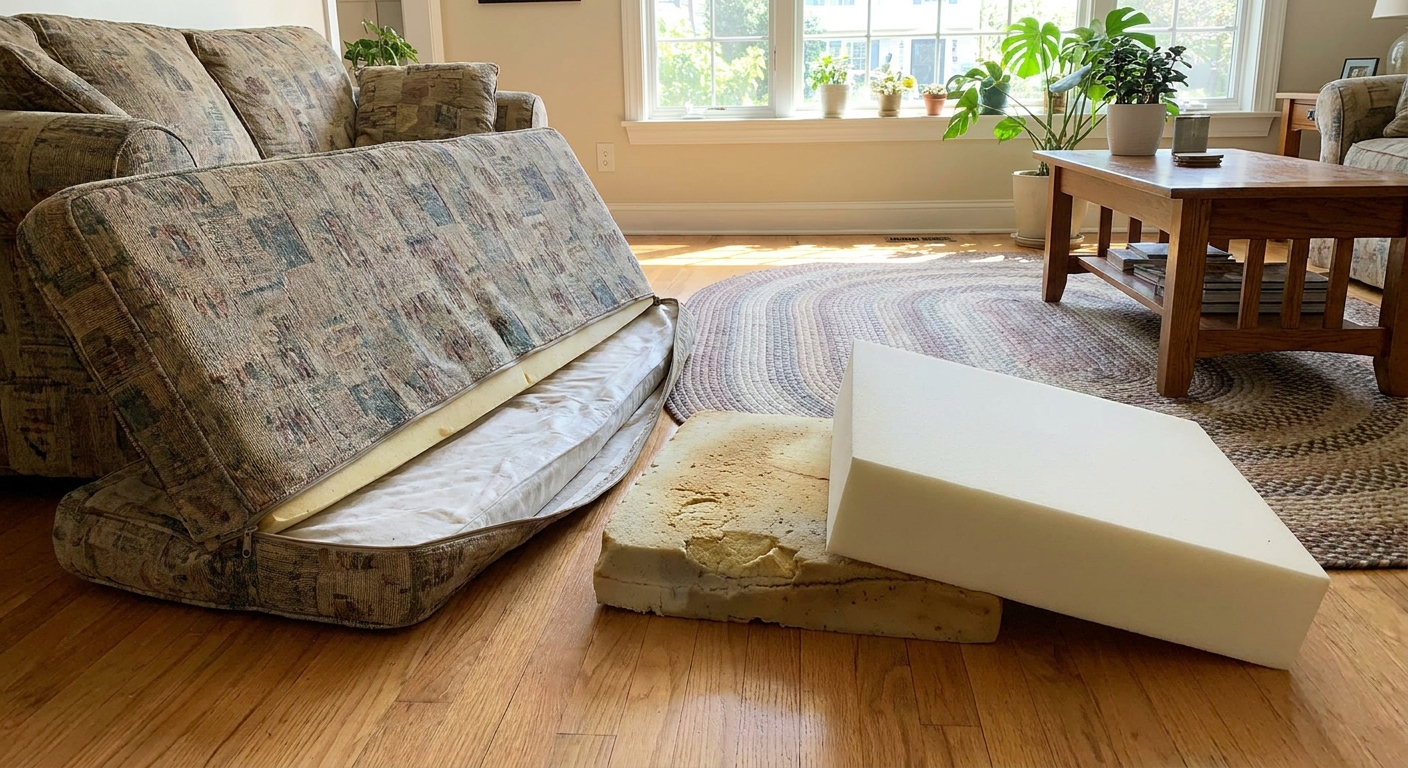
Replace vs restuff: quick call
Not every saggy cushion needs new foam. Sometimes the fix is simple, like redistributing filling or adding more wrap. Here is how I decide in real homes.
Replace the foam if:
- The foam does not bounce back. Press with your palm for 5 seconds, then release. If it stays dented or rebounds slowly, it is tired.
- You feel the frame. If you can sense the deck or springs through the cushion, foam has likely collapsed.
- The foam crumbles or turns to dust. Older polyurethane foam can break down over time. Heat and direct sun can speed that up.
- The cushion has a permanent slope. Even after rotating and flipping (if you can), it still angles toward the center.
Restuff or refresh if:
- Your inserts are down or fiber and feel lumpy, but not flat. Often they just need more fill or a new inner bag.
- The foam feels okay but the cushion looks wrinkly or underfilled. A Dacron wrap refresh can work wonders.
- Only the top looks sad. Sometimes the foam is fine and the issue is the cover stretching out. If the cover is removable, follow the care label exactly. Washing can shrink or distort some fabrics, and heat can ruin piping, zippers, or sizing. When in doubt, spot clean or dry clean.
One more reality check: sometimes the “sag” is not the cushion at all. If your sofa has tired sinuous springs, webbing, or a broken deck, fresh foam helps, but it will not perform miracles on a failing support system.
If your couch is your main lounging spot and you sit in the same place every night, replacing seat foam is usually the best money-for-comfort upgrade you can make.
Tools and materials
- Flexible tape measure
- Long ruler or straightedge
- Marker or chalk
- Scissors (for Dacron)
- Electric carving knife or a sharp bread knife (for foam cutting)
- Spray adhesive made for foam (optional but helpful)
- Dacron (polyester batting) wrap, typically 0.5 to 1 inch loft
- New foam: high-resilience (HR) polyurethane foam or latex (more on picking below)
- Seam ripper (only if you find old stitches that need gentle freeing)
Optional but nice: a large thin, dry cleaner style plastic bag to help slide foam into a tight cover, and a second set of hands for stubborn zippers.
Safety notes: Cut away from your hands and keep your fingers clear of the blade path. If you use spray adhesive, make sure it is foam-safe and use it in a well-ventilated area (outside or near open windows) while following the can directions.
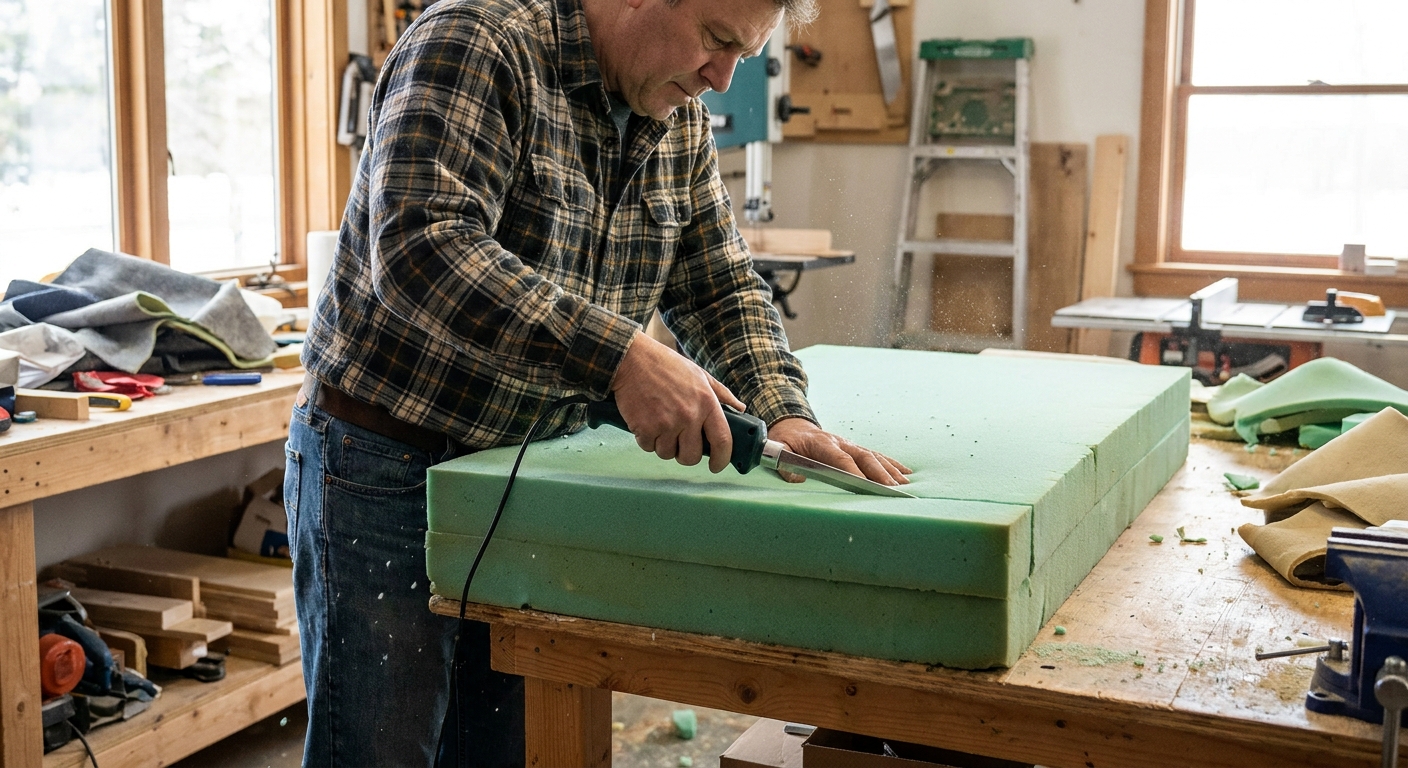
Measure the right way
Foam sizing is part math, part honesty about what your cover is doing. A cover that has stretched out over years will measure bigger than the foam that should be inside it. The goal is a cushion that looks full and tailored, not one that fights you like skinny jeans after laundry day.
Step 1: Remove the insert
Unzip the cushion and pull out the old insert. Let the empty cover lie flat for a few minutes. This helps it settle into its true shape.
Step 2: Measure the cover, not the old foam
Old foam is often compressed, rounded at the corners, and smaller than the cover. Measuring it can lead to a replacement that feels skimpy.
- Width: side to side across the front edge
- Depth: front to back
- Thickness: measure the boxing panel (the side band) height
Step 3: Choose a snugness allowance
Most seat cushions look best when the foam is slightly larger than the cover footprint, because foam compresses and fills corners.
- For a tailored look: add about 0.5 inch to 1 inch to width and depth (total, not per side) if your cover is not already very tight.
- For tight modern covers: match the cover measurement exactly, or add only 0.25 to 0.5 inch total.
- For back cushions: match the cover or go slightly smaller if you want a softer, squishier feel.
Quick example: If your cover measures 24 x 24 inches and you want a slightly fuller seat cushion, order about 24.5 x 24.5 (or up to 25 x 25 for a looser cover). You are not adding an inch to each side.
Thickness is usually best matched to the boxing height, but there are exceptions. If your cover is visibly stretched or your cushion has deep corner wrinkles, going up about 0.5 inch in foam thickness (or using a slightly loftier Dacron wrap) can help it look “new” again. If your cover is already tight, stay true to the boxing measurement so you can zip it without drama.
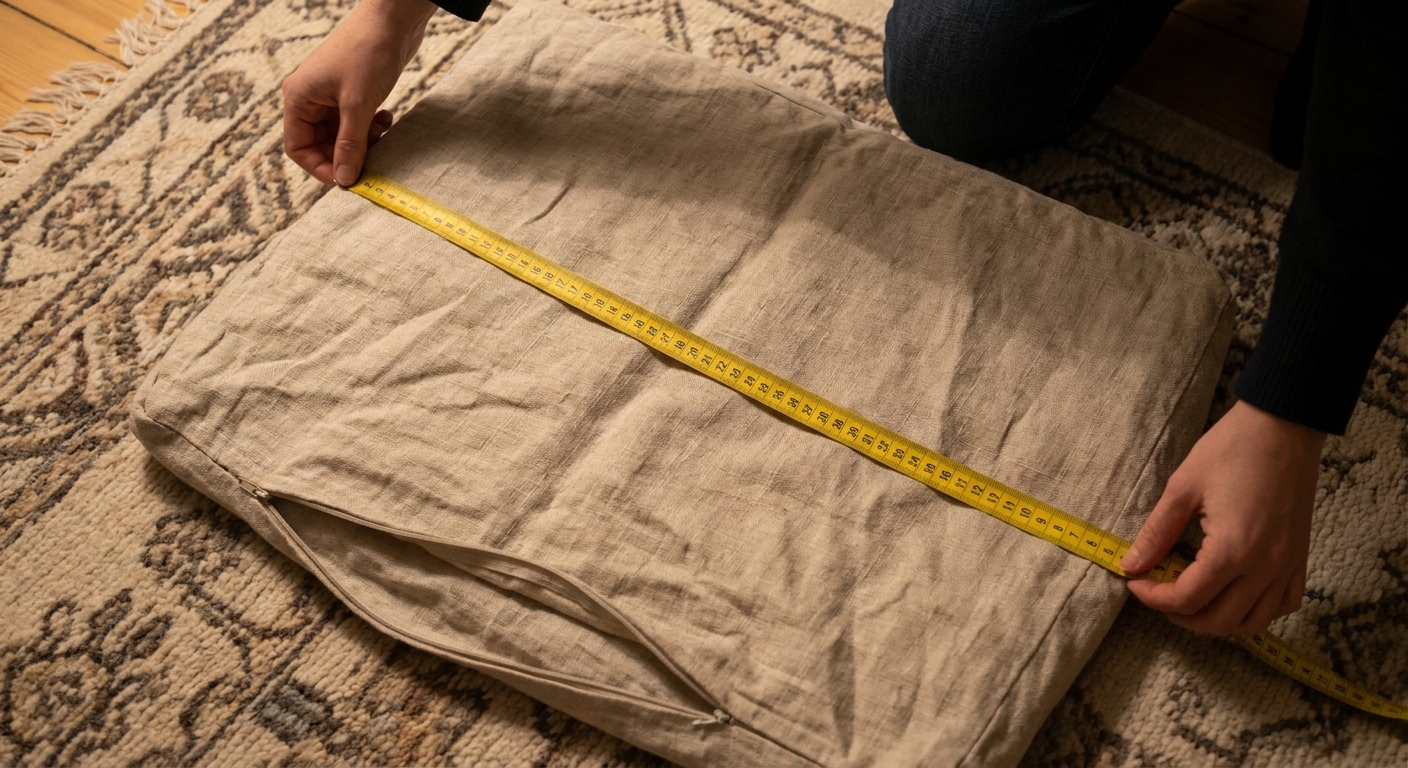
Foam basics: density and ILD
Foam specs can feel like a secret club, but you only need two numbers to make a smart choice: density and ILD.
Density: how long it lasts
Density is measured in pounds per cubic foot (PCF). Higher density often means better durability and resilience, but it is not the only factor. Foam formulation matters too (for example, HR foam is typically more durable and springy than conventional foam at the same density).
- About 1.5 PCF: budget, guest-room use, shorter lifespan
- About 1.8 PCF: a common everyday baseline for many sofas
- About 2.2 PCF and up: often chosen for heavy daily use and longer life
If your sofa is the heart of your home, I would rather you spend on density and a reputable upholstery-grade foam than on fancy marketing terms.
ILD: how firm it feels
ILD (Indentation Load Deflection) is how many pounds it takes to compress foam by 25 percent. Higher ILD equals firmer foam. Ranges vary by brand and foam type, so treat the numbers as a map, not a commandment. If the seller lists “recommended use” (seat, back, bench), that is worth following.
- Seat cushions: commonly around 28 to 45 ILD depending on preference, body weight, and seat depth (40+ is usually quite firm)
- Back cushions: often around 15 to 30 ILD for foam backs, plus softer fills like fiber and down blends
Two people can buy the same density foam and have totally different comfort experiences because ILD is the feel factor.
Seat foam picks
Seat cushions take the beating. They need structure, rebound, and enough firmness that you are not slowly sinking into a permanent valley.
A good everyday sweet spot
- Density: about 1.8 to 2.2 PCF (HR foam if possible)
- ILD: about 30 to 40 for many people, with 40 to 45 if you like a firmer sit or need more support
- Thickness: match your cushion boxing, commonly 4 to 6 inches (adjust only if your cover has stretched or you want a fuller look)
Softer feel, still supportive
Look for a layered build rather than simply choosing very soft foam. A popular approach is a firm core with a softer topper, or a firm foam wrapped generously with Dacron. This gives you a welcoming first impression and still keeps your hips from bottoming out.
Deep seats and lounging
Deep seats can feel better with slightly higher ILD because your weight is distributed differently when you sprawl. If you have ever felt like you are sliding backward into the couch, bump firmness up a notch.
Back cushion options
Back cushions should support you without pushing you off the sofa. Most people are happiest when backs are softer than seats.
Common choices
- Soft foam (lower ILD): keeps a clean shape, low maintenance
- Fiberfill: very cozy, needs frequent fluffing
- Down or down blend: luxe and slouchy, needs daily karate-chops and may trigger allergies
If you are switching from a down back to foam, expect a more structured look. If you are switching from foam to fiber, expect more fluffing. Neither is wrong. It is just lifestyle.
Foam types: quick guide
- HR polyurethane: great bounce and durability for seats, usually the best value for everyday couches.
- Conventional polyurethane: often cheaper and fine for light use, but it can soften and break down sooner.
- Latex foam: springy and long-lasting, often pricier and heavier. Some people love the feel, some do not. If you have latex allergies, check with your doctor and the supplier before buying.
One more grown-up note: in some regions, upholstery foam must meet specific flammability standards. When possible, buy upholstery-grade foam that complies with your local requirements.
Dacron wrap
Dacron (polyester batting) is what makes a cushion look finished. It softens the edges, helps the cover glide on, and reduces that sad, empty-looking corner situation.
How much to use
For most sofa cushions, 0.5 inch loft is a safe choice. For a plusher, fuller look, you can use 1 inch loft, especially on back cushions.
How to wrap
- Cut a piece large enough to go around the foam like a present, with a little overlap.
- Wrap snugly, keeping the batting smooth.
- Use a light spray of foam-safe adhesive to tack the overlap if you want it to stay put (again, ventilate).
- Keep the corners rounded, not bulky. Extra folds at the corners can make the cover hard to zip.
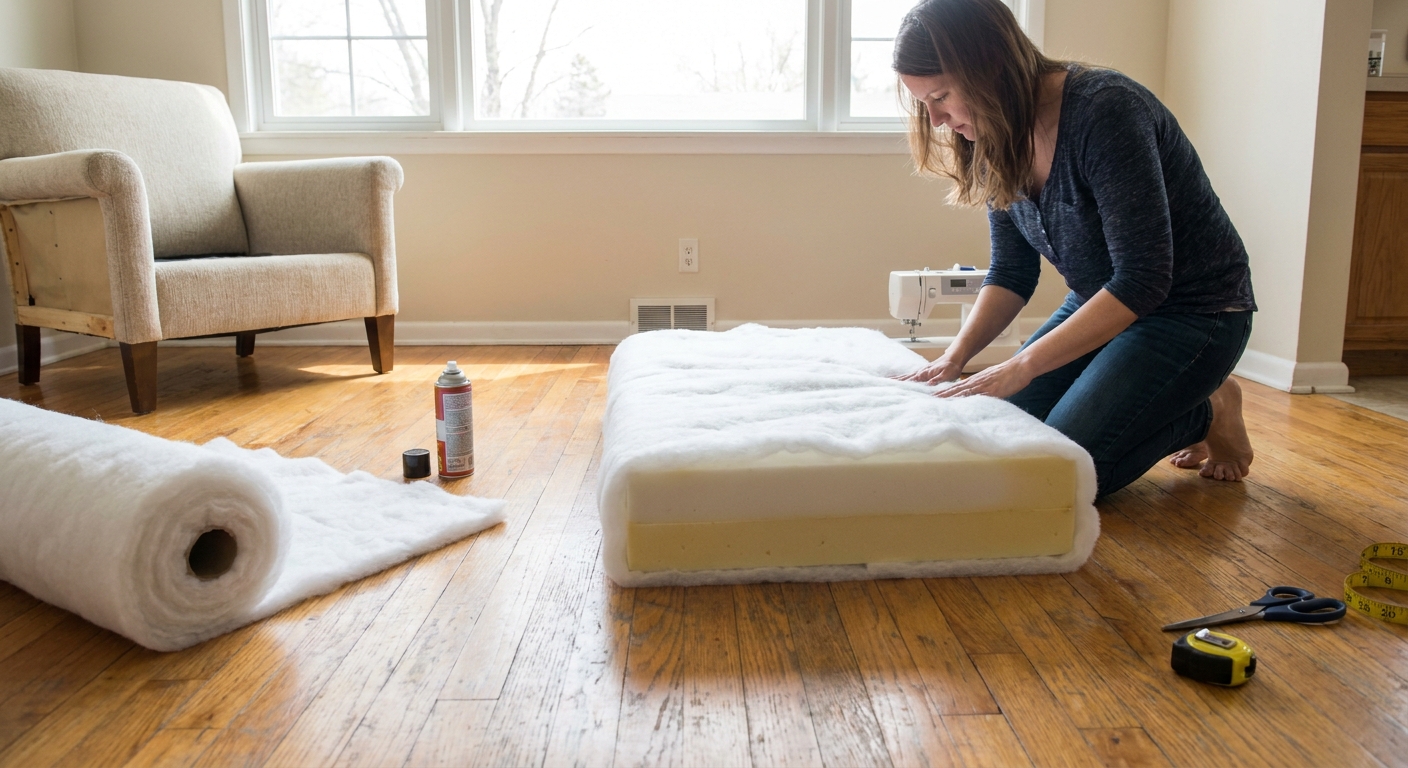
Cut foam cleanly
If your foam supplier does not cut to size, you can absolutely do it at home.
- Mark your lines: Use a straightedge and mark all the way around the foam so you can stay square.
- Use the right knife: An electric carving knife gives the cleanest, most controlled cut.
- Cut slowly: Let the blade do the work. Rushing creates wavy edges.
- Stay square: Keep the knife perpendicular so your cushion does not end up trapezoid-shaped.
Minor unevenness is fine. Dacron is forgiving, and the cover hides a lot. But clean edges make insertion and zipping much easier.
Get the insert back in
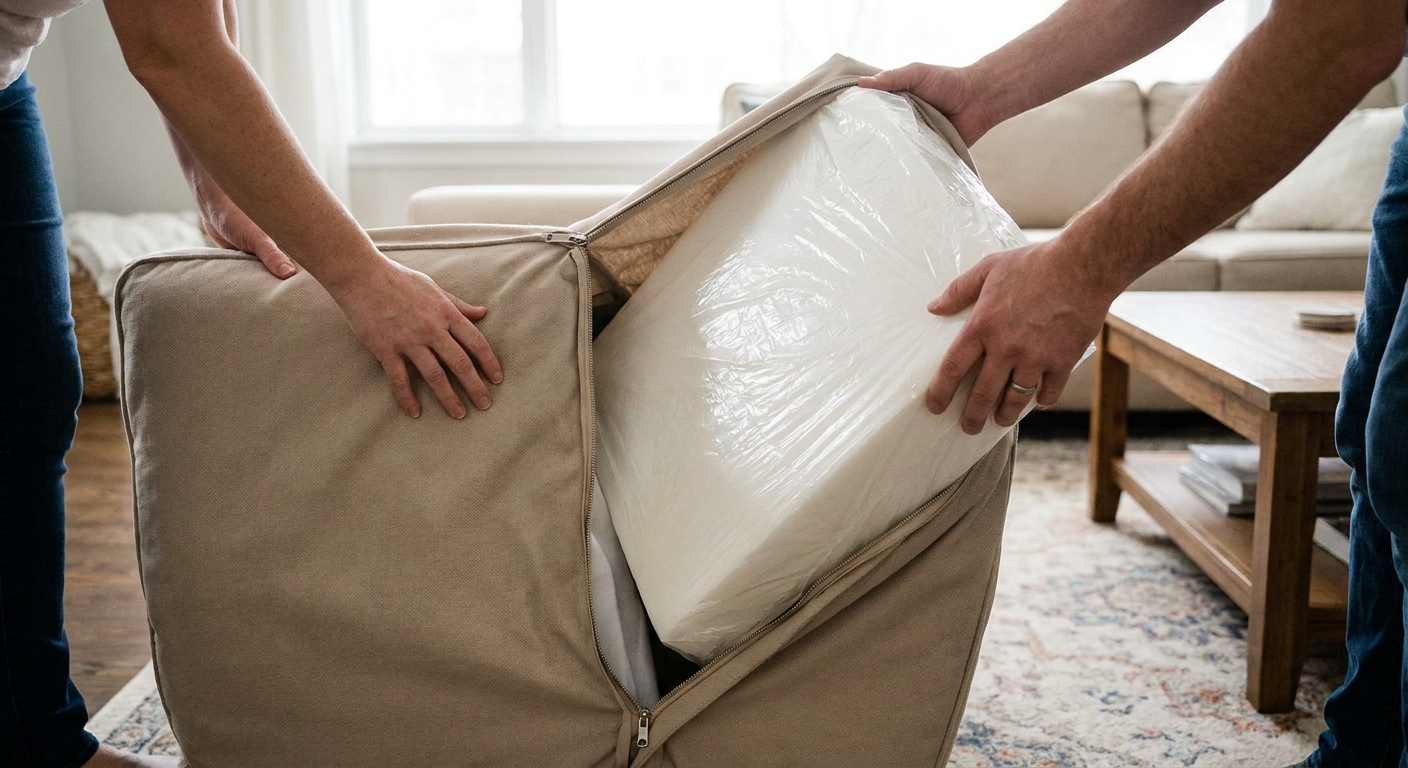
This is where most people get stuck, especially with upholstery fabric that has zero stretch. Take a breath. Your goal is to reduce friction and avoid yanking on the zipper tape.
Step-by-step insertion
- Unzip fully. Give yourself as much opening as you can.
- Inside-out or right-side out both work. If your fabric is grippy or the fit is tight, turning the cover inside-out first can make it easier to grab corners and align the insert, then you flip it right-side out as you go. If your cover is structured and easy to handle, right-side out is fine.
- Compress the insert: Hug it, gently bend it like a taco, and slide one end in first.
- Use a thin plastic bag: Put the wrapped foam inside a thin, dry cleaner style plastic bag, slide it into the cover, then pull the bag out. Thick bags can be stubborn once the foam is snug.
- Try the vacuum trick: With the foam inside the bag, use a vacuum hose to suck the air out. The foam will shrink and feel weirdly obedient. Slide it into the cover, then turn the vacuum off and let the foam expand. Pull the bag out slowly.
- Work the corners: Once the foam is inside, push the foam into each corner from the outside of the cover with open palms.
If you feel resistance, stop and reposition. Pulling harder is how seams pop and zipper teeth bend.
Zip it up cleanly
A clean zipper close is less about strength and more about alignment. You want the cover panels meeting naturally, with the insert evenly distributed.
My no-drama zipper method
- Start with the insert centered. If the foam is bunched on one side, the zipper will fight you.
- Pinch the zipper tape, not the fabric. Pulling fabric puts stress on stitches and can create puckers.
- Close in small increments. Zip two inches, then smooth the cushion, then zip again.
- Relieve pressure near the slider. If it gets stuck, do not force it. Push the foam away from the zipper line with your fingers, then try again.
- Check the ends. The last inch is where seams get stressed. Hold the ends of the zipper tape together firmly, then finish the zip.
If the zipper will not close
- Your insert is likely too thick or too oversized for that cover.
- Your Dacron may be too lofty or folded at the corners.
- The zipper may be damaged and needs replacement.
Do not brute-force a zipper. It is much easier to trim foam by a quarter inch than to repair a torn boxing seam.
Troubleshooting
It feels too firm
- Give it a week. Many foams soften slightly with use.
- Consider adding a softer wrap or topper rather than replacing the whole insert.
It looks lumpy or wavy
- Make sure the Dacron is smooth and not bunched.
- Rotate the cushion and massage the corners into place.
- Check that the foam is cut square.
It slides around
- Add a thin rug pad or non-slip shelf liner under the seat cushion.
- Check whether your sofa originally had Velcro strips or a platform lip.
The cover looks too big
- The cover may have stretched over time. A slightly thicker insert or a fuller Dacron wrap can help.
- If the cover is removable, follow the care label. Some fabrics may shrink, warp, or fade with washing, and heat is especially risky.
Make it last
- Rotate seat cushions weekly or at least monthly, especially if everyone has “their spot.”
- Flip if possible. Some cushions are two-sided, many are not. If yours has piping and identical top and bottom, flipping is usually safe.
- Keep it out of harsh sun. UV and heat fade fabric and can shorten foam life over time.
- Vacuum the seams. Grit works like sandpaper on fabric and stitching.
A well-stuffed cushion should feel supportive, look softly full at the corners, and invite you to linger. That is the whole point.
Quick reference
| Cushion type | Density (PCF) | Typical ILD | Notes |
|---|---|---|---|
| Seat cushion | About 1.8 to 2.2+ | About 28 to 45 | Higher density usually lasts longer, but formulation matters too (HR vs conventional). Pick firmness based on comfort and support needs. |
| Back cushion | About 1.5 to 1.8 | About 15 to 30 | Softer is usually more comfortable. Fiber and down blends are also common. |
If you want one takeaway: higher density usually lasts longer, and ILD controls how firm it feels. Once you understand that, you can shop confidently and ignore the gatekeeping.