Renter-Safe Radiator Covers

Clara Townsend
Clara Townsend is an interior stylist, vintage furniture enthusiast, and the creative voice behind Velvet Abode. With over a decade of experience transforming both cramped city apartments and sprawling fixer-uppers, she believes that a beautiful home is built on personal stories rather than massive budgets. When she isn't hunting for the perfect brass sconce at a local flea market, she can usually be found rearranging her living room for the third time this month.
If you rent in an older building, you already know the radiator paradox: it is either blasting like a tiny sun or sitting there looking like a rusty accordion you have to decorate around. A good radiator cover can make a room feel finished, protect little fingers and pet noses, and even give you a bit of extra surface space. The key is doing it without choking airflow, wasting heat, or leaving a trail of holes for your future self to explain at move-out.
This is the renter-safe, no-drama guide: what actually matters for airflow, which “heat loss” fears are real, and the install options that play nicely with landlords and leases.
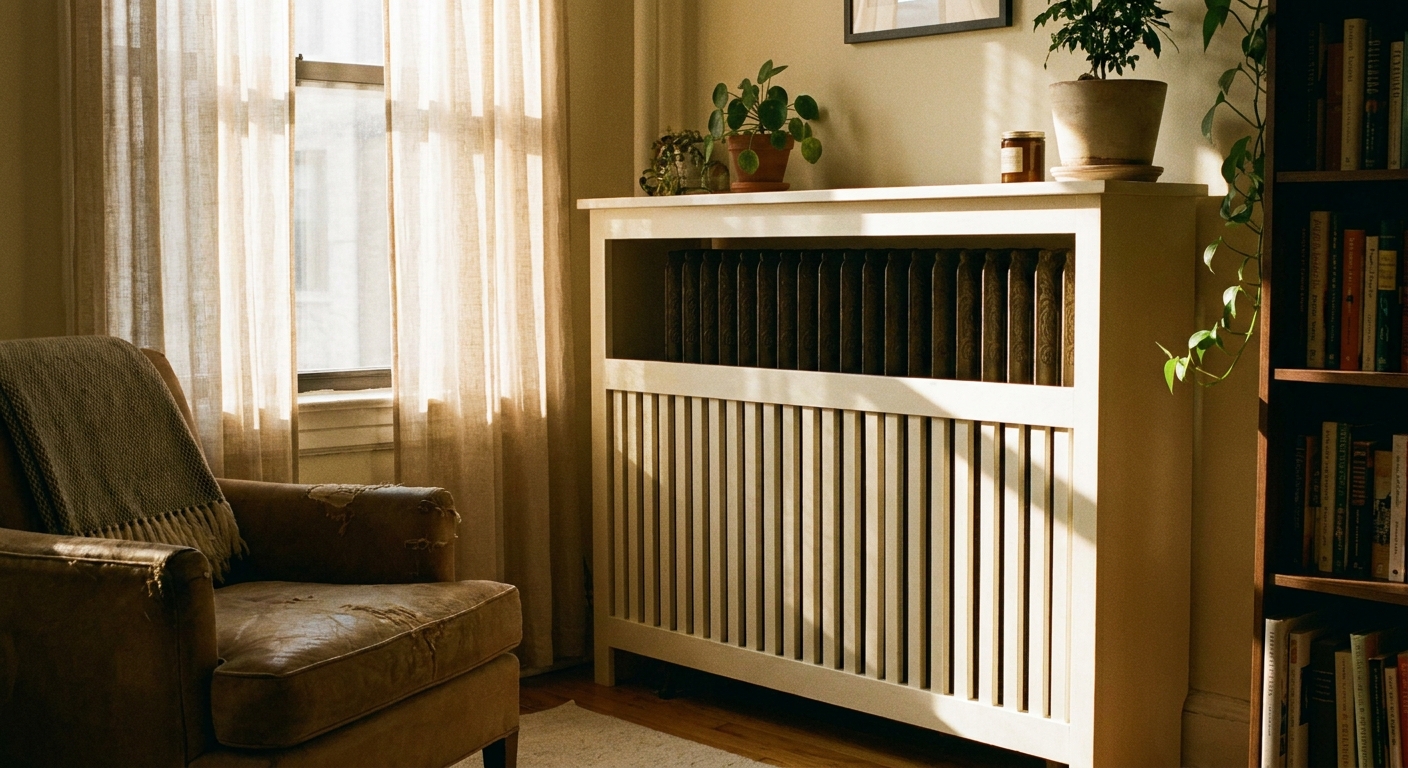
Know your radiator type
Before you shop, take 30 seconds to identify what you have, because cover rules change a bit depending on the system.
- Steam radiator: one pipe (often), plus a small air vent on the side. It may hiss or clank. Covers must not block the air vent or the valve.
- Hot-water radiator: usually two pipes (supply and return), generally quieter, sometimes paired with a thermostatic radiator valve (TRV).
- Convector (recessed or cabinet style): often under a window with a grille. These rely heavily on airflow, so venting is extra nonnegotiable.
- Electric/baseboard: this guide is mostly about steam and hot-water, but the airflow and clearance logic still applies. Always follow manufacturer safety guidance for electric heat.
How radiators heat a room
Most steam and hot-water radiators warm your space in two ways:
- Radiant heat: warmth you feel from the hot metal itself.
- Convection: air warms as it passes around the radiator, rises, and circulates through the room.
A cover can slightly reduce direct radiant heat, but a well-designed cover supports convection by letting cool air enter at the bottom and warm air escape at the top. Cute is fine. Airflow is nonnegotiable.
Think of a radiator cover like a sweater with a vented knit. Cozy, yes. Sealed tight, absolutely not.
Airflow rules
Because every building is a little quirky, there is no single clearance rule that fits all radiators and all covers. Use these numbers as a solid starting point, then follow any manufacturer guidance for your specific cover, especially for convectors and built-in radiator cabinets.
Practical clearances
- Front clearance: Aim for 2 to 3 inches between the radiator and the inside of the cover’s front panel. Go larger if the front is more decorative than slatted.
- Side clearance: Aim for 1 to 2 inches on each side so air can move and you are not scraping valves or pipes.
- Top clearance: Aim for 2 inches between the radiator and the inside of the top, and ideally include a top vent slot or grille so warm air can exit.
- Bottom intake: Do not block the bottom edge. A small gap at the bottom front or an open base helps pull cool air in.
- Valve and vent access: You should be able to reach the valve, and if you have steam, the air vent, without removing the whole cover. If you cannot access them, it is not renter-friendly.
Quick airflow check
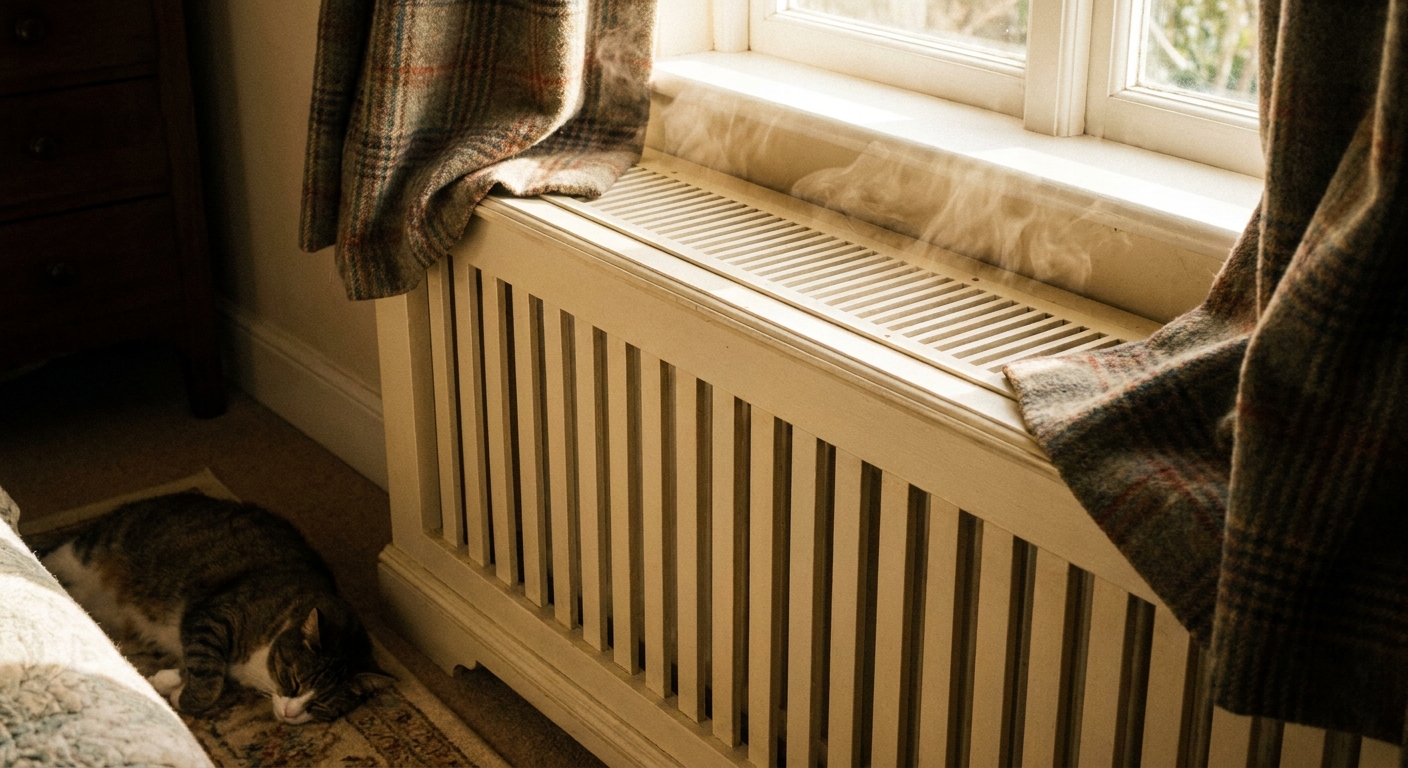
On a heating day, hold your hand near the top vent area. You should feel warm air escaping. If the cover top feels like it is trapping heat and you do not feel that upward “spill” of warmth, you need more venting or clearance. This is a rough check, not a measurement, but it catches the big problems fast.
Heat loss myths
Myth: “A radiator cover always makes the room colder.”
Not automatically. A cover that is sealed, tight, and mostly solid can reduce heat output. A cover that is properly vented often performs surprisingly well, especially if it helps the warm air move outward rather than hugging the wall behind the radiator.
Myth: “Covers are dangerous for steam heat.”
They can be risky if they block the valve or air vent, trap condensation, or sit against hot pipes. But stable covers with clearances and access are common in steam buildings. The biggest day-to-day safety issue I see is fabric, cords, or clutter touching hot metal. A cover can actually reduce that risk.
Myth: “Reflective foil behind the radiator is pointless.”
Sometimes it helps, sometimes it does almost nothing. It is most likely to help when the radiator is on an exterior wall and you can maintain an air gap for the reflective surface to work. If your wall is already insulated, or the foil ends up pressed flat with no gap, the benefit can be minimal. If you do this as a renter, keep it simple and reversible: a thin reflective insulation sheet cut to size, held with removable strips, and never interfering with pipes, vents, or valves.
Reality: airflow and mechanical issues both matter
Yes, dust build-up and furniture pushed too close can absolutely steal heat, especially for convectors. But if you have steam and the radiator is cold, clanging, or only heating halfway, common culprits include trapped air (failed air vent), an improperly pitched radiator, or a valve that is not fully open. A cover cannot fix those, and it should never block access to the parts you might need to check.
Freestanding vs tension designs
There are two main renter-friendly categories that avoid drilling into walls or floors.
Freestanding covers
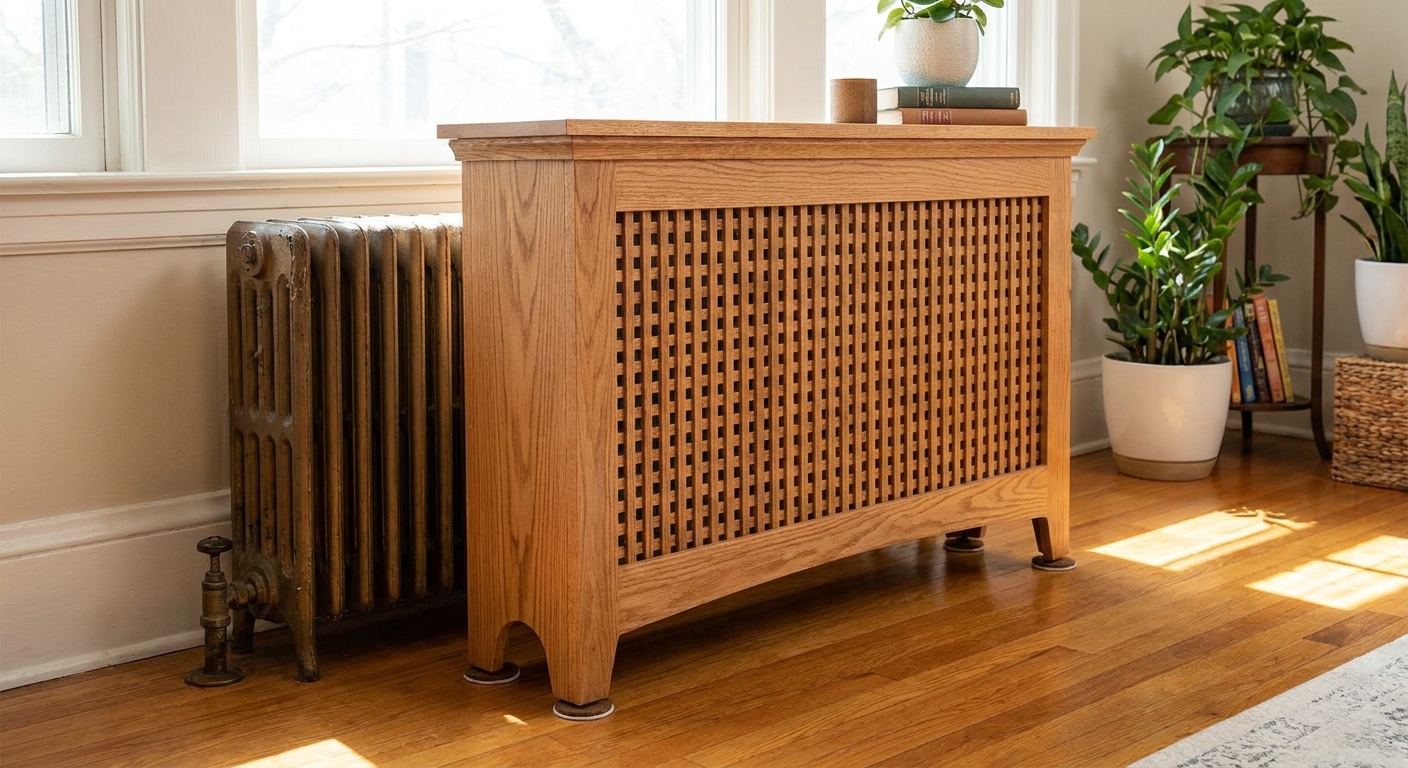
What they are: A box-like cover that sits on the floor around the radiator, often with a vented front and top.
Why renters love them:
- No wall holes, no anchors, no landlord email chain.
- Easy to remove for cleaning or maintenance.
- Often sturdier, which matters if you are using it as a landing spot for a tray or a plant.
Watch-outs:
- If your floors are uneven, the cover may wobble. Add felt pads or thin furniture shims to level it.
- Be cautious about using the top like a shelf. Heat rises, and some finishes can dry out over time. Keep decor breathable and heat-tolerant.
Tension-fit and friction-fit
What they are: Covers or panels that brace between the floor and a windowsill or between side walls using pressure, or that hook around the radiator without permanent hardware.
Why they can be great:
- Useful when a radiator sits in a tight nook where a wide freestanding cover will not fit.
- Often lighter and easier to move for seasonal cleaning.
Watch-outs:
- Anything tensioned needs regular checks. If it shifts and touches the radiator, it can discolor, warp, or smell.
- If it presses on painted trim or a sill, it can leave marks. Always buffer contact points with felt or removable rubber pads.
My renter-safe pick most of the time: freestanding, because it is simpler to document, easy to remove, and less likely to scuff paint through pressure.
Materials that will not stink
If you have ever brought home a bargain piece of furniture and immediately regretted the “new factory smell,” you already understand off-gassing. Radiators add heat to the equation, and heat can intensify odors.
Safer, low-odor picks
- Solid wood (unfinished or sealed well): Look for low-VOC sealants or water-based finishes. Solid wood handles heat better than many composites.
- Metal (powder-coated steel or aluminum): Excellent for heat tolerance and odor control. It can look modern, or vintage if you choose a softer color.
- High-quality interior hardwood plywood (DIY-friendly): Birch or similar hardwood plywood with CARB Phase 2 compliance (or NAF where available) finishes cleanly for indoor use. Seal it with water-based poly or low-VOC paint.
- Rattan or cane panels (with caution): Beautiful, breathable, and very boho-chic, but keep it from direct contact with hot metal and avoid heavily varnished versions that can smell when warmed.
Materials to be cautious with
- MDF or particleboard with unknown adhesives or heavy laminate. These can smell more when warmed and may swell if exposed to humidity from steam systems.
- Fresh oil-based paint or solvent-heavy finishes. Even when dry to the touch, they can continue to off-gas, and radiator warmth can bring the odor back.
- Fabric skirts or drapes attached near the radiator. They trap heat and can scorch if they touch hot surfaces. Keep fabrics well clear of anything that gets hot.
My simple sniff test: If you can smell the piece strongly in a cool room, you will smell it more once the heat kicks on. Let it air out before installation, ideally for a few days with good ventilation.
Steam and TRV notes
Steam valve rule
If you have steam, do not “half-close” the radiator valve to control heat unless a building pro has told you otherwise. Many steam systems want the valve either fully open or fully closed. Partially closed can contribute to water hammer and uneven heating. If you need less heat, ask about a properly sized vent, a thermostatic vent, or building-level balancing.
Do not block the steam air vent
That little vent is how the radiator breathes. If a cover blocks it, your radiator can heat poorly and spit moisture. Choose a design that keeps the vent area open and reachable.
TRVs need honest air
If you have a thermostatic radiator valve, a cover can trap warm air around the sensor and make it shut off too early. Ideally, keep the TRV outside the cover or choose a setup that leaves it exposed. Some systems use remote sensors, which are more cover-friendly.
Install options
Your lease may have language about “alterations.” Even if your landlord is relaxed, it is worth choosing an approach that is easy to reverse and easy to explain.
Option 1: Fully freestanding
- Set the cover around the radiator with appropriate clearances.
- Add felt pads to prevent floor scratches.
- If you need stability, use museum putty or removable gel pads between the cover and the floor, not the wall.
Option 2: Anti-tip without drilling (situational)
If you have kids, pets, or a narrow cover, tipping matters. Adhesive-only solutions can fail, especially near heat or on textured paint. The safest renter move is choosing a wider, heavier cover that does not wobble. If you still go the removable route:
- Place removable strips on the cover, away from hot areas so adhesives do not soften.
- Test in an inconspicuous spot first.
- Check regularly during heating season.
Option 3: Tension-fit with buffers
- Add felt where the tension points touch trim or a sill.
- Check weekly for the first month of heating season, then monthly.
- Make sure nothing is pressing on the valve, vent, or piping.
What to avoid
- Drilling into floors.
- Anchoring into plaster without landlord sign-off.
- Any installation that blocks valve or vent access or requires tools to remove quickly.
Move-out proof
Documenting your radiator cover setup is not about being paranoid. It is about being calm when you move.
Before you install
- Take photos of the radiator, valve, air vent (if steam), surrounding baseboard, and wall. Get close-ups of any existing paint chips or rust stains.
- Measure the radiator height, width, depth, and the distance to the wall and windowsill. Save the notes.
- Check your lease for alteration language. If it is strict, send a short email: “I’m placing a freestanding cover around the radiator, no drilling, for safety and aesthetics.”
After you install
- Take photos showing clearance on the sides and top, and that the valve and vent are accessible.
- If you used pads or removable products, photograph where they touch.
At move-out
- Remove the cover early, not the night before. Give yourself time to clean and address any minor scuffs.
- Wipe baseboards and vacuum the radiator area gently.
Lead paint note (older buildings)
If your building is older and you see peeling or chalky paint around baseboards, radiators, or window trim, assume it could contain lead. Do not sand or scrape. Use a damp wipe method, vacuum with a HEPA filter if possible, and consider flagging peeling paint to your landlord for proper repair.

Styling in small spaces
Radiator covers are one of my favorite “make it feel intentional” moves in a small apartment, especially when every wall has a purpose. Here is how to style them without turning them into heat traps.
Style the top, keep it breathable
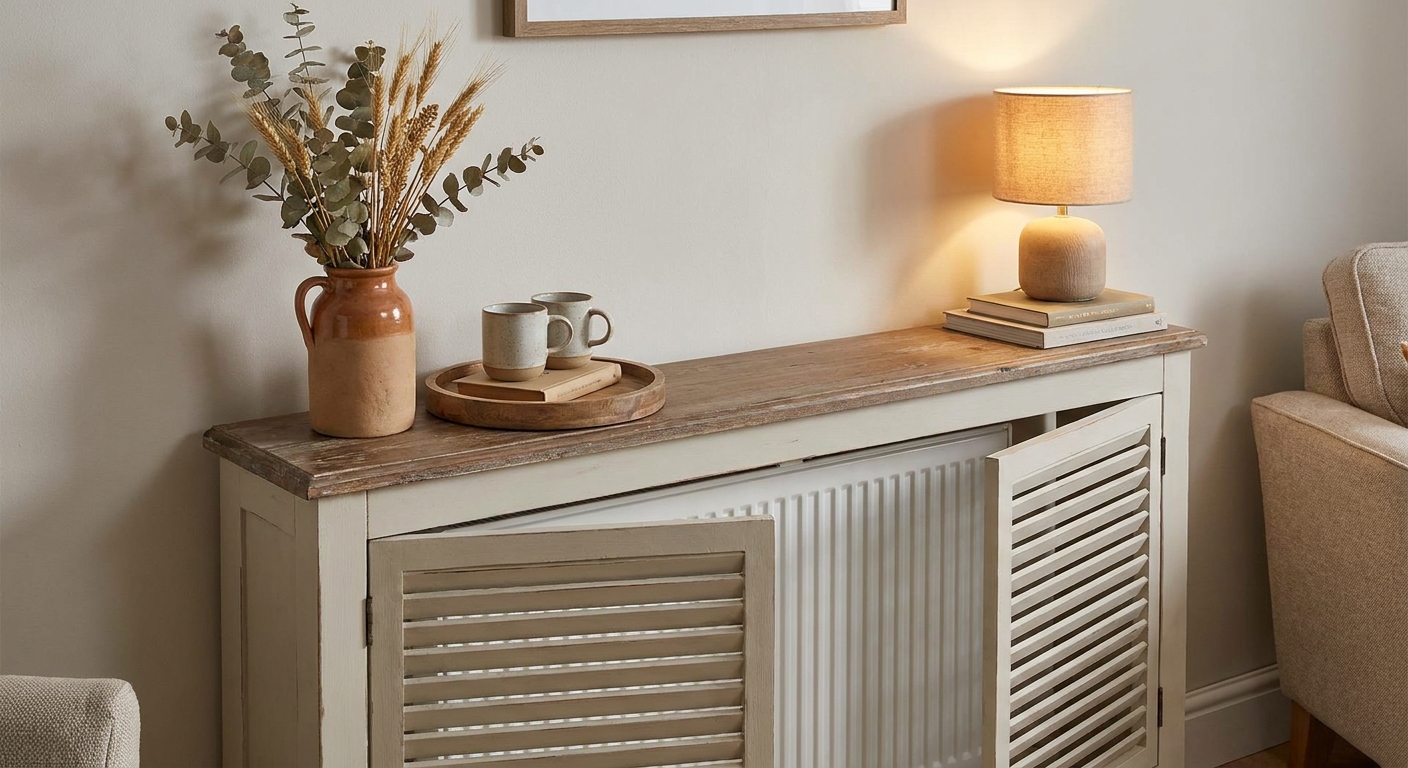
- Use a tray to corral essentials, but choose wood, ceramic, or metal over thick acrylic that can warp.
- Keep at least one-third of the top vent area clear if the top is vented.
- Avoid stacking books directly over vent holes. If you love books there, elevate them on a small stand so air can pass underneath.
Pick decor that likes warmth
- Ceramic vase with dried stems.
- Amber glass lamp (corded safely away from heat, and never resting on a hot vent).
- Framed art leaned against the wall above the cover, not touching the radiator zone.
Plants: smart placement
- Keep plants slightly off to the side where air is warmer, not scorching.
- Use a waterproof saucer. Steam systems can create small moisture swings, and you do not want rings.
Make it look built-in
- Paint the cover the same color as the wall for a seamless look.
- Or go moody to make it a design feature. A deep olive or inky brown can make even a basic vented front feel vintage and elevated.
Safety checklist
- No contact: Cover should not touch the radiator, pipes, valve, or steam air vent.
- Stable base: No wobble. Add felt pads or shims.
- Ventilation: Slatted front or perforated metal plus a vented top, or generous top gap.
- No cords over vents: Keep lamp cords and phone chargers away from heat.
- Keep fabrics clear: Curtains, throws, and pet beds should not touch hot surfaces.
- Access: You can reach and adjust the valve quickly.
Choose in 5 minutes
If you want a fast decision, use this quick filter:
- Go freestanding if you want the simplest renter-safe install and easiest move-out.
- Choose metal or solid wood if you are sensitive to smells or you run your heat high.
- Prioritize venting if your apartment is already chilly or your radiator is smaller than average.
- Keep it slim if you are in a tight room. A cover that sticks out too far will steal walking space and invite bumps.
- Document everything with before and after photos, even if you are doing a zero-hardware setup.
A radiator is not the most glamorous roommate, but it is a loyal one. Give it breathing room, wrap it in something thoughtful, and you will get warmth and a room that feels like you on purpose.